Expert comparison

Updated October 10, 2026

Best Espresso Machines for Beginners 2026

The best espresso machine for most beginners is the Breville Bambino Plus with a separate grinder: it heats in seconds and steams milk for you. The Barista Express is the one-box pick for learning technique, and the Philips 3200 LatteGo suits anyone who never wants to learn. Below: seven machines matched to seven kinds of beginner.

Affiliate disclosure: this page contains Amazon affiliate links. We may earn a commission if you buy through them, at no extra cost to you, and it never affects our rankings. Learn more

Which espresso machine should a beginner buy?

The right first espresso machine depends less on budget than on how much you want to learn. Some beginners want to understand extraction and pull shots by hand; others want a good latte with no skills at all. This guide sorts machines by that question rather than by price. For a price-led view, see our best espresso machines under $500 or the full best espresso machines ranking.

For most first-time buyers who drink milk-based coffee, the Bambino Plus is the most flexible start. If you want a single box, the Barista Express teaches you the most per shot. If you are unsure which machine type suits you at all, read our espresso machine types guide first.

Which beginner espresso machine fits you?

Match how you want to make coffee to a machine.

How do the beginner picks compare?

Ratings are each product's overall editor rating out of 5 from its own review. Learning curve reflects how many skills each machine asks of a beginner.

Best overall for beginnersRating 4.7/5

Breville Bambino Plus

Best for
Latte drinkers with little counter space
Learning curve
Low
Price
$399-$449
Check current price
Best all-in-one for learningRating 4.5/5

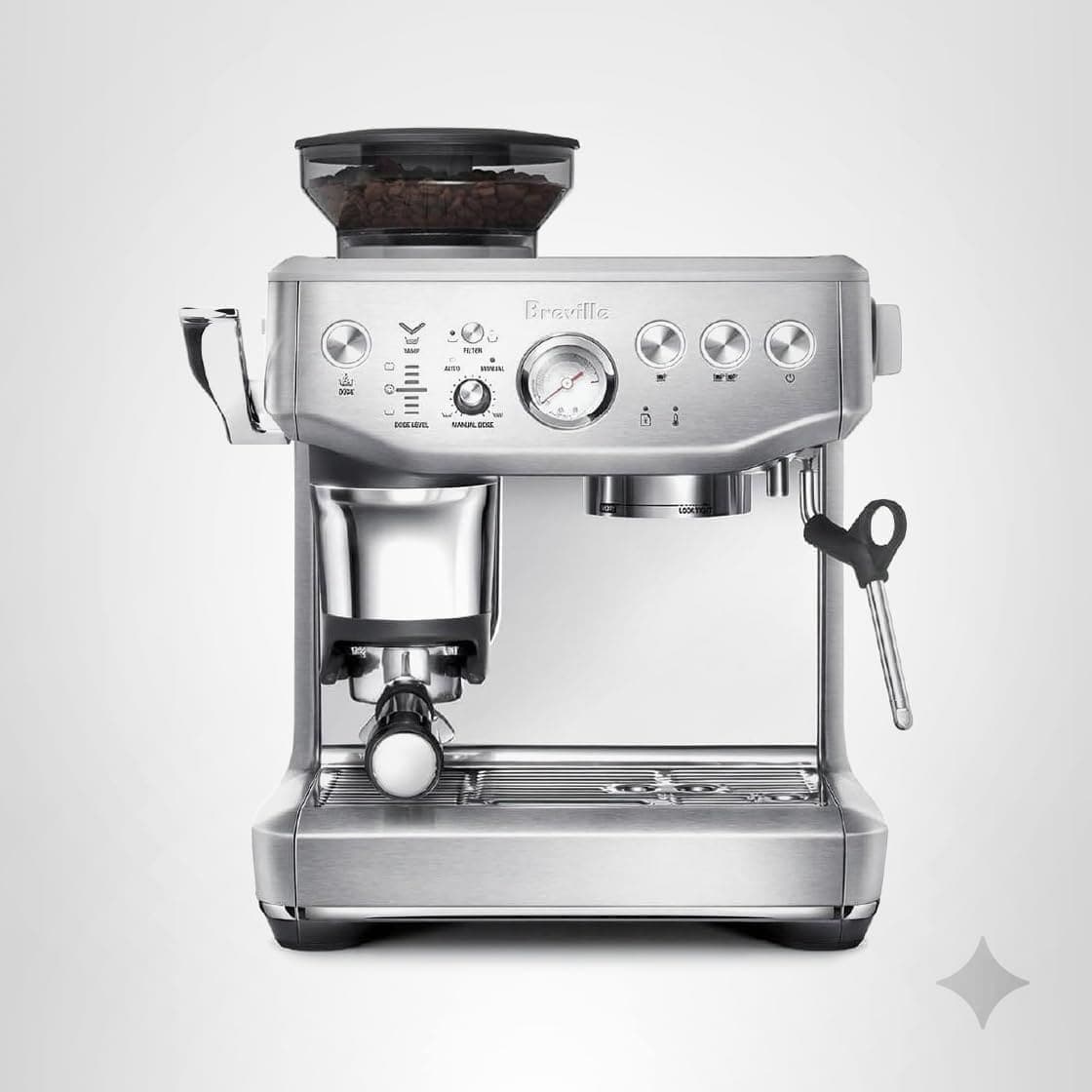
Breville Barista Express BES870XL

Best for
One box; learning real technique
Learning curve
Medium
Price
$449-$699
Check current price
Easiest semi-automaticRating 4.5/5

Breville Barista Express Impress

Best for
Worried about tamping; fast results
Learning curve
Low to medium
Price
$750-$850
Check current price
Best push-button machineRating 4.3/5

Philips 3200 LatteGo

Best for
Push-button lattes, no learning
Learning curve
None
Price
$459-$549
Check current price
Best guided all-rounderRating 4.2/5

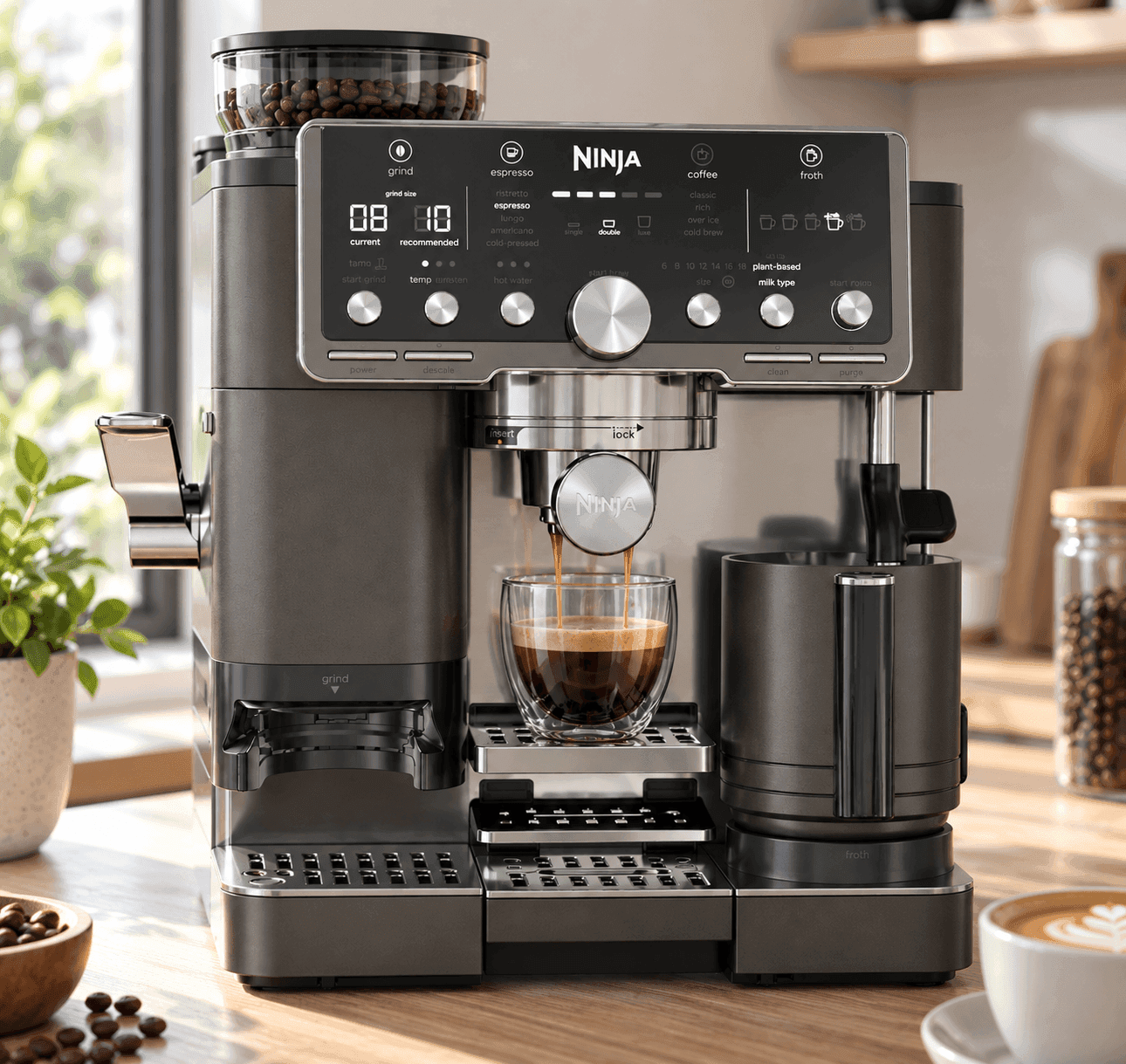
Ninja Luxe Café Pro

Best for
Guided espresso plus drip and cold brew
Learning curve
Low
Price
$699-$799
Check current price
Best budget starterRating 3.7/5

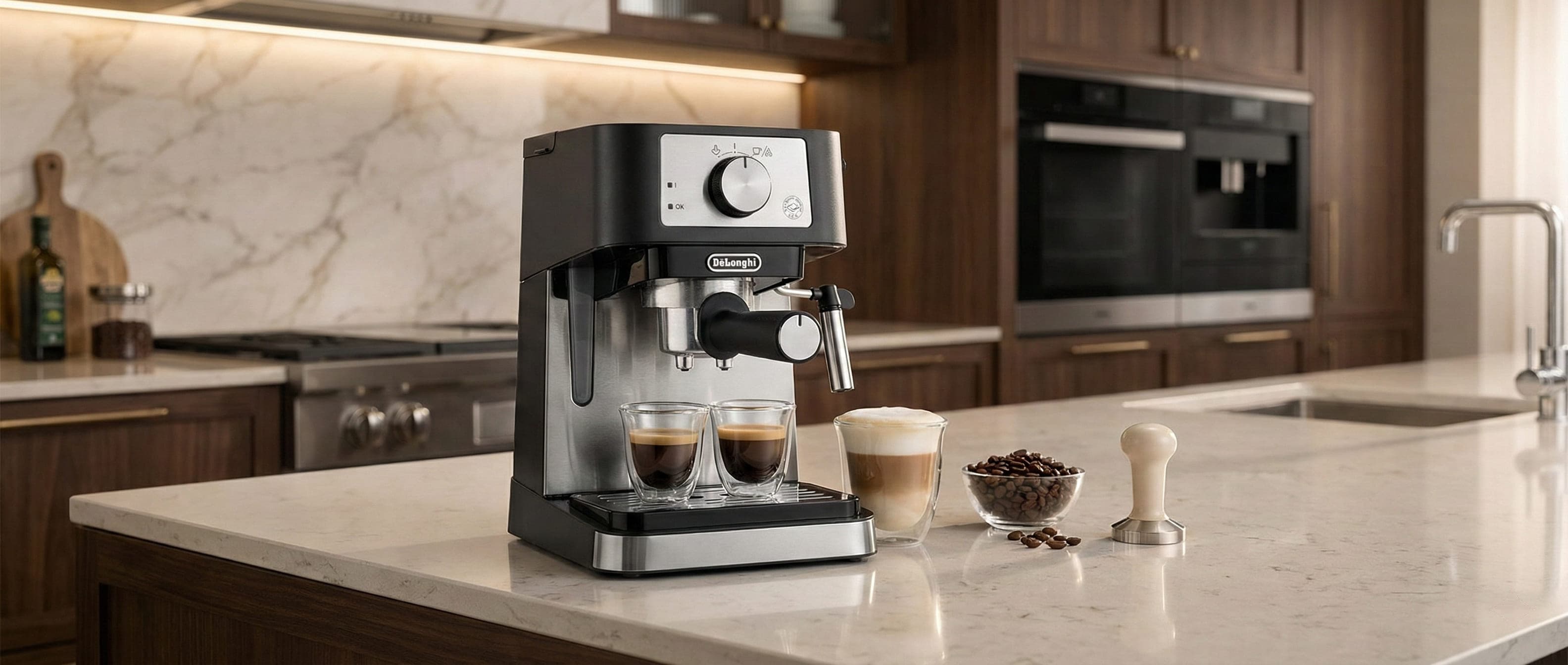
DeLonghi Stilosa EC260

Best for
Testing the hobby on a small budget
Learning curve
Medium
Price
$79-$149
Check current price
Best for zero effortRating 4.2/5

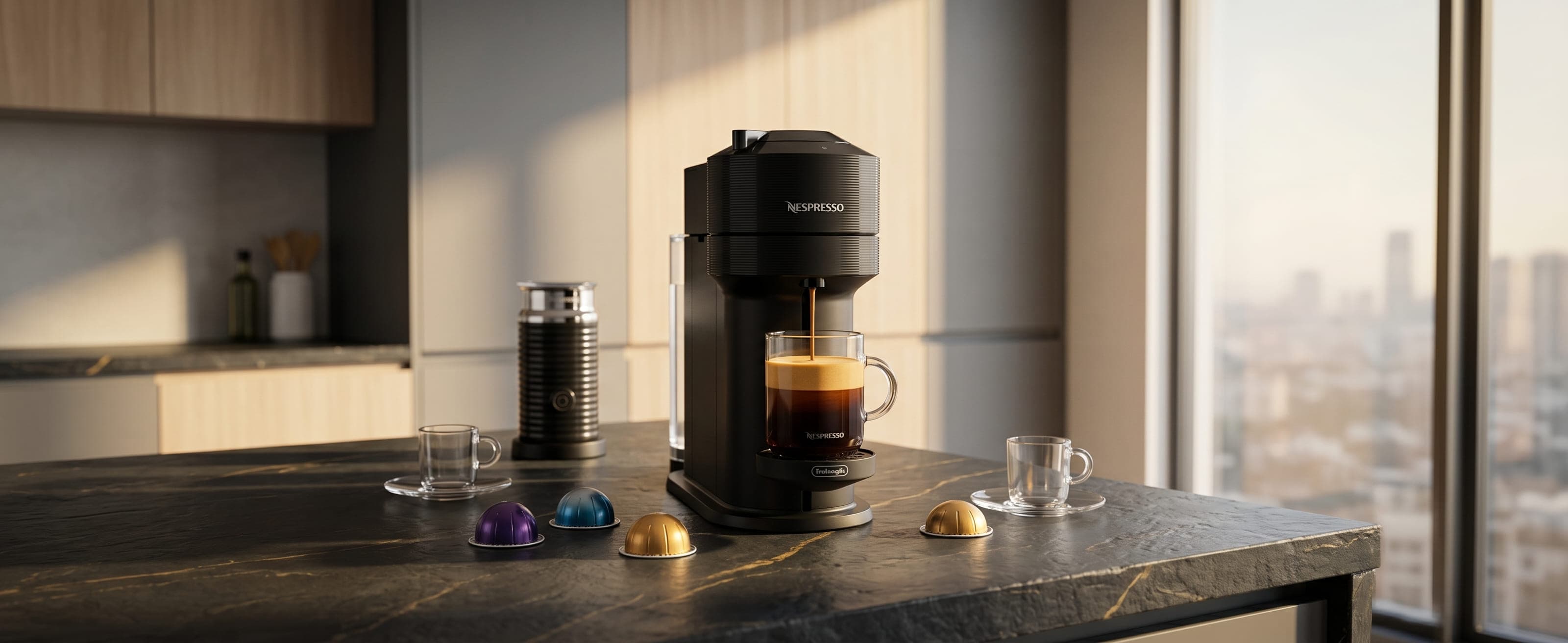
Nespresso Vertuo Next

Best for
Zero effort, occasional drinkers
Learning curve
None
Price
$120-$180
Check current price

Best espresso machines for beginners: reviews and trade-offs

Who each machine suits, who should skip it, and the trade-offs.

1. Best overall for beginners

Breville Bambino Plus

★ 4.7/5 rating

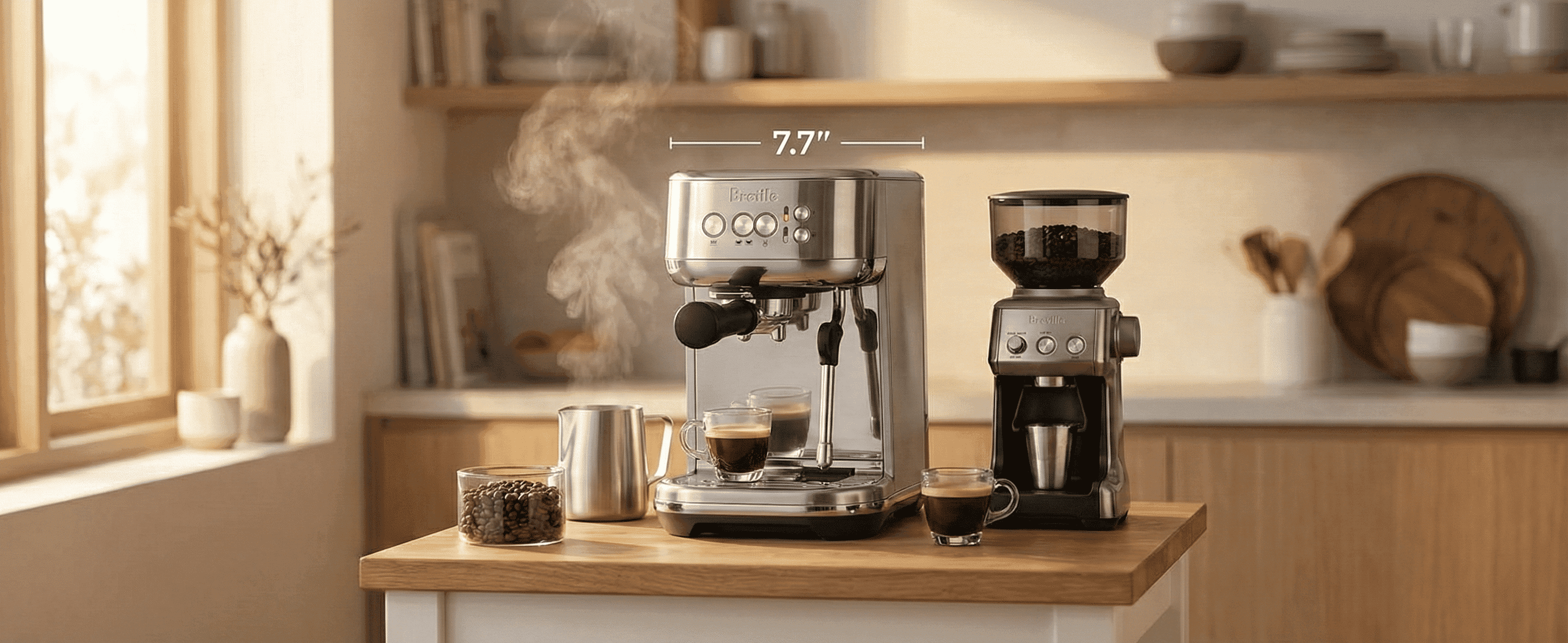
The Bambino Plus removes the two things that frustrate most beginners: waiting for the machine and learning to steam milk. It is ready almost as soon as you switch it on, and its automatic wand textures milk to a latte-ready finish without any technique. It held brewing temperature steadily throughout testing, so the shots you pull are limited by your grinder and beans rather than the machine. The one thing it asks of you is a separate grinder.

Best for
Beginners who drink lattes and cappuccinos, have limited counter space and are happy to buy a grinder separately.
Skip if
You want one box with the grinder inside, or you make six or more milk drinks a day.
  • Hands-off microfoam from the first week
  • Very narrow footprint for small kitchens
  • Stable brewing temperature in testing
  • Ships with both basket types, so you can start forgiving and progress
  • Needs a separate grinder
  • Small tank needs refilling every few days for two people
  • Cannot brew and steam at the same time
  • No programmable shot volumes

2. Best all-in-one for learning

Breville Barista Express BES870XL

★ 4.5/5 rating

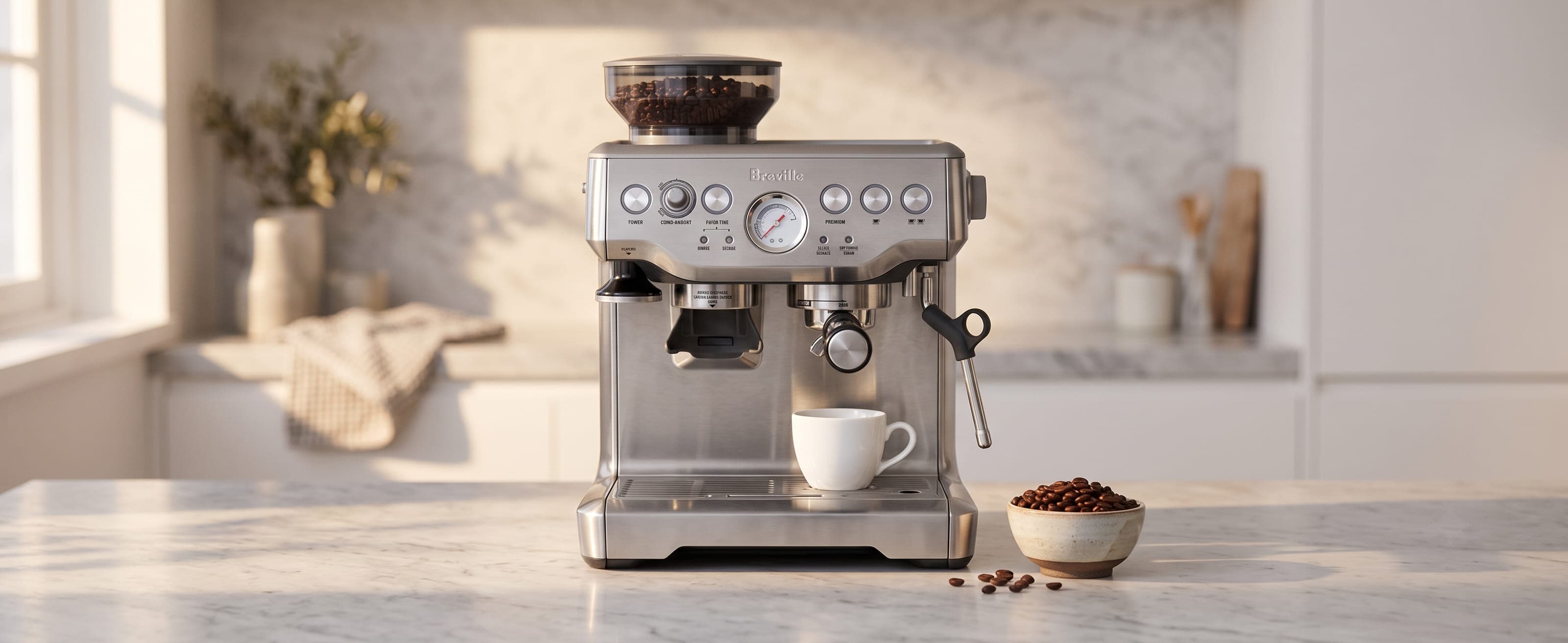
The Barista Express is the best teacher on this list. Its front pressure gauge shows on every shot whether your grind is too coarse or too fine, so you learn extraction by watching rather than guessing. The 40mm conical grinder is built in, which saves you choosing one, and automatic pre-infusion makes uneven early tamps less punishing. The trade-off is that the grinder tops out on very light roasts and cannot be upgraded separately.

Best for
Beginners who want a single purchase and want to learn real espresso technique on medium and dark roasts.
Skip if
You already own a good grinder, you mainly drink light roasts, or you want milk drinks without learning a steam wand.
  • Everything needed for espresso in one box
  • Pressure gauge makes dialing in visible
  • Pre-infusion forgives uneven early tamps
  • Manual wand capable of latte-art microfoam
  • Grinder struggles with very light roasts
  • Grinder cannot be upgraded separately
  • Included plastic tamper is worth replacing early
  • Manual wand takes one to two weeks to learn

3. Easiest semi-automatic

Breville Barista Express Impress

★ 4.5/5 rating

The Impress takes the Express idea and removes the tamping skill. Its assisted tamping and dose guidance gave consistent shots that expert tasters struggled to tell apart from careful manual technique, which means a beginner gets repeatable espresso in the first week instead of the first month. You pay noticeably more for that help, and the grinder shares the Express's limits on light roasts.

Best for
Beginners who want semi-automatic espresso but are worried about inconsistent tamping and want good shots quickly.
Skip if
Your budget is firm, you drink light roasts, or you want full manual control as your skills grow.
  • Removes tamping as a source of bad shots
  • Consistent results from the first week
  • PID keeps brew temperature tight
  • Real steam wand for latte-art foam
  • Significantly pricier than the Express
  • Cannot grind fine enough for very light roasts
  • Loud grinder for early mornings
  • Steam power dips after two back-to-back pitchers

4. Best push-button machine

Philips 3200 LatteGo

★ 4.3/5 rating

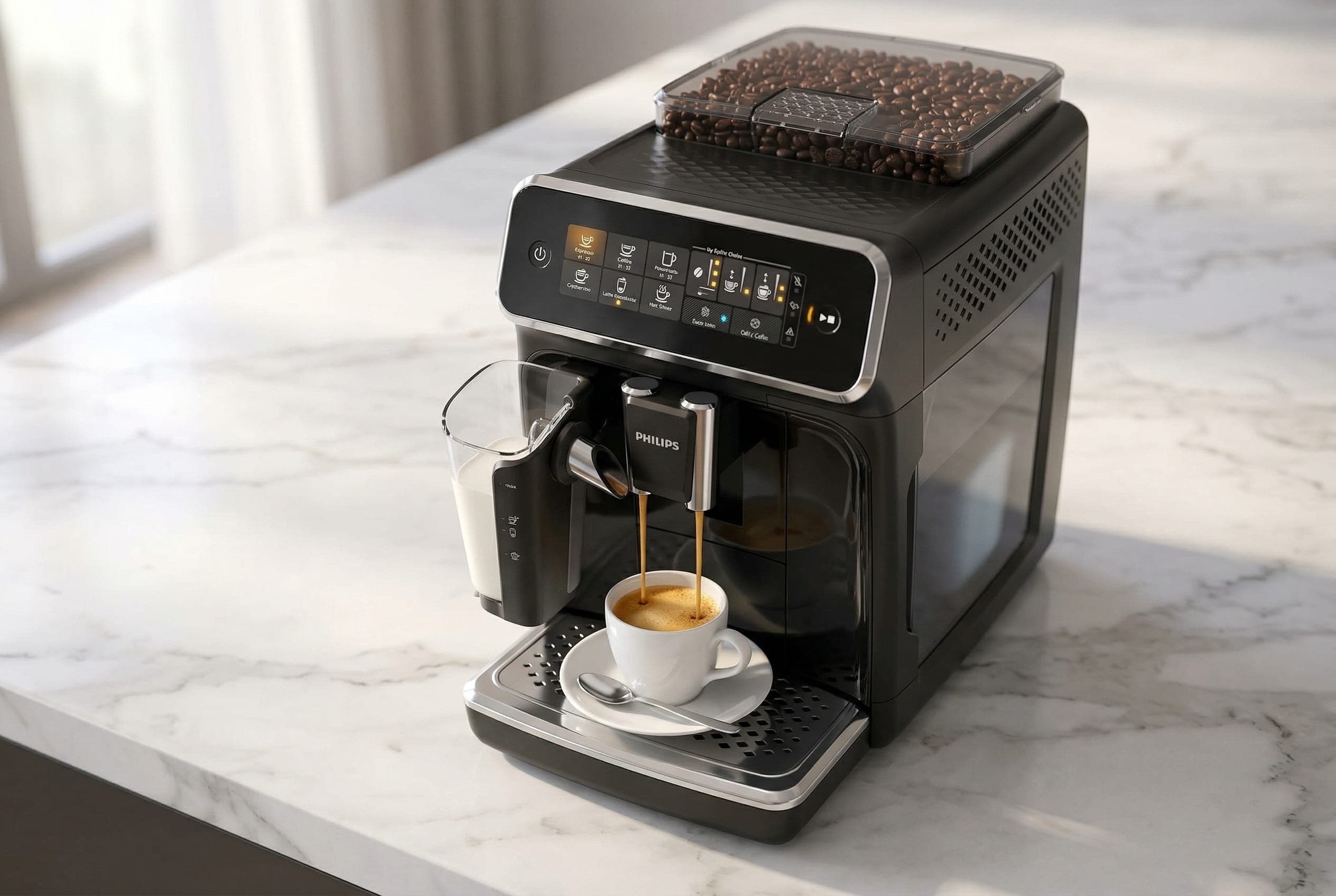
If learning espresso is not the point, a super-automatic is the honest recommendation, and the 3200 LatteGo is our pick for beginners. It grinds, doses, tamps and brews at one touch, heats quickly, and the LatteGo milk carafe has no tubes and rinses clean in seconds. The trade-off is control: you cannot adjust the shot the way you can on a semi-automatic, and straight espresso is milder than a well-made manual shot.

Best for
Busy households that want fresh-bean lattes and cappuccinos at one touch and have no interest in learning technique.
Skip if
You want to learn espresso, practice latte art or drink mostly straight shots.
  • Zero learning curve
  • Quick heat-up for rushed mornings
  • Milk system is the easiest to clean here
  • Fresh beans instead of capsules
  • No control over dose, tamp or extraction
  • Only five drink programs
  • Light roasts taste sour and inconsistent
  • Thin plant milks foam unreliably

5. Best guided all-rounder

Ninja Luxe Café Pro

★ 4.2/5 rating

The Luxe Café Pro sits between a semi-automatic and a super-automatic. A built-in scale weighs the dose, a lever-assisted tamp removes guesswork, and automated frothing handles milk, yet it still brews real espresso through non-pressurized baskets. It also makes drip coffee and cold brew, which suits households replacing more than one appliance. Its grinder favors medium-dark roasts, and its warranty is shorter than most rivals here.

Best for
Beginners who drink medium-dark roasts and want espresso plus drip and cold brew from one guided machine.
Skip if
You mainly drink light roasts, want a long warranty, or only ever make espresso.
  • Guided dosing and tamping shorten the learning curve
  • Real espresso from non-pressurized baskets
  • Four brewing modes in one appliance
  • Automated microfoam suitable for latte art
  • Light roasts extract inconsistently
  • Drip coffee is its weakest mode
  • Small drip tray fills quickly
  • One-year warranty

6. Best budget starter

DeLonghi Stilosa EC260

★ 3.7/5 rating

The Stilosa is the cheapest honest way to find out whether you enjoy making espresso. Its pressurized basket forgives coarse or pre-ground coffee, and the manual steam wand teaches technique that carries over to any better machine later. It is not a long-term machine: temperature swings between shots are its biggest weakness, and the plastic body and non-standard 51mm portafilter limit how far you can grow with it.

Best for
Beginners testing whether they will stick with home espresso, weekend drinkers and anyone on a strict budget.
Skip if
You drink espresso daily, drink light roasts or want a machine to keep for years.
  • Lowest entry price on this list
  • Pressurized basket forgives beginner mistakes
  • Manual wand teaches transferable technique
  • Compact for small counters
  • Temperature swings cause failed shots
  • Slow recovery after steaming
  • Plastic build
  • Limited upgrade path with a 51mm portafilter

7. Best for zero effort

Nespresso Vertuo Next

★ 4.2/5 rating

Some beginners do not actually want to learn espresso; they want good coffee with no effort. For them a capsule machine is the right answer, and the Vertuo Next is the best one we have tested. Insert a capsule, press one button, and it reads the barcode and brews. The catches are cost and control: capsules are expensive for daily drinkers, the system is closed, and there is no steam wand for milk.

Best for
Occasional drinkers, offices and anyone who wants café-style coffee without grinding, tamping or cleaning a portafilter.
Skip if
You drink two or more coffees a day, want control over the cup or want to learn espresso.
  • The easiest machine to use on this list
  • Consistent results every cup
  • Smallest footprint here
  • No grinder or accessories required
  • Capsule cost adds up for daily drinkers
  • Closed capsule system
  • Larger cup sizes taste thin
  • Not traditional pump-pressure espresso

How should a beginner choose an espresso machine?

If this is your situation, this is the machine to look at.

How much do you want to learn?

If: You want to learn real espresso technique

Start with the Barista Express. Its pressure gauge turns every shot into a lesson.

If: You want semi-automatic espresso without the tamping learning curve

The Barista Express Impress or the guided Ninja Luxe Café Pro.

If: You never want to adjust anything

A super-automatic like the Philips 3200 LatteGo, or a capsule machine if you drink coffee only occasionally.

What do you drink?

If: Mostly lattes and cappuccinos

Prioritize easy milk: the Bambino Plus automatic wand or the Philips LatteGo system.

If: Mostly straight espresso

Choose a semi-automatic with a single-wall basket and a good grinder; super-automatics and capsules make milder shots.

If: Light, fruity roasts

Avoid the built-in grinders here, which top out on very light roasts. Pair a Bambino Plus with a capable separate grinder instead.

Space and budget

If: Your counter space is tight

The Bambino Plus and Vertuo Next are the narrowest machines here. Remember a separate grinder needs space too.

If: You are not sure you will stick with it

The Stilosa is a low-risk trial; upgrade once you know what you like.

If: Your total budget is around $500

Compare our best espresso machines under $500, and include the grinder in the total.

Browse the full espresso machine range to compare every machine we review.

What other machines suit beginners?

Strong options that fit narrower needs than the picks above.

Gaggia Classic Pro

One of the best-value machines we review, but its manual temperature control makes it a frustrating first machine unless you enjoy tinkering.

Breville ESP8XL Cafe Roma

A cheaper traditional-style starter with both basket types and a manual wand.

DeLonghi Dedica EC685

For the tightest counters; forgiving pressurized basket, weaker milk steaming.

De'Longhi Magnifica Evo

A super-automatic alternative to the Philips 3200 for one-touch espresso from fresh beans.

More espresso machines we review

How were these beginner machines ranked?

Each machine was assessed in its own full review; this ranking weights what matters most to a first-time owner.

  • Ease of first use: How quickly a first-time owner gets a drinkable shot or milk drink, and how many skills the machine asks for before that happens.
  • Learning curve and feedback: Whether the machine helps you improve, through a pressure gauge, guided dosing, assisted tamping or forgiving baskets.
  • Milk drinks: How easily a beginner gets café-style milk, from automatic texturing to manual wands that reward practice.
  • Cup quality for the type: Shot and milk quality judged against other machines of the same type, drawn from each machine's full review.
  • Total cost to get started: Machine price plus the grinder, accessories and running costs a beginner actually needs.
  • Room to grow: Whether the machine supports better baskets, a better grinder and more control as skills improve.

Testing details and methodology are in each product's review. We do not accept paid placements or sponsored rankings.

What makes an espresso machine beginner-friendly?

The features that shorten the learning curve, and the spec that doesn't.

Forgiving baskets

Pressurized (dual-wall) baskets build pressure through a small exit hole, so shots taste acceptable even with a coarse grind. They are ideal for week one and limiting by month three. Machines that ship with both basket types let you progress without buying anything. Our pressurized vs non-pressurized basket guide explains when to switch.

Easy milk

Steaming milk is the hardest skill for most beginners. Automatic texturing (Bambino Plus) and integrated milk systems (Philips LatteGo, Ninja) remove it. Manual wands make better latte-art foam once learned, but expect a couple of weeks of practice and some wasted milk.

Feedback while you learn

A pressure gauge or a built-in scale tells you whether the grind or dose is wrong before you taste it, which speeds up learning far more than any other feature.

Fast heat-up

Machines that are ready in seconds get used on busy mornings. Traditional boiler machines that need a long warm-up are easy to abandon.

Pump pressure is not a quality signal

A 15-bar or 20-bar rating on the box tells you little. Espresso is extracted at roughly 9 bar at the puck, and steady temperature matters far more than the pump number.

What should beginners avoid when buying?

Common first-machine mistakes that cost money or motivation.

Spending the whole budget on the machine

For a semi-automatic without a grinder, the grinder matters as much as the machine. Hold part of the budget back for it, plus a scale and a proper tamper.

Buying a prosumer machine first

Commercial-style machines reward technique you do not have yet. Learn on something forgiving, then upgrade once you know your taste and routine.

Choosing features you will not use

Pick for your everyday drink. If it is a latte, easy milk matters more than pressure profiling or a dozen drink programs.

Using stale pre-ground coffee

Pre-ground supermarket coffee goes stale fast and is rarely fine enough for espresso. Fresh whole beans make the biggest difference to a beginner's shots; our guide to picking espresso beans covers what to look for.

Treating a capsule machine as a learning tool

Capsule machines are convenient and consistent, but they teach nothing about espresso. Choose one for convenience, not to build skills.

What else will a beginner need to buy?

The extras that make the biggest difference to your first shots.

A burr grinder

Needed for the Bambino Plus and Stilosa. Choose one that can grind fine and adjust in small steps; our best coffee grinders roundup covers options for espresso.

A scale that reads to 0.1g

Weighing dose and output turns guesswork into repeatable shots. It is the most useful low-cost upgrade for any semi-automatic.

A proper tamper

Several machines here ship with light plastic tampers. A well-fitting metal tamper gives a more even puck.

Descaler and filtered water

Every machine here needs descaling; scale buildup is a common cause of faults. See our descaling guide.

Beans or capsules

Fresh beans cost far less per cup than capsules. Capsule machines are cheap to buy but expensive to run for daily drinkers.

How long does it take to learn espresso?

A realistic timeline for a semi-automatic, from first shot to consistent results.

Day one

Use the pressurized basket if your machine has one, follow a simple recipe (about 18g in, about 36g out) and get a feel for the workflow.

Week one

Start weighing every shot and change one variable at a time. Our dial-in guide and sour espresso fixes cover the most common problems.

Weeks two to three

Switch to the single-wall basket once your grinder allows it, and practice milk steaming if your machine has a manual wand.

Month two onward

Refine with better beans, puck prep such as WDT, and small grind changes for each new bag. This is also when beginners usually decide whether to upgrade the grinder.

Frequently Asked Questions

Quick answers before you buy.

A capsule machine like the Nespresso Vertuo Next is the easiest of all, followed by a super-automatic like the Philips 3200 LatteGo.

Among machines that make traditional espresso with a portafilter, the Breville Barista Express Impress is the easiest because it handles tamping and guides your dose.

No.

Expect one to two weeks of practice before shots are consistent.

Weighing your dose and output, changing one thing at a time and starting on a pressurized basket make the learning curve far gentler.

How to dial in espresso →

Yes, unless the machine has one built in or uses capsules.

Fresh, finely ground coffee is the biggest single factor in shot quality.

If you choose the Bambino Plus or Stilosa, set aside money for an espresso-capable burr grinder.

How to choose a burr grinder →

It depends on how you expect to grow.

A built-in grinder is simpler to buy and saves space, but you cannot upgrade it separately.

If you think you will get serious about espresso, a machine plus a separate grinder gives you a better upgrade path.

Bambino Plus vs Barista Express →

Yes, with practice and the right wand.

Automatic texturing on the Bambino Plus produces latte-art-capable microfoam without technique; manual wands on the Barista Express and Impress take a couple of weeks to learn.

Panarello-style frothers and capsule machines are not suited to latte art.

How to make a latte →

Possibly, if you get into light roasts, latte art or manual control.

The budget starters on this list are the easiest to outgrow.

The Bambino Plus paired with a good grinder lasts longest, because the grinder is usually the first thing serious beginners upgrade.

A pressurized basket creates pressure through one small exit hole, so shots still taste acceptable with a coarse or uneven grind.

It is a good starting point with pre-ground coffee; switch to a single-wall basket once you have a proper espresso grinder.

Pressurized vs non-pressurized baskets →

It is easier, not better.

A super-automatic removes every skill and gives consistent drinks at one touch.

A semi-automatic asks more of you but makes stronger, more adjustable espresso and teaches you how extraction works.

Espresso machine types explained →