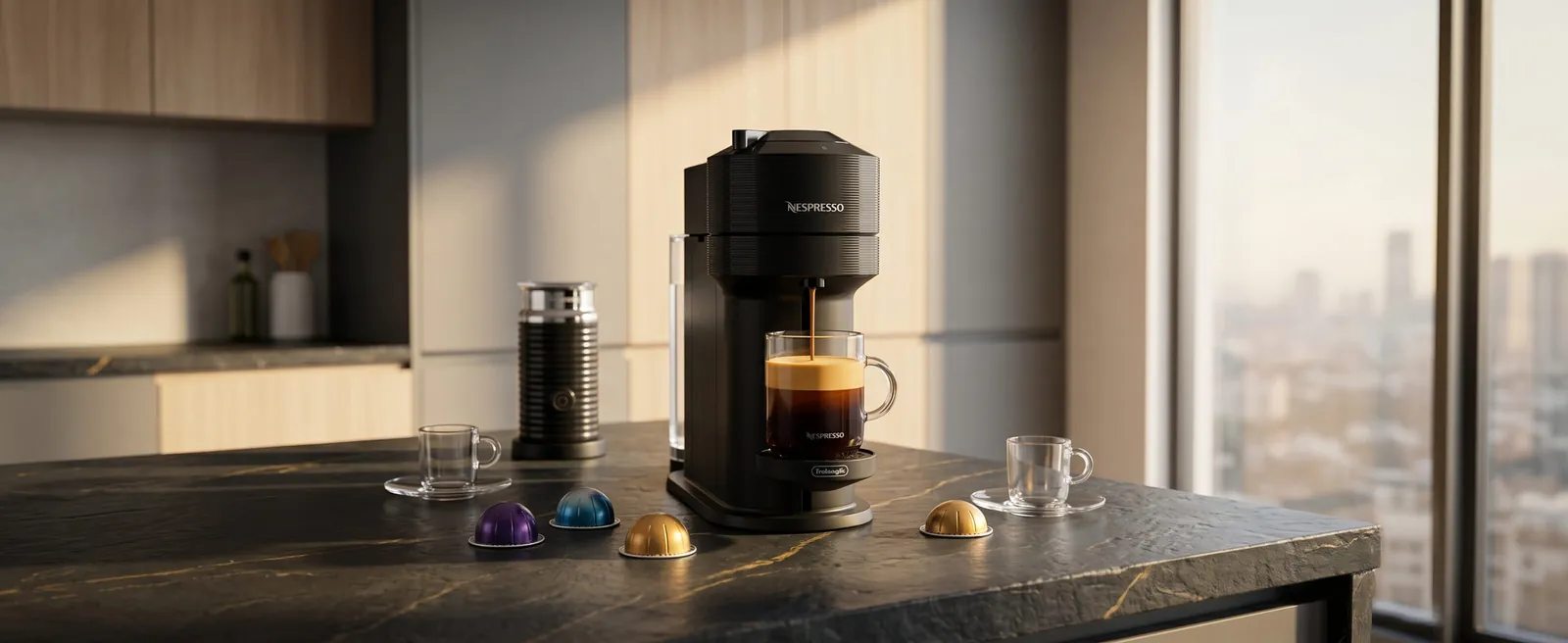
Espresso machine review
Last updated
Nespresso Vertuo Next Review 2026: Costly Pods
Nespresso Vertuo Next review: one-button capsule coffee with strong crema, but what does daily use really cost? 90+ capsules tested. See who should buy it.
- Our rating 4.2/5
- By Michael Anderson
- 22 min read
- Independently tested: 90+ capsules over 30 days
Affiliate disclosure: this page contains Amazon affiliate links. We may earn a commission if you buy through them, at no extra cost to you, and it never affects our rankings. Read our full affiliate disclosure
Nespresso Vertuo Next at a GlanceRecommended
The best capsule machine we've tested; the ongoing capsule cost is the one real catch for daily drinkers.
Pod / Capsule Machine
Affiliate link: we may earn a commission at no extra cost to you. It never affects our rating.
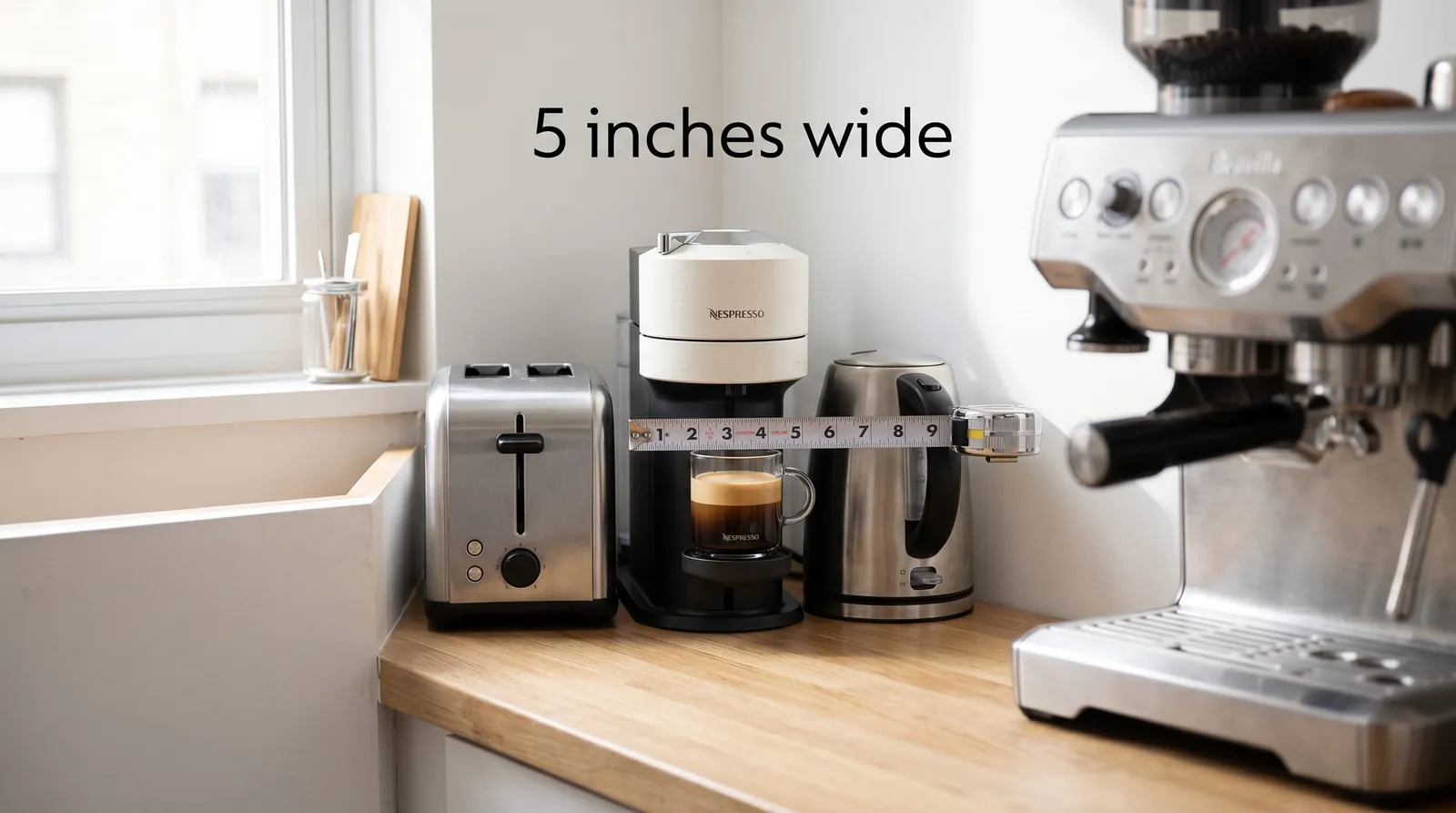
- 5-inch
- Footprint
- 30-second
- Heat-up
In the shot log· 90+ capsules · 30 days
Why it stands out
- One button, zero manual settings
- Crema beats pump-based capsule machines
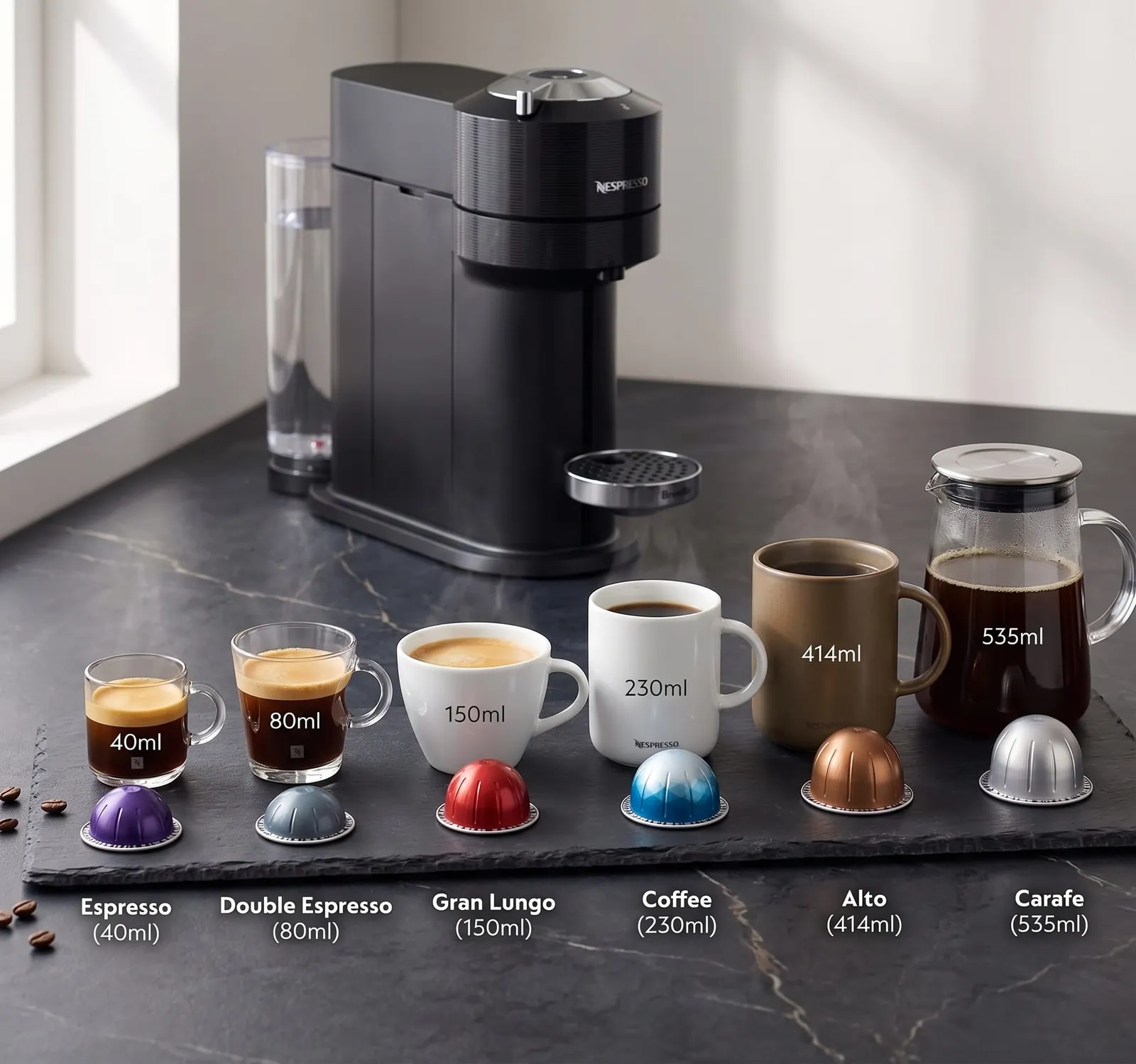
- Six cup sizes from one machine
Watch out for
- Capsules cost $1.10-$1.40 each, $800+/year at two daily
- Closed Vertuo ecosystem; Alto and Carafe taste thin
✓ Best for
Convenience-first coffee drinkers who value speed above all else
✕ Skip if
Daily drinkers watching costs
We were skeptical going in, since pod machines usually feel like a compromise, but after 30 days and 90+ capsules the view is more nuanced. Centrifusion brewing produces crema that beats every pump-based pod machine in this price range.
The short answer: in this Nespresso Vertuo Next review, it comes out as the best capsule machine in our testing, as long as you drink 1-3 cups a week or value convenience over cost.
- What held up: One button, zero manual settings and consistent extraction through automatic capsule recognition.
- Where it fell short: Capsules run $1.10-$1.40 each, which adds up to $800+/year at two cups a day.
- Ecosystem lock-in: The third-party capsule ecosystem is limited compared to OriginalLine.
- Size caveat: The Alto and Carafe sizes come out thin, closer to drip coffee.
Who Is This Right For?
Check where you fit before you look at the trade-offs below.
A strong match
It suits you if you are
- Convenience-first coffee drinkers who value speed above all else
- Office or guest kitchens where anyone needs to operate it correctly on the first try
- Small-space households — 5-inch footprint is the slimmest capable option
- Espresso beginners upgrading from a drip coffee maker with no desire for a learning curve
- Occasional drinkers (1-3 cups per week) for whom capsule costs don't accumulate significantly
Consider something else
Look elsewhere if you are
- Daily drinkers watching costs — two drinks per day costs $66-$84/month in capsules
- Coffee enthusiasts who want to adjust grind, dose, or temperature
- Large-format coffee drinkers — Alto and Carafe sizes produce mediocre results
- Buyers who want a wide third-party capsule selection
- Skill level
- None required — one-button operation, zero manual input
- Drink style
- Espresso-style drinks from 40ml to 535ml; requires separate frother for lattes and cappuccinos
- Upgrade path
- Users who discover they want true espresso control typically upgrade to the Breville Bambino Plus or Gaggia Classic Pro within 1-2 years
Pros & Cons
What earns the rating, and what you give up to get it.
7 reasons it works
Pros
- Easiest coffee machine to use — one button, zero manual settings required
- Automatic capsule recognition delivers consistent extraction every time
- Impressive crema production for a capsule machine, noticeably better than pump-based alternatives
- Six cup sizes from one machine — real versatility for different drink occasions
- 5-inch footprint fits spaces where other machines won't
- 30-second heat-up fast enough for daily morning use
- Bluetooth firmware updates future-proof the machine
5 trade-offs to weigh
Cons
- Capsule cost of $1.10-$1.40 each makes daily use expensive ($800+/year for two-cup-per-day drinkers)
- Limited third-party capsule ecosystem compared to OriginalLine
- Alto and Carafe sizes produce thin, drip-coffee quality results
- Build quality slightly downgraded from Vertuo Plus — lid mechanism less solid
- Water tank requires full removal to refill
Real-World Testing
How it performed in day-to-day use, in the order you will meet it.
Setup & Learning Curve
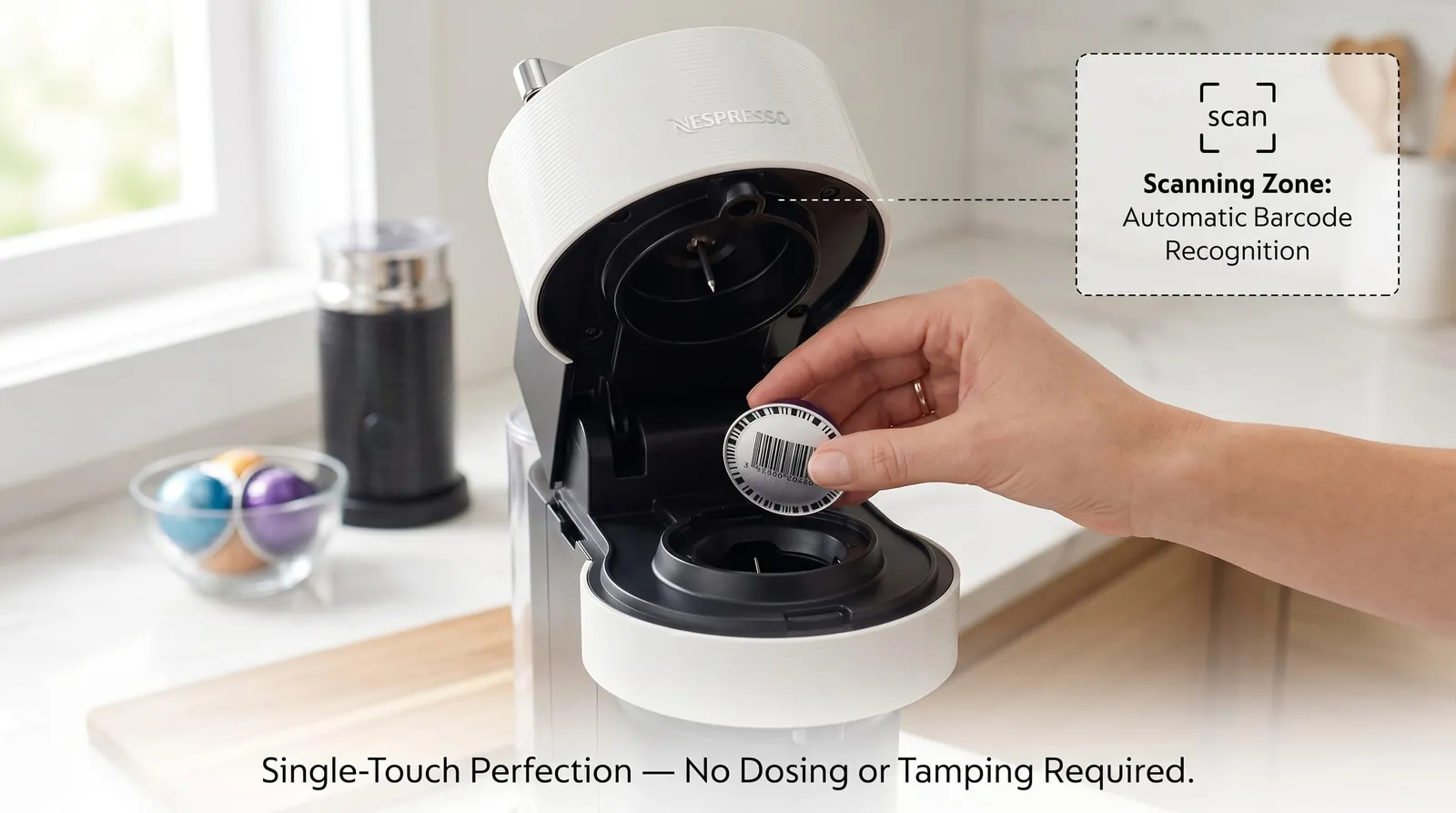
There's effectively no learning curve. Fill the tank, drop in a capsule, close the lid, press the button — the barcode on each capsule tells the machine exactly how fast to spin, how much water to inject, and for how long, so it adjusts automatically every time. The Vertuo Next is the slimmest machine in the Vertuo lineup at just 5 inches across, and the 37-oz tank sits at the back to keep the brewing footprint minimal.
Fit and finish are functional rather than premium: the recycled-plastic body and matte finish attract fingerprints, and the lid mechanism feels slightly less solid than the older Vertuo Plus, but nothing rattled or felt flimsy across a month of daily use. The used-capsule container holds 10 pods before it needs emptying, and the drip tray comes out one-handed.
Brew Quality & Consistency
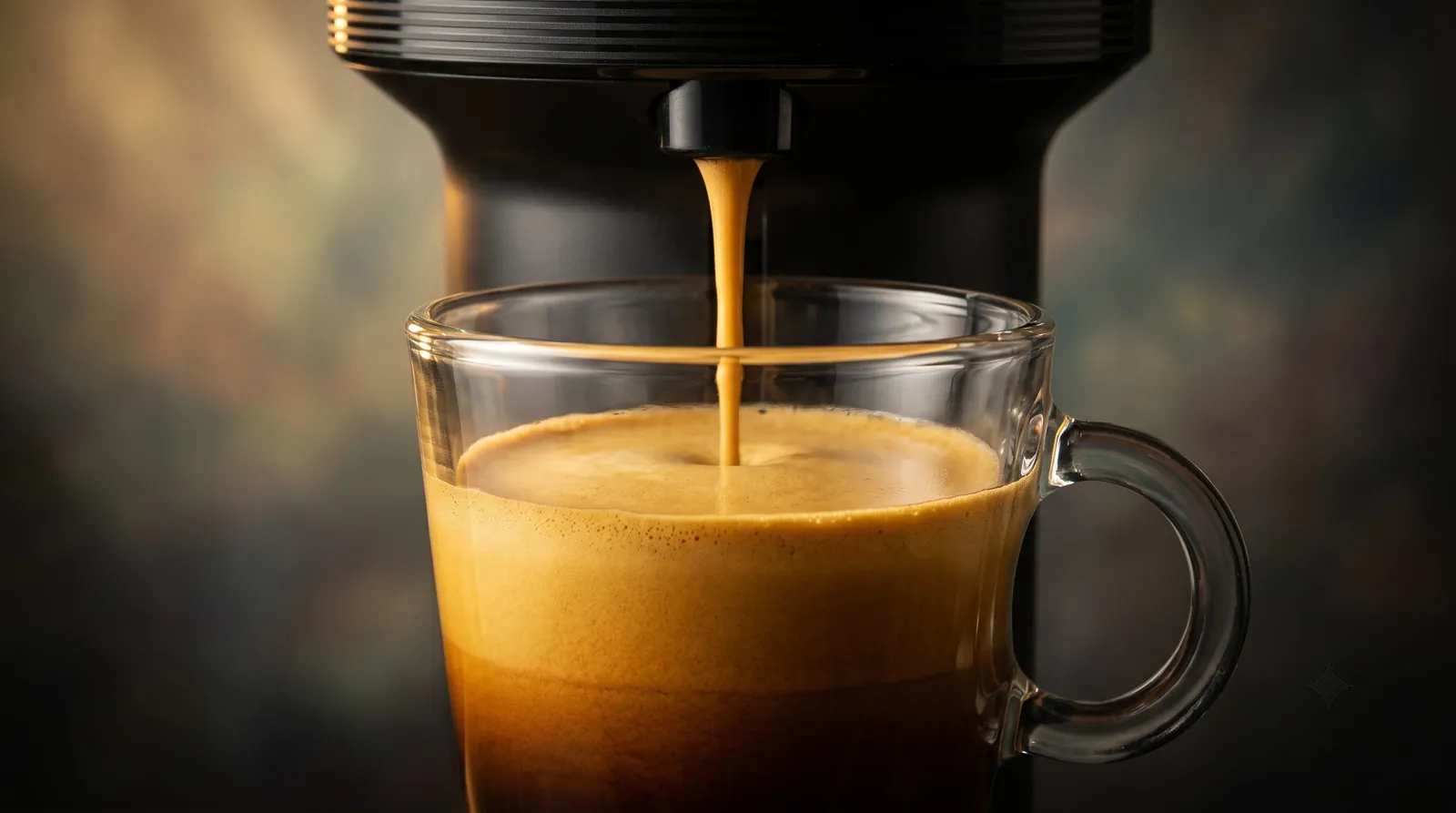
Crema is the standout. Espresso and Double Espresso capsules produced consistently thick, persistent foam — noticeably heavier than anything we've seen from pump-driven capsule machines like the Essenza Mini or a Keurig — and extraction repeated closely shot after shot on the same capsule.
- Larger formats: performance drops off here. Gran Lungo and Coffee sizes are solid, closer to an Americano, but Alto and Carafe develop a thin, slightly hollow character as the water volume increases.
- Top picks: Altissio and Diavolitto for the espresso format; Scuro was the best Double Espresso for Americano-style drinks.
If you mostly want big-format coffee, a proper drip coffee maker like the Moccamaster will serve you better than this machine's largest capsule sizes.
Pod Variety & Cost
This is the real trade-off. Official Vertuo capsules run $1.10-$1.40 each, and the third-party selection (Starbucks, Peet's, a few store brands) is thin compared to Nespresso's OriginalLine. Two cups a day puts you at roughly $66-$84 a month — within 18 months you'll have spent more on pods than a Gaggia Classic Pro plus grinder would have cost outright, and that setup produces cheaper, more complex coffee per cup. The math only favors the Vertuo Next for occasional drinkers, office kitchens, or anyone who values zero-effort convenience enough to pay for it.
Build Quality & Daily Workflow
Button-to-cup takes well under a minute for espresso sizes and closer to a minute and a half for the largest formats.
- App: the Bluetooth app handles firmware updates and reorder shortcuts but isn't required for daily use — we opened it maybe twice after the first week.
- Maintenance: low, with a daily rinse, a monthly cleaning-capsule cycle, and a quarterly descale the machine prompts you for.
- Water tank: the main daily friction point, since it has to come out fully to refill rather than top-filling in place.
- Milk: the machine has no built-in frother; we paired it with a separate Nespresso Aeroccino for milk drinks throughout testing.
Is the Vertuo Next a good choice if you drink coffee every day?
It depends on how you count cost. The machine itself is inexpensive, which is part of the appeal. The running cost is the capsule, and that dominates over a few years. A daily drinker is effectively buying a subscription to one capsule system.
The fair comparison is not against a café but against the alternatives you would realistically own. A small espresso machine and grinder cost more up front and demand time and skill, but the per-cup cost of beans is far lower. If you value the time saved and the consistency, the premium per cup can be reasonable. If you are budget-driven, the numbers lean the other way.
A practical rule: if you would otherwise buy a coffee out several times a week, the capsule cost looks fine. If you would otherwise brew a pot of drip coffee at home, it looks expensive.
Vertuo Next vs VertuoPlus, Vertuo and Original line machines
Within the Vertuo family, the main decisions are build and size rather than coffee quality, because the brewing method is the same. Read the VertuoPlus review and the Vertuo review for the differences in finish and lid design.
| Machine | Type | Heating system | Built-in grinder | Current price |
|---|---|---|---|---|
| Vertuo Next | Pod / capsule | not listed | No (capsules) | Check current price |
| VertuoPlus | Pod / capsule | not listed | No (capsules) | Check current price |
| Vertuo | Pod / capsule | not listed | No (capsules) | Check current price |
| Bambino Plus | Compact semi-automatic | ThermoJet | No (separate grinder) | Check current price |
The larger choice is Vertuo versus the Original line. Vertuo capsules are spun during brewing and produce a foam-topped cup in larger sizes; Original machines use pump pressure and make smaller, more traditional espresso. They use different capsules, so you cannot switch later without changing what you buy. Our Vertuo vs Original guide explains how to decide.
If you want real control over grind, dose and milk texture, neither capsule line gets you there. The Breville Bambino Plus is the usual next step for buyers who outgrow the convenience.
What the Vertuo Next's features mean in practice
- Barcode capsule reading: The machine adjusts the brew to each capsule. This is why there are no settings: it removes error for beginners and offices. The trade-off is that you cannot tune a recipe at all.
- Centrifusion: Spinning the capsule is what produces the foam layer. It helps larger drinks feel more like a finished cup, but it is a different texture from pump-pressure espresso, and people who like traditional espresso may not.
- Compact body: The narrow footprint helps small kitchens and desks. The matching trade-off is a smaller water tank, which you will refill more often if several people use it.
- No steam wand: Milk drinks need a separate frother. That is an added cost and an added step, and it is why latte drinkers should budget for one.
- Bluetooth updates: Useful for keeping the machine current, but you do not need the app for everyday brewing.
Cleaning, descaling and capsule recycling
Maintenance is light, but skipping it is what shortens the life of capsule machines.
- Empty the used-capsule container regularly. An overfull container is the most common cause of piercing and ejection problems.
- Rinse the water tank and refill with fresh water. Standing water affects taste and encourages scale.
- Descale on the manufacturer's schedule. Our descaling guide explains the process, and the machine prompts you when it is due.
- Wipe the capsule area. Coffee residue near the piercing mechanism builds up over time.
For recycling, Nespresso runs a capsule take-back program, but availability and drop-off options vary by location, so check the current program details for your area before relying on it.
Who should skip the Nespresso Vertuo Next?
Skip it if you recognize yourself here.
- You want to learn espresso. There is nothing to dial in, so there is nothing to learn. Start with our home espresso guide and a manual machine instead.
- You drink several cups a day. Capsule cost adds up quickly and can exceed the price of a better machine within a couple of years.
- You buy specialty beans. Capsules limit you to what the brand and a few partners sell.
- You mostly drink milk drinks. The extra frother and the lack of a steam wand make this less convenient than it first appears.
If you are comparing machines more broadly, see our best espresso machines under $500 guide.
How it works and why it matters
Barcode recognition and spinning extraction: why the cup differs from espresso
Vertuo capsules carry a barcode on the rim. The machine reads it, then spins the capsule at high speed while water is injected, a method Nespresso calls Centrifusion. Water is forced through the grounds by rotation rather than a pump at about 9 bar.
The spinning builds a thick foam layer and a lighter-bodied cup, so it tastes closer to a strong filter coffee with crema than to true espresso. Pod size sets the cup volume, which is why one button covers several sizes.
The benefit is repeatability. The cost is flexibility: no grind, dose or temperature control. See the Vertuo vs Original guide.
Common problems and modern fixes
Capsule cost, descaling alerts and recycling: what owners deal with and how to manage it
- Cost per cup: compare per-cup prices before buying a sleeve of pods. A grinder-and-machine setup becomes cheaper over time; see the types guide.
- Weak large cups: larger sizes taste thinner. Use the smaller sizes, or add hot water to a short pod.
- Scale and flow problems: run descaling when the light signals, using the descaling guide.
- Capsule waste: aluminum capsules can be recycled through the brand's program or local schemes. Check what applies where you live.
- Taste drift: wipe the capsule area and empty the used-capsule container often. The cleaning guide covers routine wipe-downs.
Before you decide
Why Capsule Machines Are Different — And When They're the Right Choice
Most espresso machines require three things: fresh beans, a burr grinder, and technique. Capsule machines like the Vertuo Next eliminate all three at the cost of flexibility and per-cup economics. The Vertuo Next is unique within the capsule category because centrifusion technology produces measurably better crema than traditional pump-driven pod machines.
The key question before buying isn't 'is this a good machine?' (it is) but 'is a capsule machine right for my situation?' If you drink two or more cups daily and plan to own this for 3+ years, the math points toward a semi-automatic machine within 18 months.
How It Measures Up on Key Espresso Criteria
- Temperature stability
- There is no user temperature control: brewing parameters are set automatically from each capsule's barcode.
- Pressure and pre-infusion
- Vertuo machines brew by spinning the capsule (Centrifusion) rather than pump pressure, so a bar rating doesn't apply. No user pre-infusion.
- Shot-to-shot consistency
- Barcode-set brewing makes cups very repeatable as long as you use genuine Vertuo capsules; the trade-off is no control at all.
Long-Term Ownership
Durability, upkeep and running costs once the novelty wears off.
- Durability
The recycled-plastic body is built to the standard 2-year warranty period, and the centrifusion motor typically lasts 5-7 years with regular descaling.
More detail
The lid mechanism shows minor wear under heavy daily use but stays functional.
- Reliability
The main failure point is the capsule piercing mechanism clogging if the used-capsule container overflows.
More detail
Skipping descaling is the leading cause of premature failure — mineral buildup stresses internal components over time.
- Parts
Nespresso covers free repairs under warranty through its support line; the flat post-warranty repair fee is roughly $69.
More detail
Parts availability for Vertuo machines has been consistent since the line launched in 2014.
- Upkeep cost
A descaling kit runs $10-12 and lasts a quarter, putting total annual maintenance around $40-48 — in the same range as the upkeep on a semi-automatic machine.
- Warranty
2-year limited warranty covering manufacturing defects, not limescale, physical damage, or non-Nespresso capsule damage.
More detail
Customer service response and warranty replacement times have been fast in our experience.
- Resale value
Expect a modest fraction of the purchase price on the secondhand market — the proprietary capsule system narrows the buyer pool to people already in the Nespresso ecosystem.
This machine was purchased independently and was not provided by Nespresso.
Final Verdict
Our rating, who it fits, and what it costs.
Nespresso Vertuo NextRecommended
4.2 / 5 — Is it worth buying?
Centrifusion brewing outperforms pump-based capsule machines on crema, and the one-button operation removes every point of friction between wanting coffee and having it. The catch is entirely economic: capsule costs make this an expensive habit for daily drinkers, and the Vertuo ecosystem is more closed than ideal.
✓ Best for
- Convenience-first households wanting one-button coffee with zero learning curve
- Offices and guest kitchens where multiple users need foolproof results
✕ Skip if
- Daily drinkers watching costs
- Coffee enthusiasts wanting grind, dose, or temperature control
Score breakdown
Capsules tested
90+
Testing period
30 days
Ready to decide?
Our verdict: 4.2/5, recommended. Independently tested; commissions never change a rating.
Where It Ranks in Our Buying Guides
See how the Nespresso Vertuo Next compares with the other picks in each tested roundup.
Tools That Pair With This Review
Put it into practice with a free calculator built for what you just read.
- Espresso Dial-In CalculatorEnter your actual shot results to see whether you're on target — and what to adjust.
- Espresso Ratio CalculatorEnter your dose and shot style (ristretto, normale, lungo) to get your target shot weight.
- Coffee Grind Size CalculatorPick your brew method and get the right grind size, texture, and grinder setting.
Reader questions
Questions or tips? Leave a comment
Ask about your setup or share what worked for you. Comments are checked before they appear.