Espresso machine review
Last updated
Breville Bambino Plus Review 2026: Quick Lattes
Breville Bambino Plus review: can a compact espresso machine with 3-second heat-up and automatic milk texturing suit you? 180+ shots tested, with caveats.
- Our rating 4.7/5
- By Michael Anderson
- 21 min read
- Independently tested: 180+ shots over 45 days
Affiliate disclosure: this page contains Amazon affiliate links. We may earn a commission if you buy through them, at no extra cost to you, and it never affects our rankings. Read our full affiliate disclosure
Breville Bambino Plus at a GlanceHighly recommended
Our pick for small kitchens if you already own a decent grinder; the compact size and hands-off milk are hard to beat.
Compact Semi-Automatic Espresso Machine
Affiliate link: we may earn a commission at no extra cost to you. It never affects our rating.
- 3 seconds
- Heat-up time
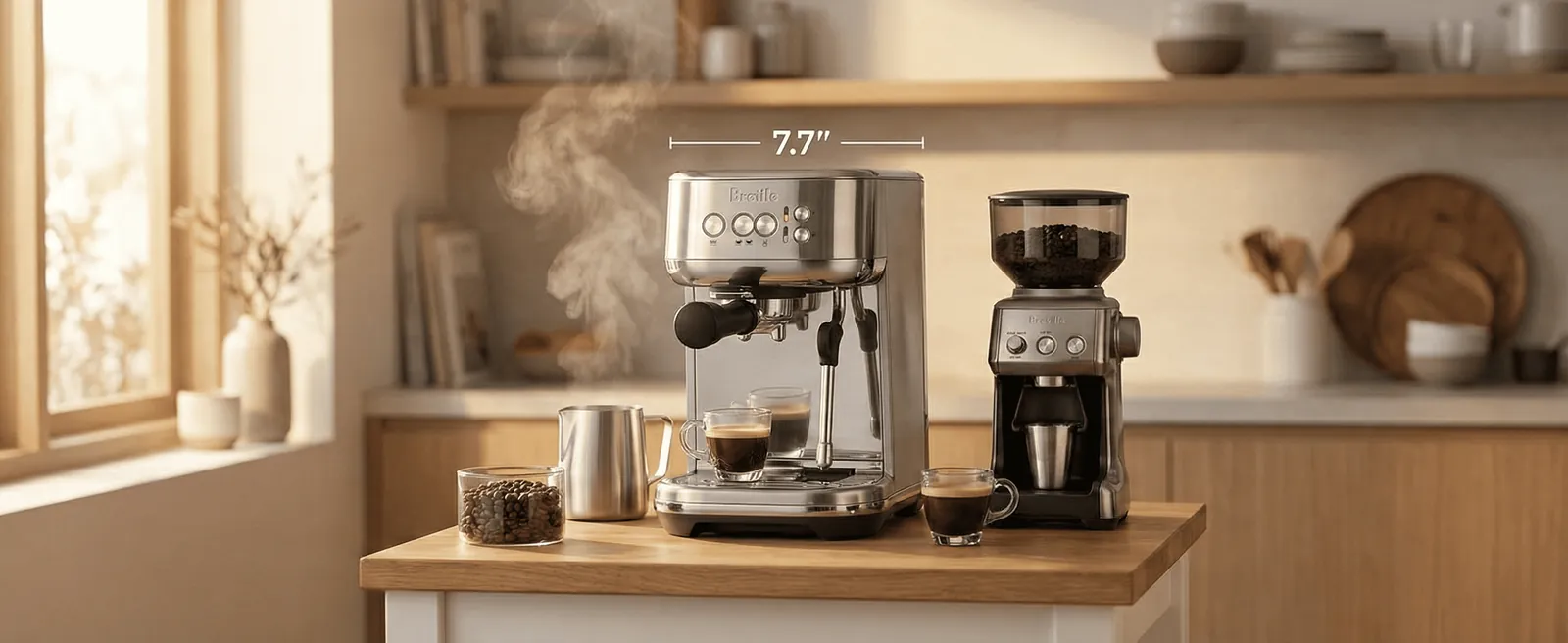
- 7.7"
- Width
- 64oz
- Water tank
In the shot log· 180+ shots · 45 days
Why it stands out
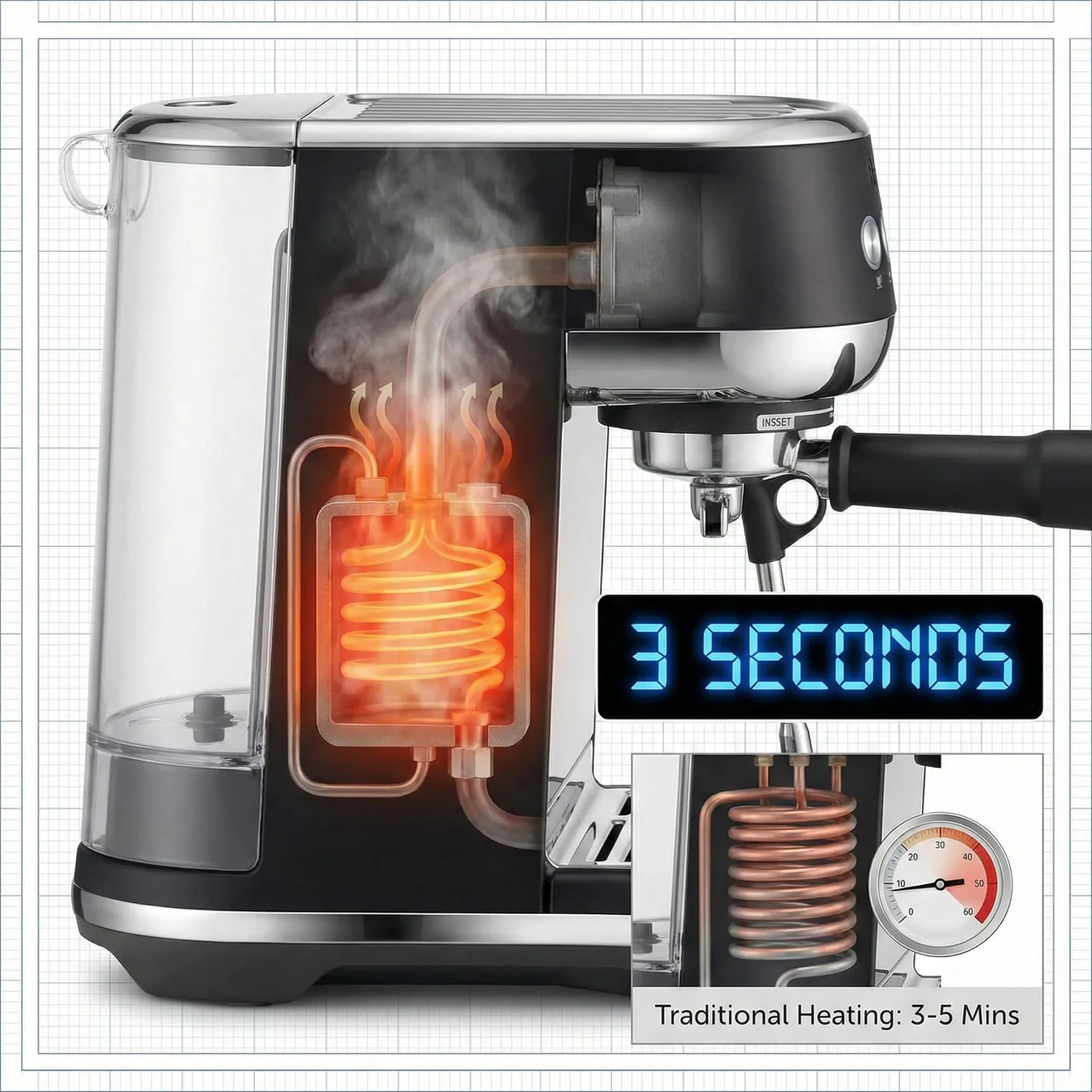
- 3-second ThermoJet heat-up
- Automatic milk texturing, hand-steamed quality
- Consistent brewing temperature across testing
Watch out for
- Needs a separate grinder ($200–$400)
- No simultaneous brewing and steaming
✓ Best for
Small kitchen and apartment dwellers needing a machine with a small footprint
✕ Skip if
Buyers wanting an all-in-one machine with a built-in grinder
We expected the Bambino Plus to bottleneck a good grinder, as compact machines usually do. By week three it was out-pulling a Gaggia Classic Pro on light roasts, which we didn't expect from a sub-$450 machine.
The short answer: yes, for the right buyer: someone short on counter space who wants café-quality lattes without learning to steam milk by hand, and who already owns or will buy a grinder.
- What held up: 3-second ThermoJet heat-up and automatic milk texturing that matched hand-steamed microfoam in blind tastings.
- Where it fell short: One heating system means no simultaneous brewing and steaming, and temperature lags slightly on back-to-back shots.
- What you add: It's not an all-in-one, so budget for a separate grinder.
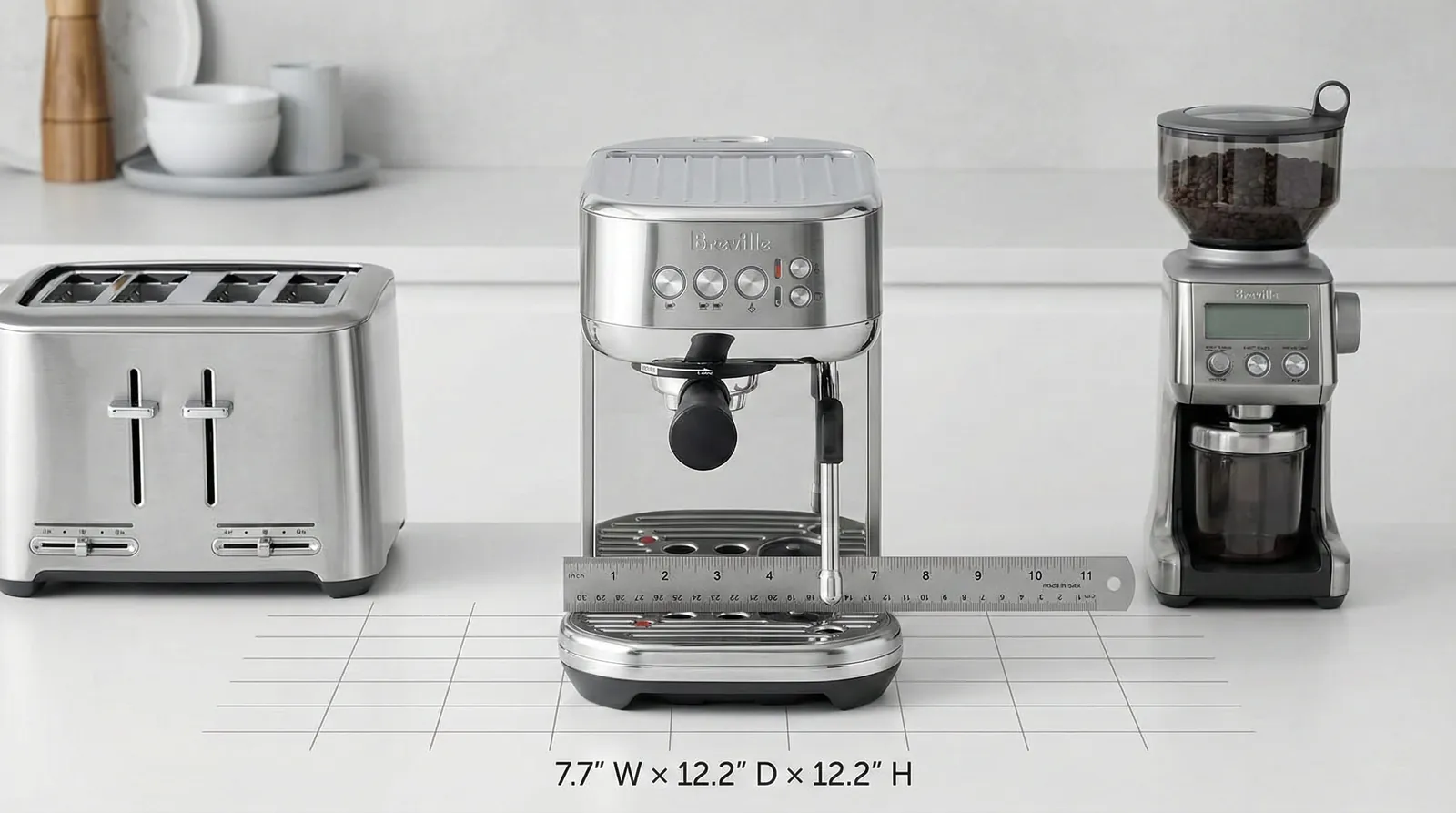
- Who it's for: Small kitchens, thanks to the 7.7-inch footprint.
Browse our espresso machine reviews hub for more options.
Who Is This Right For?
Check where you fit before you look at the trade-offs below.
A strong match
It suits you if you are
- Small kitchen and apartment dwellers needing a machine with a small footprint
- Latte and cappuccino drinkers making 2–4 milk drinks daily
- Beginners wanting café-quality milk texturing without a learning curve
- Anyone who already owns a quality grinder and wants a standalone espresso machine
- Couples sharing a morning routine who don't want to wait on heat-up
Consider something else
Look elsewhere if you are
- Buyers wanting an all-in-one machine with a built-in grinder
- Manual wand purists who want full hands-on steaming control
- High-volume households needing 6+ drinks daily
- Budget shoppers who can't also invest in a separate grinder ($200–$400)
- Espresso-only drinkers who rarely make milk-based drinks
- Skill level
- Beginner to intermediate — needs a separate grinder, minimal espresso experience required
- Drink style
- Best suited to milk-based drinks (lattes, cappuccinos, flat whites) with automated microfoam
- Upgrade path
- Most owners stay satisfied 2–3 years before considering a dual-boiler or prosumer upgrade
Pros & Cons
What earns the rating, and what you give up to get it.
11 reasons it works
Pros
- 3-second ThermoJet heat-up, verified with a thermocouple — no waiting for the machine to warm up
- Automatic milk texturing matches hand-steamed microfoam, with consistent results shot to shot
- Ultra-compact 7.7" width fits the smallest kitchens and apartments
- Consistent brewing temperature throughout testing, rivaling PID dual-boilers costing $1,200+
- Stainless steel construction feels premium despite the compact size
- Manual wand override available for experienced users who want full control
- Fast brew-to-steam switch (10–15 seconds), with slight temperature lag on back-to-back shots
- Three-button interface with essentially zero learning curve
- Exceptional value at $399–$449 for this level of temperature stability
- Low annual maintenance cost and strong resale value
- Comes with both single wall and dual wall filter baskets (1- and 2-cup), a tamper, the Razor dosing tool, and a cleaning tool — no separate purchases needed to get started
7 trade-offs to weigh
Cons
- Requires a separate grinder ($200–$400 for a quality option)
- 64oz water tank needs refilling every 2–3 days for a two-person household
- 54mm portafilter limits some aftermarket accessory compatibility
- Rear-access water tank means pulling the machine forward slightly to refill
- No programmable shot volumes — manual override only
- Single heating system (ThermoJet) means no simultaneous brewing and steaming
- Milk jug's magnetic dock occasionally detaches if bumped
Real-World Testing
How it performed in day-to-day use, in the order you will meet it.
Setup & Learning Curve
Unboxing to first drinkable latte took 12 minutes, with accessories neatly organized and an easy-to-follow manual. Setup came down to three steps:
- Water tank: slide in the 64oz rear-access tank.
- Drip tray: attach it.
- Flush: run three blank shots to flush the system.
The real revelation was milk: insert the jug, press a button, walk away — first attempt was already good microfoam. Next to the effort of learning manual frothing, that felt almost unfair. By day two, shot consistency had stabilized; the only real learning curve left is dialing in your grinder for each new bag of beans, which you'd face with any espresso machine.
Shot Extraction Performance
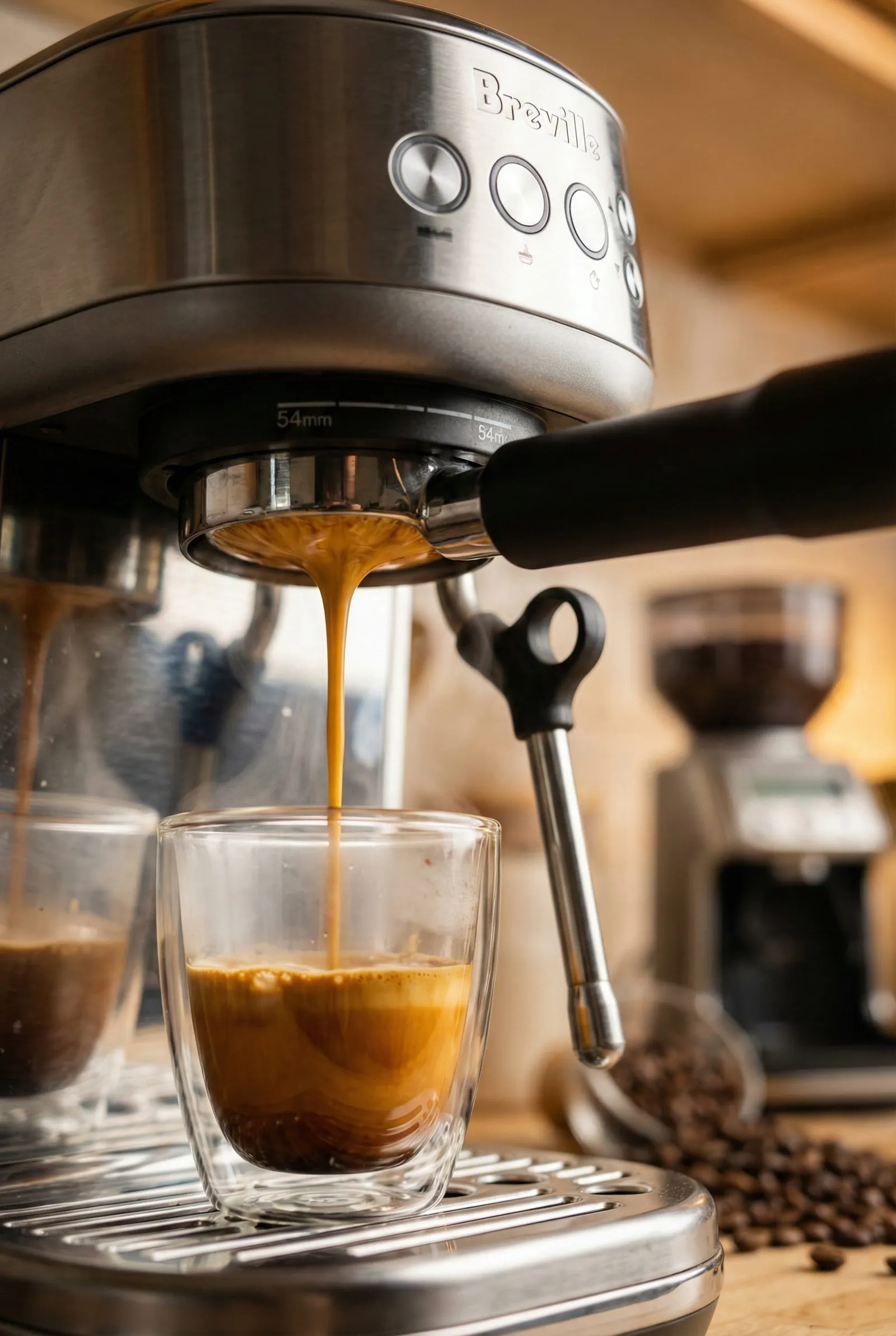
Target ratio was 18g in, 36g out, 25–30 seconds. ThermoJet held 200°F ±1°F at the group head throughout — tighter than several PID dual-boilers costing hundreds more. By roast:
- Medium roasts: balanced, with chocolate and caramel notes.
- Ethiopian light roasts: bright citrus and florals without sourness.
- Dark Italian blends: rich, without the bitterness that usually signals a temperature problem.
Not every shot worked. Roughly 15–20% of test shots failed, mostly in the first week while we were still dialing in grind settings, plus a handful we deliberately sabotaged with stale beans to stress-test the system. By week three, our failure rate had dropped to about 1 in 20, and those were our errors, not the machine's.
The machine's own limitations were real, but minor and predictable:
- Temperature recovery: lag on back-to-back shots.
- Pressure: occasional inconsistency with certain baskets.
With a bottomless portafilter, fresh coffee and a correct grind extracted evenly across the puck every time; channeling only showed up when we deliberately used stale coffee or a bad grind setting — exactly what you'd expect from a properly engineered group head.
Milk Steaming Experience
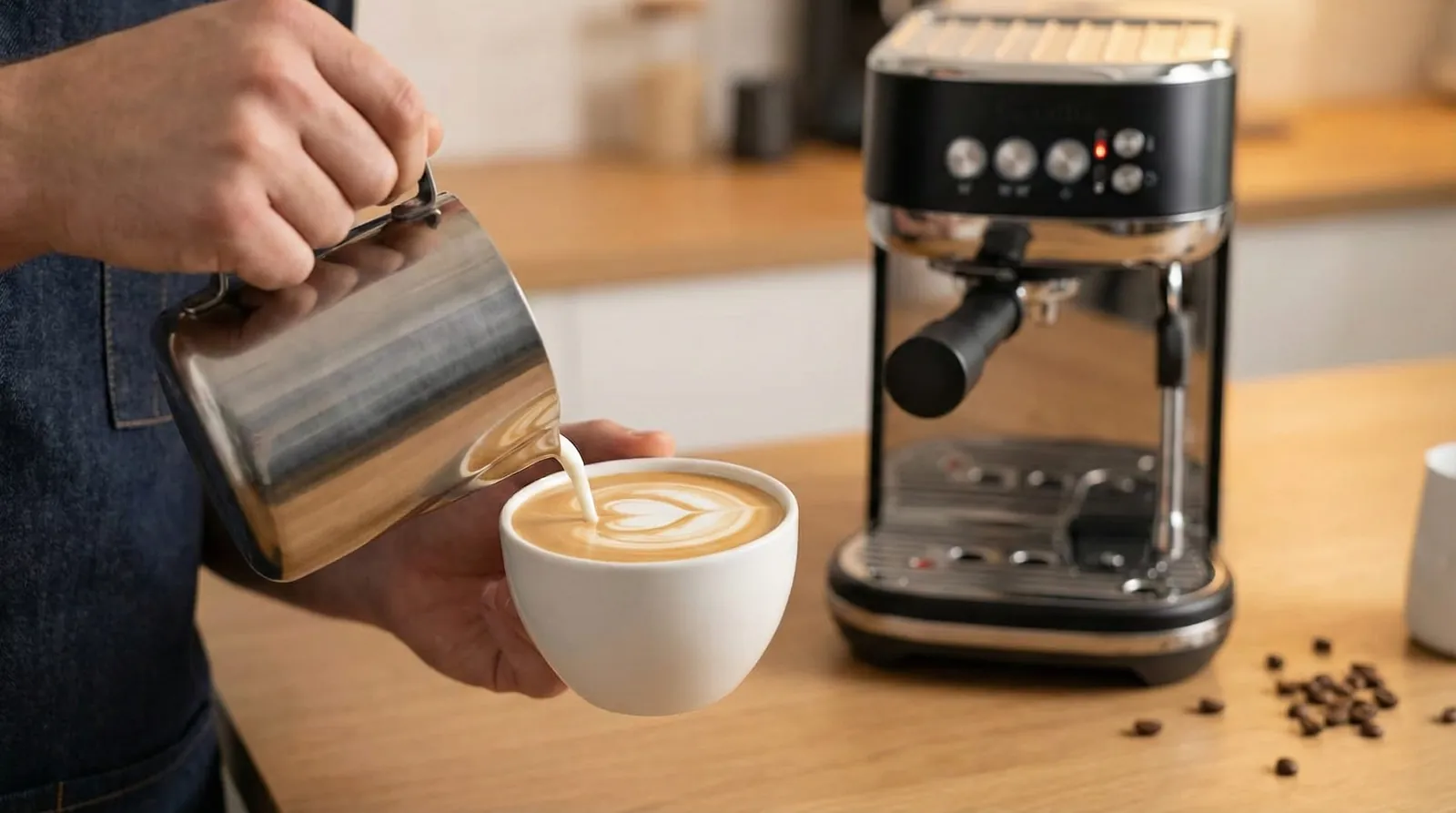
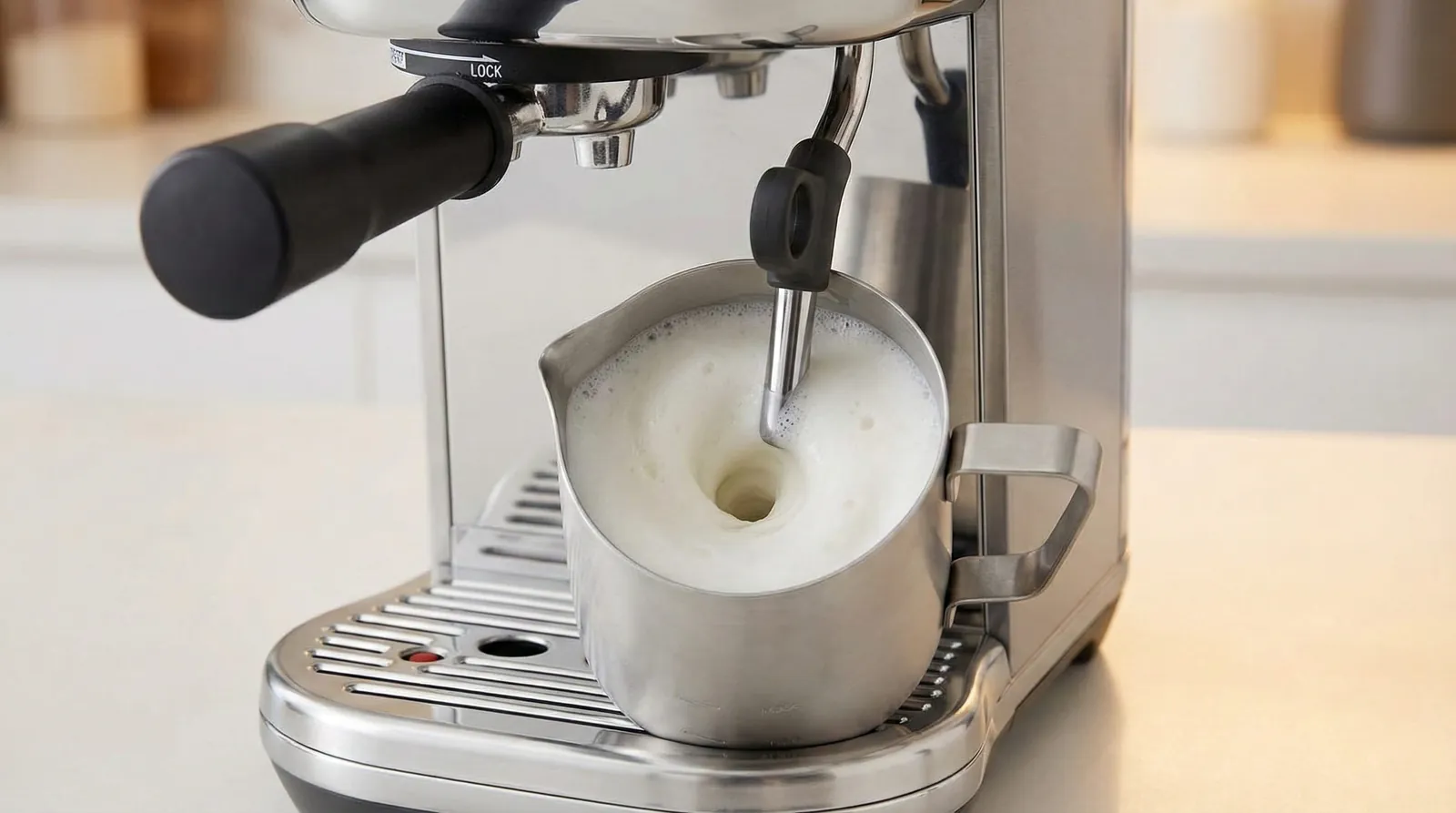
The automatic milk system is this machine's standout feature. Insert the jug, pick cappuccino or latte mode, and 55–75 seconds later you have silky microfoam, stopping automatically at 140–150°F — the range where milk tastes sweetest without scalding. It executes the same technique baristas spend months learning to do by hand: air incorporation during the stretch phase, then circulation to refine the bubble structure.
In blind tests with eight former colleagues, five couldn't tell automatic-textured milk from manual pours, and two preferred the machine's consistency. Latte art came together quickly — hearts and rosettas within 5–6 practice pours, using microfoam that held its texture as well as machines costing three times as much.
Other milks and modes:
- Oat milk: Oatly Barista performed almost as well as dairy, about 10 seconds slower.
- Almond and soy: worked, but with less stable foam — a limitation of those milks, not the machine.
- Manual override: disables the automation entirely, turning the wand into a traditional steam wand with power comparable to a Gaggia Classic Pro, for anyone who wants full control.
If the automatic frother ever stops texturing milk properly, our steam wand not frothing guide covers the same causes that apply to the manual mode.
Pairing Grinders: What Actually Matters
Grinder choice matters more than most people expect. We paired the Bambino Plus with grinders spanning $200 to $800 — from a Baratza Encore with an upgraded burr up to a Eureka Mignon Specialita — and compatibility held up well throughout. An 18g dose at a mid setting produced balanced 28-second shots on medium roasts, and the Eureka's finest settings pulled bright, complex Ethiopian light roasts without issue.
In a blind comparison with SCA-certified tasters against a $1,200 Lelit MaraX — same beans, same grinder, same dose — most couldn't reliably tell which shot came from which machine; the taster who guessed correctly judged the quality gap to be small, for roughly triple the price.
The 54mm portafilter's pre-infusion (about 10 seconds at 3–4 bar before ramping to 9 bar) makes dialing in more forgiving, since it gives feedback on your grind setting before a shot completely falls apart.
Cleanup & Maintenance
Upkeep is light:
- Daily (2–3 minutes): knock out the puck, rinse the portafilter, wipe the steam wand (which auto-purges after every use), empty the drip tray.
- Weekly (about 10 minutes): a 5-minute soak for the steam wand tip and milk jug, plus a water-only backflush.
- Every 2–3 months: descale, depending on water hardness — guided step-by-step and done in about 25 minutes.
Annual upkeep runs roughly $25–$35 in descaling solution and occasional gasket replacement — meaningfully less than a super-automatic, since there are fewer components to maintain in the first place.
Bambino Plus vs Gaggia Classic Pro: which suits your routine?
These two machines solve different problems. The Bambino Plus automates the parts that frustrate beginners, namely warm-up and milk texturing, so you spend your effort on grinder choice and dialing in. The Gaggia Classic Pro hands you a commercial-size portafilter and full manual control, which rewards patience but asks for more technique and more time before the first good latte. To check a shot, enter it in our espresso dial-in calculator.
| Machine | Type | Heating system | Built-in grinder | Current price |
|---|---|---|---|---|
| Bambino Plus | Compact semi-automatic | ThermoJet | No (separate grinder) | Check current price |
| Gaggia Classic Pro | Manual semi-automatic | Single boiler (aluminum) | No (separate grinder) | Check current price |
If your mornings are rushed and most of your drinks contain milk, the Bambino Plus fits better. If you enjoy tinkering, want a larger portafilter for aftermarket baskets, and don't mind learning to steam by hand, the Gaggia is the more flexible long-term platform. Neither removes the need for a good grinder, so budget for one either way.
For a full side-by-side on workflow, milk, upgrades and ownership, read our Gaggia Classic Pro vs Breville Bambino Plus comparison.
Before you order the Bambino Plus: a short checklist
A few questions settle most of the decision:
- Do you have a grinder? If not, treat the machine and the grinder as one purchase, and look at our best coffee grinders guide before you commit.
- Do you mostly drink milk drinks? The automatic wand is the main reason to pay more than for a basic compact machine. Black-coffee and espresso-only drinkers use less of what they are paying for.
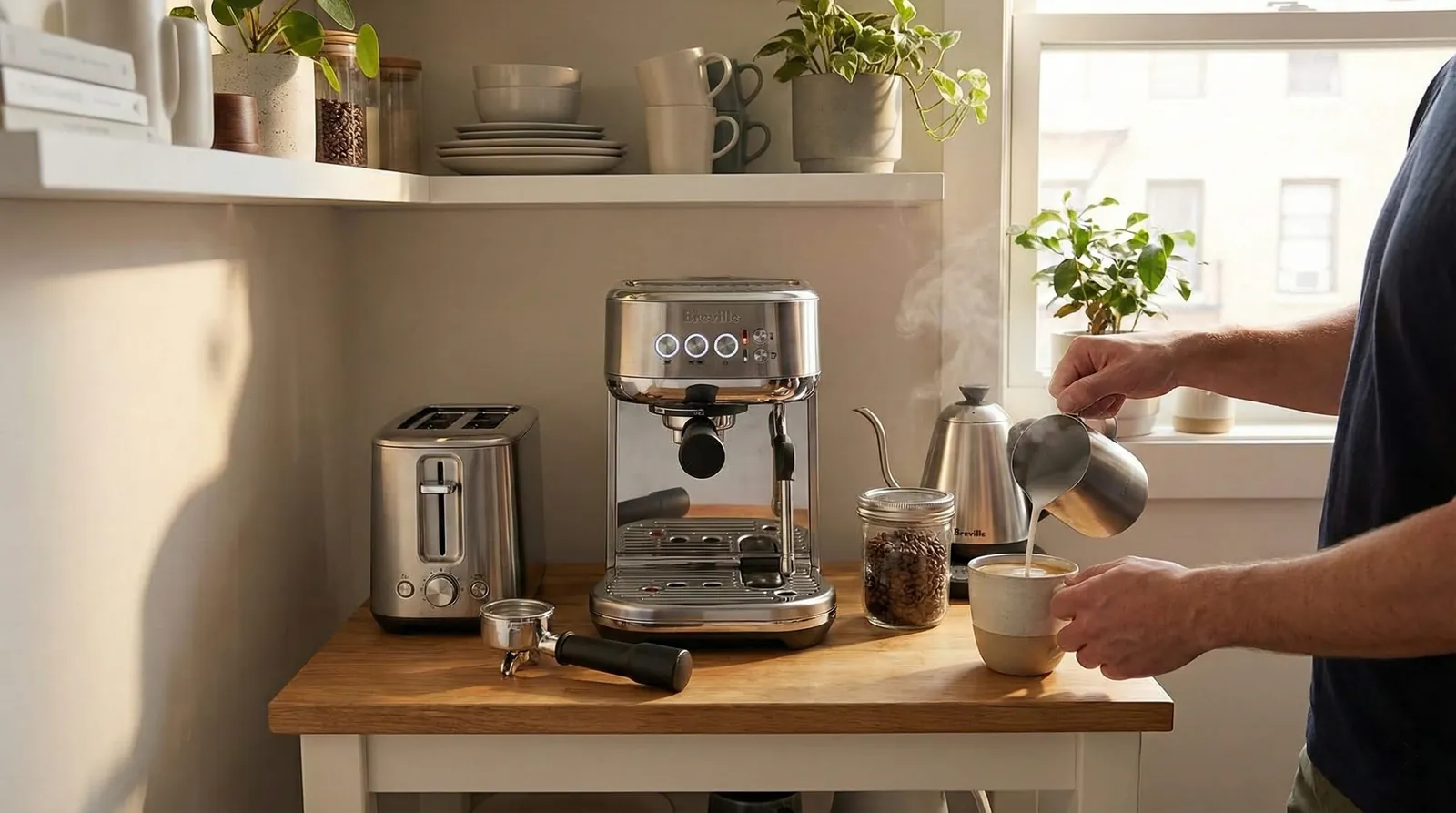
- Where will it sit? The water tank is filled from the rear, so check you can slide the machine forward on your counter.
- Do you want to learn manual steaming? The manual override exists, but if hands-on steaming is the goal, a machine built around a traditional wand may suit you better.
If you answer yes to the first three, the Bambino Plus is a sensible, low-friction choice. For a broader view of the alternatives, see our best espresso machines under $500 guide.
How it works and why it matters
ThermoJet heating and automatic steam explained
- On-demand heating: Instead of holding a tank of hot water, the ThermoJet heats water as it flows, so the machine is ready almost immediately. That saves time and energy, but its small thermal mass means it can lose a little stability when you pull several shots in a row.
- Pump and pre-infusion: A low-pressure soak wets the puck before full pressure arrives, which helps water flow through more evenly. See our channeling guide for why this helps.
- The automatic steam wand: Sensors and preset temperatures control the steam so milk reaches the right heat and texture without you watching it. Beginners get repeatable microfoam, though experienced users may prefer to steam by hand.
- 54mm portafilter: The smaller size is part of what keeps the machine compact, but it limits aftermarket baskets.
- What it means for you: A quick, simple route to café-style lattes, as long as you add a decent grinder.
Common problems and modern fixes
Common issues and modern fixes
- Sour or fast shots: Usually the grind is too coarse for the machine. Adjust finer and follow the dial-in guide.
- Channeling or uneven pucks: Distribute the grounds evenly with a simple needle tool; read what is WDT and how to tamp espresso.
- Wet puck: See why is my espresso puck wet for causes.
- Scale: Use filtered water and descale regularly with the descaling guide.
- Weak steam or milk not frothing: Purge the wand, clean the tip, and start with cold milk; see steam wand not frothing milk.
- Grinder pairing: A burr grinder with fine adjustment makes the biggest difference; our burr grinder guide explains what to look for.
- Water tank refills: Keep a jug nearby and refill before the tank runs low.
- Moving off the dual-wall basket: Once you own a good grinder, the single-wall basket gives more control over taste; our pressurized vs non-pressurized baskets guide explains when to switch.
Before you decide
What Actually Matters in a Small Footprint Machine
Machines this size usually sacrifice something for their small footprint — weak heating, unstable temperature, underpowered steam, or plastic construction. The Bambino Plus gets the fundamentals right instead: ThermoJet delivers stable brewing temperature, steam power matches full-size machines despite the 7.7-pound body, and the stainless-steel build with a solid 54mm portafilter feels nothing like an entry-level machine.
The trade-offs are real, though:
- No built-in grinder: a $200–$400 extra investment.
- Smaller water tank: 64oz, less than most full-size machines.
- Smaller portafilter: 54mm rather than the commercial 58mm standard.
For anyone already running a quality grinder and making 1–4 drinks a day, none of that matters much.
Weighing it against an all-in-one? Our Bambino Plus vs Barista Express comparison lays out the total setup cost, milk workflow and upgrade path side by side. Still choosing the grinder? Our best espresso grinders under $300 pairs each budget grinder with the Bambino Plus.
How It Measures Up on Key Espresso Criteria
- Temperature stability
- ThermoJet heater with PID temperature control. Brew temperature is fixed, but PID is designed to hold it steady from shot to shot.
- Pressure and pre-infusion
- 15-bar pump rating (a maximum, not brew pressure) with automatic low-pressure pre-infusion that wets the puck before full pressure. No pressure gauge.
- Shot-to-shot consistency
- Ships with both pressurized and non-pressurized 54mm baskets. With non-pressurized baskets, consistency depends mostly on your separate grinder and tamp; PID removes temperature as a variable.
Long-Term Ownership
Durability, upkeep and running costs once the novelty wears off.
- Durability
Stainless-steel body, 54mm portafilter, and a ThermoJet heating system built for fast heat-up and stable brewing temperature.
More detail
Expect 6–9 years with proper descaling, with fewer moving parts to fail than an all-in-one grinder machine.
- Reliability
The most common wear item is the group head gasket, typically needing replacement every 18–24 months (an $8 part, 15-minute DIY job).
More detail
Pump vibration can increase slightly after 3–4 years — normal for a vibratory pump. Reported ThermoJet element failures are uncommon within the warranty period.
- Parts
Strong.
More detail
Breville stocks parts — gaskets, shower screens, baskets, steam wands, ThermoJet elements — for 7+ years post-production, available directly and through specialty retailers, usually shipping within 2–4 business days.
- Upkeep cost
About $25–$35 a year for descaling solution, the included cleaning tool's replacement discs, and occasional gaskets; roughly $125–$200 over five years including a possible service call — well below what a super-automatic typically costs to maintain.
- Warranty
2-year limited warranty covering manufacturing defects and the ThermoJet system, excluding normal wear items like gaskets and seals.
More detail
Extended coverage runs an extra $60–$100 for a third year; Breville's support has a reputation for fast turnaround.
- Resale value
Holds value well — helped by steady demand for its compact size and automatic frothing.
We purchased this machine independently and received no compensation from Breville.
Final Verdict
Our rating, who it fits, and what it costs.
Breville Bambino PlusHighly recommended
4.7 / 5 — Is it worth buying?
What sets the Bambino Plus apart is fundamentals, not feature count: 3-second heat-up, temperature stability that rivals dual-boiler machines costing $1,200+, and automatic milk texturing that held up in blind taste tests against hand-steamed milk.
✓ Best for
- Small kitchen and apartment espresso enthusiasts
- Latte and cappuccino lovers prioritizing milk quality
✕ Skip if
- All-in-one seekers without grinder
- Budget shoppers under $500 total investment
Score breakdown
Shots tested
180+
Testing period
45 days
Ready to decide?
Our verdict: 4.7/5, highly recommended. Independently tested; commissions never change a rating.
Where It Ranks in Our Buying Guides
See how the Breville Bambino Plus compares with the other picks in each tested roundup.
Tools That Pair With This Review
Put it into practice with a free calculator built for what you just read.
- Espresso Dial-In CalculatorEnter your actual shot results to see whether you're on target — and what to adjust.
- Espresso Ratio CalculatorEnter your dose and shot style (ristretto, normale, lungo) to get your target shot weight.
- Coffee Grind Size CalculatorPick your brew method and get the right grind size, texture, and grinder setting.
Reader questions
Questions or tips? Leave a comment
Ask about your setup or share what worked for you. Comments are checked before they appear.