Best Programmable Coffee Makers 2026
5 programmable drip coffee makers compared on delay-brew reliability, brew temperature, and carafe heat retention. Find all our individual write-ups in the coffee maker reviews hub.
Affiliate Disclosure: This page contains affiliate links. We may earn a commission when you make a purchase through our links, at no additional cost to you. Learn more
🏆 Expert's Top Picks 2026
Set-and-forget picks for every budget and priority — from a reliable daily driver to a thermal-carafe upgrade.

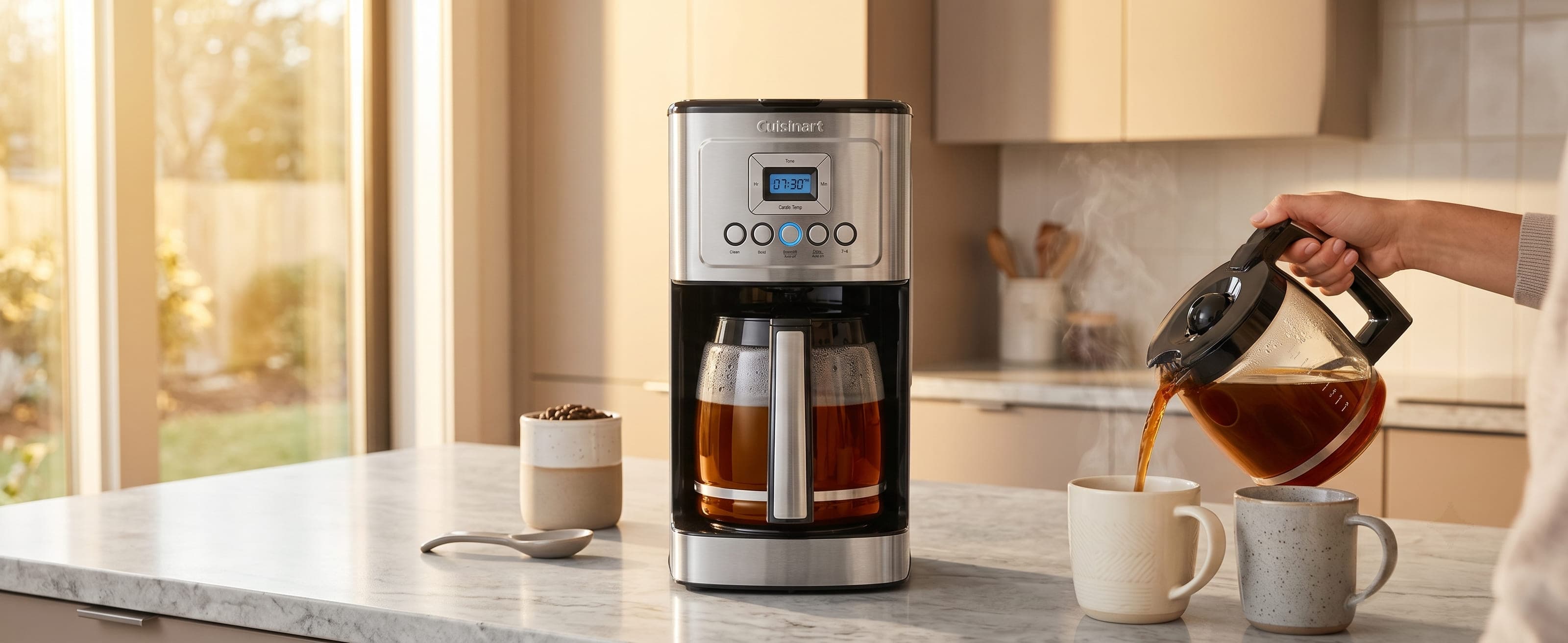
Cuisinart 14-Cup Programmable
Price range: $80–$150 · Carafe: Glass · Rating: 4.4/5. 24-hour delay brew with zero missed starts across 21 days of testing, and a Bold mode that measurably boosts extraction.

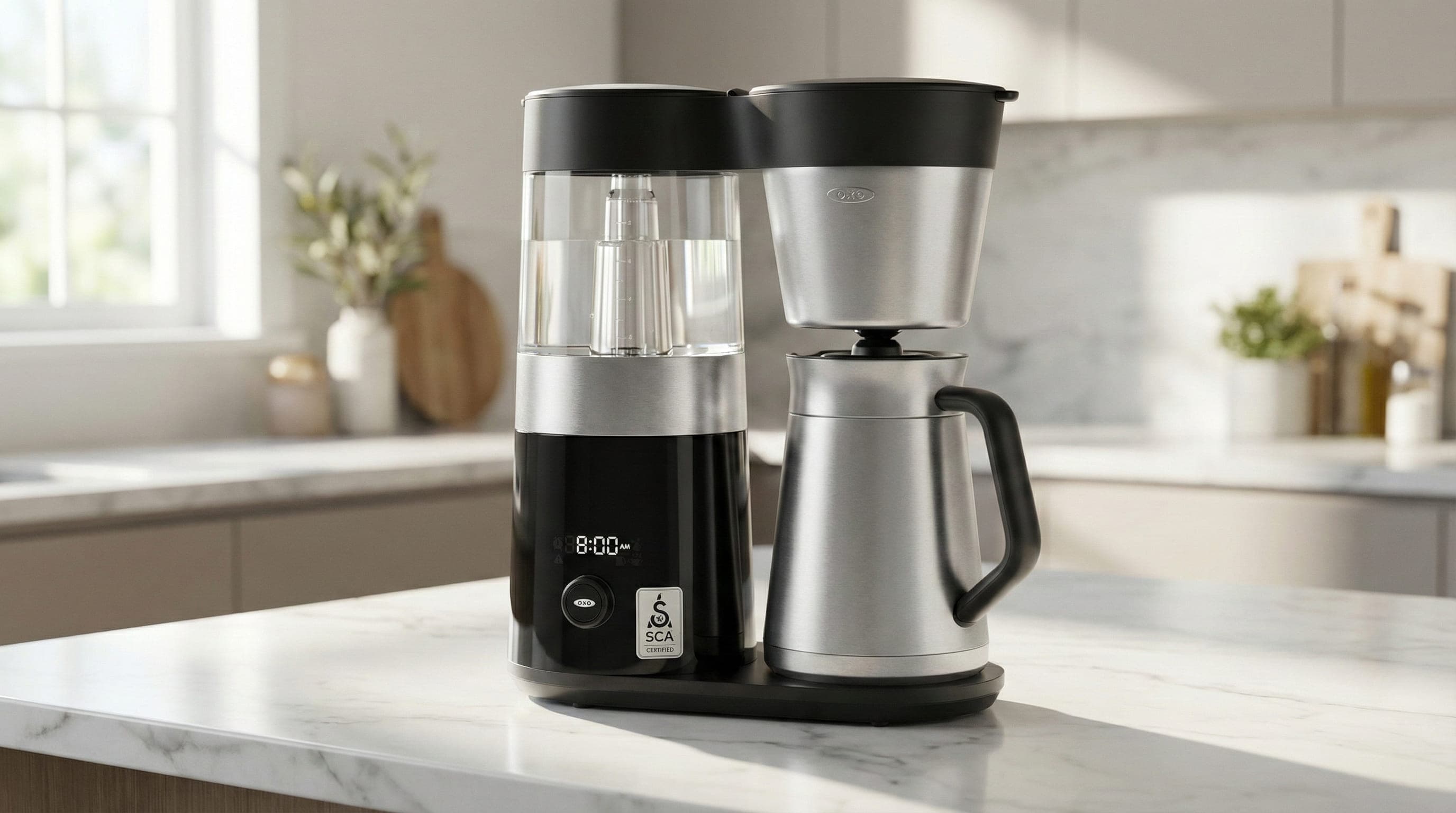
OXO Brew 9-Cup
Price range: $200–$250 · Carafe: Thermal · Rating: 4.5/5. SCA-certified brew temperature with automatic bloom, and a thermal carafe that holds heat for hours without scorching.

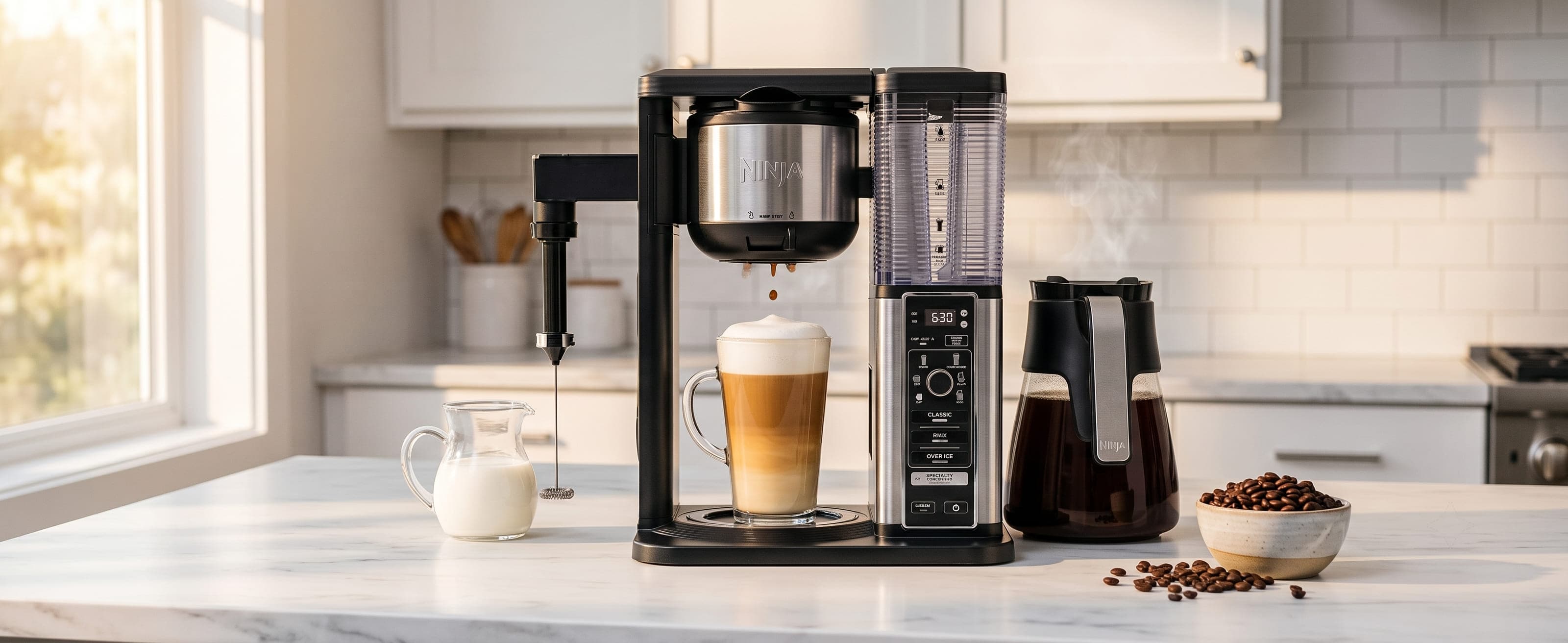
Ninja Specialty Coffee Maker
Price range: $129–$169 · Carafe: Glass · Rating: 4.4/5. Four brew styles, including a concentrate mode for iced coffee, plus a fold-away frother for milk drinks.

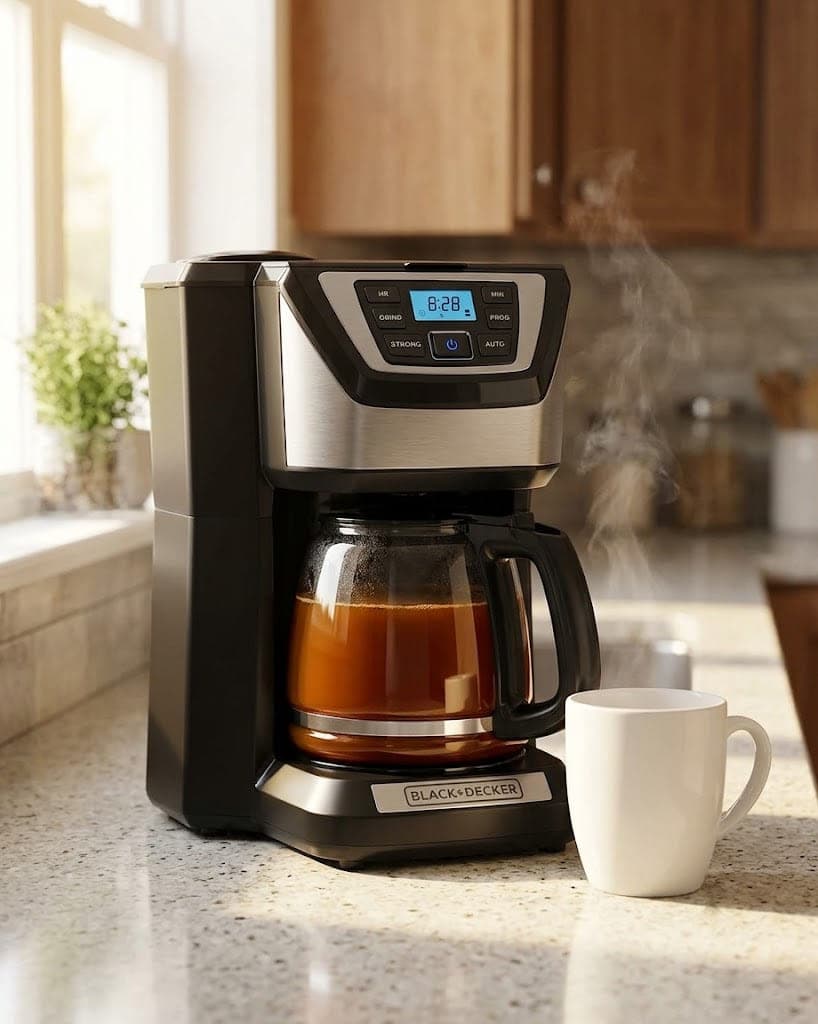
BLACK+DECKER 12-Cup Programmable
Price range: $59–$89 · Carafe: Glass · Rating: 3.9/5. A rock-solid 24-hour timer and 12-cup capacity at roughly half the price of comparable machines.

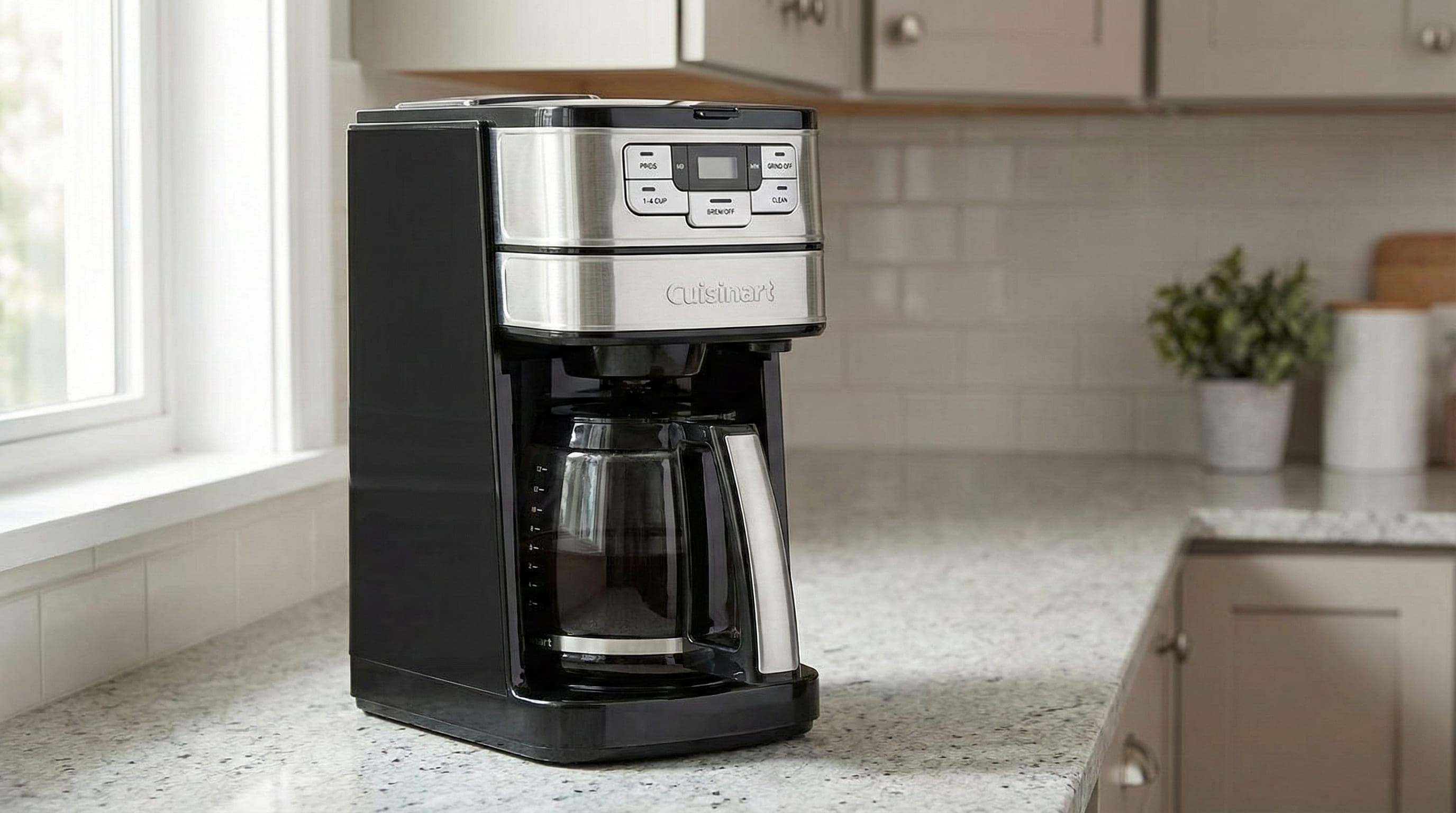
Cuisinart Grind & Brew
Price range: $149–$199 · Carafe: Thermal · Rating: 3.8/5. Grinds whole beans immediately before brewing, so delay-brew coffee never sits ground overnight — at roughly half the price of burr-grinder grind-and-brew machines.
How We Tested
Each machine in this guide was tested over a minimum of three weeks in a real home kitchen — not a lab, not a single-morning unboxing. Here is exactly what we evaluated:
- Brew temperature: Measured at the brew head using a calibrated probe thermometer across consecutive brew cycles, checked against the SCA standard of 195–205°F.
- Delay-brew reliability: Set delay brew nightly for two or more weeks per machine, recording whether it started within a couple of minutes of the programmed time and whether it recovered correctly from any power interruption.
- Carafe heat retention: Measured coffee temperature at 0, 15, 30, 45, and 60 minutes post-brew. For glass carafes, also assessed flavor degradation from the hot plate at each interval.
- Extraction quality: Brewed the same coffee on every machine at a consistent ratio and grind to compare body, sweetness, clarity, and bitterness.
- Ease of programming and cleaning: Counted the steps required to set the delay-brew timer from scratch, and assessed carafe washing, filter basket removal, and descaling.
Quick Comparison Table
| Machine | Price | Carafe | Rating | Best For |
|---|---|---|---|---|
| Cuisinart 14-Cup Programmable | $80–$150 | Glass | 4.4/5 | Best overall value |
| Ninja Specialty Coffee Maker | $129–$169 | Glass | 4.4/5 | Multi-brew versatility |
| BLACK+DECKER 12-Cup | $59–$89 | Glass | 3.9/5 | Budget / occasional use |
| OXO Brew 9-Cup | $200–$250 | Thermal | 4.5/5 | SCA-certified quality |
| Cuisinart Grind & Brew | $149–$199 | Thermal | 3.8/5 | Fresh-ground delay brew |
Individual Machine Reviews
1. Cuisinart 14-Cup Programmable – Best Overall

Price: $80–$150 | Rating: ⭐⭐⭐⭐ (4.4/5)
The Cuisinart 14-Cup keeps earning the top spot for most households because it gets the fundamentals right without overcharging for them. In testing, its 24-hour programmable timer triggered reliably across 21 consecutive days with zero missed starts, and brew temperature measured 196–200°F — squarely in the SCA-recommended range for a sub-$100 drip machine.
Bold mode is more than a marketing toggle here: it measurably raised TDS from the 1.18–1.30% range to 1.32–1.48%, a genuine, tastable strength increase. The 1–4 cup small-batch mode also works as advertised, preventing the weak, underextracted small pots that plague most 12–14 cup machines when brewed under capacity.
The honest limitation: it's a glass carafe on a warming plate, so coffee sitting past 90 minutes starts to lose flavor. There's no built-in grinder either, so overnight delay brew means pre-ground coffee losing some aromatics by morning — if that matters to you, see the Cuisinart Grind & Brew below.
Pros:
- ✅ Brews at 196–200°F, within the SCA-recommended range
- ✅ 24-hour timer triggered reliably across 21 days of testing, zero failures
- ✅ Bold mode and 1–4 cup mode both produce a measurable, real difference
- ✅ 14-cup capacity covers a full household in one brew cycle
- ✅ Adjustable auto shutoff (0–4 hrs) and top-rack dishwasher-safe parts
Cons:
- ❌ Glass carafe on a warming plate — flavor degrades noticeably after 90 minutes
- ❌ No integrated grinder; pre-ground coffee only
- ❌ No brew temperature adjustment beyond the fixed internal cycle
Skip this if:
You always want fresh-ground coffee for delay brew, or you routinely let a pot sit for over an hour — the Cuisinart Grind & Brew or a thermal-carafe machine like the OXO Brew 9-Cup will serve you better.
2. Ninja Specialty Coffee Maker – Best for Versatility

Price: $129–$169 | Rating: ⭐⭐⭐⭐ (4.4/5)
The Ninja Specialty is the right pick if you want one machine that brews a full pot in the morning and makes a concentrated cup for an afternoon iced drink. Four brew styles — including a dedicated Over Ice mode that compensates concentration so iced coffee doesn't taste diluted — make this the most versatile machine in this roundup, and the fold-away frother produces stable hot and cold foam that's genuinely useful rather than a gimmick.
Programmable delay brew is simple to set and the control panel has no hidden menus, so it's also one of the easiest multi-brew machines to operate straight out of the box.
Best for: households where one person wants two cups and another wants a full pot, or where you alternate between hot morning coffee and iced afternoon drinks. If reliable delay-brew drip is all you need, the Cuisinart 14-Cup is simpler and cheaper for that single purpose.
Pros:
- ✅ 4 brew styles, including dedicated Over Ice and Specialty concentrate modes
- ✅ Fold-away frother makes stable hot and cold foam
- ✅ Intuitive control panel, easiest multi-brew machine to operate
- ✅ Over Ice mode produces properly strong iced coffee, not diluted drip over ice
Cons:
- ❌ Specialty mode is strong concentrate, not true espresso
- ❌ Glass carafe loses heat noticeably after 90+ minutes
- ❌ 1-year warranty, shorter than OXO's 2-year or Technivorm's 5-year coverage
- ❌ Thin plant milks (almond) don't froth reliably
Skip this if:
You want real espresso rather than a strong concentrate, or you only ever brew a single style of drip coffee — the simpler Cuisinart 14-Cup covers that need for less money.
3. BLACK+DECKER 12-Cup Programmable – Best Budget Pick

Price: $59–$89 | Rating: ⭐⭐⭐⭐ (3.9/5)
At $59–$89, the BLACK+DECKER 12-Cup does what budget buyers actually need: a rock-solid 24-hour timer — tested across 30+ mornings, starting within 10 seconds of the scheduled time every time — and simple, one-touch controls that need no instructions. Brew temperature sits around 195–200°F, acceptable for the grocery-store medium and dark roasts most households use.
It's also comparably priced well below other 12-cup programmable machines, which commonly run $120–$150, without sacrificing the core delay-brew reliability that matters most.
Pros:
- ✅ 24-hour timer rock solid across 30+ mornings tested
- ✅ Significant price undercut versus comparable 12-cup machines
- ✅ Compact 9.6" footprint fits apartments and small kitchens
- ✅ Drip-stop works as advertised — tested 15+ times with no pooling
Cons:
- ❌ Glass carafe on a hot plate — coffee tastes burnt after 45+ minutes
- ❌ No brew strength selector or bloom function
- ❌ Reusable filter feels flimsy; paper filters sometimes sit awkwardly
- ❌ Faint water-reservoir markings make it easy to overfill
Skip this if:
You drink specialty-grade beans and want to taste the difference bloom and precise temperature make — step up to the Cuisinart 14-Cup or OXO Brew 9-Cup instead.
4. OXO Brew 9-Cup – Best Thermal Carafe

Price: $200–$250 | Rating: ⭐⭐⭐⭐⭐ (4.5/5)
The OXO Brew 9-Cup is SCA-certified, meaning its brew temperature is independently verified, and in testing it measured 197–204°F with a thermocouple across 80+ brews. The rainmaker showerhead saturates the coffee bed more evenly than machines costing significantly more, and the automatic 45-second bloom cycle produces a measurable extraction improvement with fresh-roasted beans.
The thermal carafe held coffee at roughly 168°F about 2.5 hours after brewing with no burnt flavor — a real advantage over the glass-carafe machines in this guide. Programmable delay brew ran reliably across six weeks of testing with no missed brews.
Pros:
- ✅ SCA-certified 197–204°F, verified with a thermocouple across 80+ brews
- ✅ Automatic bloom cycle measurably improves extraction with fresh beans
- ✅ Thermal carafe holds ~168°F roughly 2.5 hours after brewing
- ✅ Programmable timer ran reliably across six weeks of daily testing
- ✅ One-button operation, daily cleanup takes about 3 minutes
Cons:
- ❌ No built-in grinder, adding $100–$200 to the total cost if you need one
- ❌ 9-cup capacity — larger households will need multiple brew cycles
- ❌ No strength settings or temperature adjustment; parameters are fixed
- ❌ Thermal carafe's opacity makes it hard to see remaining coffee level
Skip this if:
You need more than 8–9 cups from a single brew cycle for a larger household, or the $200+ price is outside your budget — the Cuisinart 14-Cup covers more cups for less money.
5. Cuisinart Grind & Brew – Best Grind & Brew Programmable

Price: $149–$199 | Rating: ⭐⭐⭐⭐ (3.8/5)
The main problem with delay-brew programming is that ground coffee sitting overnight loses aromatics and tastes flat by morning. The Cuisinart Grind & Brew solves this by grinding whole beans directly into the filter immediately before brewing, so the delay-brew feature works with whole beans instead of pre-ground coffee — at roughly half the price of burr-grinder grind-and-brew systems.
The trade-off is the grinder itself: it's a blade grinder, not a burr grinder, which produces meaningfully more fines and a less even extraction. Brew temperature also runs 185–195°F, 5–10°F below the SCA-recommended range.
Pros:
- ✅ Roughly half the price of burr-grinder grind-and-brew systems
- ✅ Reliable programmable 24-hour timer across 30+ consecutive mornings
- ✅ Grinds whole beans fresh immediately before brewing
- ✅ Compact 8" footprint, thermal carafe holds heat for 2+ hours
Cons:
- ❌ Blade grinder produces ~40% more fines than burr alternatives
- ❌ Brew temperature runs 185–195°F, below the SCA-recommended range
- ❌ No pre-infusion or bloom cycle, causing uneven extraction with fresh beans
- ❌ Blade grinder noise reaches 80–85 dB for 15–20 seconds when timer-programmed
Skip this if:
Grind quality matters more to you than the convenience of delay-brew whole beans — a dedicated burr grinder paired with the Cuisinart 14-Cup or OXO Brew 9-Cup will extract more evenly.
What Actually Matters in a Programmable Coffee Maker
Marketing specs on coffee makers are notoriously inflated. Here are the five things that actually affect your daily experience.
01. Brew Temperature
The SCA standard is 195–205°F at the brew head. Most budget machines brew at 185–192°F — hot enough for drinkable coffee but not ideal for extracting full flavor from quality beans.
02. Thermal vs Glass Carafe
A glass carafe on a hot plate keeps coffee warm but scorches it after 20–30 minutes, adding bitterness. A thermal carafe holds temperature for 2–4 hours without a heating element, preserving flavor — but costs more and is harder to clean.
03. Bloom Pre-Infusion
Pre-infusion briefly saturates the grounds before full brewing begins, letting CO₂ escape and improving even extraction. It's a feature you'll find on mid-range machines like the OXO Brew 9-Cup.
04. Delay Brew Reliability
This is the core feature — and it's surprisingly inconsistent across machines. The clock needs to hold time accurately, the controls need to be easy to set without reading the manual every morning, and the machine needs to actually start on time.
05. Water Tank & Carafe Capacity
Match capacity to your household. A two-person household brewing two cups each needs a 4–6 cup machine, not a 14-cup unit that brews weak half-pots daily.
5 Tips for Better Coffee From Your Programmable Machine
A good programmable coffee maker is only half the equation. These habits make a bigger difference to cup quality than most machine upgrades.
- Use the right coffee-to-water ratio. The SCA recommends 1:18 by weight — roughly 1 gram of coffee per 18ml of water. Most scoops use about 10g, which produces weak coffee in a 12-cup machine. Weigh your coffee rather than guessing.
- Don't leave coffee on the hot plate past 20–30 minutes. Hot plates continue cooking your coffee after brewing ends, accelerating bitterness. Pour what you'll drink, transfer the rest to a thermal flask, or set the shortest auto shut-off available.
- Grind fresh — or grind the night before and seal tightly. Pre-ground coffee left open overnight loses aromatics by morning. If you use delay brew, either use a grind-and-brew machine like the Cuisinart Grind & Brew, or grind fresh the night before and store airtight.
- Use filtered water. Hard water leaves scale deposits that degrade heating-element performance over time. Filtered water produces better-tasting coffee and extends machine life.
- Descale every 1–3 months. Scale buildup lowers effective brew temperature with no visible sign — your machine looks fine but brews at 185°F instead of 200°F. Run a descaling solution through a full brew cycle, then flush with clean water.
For the full walkthrough, see our descaling guide.
Frequently Asked Questions
A programmable coffee maker lets you set a brew time in advance — typically 24 hours ahead — so fresh coffee is ready when you wake up or return home.
You load the grounds and water the night before, set the clock, and the machine starts automatically.