
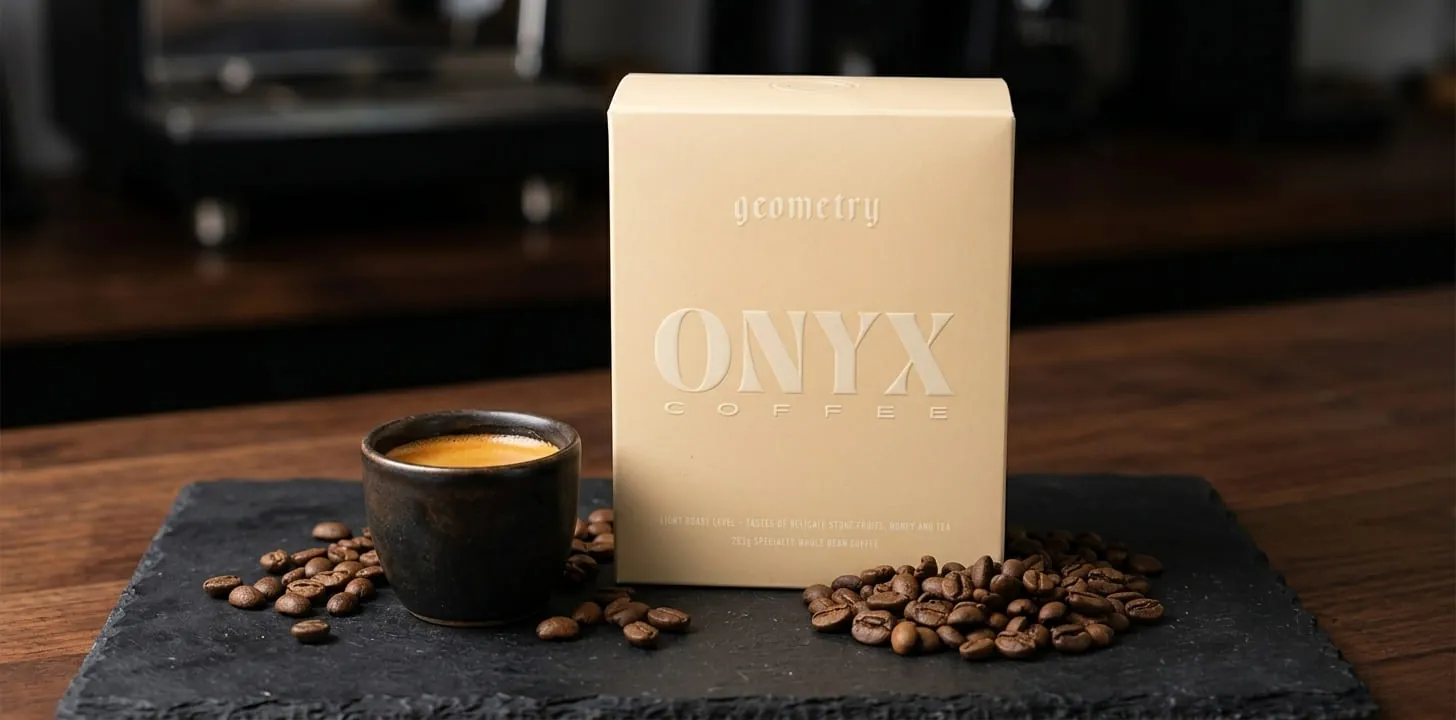
Onyx Coffee Lab
Onyx Coffee Lab Geometry
An award-winning medium-light blend with dark chocolate and dried stone fruit complexity — versatile across espresso and pour-over alike.
Coffee beans review
Last updated
A smooth, balanced 100% Arabica blend with caramel and chocolate notes — best enjoyed as straight espresso rather than buried in milk.
Affiliate disclosure: this page contains Amazon affiliate links. We may earn a commission if you buy through them, at no extra cost to you, and it never affects our rankings. Read our full affiliate disclosure
illy Classico at a GlanceRecommended
A balanced, sweet espresso blend that's worth the premium if you value flavor over crema.
Premium 100% Arabica Espresso · Medium Roast
Why it stands out
Watch out for
✓ Best for
Espresso drinkers who want a clean, balanced shot without the bitterness of a dark Italian roast
✕ Skip if
Crema hunters who judge a shot by foam volume
Affiliate link: we may earn a commission at no extra cost to you. It never affects our rating.
This illy Classico review starts with the first shot: smooth in a way cheap Italian blends rarely manage, with a caramel sweetness we hadn't expected from a commercial product. After 75 shots, that impression held up, with real trade-offs attached.
The short answer: Classico is a genuinely good 100% Arabica espresso blend for anyone who values balance over foam, as long as you accept the premium and thinner crema.
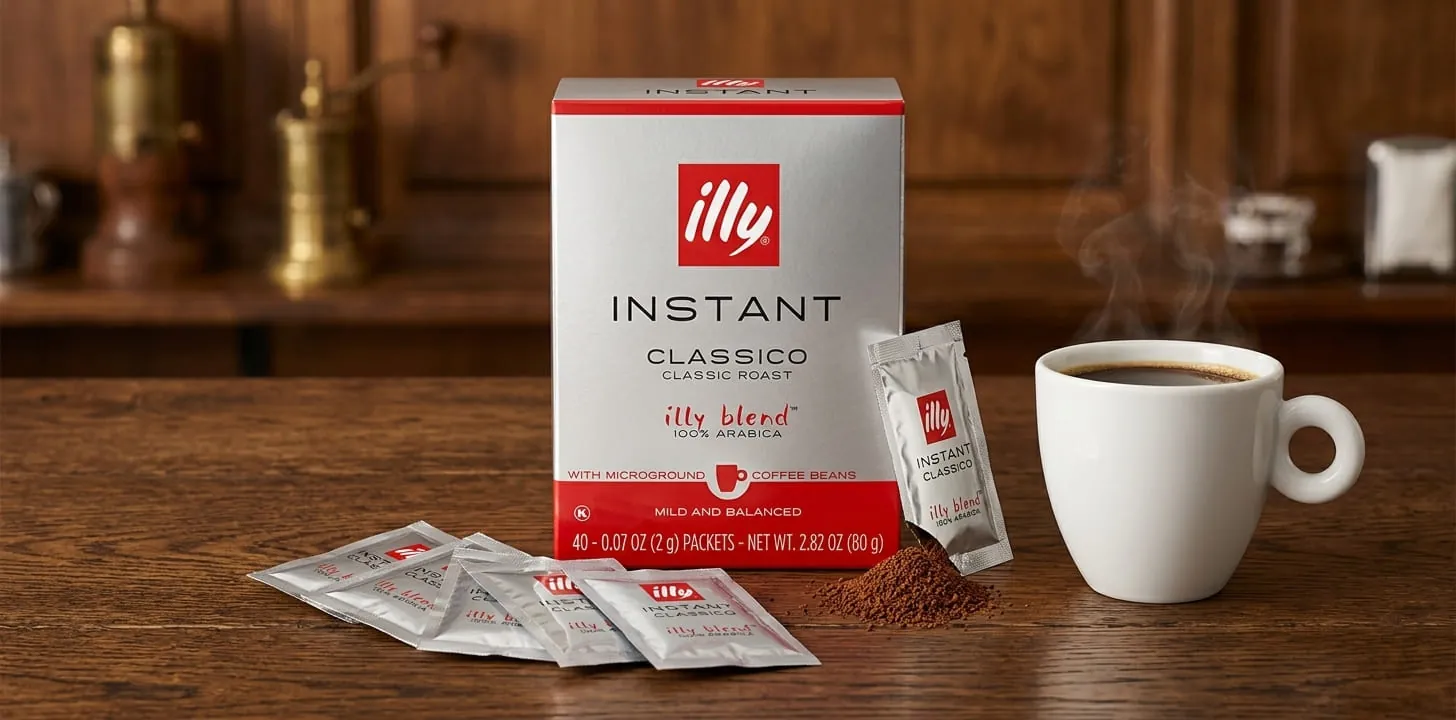
Check where you fit before you look at the trade-offs below.
A strong match
Consider something else
What earns the rating, and what you give up to get it.
6 reasons it works
5 trade-offs to weigh
How it performed in day-to-day use, in the order you will meet it.
illy Classico is the flagship espresso blend from illycaffè, based in Trieste, Italy — a city that has been at the epicentre of Italian espresso culture since the early twentieth century. Francesco Illy founded the company in 1933 and invented one of the earliest pressurised espresso machines; his successors refined and standardised the blend over decades into what you get today.
The defining characteristic of Classico is its 100% Arabica composition, blended from nine distinct origins: Brazil, Colombia, Costa Rica, Ethiopia, Guatemala, Honduras, India, El Salvador, and Nicaragua. Each origin contributes a specific flavour characteristic — Brazil adds body and chocolate sweetness, Ethiopia brings florals and delicate fruit, Colombia contributes caramel balance, and the Central American origins layer in complexity and brightness. The blend is roasted in Trieste to a consistent medium profile designed to integrate these components rather than let any single origin dominate.
The packet itself is a functional innovation, not just marketing. illy pioneered the pressurised freshness can in espresso — nitrogen flushed and sealed at a slight overpressure to prevent oxygen contact. Open a fresh packet and the hiss of released gas is real: those beans have been protected since roasting in a way that a standard valve bag simply doesn't replicate long-term.
Most commercial espresso blends — including quality Italian ones like Lavazza — draw from three to five origins at most. illy's decision to blend nine, roasting each component separately before combining them (a costlier process called "post-roast blending"), is what gives Classico its layered, balance-over-boldness character rather than a single dominant origin.
The dominant impression drinking illy Classico straight is sweetness — a rounded caramel sweetness that doesn't rely on low acidity alone to mask bitterness. The chocolate note sits in the mid-palate rather than up front: it's dark rather than milky chocolate, clean and dry, not heavy. There's a top-note brightness associated with the Ethiopian and Colombian components — not sour or citrusy, but a floral lift resembling orange blossom that makes the shot feel lighter than its body suggests.
Acidity is present but restrained. In a blind tasting alongside Lavazza Super Crema, illy Classico tasted noticeably brighter — but against a proper specialty single-origin, it reads as traditional and mellow. It occupies a middle ground: more lively than a dark Italian commercial blend, more traditional than third-wave light roasts.
In milk drinks: a well-pulled illy Classico shot in a 6oz flat white delivers caramel sweetness that integrates cleanly with whole milk. It doesn't overpower or disappear — it balances. Where illy loses a small edge compared to bolder blends is in a large latte or a very milky cappuccino, where the more intense profiles of Robusta-containing beans assert themselves more confidently through substantial milk volumes.
On crema specifically: expect 2–2.5mm of fine-textured, hazel-gold crema at an 18g/36g dose — thinner than Robusta-blend crema like Lavazza Super Crema's 3–4mm, but stable for 2–3 minutes with a finer, more uniform texture. That's the trade-off of a 100% Arabica blend: less visual crema volume in exchange for a cleaner cup.
The first thing we noticed pulling illy Classico on the Rocket Appartamento was how quickly the grind settled. Within three pulls we had a consistent 27-second extraction, whereas some blends, particularly lighter-roasted specialty beans, need half a dozen shots before the grind stabilises.
If you're still learning to dial in, read our guide to dialling in espresso before committing to a pure Arabica blend.
We used an 18g dose into a 36g yield as the baseline (standard 1:2 ratio), targeting a 27-second extraction at 93°C and 9 bar.
For the pre-ground comparison we ran parallel shots on the same machine, fresh-ground whole bean against illy's pre-ground version.
With steamed milk the caramel sweetness in illy Classico integrates naturally, producing a flat white with a clean finish that doesn't require sugar to balance. The crema held its structure through milk pouring, giving latte art attempts a firm, workable canvas.
We also brewed it in a Moka pot (Bialetti 3-cup) and found it performs remarkably well there, cleaner and less bitter than many Italian blends, which typically lean darker for Moka compatibility. For home baristas who split their brewing between a machine and a Moka pot, that versatility is a real advantage.
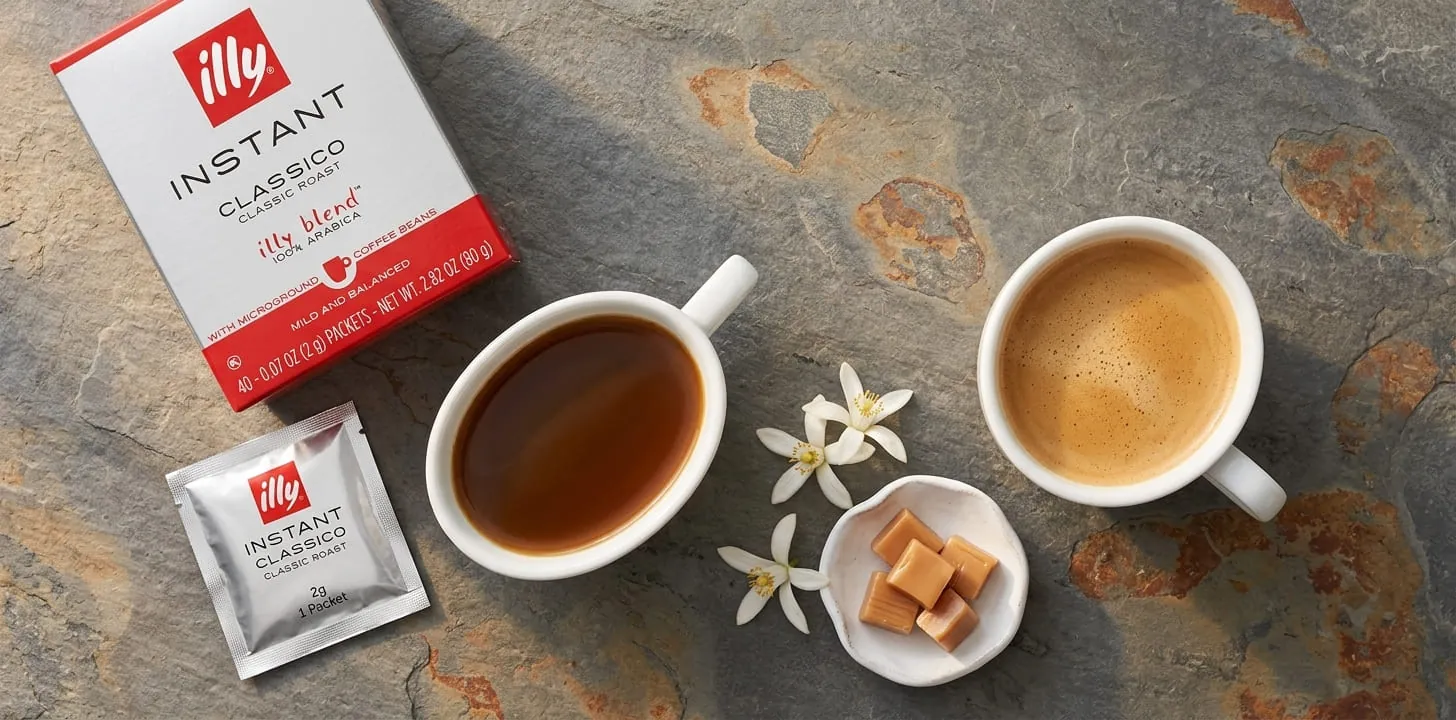
How a nine-origin Arabica blend behaves in the portafilter and the Moka pot
Classico is blended from many origins rather than sold as one, so no single bean has to carry the cup. Brazilian-style beans supply body and chocolate, higher-grown beans add florals and acidity, and the blend smooths out harvest-to-harvest swings. That is the engine behind the consistency.
It is also 100% Arabica, which explains the crema. Robusta holds more CO2 and lipids and builds a thick, foamy layer; Arabica builds a thinner, finer one. Thin crema here is a composition trait, not a stale-bean signal, and the crema guide explains what crema does and does not tell you.
Medium roast preserves sweetness, so the extraction window is narrower than for a dark blend. Under-extract and it turns sharp; over-extract and the caramel disappears behind astringency.
Inert-gas packaging slows oxidation before opening. After that, the clock runs like any bag.
What it means for you: judge Classico by taste, not foam. Use it where balance matters, in a straight shot, a small milk drink or a Moka pot.
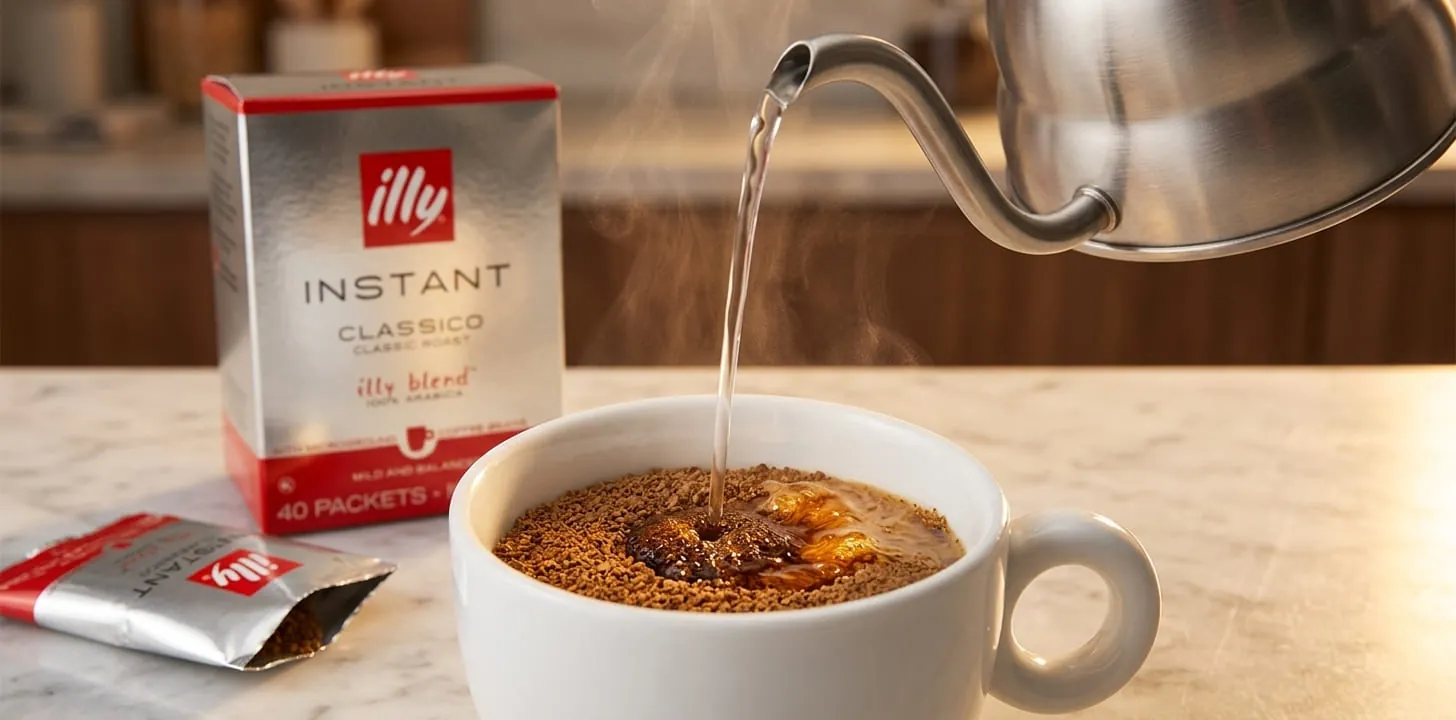
Why shots drift after opening, and the tools that keep them steady
Before you decide
illy Classico sits at the premium end of widely available Italian espresso blends, and the trade-off is explicit. You get less crema volume and a narrower extraction window than a Robusta-blended bean like Lavazza Super Crema, in exchange for a cleaner, more layered cup built from nine separately-roasted Arabica origins.
If boldness and forgiving extraction matter more than nuance, Super Crema is the better everyday choice. If you want the more refined profile and don't mind paying roughly three times as much per shot, illy Classico delivers on that premium.
Want to understand how to choose beans suited to espresso before you decide? See our guide on how to choose beans suited to espresso. Curious how this medium roast compares to lighter and darker options? Our coffee roast levels chart breaks down what each roast level actually tastes like.
To see how illy Classico compares with the other beans we have pulled as espresso, read our highest-rated beans for espresso roundup.
Durability, upkeep and running costs once the novelty wears off.
The pressurised packet format is illy Classico's most important freshness advantage over standard valve-bag competitors.
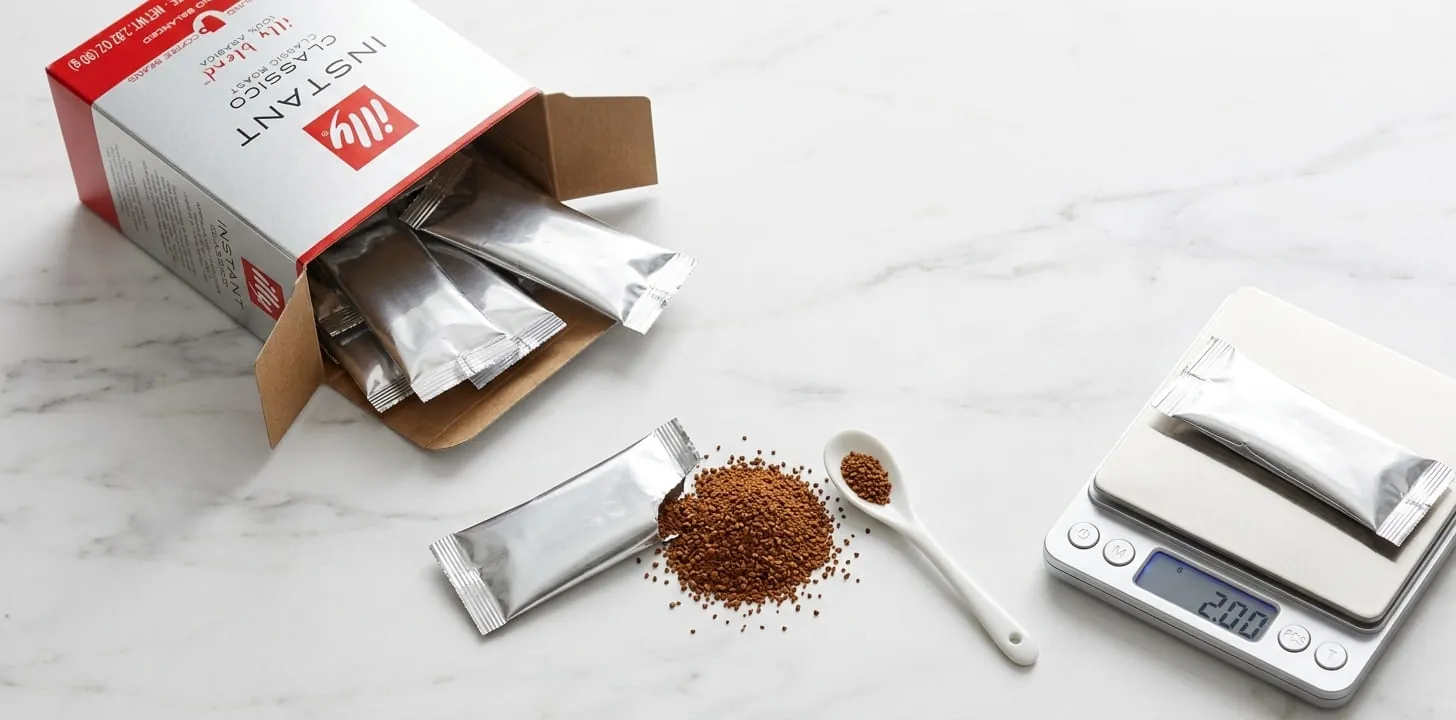
Unopened, the packet maintains peak quality for 24 months from roast date — significantly longer than the 12–18 months typical of standard valve-sealed bags. Once opened, whole beans maintain excellent quality for 2–3 weeks with the lid replaced firmly. The packet itself is rigid and stackable, making storage convenient. Pre-ground version: 7–10 days post-opening before quality noticeably declines.
illy's quality control is among the most consistent in the commercial Italian espresso category.
The post-roast blending process — where each of the nine origins is roasted separately before blending — allows illy's roasters to adjust individual origin contributions to accommodate seasonal green coffee variation. The result is a blend that tastes materially the same packet-to-packet across seasons and years. If you find a recipe that works, it will work next month and next year.
illy Classico is widely available globally — in supermarkets, specialty food retailers, Amazon, and directly via illy's website with subscription options.
The 8.8 oz whole-bean and pre-ground packets are core SKUs that have been in continuous production for decades. Multi-packs and Subscribe & Save options on Amazon can reduce per-unit cost.
At $20–$25 per 250g packet, the effective cost per 18g double espresso is approximately $1.44–$1.80.
For daily single-shot drinkers, one packet lasts approximately 13–14 shots — roughly two weeks at one shot per day. Annual cost at that rate: 26 packets × $22 average = $572/year. Compare to café espresso at $3.50–$5.00 per shot: home brewing with illy Classico saves roughly $700–$1,250 per year at the same consumption rate.
As a food product, illy Classico carries no traditional warranty, but illy's freshness guarantee is backed by the pressurised packet: if you receive a packet without the characteristic hiss on opening, indicating the seal has failed, contact the retailer for a replacement. illy's customer service has a solid reputation for addressing quality complaints.
Amazon's standard return policy covers defective or incorrectly described products.
Not applicable as a consumable product. illy's pricing has remained relatively stable over the years and the Subscribe & Save model on Amazon effectively provides a permanent discount for regular buyers.
The multi-pack format (three or six packets) also reduces per-unit cost when purchased in advance, making it practical to buy ahead without the freshness risk associated with bulk-purchasing less well-sealed alternatives.
Quick specs
How it scored
Affiliate link: we may earn a commission at no extra cost to you. It never affects our rating.
Our rating, who it fits, and what it costs.
illy ClassicoRecommended
4.4 / 5 — Is it worth buying?
The testing confirmed what that first packet in Melbourne suggested years ago: illy Classico is the real thing. The nine-origin Arabica blend is a technically ambitious product that delivers on its promise of sweetness and balance.
✓ Best for
✕ Skip if
Score breakdown
Shots tested
75+
Testing period
4 weeks
Ready to decide?
Our verdict: 4.4/5, recommended. Independently tested; commissions never change a rating.
See how the illy Classico compares with the other picks in each tested roundup.
Closest alternatives in price and purpose, each tested the same way.
Onyx Coffee Lab
An award-winning medium-light blend with dark chocolate and dried stone fruit complexity — versatile across espresso and pour-over alike.
Stumptown Coffee Roasters
A Pacific Northwest-style dark roast with a bold, chocolatey body that holds up well across espresso, Americanos, and French press.
Lavazza
A forgiving, classic Italian-style espresso blend that builds reliable crema and performs especially well in flat whites and cappuccinos.
Peet's Coffee
A bold, chocolatey dark roast with no sourness, well suited to French press, lattes, and entry-level espresso machines.
Quick answers before you buy.
Yes — it's one of the cleanest, most balanced commercial Italian espresso blends available.
The 100% Arabica composition and nine-origin blend produce a caramel-sweet, low-bitterness shot that excels as straight espresso.
It requires slightly more precise dialling-in than Robusta-containing blends, but once calibrated it's consistent and rewarding.
illy Classico has a smooth, integrated profile with dominant caramel sweetness, a mild dark chocolate mid-note, and a delicate floral lift — think orange blossom or jasmine — in the finish. Acidity is present but gentle.
It reads as classic Italian espresso without the harshness of very dark roasts. The nine-origin Arabica blend creates this balance by having components that complement rather than compete with each other.
illy Classico is 100% Arabica with no Robusta content. Robusta beans contain significantly more CO2 post-roast, which is the primary driver of crema volume in espresso.
A pure Arabica extraction will always produce a thinner, finer crema — typically 2–2.5mm — compared to the 3–4mm seen with Arabica/Robusta blends. This is a characteristic of quality Arabica, not a defect: illy's crema is stable and well-textured, just lighter in volume.
If you want more, how to increase espresso crema covers the levers that matter.
Whole bean, strongly. The pre-ground version is preserved adequately in the pressurised packet, but the floral top notes that distinguish illy Classico — the orange blossom and jasmine lift — are volatile aromatics that dissipate within minutes of grinding.
In direct side-by-side testing, the whole-bean version produced noticeably more complexity and balance. If you don't own a grinder, the pre-ground is still better than most supermarket alternatives, but a burr grinder makes an immediate difference with illy.
It depends on whether you value flavor clarity or crema and value. illy Classico is 100% Arabica, so it tastes cleaner and sweeter but makes lighter crema and costs more per gram.
Lavazza Super Crema adds Robusta for thicker crema, a more forgiving extraction and better value in milk drinks. Choose illy for straight espresso and Super Crema for lattes on a budget.
Yes — illy Classico performs particularly well in the Moka pot compared to many Italian espresso blends. The medium roast level means it doesn't over-extract into bitterness under Moka pot heat and pressure the way darker-roasted Italian blends often do.
The result is a clean, caramel-forward Moka brew that retains much of the blend's sweetness. Use a consistent medium grind (slightly coarser than espresso) and avoid over-heating.
Yes, if you drink straight espresso or Moka pot coffee and want a smooth, caramel-sweet Italian blend that is easy to like.
The pressurized packet keeps beans fresher than most supermarket coffee, which helps justify the premium.
It is less worth it if you mostly make milk drinks or want big crema, where a cheaper Arabica/Robusta blend does the job.
The whole-bean and pre-ground versions require a traditional espresso machine or Moka pot — they're not compatible with Nespresso capsule machines.
illy does produce their own capsule products for compatible pod machines (iperEspresso capsules and Nespresso-compatible options), but those are separate products from the Classico packet.
If you want illy flavour in a pod machine, look specifically for illy-branded capsules.
Reader questions
Questions or tips? Leave a comment
Ask about your setup or share what worked for you. Comments are checked before they appear.