
Distribution
WDT tool
Breaks up clumps and spreads grounds evenly before tamping.
Espresso Guides
Last updated
How to fix bitter espresso: find the cause of harsh, drying shots and fix it one change at a time.
Affiliate disclosure: this page contains Amazon affiliate links. We may earn a commission if you buy through them, at no extra cost to you, and it never affects our rankings. Learn more
Bitter espresso is most often over-extraction, so the fastest fix is to grind one click coarser and taste a fresh shot. If it is still harsh, work down the list below: temperature, yield, channeling, cleanliness, then beans.
Match the taste in your cup to the most likely cause.
| Symptom | Likely cause | Jump to |
|---|---|---|
| Harsh, drying finish; shot runs slow | Grind too fine | Step 1 |
| Harsh from the first sip on a PID-less machine | Water too hot | Step 2 |
| Right shot time, but too much liquid | Yield too high | Step 3 |
| Bitter and sour together, patchy crema | Channeling | Step 4 |
| Lingering rancid bitterness | Dirty equipment | Step 5 |
| Flat, papery, little aroma | Stale or very dark beans | Step 6 |
Bitter compounds dissolve last, so most causes come down to over-extraction. The opposite problem is covered in why espresso tastes sour; for other brew methods, see why coffee tastes bitter.
The quickest fix: a slow, trickling shot usually means the grind is choking the puck.
The shot is slow (see shot too fast or too slow for timing targets), drips rather than streams, or the portafilter is hard to lock in.
A steadier stream and a sweeter, rounder finish.
Above roughly 96°C, extraction turns harsh even when grind and dose are right.
Harsh from the first sip, on a machine without a PID. Medium roasts do best around 90-93°C (194-200°F), but many mid-priced boiler machines brew at 96-98°C.
Less edge and astringency with the same grind.
Shot time alone does not show how much you extracted; weigh the liquid.
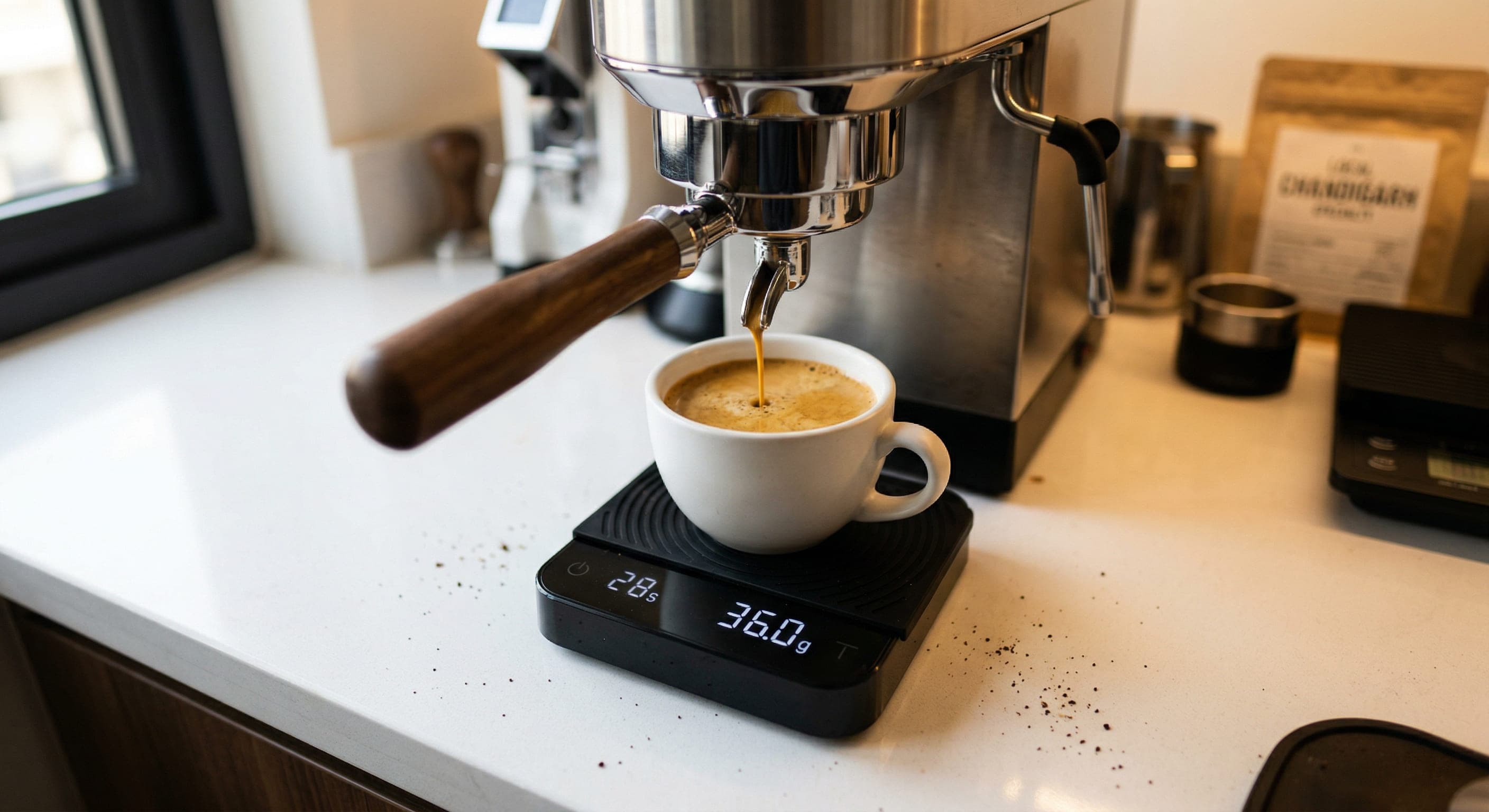
The shot time looks right, but 18 g in gives 45 g or more out. Late extraction is dominated by bitter compounds, so a long ratio tastes harsh.
| Ratio | 18 g dose | Result |
|---|---|---|
| 1:1.5 | 27 g out | Intense, sweet; good for milk |
| 1:2 | 36 g out | Balanced starting point |
| 1:2.5 | 45 g out | Light roasts only |
| 1:3 | 54 g out | Bitter for most roasts |
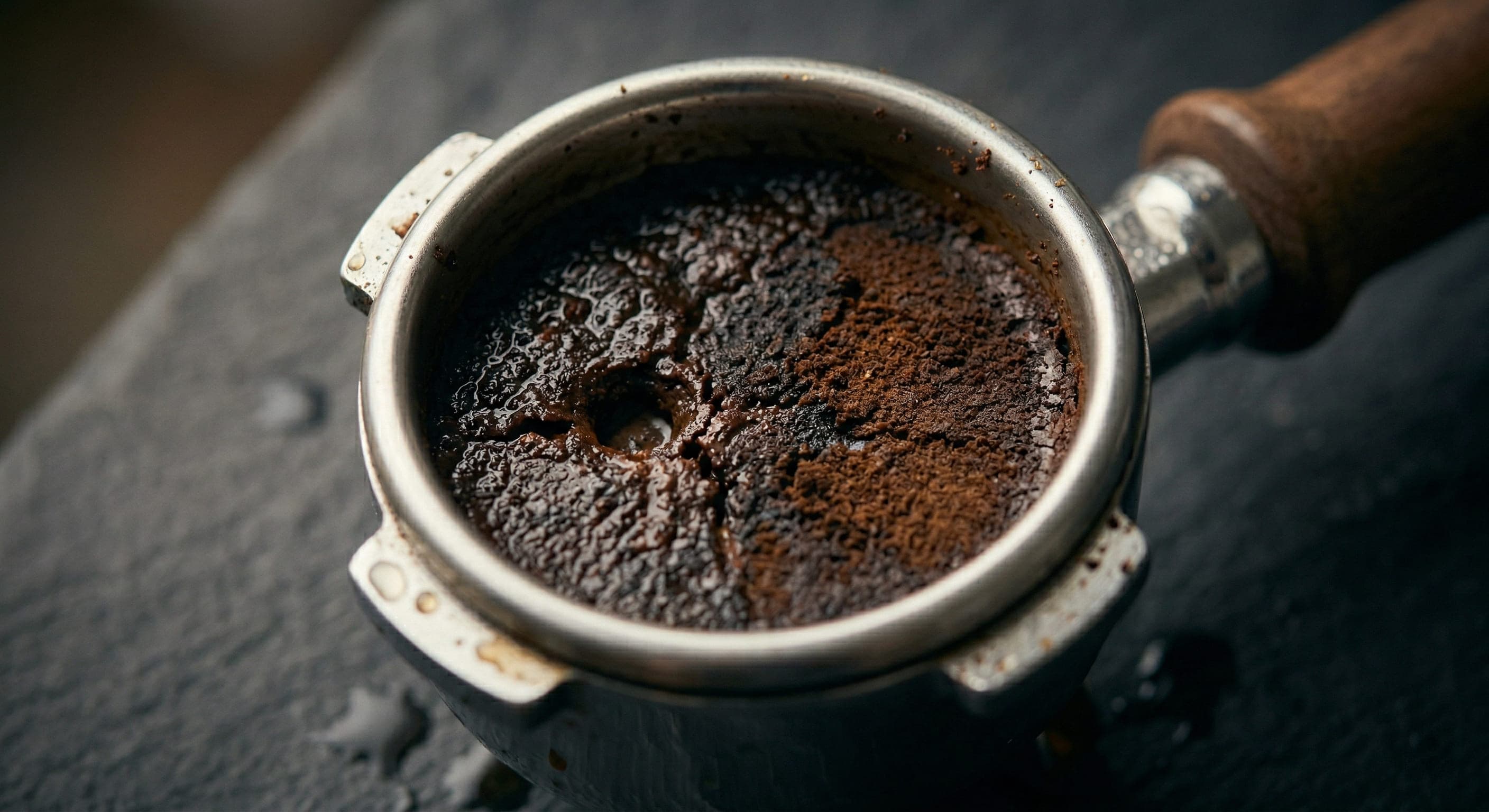
Bitter and sour in the same shot points to water tunneling through the puck.
Bitter and sour together, splotchy crema, or a spent puck with holes or wet and dry patches. Full diagnosis and fixes are in our espresso channeling guide; the quick version:
An even, hazelnut-brown flow and an intact, evenly wet puck.
Distribution
Breaks up clumps and spreads grounds evenly before tamping.
Affiliate links: we may earn a commission at no extra cost to you.
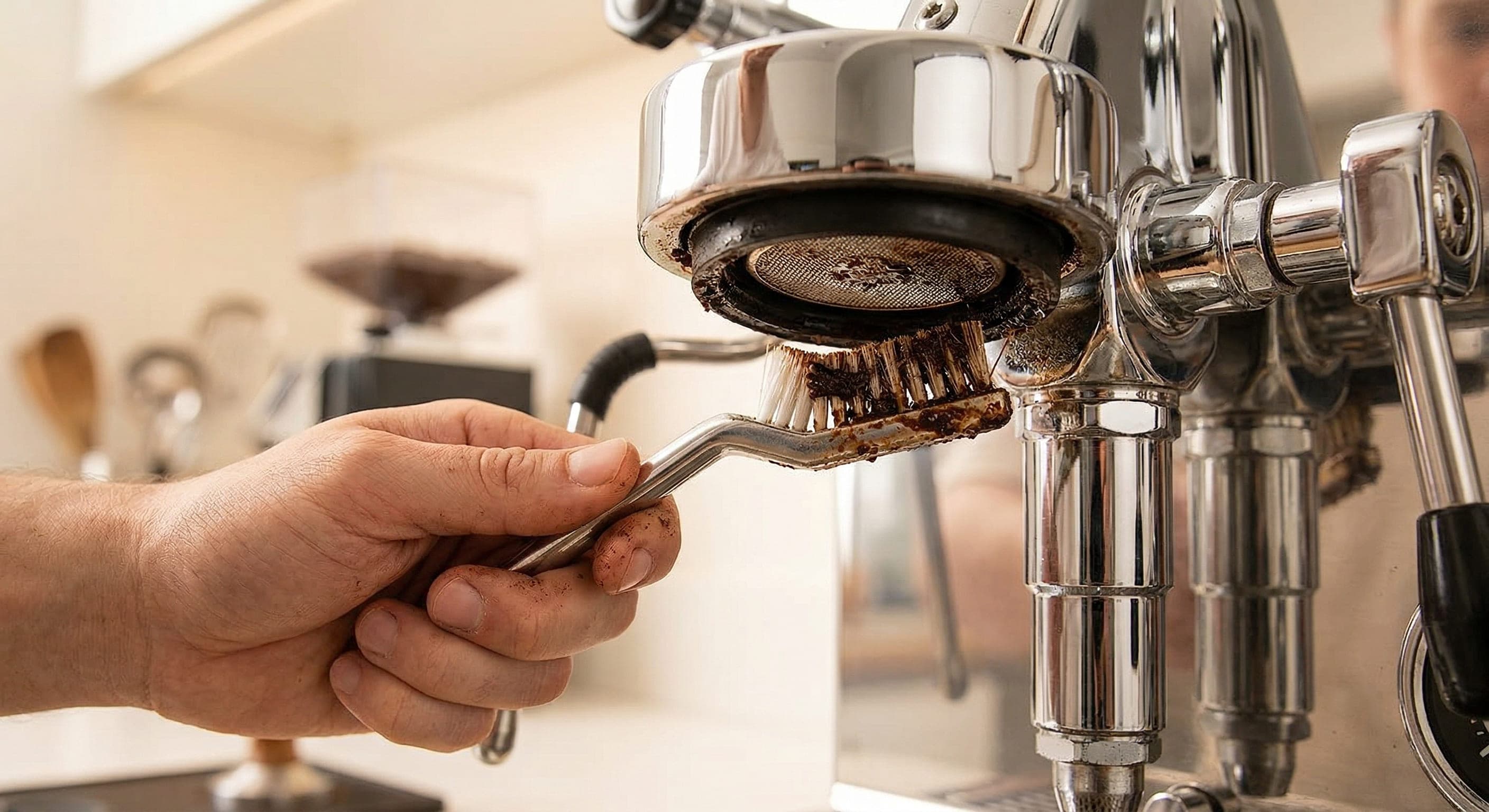
Rancid coffee oils build up quickly and taste bitter even with fresh beans.
A lingering, slightly rancid bitterness that survives grind and yield changes.
| When | Do this |
|---|---|
| After every shot | Rinse the basket and wipe the shower screen. |
| Weekly | Backflush with cleaner (three-way valve machines) and soak the basket. |
| Monthly | Soak the shower screen and clean the steam wand. |
| Every 2-3 months | Descale to suit your water hardness. |
Full routines: cleaning guide and descaling guide. Common cleaners:
Cleaning powder
Group head and basket cleaner.
Cleaning tablets
Pre-measured, easier to dose.
Oxidized beans and very dark roasts both taste bitter whatever your technique.
No roast date on the bag, little aroma, dull dry beans, and a flat, papery taste. Peak flavor runs from about 5 days to 3-4 weeks after roasting.
Very dark roasts contain far more inherent bitter compounds (melanoidins and degraded chlorogenic acids from the long roast) and extract faster. Medium roasts are more forgiving and less bitter to begin with.
Every dark roast tastes bitter
try a medium roast before changing more settings. See how to pick espresso beans.
Over-extraction pulls late-eluting compounds, and burnt or stale inputs make it worse.
Coffee releases acids first, sugars in the middle and heavy bitter compounds (plus astringent tannins) last. Bitterness appears when the shot runs too long, uses water that is too hot, or extracts unevenly so some of the puck is over-extracted. Dark roasts and old beans also carry bitter compounds before water touches them.
A dry, drying finish suggests astringency, while a harsh ashy taste suggests roast. Knowing which one you have saves chasing the wrong fix. Compare it with why coffee tastes bitter for non-espresso brews.
Bitterness is not always a fault. Dark roasts and some robusta blends are meant to taste roasty and bitter-sweet, and a short, strong ristretto from them will always lean bitter. If you prefer a softer cup, the fix may be a lighter roast or milk, rather than another grind change.
Tight recipes, better puck prep and cleaner equipment reduce bitterness more than any single trick.
Where to go next based on what the shot is doing now.
Quick decision guide
The shot turned sour after you grind coarser
read why espresso tastes sour.
Bitterness is gone and you want to refine
use the dial-in guide or the espresso dial-in calculator.
A blade or very basic grinder is the limit
Upgrade the grinder: compare the best espresso grinders under $300.
Quick answers before you buy.
Yes.
An under-dosed basket lets the puck shift and channel, which over-extracts parts of it.
Weigh the dose within your basket's rated range.
Stale water in the group head and a still-heating machine are common causes.
Run a blank shot first, and let the machine warm up fully.
Usually channeling: water races through weak spots (sour) while the rest of the puck over-extracts (bitter).
Level your tamp and distribute with a WDT tool before touching the grind.
Burnt flavors come from very dark roasts, water that is too hot, or a dirty group head with rancid oils.
Try a medium roast and clean the group head before changing other settings.
Yes, usually. Finer grounds slow the shot and extract more, pushing it toward bitterness.
Go one step coarser and taste; if it turns sour, you went too far. See how to dial in espresso.
Yes.
Espresso has a pleasant bittersweet edge, like dark chocolate.
It is only a problem when it is harsh, drying or lingers unpleasantly after you swallow.
Keep reading: more guides on the same topic.
 Fix a problem
Espresso5 min read
Why does coffee taste bitter? Find your cause (grind, water temperature, stale beans, dirty gear) and fix bitter coffee one change at a time.
 Fix a problem
Espresso4 min read
Sour, thin espresso is usually under-extraction. Work through grind, dose, water temperature, bean age and ratio, one change at a time.
 Fix a problem
Espresso4 min read
Espresso pulling too fast (under 20 sec) or too slow (past 40)? Fix shot time by checking grind, dose, tamp, bean age and machine in order.
 Fix a problem
Maintenance4 min read
Coffee maker leaking water from the bottom, filter basket or carafe? Match the leak to its cause, fix it step by step, or know when to replace.
Reader questions
Questions or tips? Leave a comment
Ask about your setup or share what worked for you. Comments are checked before they appear.