
 4.3
4.3Philips
Philips 3200 LatteGo
A convenience-focused super-automatic with a fast-heating LatteGo milk system, built for daily lattes and cappuccinos.
Espresso machine review
Last updated
Gaggia Classic Pro review: a 58mm espresso machine built to last, but is the learning curve worth it? Our 63+ shots show how it fits beside the Silvia.
Affiliate disclosure: this page contains Amazon affiliate links. We may earn a commission if you buy through them, at no extra cost to you, and it never affects our rankings. Read our full affiliate disclosure
Gaggia Classic Pro at a GlanceHighly recommended
A rewarding machine for anyone ready to learn manual technique and buy a decent grinder.
Manual Semi-Automatic with Commercial Components
Affiliate link: we may earn a commission at no extra cost to you. It never affects our rating.
In the shot log· 63+ shots · 30 days
Why it stands out
Watch out for
✓ Best for
DIY enthusiasts who enjoy tinkering and optimization
✕ Skip if
Complete beginners without espresso experience (steep curve)
In this Gaggia Classic Pro review, the learning curve is the headline: our first week with the machine gave us maybe 40% drinkable shots; by week three we were consistently above 85%. That gap is the point: this machine doesn't hide bad technique.
The short answer: it's one of the best-value manual espresso machines at $450-$550 if you're willing to learn it, and the wrong choice if you want convenience.
Browse our espresso machine reviews hub for more options across every budget.
Check where you fit before you look at the trade-offs below.
A strong match
Consider something else
What earns the rating, and what you give up to get it.
13 reasons it works
11 trade-offs to weigh
How it performed in day-to-day use, in the order you will meet it.
Unboxing and setup are simple—fill the 2.1-liter reservoir, plug in, run a blank shot to prime the pump. The learning curve is the real story.
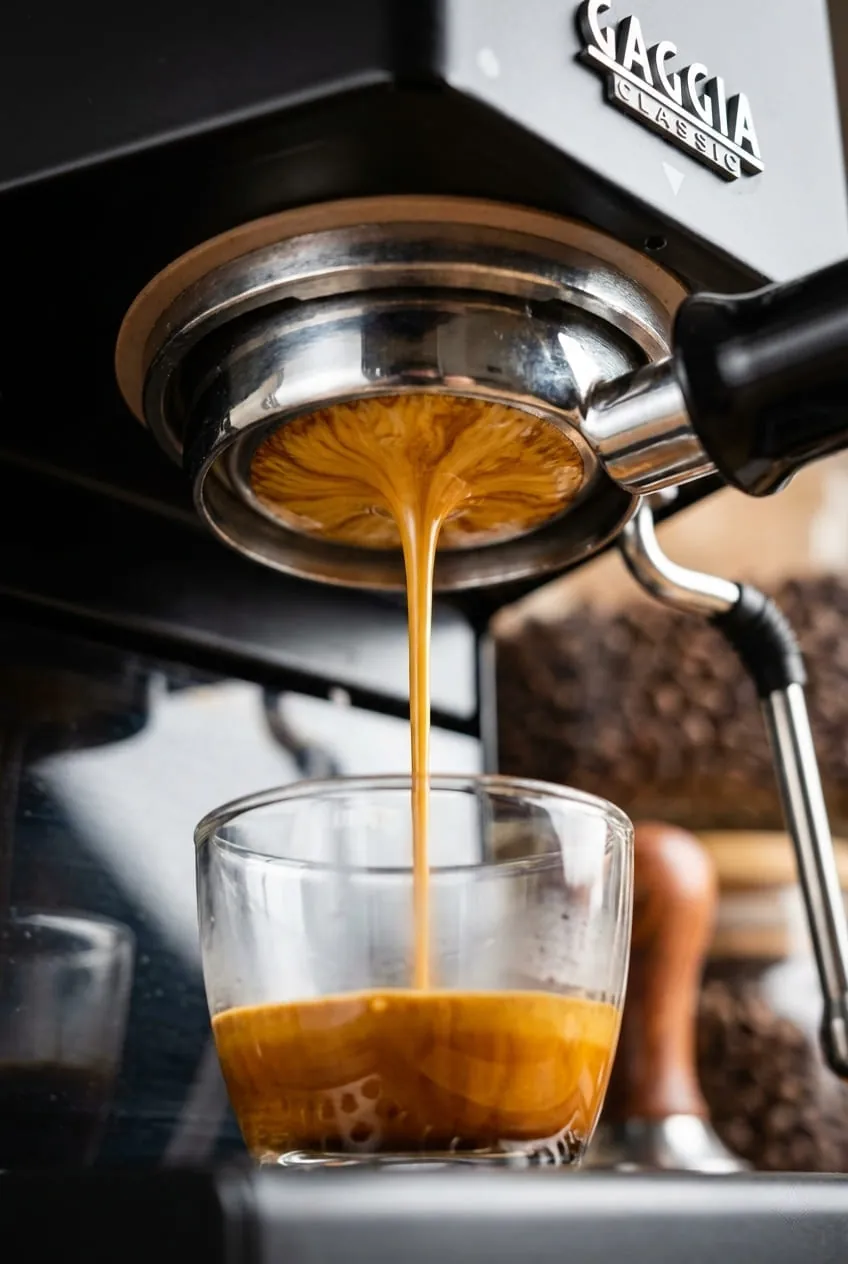
Dialed in, this machine pulls clean, balanced shots—quality that's competitive with machines costing $800-1,200, assuming a decent grinder and real technique behind it.
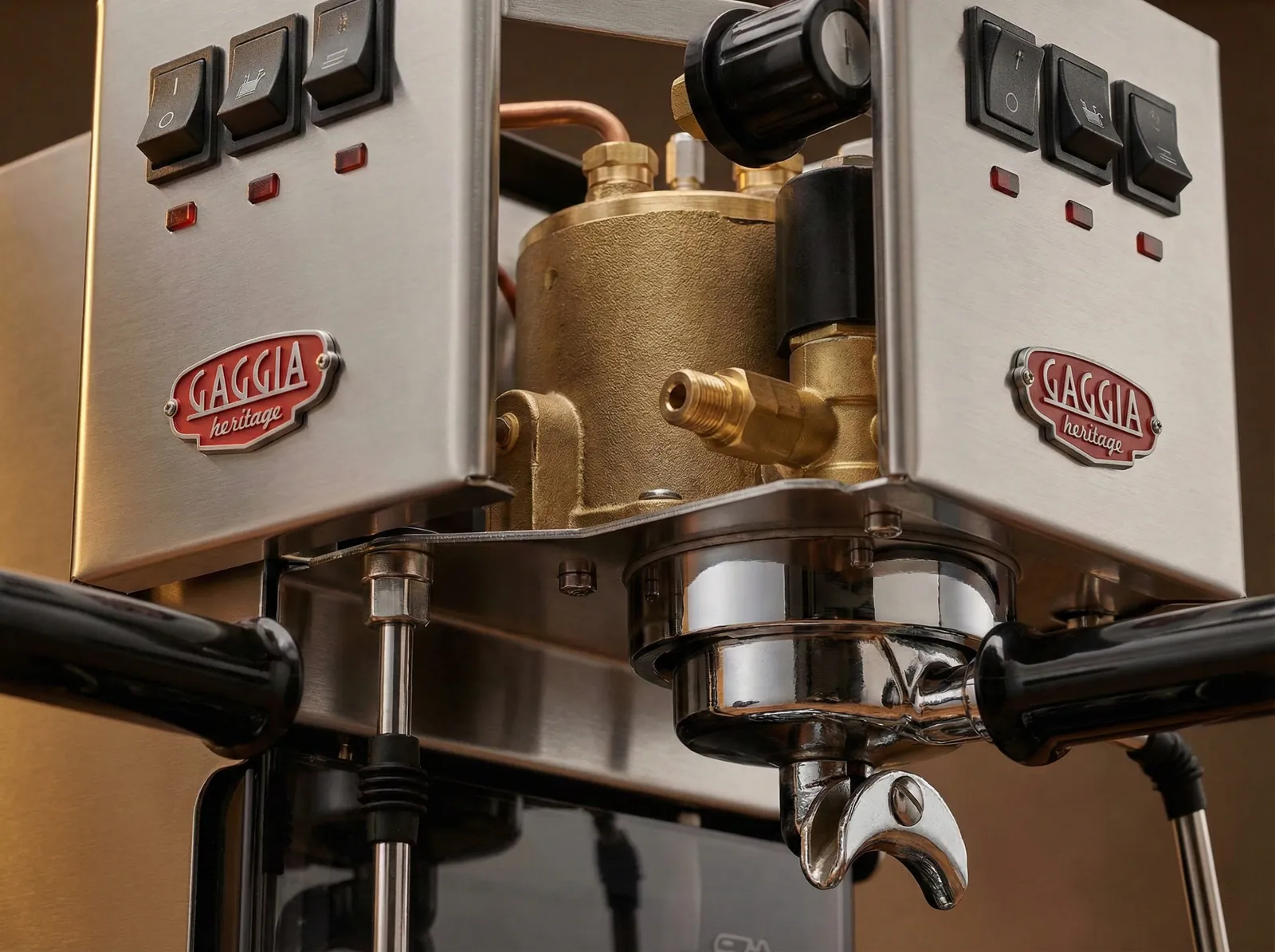
The aluminum boiler holds heat well once stable, and dropping the OPV pressure to 9 bar (a spring swap; a pressure gauge helps verify 9 bar) visibly reduced channeling and improved flavor clarity. A precision basket (VST or IMS) sharpens extraction further and is worth it if you're chasing consistency.
The steam wand is a true commercial-style wand—no panarello attachment—and produces competition-level microfoam once you've built the technique. Whole milk and oat milk both textured well.
The catch is the single boiler: switching from brew to steam mode takes roughly a minute, so there's no brewing and steaming at once. For one to three milk drinks in sequence that's a manageable, traditional workflow; if you're regularly making four or more drinks back-to-back for a household, the wait becomes tedious.
If your wand ever stops producing foam like this, see our steam wand not frothing guide before assuming it needs repair.
At 20 lbs, the machine sits solidly on the counter through tamping and portafilter twisting—no wobble. Day to day:
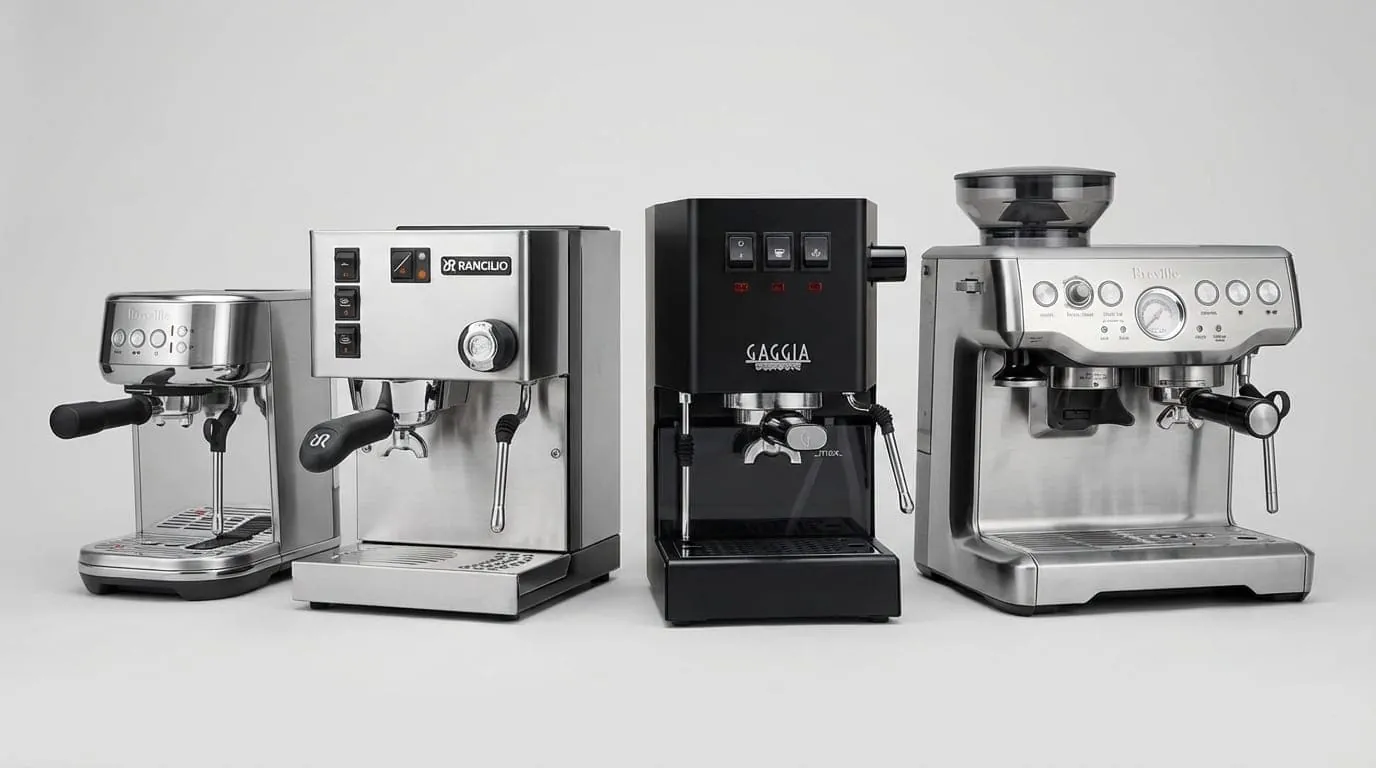
Choosing between manual purity and built-in convenience
The Classic Pro competes on a different axis from most machines at its price: hardware and repairability rather than features.
| Machine | Type | Heating system | Built-in grinder | Current price |
|---|---|---|---|---|
| Gaggia Classic Pro | Manual semi-automatic | Single boiler (aluminum) | No (separate grinder) | Check current price |
| Rancilio Silvia | Semi-automatic | Brass boiler | No (separate grinder) | Check current price |
| Bambino Plus | Compact semi-automatic | ThermoJet | No (separate grinder) | Check current price |
| Barista Express | Semi-automatic | not listed | Yes | Check current price |
The pattern is clear. If you want to tinker, buy the Classic Pro. If you want convenience, buy something with automation. The highest-rated home espresso machines guide gives the wider picture.
For a full side-by-side on workflow, milk, upgrades and ownership, read our Gaggia Classic Pro vs Breville Bambino Plus comparison.
The total budget matters more than the sticker price
The machine alone is not the full purchase. A realistic setup includes the following.
Add those up and the real cost is meaningfully higher than the machine price, though still modest next to dual-boiler machines. That is the honest value case: you pay for components, not features.
Skip the Classic Pro if you want push-button convenience, you make several milk drinks back to back, you have no patience for temperature surfing, or you do not want to buy a separate grinder. In those cases, a machine with automation or a built-in grinder will suit you better, and you will enjoy it more.
If you are unsure, our top espresso machines under $500 guide covers easier alternatives.
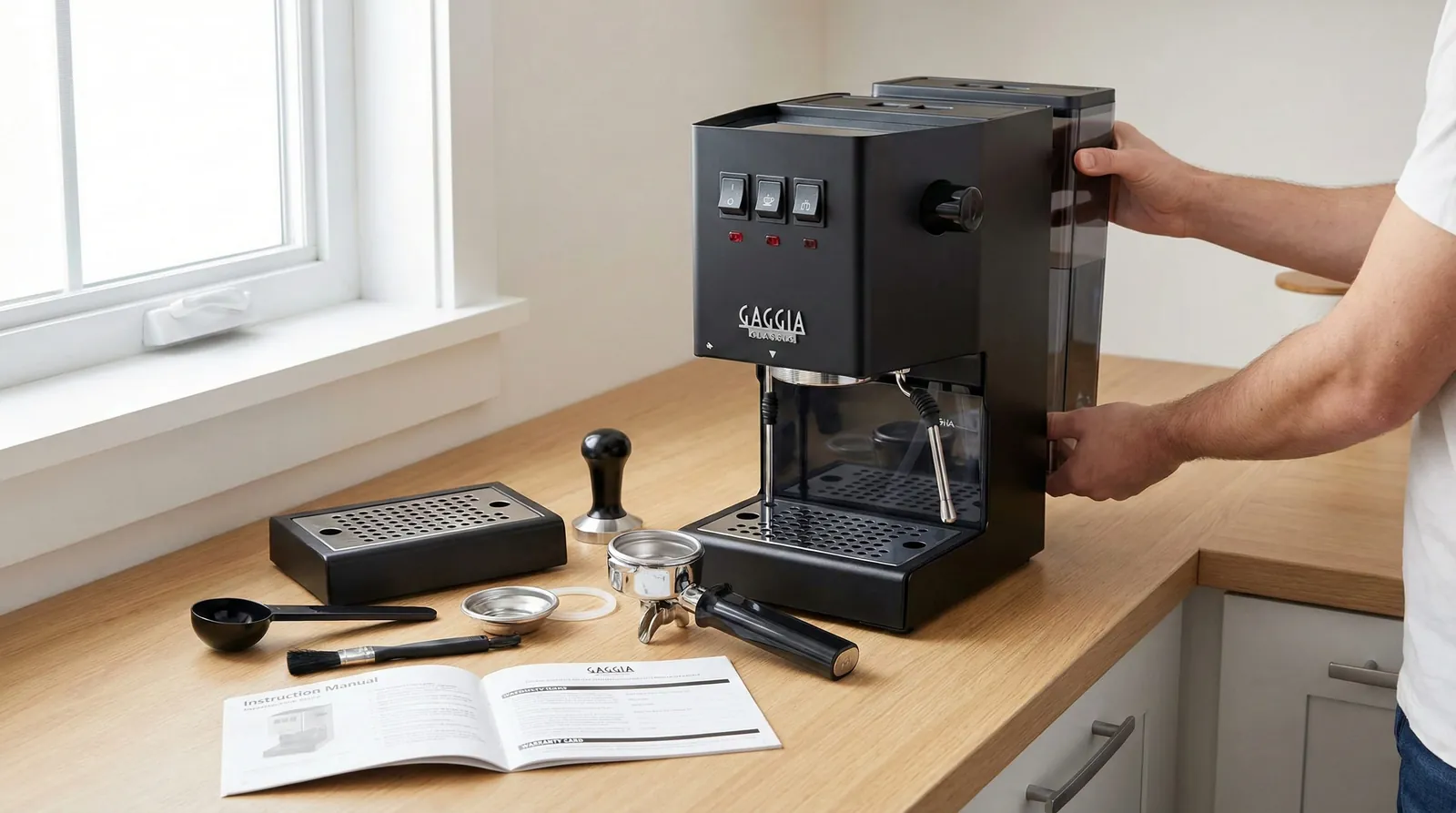
A pump, a small boiler and a manual workflow: what each part does to the shot
The Classic Pro is a single-boiler machine. A vibratory pump pushes water through an aluminum boiler that also feeds the steam wand, and a thermostat cycles the heater on and off. That swing is why shots pulled straight after the ready light can run hotter or cooler than ones pulled after a short flush.
The 58mm portafilter holds a larger puck than most budget machines, so the water meets more coffee across a wider bed. The 3-way solenoid releases residual pressure after the shot, which is why the puck comes out dry and easy to knock out. See the espresso machine types guide for how single-boiler designs compare.
For the cup, the practical lever is temperature timing, not the machine's spec sheet. Learning to flush and wait gives steadier flavor, and light roasts reward that effort most.
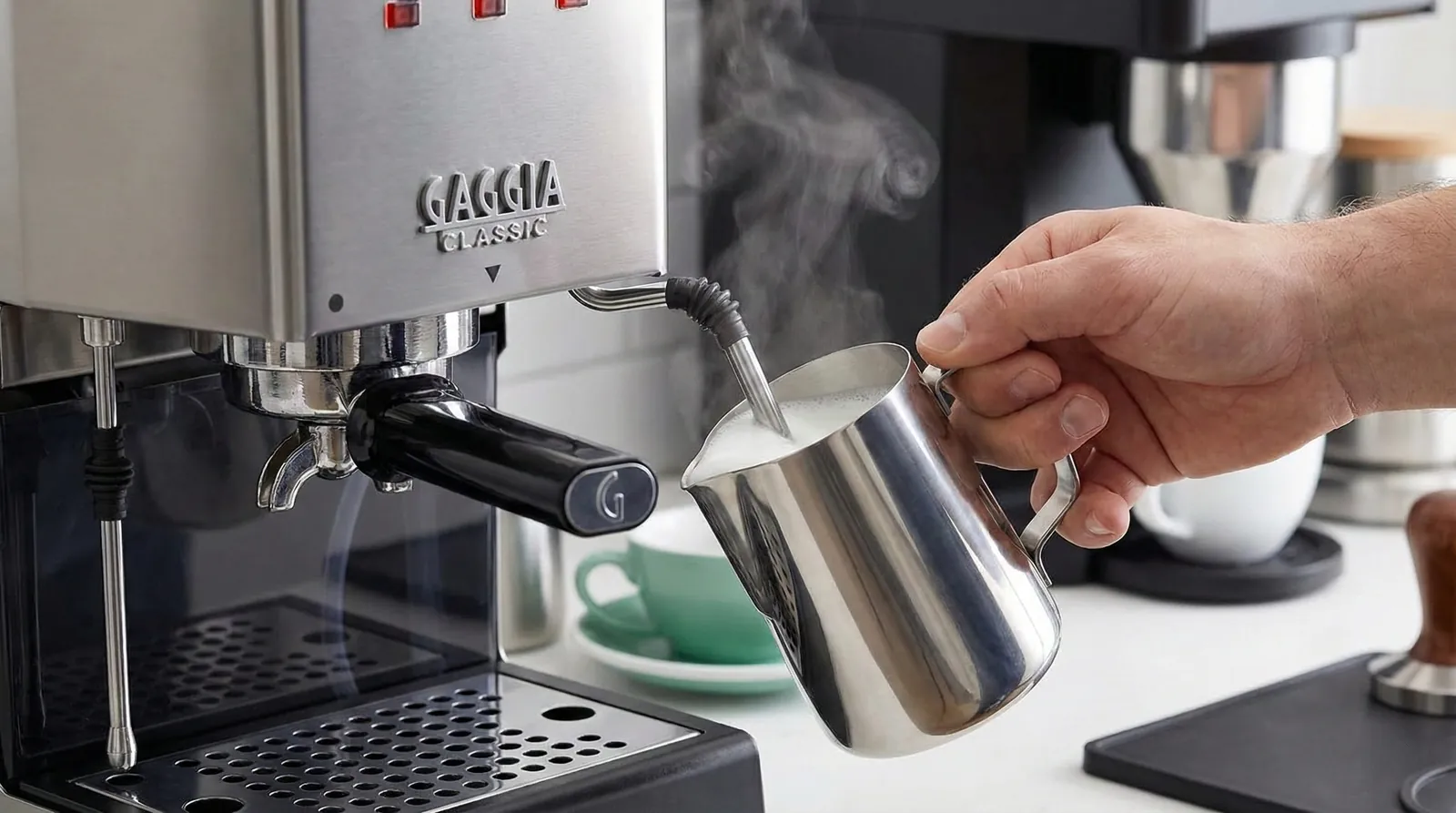
Cooling-flush timing, uneven pressure and a wet workflow: what owners hit and how to fix it
Before you decide
Manual espresso machines require understanding of core components that affect extraction quality and long-term value:
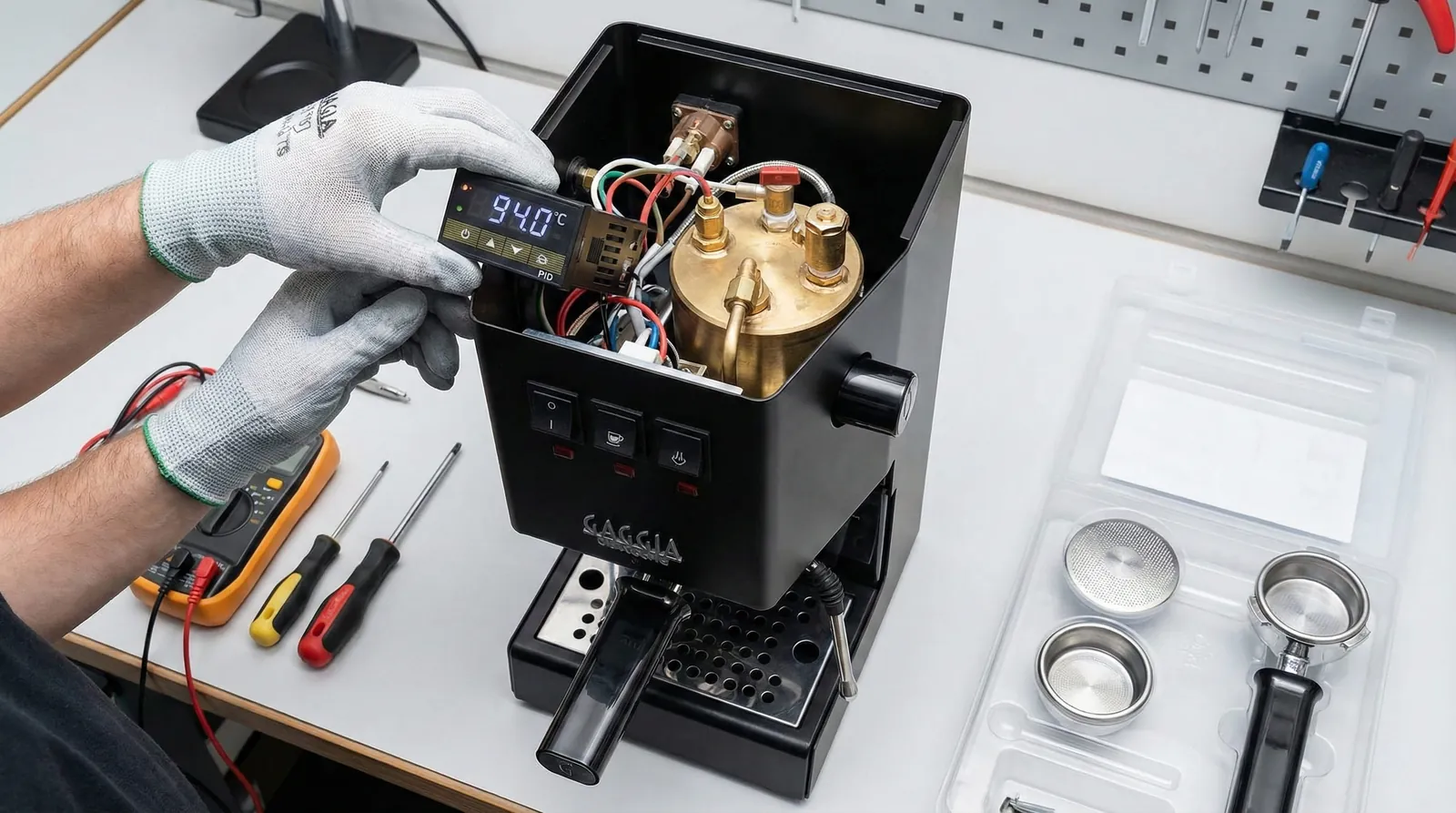
Entry-level manual machines often compromise on portafilter size (limiting accessory options), use thermoblock heating (less stable temperature), or lack solenoid valves (messy puck removal). The Gaggia Classic Pro succeeds by prioritizing commercial-grade components over convenience features, providing a platform that rewards skill development and accepts professional accessories.
See our full espresso machine reviews for context, the best espresso machines overall, or if budget is the priority, our best espresso machines under $500 guide.
If shots taste sharp or sour while you're still getting the hang of temperature surfing, our sour espresso diagnosis guide covers temperature alongside the other usual causes.
Need a grinder for the Gaggia? Our top espresso grinders under $300 compares electric and manual options that suit its 58mm basket.
Durability, upkeep and running costs once the novelty wears off.
Aluminum boiler, chromed brass group head, solid metal portafilter handle, and industrial-spec switches.
All internal components are standard commercial parts, easily replaced.
10+ years with regular maintenance; several community owners report 15+ years of service.
Routine upkeep is minimal: group head gasket replacement (annually, $8-10), shower screen cleaning (monthly), occasional pump servicing after 5+ years.
Excellent.
Gaskets, shower screens, baskets, and wand tips are stocked by every major espresso retailer, with strong aftermarket support from VST, IMS, and similar manufacturers. The standard 58mm portafilter also means off-the-shelf accessories like puck screens fit without hunting for a proprietary size.
Roughly $20-30/year for descaling solution, gaskets, and backflush detergent—about $100-150 over five years, well below super-automatic or proprietary-pod machines.
The user-serviceable design also cuts professional repair costs.
Standard 1-year limited warranty against manufacturing defects; extended coverage is rarely necessary given the build quality and longevity track record.
Well-maintained units generally hold their resale value well, with modded (PID, OPV-adjusted) units often commanding a premium.
This machine was purchased independently and was not provided by Gaggia.
Our rating, who it fits, and what it costs.
Gaggia Classic ProHighly recommended
4.7 / 5 — Is it worth buying?
The Gaggia Classic Pro delivers commercial-grade components—58mm portafilter, aluminum boiler, 3-way solenoid—at $450-$550, backed by a deep modding community that lets it keep pace with machines costing several times as much.
✓ Best for
✕ Skip if
Score breakdown
Shots tested
63+
Testing period
30 days
Ready to decide?
Our verdict: 4.7/5, highly recommended. Independently tested; commissions never change a rating.
See how the Gaggia Classic Pro compares with the other picks in each tested roundup. Owner guides for this model are listed below the roundups.
Closest alternatives in price and purpose, each tested the same way.
4.3Philips
A convenience-focused super-automatic with a fast-heating LatteGo milk system, built for daily lattes and cappuccinos.
 4.5
4.5Breville
An all-in-one grinder-plus-machine that delivers a complete espresso station in a single purchase — ideal for a first serious home setup.
 4.3
4.3De'Longhi
A semi-automatic with a Smart Tamping Station that consistently eliminates channeling — training wheels that work for espresso beginners.
 4.6
4.6DeLonghi
A machine built for simultaneous brewing and steaming, aimed at serious home baristas making several drinks a day.
Put it into practice with a free calculator built for what you just read.
Quick answers before you buy.
Yes, for hands-on enthusiasts, despite the decades-old core design. The commercial 58mm portafilter, aluminum boiler, and 3-way solenoid valve are the same fundamentals found on machines costing $1,200+.
Modding potential adds to that: a PID controller (~$100-$150) and the OPV adjustment can push it toward $800-machine performance. At $450-$550 it's the strongest value we've found for anyone who wants a traditional manual workflow.
It's not for beginners—steep learning curve, separate grinder required, no assisted features. If you want an easier path, look at the Bambino Plus or Barista Express Impress instead.
Five recurring issues:
1) Temperature surfing is required for consistent shots without a PID mod—either learn the flush technique or add a $100-$150 PID controller.
2) Milk steaming takes roughly a minute to come up to temperature after brewing, which feels slow next to dual-boiler machines.
3) There's no built-in shot timer, so an external scale with a timer becomes essential.
4) The drip tray is small and fills after 4-6 doubles.
5) Factory OPV pressure (12-14 bar) is higher than ideal for modern coffee—a 9-bar spring swap fixes this in about 15 minutes. Budget $200-$300 for a PID, scale, and decent tamper to get the most out of it.
Not really.
It's fully manual, requires temperature surfing, and offers no assisted features—complete beginners are usually better served by something like the Breville Barista Express Impress that automates the hard parts.
That said, if you're willing to practice for a few weeks, the Classic Pro teaches real espresso fundamentals—grind, dose, tamp, extraction—that transfer to any machine you own afterward.
Yes—there's no built-in grinder.
Budget a minimum of $200-$300 for something like the Baratza Encore ESP or Eureka Mignon Filtro; stepping up to the Eureka Mignon Specialita ($700-$800) or Niche Zero (~$650) noticeably improves consistency, and the Turin DF64 V5 ($399–$499) is the single-dose option to consider under $500.
The grinder matters as much as the machine, if not more—don't skimp here.
The Gaggia wins on value for most buyers. Both use 58mm commercial portafilters, but the Silvia has a brass boiler and the Gaggia an aluminum one, and the Gaggia costs roughly $450-$650 less ($450-$550 vs. $1000-$1100).
The Silvia has a larger boiler for slightly better stock thermal stability and a more refined steam wand, but the difference is subtle in daily use. The Classic Pro pulls ahead on modding potential and community support, with a well-documented OPV/PID upgrade path.
Choose the Silvia if minimal modding and marginally better stock build quality matter more to you than the savings.
Expect 10+ years with regular maintenance; several community owners report 15+ years.
Upkeep is light: a group head gasket annually ($8–$10) and monthly shower screen cleaning.
Parts are widely stocked because it uses standard commercial components, and the warranty is 1 year limited.
Choose the Classic Pro if you want a 58mm portafilter, metal construction and a modding path, and you're willing to learn temperature surfing.
Choose the Breville Bambino Plus if you want a faster, more automated routine.
Our top espresso machines under $500 roundup compares more options.
Yes, with one catch.
Its steam power is strong (we scored milk frothing 8.5/10), but as a single-boiler machine you must wait between pulling a shot and steaming, so milk drinks are sequential rather than simultaneous.
Reader questions
Questions or tips? Leave a comment
Ask about your setup or share what worked for you. Comments are checked before they appear.