Expert comparison

Updated October 11, 2026

Best Espresso Grinders Under $300 (2026)

The best espresso grinder under $300 for most people is the Baratza Encore ESP: fine micro-steps for espresso, clean filter grinds and a repairable build. The Breville Smart Grinder Pro is the easiest workflow for Breville machines, and the 1Zpresso K-Ultra gives the best grind quality if you will grind by hand.

Affiliate disclosure: this page contains Amazon affiliate links. We may earn a commission if you buy through them, at no extra cost to you, and it never affects our rankings. Learn more

Which is the best espresso grinder under $300?

A grinder that cannot grind fine and evenly will hold back any espresso machine, which is why it is the purchase most budget buyers regret skimping on. Under $300 you can get a genuinely espresso-capable grinder, as long as you choose one built for espresso rather than filter coffee. For grinders across every budget and brew method, see our best coffee grinders comparison.

The first decision is electric or manual. Electric grinders save time every morning; hand grinders give better grind quality per dollar but take a minute or more of cranking per shot. Our manual vs electric grinder guide covers that trade-off in depth. If you already own a machine, jump to which grinder suits your espresso machine.

Which grinder fits how you make coffee?

Match your routine to a grinder.

How do the picks compare?

Ratings are each grinder's overall editor rating out of 5 from its own review. Adjustment describes how finely each grinder can be tuned in the espresso range.

ProductBest forAdjustmentPriceRatingLink

Best overall under $300

Baratza Encore ESP

Best overall under $300

Best forFirst espresso setups; espresso plus filterAdjustmentMicro-stepped (espresso range)Price$199-$299Rating4.6/5Check current price

Best for Breville machines

Breville Smart Grinder Pro

Best for Breville machines

Best forBreville owners; grind straight into the portafilterAdjustmentStepped (60 settings)Price$179-$199Rating4.4/5Check current price

Best for filter-first homes

Fellow Opus

Best for filter-first homes

Best forMostly filter, with occasional milk drinksAdjustmentSteppedPrice$195-$225Rating4.5/5Check current price

Best hand grinder for espresso

1Zpresso K-Ultra

Best hand grinder for espresso

Best forBest grind quality if you will hand-grindAdjustmentVery fine stepsPrice$135-$265Rating4.7/5Check current price

Best budget hand grinder

KINGrinder K6

Best budget hand grinder

Best forLowest budget; pressurized basketsAdjustmentSteppedPrice$100-$110Rating4.0/5Check current price

Best espresso grinders under $300: reviews and trade-offs

Who each grinder suits, who should skip it, and the trade-offs.

1. Best overall under $300

Baratza Encore ESP

★ 4.6/5 rating

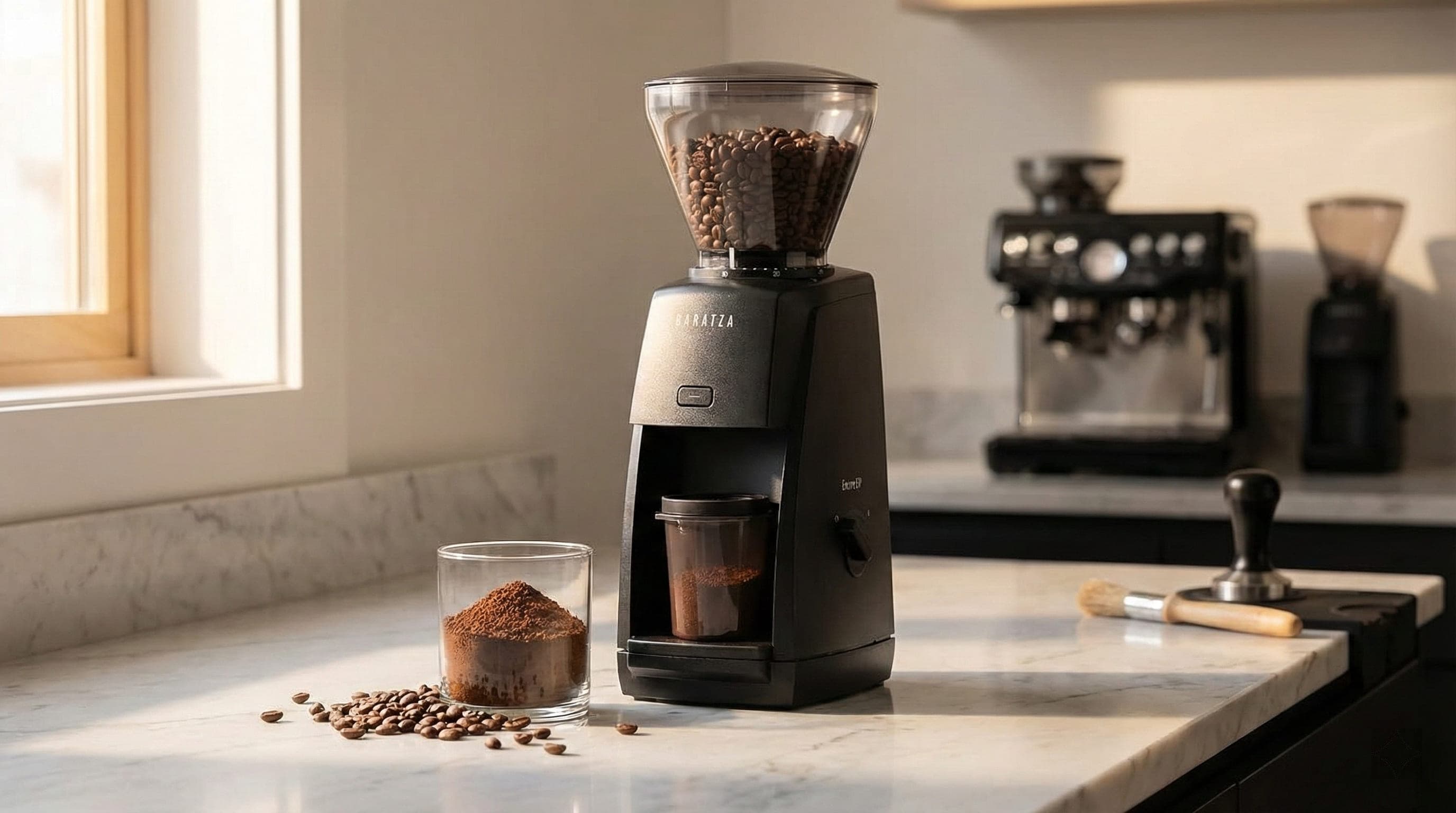
The Encore ESP is the grinder we would hand most people buying their first espresso setup. Its two-stage collar gives small micro-steps across the espresso range, so you can land between the clicks that trip up ordinary stepped grinders. It also grinds cleanly for pour-over and French press, and every part can be replaced at home. The price of that versatility is static: a quick water spritz on the beans before grinding is part of the routine, not an optional extra.

Best for
First espresso setups, multi-method households and anyone pairing a Bambino Plus, Gaggia Classic Pro or Dedica with a capable electric grinder.
Skip if
You single-dose many different beans and want near-zero retention, or you pull very light roasts as straight shots every day.
  • Fine espresso adjustment at this price
  • Also excellent for pour-over and French press
  • Repairable design built to last years
  • Pairs well with Bambino Plus and Gaggia machines
  • Static makes RDT a required habit
  • Higher retention than single-dose grinders
  • Plastic housing
  • Reaches its limits on very light roasts
2. Best for Breville machines

Breville Smart Grinder Pro

★ 4.4/5 rating

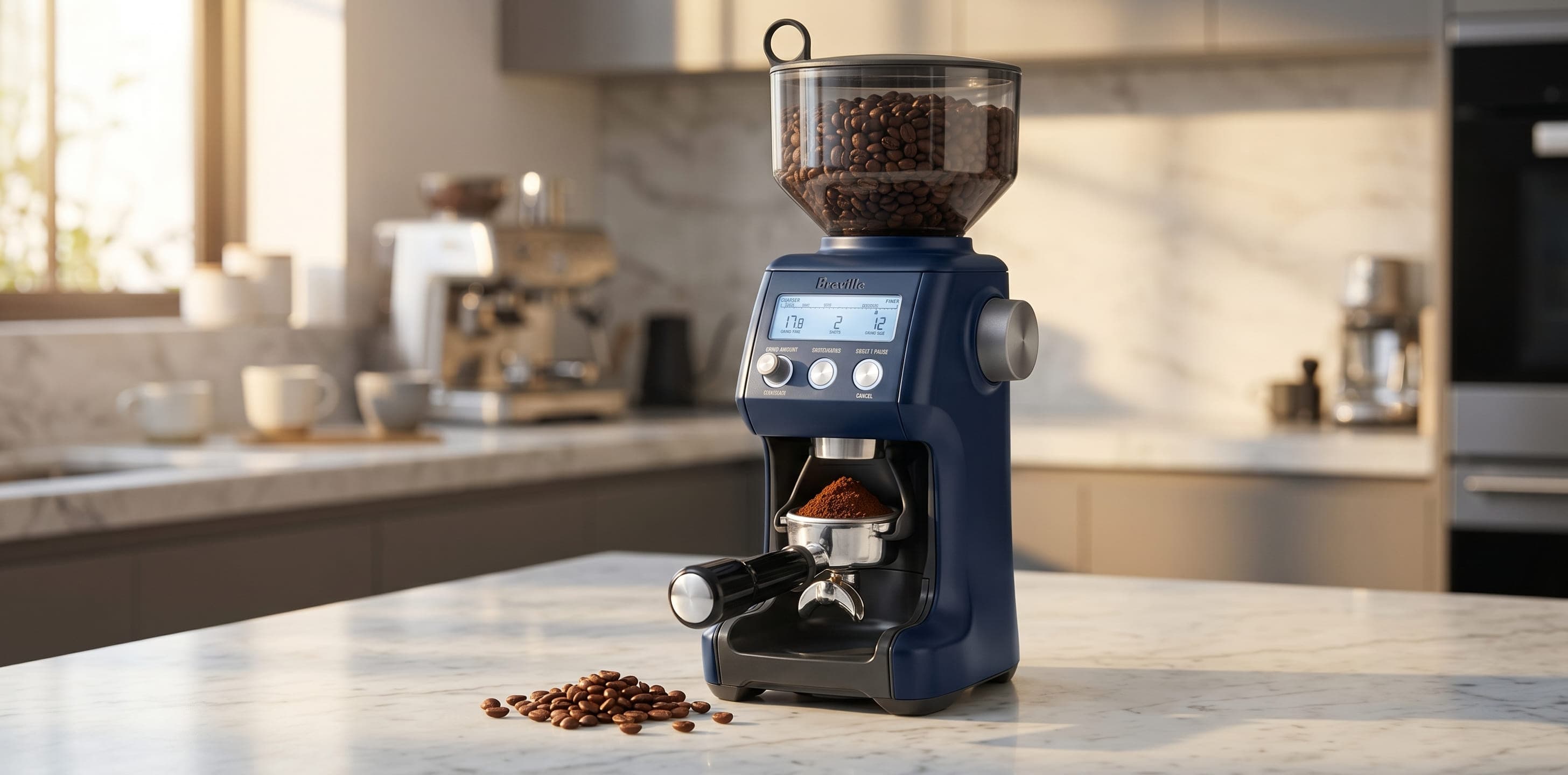
The Smart Grinder Pro is the easiest daily workflow on this list. It grinds straight into a portafilter through a cradle that fits 54mm and 58mm handles, and its timed dosing held within a few tenths of a gram across repeated shots. Sixty settings cover espresso through French press. The limit is that the settings are fixed steps, so occasionally the ideal grind sits between two clicks, and very light roasts take extra work.

Best for
Bambino Plus and other Breville owners who want the quickest grind-to-tamp routine at the lowest electric price.
Skip if
You want fine micro-adjustment for light roasts, or you mainly brew pour-over and care about clarity.
  • Hands-free grinding into the portafilter
  • Consistent timed doses
  • Lowest price among the electric picks
  • Natural partner for Breville machines
  • No micro-steps between settings
  • Retention is on the high side for single dosing
  • Static needs managing
  • Struggles with very dense light roasts

3. Best for filter-first homes

Fellow Opus

★ 4.5/5 rating

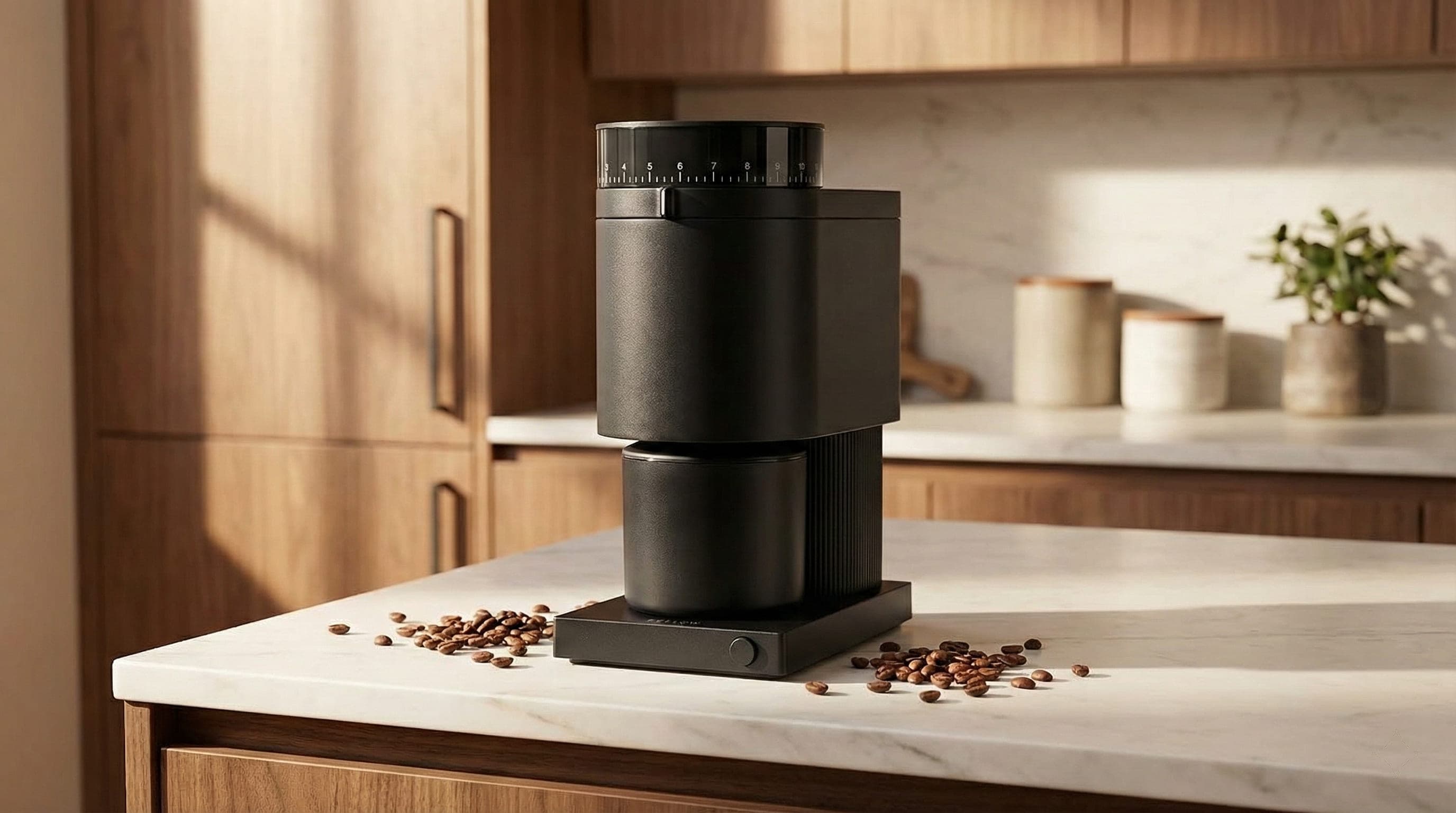
The Opus is the pick for homes that brew mostly pour-over or drip and make espresso drinks a few times a week. Its filter grinds rival grinders costing far more, retention is low and its anti-static design keeps the counter clean. Espresso is capable, especially in milk drinks, but dedicated espresso grinders produce more even shots, and its stepped adjustment can fall between ideal settings.

Best for
Households that drink mostly filter coffee and make lattes or cappuccinos a few times a week.
Skip if
Espresso is your main drink, especially straight shots or light roasts.
  • Excellent filter coffee for the price
  • Very little mess or retention
  • Easy to use with almost no learning curve
  • Good-looking on the counter
  • Espresso is good, not great, for straight shots
  • Stepped adjustment limits fine espresso tuning
  • Very light roasts push it to its limit
  • Not the best value if espresso comes first

4. Best hand grinder for espresso

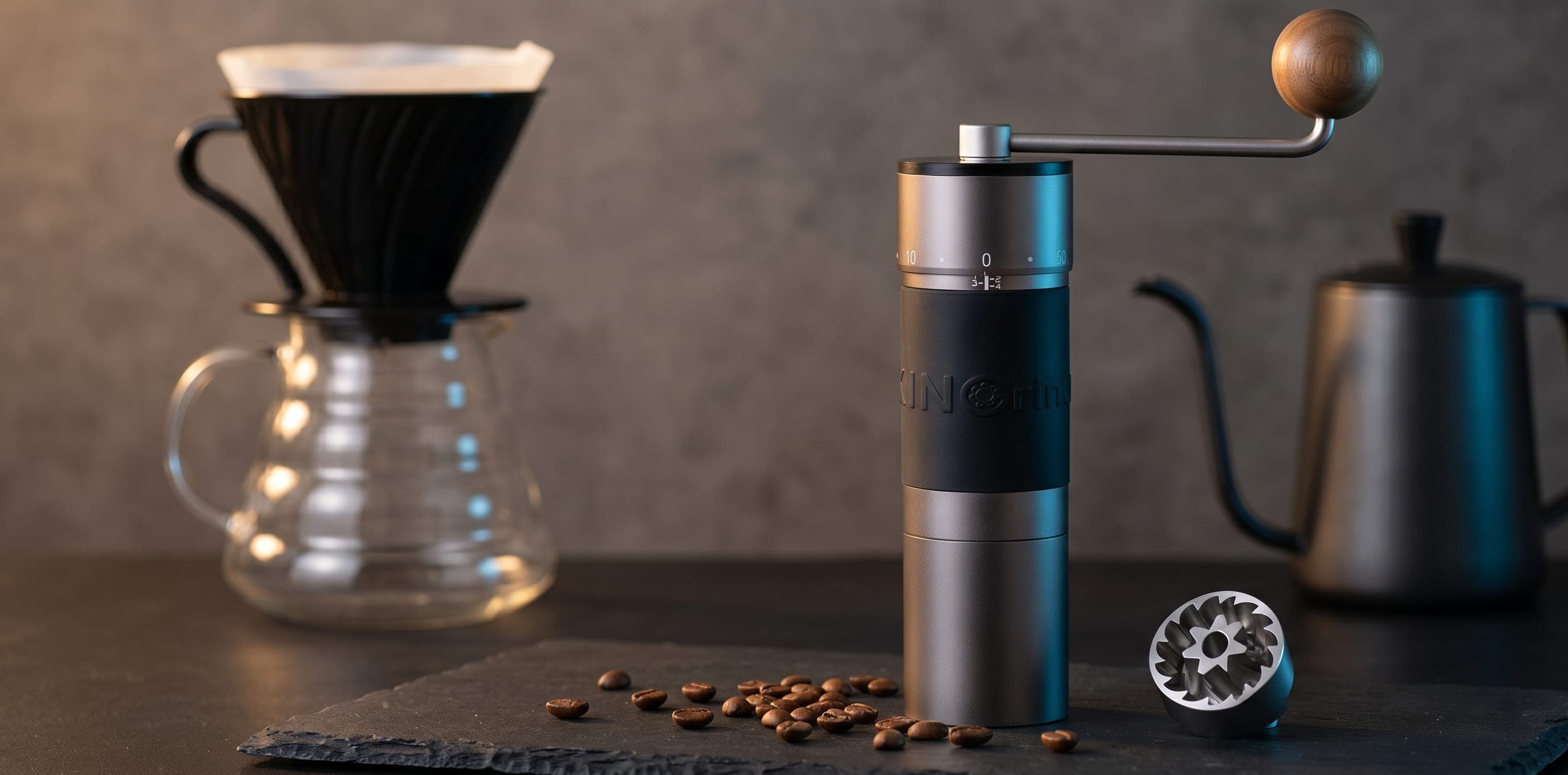
1Zpresso K-Ultra

★ 4.7/5 rating

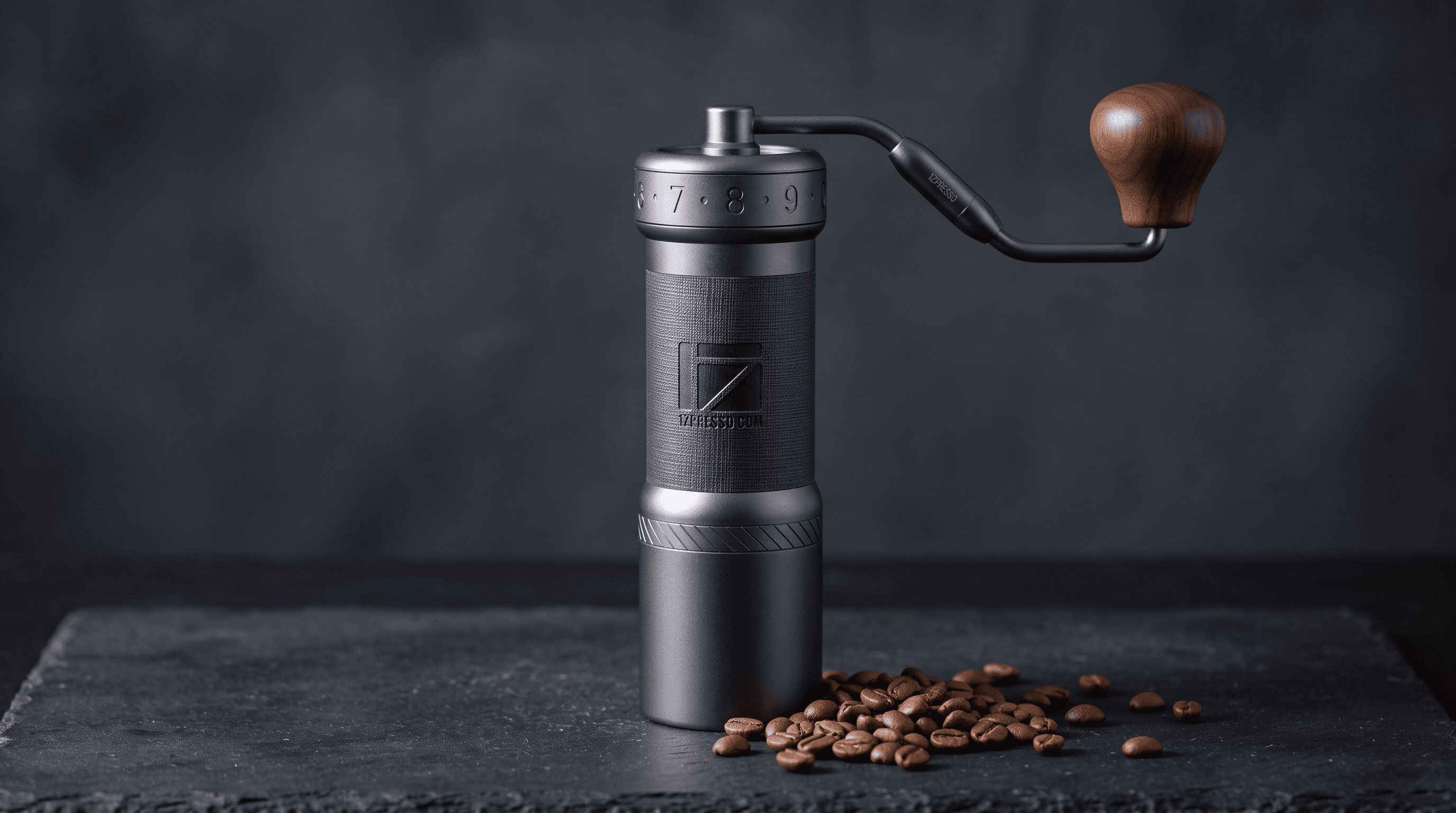
If you are willing to grind by hand, the K-Ultra gets you espresso grind quality that electric grinders at this price struggle to match. Its very small adjustment steps make dialing in straightforward, and an external dial means you change settings without taking it apart. The cost is effort and time: expect about a minute or more of cranking for each espresso dose, which is fine for one or two drinks a day and tiring for more.

Best for
One- or two-drink-a-day espresso drinkers who want the best grind quality under $300 and do not mind cranking.
Skip if
You make several espresso drinks a day, or you want push-button speed.
  • Excellent espresso grind quality for the money
  • Very fine adjustment makes dialing in easier
  • Also strong for pour-over
  • Quiet and portable
  • Roughly a minute or more of grinding per espresso dose
  • Not for households making many drinks
  • Moving across the full range takes many clicks
  • Pricier than other hand grinders

5. Best budget hand grinder

KINGrinder K6

★ 4.0/5 rating

The K6 is the cheapest grinder here that can still produce a usable espresso grind. Its 48mm burrs and large capacity make it especially good for filter batches, and its numbered dial makes settings easy to repeat. For daily espresso, its stepped adjustment is the main limitation: it is coarser in resolution than the K-Ultra, so dialing in takes more patience. It suits pressurized-basket machines and occasional espresso best.

Best for
Tight budgets, pressurized-basket machines like the Dedica or Stilosa, and filter brewers who want occasional espresso.
Skip if
Daily espresso on a non-pressurized basket is your priority; spend more on the K-Ultra or an Encore ESP.
  • Lowest-cost espresso-capable pick
  • Large burrs for the price
  • Repeatable numbered settings
  • Great for filter batches
  • Stepped adjustment limits espresso fine-tuning
  • Heavy for travel
  • Slow for espresso, like all hand grinders
  • Less refined build than pricier hand grinders

How do you choose an espresso grinder on a budget?

If this is your situation, this is the grinder to look at.

Electric or manual?

If: You make three or more espresso drinks a day

Go electric. The Encore ESP or Smart Grinder Pro will save you several minutes of cranking every morning.

If: You make one or two drinks and want the best grind quality

A hand grinder like the 1Zpresso K-Ultra outperforms electric grinders at the same price.

What else do you brew?

If: Espresso first, filter sometimes

The Encore ESP covers both well; its micro-steps help most in the espresso range.

If: Filter first, espresso sometimes

The Fellow Opus makes the cleaner pour-over and still handles milk-based espresso drinks.

Budget and machine

If: Your machine uses pressurized baskets (Dedica, Stilosa)

A premium grinder is partly wasted; the KINGrinder K6 or Smart Grinder Pro is enough. See pressurized vs non-pressurized baskets.

If: You can stretch past $300 and drink light roasts

Look at single-dose grinders like the Turin DF64 Gen 2, which handle light roasts and bean switching better.

Browse every grinder we review to compare more options.

Which grinder suits your espresso machine?

Pairings based on each machine's basket type, portafilter size and how much it exposes grind quality.

Breville Bambino Plus (54mm)

Encore ESP for the best shots, or the Smart Grinder Pro for grinding straight into the portafilter. With the Encore ESP, use a dosing funnel to transfer grounds. Machine details: Bambino Plus review.

Gaggia Classic Pro (58mm)

Encore ESP. The Gaggia rewards precise grinding, and the micro-steps let you land between settings. The K-Ultra is the hand-grinder alternative. Machine details: Gaggia Classic Pro review.

DeLonghi Dedica and Stilosa (51mm, pressurized)

Pressurized baskets forgive grind inconsistency, so the KINGrinder K6 or Smart Grinder Pro is enough. Spend more only if you plan to move to a single-wall basket.

Rancilio Silvia (58mm)

Encore ESP as a starting point, with careful puck prep. The Silvia exposes grinder limits quickly, so this is also the machine where stretching to a better grinder pays off most.

Breville Barista Express, Pro and Impress

Built-in grinder; you do not need one for medium and dark roasts. If light roasts stay sour after adjusting the built-in burrs, the Encore ESP is a sensible upgrade. See our Barista Express grind settings guide first.

Manual lever machines

Lever machines expose grind quality more than pump machines. The K-Ultra or Encore ESP both work well; fine adjustment matters most here.

What other grinders are worth considering?

Options that fit narrower needs, or stretch past $300.

Baratza Virtuoso+

A filter-first electric grinder with a large hopper; less suited to fine espresso dialing than the Encore ESP.

Timemore Chestnut C3

A portable hand grinder for pour-over and travel; slow and limited for espresso.

Mavo Phantox Pro

A stepless precision hand grinder for filter coffee that can also grind for espresso, slowly.

Turin DF64 Gen 2

A single-dose flat-burr grinder that costs more than $300 but handles light roasts and bean switching far better.

More grinders we review

How were these grinders ranked?

Each grinder was assessed in its own full review; this ranking weights what matters most for espresso on a budget.

  • Espresso grind quality: How evenly each grinder produces a fine espresso grind, judged from shot consistency and taste in its full review.
  • Adjustment resolution: Whether the grinder can move in steps small enough to dial in a shot, which matters more for espresso than for any other method.
  • Daily workflow: Grind speed, dosing, mess, retention and how easily grounds get into the portafilter.
  • Versatility: How well the grinder also handles pour-over, drip and French press for multi-method households.
  • Build and repairability: Materials, parts availability and how long the grinder is likely to last.
  • Value under $300: What each grinder delivers for its typical price, based on the range in its review.

Testing details are in each grinder's review. We do not accept paid placements or sponsored rankings.

What makes a grinder good enough for espresso?

The features that matter for espresso, in order of importance.

Fine adjustment

Espresso is extremely sensitive to grind size; a tiny change moves a shot from fast and sour to slow and bitter. Look for micro-steps, very small clicks or stepless adjustment in the espresso range.

Burr type and size

Burrs, not blades, are essential. Conical burrs dominate this price range and give a fuller-bodied cup; larger burrs generally grind faster and more evenly. Our burr grinder buying guide explains the trade-offs.

Retention and static

Coffee left in the grinder and grounds clinging to the chute affect dose accuracy and freshness. RDT, a light spritz of water on the beans, solves most static problems.

Workflow

Grinding directly into the portafilter is fastest. Grinders with a catch bin need a dosing funnel or careful transfer, which adds a few seconds.

Your roast level

Medium and dark roasts are forgiving and grind well on every pick here. Very light roasts need the finest, most even grinding and are where budget grinders show their limits.

What should you avoid in a budget espresso grinder?

Common mistakes that lead to sour shots and a second grinder purchase.

Blade grinders

They cannot produce an even espresso grind at any price.

Filter-only burr grinders

Many budget burr grinders cannot grind fine enough for espresso. Check that a grinder lists an espresso range before buying it for a pump machine.

Large fixed steps

Grinders with only a handful of espresso settings make dialing in frustrating, because the ideal grind often sits between two clicks.

Spending everything on the machine

The grinder affects the cup as much as the machine. If you are still choosing a machine, our best espresso machines for beginners shows the total setup cost for each pick.

Ignoring the grind chart

Every grinder has its own numbers, so use a starting chart and adjust by taste. Our coffee grind size chart explains how grind changes the cup.

What does it take to own an espresso grinder?

Small habits and cheap extras that keep any grinder performing.

Cleaning the burrs

Coffee oils and fines build up on burrs and slowly change the grind. Brush the burrs every few weeks and do a deeper clean every few months, more often with oily dark roasts. Our maintenance guide covers the routine for your whole setup.

Burr wear and replacement

Steel burrs dull gradually over years of home use. Grinders with available replacement burrs and parts, such as the Encore ESP, can be refreshed rather than replaced.

Dosing tools

Catch-bin grinders benefit from a dosing funnel that fits your portafilter, and every setup benefits from a scale that reads to 0.1g so you can check your dose.

Static control

A small spray bottle for RDT costs almost nothing and removes most static and mess. A WDT tool helps break up clumps once the grounds are in the basket.

Fresh beans

The best grinder cannot rescue stale coffee. Buy beans roasted within the last few weeks and store them sealed; our guide to picking espresso beans explains what to look for.

Frequently Asked Questions

Quick answers before you buy.

Yes, for medium and dark roasts and most home setups.

Grinders like the Baratza Encore ESP and hand grinders like the 1Zpresso K-Ultra grind fine and evenly enough for good espresso.

Very light roasts and single-dosing workflows are where more expensive grinders pull ahead.

Yes, a good one is.

Hand grinders like the K-Ultra often grind more evenly than electric grinders at the same price.

The trade-off is time and effort, typically a minute or more per espresso dose, so they suit one or two drinks a day.

Manual vs electric grinders →

The Baratza Encore ESP is our first choice for the Bambino Plus, with the Breville Smart Grinder Pro as the easiest workflow because it grinds straight into the 54mm portafilter.

Both handle medium and dark roasts well.

Bambino Plus vs Barista Express →

No.

Stepless adjustment helps, but fine micro-steps like the Encore ESP or very small clicks like the K-Ultra are enough for most home espresso.

Large fixed steps are the real problem, because the right grind can fall between two settings.

No.

Blade grinders chop beans into a mix of dust and chunks, which causes uneven, sour-and-bitter shots.

Even the cheapest burr grinder on this page is a large step up.

Burr vs blade grinder →

Not for medium and dark roasts; its built-in grinder handles them.

Consider a separate grinder only if you drink light roasts and the built-in grinder cannot go fine enough even after adjusting its upper burr.

Barista Express grind settings →

Retention is the coffee left inside the grinder after each grind.

It matters most if you switch beans often, because old grounds mix into the next dose.

For one bean at a time, a gram or two of retention is a minor issue.

Static.

Dry beans and fast-spinning burrs build a charge that makes grounds cling and scatter.

A single light spritz of water on the beans before grinding, known as RDT, fixes most of it.

Encore ESP grind settings and RDT →