
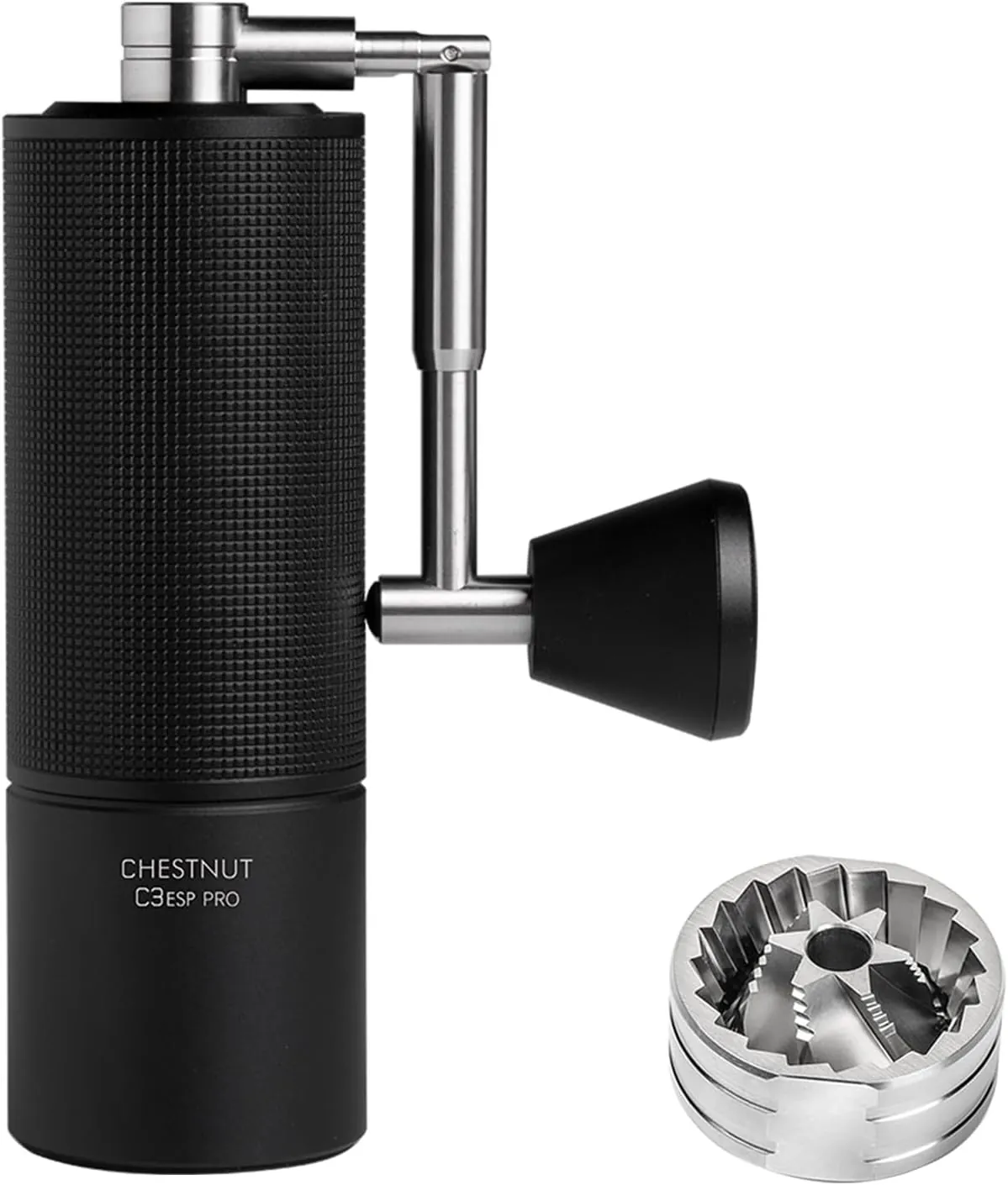
Timemore Chestnut C3
4.4
Best forBest Manual Overall
Burr Type: Conical (38mm)
Price: $99-$149
Affiliate link: we may earn a commission at no extra cost to you.
Grinder Guides
Last updated
Manual vs electric grinders compared on speed, grind quality, noise and cost, with a clear pick for espresso, pour-over and travel.
Affiliate disclosure: this page contains Amazon affiliate links. We may earn a commission if you buy through them, at no extra cost to you, and it never affects our rankings. Read our full affiliate disclosure
Choose manual for quiet, portability and the best grind per dollar. Choose electric for speed, big batches, or espresso at 3+ shots a day (mid-range or above).
Side by side on the factors that decide most purchases.
| Factor | Manual | Electric |
|---|---|---|
| Speed | 60-90 seconds per dose | 5-10 seconds |
| Grind quality | Best value; premium models rival pricier electrics | Wins for espresso at $500+ |
| Noise and heat | Silent, almost no heat | Louder, some friction heat |
| Portability | Light, no power needed | Needs an outlet |
| Upkeep | Few parts, nothing to burn out | Brush chamber every 1-2 weeks; motor can fail |
| Typical cost for good results | $80-200 | $150-300 and up |
Speed
Grind quality
Noise and heat
Portability
Upkeep
Typical cost for good results
Match the grinder to how you brew.
Quick decision guide
You travel, live in an apartment, or brew 1-2 servings at a time
Manual.
You brew several cups a day, entertain, or have arthritis or wrist issues
Electric.
You pull espresso at home most days
Electric from mid-range up, or a premium manual if you accept the cranking.
Many enthusiasts own both: a manual for travel and pour-over, an electric for home espresso.
Grind fineness and batch size change the answer.
| Method | Manual | Electric |
|---|---|---|
| Espresso | Premium manuals work; no static clumping | Better for daily shots and milk drinks |
| Pour-over, drip | Excellent for 20-30 g in about a minute | Needed for big batches |
| French press, cold brew | Fine for a press; slow for cold brew (100+ g takes 5-10 minutes) | Better for cold brew |
| AeroPress, moka pot | Ideal: quiet and single-serve | Not necessary |
Espresso
Pour-over, drip
French press, cold brew
AeroPress, moka pot
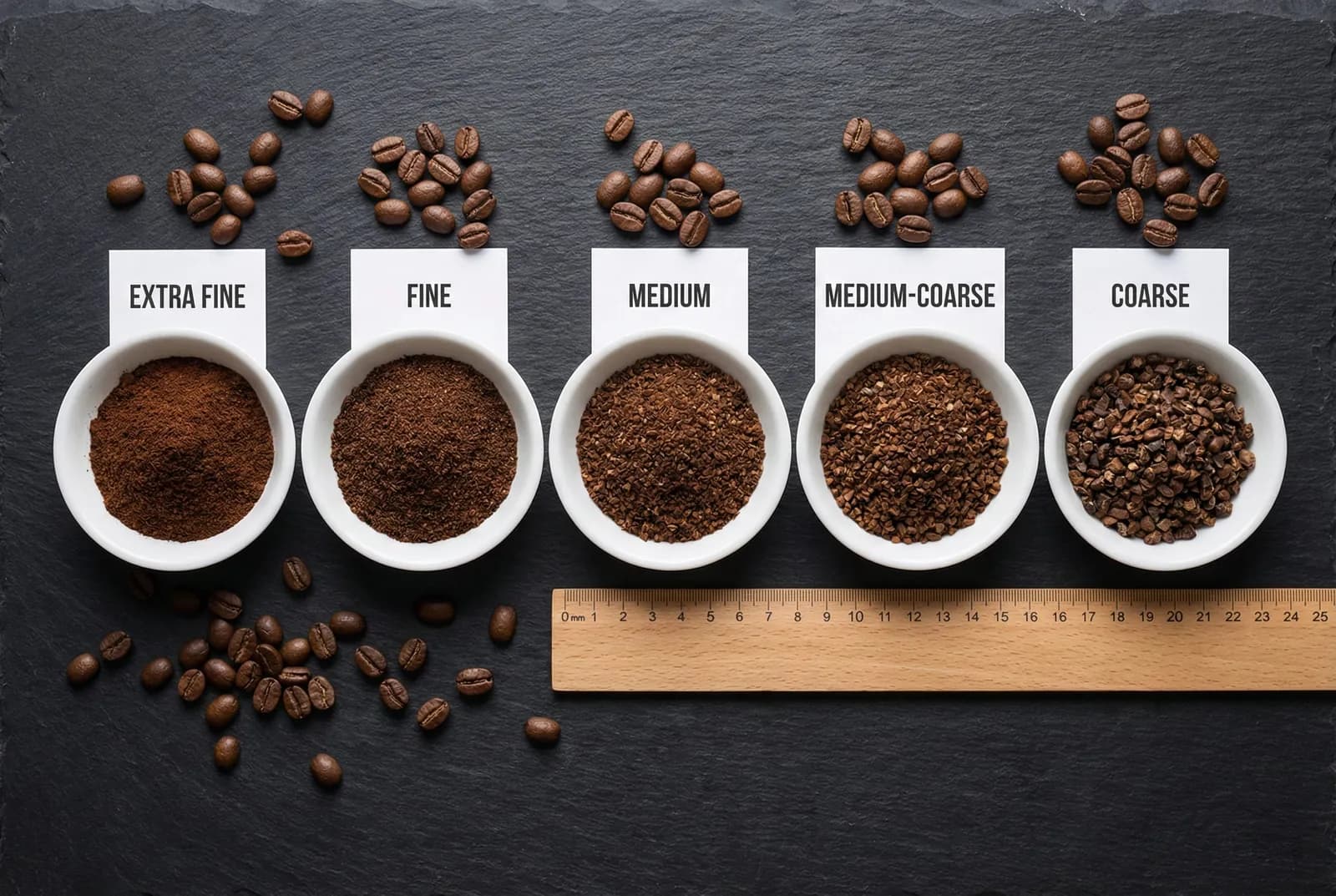
Target sizes are in the coffee grind size chart. For burr shape and burr vs blade, see how to choose a burr grinder and burr vs blade grinders. The grind size calculator gives a starting point for each brew method.
Price tiers and what you get at each.
| Tier | Manual | Electric |
|---|---|---|
| Budget | $30-80: fine for beginners, inconsistent for espresso | $50-150: often worse than a manual |
| Mid | $80-180: excellent value | $150-300: reliable conical burrs |
| Premium | $200-500: can match $600+ electrics | $300-2,000+: espresso-capable to commercial |
Budget
Mid
Premium
Burr design matters more than whether a motor turns it.
Both types use burrs, two toothed surfaces that crush beans to a controlled size. What changes is the drive: your arm, or a motor. Grind quality depends on burr geometry, burr size, alignment and the stepped or stepless adjustment, not on the motor.
A good manual grinder can match an electric grinder costing far more because the cost goes into the burrs, not the electronics. The trade-off is effort and speed: fine espresso grinding is hard work by hand, and hand grinders usually have slower throughput. Electric grinders add retention, noise and static, but they handle several cups quickly.
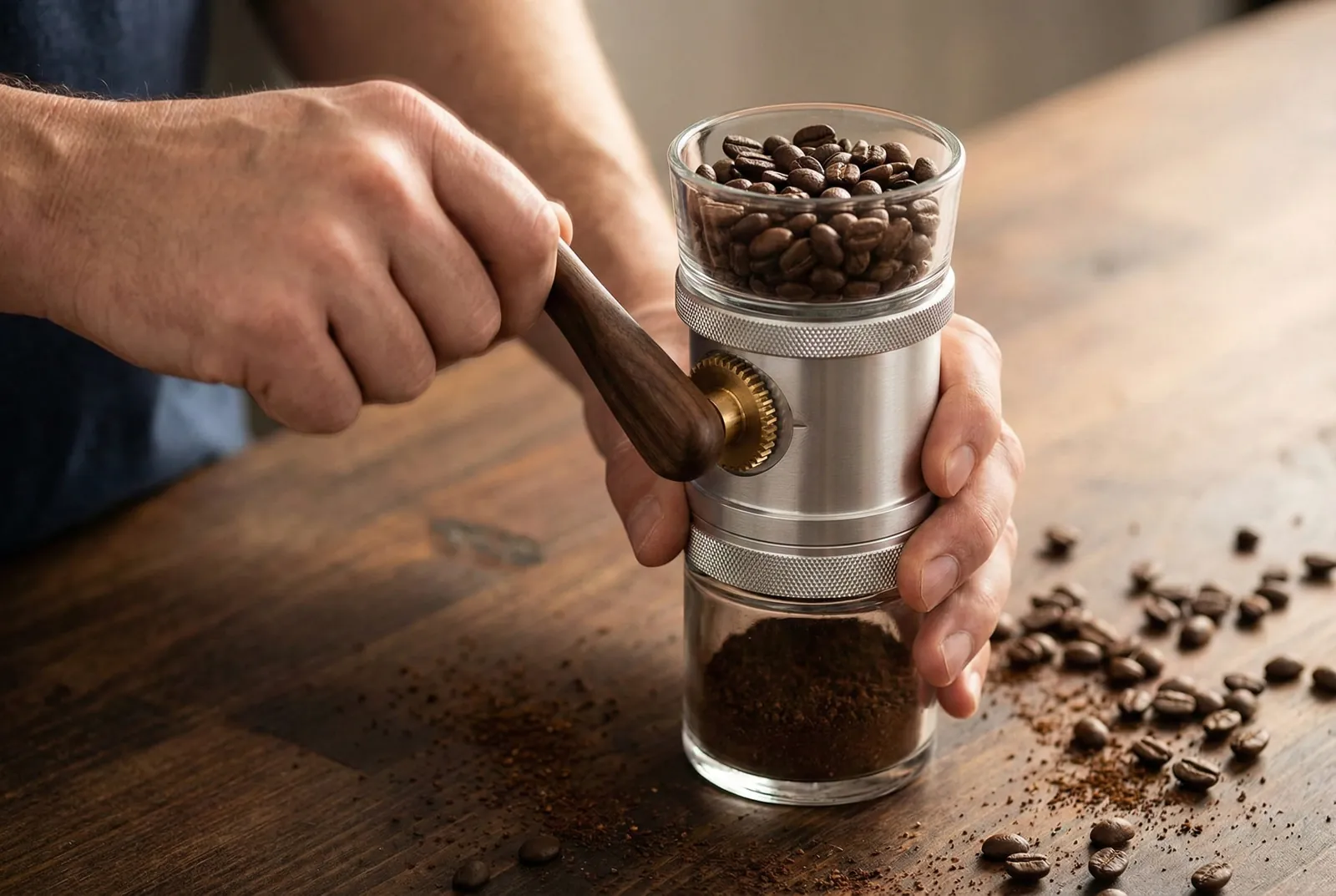
Build quality matters more on a hand grinder than its size suggests. Two bearings holding the central shaft keep the burrs aligned as you turn, which gives a more even grind; cheaper models with a single bearing or loose shaft can wobble and produce more fines. A solid handle, a smooth turn and a clear, numbered adjustment are signs of a hand grinder that will stay consistent for years.
What current grinders and habits offer.
One more consideration is how you switch between brew methods. If you make espresso in the morning and pour-over in the afternoon, a hand grinder with a numbered dial makes it easy to return to each setting, and some people keep two inexpensive hand grinders set for different methods. Electric grinders with stepped settings also make switching easy, while stepless electric grinders need you to note your settings carefully, because moving from espresso to filter and back can take a few test brews to land again.
Fine for one or two cups; tiring for a household.
Grinding time depends on the grinder, the beans and the grind size. As a rough guide, a good hand grinder takes well under a minute for a single filter dose and noticeably longer for an espresso dose, because finer grinding needs more turns. Light roasts are harder and slower to grind than dark roasts. An electric grinder does either in seconds at the press of a button.
Size, noise and mess differ more than people expect.
Hand grinders are quiet, take up the space of a pepper mill and store in a drawer, which suits small apartments and early mornings when others are asleep. Electric grinders are louder for a few seconds, need counter space near a socket, and some throw static-charged grounds around the counter. A drop of water on the beans before grinding (often called RDT) and a light tap on the chute cut down on static and mess.
Retention, the coffee left inside the grinder after each use, also matters. Hand grinders hold almost nothing, so every cup is fresh. Some electric grinders retain a little coffee between uses, which ends up in your next cup; single-dose designs reduce this. If you are weighing up your first grinder, burr vs blade grinder and the grind size chart help you decide which features you actually need.
Yes, if it has fine enough steps; most budget hand grinders do not.
Espresso needs a fine grind and small, repeatable adjustments, because a single step can change a shot from too fast to too slow. Hand grinders built for espresso have tight burr alignment and fine click steps, often with many clicks within the espresso range. Budget hand grinders designed for filter coffee usually jump too far between clicks to dial in a shot precisely. Log a shot in the espresso dial-in calculator to see whether to grind finer or coarser.
The trade-off is effort. Grinding an espresso dose by hand takes noticeably longer than a filter dose, and light roasts are harder work still. That suits someone making one or two shots a day who wants top grind quality for the money, or who wants a travel setup. If you make several milk drinks every morning, an electric espresso grinder will feel far easier. Our how to choose a burr grinder guide lists the features to check, and how to dial in espresso shows how small grind changes affect a shot.
Our picks for each type; read the review before you buy.
Side by side
| Product | Best For | Burr Type | Price | Buy |
|---|---|---|---|---|
Timemore Chestnut C3 4.4 | Best Manual Overall | Conical (38mm) | $99-$149 | Check current price |
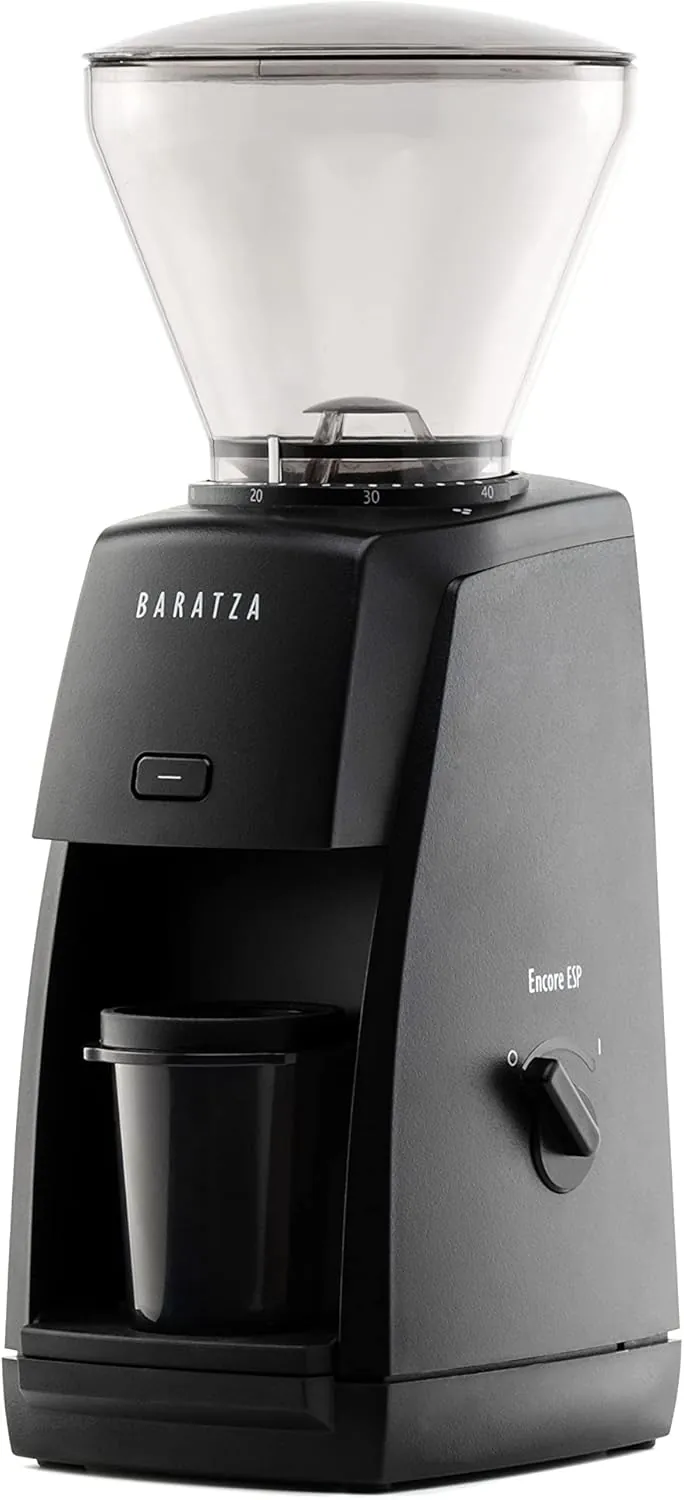 Baratza Encore ESP 4.7 | Best Electric Overall | Conical (40mm) | $199-$299 | Check current price |
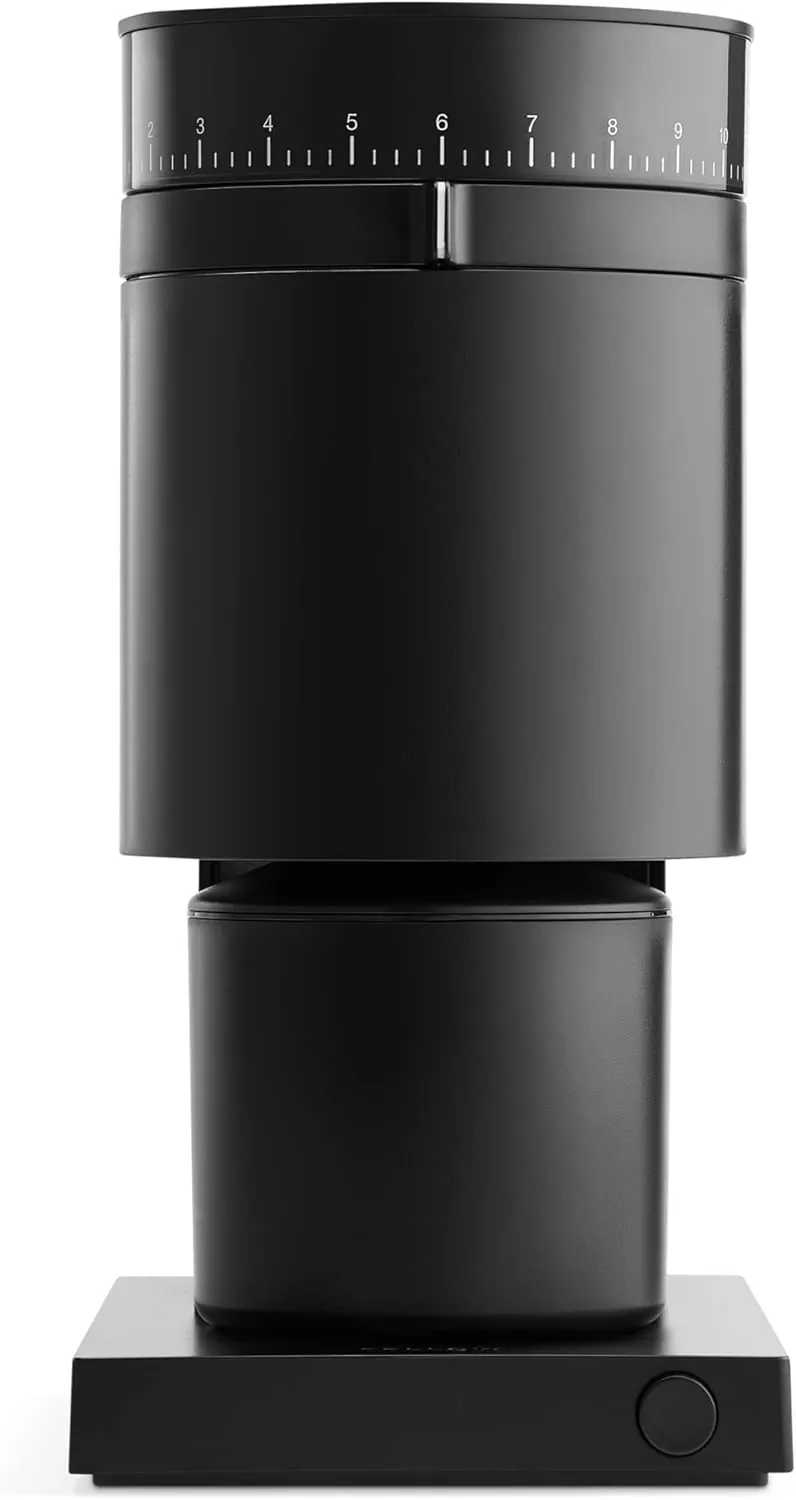 Fellow Opus 4.6 | Versatile Electric | Conical (40mm) | $195-$225 | Check current price |
Affiliate link: we may earn a commission at no extra cost to you.
Affiliate link: we may earn a commission at no extra cost to you.
Affiliate link: we may earn a commission at no extra cost to you.
Best high-capacity manual
48mm titanium-coated conical burrs and a 55g hopper mean you can grind a full pour-over batch for two, or an entire AeroPress dose, in one load.
Best premium manual
German-engineered Nitro Blade burrs with fine click adjustment and a long-lived, repairable design. A premium choice for filter and espresso.
Affiliate links: we may earn a commission at no extra cost to you.
Prices change, so check current listings. Read the reviews for the Timemore Chestnut C3, Baratza Encore ESP and Fellow Opus, or a budget electric burr alternative in the KRUPS Precision Burr Grinder review, or browse the best coffee grinders.
Buying mainly for espresso? Our best espresso grinders under $300 compares electric and manual picks side by side, with a grinder matched to each espresso machine. Already own a hand grinder? Our Comandante C40 grind settings and KINGrinder K6 grind settings guides give starting clicks for each brew method.
Quick answers before you buy.
Premium manuals can match electrics costing 2-3x more; the cost is 60-90 seconds of cranking per dose, and budget manuals struggle at espresso-fine.
Possible but impractical: 100+ grams takes 5-10 minutes of cranking.
Manuals suit 15-30 g doses.
Neither wins outright.
Manual gives the best grind per dollar and portability; electric wins on speed and convenience.
Yes.
Pour-over needs a coarser grind that cranks quickly, so a good hand grinder is often the best value there.
Roughly a minute or two for a single dose, depending on the grinder, grind size and burr design.
Finer espresso settings take longer.
Burr grinders beat blade grinders for consistency.
Keep reading: more guides on the same topic.
 Explained
Grinder7 min read
Coffee grind size chart with micron ranges for espresso, moka pot, AeroPress, pour over, French press and cold brew, plus how to adjust.
 Compare
Grinder7 min read
Burr vs blade grinder: how grind consistency changes taste, who can keep a blade, and what a first burr grinder costs at each budget.
 Compare
Grinder6 min read
How to choose a burr grinder: conical vs flat burrs, features worth paying for, and the best grinder by brew method and budget.


Reader questions
Questions or tips? Leave a comment
Ask about your setup or share what worked for you. Comments are checked before they appear.