

Pick this if you want beans with a clear roast date
Onyx Coffee Lab Geometry
A light-roast specialty blend shipped soon after roasting, so you can plan storage from day one.
Updated
How to store coffee beans: airtight, dark and at room temperature, when to freeze them, and why the fridge and a glass jar on the counter go stale fast.
Affiliate disclosure: we may earn a commission from Amazon links here, at no cost to you.this page contains Amazon affiliate links. We may earn a commission if you buy through them, at no extra cost to you, and it never affects our rankings. DetailsRead our full affiliate disclosure
Store coffee beans whole, in an airtight, opaque container at room temperature, away from the stove, sunlight and the fridge. Buy what you will use in two to four weeks after the roast date, and freeze any extra in sealed single-week portions. Grind only right before you brew.
An airtight, opaque container and a cool cupboard cover most kitchens.
| Item | Why it matters |
|---|---|
| Airtight container | Oxygen is what turns roasted coffee flat and papery; a good seal slows it |
| Opaque walls (ceramic, steel or tinted) | Light speeds up the breakdown of coffee oils; a clear jar on the counter goes stale fastest |
| A cool, dry cupboard | Heat from an oven, kettle base or sunny window speeds staling; steam brings moisture |
| Beans with a roast date | Lets you plan your buying; a “best by” date alone tells you little |
| Freezer bags or small jars (optional) | For portions you will not open within about three weeks |
A one-way valve bag that you squeeze flat and clip shut is fine for the first week or two. Most quality roasters, including those behind Onyx Geometry and Stumptown Holler Mountain, ship in these bags.
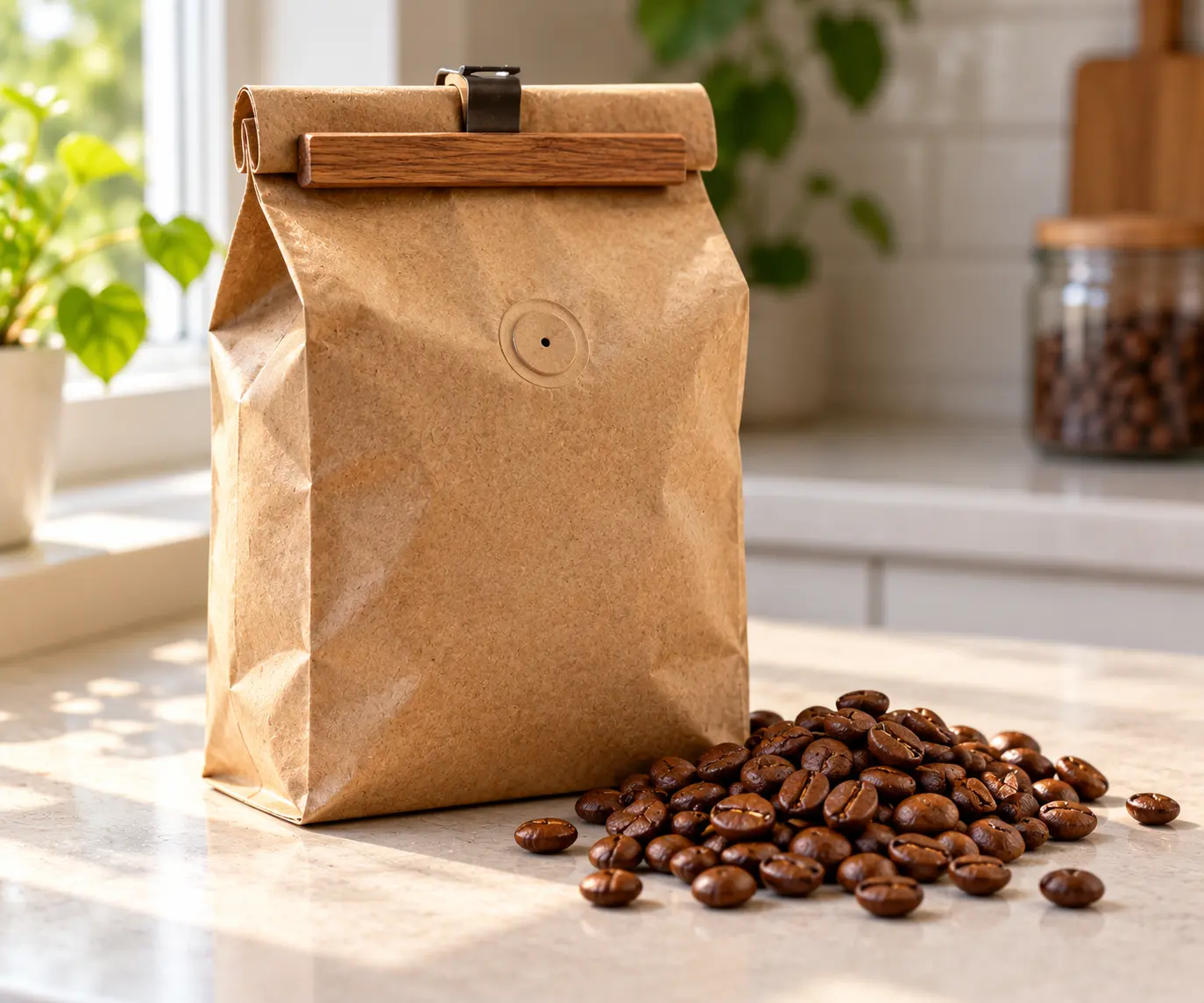
Seven steps from opening the bag to the last scoop.
Check the roast date. When the bag arrives. Plan to finish filter beans within about four weeks of it, espresso beans within about five.
Let fresh beans rest. Beans roasted in the last few days are still releasing CO2; leave the bag closed for 3–5 days for filter and 7–10 days for espresso.
Split off what you will not use soon. Anything you will not open within three weeks goes into the freezer now, in airtight single-week portions.
Move the rest into an airtight, opaque container. , or keep it in the valve bag with the air pressed out and the top clipped.
Store it in a cupboard. Away from the oven, dishwasher vent, kettle and direct sun.
Open it only to scoop. , and close it straight away. Each opening swaps in fresh oxygen.
Grind right before you brew. , and only the dose you need. Ground coffee loses aroma within minutes.
If your cup turns flat or sour partway through a bag while nothing else changed, staling is the usual reason. Our guide to why espresso tastes sour covers the other causes to rule out first.
Oxygen, light, heat and moisture all attack the same oils and aromas.
Roasting builds hundreds of aroma compounds and traps CO2 inside the bean. From the moment the beans cool, that gas seeps out and oxygen seeps in. Oxygen reacts with the oils, which is what makes old coffee taste flat, woody or like cardboard.
Heat and light speed that reaction up, and moisture makes it worse by breaking down the bean's surface. Darker roasts stale a little faster because roasting has opened the bean's structure and pushed oil to the surface; you can see the difference in our coffee roast levels chart.
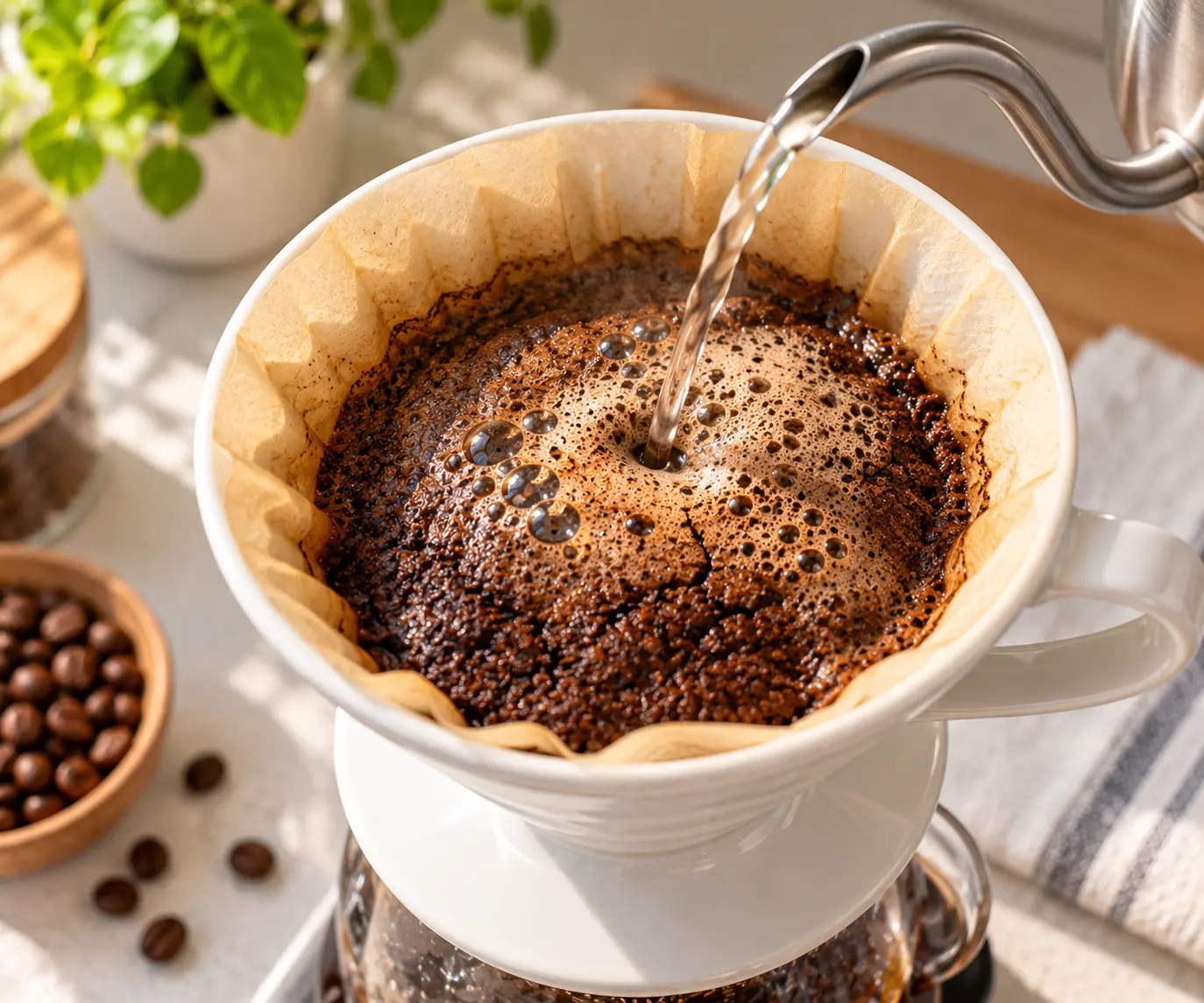
The escaping CO2 matters for brewing too. Fresh beans bubble hard when hot water hits them, which is the coffee bloom. Beans that barely bloom are usually past their best, and on an espresso machine they pour fast with thin, pale crema.
| Form | Stays at its best (recommended column) | What you notice after |
|---|---|---|
| Whole beans, sealed valve bag | About 2–4 weeks from roast for filter, 3–5 for espresso | Less aroma, weaker bloom, flatter cup |
| Whole beans, frozen in airtight portions | 2–3 months | Little change if the seal held |
| Pre-ground coffee, opened | A few days | Dull, bitter or papery taste |
| Beans in a clear jar in the sun | About a week | Stale, slightly rancid notes |
Whole beans, sealed valve bag
Whole beans, frozen in airtight portions
Pre-ground coffee, opened
Beans in a clear jar in the sun
Yes for beans you will not open for weeks, as long as they stay sealed and dry.
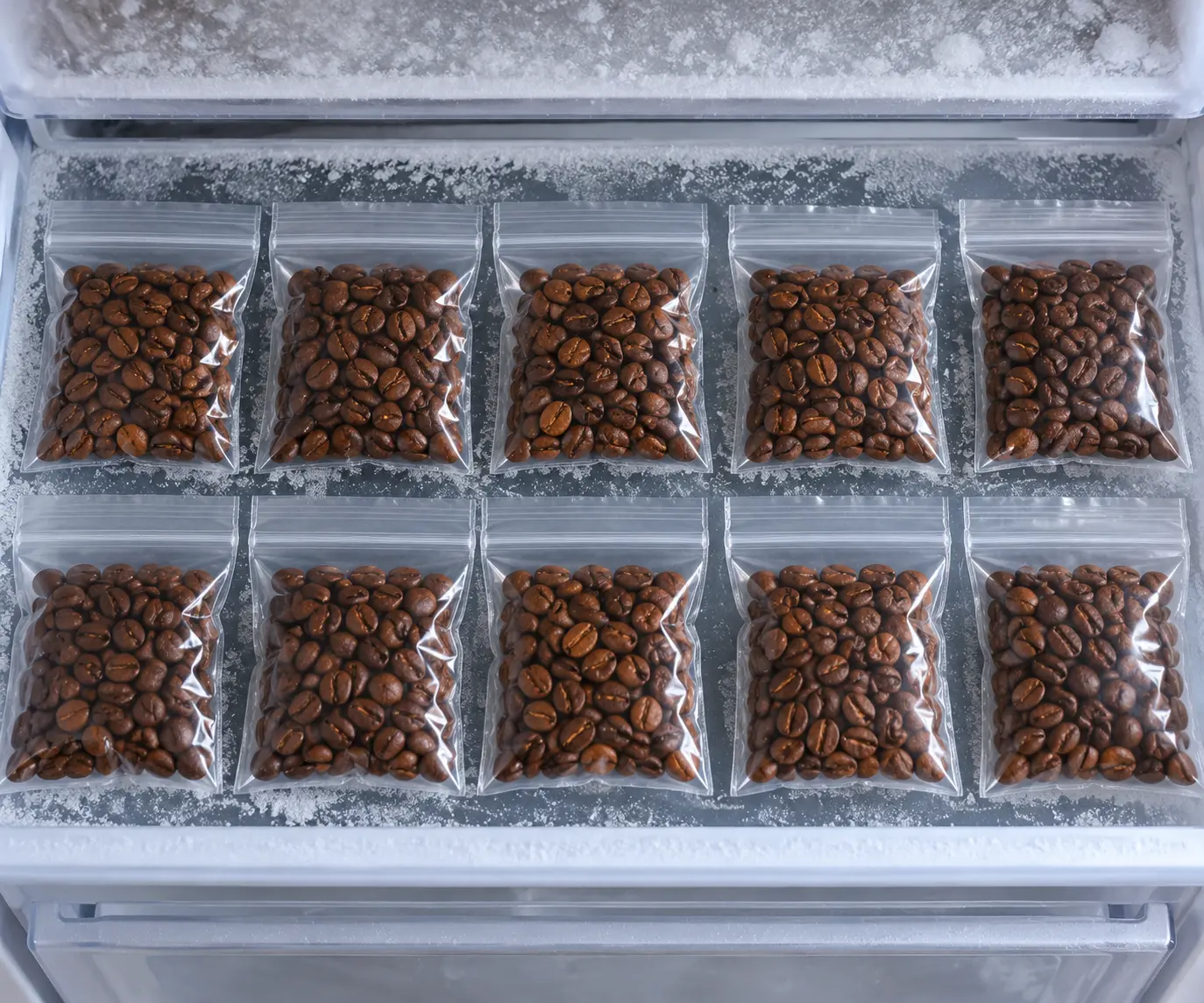
Freezing is the best way to hold beans for more than a month. Cold slows the staling reactions almost to a stop. The risk is moisture: every time a cold container is opened in a warm kitchen, water condenses on the beans.
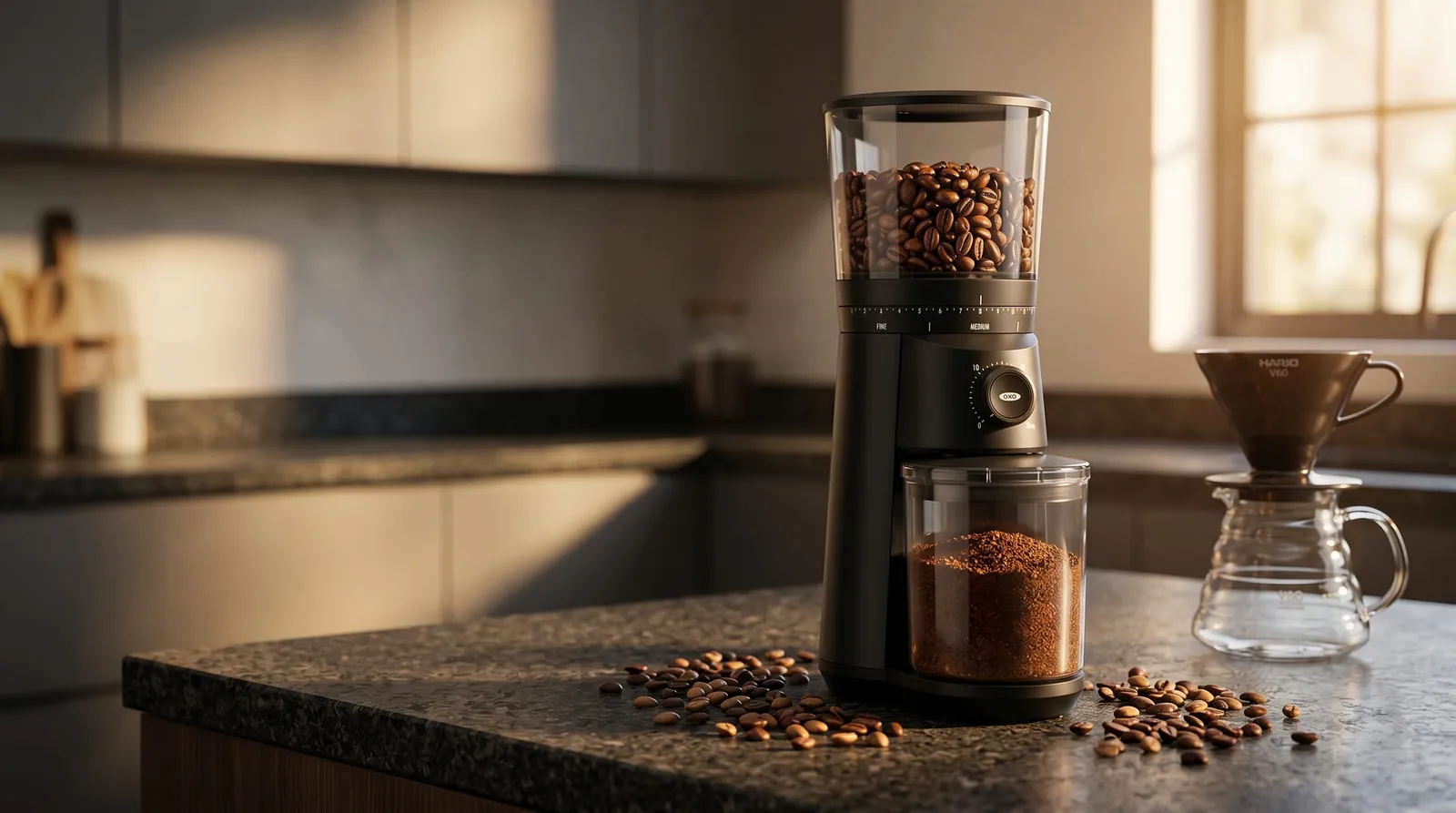
Single dosing, vacuum canisters and smaller bags have changed how keen home baristas store coffee.
The biggest shift is buying smaller and more often. A 12 oz (340 g) bag lasts one person drinking two cups a day about two weeks, which fits neatly inside the freshness window. A 2 lb supermarket bag usually does not.
Vacuum canisters with a plunger lid push most of the air out of the container as the beans run down, which helps once a bag is half empty. Plain opaque canisters with a good gasket work almost as well for a two-week supply. Whichever you use, wash it between bags so old oils do not taint new beans.
Single-dose grinders have changed hopper habits. A hopper full of beans sits in light and warm air on the counter, so it is better to weigh each dose and keep the bag sealed. Grinders such as the DF64 Gen 2 and Fellow Opus are built for this; the espresso bean guide explains how bean age changes your grind setting.
Supermarket espresso blends such as Lavazza Super Crema and illy Classico are packed in nitrogen-flushed bags or tins. They stay stable on the shelf until opened, then stale at the same rate as any other beans.
Pick this if you want beans with a clear roast date
A light-roast specialty blend shipped soon after roasting, so you can plan storage from day one.
Pick this if you need a shelf-stable espresso blend
A forgiving medium-roast blend in a sealed bag that keeps well until you open it.
Affiliate links: we may earn a commission at no extra cost to you.
It needs the same care, but it stales many times faster.
Grinding multiplies the surface that air can reach, so ground coffee loses most of its aroma within minutes to hours. Store it exactly like beans, airtight and dark, and finish an opened bag within a few days.
If you buy pre-ground because you have no grinder, a basic burr grinder is the single biggest freshness upgrade you can make. Our burr vs blade grinder guide explains why, and the best coffee grinders list covers every budget.
Pick this if you are moving off pre-ground coffee
An affordable burr grinder that lets you buy whole beans and grind each dose fresh.
Pick this if you brew both filter and espresso
A burr grinder with a fine espresso range and a coarse filter range in one body.
Most stale coffee comes from one of these five habits.
| Mistake | Fix |
|---|---|
| Clear glass jar on the counter | Move the beans to an opaque container in a cupboard |
| Keeping beans in the fridge | Use the cupboard for this week's beans and the freezer for the rest |
| Buying a large bag to save money | Buy a size you finish within four weeks, or freeze portions on day one |
| Filling the grinder hopper for the week | Weigh each dose and keep the bag sealed |
| Thawing frozen beans with the lid open | Leave the portion sealed until it reaches room temperature |
Storage is only half of freshness. If your beans are fresh but the cup still tastes harsh, read why coffee tastes bitter.
Pick the step that matches your situation.
Quick decision guide
You buy pre-ground coffee
Compare the best coffee grinders and switch to whole beans.
You want fresh beans for espresso
See our best coffee beans for espresso.
Your beans bloom weakly in pour-over
Read what coffee bloom tells you about freshness.
You want to understand what you are buying
Start with what specialty coffee is.
Quick answers before you buy.
About two to four weeks for the best flavor, counted from the roast date rather than the day you open the bag.
Beans are still safe to drink for months, but they taste flatter and weaker as time passes.
Yes, if it has a one-way valve and a zip or clip.
Press the air out before closing it each time and keep it in a dark cupboard.
A thin paper bag with no seal should be emptied into an airtight container.
Yes.
Frozen beans grind slightly finer and more evenly, so you may need to coarsen the setting a step.
Grind only the dose you need and put the rest back in the freezer before it warms.
They help once a bag is half empty, because they push out the air above the beans.
A plain opaque canister with a tight gasket is close enough for a two-week supply, so a vacuum canister is a nice-to-have, not a must.
Yes, slightly more.
Decaffeination opens up the bean's structure, so decaf tends to stale a little faster.
Buy smaller bags and follow the same airtight, dark, room-temperature rules.
Stale beans smell faint or dusty instead of sweet, bloom weakly when hot water hits them, and brew a flat, papery cup.
On espresso they pour fast with thin, pale crema even at a finer grind.
Keep reading: more guides on the same topic.
 Explained
Coffee Education9 min read
Coffee roast levels chart comparing light, medium and dark roast by flavor, acidity, body and brew method, plus the caffeine myth.
 Compare
Buying8 min read
Pick espresso beans by roast, blend type, roast date and price, with a simple match-to-taste guide and reviewed bags to start with.
 Explained
Coffee Education8 min read
What is single-origin coffee? How it differs from blends and specialty grade, and what to check on the bag before you buy.
 Explained
Coffee Education7 min read
What is specialty coffee? It scores 80+ on the SCA scale. Learn how it is graded, how it differs from commercial coffee, how to spot it.

Reader questions
Questions or tips? Leave a comment
Ask about your setup or share what worked for you. Comments are checked before they appear.
Write a comment or question