
Descaler for espresso and drip machines
Urnex Dezcal
A citric acid-based scale remover that suits most home machines.
Maintenance Guides
Last updated
How to descale a coffee machine: drip, Nespresso, Keurig or espresso steps, vinegar vs descaler, and how often to descale.
Affiliate disclosure: this page contains Amazon affiliate links. We may earn a commission if you buy through them, at no extra cost to you, and it never affects our rankings. Learn more
Run a descaler through a brew cycle with no coffee or pods, soak it if the scale is heavy, then rinse twice with fresh water. Descale monthly in very hard water and every 6-12 months in soft water. It does not remove coffee oil, which is a separate cleaning routine.
What mineral buildup does inside the machine.
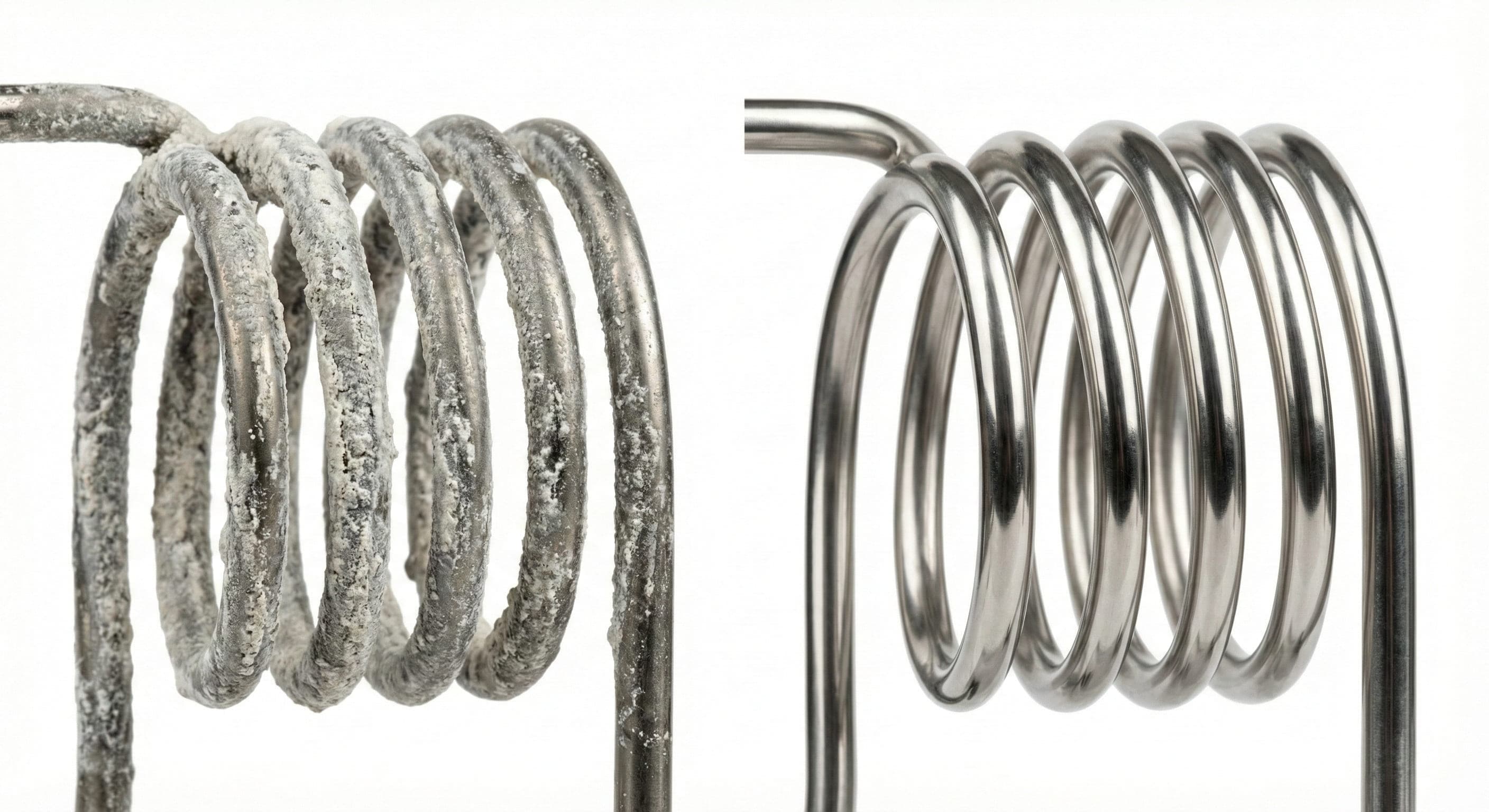
Scale forms when hot water deposits calcium on heating elements, pipes and valves. It builds silently with every brew.
Set the schedule by your water hardness, then by machine type.
| Water hardness | PPM | Descale every |
|---|---|---|
| Soft | <100 | 6-12 months |
| Moderately hard | 100-200 | 3-4 months |
| Hard | 200-400 | 2-3 months |
| Very hard | >400 | Monthly to 6 weeks |
Not sure? A water test strip costs under $10. Pod and espresso machines are more sensitive, so tighten the schedule one step.
| Machine | Key signal |
|---|---|
| Drip maker | Slower brew time |
| Nespresso | Orange indicator light |
| Keurig | Descale light or slow brew |
| Espresso machine | Cooler shots or slow flow |
Other signs: gurgling noises, less coffee per cycle, or white deposits in the reservoir. Cooler, flatter coffee is the most overlooked one.
Pick a descaler that protects seals, and when a substitute is fine.
| Option | Best for (recommended column) | Notes |
|---|---|---|
| Urnex Dezcal | Espresso and drip | Citric acid-based, gentle on seals. |
| Nespresso kit | Nespresso | Matches the brand spec and warranty. |
| Keurig solution | Keurig | Safest on K-Café and K-Supreme plumbing. |
| Food-grade citric acid | Budget DIY | 1 tbsp (about 15 g) per liter of water. |
Descaler for espresso and drip machines
A citric acid-based scale remover that suits most home machines.
Affiliate links: we may earn a commission at no extra cost to you.
Quick decision guide
Your machine is under warranty (Nespresso, Keurig, espresso)
Buy the maker-approved or purpose-made descaler.
You descale often and want the cheapest option
Use food-grade citric acid. Keep vinegar for emergencies.
About 30-45 minutes for almost any drip machine.
Empty. The carafe, filter and grounds.
Mix the solution. One Dezcal packet or 1 tbsp citric acid in 32 oz warm water. Vinegar, emergencies only: equal parts with water.
Fill the reservoir. And start a brew with the carafe in place.
Pause halfway. And soak 15-30 minutes (longer for heavy scale).15-30 minutes
Finish the cycle. Cloudy liquid is dissolved scale.
Rinse twice. Run a full cycle of fresh water, discard, repeat.
Wash. The carafe, basket and warming plate.
Use the dedicated descaling mode; buttons differ by line.
Check your manual for the exact button sequence. Original Line and Vertuo Line differ (see Nespresso Vertuo vs Original).
Empty. The capsule container and drip tray, and place a 1-liter container under the outlet.
Mix. One Nespresso descaling sachet into 0.5 liters of fresh water in the reservoir.
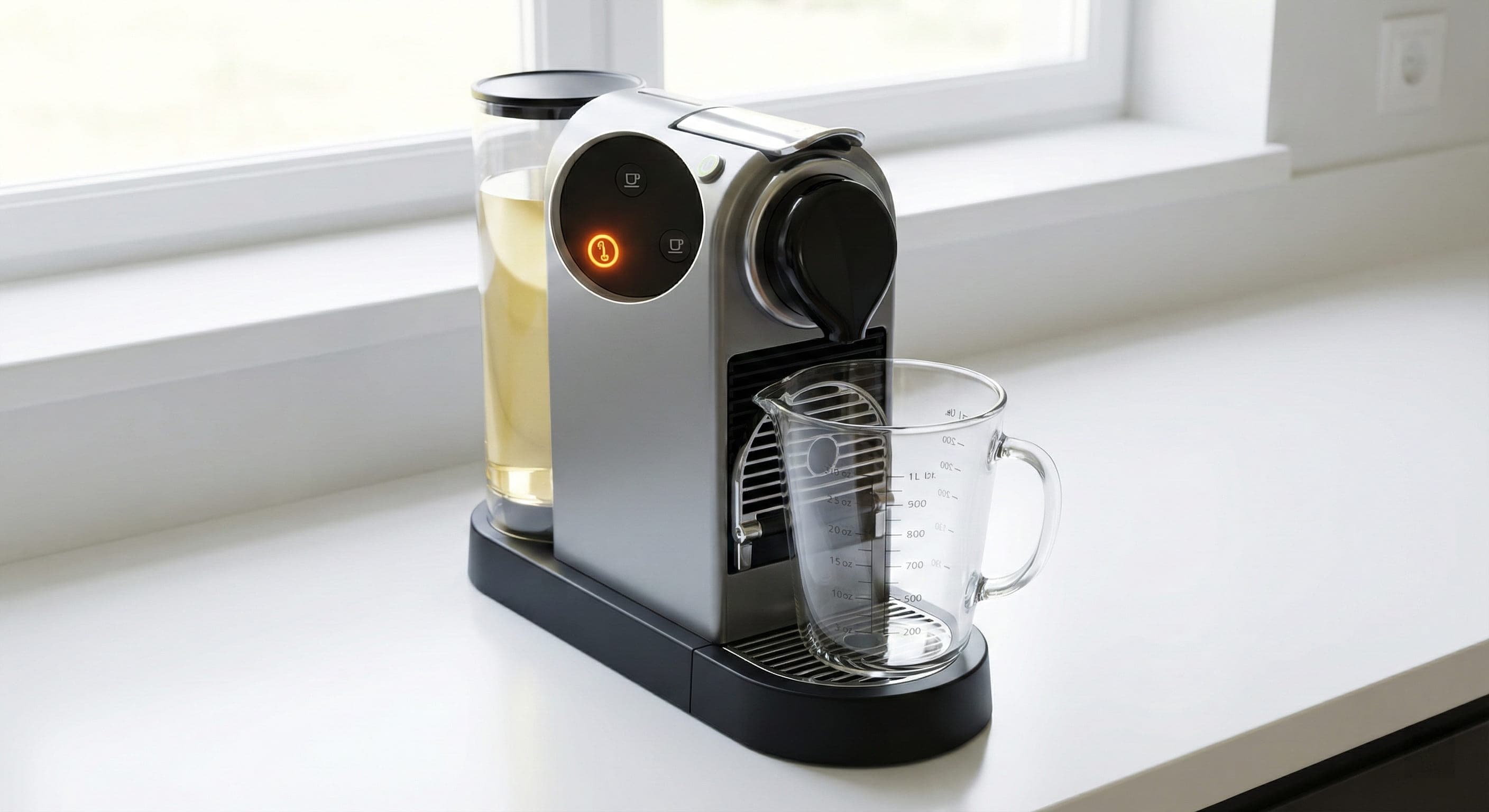
Enter descaling mode. Original Line: hold Lungo and Espresso together for 3 seconds. Vertuo: hold the button for 7 seconds until it blinks orange, then rotate the lever 3 times and press.3 seconds
Run the cycle. (about 20 minutes) without interrupting it.20 minutes
Rinse. With a full reservoir of fresh water when prompted.
Exit. The mode as your manual says, then rinse the tank and tray.
Most models have no descale mode, so you run solution, then rinse.
Power off,. Empty the reservoir and remove any K-Cup and the filter.
Add. The Keurig solution bottle (or 1 tsp citric acid in 10 oz water), then fill with fresh water.
Brew with no K-Cup. Into a large mug on the largest size. Discard and repeat until the Add Water light comes on.
Optional. Soak 30 minutes if it has been over 6 months.30 minutes
Rinse. With fresh water until empty, twice (three times after vinegar).
Reinstall. The filter, brew a test cup and rinse again if you taste descaler.
Clear the boiler, group head and steam wand, not just the brew path.
Let it cool fully,. Then empty the tank and drip tray and remove the portafilter.
Add. The solution (Dezcal: one packet in 32 oz warm water) and place a 1-liter container under the group head and wand.
Run the cycle. Use the automatic descale mode if your machine has one; otherwise run water through until half is gone and soak 15-20 minutes.15-20 minutes
Flush the steam wand. With the remaining solution, since it scales too.
Rinse twice. Through both group head and wand. Leftover acid ruins flavor.
Wipe. The gasket and shower screen, then pull a test shot.
Descaling does not clean these; they need their own routine.
Old coffee oil turns rancid whatever the pipes look like. Follow the espresso machine cleaning routine, or see the maintenance guide for one calendar covering everything.
Hard water leaves calcium and magnesium behind every time it heats.
Heating water drives dissolved calcium and magnesium bicarbonate out of solution as solid calcium carbonate. The solid coats heating elements, boilers and narrow tubes. A scaled element heats less efficiently, so brew temperature drifts and the machine works harder.
Scale also restricts flow, which shows up as slow brewing, weak coffee, loud pumps or error lights. Water hardness (measured in grains per gallon, ppm or dH) decides how fast this happens, so a hard-water home needs descaling far more often than a soft-water one.
Match the descaler to the machine and reduce scale before it forms.
Descaling does not clean oils; follow it with the routine in how to clean an espresso machine.
If descaling does not restore it, compare current options.
Descaling did not fix a drip maker
compare the best drip coffee makers.
Descaling did not fix an espresso machine
compare the best espresso machines.
Buying tablets for routine cleaning? See best coffee machine cleaning tablets.
Quick answers before you buy.
Not with a diluted, purpose-made descaler.
Damage comes from bleach, household cleaners, undiluted acids or skipped rinses.
It dissolves scale well, but Nespresso recommends its own kit and warns third-party solutions may void the warranty.
Look for slower brewing, cooler or flatter coffee, gurgling noises, less coffee per cycle, white deposits in the reservoir, or a descale light on pod machines.
In an emergency, diluted vinegar works, but it can wear rubber seals and leaves a smell that takes extra rinses.
A purpose-made descaler or citric acid is the better routine choice.
Run the solution through the group head in short bursts, soak 15-20 minutes, flush the steam wand, then rinse thoroughly.
Steps are above, and the maintenance guide covers the full calendar.
No.
Filters reduce scale but do not remove it, so descale less often rather than never.
Hard-water areas still need regular descaling.
Keep reading: more guides on the same topic.
 How to
Maintenance4 min read
Espresso machine maintenance schedule: daily, weekly and monthly cleaning tasks, backflushing, gasket care and descaling by water hardness.
 How to
Maintenance4 min read
How to clean an espresso machine: daily, weekly and monthly steps for the portafilter, group head, steam wand and backflush.
 How to
Maintenance4 min read
Best coffee machine cleaning tablets for espresso, bean-to-cup and drip machines: which to buy for yours and how to use them.