
 3.8
3.8Nespresso
Nespresso Essenza Mini
The smallest Original-line Nespresso: two cup sizes, a 30-second heat-up and a small tank. Research-based review.
Espresso machine review
Last updated
Is Nespresso VertuoPlus real espresso? We tested 50+ capsules over 21 days: one-touch ease, compact body, highest cost per cup we tested. See who it suits.
Affiliate disclosure: this page contains Amazon affiliate links. We may earn a commission if you buy through them, at no extra cost to you, and it never affects our rankings. Read our full affiliate disclosure
Nespresso VertuoPlus at a GlanceRecommended
Effortless and consistent, but it isn't espresso and its cost per cup is the highest we've tested.
Pod-Based Coffee Maker
Affiliate link: we may earn a commission at no extra cost to you. It never affects our rating.
In the shot log· 50+ capsules · 21 days
Why it stands out
Watch out for
✓ Best for
Busy professionals needing fast morning coffee with zero prep time
✕ Skip if
Espresso purists wanting traditional manual extraction control
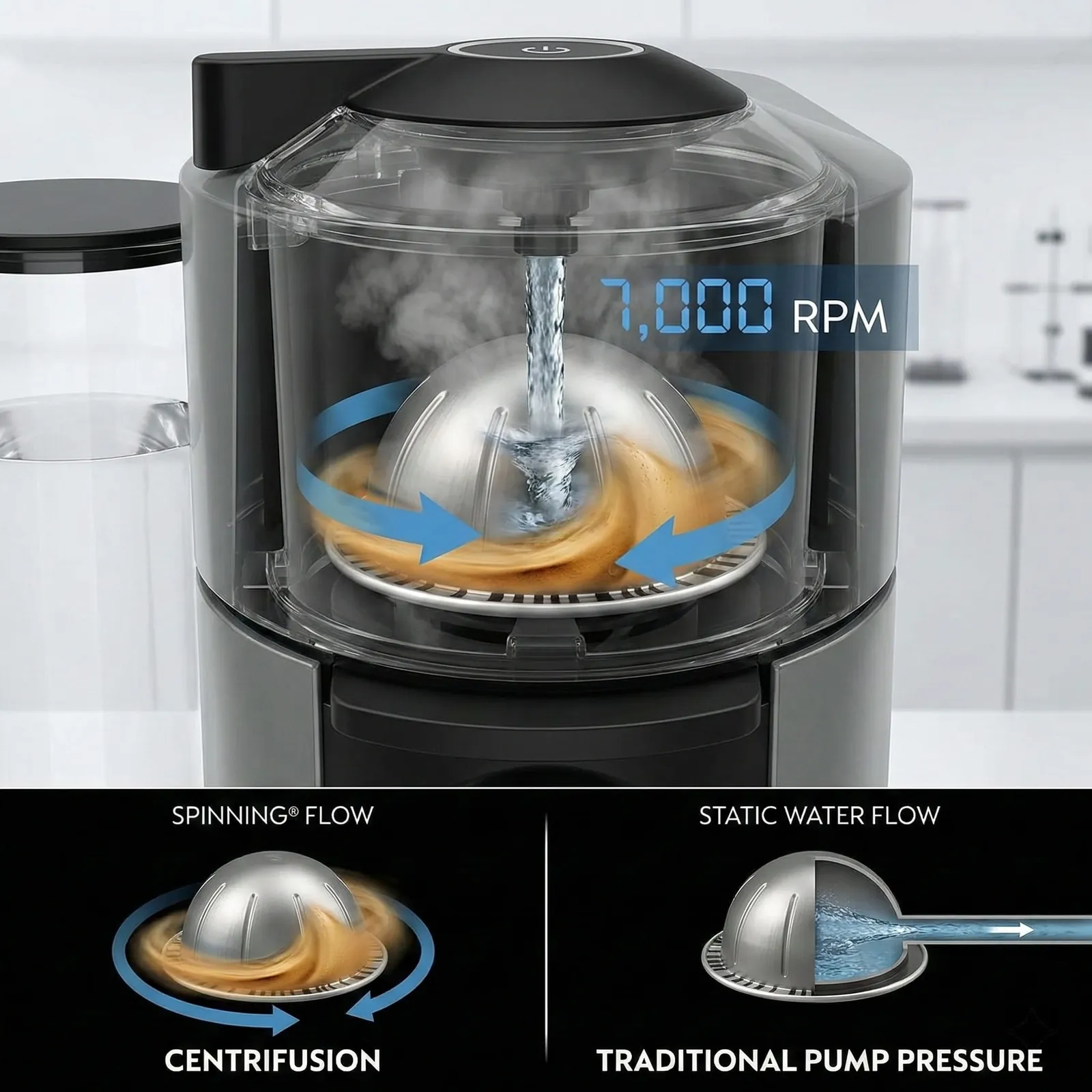
The VertuoPlus is the easiest coffee machine we've tested, and it is not espresso: Centrifusion spins capsules at up to 7,000 RPM instead of forcing water through grounds at 9 bars of pump pressure.
The short answer: if you know pod coffee isn't true espresso and still want the convenience, it delivers every time; if you expect café-quality espresso for $200, you'll be disappointed.
Browse our espresso machine reviews hub for more options across every budget.
Check where you fit before you look at the trade-offs below.
A strong match
Consider something else
What earns the rating, and what you give up to get it.
10 reasons it works
10 trade-offs to weigh
How it performed in day-to-day use, in the order you will meet it.
Unboxing to first cup took about 90 seconds: install the 40 oz water tank (it rotates a full 360° for flexible placement), plug in, run one blank cycle to prime the system. After that there's nothing left to learn.
A complete beginner in our household got a good cup on the first attempt and an identical one on the fiftieth—the whole point of this machine is that skill doesn't factor into the result. By the first morning, you're as proficient with it as you'll ever be.
This isn't espresso, and it's worth saying plainly: espresso needs roughly 9 bars of pump pressure through fine grounds, while Centrifusion spins the capsule at high speed and injects water through it. Across a dozen Vertuo varieties:
Capsules run $0.80–$1.25 depending on the line, averaging around $0.90 for the blends we drank most (Melozio, Stormio, Voltesso). At two drinks a day, that adds up to real money over a year—plus about $40 annually in descaling kits, since there's no grinder or portafilter to maintain.
A Bambino Plus setup running on fresh beans has ongoing coffee-and-maintenance costs closer to $400 a year. Over five years the totals work out as:
That is roughly a third more for the pod system despite its lower sticker price.
Capsule quality also varies: premium and Master Origin pods ($1.00–$1.25) deliver noticeably better flavor complexity than the budget blends, so if you're committing to this ecosystem, budget for the better capsules rather than the cheapest ones.
At 9 pounds, the VertuoPlus is mostly molded plastic with a brushed metallic finish—it looks nicer than it feels, and it's built for a 3–5 year lifespan rather than the decade-plus run you'd get from a Gaggia Classic Pro or Rancilio Silvia.
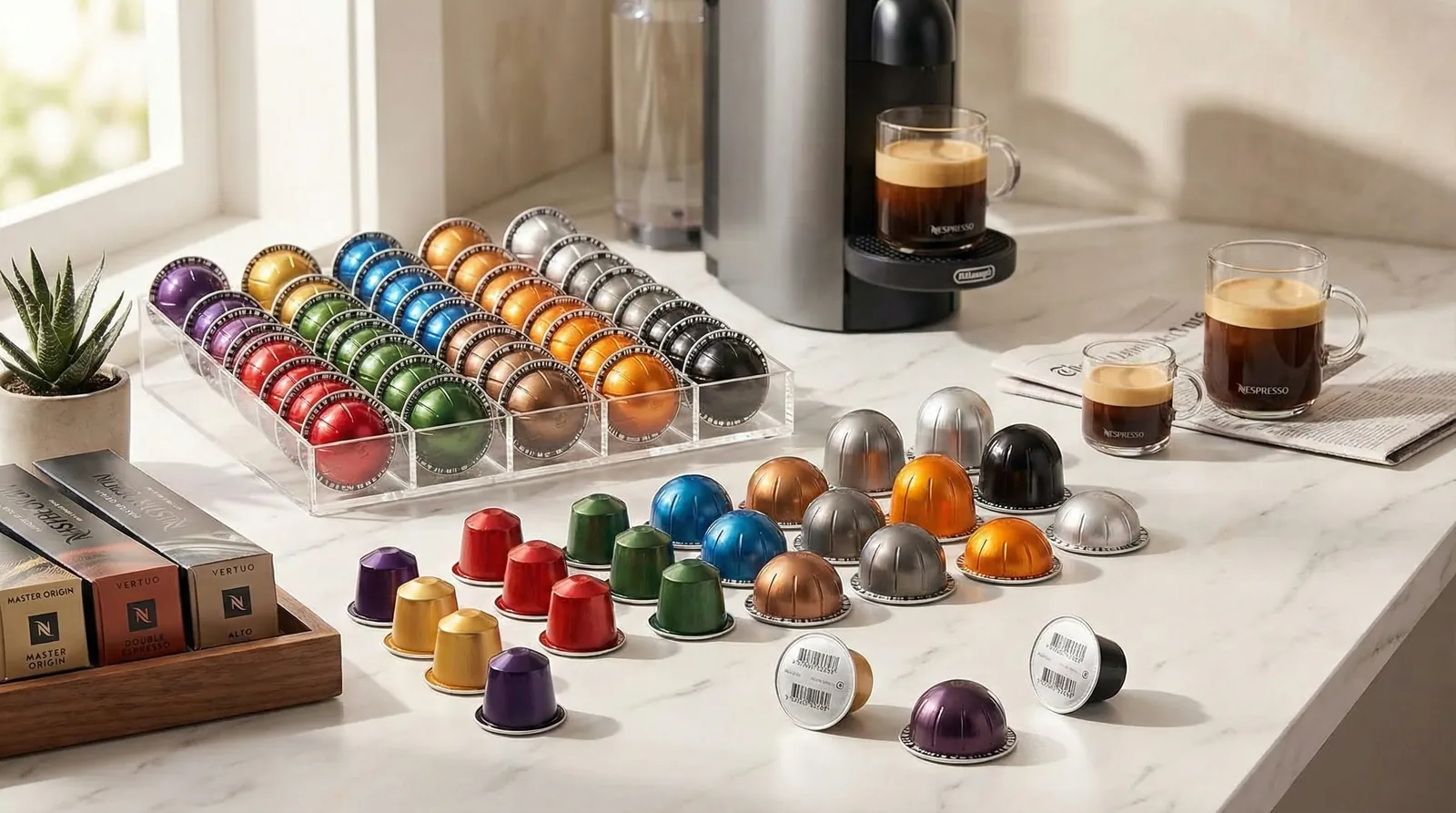
Capsule convenience is the whole point, so judge it on that
Skip it if you want to choose your own beans, because the machine only works with Vertuo capsules and reads a barcode on each one. Skip it too if you want to steam milk by hand or learn espresso technique; there is no pressure-based espresso extraction and no manual controls to practise with.
| Machine | Type | Heating system | Built-in grinder | Current price |
|---|---|---|---|---|
| VertuoPlus | Pod / capsule | not listed | No (capsules) | Check current price |
| Bambino Plus | Compact semi-automatic | ThermoJet | No (separate grinder) | Check current price |
| Vertuo Next | Pod / capsule | not listed | No (capsules) | Check current price |
If you want a more traditional route at a modest cost, the Breville Bambino Plus uses fresh grounds and has an automatic steam wand, though it needs a separate grinder. Our guide to espresso machine types explains the differences in workflow.
If you like capsules but want a different footprint or price, compare the Vertuo Next, and read Vertuo vs Original to see which capsule system suits you.
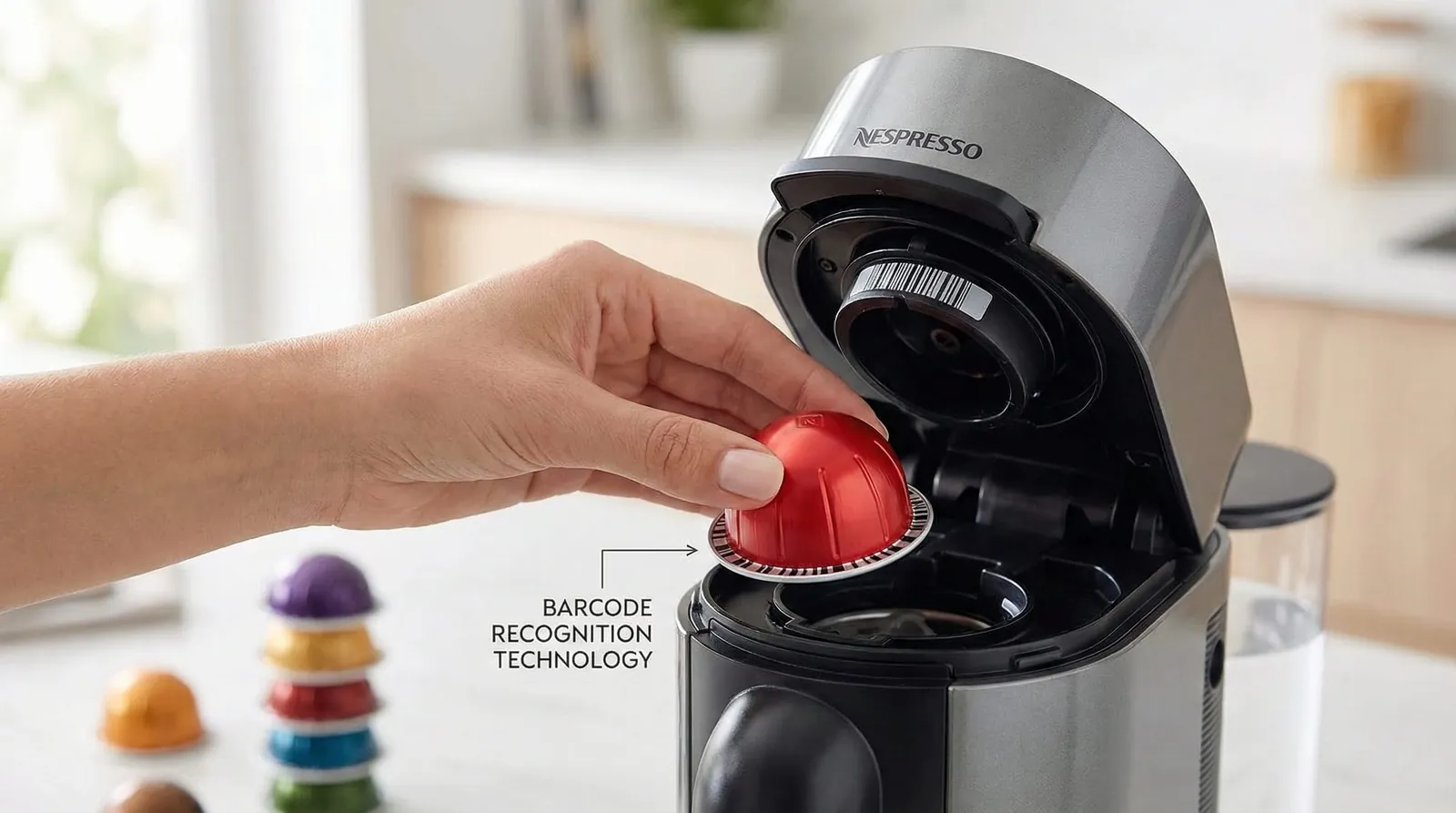
Practical checks that keep ownership simple
Start with a sampler of capsule varieties rather than a large order, since taste preferences differ and you cannot swap in another brand's pods. Check where you will buy refills and whether you are happy with that supply, because the system depends on it.
Think about where it will sit. A compact machine suits a small counter, but you still need room beside it for capsules and a cup. Keep descaling on your calendar; our descaling guide covers the general routine, and you should follow Nespresso's own instructions for this model.
Finally, compare the yearly cost honestly. If you drink several cups a day, a bean-based machine can cost less per cup over time, and the sub-$500 espresso machines list shows what that budget can buy.
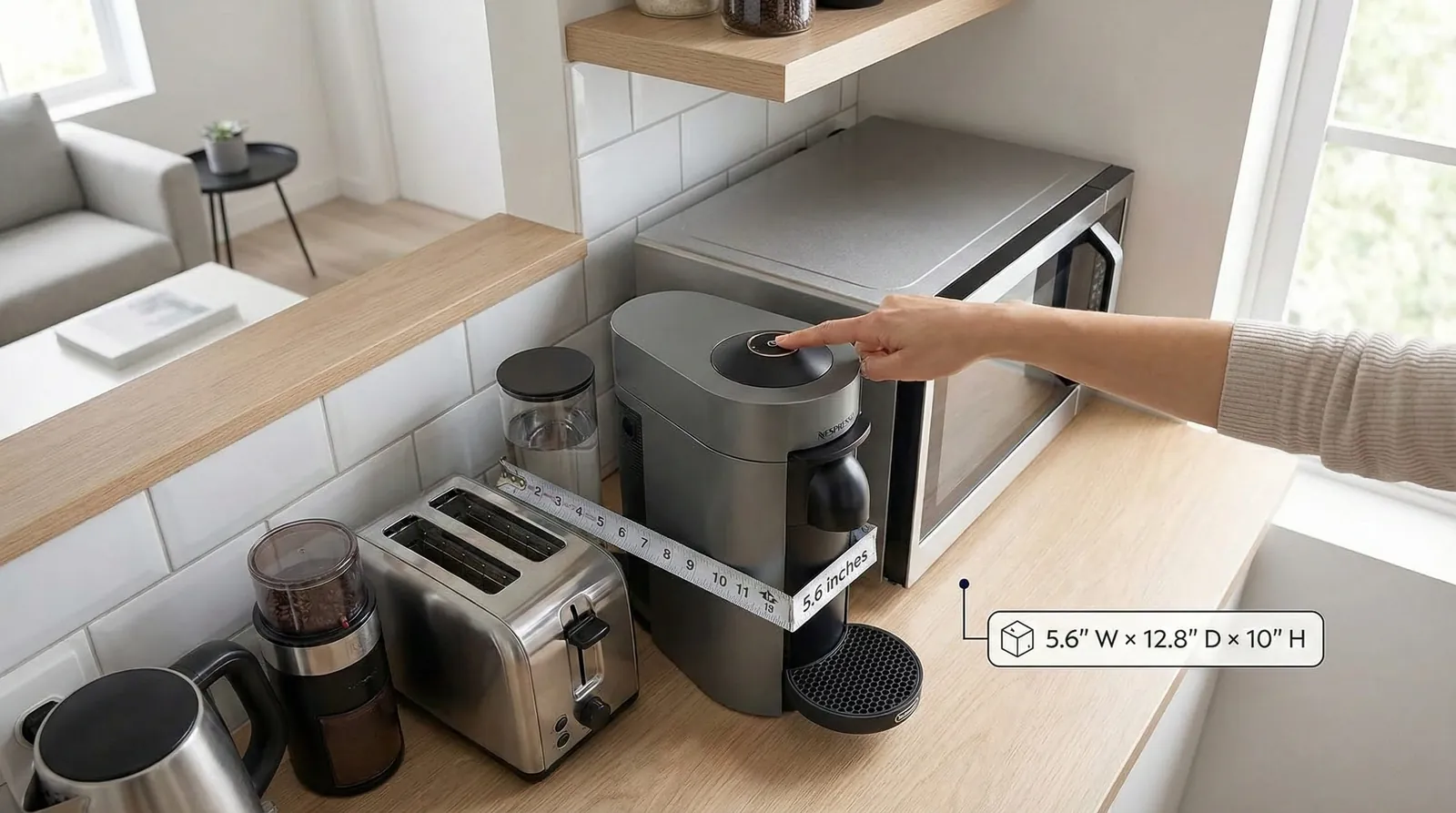
Centrifusion, barcodes and a capsule head: why the cup differs from pump espresso
The VertuoPlus locks a pod with a motorised head, reads the barcode and spins the capsule to separate coffee and water. Rotation, not pump pressure, drives extraction, and the sizes are written into the barcode.
That is how it makes a foamy topping from a pod and a mild, round cup. It is not espresso in the pump sense, and the lack of a grind or dose control means beans never change.
If you like drinks you can tweak, a pump machine suits better. If you want identical results with one button, this design delivers. The Vertuo vs Original guide explains the split.
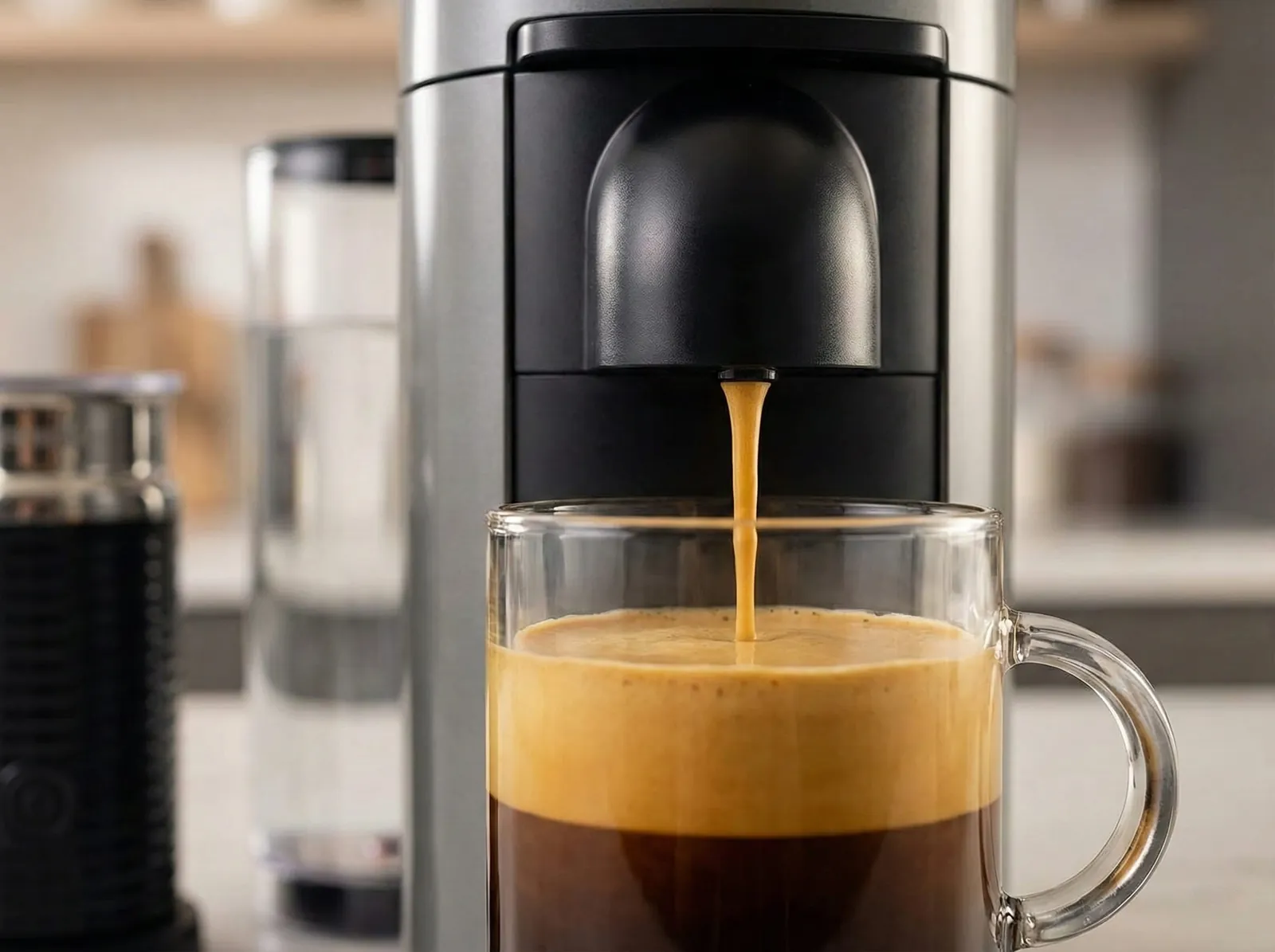
Pod cost, milk drinks and cleaning: ownership issues with practical fixes
Before you decide
Pod-based coffee makers like the VertuoPlus eliminate the core challenges of traditional espresso: grinding consistency, precise dosing, proper tamping pressure, and extraction timing. This automation delivers very consistent results but surrenders the experimentation and cost benefits of fresh-ground systems.
The fundamental trade-off: convenience versus control. Pod systems cost 2-3x more per cup ($0.80-$1.25 vs $0.30-$0.50) but require zero skill or cleanup. Traditional espresso demands learning curve investment but rewards you with creative freedom, lower ongoing costs, and authentic 9-bar pressure extraction.
Evaluating the VertuoPlus requires understanding this isn't traditional espresso—it's Centrifusion brewing (high-speed capsule spinning). The result tastes similar to espresso but uses fundamentally different physics. For users prioritizing speed and simplicity over craft and cost efficiency, pod systems excel. For coffee enthusiasts wanting to develop barista skills and control every extraction variable, semi-automatic machines prove more satisfying long-term.
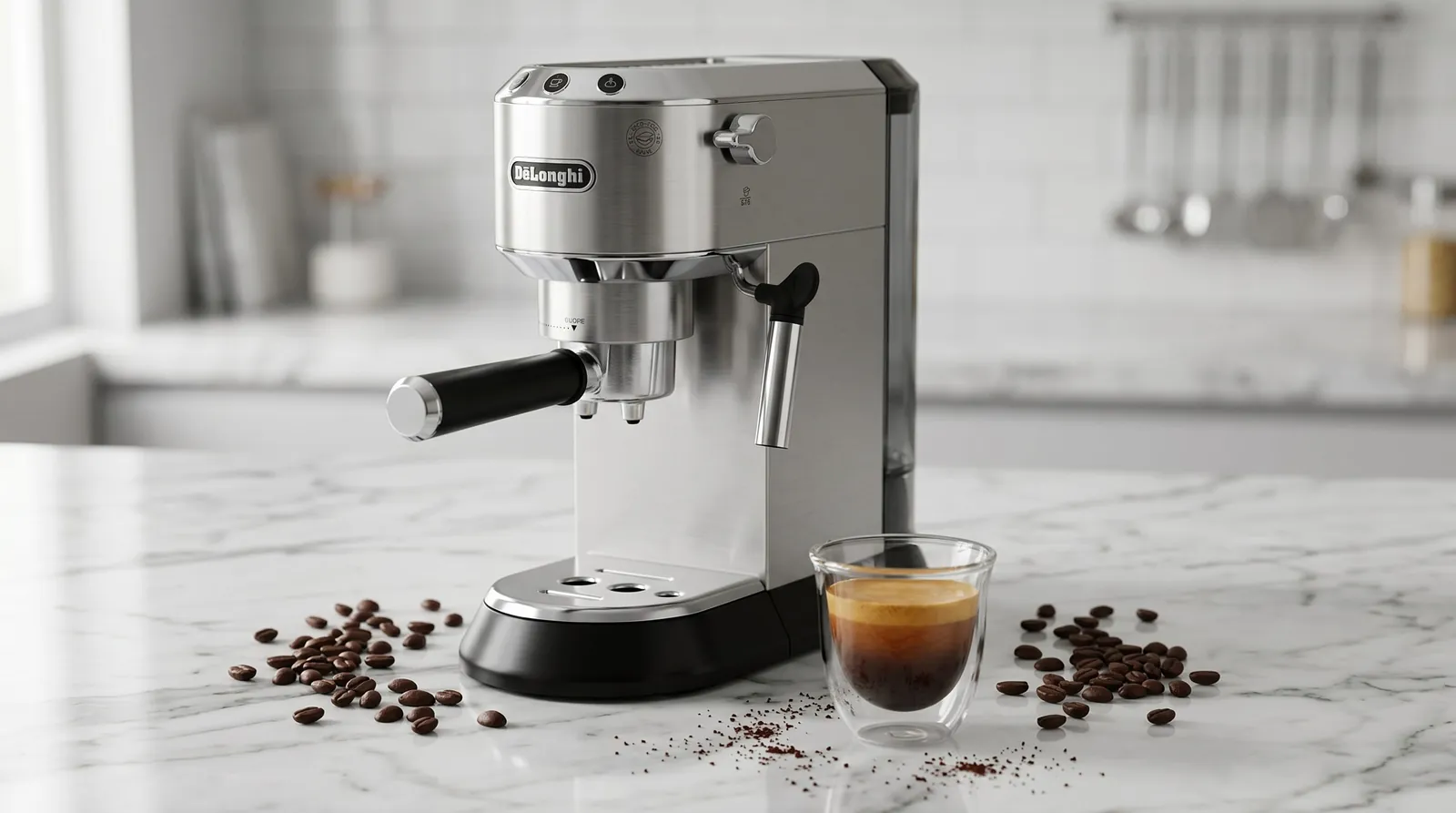
Browse our full espresso machine reviews or the best espresso machines roundup. If you're weighing pod convenience against a proper semi-automatic, compare the Breville Bambino Plus or the budget-friendly De'Longhi Dedica.
To compare it with budget pump espresso machines, see our best espresso machines under $200. For espresso-only drinkers, our research-based Essenza Mini review covers the smallest Original-line machine.
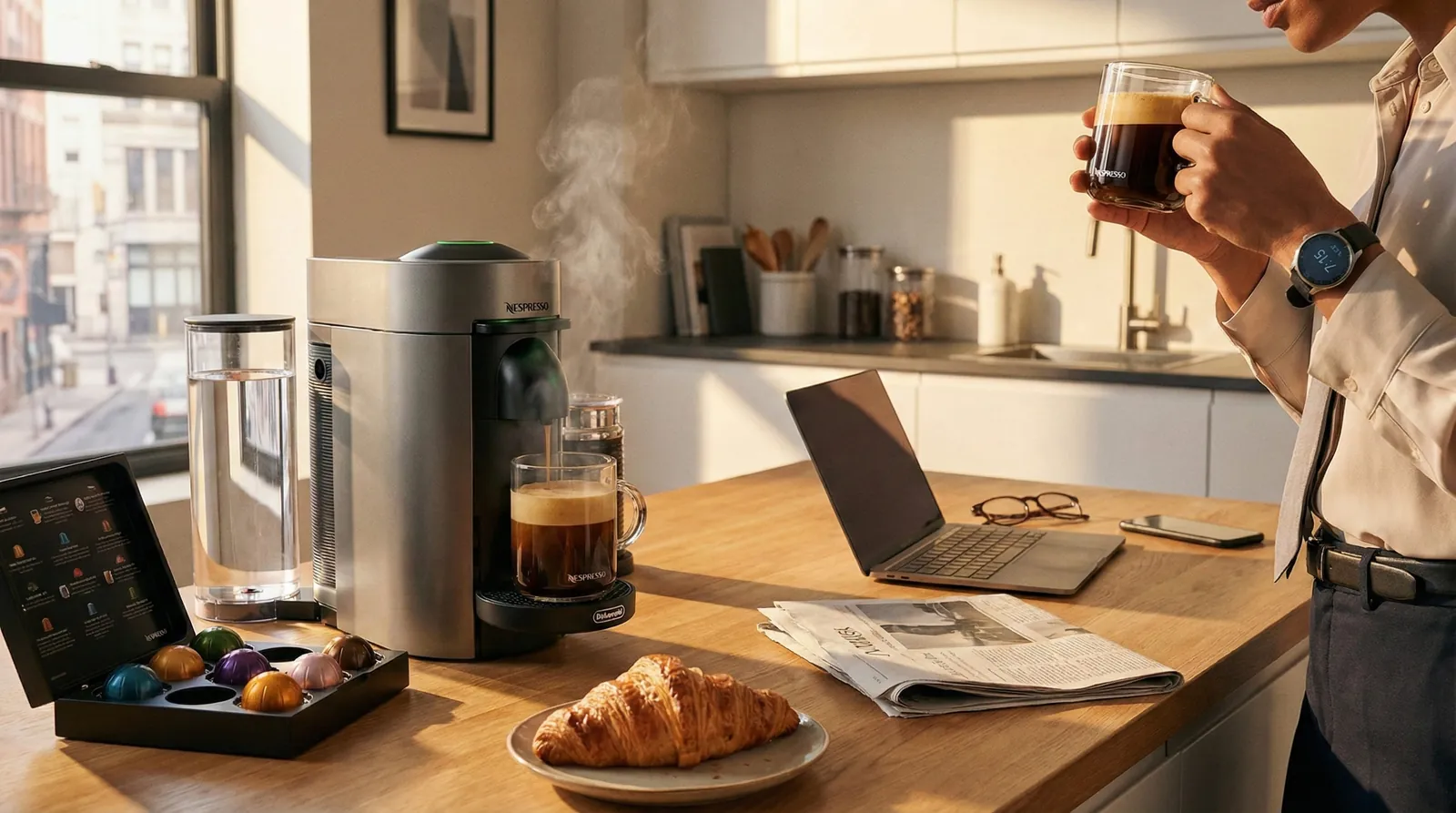
Durability, upkeep and running costs once the novelty wears off.
Predominantly plastic construction with a brushed metallic finish.
Unlike the stainless-steel bodies of the Bambino Plus or Gaggia Classic Pro, the VertuoPlus prioritizes light weight over heavy-duty build, and the motorized brew head adds a moving part that pump machines don't have. Expect a 3–5 year lifespan with regular descaling and normal use (2–3 capsules daily). The pod design avoids traditional failure points—pump seals, group gaskets, grinder burrs—but introduces its own motor and barcode-reader components instead.
User reports point to a few recurring issues: the motorized brew head occasionally needs lubrication or jams after 18–24 months of heavy use, descaling alerts can fire early with hard water, and the barcode reader can misread when coffee residue builds up.
The Centrifusion mechanism itself is generally reliable, with fewer moving parts than a traditional pump system, and Nespresso's wide retail and service network make support easy to access.
Limited.
Nespresso doesn't sell user-replaceable parts beyond descaling kits and capsule containers, so repairs go through the manufacturer or an authorized center—no DIY gasket swaps or pump servicing like you'd find with traditional machines. If the motorized brew head fails after warranty, replacement can cost a large share of a new machine's price, making replacement more economical than repair.
Machine upkeep is cheap: about $40 a year in descaling kits, with no gaskets, seals, or grinder burrs to maintain.
Add the ongoing capsule cost calculated above and total annual coffee spend lands near $697. A semi-automatic setup running fresh beans costs more to maintain (~$75/year) but far less in beans (~$329/year for the same volume), for a total closer to $404—about $293 less per year than the VertuoPlus once capsule costs are counted.
A 1-year limited warranty covers manufacturing defects, electrical components, and the Centrifusion and brew-head mechanisms; descaling-related damage is excluded, so using filtered water and descaling on schedule matters for keeping coverage intact.
Extended warranties run $30–$50 for two additional years. Nespresso's customer service is responsive, with average repair turnaround of 10–14 days.
Weak.
Pod machines depreciate quickly as new models arrive, with well-maintained units typically reselling for well under half of the original price within a couple of years—roughly $60–$80 after two years, $30–$50 after four (estimates). Traditional machines like the Bambino Plus or Gaggia Classic Pro hold value noticeably better thanks to longer functional life and fewer proprietary parts; the capsule lock-in also makes buyers favor new-with-warranty over used pod machines.
This machine was purchased independently and was not provided by Nespresso.
Our rating, who it fits, and what it costs.
Nespresso VertuoPlusRecommended
4.3 / 5 — Is it worth buying?
The VertuoPlus is the easiest coffee machine we've tested—insert a capsule, press one button, and get a consistent result every time. It isn't espresso, though, and the convenience comes with the highest cost-per-cup of any system we've reviewed.
✓ Best for
✕ Skip if
Score breakdown
Capsules tested
50+
Testing period
21 days
Ready to decide?
Our verdict: 4.3/5, recommended. Independently tested; commissions never change a rating.
See how the Nespresso VertuoPlus compares with the other picks in each tested roundup.
Closest alternatives in price and purpose, each tested the same way.
3.8Nespresso
The smallest Original-line Nespresso: two cup sizes, a 30-second heat-up and a small tank. Research-based review.
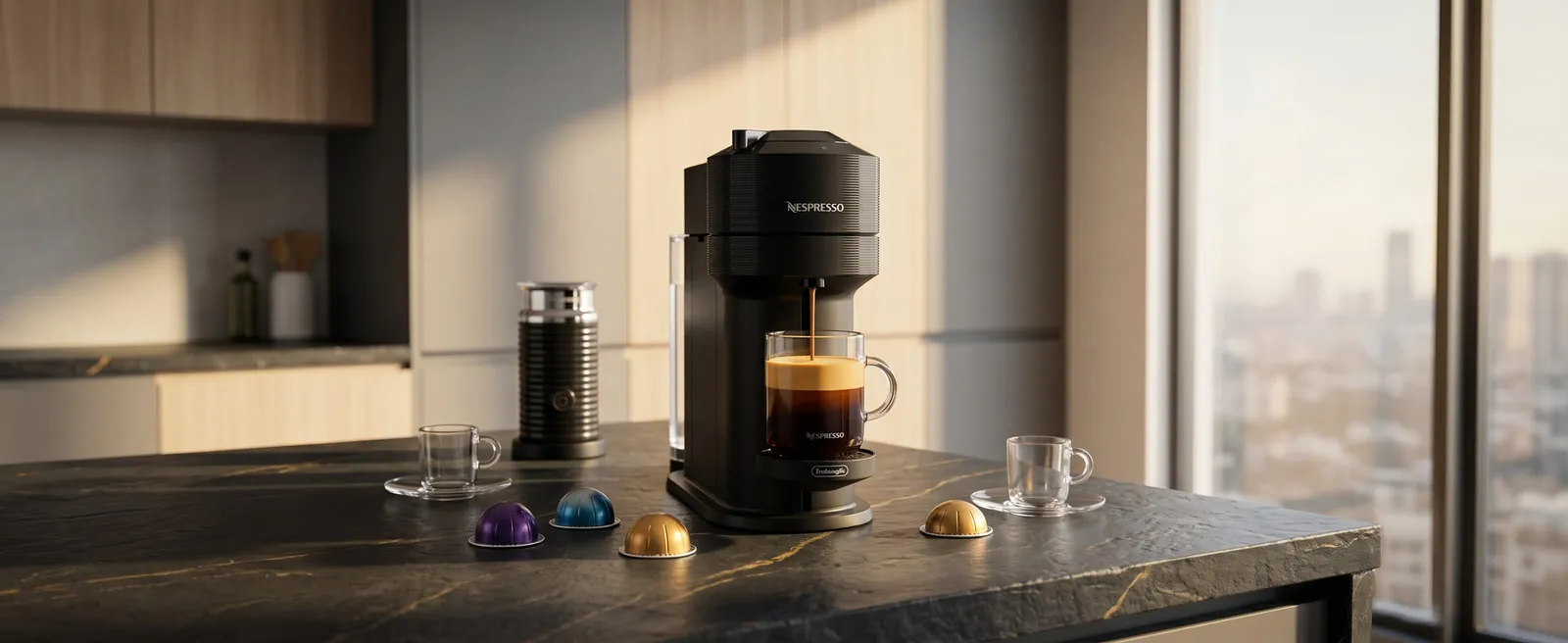 4.2
4.2Nespresso
A one-button capsule machine with a 30-second heat-up, aimed at absolute beginners who want good results with zero learning curve.
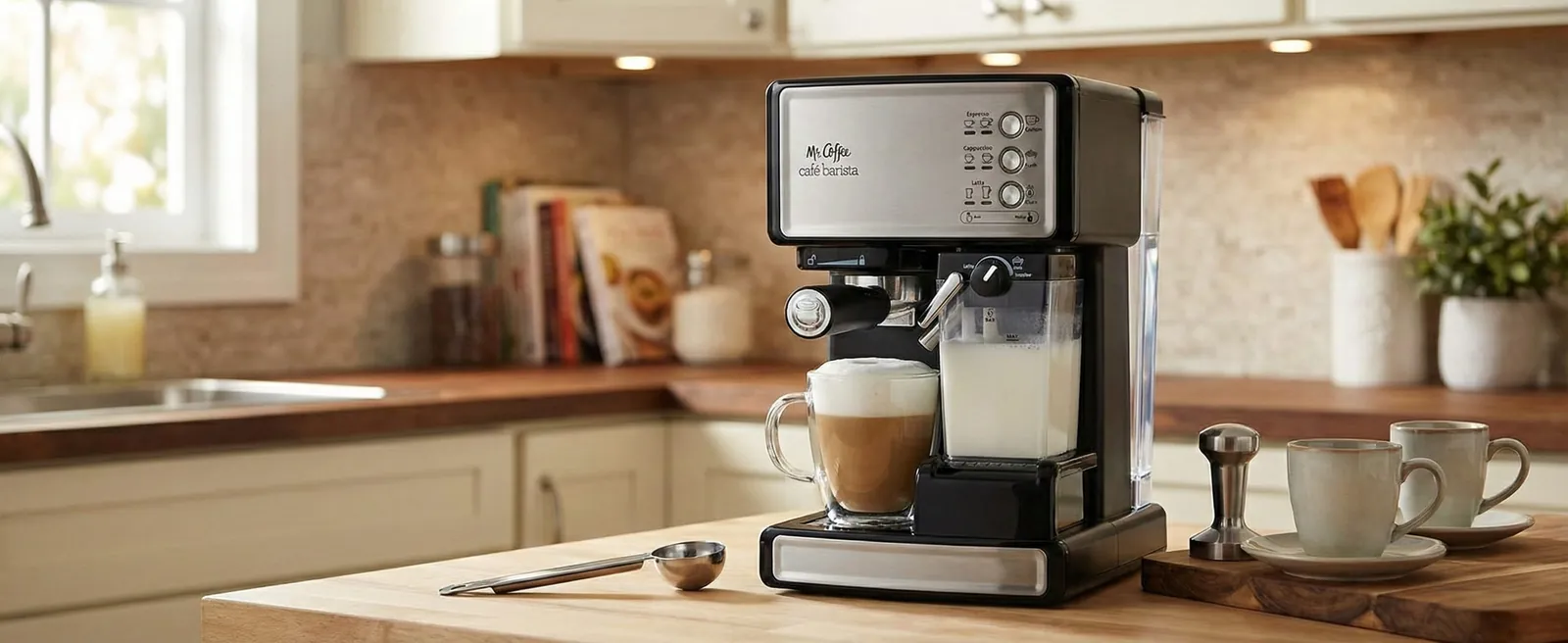 3.8
3.8Mr. Coffee
A budget beginner machine under $200 for occasional drinkers who want one-button milk drink convenience.
 3.9
3.9De'Longhi
A space-saving machine for learning manual milk steaming without stepping up to Gaggia Classic Pro money.
Put it into practice with a free calculator built for what you just read.
Quick answers before you buy.
It's worth it if convenience matters more to you than cost. Testing this alongside traditional espresso equipment made the trade-off clear: the VertuoPlus removes every skill requirement from making coffee, but the ongoing capsule cost is meaningfully higher than brewing with fresh beans—the annual gap runs into the hundreds of dollars for a two-cup-a-day habit.
It's the right call for busy professionals who won't make time for traditional espresso and can justify paying more for zero effort. Skip it if you're cost-conscious, enjoy coffee as a hobby, or want the flexibility to experiment with different beans.
No. Authentic espresso requires roughly 9 bars of pump pressure forcing water through finely ground coffee. The VertuoPlus uses Centrifusion instead: it spins capsules at high speed, which is fundamentally different physics.
The resulting coffee looks like espresso and tastes pleasant, but it lacks the syrupy body, layered flavor, and authentic crema that pump-driven extraction produces. For casual drinkers, this distinction won't matter much.
For anyone comparing it seriously against a real espresso machine, it does.
We tested the VertuoPlus alongside a Bambino Plus; our notes on traditional manual machines are based on general experience. Choose the VertuoPlus ($150–$200) if convenience is the priority—zero learning curve, one-button brewing, minimal cleanup, but the highest cost-per-cup of any system we've reviewed.
Choose the Bambino Plus ($399–$449) for real 9-bar espresso with a 3-second heat-up; it needs a separate grinder ($200–$400) but costs far less per cup with fresh beans. Choose a manual machine (Gaggia Classic Pro, Rancilio Silvia) if you want full control and don't mind a real learning curve.
We'd pick the Bambino Plus for the best balance of quality and convenience, but the VertuoPlus serves its target buyer well. If you are leaving capsules for pump espresso on a small budget, the Capresso EC100 ($100–$150) comes to roughly $0.30–$0.50 per shot versus $0.70–$1.20 per pod, though you will need a grinder.
No. The VertuoPlus reads a barcode on each capsule to set brewing parameters, and no third party has replicated that system—so you're locked into official Nespresso Vertuo capsules.
Original-line Nespresso pods don't work either; it's a completely different machine and capsule shape.
That lock-in means you're committed to Nespresso's pricing with no budget alternative, unlike open pod systems such as Keurig.
No—there's no steam wand or built-in frother. Making lattes or cappuccinos means buying the Nespresso Aeroccino separately (about $80–$100).
It produces light, airy foam that works for cappuccinos, but not the dense microfoam needed for latte art. Combined, machine plus Aeroccino runs $230–$300—close enough to a Bambino Plus, which includes automatic milk texturing and true espresso capability, that it's worth comparing directly if milk drinks matter to you.
Choose the VertuoPlus if you want a sturdier machine; choose the Vertuo Next if a slimmer, newer design with Bluetooth matters more. Both brew the same Vertuo capsules with the same spinning extraction, so the coffee in the cup is the same.
The VertuoPlus has a more solid lid and a pivoting water tank that is easier to refill, while the Next usually costs a little less. If you are still deciding between capsule systems, the Vertuo vs Original guide explains the difference.
Our estimate is about $657 a year in capsules, or near $697 with roughly $40 of descaling kits. A semi-automatic running fresh beans came to about $404 a year in our comparison, so the VertuoPlus costs around $293 more annually.
Capsule prices vary, so check current pricing before you commit. The base Nespresso Vertuo ($91) is the cheaper way into the same capsule system, though capsules still cost $1.10–$1.40 each.
Expect roughly 3–5 years with regular descaling and 2–3 capsules a day. Nespresso sells no user-replaceable parts beyond descaling kits and capsule containers, so repairs go through the manufacturer.
If the motorized brew head fails out of warranty, replacement can make more sense than repair. The warranty is 1 year, with extended plans around $30–$50.
Reader questions
Questions or tips? Leave a comment
Ask about your setup or share what worked for you. Comments are checked before they appear.