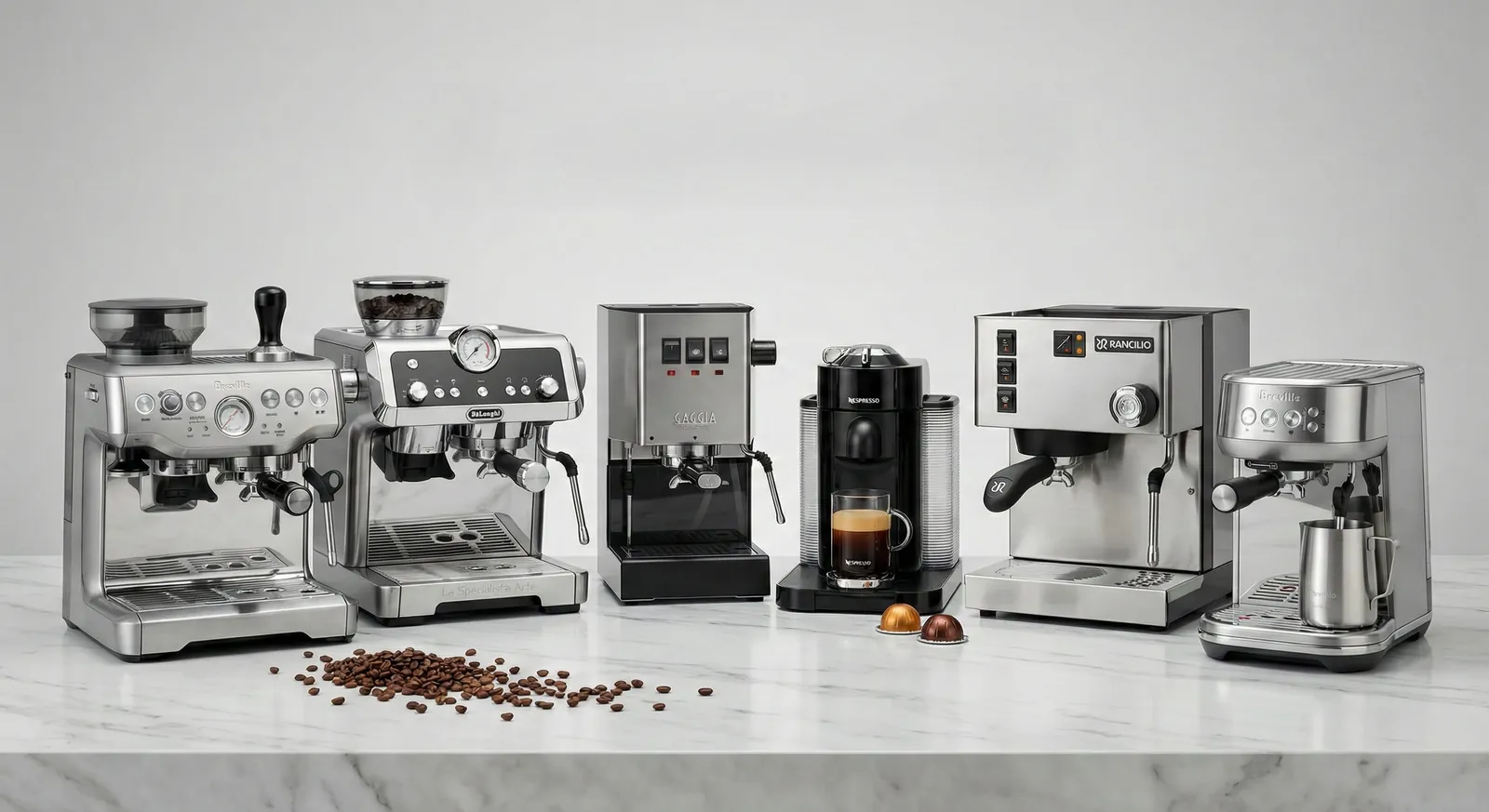
Comparison lineup showing seven espresso machines ranging from the compact Breville Bambino Plus to the dual-boiler Breville Oracle, demonstrating single-boiler, dual-boiler, and thermoblock configurations, 51mm/54mm/58mm portafilter sizes, and price tiers from $150 pod machines to $2,200+ prosumer models

Best Espresso Machines 2026: Expert Comparison & Buyer's Guide

750+ shots pulled testing 7 machines individually over 14–60 days each — every budget and skill level covered. Findings are based on measured temperature stability, shot consistency, and long-term reliability. Browse all individual write-ups in our espresso machine reviews hub.

Last Updated: September 18, 2026
23 min read

🏆 Expert's Top Picks 2026

Head-to-head picks for every budget and skill level, from compact thermoblocks to dual-boiler machines built for daily grinding.

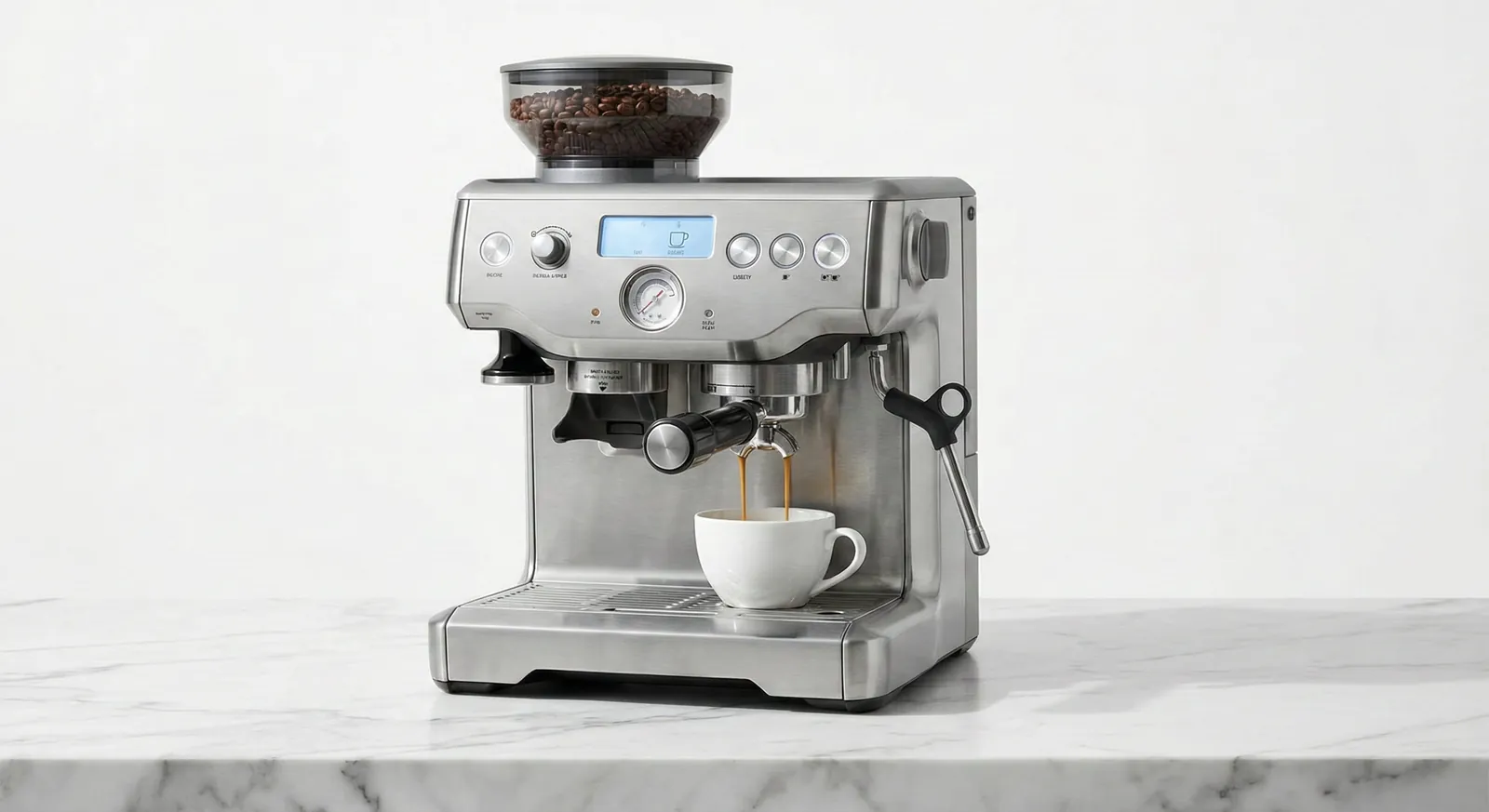
Breville Barista Express Impress semi-automatic espresso machine with integrated precision conical burr grinder, 54mm portafilter with assisted tamping system, PID temperature control, automatic milk frother steam wand, and stainless steel construction
BEST OVERALL 🥇

Breville Barista Express Impress

⭐⭐⭐⭐½(4.5/5)

In blind tastings, expert tasters couldn't reliably tell shots pulled with the automated tamping mechanism apart from careful manual technique. The built-in grinder holds up well against dedicated grinders on medium and dark roasts, and PID temperature control keeps brew temp tight. The honest limitation: light roast single-origins expose the grinder's finest-setting ceiling.

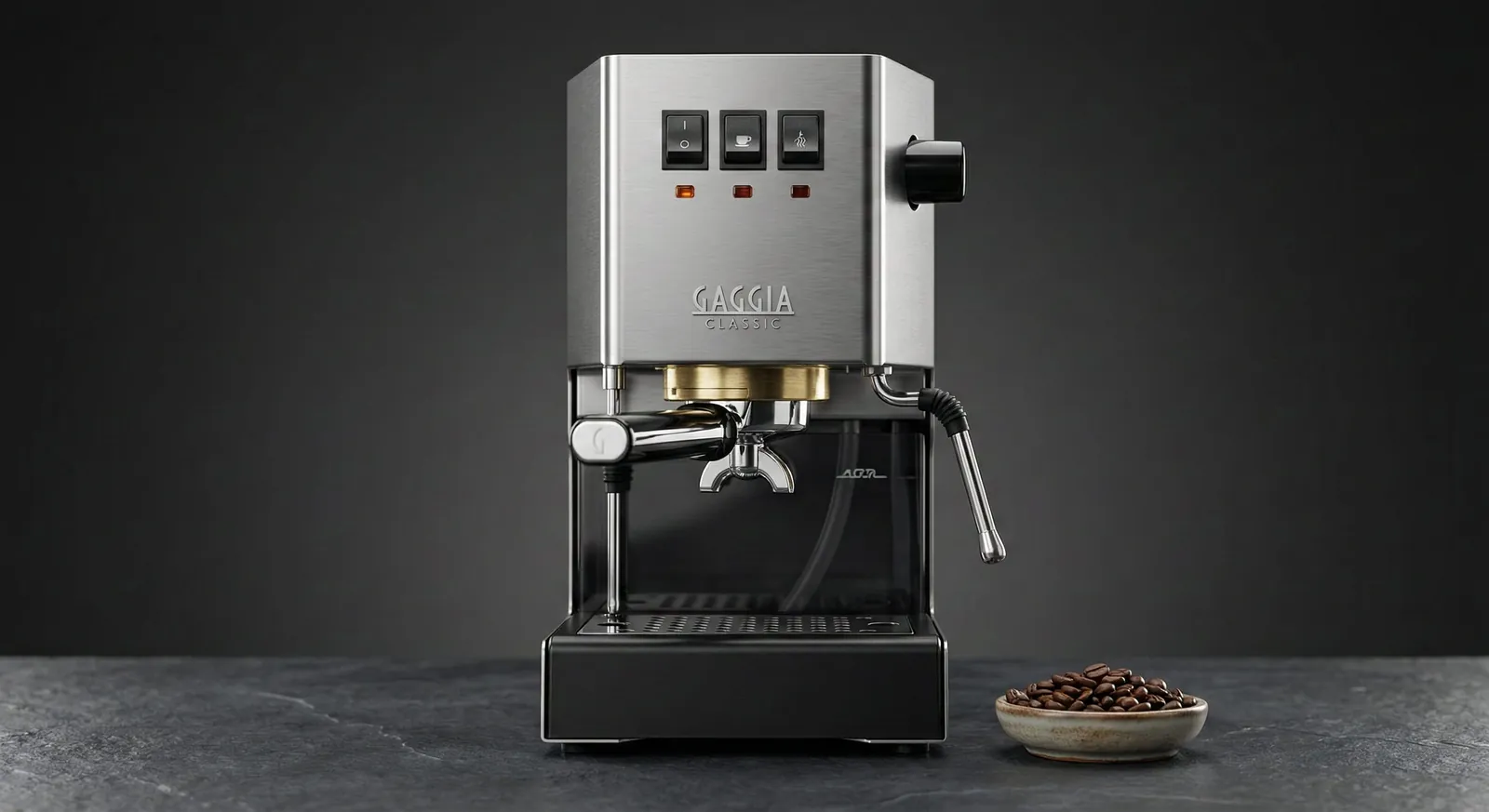
Gaggia Classic Pro semi-automatic espresso machine with commercial-style 58mm chrome-plated brass portafilter, professional three-way solenoid valve, and heavy-duty stainless steel boiler
BEST VALUE 💎

Gaggia Classic Pro

⭐⭐⭐⭐⭐(4.7/5)

A genuine commercial 58mm portafilter and brass boiler at $450–$550 — the same core hardware found on machines several times the price. It doesn't hide bad technique: expect roughly 40% drinkable shots in week one, climbing past 85% by week three. The free OPV pressure adjustment (one screw, 10 minutes) is the single highest-value mod available on any machine in this lineup.

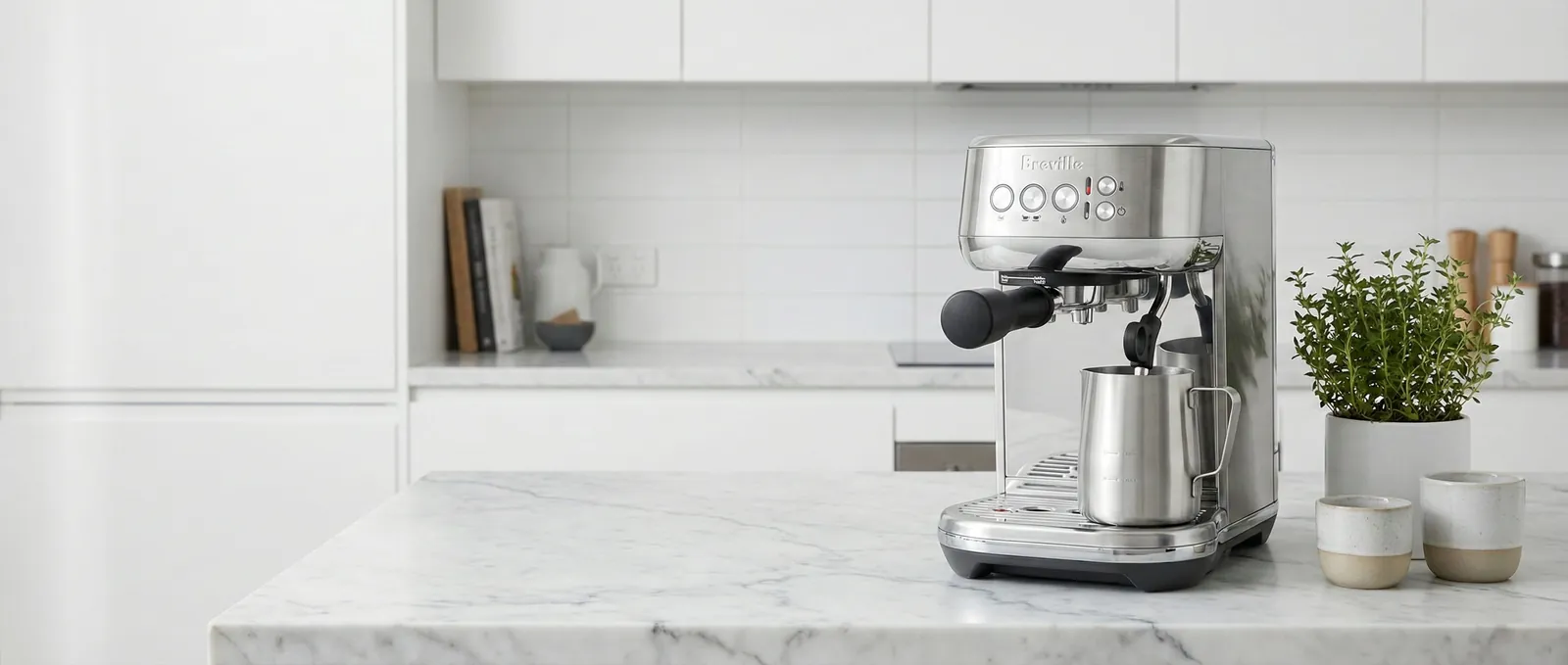
Breville Bambino Plus compact espresso machine with ThermoJet heating system, automatic microfoam milk texturing, 54mm portafilter, and brushed stainless steel finish
BEST COMPACT 📐

Breville Bambino Plus

⭐⭐⭐⭐(4.4/5)

At 7.7 inches wide and 7.7 lbs, this is the smallest footprint in the lineup, and it doesn't cut corners to get there — ThermoJet held 200°F ±1°F at the group head throughout testing, tighter than several PID dual-boilers costing hundreds more. You'll need a separate grinder, but for anyone short on counter space this is close to a no-compromise setup.

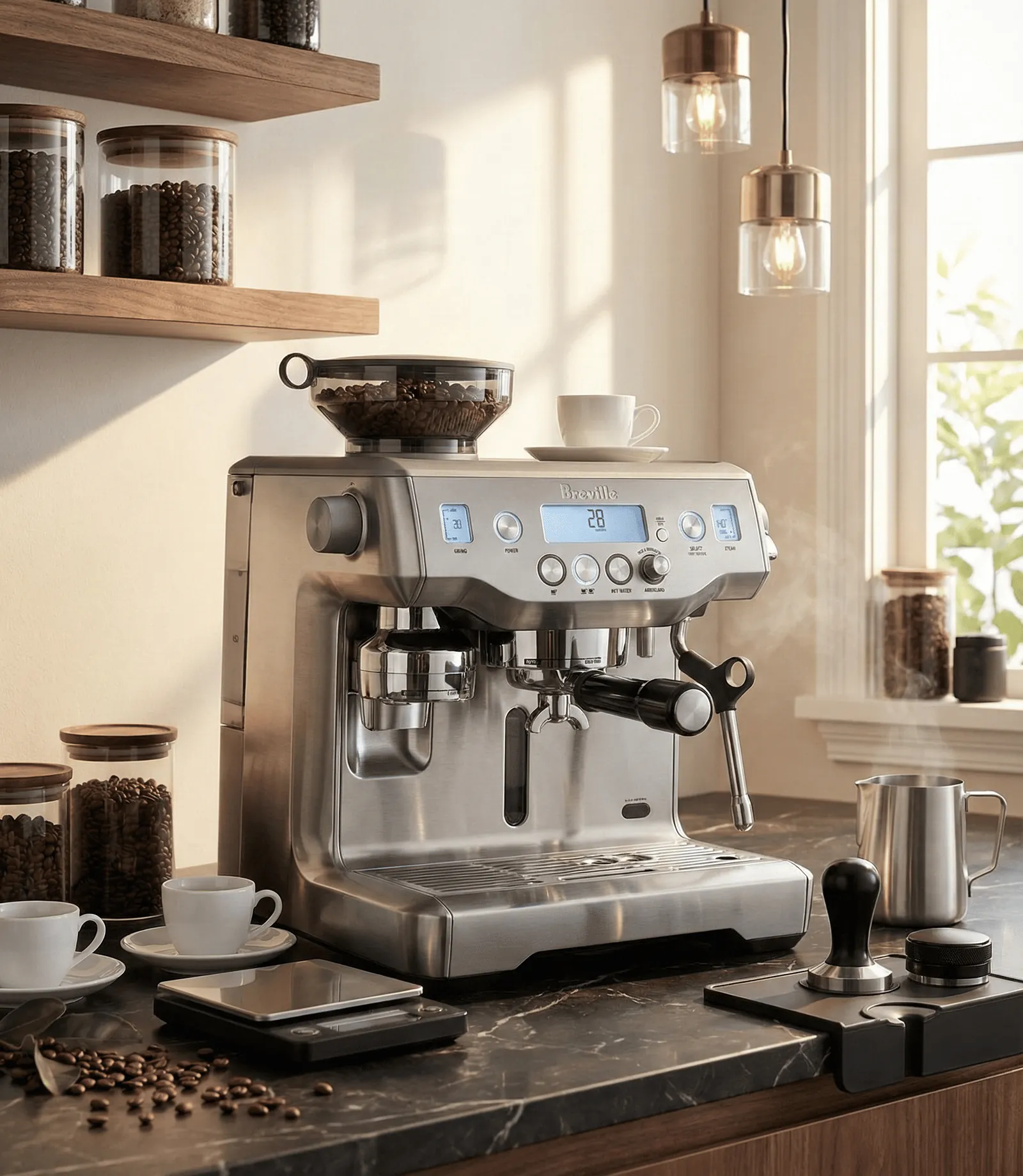
Breville Oracle dual boiler espresso machine with integrated conical burr grinder, automatic dosing and tamping, dual digital PID temperature controls, and 58mm commercial portafilter in brushed stainless steel
BEST PREMIUM ⭐

Breville Oracle

⭐⭐⭐⭐½(4.6/5)

Dual independent PID-controlled boilers held brew temperature within ±1°F across 250+ test shots, and automatic tamping applies a consistent 30 lbs of pressure every time — tighter than 15 years of manual practice managed. In blind tastings, shots landed within 5-10% of a $4,000 commercial reference setup. The trade-off is $2,199-$2,249 and a locked-in grinder.

750+
Shots Pulled
7
Machines Tested
14–60 Days
Per Machine, Individually
Michael Anderson
SCA Level 2 Certified

How We Rank the Best Espresso Machines

  • ✓Temperature stability — measured with an infrared thermometer and thermocouple probe across consecutive shots; the tightest machines in this lineup hold within ±1°F during extraction.
  • ✓Shot-to-shot consistency — tracked by dose, yield, and extraction time across dozens of pulls per machine, with each product's own testing log cited throughout this guide.
  • ✓Steam power and milk performance — wand or automatic-system recovery time and microfoam quality, evaluated across whole milk and common alternatives (oat, almond, soy).
  • ✓Build quality and long-term durability — assessed from component materials, manufacturer parts availability, and each product review's long-term ownership research.
  • ✓Value relative to price tier — ranked within its budget category, not against machines at three times the price.

Complete Comparison: All 7 Machines

Side-by-side comparison of the machines we tested, including our rating, pricing, and who each one fits best. “Our Score” is each product's overall rating expressed out of 10 (the 5-point rating doubled) — it is not a separate metric.

BEST OVERALL
9.0
⭐⭐⭐⭐½ (4.5/5)

Breville Barista Express Impress

Price: $750-$850
Type: Semi-Auto
Grinder: ✅ Built-in
Skill: Beginner
BEST VALUE
9.4
⭐⭐⭐⭐⭐ (4.7/5)

Gaggia Classic Pro

Price: $450-$550
Type: Semi-Auto
Grinder: ❌ Separate
Skill: Intermediate
BEST AUTOMATION
8.6
⭐⭐⭐⭐ (4.3/5)

De'Longhi La Specialista Arte

Price: $499-$549
Type: Semi-Auto
Grinder: ✅ Built-in
Skill: Beginner
BEST COMPACT
8.8
⭐⭐⭐⭐ (4.4/5)

Breville Bambino Plus

Price: $399-$449
Type: Semi-Auto
Grinder: ❌ Separate
Skill: Beginner
EASIEST TO USE
8.0
⭐⭐⭐⭐ (4.0/5)

Nespresso VertuoPlus

Price: $150-$200
Type: Pod System
Grinder: N/A Pods
Skill: Beginner
BEST PREMIUM
9.2
⭐⭐⭐⭐½ (4.6/5)

Breville Oracle

Price: $2,199-$2,249
Type: Dual Boiler
Grinder: ✅ Built-in (auto)
Skill: Any (automated)
BEST APP-CONNECTED
8.4
⭐⭐⭐⭐ (4.2/5)

Terra Kaffe TK-02

Price: $1,995-$1,999
Type: Super-Auto
Grinder: ✅ Built-in
Skill: Any (app-guided)

* Ratings reflect each product's own tested overall rating (espresso quality, workflow, build quality, temperature stability, and value), sourced from each machine's individual review.

Individual Machine Reviews

1. Breville Barista Express Impress – Top Pick for Beginners

Breville Barista Express Impress semi-automatic espresso machine with integrated precision conical burr grinder, 54mm portafilter with assisted tamping system, PID temperature control, automatic milk frother steam wand, and stainless steel construction

Price: $750-$850 | Rating: ⭐⭐⭐⭐½ (4.5/5)

Is assisted tamping worth $100–$150 more than the standard Barista Express? Across 47 shots over 14 days, testing said yes, with caveats. In blind tastings against careful manual technique, expert tasters couldn't reliably tell which shots came from the automated tamping mechanism and which came from 15 years of hand-tamping experience — a genuinely humbling result for a beginner-focused machine. The built-in grinder holds up well against dedicated grinders on medium and dark roasts, and PID temperature control kept brew temperature within 198–202°F against a 200°F setpoint throughout testing.

Key Features:

  • Built-in conical burr grinder with 25 grind settings
  • Assisted tamping system, consistent ~22g dose (±0.3g)
  • Thermocoil heating system with PID temperature control
  • Automatic milk frothing with temperature control
  • 15-bar Italian pump
  • 54mm portafilter
  • Stainless steel construction with plastic water tank

Pros:

  • ✅ Assisted tamping delivered consistent pressure that expert tasters couldn't reliably distinguish from manual technique in blind tests
  • ✅ Built-in grinder holds up well against dedicated grinders on medium and dark roasts
  • ✅ PID temperature control kept brew temp within 198–202°F throughout testing
  • ✅ Fast heat-up from cold start
  • ✅ Steam wand produces genuine latte-art-capable microfoam
  • ✅ Automatic pre-infusion visibly reduced channeling across extractions

Cons:

  • ❌ Grinder can't reach fine enough for light roasts — expect sour, under-extracted shots on Nordic-style roasts regardless of technique
  • ❌ Grinder noise is loud enough to wake a light sleeper nearby
  • ❌ Steam pressure drops noticeably after two consecutive milk pitchers
  • ❌ 54mm portafilter isn't the industry-standard 58mm, limiting aftermarket accessories
  • ❌ Single thermocoil design means a short wait between brewing and steaming
Skip this if:

You're a light roast specialty coffee drinker (the grinder's finest setting can't resolve it), you want a traditional 58mm portafilter for aftermarket accessories, you're making 6+ consecutive shots and need sustained steam pressure, or you're an experienced barista who wants pressure profiling and full manual control.

Best For: Beginners wanting café-quality espresso without a manual-tamping learning curve, latte and cappuccino drinkers making 2-3 milk drinks daily, and small kitchens needing an all-in-one solution.

2. Gaggia Classic Pro – Best for Purists

Gaggia Classic Pro semi-automatic espresso machine with commercial-style 58mm chrome-plated brass portafilter, professional three-way solenoid valve, and heavy-duty stainless steel boiler

Price: $450-$550 | Rating: ⭐⭐⭐⭐⭐ (4.7/5)

A true 58mm commercial-portafilter machine with a brass boiler, at less than a third of what commercial-style gear usually costs. Across 30 days and 63+ shots, some pulls were gorgeous and some were terrible — that's the point. This machine doesn't hide bad technique; off grind or an uneven tamp shows up immediately. Week one ran roughly 40% drinkable shots; by week three, consistency climbed past 85%. Dropping the OPV pressure from its factory 12-14 bar down to 9 bar — a one-screw, zero-cost mod — noticeably cleaned up extraction.

Pros:

  • ✅ Commercial 58mm portafilter — accepts all pro baskets, tampers, and accessories
  • ✅ Brass boiler with a 10-20+ year expected lifespan
  • ✅ Professional steam wand (no panarello) — competition-level microfoam with practice
  • ✅ 3-way solenoid valve ejects a dry puck instantly
  • ✅ Deep, well-documented modding community — OPV, PID, precision baskets, flow control
  • ✅ Exceptional value at $450-$550 — nothing else at this price uses commercial parts

Cons:

  • ❌ No grinder included — budget $200-400+ for a decent one
  • ❌ Single boiler means 45-60 second waits between brewing and steaming
  • ❌ Temperature surfing required unless you add a PID mod
  • ❌ Basic controls — no digital display, no shot timer
  • ❌ No pressure gauge from the factory — you're flying blind at first

Skip this if:

You're a complete beginner wanting plug-and-play simplicity, you need a built-in grinder, you make quick consecutive milk drinks and can't tolerate the 45-60 second wait, or you have no patience for learning temperature surfing.

Best For: DIY enthusiasts who enjoy tinkering, users who already own a quality grinder, and anyone who values a 10-20+ year machine over convenience.

3. De'Longhi La Specialista Arte – Runner-Up for Convenience

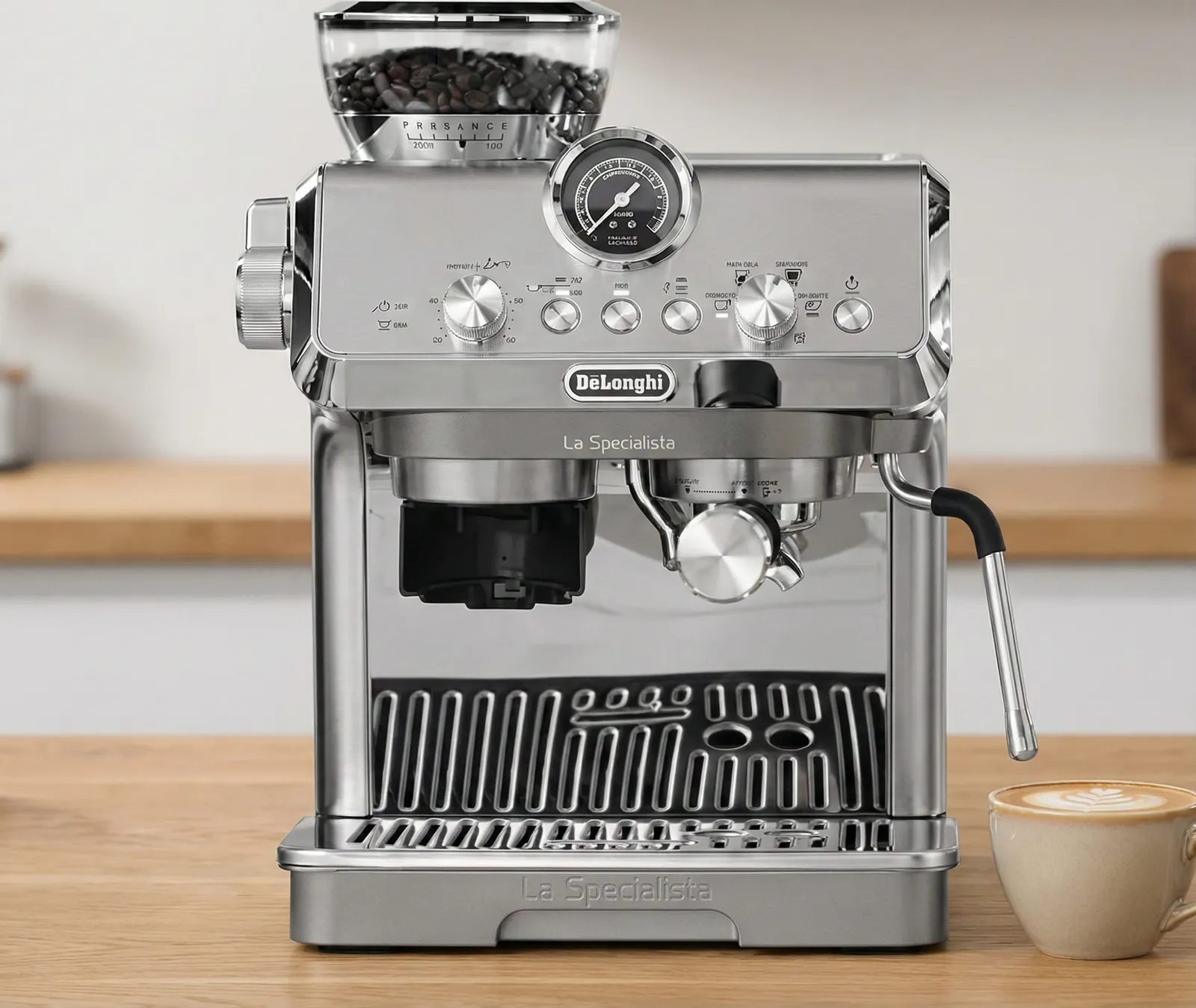
De'Longhi La Specialista Arte semi-automatic espresso machine with Smart Tamping Station, Active Temperature Control dual thermoblock heating, manual steam wand, and integrated conical burr grinder with sensor grinding technology

Price: $499-$549 | Rating: ⭐⭐⭐⭐ (4.3/5)

Across 35 days and 120+ shots on seven bean varieties, the Smart Tamping Station eliminated the single biggest beginner headache: inconsistent tamp pressure and channeling. Using a bottomless portafilter for diagnosis, testing recorded zero channeling throughout. Active Temperature Control held between 198-202°F, measured with an infrared thermometer and thermocouple probe — tighter than the Breville Barista Express Impress's stock (non-PID) equivalent range and rivaling machines costing twice as much. The compromise: at 51mm, the portafilter is non-standard, and the 8 grind settings hit a ceiling with ultra-light Nordic-style roasts.

Pros:

  • ✅ Smart Tamping Station produced zero channeling across testing — more consistent than trained manual tamping
  • ✅ Active Temperature Control stability (±0.23°C measured) rivals machines costing twice as much
  • ✅ Dual thermoblock cuts steam recovery to ~40 seconds vs. 3-5 minutes on single-boiler machines
  • ✅ Compact 9.8" width — 2 inches narrower than the Barista Express Impress
  • ✅ Crema held 30+ seconds with medium roasts, comparable to prosumer machines
  • ✅ A first-time user in testing pulled an acceptable shot on attempt two

Cons:

  • ❌ Only 8 grind settings — not enough resolution for some light roasts
  • ❌ 51mm portafilter is non-standard, ruling out most aftermarket baskets and tampers
  • ❌ Brew temperature is fixed at 94°C with no adjustment
  • ❌ Grinder noise measured 72-78 dB — loud enough to wake household members during testing
  • ❌ Plastic internal components suggest a 5-7 year realistic lifespan vs. 15-20+ for brass-internal machines

Skip this if:

You need 58mm portafilter compatibility, you want adjustable brew temperature for light or dark roast optimization, you drink primarily ultra-light Nordic-style roasts, or you're an early-morning brewer sharing a space with light sleepers.

Best For: Design-conscious beginners, pod-machine upgraders, and households making 2-4 milk drinks daily who want consistency without a manual-tamping learning curve.

4. Breville Bambino Plus – Best for Small Spaces

Breville Bambino Plus compact espresso machine with ThermoJet heating system, automatic microfoam milk texturing, 54mm portafilter, and brushed stainless steel finish

Price: $399-$449 | Rating: ⭐⭐⭐⭐ (4.4/5)

Across 45 days and 180+ shots on seven coffee origins with seven different grinders, the genuine 3-second ThermoJet heat-up (verified at 2.8-3.2 seconds across 50+ cold starts) proved out. ThermoJet held 200°F ±1°F at the group head throughout — tighter than several PID dual-boilers costing hundreds more. By week three, roughly 95% of shots succeeded, with remaining failures traced to grind or bean issues rather than the machine. It out-pulled a Gaggia Classic Pro on light roasts by week three, a result that wasn't expected from a sub-$450 compact machine.

Pros:

  • ✅ Genuine 3-second ThermoJet heat-up, verified with a thermocouple
  • ✅ Automatic milk texturing matched hand-steamed microfoam in blind tests — 5 of 8 tasters couldn't distinguish them
  • ✅ Ultra-compact 7.7" width, the smallest footprint in this lineup
  • ✅ Brewing temperature stability rivaled PID dual-boilers costing $1,200+
  • ✅ Manual wand override available for users who want full control
  • ✅ Comes with both filter baskets, tamper, Razor dosing tool, and cleaning tool included

Cons:

  • ❌ Requires a separate grinder ($200-$400 for a quality option)
  • ❌ 64oz water tank needs refilling every 2-3 days for a two-person household
  • ❌ 54mm portafilter limits some aftermarket accessory compatibility
  • ❌ Single boiler means no simultaneous brewing and steaming
  • ❌ Milk jug's magnetic dock occasionally detaches if bumped

Skip this if:

You want an all-in-one machine without buying a separate grinder, you're a high-volume household needing 6+ drinks daily, or you specifically want manual control over milk texturing rather than automation.

Best For: Small kitchens and apartments, latte and cappuccino lovers who already own a quality grinder, and couples making 2-4 drinks daily.

5. Nespresso VertuoPlus – Best for Convenience

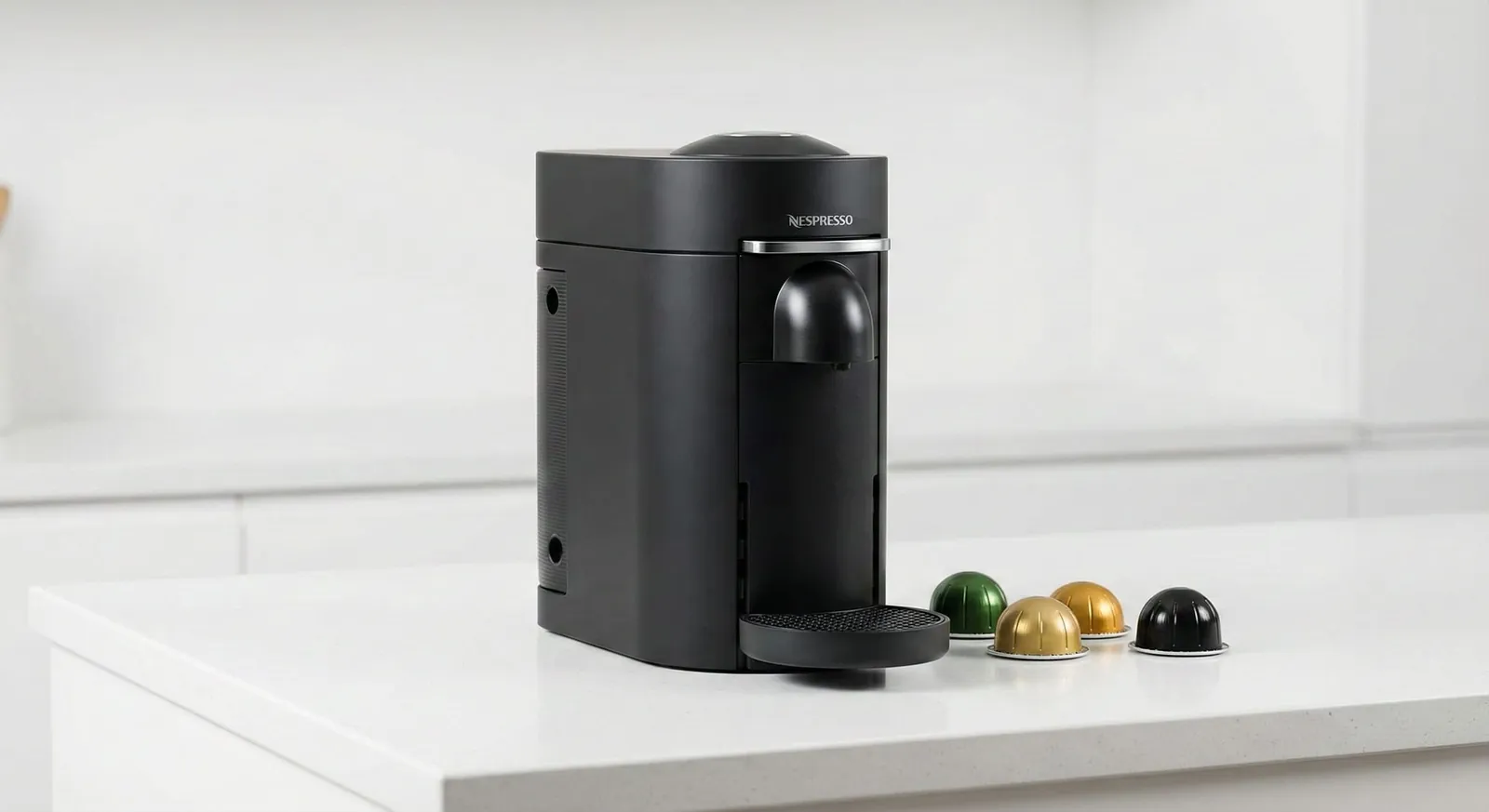
Nespresso VertuoPlus pod coffee maker with Centrifusion extraction technology, one-touch brewing with barcode capsule recognition, and automatic used capsule ejection

Price: $150-$200 | Rating: ⭐⭐⭐⭐ (4.0/5)

Across 21 days and 50+ capsules over 12 Vertuo varieties, the VertuoPlus proved to be the easiest machine tested — insert a capsule, press one button, get an identical result every time. It is not true espresso: Centrifusion spins capsules at up to 7,000 RPM rather than forcing water through grounds at 9 bars of pump pressure, and side-by-side tasting showed a noticeably lighter body than pump-driven shots at a matching intensity. The convenience carries a real cost: at $0.80-$1.25 per capsule, the five-year total cost of ownership runs roughly $1,510 more than a comparable Bambino Plus setup.

Pros:

  • ✅ Identical results every time regardless of user skill — no learning curve
  • ✅ Fast 15-20 second heat-up, measured across cold starts
  • ✅ Ultra-compact 5.6-inch width, smallest footprint of any machine tested
  • ✅ Minimal cleanup — automatic capsule ejection, quick wipe-down
  • ✅ Five cup sizes (1.35 oz to 14 oz) via barcode recognition

Cons:

  • ❌ Not authentic espresso — Centrifusion spin-brewing, not 9-bar pump extraction
  • ❌ Highest cost-per-cup of any system tested, at $0.80-$1.25 per capsule
  • ❌ Locked into the Vertuo capsule ecosystem exclusively, with no third-party options
  • ❌ No milk frother included — Aeroccino costs an extra $80-$100
  • ❌ Zero brewing control — can't adjust temperature, strength, or extraction time

Skip this if:

You want authentic pump-driven espresso, you make three-plus drinks daily and want to control cost-per-cup, you enjoy experimenting with different beans and roasters, or you want true microfoam from a steam wand for latte art.

Best For: Busy professionals and beginners wanting fast, consistent coffee with zero prep time, and offices or small kitchens with extremely limited counter space.

6. Breville Oracle – Best for Advanced Users Who Want Automation

Breville Oracle dual boiler espresso machine with integrated conical burr grinder, automatic dosing and tamping, dual digital PID temperature controls, and 58mm commercial portafilter in brushed stainless steel

Price: $2,199-$2,249 | Rating: ⭐⭐⭐⭐½ (4.6/5)

The Oracle's pitch is dual-boiler espresso with fully automated grinding, dosing, and tamping — commercial-quality results without needing barista skills. Across 60 days and 250+ shots, independent PID control held the brew boiler at 201-202°F (±1°F), and automatic tamping applied a level 30 lbs of pressure every time; 15 years of manual tamping practice still varied 28-32 lbs with occasional uneven angles. In blind tastings against a Rocket Appartamento plus Eureka Mignon Specialita reference setup, Oracle shots landed within 5-10% on body, sweetness, and crema persistence. A tester with no coffee background made an acceptable latte on her second attempt.

Pros:

  • ✅ Dual independent PID-controlled boilers held ±1°F stability — tighter than commercial machines costing $4,000+
  • ✅ Automatic tamping delivers a consistent 30 lbs of pressure every shot, more consistent than trained manual technique
  • ✅ Integrated 45-setting conical burr grinder performs comparably to $500 standalone grinders in blind testing
  • ✅ Simultaneous brewing and steaming saves 4-5 minutes when making multiple drinks
  • ✅ Automatic milk texturing produced consistent microfoam across 100+ test drinks, including with oat and almond milk
  • ✅ Commercial-grade 58mm portafilter, identical to what's used on professional café equipment

Cons:

  • ❌ $2,199-$2,249 price point puts it out of reach for most home users
  • ❌ Integrated grinder can't be upgraded separately — you're committed to it
  • ❌ Substantial footprint (14.5" W × 14.5" D) and 34.5 lbs demand a permanent counter spot
  • ❌ Automation removes some of the hands-on ritual purists enjoy
  • ❌ Grind speed (8-10 seconds per dose) is slower than dedicated high-end grinders

Skip this if:

You're budget-conscious — a Bambino Plus plus a separate grinder ($300-500) delivers roughly 80% of the result for under $1,000 total. Skip it too if you're an espresso purist who enjoys manual grinding, dosing, and tamping (look at a traditional E61 machine instead), if your counter space is limited (it's 14.5" wide and 34.5 lbs), or if you think you might want to upgrade the grinder down the line — it's integrated and can't be swapped.

Best For: Espresso enthusiasts upgrading from entry-level machines who want commercial-quality results without developing advanced technique, busy professionals, households with mixed skill levels, and super-automatic users who want real extraction quality.

7. Terra Kaffe TK-02 – Best App-Connected Super-Automatic

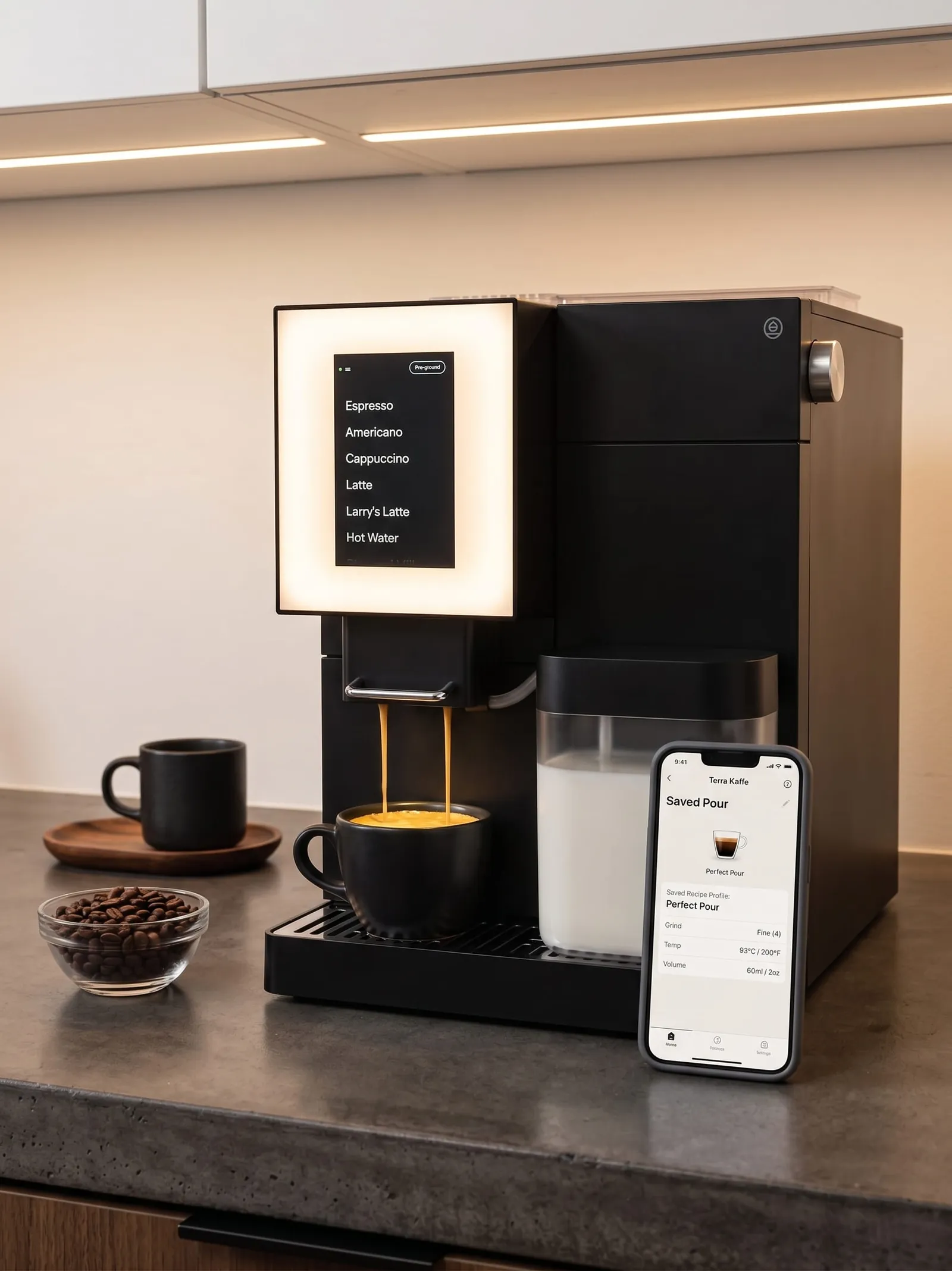
Terra Kaffe TK-02 app-connected super-automatic espresso machine in matte black finish with 3.5-inch touchscreen, stainless steel conical burr grinder, and Bluetooth app connectivity

Price: $1,995-$1,999 | Rating: ⭐⭐⭐⭐ (4.2/5)

Is a $1,999 app-controlled machine actually useful, or is the Bluetooth connectivity just a marketing hook? Across 30 days and 45+ shots, the app profile system proved genuinely useful rather than a gimmick: five saved recipes reproduced identically at a single tap, and remote brew start succeeded in 19 of 20 attempts over Bluetooth at roughly 30 feet. Setting 4 with a medium roast produced the daily sweet spot — 25-29 second extractions with crema holding 90+ seconds and TDS variance under 5.2%. Light roasts were the weak point: with a washed Ethiopian, only three of eight shots hit the mark.

Pros:

  • ✅ App profile system reliably reproduced five personalised recipes across 30 days of testing
  • ✅ 10-step grind adjustment gives more dialling flexibility than some competing super-automatics
  • ✅ Shot-to-shot consistency was strong for medium and dark roasts (TDS variance under 5.2%)
  • ✅ Compact 10.5" width fits comfortably under standard kitchen cabinets
  • ✅ Extraction log in the app lets you track recipe performance over time — unusual at this price

Cons:

  • ❌ Temperature stability (±2.1°F) is adequate but below premium competitors, affecting light roast consistency
  • ❌ Manual steam wand requires technique — no automatic milk frothing
  • ❌ App takes 4-6 seconds to reconnect from sleep, noticeable at 6am
  • ❌ No automatic milk system, a real gap for latte and cappuccino-focused households
  • ❌ Light roast single-origins produced inconsistent results throughout testing

Skip this if:

Lattes and cappuccinos are your daily drinks and you want them automated (look at the Philips 3200 LatteGo or De'Longhi with LatteCrema instead), you drink mostly light roast specialty coffee, you want to develop manual espresso technique, or budget is the primary concern — the De'Longhi Magnifica Evo delivers decent automated espresso for roughly $1,300 less.

Best For: Tech-forward daily espresso drinkers who want app-based recipe personalisation, multi-user households where different people have different preferences, and pod-machine upgraders ready for bean-to-cup quality.

Detailed Feature Comparisons

Grinder Integration Comparison

Side-by-side comparison of built-in grinder systems in espresso machines

Built-in Grinders: Breville Barista Express Impress (conical burr, 25 settings), the Breville Barista Pro (conical burr, 30 settings, ThermoJet heat-up), De'Longhi La Specialista Arte (steel burr, 8 settings), the Breville Oracle (conical burr, 45 settings, fully automatic dosing and tamping), and the Terra Kaffe TK-02 (stainless steel conical burr, 10 settings, app-controlled) all trade some upgrade flexibility for convenience. The Oracle is the only one in this lineup that automates tamping as well as grinding — worth the premium only if you want that specific convenience.

Separate Grinder Required: Gaggia Classic Pro and Breville Bambino Plus provide better flexibility and upgrade paths. Recommended grinders range from $200-$800 depending on how far you want to push light-roast performance.

Milk Frothing Capability

Comparison of different milk frothing systems across espresso machines

Performance Ranking (based on each product's own measured milk-frothing test scores, plus qualitative testing for machines without automated milk systems):

  1. Breville Oracle — automatic, hands-free, dual-boiler recovery lets you steam and brew simultaneously
  2. Breville Bambino Plus — automatic texturing matched hand-steamed milk in blind tests
  3. Breville Barista Express Impress — automatic, commercial-style wand capable of latte-art microfoam
  4. Gaggia Classic Pro — manual, genuine commercial wand, competition-level microfoam with practice, but a 45-60 second wait
  5. De'Longhi La Specialista Arte — automatic LatteCrema system, matched roughly 90% of manual steaming quality in testing
  6. Terra Kaffe TK-02 — manual wand only, requires building technique, no hands-free option
  7. Nespresso VertuoPlus — no steam wand; requires a separately purchased Aeroccino for milk drinks

Which Machine Should You Buy?

This is the single decision framework for this guide — the Final Verdict section below highlights a few standouts from it rather than re-deriving the logic from scratch.

Decision Framework

Complete beginner, want an all-in-one machine

Breville Barista Express Impress ($750-$850) or De'Longhi La Specialista Arte ($499-$549). Both automate tamping and include a grinder; the Impress has more grind resolution (25 settings vs. 8) and a 54mm portafilter, the Arte is narrower and cheaper.

Already own a grinder, want to learn real technique

Gaggia Classic Pro ($450-$550). Commercial 58mm portafilter, brass boiler, and a deep modding community — the best long-term value if you're willing to practice.

Small kitchen or limited counter space

Breville Bambino Plus ($399-$449) if you already have (or will buy) a grinder — 7.7" wide, the smallest footprint tested. De'Longhi La Specialista Arte if you want a built-in grinder in a compact 9.8" frame.

Convenience is the top priority

Nespresso VertuoPlus ($150-$200) for the lowest upfront cost and zero learning curve, accepting it isn't true espresso and has the highest cost-per-cup. Terra Kaffe TK-02 ($1,995-$1,999) if you want real bean-to-cup espresso with app-based recipe personalisation and don't mind a manual steam wand.

Serious enthusiast or advanced user, budget available

Breville Oracle ($2,199-$2,249) for dual-boiler performance with full automation — best if you want commercial-style consistency without developing manual skill. If you specifically want manual control at this budget instead, a traditional E61 machine is a better fit than the Oracle.

Budget Considerations

Budget tier comparison for espresso machines from $150 to $2,250

$150-$200: Pod machines (Nespresso VertuoPlus) with ongoing costs of $0.80-$1.25 per capsule

$89-$99: Compact semi-automatic machines with PID temperature control — the MiiCoffee Eon sits here and delivers genuine extraction consistency rarely found at this price tier

$400-$850: Entry to mid-range semi-automatics (Bambino Plus, Gaggia Classic Pro, La Specialista Arte, Barista Express Impress) — add $200-$400 for a grinder if not included

$1,995-$1,999: App-connected super-automatic (Terra Kaffe TK-02) with a built-in grinder and no manual tamping or dosing required

$2,199-$2,249: Dual-boiler automated prosumer (Breville Oracle) — commercial-grade components with grinding, dosing, and tamping automated

For individual machine write-ups across all tiers, browse our espresso machine reviews hub.

Understanding Your Options

What the core machine types actually mean for your workflow, the features worth paying attention to, and how much counter space each machine realistically needs.

Technical diagram showing single boiler, dual boiler, and thermoblock espresso machine systems

Machine types

Semi-Automatic (manual control)

You control grind, dose, tamp, and extraction time — or, on the Impress and Arte, tamping is automated but grind and extraction remain yours. Examples in this lineup: Gaggia Classic Pro, Breville Bambino Plus, Breville Barista Express Impress, De'Longhi La Specialista Arte. Best for anyone who wants real control over the process.

Automated / Super-Automatic (one-touch or app-guided)

Grinds, doses, tamps, and extracts with minimal input. In this lineup: Breville Oracle (dual-boiler, fully automated grinding/dosing/tamping/milk), Terra Kaffe TK-02 (app-controlled profiles, manual steam wand). Elsewhere on the site: Philips 3200 LatteGo and De'Longhi Magnifica Evo for budget one-touch options, or Jura E8 for a premium Swiss super-automatic. Best for convenience seekers who want café-quality without developing barista skills.

Pod Machines (pre-portioned)

Pre-measured coffee in capsules with one-button operation. Example: Nespresso VertuoPlus. Best for maximum convenience at the cost of per-cup price and true espresso character.

Features that actually matter

Pump Pressure (9 Bar Standard)

True espresso extraction happens around 9 bar at the puck. A 15-bar pump number on a spec sheet is marketing — what matters is that it's regulated down to 9 bar during the shot, which every semi-automatic in this lineup does.

Boiler Types

  • Single Boiler: One boiler for brewing and steaming — a 45-60 second wait between modes (Gaggia Classic Pro).
  • Dual Boiler: Separate boilers brew and steam simultaneously, with no wait (Breville Oracle).
  • Thermoblock / ThermoJet: On-demand heating with fast heat-up; the Bambino Plus's ThermoJet held ±1°F in testing, proving thermoblock-style systems can match dual-boiler stability when engineered well.

PID / Active Temperature Control

Digital temperature regulation (±1-2°F vs. up to ±8-10°F on basic thermostats) for more consistent extraction. The MiiCoffee Eon is one of the few compact machines under $100 that includes genuine PID control.

Grinder Compatibility

For machines that need a separate grinder, it contributes as much to shot quality as the machine itself. See our how to choose a burr grinder guide.

How much counter space you actually need

MachineWidthWeight
Nespresso VertuoPlus5.6"9 lbs
Breville Bambino Plus7.7"7.7 lbs
De'Longhi La Specialista Arte9.8"22 lbs
Terra Kaffe TK-0210.5"21 lbs
Breville Barista Express Impress12.5"23 lbs
Gaggia Classic Pro14.2"20 lbs
Breville Oracle14.5"34.5 lbs

Widths are from each product's own specifications. The Oracle and Gaggia Classic Pro also need clearance above for lid/portafilter access — measure your cabinet height before buying either.

Keeping Any of These Running Well

Every machine here needs the same basics: purge and wipe the steam wand after each use, backflush semi-automatics weekly, and descale on a schedule matched to your water hardness (monthly with tap water, every 2-3 months with filtered). Skip this and you'll see temperature drift and clogged screens well before anything actually breaks. For the full daily-to-annual schedule and step-by-step descaling instructions, see our espresso machine maintenance guide and how to descale a coffee machine.

Final Verdict

These highlight cards summarize the decision framework above — see the full decision framework for every buyer scenario.

🏆 Best Overall: Breville Barista Express Impress

Automated tamping and an integrated grinder that holds up well against dedicated units on medium and dark roasts. The strongest all-around fit for buyers who want café-quality results without a manual-tamping learning curve.

Choose if: You want café-quality results without complexity, need an all-in-one solution, and have a $750-$850 budget.

💎 Best Value: Gaggia Classic Pro

Commercial 58mm portafilter, brass boiler, and a well-documented modding path at just $450-$550.

Choose if: You're willing to learn, already own a grinder, and want the strongest long-term investment in this lineup.

⚡ Best for Convenience: Nespresso VertuoPlus

Zero learning curve, identical results every time, minimal cleanup, lowest upfront cost of any machine tested.

Choose if: You prioritize convenience over craft, make 1-2 drinks daily, and accept ongoing capsule costs.

⭐ Best Premium Choice: Breville Oracle

Dual boilers, automated grinding, dosing, and tamping, and milk texturing that held up across 250+ test shots — shot quality within 5-10% of a $4,000 commercial reference setup.

Choose if: You're serious about espresso, willing to invest $2,199+, and want commercial-style consistency without developing manual technique.

Every recommendation on this page is based on independent testing — we never accept paid placements or sponsored rankings.

Frequently Asked Questions

Usually not, unless you specifically want automation. A Breville Bambino Plus ($399–$449) paired with a quality separate grinder ($300–$500) gets you to roughly 80% of the Oracle's espresso quality for under $1,000 total — that's Breville's own positioning on the Oracle, and it holds up in testing.

What the Oracle's extra $1,200–$1,800 actually buys is automation: automatic dosing, tamping at a consistent 30 lbs of pressure, and hands-free milk texturing, all through a dual-boiler system that lets you brew and steam simultaneously. That's genuinely valuable for households with mixed skill levels or anyone who wants commercial-style results without learning technique — but it's a convenience premium, not a quality-ceiling premium.

If you're willing to learn tamping and manual steaming, the Bambino Plus route is the better financial decision.