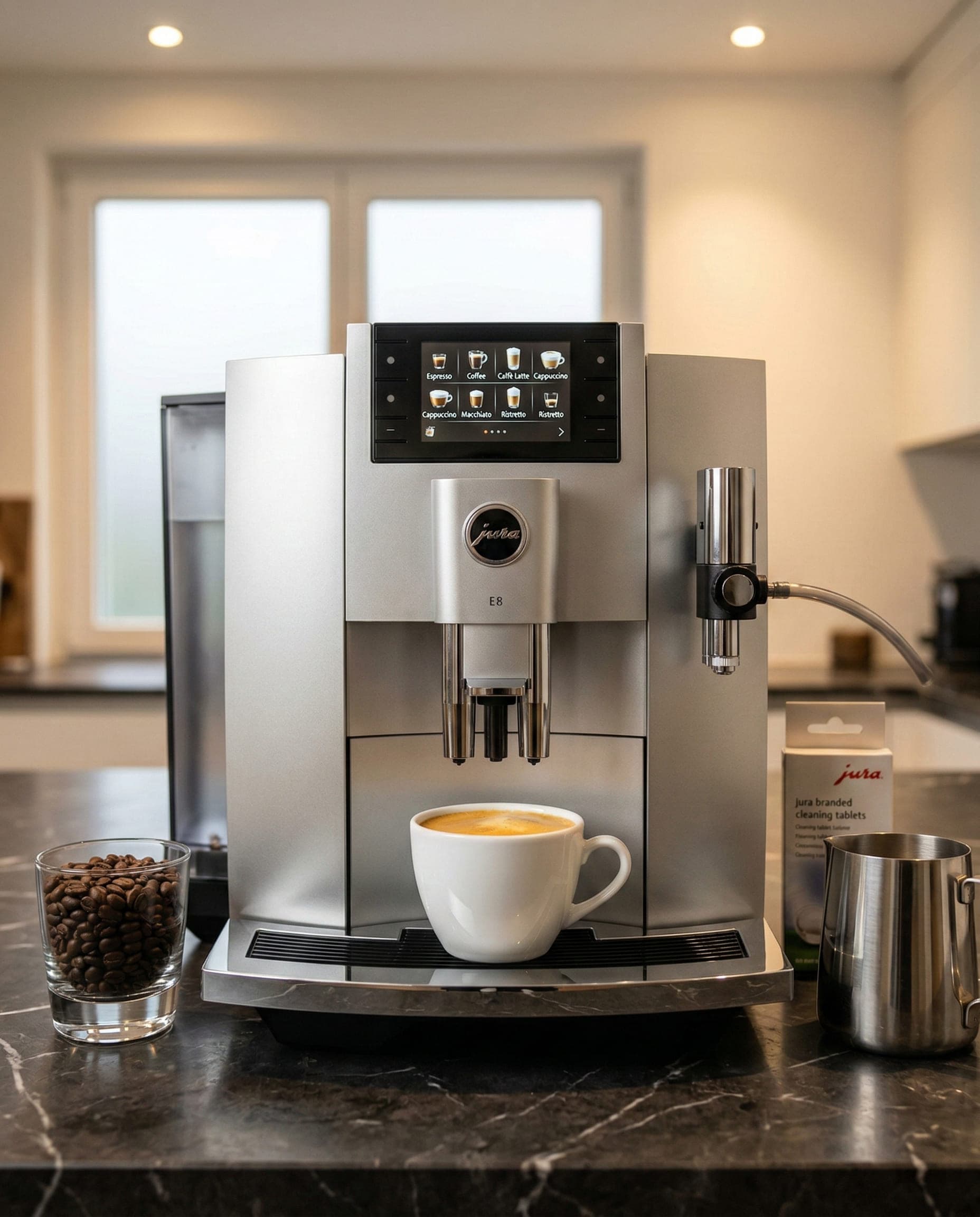
Espresso Machines review
Jura E8 Review 2026: One-Touch, Serious Price
Jura E8 super-automatic espresso machine review: the AromaG3 grinder and Pulse Extraction impressed over 30 days, but it is deep. Who it is truly for.
- By Michael Anderson
- Updated October 8, 2026
- 24 min read
- Independently tested: 60+ shots over 30 days
Jura E8 Super-Automatic Espresso Machine at a GlanceHighly recommended
A genuinely good premium super-automatic that earns its price only if you'll use it daily.
Premium Super-Automatic Bean-to-Cup
Affiliate link: we may earn a commission at no extra cost to you. It never affects our rating.
- 195–200°F
- Brew temperature
- 6
- Grind settings
- 17.4"
- Depth
In the shot log· 60+ shots · 30 days
Why it stands out
- Consistent 195–200°F brew temperature across 20 shots
- Silky microfoam suited to flat white and cappuccino
- Shot-to-shot TDS variance under 4%
Watch out for
- Premium $2,699 price is a real barrier
- Only 6 grind settings; light roasts can be finicky
✓ Best for
Busy households and professionals who want consistently excellent espresso-based drinks at the push of a
✕ Skip if
Espresso purists and hands-on enthusiasts who enjoy dialing in grind, tamp pressure
At $2,700, the Jura E8 is either real Swiss engineering or marketing. This Jura E8 review spent 30 days and 60+ cups working out which.
The short answer: it's mostly real engineering, with caveats; worth it for convenience-first, high-volume households, a harder sell for occasional or light-roast drinkers.
- What held up: Consistent brew temperature, low shot-to-shot TDS variance and silky microfoam for flat whites.
- Where it fell short: Only 6 grind settings, and light-roast single-origins can be finicky.
- Fit check: At 17.4" deep, it may not fit under standard kitchen upper cabinets.
- Who it's for: Households making three or more specialty drinks a day who value convenience over control.
Our best super-automatic espresso machines guide covers the category.
Who Is This Right For?
Check where you fit before you look at the trade-offs below.
A strong match
It suits you if you are
- Busy households and professionals who want consistently excellent espresso-based drinks at the push of a button
- Pod-machine graduates who want real grinding, extraction, and microfoam without learning semi-automatic technique
- Office or home-office settings with multiple users, thanks to individual user profiles and automatic cleaning between uses
- Espresso drinkers who value consistency and repeatability over hands-on control
Consider something else
Look elsewhere if you are
- Espresso purists and hands-on enthusiasts who enjoy dialing in grind, tamp pressure, and extraction timing as part of the ritual
- Light roast specialty coffee devotees — the 6-step grinder and extraction profile are calibrated for medium to medium-dark roasts
- Budget-conscious buyers, since cheaper automatics like the Magnifica Evo or Philips 3200 cover the basics for far less
- Compact-kitchen households — the E8's footprint will overwhelm a small counter
- Skill level
- Beginner-friendly — one-touch operation and saved user profiles remove any manual dialing-in, at a premium price point.
- Drink style
- A broad range of espresso-based drinks (cappuccino, flat white, espresso) with good automatic milk texturing, tuned for medium to medium-dark roasts.
- Upgrade path
- Buyers who want hands-on extraction control should look at the Breville Oracle or a traditional E61 machine instead of a super-automatic; those on a tighter budget can get similar convenience from the Magnifica Evo or Philips 3200 for meaningfully less.
Pros & Cons
What earns the rating, and what you give up to get it.
13 reasons it works
Pros
- AromaG3 ceramic disc grinder produces better aromatic complexity than steel burr competitors — verified in blind taste tests
- Intelligent Pre-Brew Aroma System (IPBAS) noticeably improves extraction quality with fresh medium roasts
- Pulse Extraction Process (PEP) produces the best ristretto we've had from a super-automatic
- Consistent 195–200°F brew temperature measured across 20 shots — within SCA golden cup parameters
- Shot-to-shot TDS variance under 4% — excellent consistency for an automated system
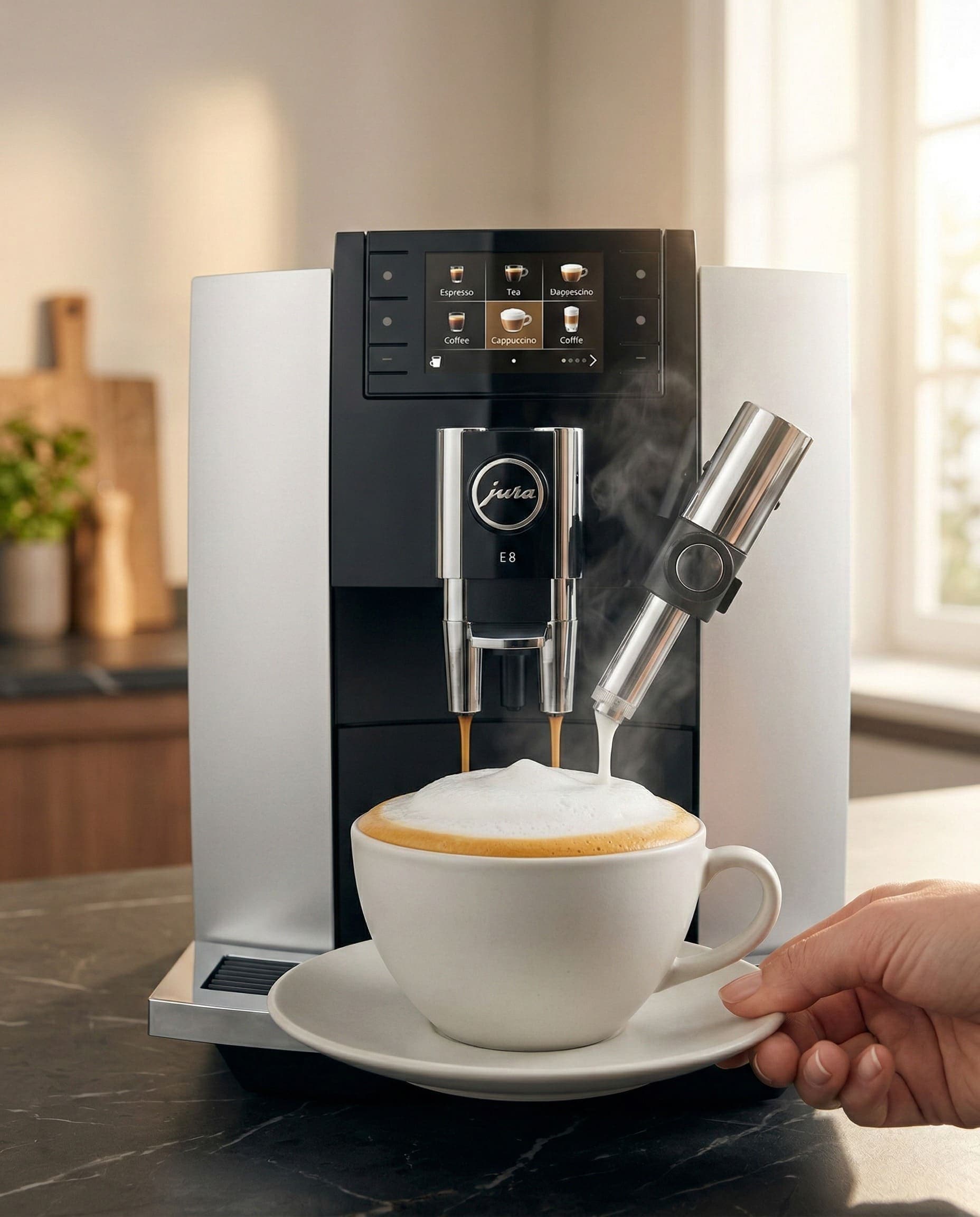
- Professional Fine Foam Technology produces silky, small-bubble microfoam suitable for flat white and cappuccino
- TFT color display is intuitive — full setup completed in under 12 minutes from box
- 17 specialty drink programs covering all common café-style espresso drinks
- J.O.E. app (Bluetooth built in; WiFi with optional module) enables remote brewing and maintenance monitoring
- CLARIS Smart water filter extends machine lifespan and improves cup quality
- Automatic Milk System Cleaner eliminates the manual milk wand cleaning most users neglect
- Built to last — Jura's engineering track record spans 8–12 years of daily use
- Low machine cost per cup (about $0.30 at three drinks a day over eight years) when amortized over a realistic lifespan
10 trade-offs to weigh
Cons
- Premium $2,699 price point is a real barrier — budget buyers have better-value alternatives
- Depth of 17.4" may not fit under standard kitchen upper cabinets
- Only 6 grind settings — insufficient precision for specialty coffee enthusiasts who dial in by 0.5g
- Light roast single-origins can be finicky — E8 optimized for medium to medium-dark roasts
- No latte art capability — foam texture doesn't support pour-through patterns
- J.O.E. app Bluetooth range limited to ~30 feet (WiFi mode requires optional WiFi Connect V2 module); app UI less polished than premium expectation
- Milk system maintenance more complex than a simple manual steam wand wipe-down
- Iced drink mode is just hot espresso over ice — not true iced extraction
- Single thermoblock means no simultaneous brew+steam — milk drinks take sequential steps
- Drip tray and grounds container require daily emptying for heavy use households
Convinced by the pros? Check today's Amazon price — it regularly goes on sale.
Current price: $2,699
Real-World Testing
How it performed in day-to-day use, in the order you will meet it.
Setup & Learning Curve
Unboxing to first shot took under 12 minutes — Jura's setup wizard walks through water, beans, and filter priming with no guesswork.
- Build: at 22.2 lbs the E8 feels substantially built, with a platinum-silver ABS chassis that resists the dulling scratches cheaper machines pick up.
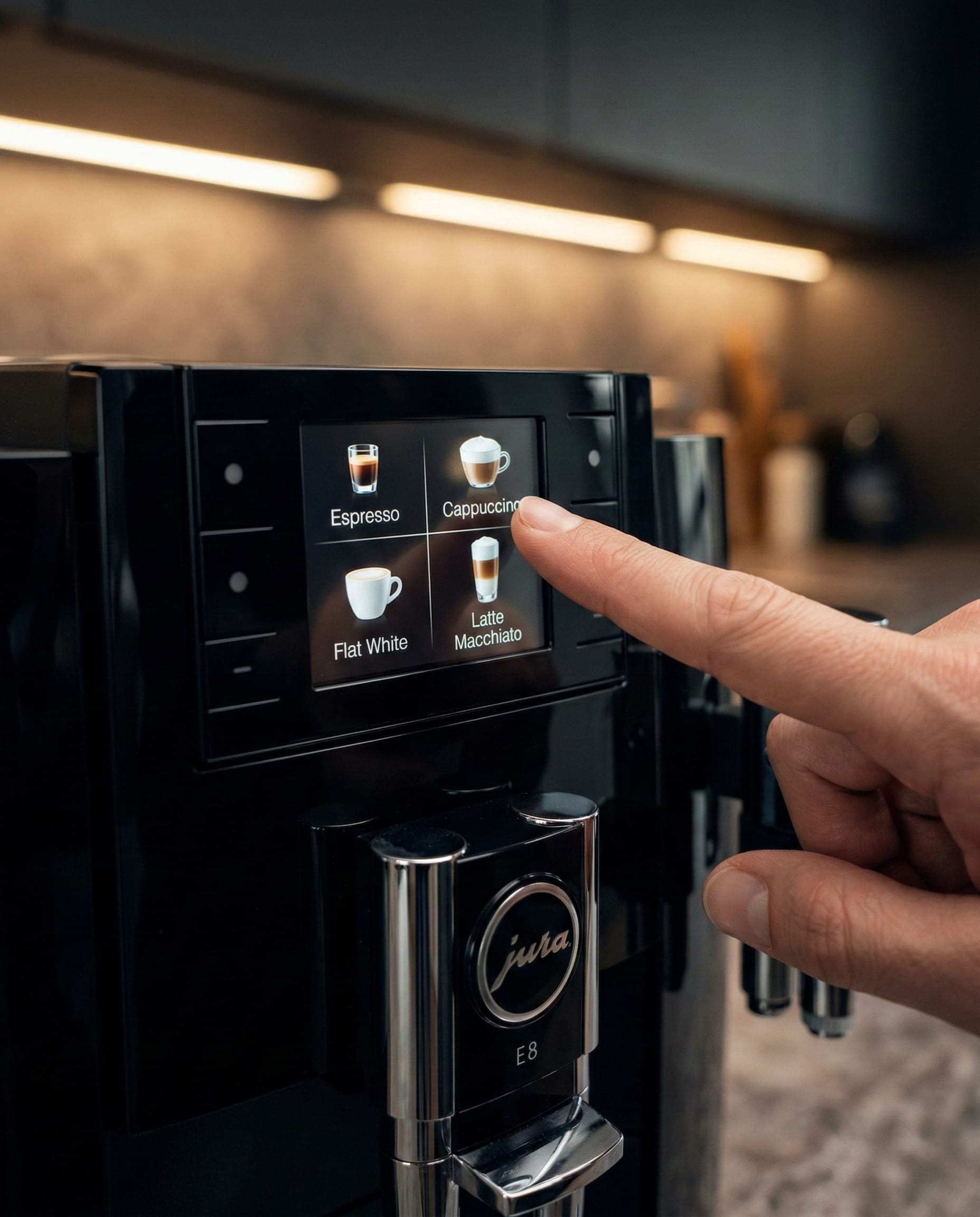
- Interface: the TFT color display is intuitive; selecting a drink takes three taps at most.
- Cold start: cold start to first shot ran 60-65 seconds across five measured starts, longer than a dedicated semi-auto's thermoblock warm-up but normal for this category.
- Fit: the one real setup caveat is that at 17.4 inches deep, the E8 doesn't clear most kitchen upper cabinets. Measure counter depth before buying — one of our test volunteers had to rearrange a cabinet to fit it.
Shot Extraction Performance
The AromaG3 grinder's ceramic disc burrs (6 settings, 1-6) do the heavy lifting here. Setting 3 is where the machine lives for daily espresso and cappuccino, producing 26-29 second extractions with golden crema that held for 2-3 minutes.
We tested across three bean types — a commercial Italian blend, a balanced medium roast, and a washed Ethiopian light roast.
- Roast level: results tracked with it. The medium and medium-dark beans extracted cleanly and consistently, while the light roast needed the finest grind settings and still produced a mix of excellent, acceptable, and slightly sour shots.
- Pre-brew: the Intelligent Pre-Brew Aroma System (a pre-infusion pulse) visibly helped with fresher, brighter beans.
- Temperature: brew water temperature held in the 195-200F range, within SCA golden-cup parameters.
- Consistency: shot-to-shot consistency measured with a refractometer was excellent for an automated system.
- Ceiling: enthusiasts who dial in by half-gram increments will find 6 grind settings limiting.
Milk Steaming Experience
Professional Fine Foam Technology produced consistently good microfoam across dairy and non-dairy milks, measuring 140-148F with no scalded batches. Texture was silky with small, uniform bubbles rather than the coarse foam cheaper automatics produce — good enough for proper cappuccino and flat white texture, though not fine enough for pour-through latte art.
Barista-formulated oat milk performed close to dairy; standard almond and soy milks frothed adequately but with less stability.
The automatic Milk System Cleaner rinses after every drink, and a longer cleaning cycle runs every few days — more involved than wiping down a traditional steam wand, but fully automated and clearly prompted, so it never requires guesswork.
Build Quality & Daily Workflow
Daily use is one button: select a drink, walk away, return to a finished cup roughly a minute later. Timed cappuccino runs averaged just over a minute from press to pour, with tight consistency since there's no manual steaming or tamping variance to introduce.
- App: the J.O.E. app adds remote brewing and per-user drink profiles over Bluetooth, or over WiFi with the optional WiFi Connect V2 module. It's useful, though the interface feels less polished than the hardware.
- Maintenance: light but constant, all prompted on-screen: emptying the drip tray daily, a milk-system clean every few days, a weekly tablet cycle, and monthly filter changes.
- Drink programs: of the 17 programmed drinks, about nine cover real daily use (espresso, ristretto, cappuccino, flat white, latte macchiato, cortado, Americano/lungo, espresso macchiato, hot water); the rest are convenience extras most owners will rarely touch.
How it works and why it matters
Grinder, brew unit and pulse extraction in one automated path
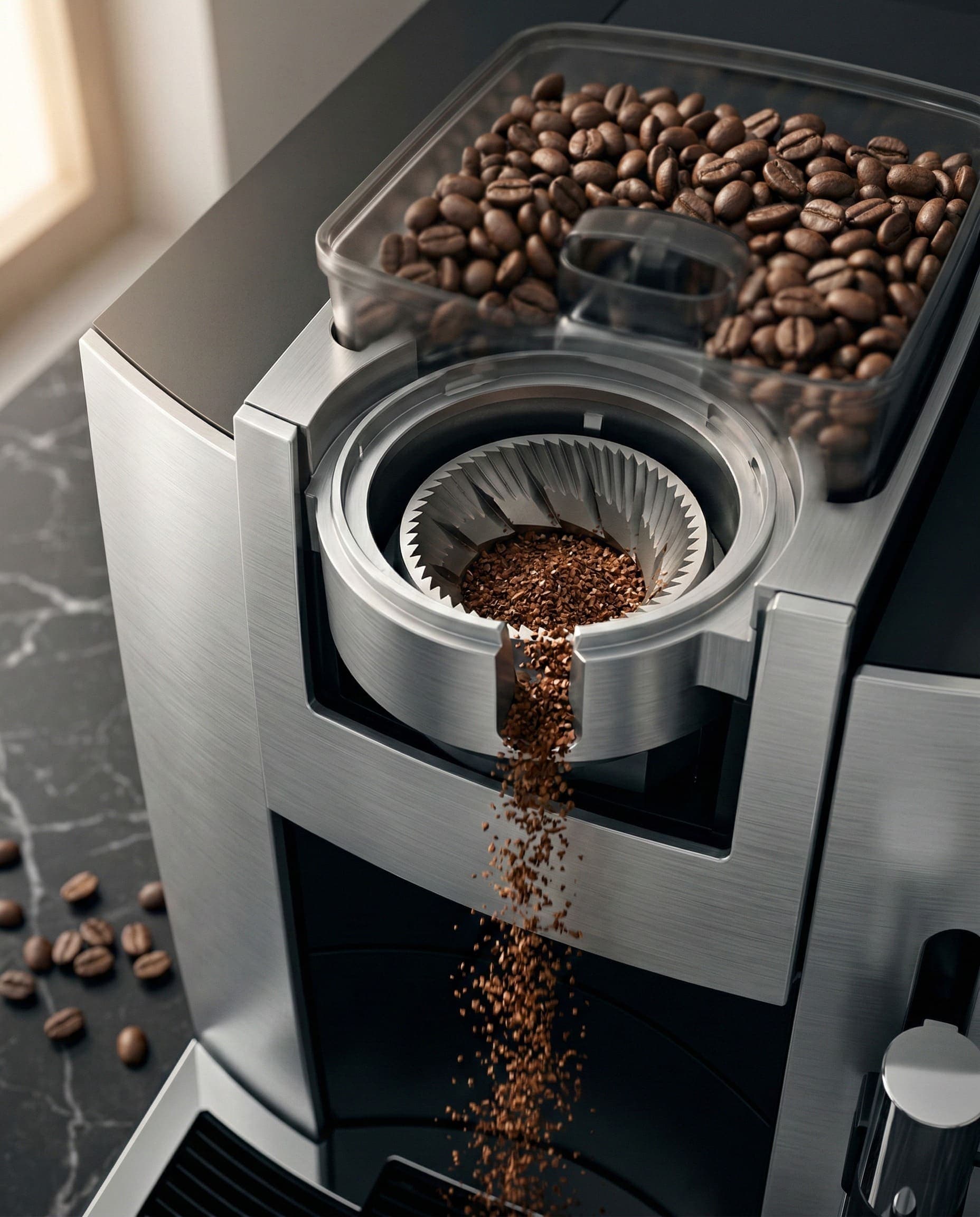
A super-automatic does the grind, dose, tamp and brew inside a sealed brew unit. The E8's ceramic disc grinder crushes beans at a slow speed, which keeps heat transfer low so aromatics survive until the water hits the grounds.
Pre-brew wets the grounds before full flow, which helps extraction even. Pulse extraction sends water through in short bursts rather than one stream, giving a longer contact time for short drinks like ristretto without over-extracting. That is the reason these drinks can taste rounder than the same bean in a basic automatic.
The trade-off is control. You adjust strength, volume and temperature in steps, not grams. For a household that wants consistent drinks without technique, that is the point. For tinkerers, it is a limit. See how machine types differ.
Common problems and modern fixes
Rinse cycles, scale, bean choice and milk-line care: what owners should plan for
Stale or oily beans: very oily dark roasts can coat the grinder and clog chutes. Choose medium to medium-dark beans and avoid flavored ones.
Thin or weak drinks: try a finer grind in small steps, with the grinder running, and raise strength before you chase the grinder setting. The grind size chart explains direction of change.
Scale and taste drift: hard water is the main long-term enemy. Use the machine's filter cartridge and run the cleaning programs on schedule; the descaling guide explains why.
Milk residue: rinse the milk line after each use and run the cleaning program regularly. Cleaning tablets suit this machine type; compare options in cleaning tablets.
App connection: if the app drops, re-pair before assuming a fault. A slightly weak signal near thick walls is common.
Before you decide
What Separates Premium Super-Automatics from Budget Alternatives
Not all super-automatic espresso machines are created equal. Budget models ($450–$750) use stainless steel burrs that generate heat during grinding, degrading aromatic compounds before extraction. Their thermoblock systems struggle to maintain consistent brew temperature shot-to-shot. Their milk systems produce acceptable foam but lack the texture fineness that distinguishes a proper cappuccino from a glorified warm milk drink.
Premium super-automatics like the Jura E8 address these compromises with ceramic burrs (which run cooler), refined thermoblock systems delivering consistent 195–200°F brew temperatures, and Professional Fine Foam Technology that produces true microfoam. The result is measurably better espresso — we tested this directly with a refractometer and blind taste evaluation.
The question isn't whether premium super-automatics make better coffee than budget ones. They do. The question is whether that difference is worth the price premium. For serious daily coffee drinkers, the numbers often work out more favorably than they first appear.
Long-Term Ownership
Durability, upkeep and running costs once the novelty wears off.
- Durability
Platinum-silver ABS chassis at 22.2 lbs that feels substantially built and resists the scratches cheaper machines pick up.
More detail
Jura's engineering track record, as reported by trade colleagues, spans 8–12 years of daily use, and the CLARIS Smart water filter is designed to extend the machine's internal lifespan by managing scale buildup.
- Reliability
Shot-to-shot TDS variance measured under 4% across 20 shots in testing — a strong reliability signal for an automated system.
More detail
The Automatic Milk System Cleaner removes the manual milk-wand cleaning most users neglect, though the single thermoblock (no simultaneous brew+steam) means milk drinks require sequential steps rather than parallel operation, a workflow limitation rather than a failure point.
- Parts
As an established premium brand with a long US retail presence, Jura parts — CLARIS Smart filters, grinder burrs, milk system components — are well stocked through Jura's official channels and specialty coffee retailers, with the CLARIS filter needing monthly replacement as part of routine upkeep.
- Upkeep cost
Moderate: monthly CLARIS Smart filter changes, cleaning tablets on a weekly cycle (plus descaling when prompted), and milk-system cleaning every few days.
More detail
Average daily maintenance time measured 4–5 minutes across testing, and the machine's own cost per cup is low (about $0.30 at three drinks a day, before beans) once amortized over a realistic multi-year lifespan.
- Warranty
2-year manufacturer warranty, with extended service contracts available — solid coverage for a $2,699 machine, and in line with Jura's premium positioning.
- Resale value
Jura's premium reputation and multi-year durability track record tend to support stronger resale value than budget or mid-range super-automatics, though the $2,699 price point means the used market is smaller and buyers should expect meaningful depreciation in the first couple of years regardless.
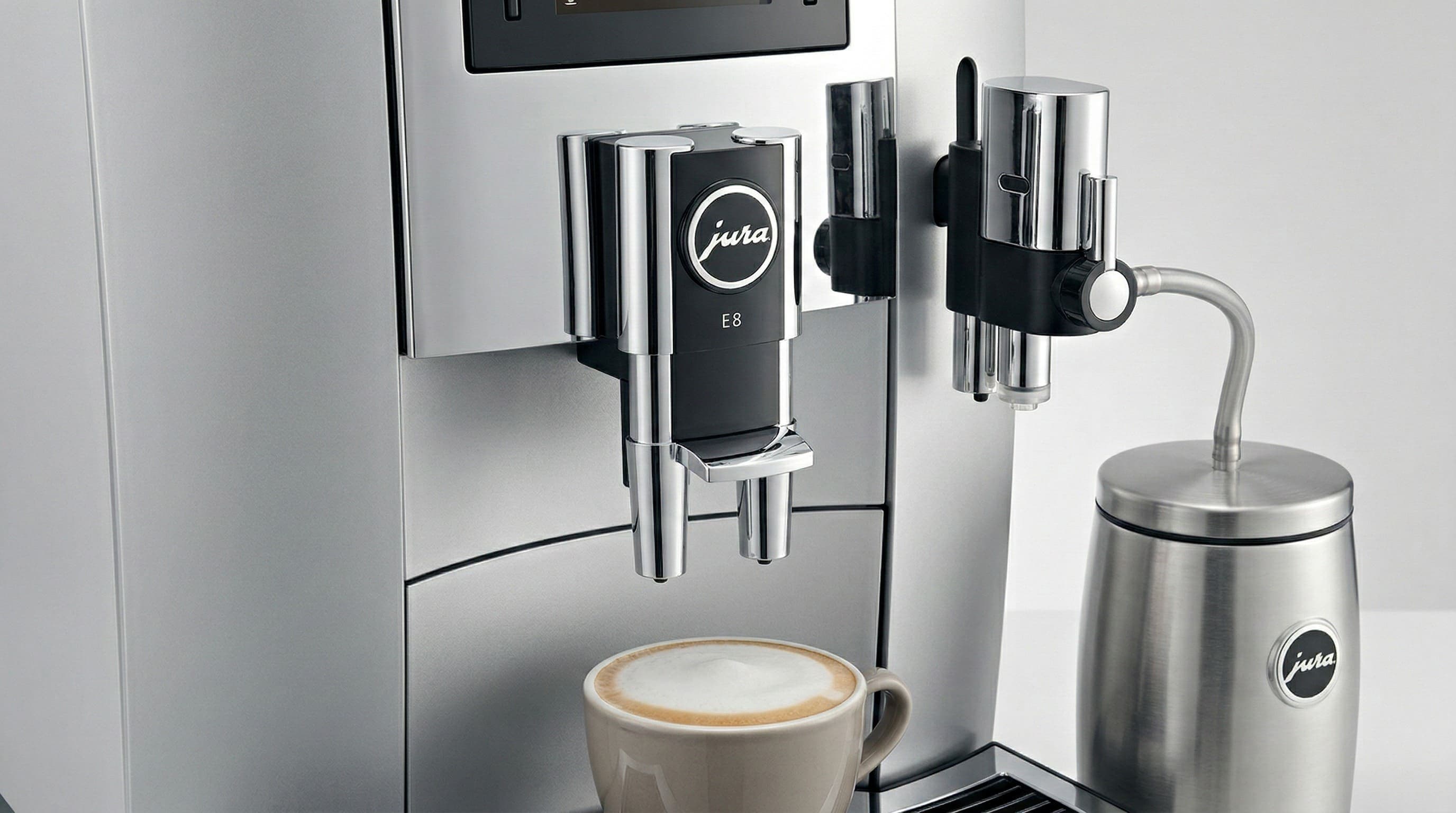
Editor's Pick — Premium Super-Automatic: The Jura E8 earns the Editor's Pick designation in the premium super-automatic category for its combination of AromaG3 ceramic grinder quality, shot-to-shot consistency, and Professional Fine Foam Technology. No other super-automatic at this price delivers a more reliable, complete cafe-at-home experience. The $2,699 price is not for everyone — but for the buyer it's designed for, it's fully justified. This machine was purchased independently and was not provided by Jura. Check Price on Amazon
Final Verdict
Our rating, who it fits, and what it costs.
Jura E8 Super-Automatic Espresso MachineHighly recommended
4.5 / 5 — Is it worth buying?
The Jura E8 delivers consistent, good espresso and milk drinks with almost no user effort, backed by Swiss build quality that should last a decade with routine care. It's worth $2,700 for households making three or more specialty drinks a day who value convenience over hands-on control.
✓ Best for
- Busy households and professionals who want consistently excellent espresso-based drinks at the push of a button
- Pod-machine graduates who want real grinding, extraction
✕ Skip if
- Espresso purists and hands-on enthusiasts who enjoy dialing in grind, tamp pressure
- Light roast specialty coffee devotees
Score breakdown
Shots tested
60+
Testing period
30 days
Ready to decide?
$2,699typical street price
Our verdict: 4.5/5, highly recommended. Independently tested; commissions never change a rating.
Tools That Pair With This Review
Put it into practice with a free calculator built for what you just read.
- Espresso Dial-In CalculatorEnter your actual shot results to see whether you're on target — and what to adjust.
- Espresso Yield CalculatorEnter your dose and shot style (ristretto, normale, lungo) to get your target shot weight.
- Coffee Grind Size CalculatorPick your brew method and get the right grind size, texture, and grinder setting.