
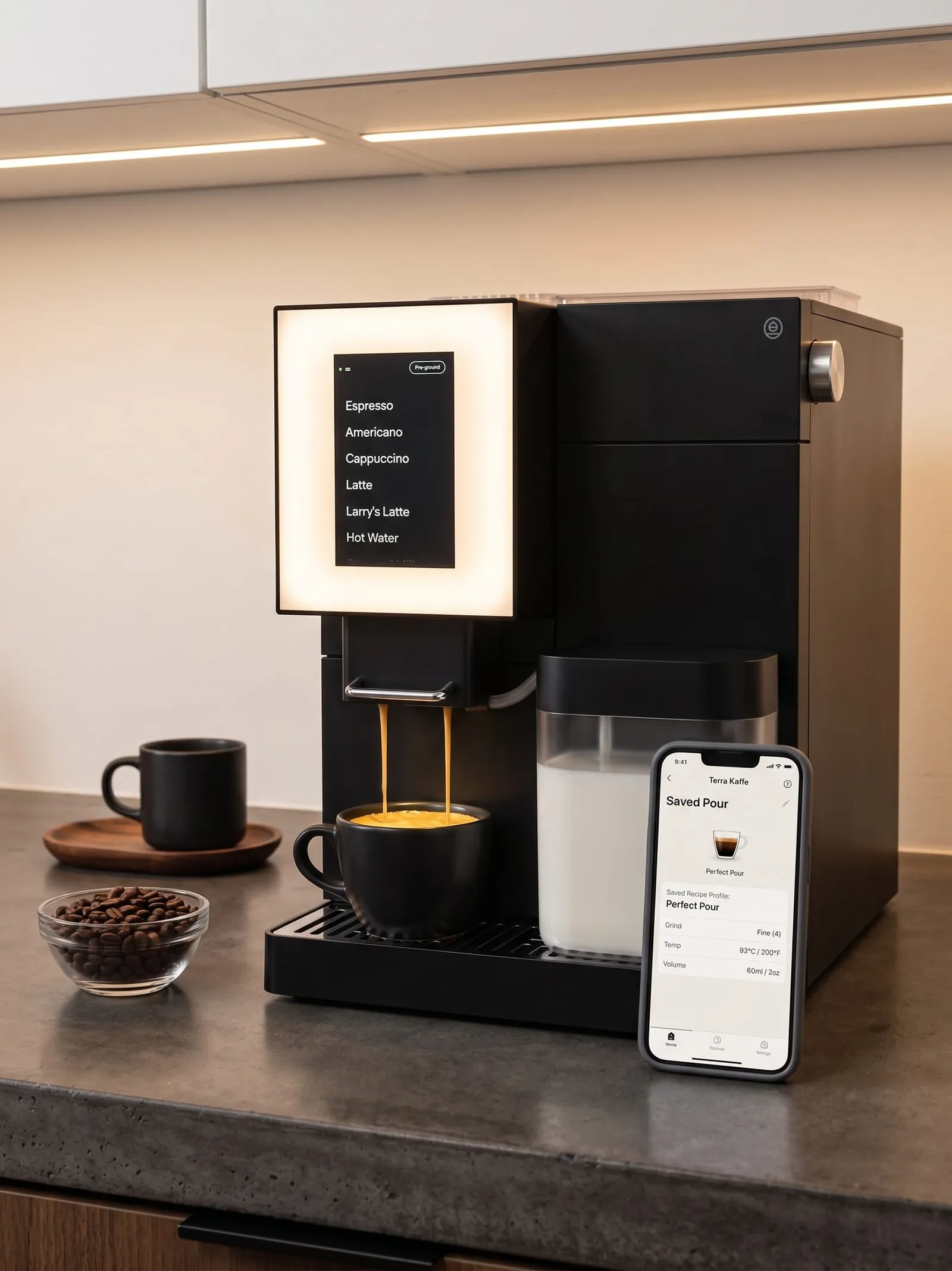
Terra Kaffe
Terra Kaffe TK-02 Super-Automatic Espresso Machine Review
A super-automatic with full smartphone-app brew customization, letting multiple users save and recall their own recipes.
Updated
A notably quiet bean-to-cup super-automatic making fresh-ground espresso drinks at the push of a button.
Typical price
$1,029–$2,199
Approximate; varies by seller
Affiliate disclosure: we may earn a commission from Amazon links here, at no cost to you.this page contains Amazon affiliate links. We may earn a commission if you buy through them, at no extra cost to you, and it never affects our rankings. DetailsRead our full affiliate disclosure
Miele CM 5310 Silence at a GlanceRecommended
A confident pick for quiet, well-built bean-to-cup coffee; it costs a lot and isn't made for specialty-grade extraction.
Premium Super-Automatic Espresso Machine
Why it stands out
Watch out for
✓ Best for
Anyone who wants fresh-ground coffee at the push of a button without operating a manual espresso setup
✕ Skip if
Specialty coffee purists who dial in single-origin light roasts by hand and want pour-over-grade clarity
In this Miele CM 5310 Silence review, the headline is in the name: a bean-to-cup machine designed to grind more quietly than typical rivals, which matters most in open-plan homes and early-morning kitchens.
The short answer: it suits households that want fresh-ground coffee at the push of a button, value long-term build quality, or need quiet operation, but it is not built for specialty-grade extraction.
Use the coffee grind size chart for the grind settings, see the best drip coffee makers comparison for pour-over clarity, and read the what is pour-over coffee guide for the extraction variables behind that choice.
Check where you fit before you look at the trade-offs below.
A strong match
Consider something else
What earns the rating, and what you give up to get it.
7 reasons it works
6 trade-offs to weigh
Medium roasts keep the grinder and brew unit clean; oily dark roasts do not
Bean choice matters too. Oily dark roasts can leave residue in a grinder and brew unit over time, so ask what Miele recommends before settling on a bean, and see our guide to picking espresso beans for the basics. Grind size is set at the machine rather than by feel, so the coffee grind size chart is useful for understanding what each setting does.
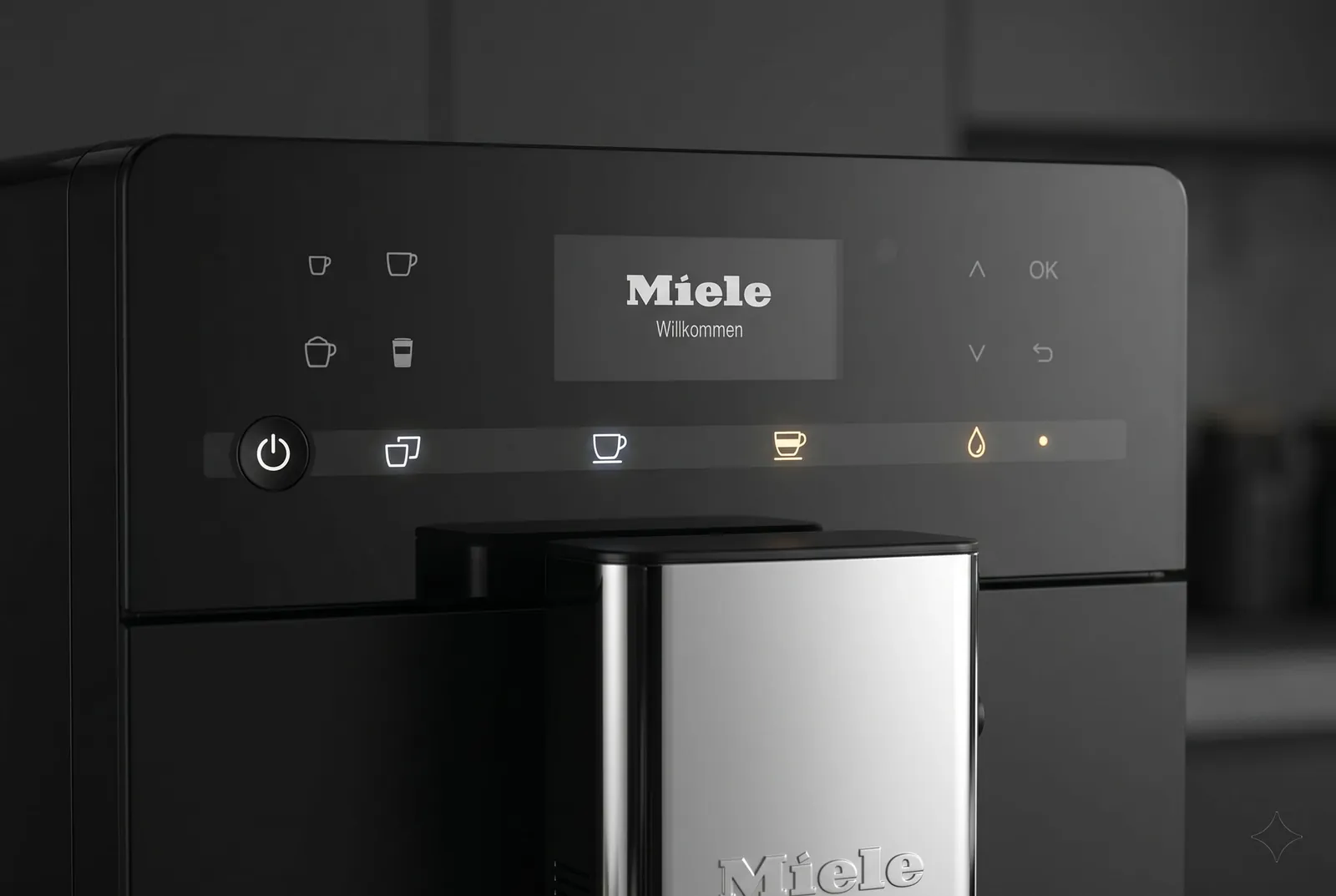
The automatic steps behind each drink, and what they take away from you
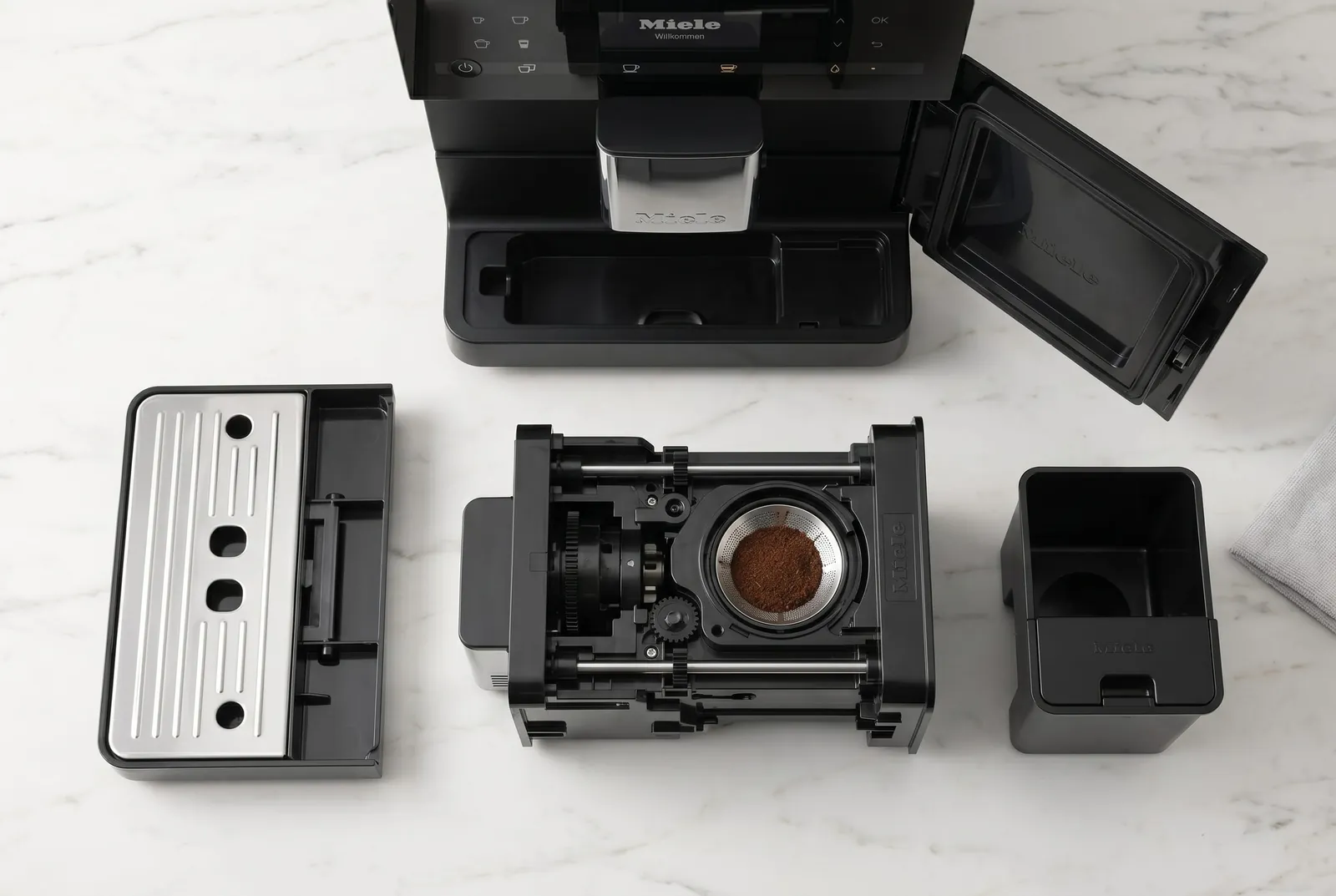
A bean-to-cup machine does the whole espresso routine for you. When you choose a drink, the CM 5310 grinds a fresh dose in its stainless-steel conical burr grinder, drops the grounds into the brew unit, compresses them into a puck and pushes hot water through under pressure. The spent puck then falls into an internal grounds container.
Those steps replace the grinder, dosing, tamping and portafilter work of a manual espresso machine. The result is consistent and effortless, but the machine decides most variables, which is why it suits convenience-first households more than people chasing specialty-grade shots.
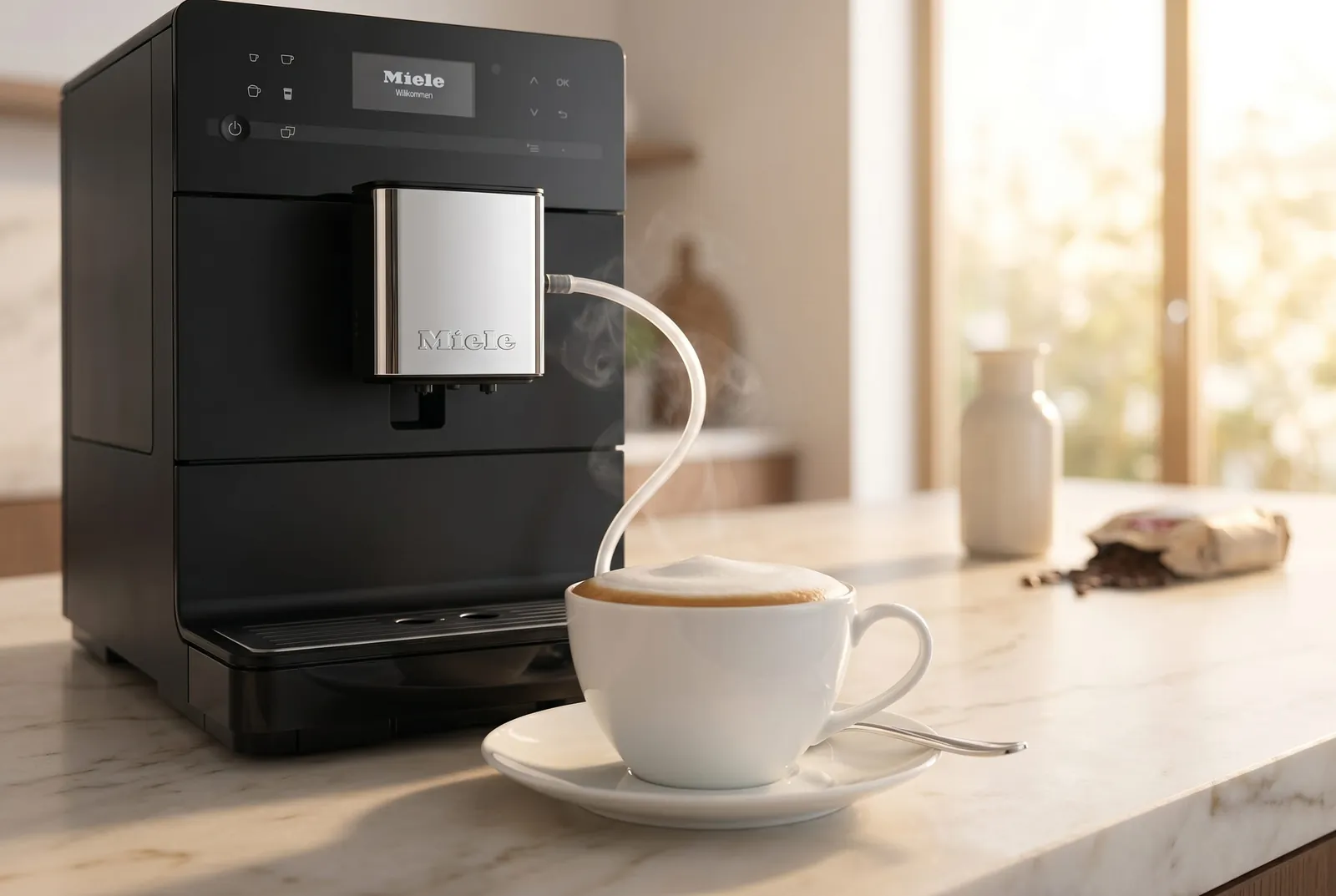
Milk drinks are automatic: a removable milk pipe draws milk from a container into the central spout, where it is frothed with steam and air, and the machine rinses the pipe afterward.
What it means for you: push-button espresso and coffee with minimal noise and easy cleaning. Like any machine with a heater, it needs regular descaling; see our descaling guide.
Automatic machines trade control for maintenance routines worth following.
Noise, milk drinks and ownership cost decide it
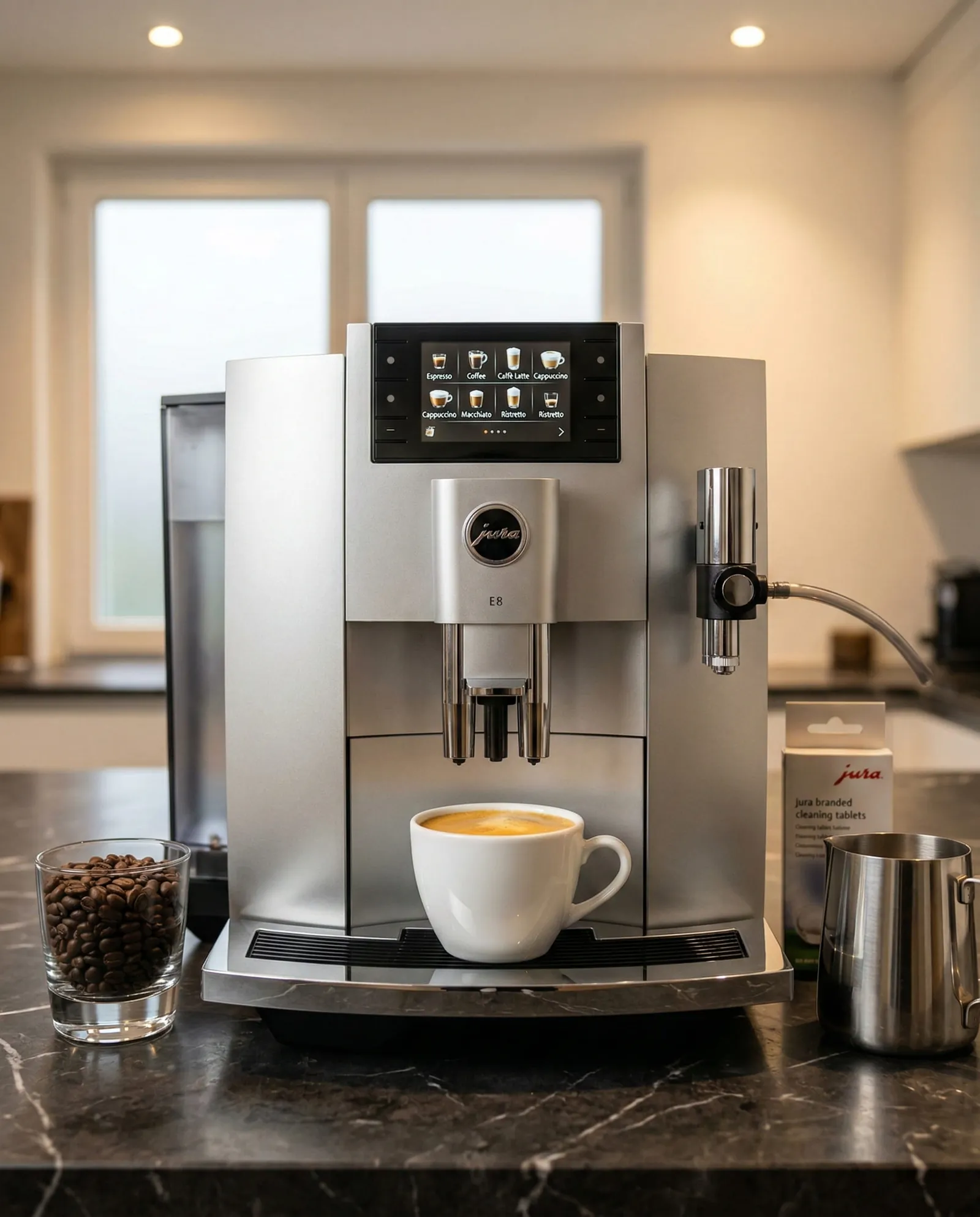
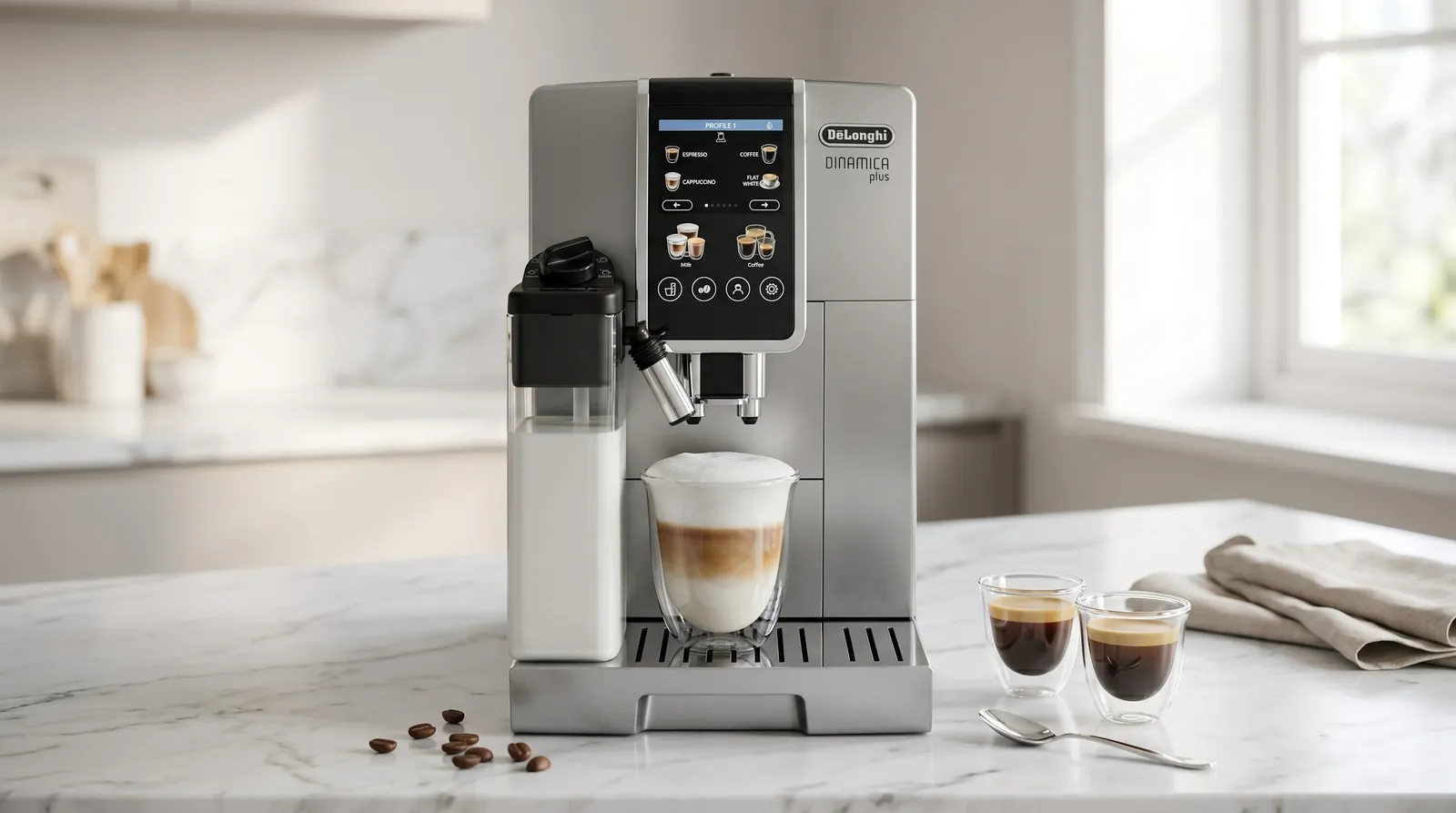
The decision usually comes down to noise, milk drinks and ownership cost. The Jura E8 review covers a rival built around milk drinks, and the De'Longhi Dinamica review covers a lower-priced machine that isn't designed around quiet grinding.
If you would rather separate grinding from brewing, our sub-$500 coffee makers comparison shows what a standalone brewer costs. A superautomatic only makes sense if convenience is the point; otherwise, the price is hard to justify.
Before you decide
Most bean-to-cup machines make the same trade-off: they sacrifice extraction precision for convenience. The grinder burrs are cheaper than standalone units, the extraction parameters are fixed rather than adjustable, and the result is coffee that is consistent but rarely exceptional.
What separates the Miele CM 5310 Silence from most of the category is how narrowly it closes those gaps:
The CM 5310 does not close every gap — it is not a specialty extraction machine — but it closes the gaps that matter most for the daily household user who wants real quality without manual complexity.
For how it compares with other bean-to-cup espresso machines, see our best super-automatic espresso machines.
Durability, upkeep and running costs once the novelty wears off.
Miele's manufacturing standard shows in the components of the CM 5310 Silence — stainless drip tray, precision-fitted brew unit, conical steel burr grinder.
With proper maintenance it is built for long service.
Steel burrs are hard-wearing and rarely need replacing under normal home use.
The thermoblock and brew unit are the primary service components over a long ownership period. Miele authorized service centers handle repairs with original Miele parts.
Common consumables (water filters, descaling tablets) are available through Miele directly and major retailers.
Annual: $15–$25 (descaling tablets, occasional water filter replacement).
Five-year total: $75–$125 — among the lowest maintenance cost of any machine at this price tier due to automated cleaning systems.
2-year limited manufacturer warranty in the US (per authorized retailer listings), in line with premium competitors.
Miele's service network adds reassurance; check current terms with your retailer before buying.
Miele appliances retain secondary market value well due to brand reputation and longevity.
Resale value typically holds up better than for most small appliances, though actual figures vary by condition and market. Strong demand from buyers specifically seeking Miele build quality.
A bean-to-cup machine trades control for convenience: cleaning is automated in part, but you still need to empty the drip tray and grounds container and follow the descaling prompts. Our how to descale a coffee machine guide explains why skipping that step shortens the life of any heating system.
Quick specs
How it scored
Our rating, who it fits, and what it costs.
Miele CM 5310 SilenceRecommended
4.3 / 5 — Is it worth buying?
The Miele CM 5310 Silence earns its rating — and its price — for a specific type of buyer. It is among the best-built and quietest-by-design fully automatic bean-to-cup machines at this price tier.
✓ Best for
✕ Skip if
Score breakdown
Ready to decide?
Our verdict: 4.3/5, recommended. Independent reviews; commissions never change a rating.
See how the Miele CM 5310 Silence compares with the other picks in each roundup.
Closest alternatives in price and purpose, each reviewed the same way.
Terra Kaffe
A super-automatic with full smartphone-app brew customization, letting multiple users save and recall their own recipes.
Jura
A super-automatic delivering consistently excellent espresso drinks at the push of a button — zero skill required, at a premium.
De'Longhi
A bean-to-cup super-automatic with 16 one-touch drink recipes and saved profiles — real convenience, not a craft project.
Put it into practice with a free calculator built for what you just read.
Quick answers before you buy.
It is worth it if you plan to keep it for many years, and harder to justify for shorter ownership. The CM 5310 Silence is expensive compared to most bean-to-cup alternatives.
The value case is clearest over long ownership — Miele's build quality and service infrastructure support that timeline in a way most competitors at this price tier do not, and spread over years of daily use the per-cup cost falls well below café prices. If you are evaluating on a 1–2 year horizon or comparing raw features per dollar, the De'Longhi Dinamica Plus is a sharper immediate value.
The Silence feature is also worth paying for if noise level in your household is a real constraint. If it is not, the price premium is harder to justify.
Quieter than most bean-to-cup machines by design — the Silence name refers to Miele's focus on reducing grinder noise.
In an open-plan kitchen or a household where someone is still asleep at 6 AM, that is the main reason to choose it over louder rivals such as the De'Longhi Dinamica Plus.
If noise isn't a concern for you, the premium is harder to justify.
Medium and medium-dark roast coffee. Integrated bean-to-cup grinders and thermoblock brewing suit well-developed roasts, which give balanced, clean cups with good body and low bitterness.
Light roast single origins tend to taste less expressive from any automatic machine, because the extraction ceiling on dense, delicate beans is lower than a dedicated filter machine with precise temperature control and a quality standalone grinder. If your primary interest is light-roast specialty coffee with origin-specific character, a separate brewer and grinder setup will serve you better.
Better than most integrated bean-to-cup grinders, but below a quality standalone burr grinder at a similar price. Stainless-steel conical burrs are a stronger design than the grinders in many rivals.
However, a quality standalone burr grinder (such as the Baratza Encore ESP at $199–$299 or the Fellow Ode Gen 2 at $350–$450) will grind more evenly than any integrated machine in this category. If you already own quality grind equipment, the integrated grinder is not a step up from your current setup.
If you are starting from scratch and want one machine rather than two, the Miele's integrated grinder is a credible solution.
Yes. The CM 5310 Silence makes milk drinks automatically: a removable milk pipe draws milk from a container (or Miele's milk flask, sold separately) into the central spout, where it is frothed with steam and air, and the machine can rinse the pipe automatically afterward.
Milk and froth quantities are programmable. The result is hot, frothy milk suited to a daily cappuccino or latte, not the precisely textured microfoam of a machine with a steam wand.
If latte art is the goal, a semi-automatic espresso machine will serve you better.
With proper maintenance it is built for long service.
Steel burrs are hard-wearing, and annual upkeep (descaling tablets, occasional water filter) is modest.
The thermoblock and brew unit are the main service components over time.
Its advantage over both is the quieter grinder design and stainless-steel conical burrs.
See our Jura E8 review and De'Longhi Dinamica review for what those machines do better, including price.
For app-saved recipes per person and an automatic milk carafe rather than a quiet grinder, the Terra Kaffe TK-02 ($1,995) is the other premium option.
US authorized retailers list a 2-year manufacturer warranty, in line with premium rivals.
Check the current terms with the seller before you buy.
Reader questions
Questions or tips? Leave a comment
Ask about your setup or share what worked for you. Comments are checked before they appear.
Write a comment or question