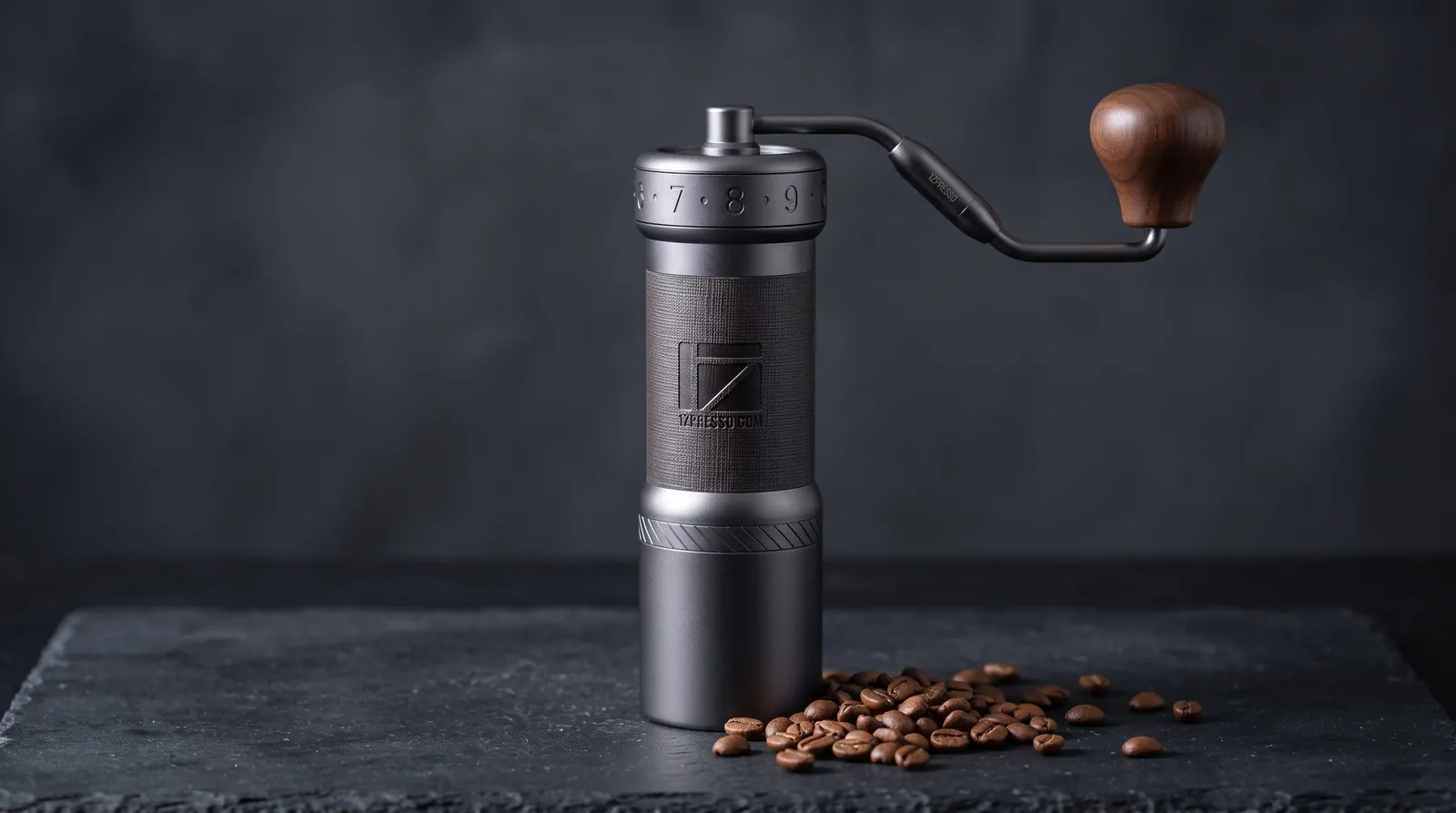
Coffee grinder review
Last updated
1Zpresso K-Ultra Review 2026: Slow for Espresso
1Zpresso K-Ultra manual grinder review: 8-micron clicks and 48mm burrs for espresso and filter, but 60-100 seconds per 18g dose. Who should buy or skip it.
- Our rating 4.7/5
- By Sarah Chen
- 20 min read
- Independently tested: 400+ grinds over 35 days
Affiliate disclosure: this page contains Amazon affiliate links. We may earn a commission if you buy through them, at no extra cost to you, and it never affects our rankings. Read our full affiliate disclosure
1Zpresso K-Ultra Manual Coffee Grinder at a GlanceHighly recommended
The one hand grinder to buy if you brew both espresso and filter; skip it for filter-only or large-batch brewing.
Premium Espresso-Capable Manual Grinder
Affiliate link: we may earn a commission at no extra cost to you. It never affects our rating.
- 48mm conical
- Burr size
- 8 microns
- Adjustment step
- 35g
- Capacity
On the grind bench· 400+ grinds · 35 days
Why it stands out
- 8-micron clicks make espresso dialing workable by hand
- 48mm burrs give more even grounds than 38mm burrs
- Handles both espresso and filter well
Watch out for
- 60–100 seconds to grind 18g for espresso
- 35g capacity is small for batch brews
✓ Best for
Home baristas who brew both espresso and filter coffee and want one grinder for both
✕ Skip if
Daily high-volume espresso users (4+ shots/day)
Most manual grinders are good at one thing, filter or espresso, and rarely both. After 35 days and 400+ grinds against the Mavo Phantox Pro, KINGrinder K6, and Comandante C40, the 1Zpresso K-Ultra is the strongest dual-use manual grinder we've tested, and this review covers who it suits, who should skip it and how it compares with the alternatives.
The short answer: if you want one hand grinder for both espresso and filter, this is the one to buy; if you only brew filter or need large-batch capacity, other grinders make more sense.
- What sets it apart: The dial moves the burrs just 8 microns per click, which makes espresso dialing workable by hand.
- What held up: The 48mm burrs gave more consistent particle sizes than the 38mm burrs we tested alongside.
- Where it fell short: Grinding 18g for espresso takes 60–100 seconds, and the 35g capacity is small for batch brews.
- The price gap: At $135–$265 it costs more than the Mavo Phantox Pro or the KINGrinder K6.
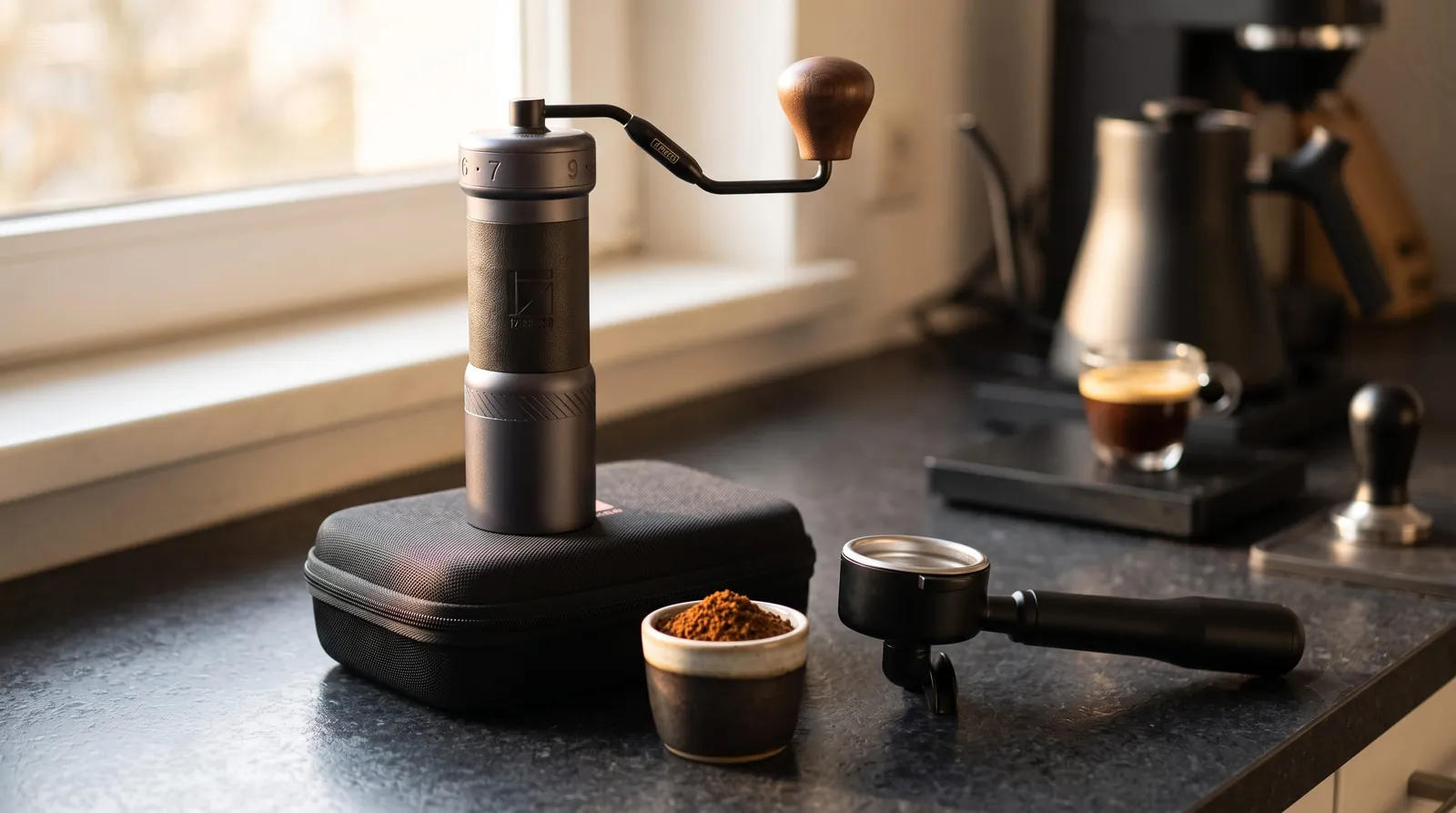
Who Is This Right For?
Check where you fit before you look at the trade-offs below.
A strong match
It suits you if you are
- Home baristas who brew both espresso and filter coffee and want one grinder for both
- Espresso enthusiasts who want the best manual grinder for dialing in shots precisely
- Single-origin pour-over lovers who want fine adjustment control for different origins
- Travelers and remote workers who need a premium grinder that packs small
- Upgraders from the Timemore C3 or similar budget stepped-click grinders
Consider something else
Look elsewhere if you are
- Daily high-volume espresso users (4+ shots/day) — electric grinder is more practical
- Budget-conscious buyers — the Timemore C3 ($99–$149) makes excellent filter coffee for less
- Batch brewers regularly making 3–4 cups — the KINGrinder K6's 55g capacity is better suited
- Users who prefer stepless adjustment — the Mavo Phantox Pro offers that at a lower price
- Skill level
- Intermediate to expert — the fine adjustment system rewards anyone willing to learn their preferred dial positions
- Drink style
- Excellent for espresso, V60, AeroPress, and most filter methods. Works for French press. Best suited to single-origin and specialty coffee.
- Upgrade path
- Many K-Ultra users pair it with an electric grinder for high-volume espresso days — manual for weekend ritual, electric for weekday speed
Pros & Cons
What earns the rating, and what you give up to get it.
7 reasons it works
Pros
- Ultra-fine 8-micron stepped adjustment — the finest click system available in a manual grinder, makes espresso dialing simple
- 48mm conical burrs produce more even grounds than 38mm alternatives — cleaner, more balanced cups
- Handles both espresso and filter well — one grinder replaces two for most home baristas
- External adjustment dial changes settings instantly without disassembly
- Foldable handle and magnetic catch cup — practical for daily use and travel
- Solid, consistent build quality — zero wobble at any grind setting throughout testing
- Low grind retention under 0.3g — important for accurate espresso dosing
6 trade-offs to weigh
Cons
- Takes 60–100 seconds to grind 18g for espresso at fine settings — normal for manual grinders but worth knowing
- Moving through the full grind range from coarse to fine takes many clicks due to the ultra-fine steps
- At $135–$265, it costs more than excellent alternatives like the Mavo Phantox Pro ($125–$135) or KINGrinder K6 ($100–$110)
- 35g capacity means refilling for large batch brews — KINGrinder K6 (55g) is better for multi-cup filter sessions
- No stepless option — some filter-focused buyers prefer continuous adjustment over clicks
- 1Zpresso's service network is smaller than Comandante's global reach
Real-World Testing
How it performed in day-to-day use, in the order you will meet it.
Setup & Learning Curve
Ready to grind out of the box — no assembly beyond attaching the catch cup. The external dial's click detents are unambiguous from the first use, and marking two or three go-to positions with a paint dot took the guesswork out of switching brew methods within the first few days.
Dial-In Workflow
Espresso dialing was faster than any other manual grinder tested — typically locked in within 2–3 shots per new bean, versus 4–6 attempts on the KINGrinder K6's coarser adjustment. Switching between an espresso setting and a filter setting takes seconds via the external dial, though moving across the full grind range takes noticeably more clicks than coarser-stepped competitors.
Grind Consistency Notes
Kruve Sifter Pro analysis showed the 48mm burrs producing 70–72% of grounds in the ideal target range, versus 65–68% for 38mm grinders tested alongside it. Distribution shifted less than 5% from the first grind session to the last, indicating the burrs held calibration well through the test period.
Retention & Static Management
Grind retention stayed under 0.3g in every session — low enough that it doesn't meaningfully affect single-dose espresso accuracy. No static issues observed at any setting, filter or espresso.
Cleanup & Maintenance
Tool-free disassembly — the burr carrier pulls out after a half-turn release, and a full clean took under 3 minutes on a weekly cadence. After the full test period the body showed no scratches and the dial clicked as consistently as on day one.
Is the 1Zpresso K-Ultra worth it?
Value depends on how many brew methods you cover
The K-Ultra earns its price when it replaces two grinders. A buyer who would otherwise purchase a coarser-stepped hand grinder for filter and then struggle to dial espresso gets both jobs done by one body and one set of burrs.
It is harder to justify if you brew only filter coffee. The Mavo Phantox Pro review and the KINGrinder K6 review cover cheaper options that already handle pour-over well, so the premium over them is really a premium for espresso precision. Our pour-over ratio calculator works out water, bloom and brew time.
The wide $135-$265 range also matters. Check the current listing before deciding, because the version you choose changes the real cost per year of ownership more than any other factor.
What the K-Ultra specs mean in daily use
Feature, practical impact, who benefits, trade-off
- 8-micron adjustment steps: Each click changes the burr gap by a very small amount, so you can move between shots without overshooting. Espresso users benefit most, because a tiny change in grind size can shift extraction noticeably. The trade-off is more clicks to travel from a filter setting to an espresso setting.
- 48mm conical burrs: A larger cutting surface generally grinds more quickly and evenly than smaller burrs at the same effort. Filter brewers benefit from a cleaner cup. The cost is a heavier, bulkier grinder than compact travel models.
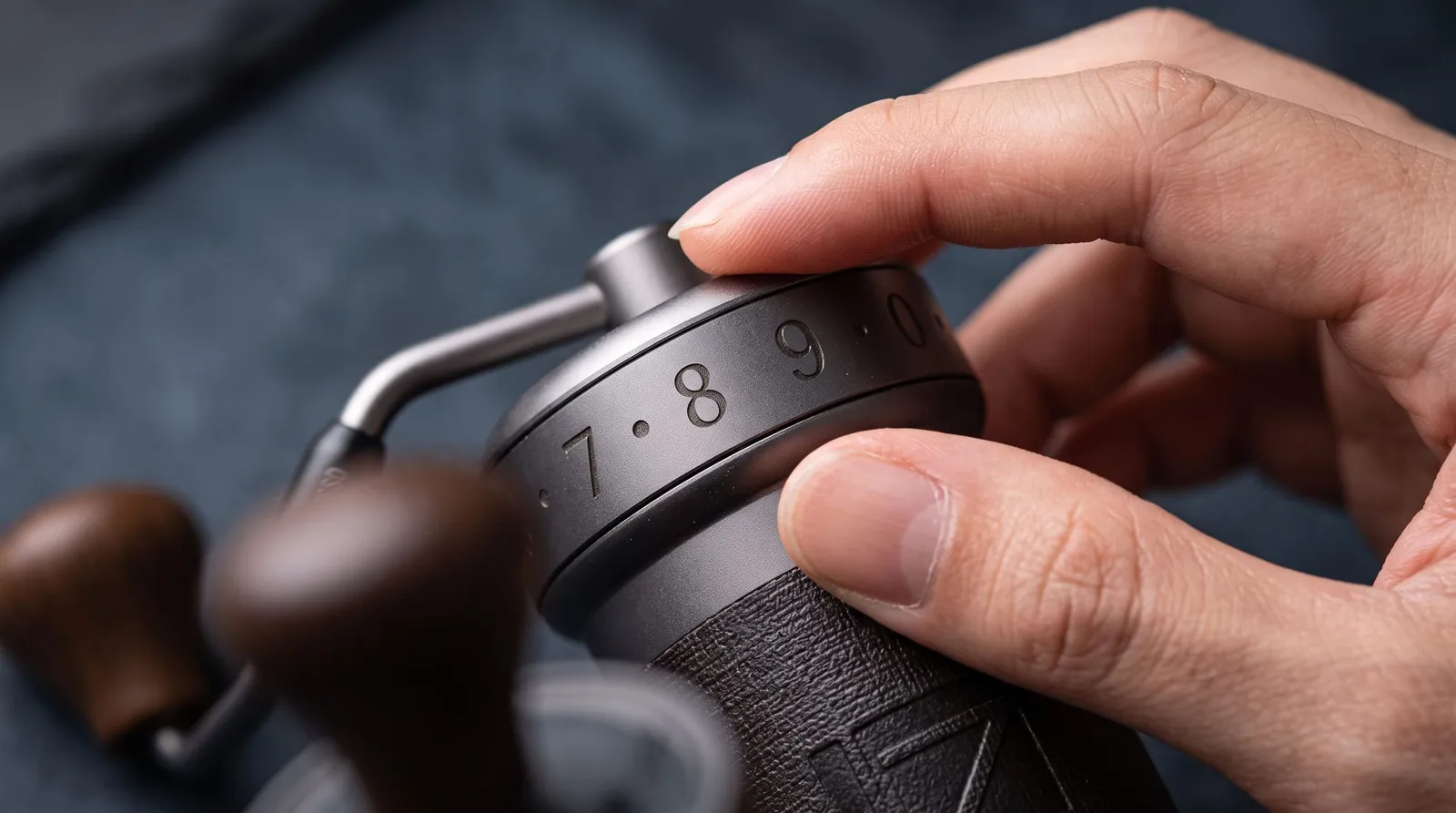
- External adjustment dial: You change the setting without taking the grinder apart, so a dot or mark on the dial lets you return to your usual espresso and V60 positions. This suits households that switch brew methods through the week.
- 35g capacity: One person's espresso or a single pour-over fits comfortably. A two- or three-cup batch means refilling, which is the main reason the K6's larger hopper appeals to batch brewers.
- Foldable handle and magnetic catch cup: These keep the grinder compact in a bag or drawer, and the cup stays attached while you work. The trade-off is one more moving part to keep clean.
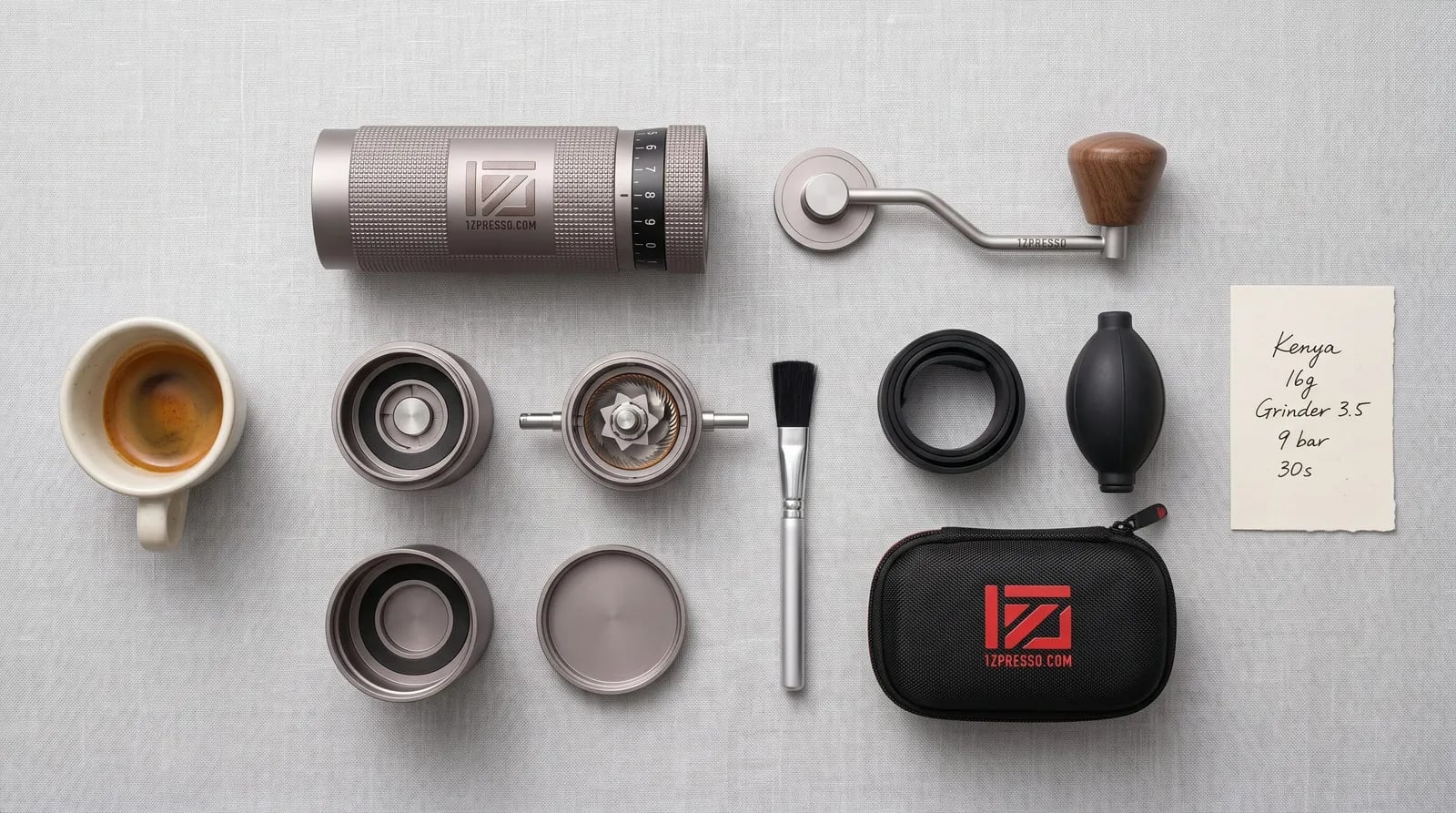
K-Ultra setup, cleaning and maintenance tips
Keeping the grind consistent over years
Set aside a few minutes at the start to find your own reference positions. Choose one coffee, dial in an espresso setting and a filter setting, then mark them. Every new bag will need a small adjustment, but you start from a known point rather than guessing. Log a shot in the espresso dial-in calculator to see whether to grind finer or coarser.
Brush out the grounds regularly and do a fuller clean when you change roast style, since oils from dark roasts can build up and affect feel. Follow 1Zpresso's own instructions for disassembly and avoid water on the burrs or bearings.
Remember that burrs are a consumable part. Replacement sets are sold by 1Zpresso, so check the manufacturer's site for the current price and fit before ordering.
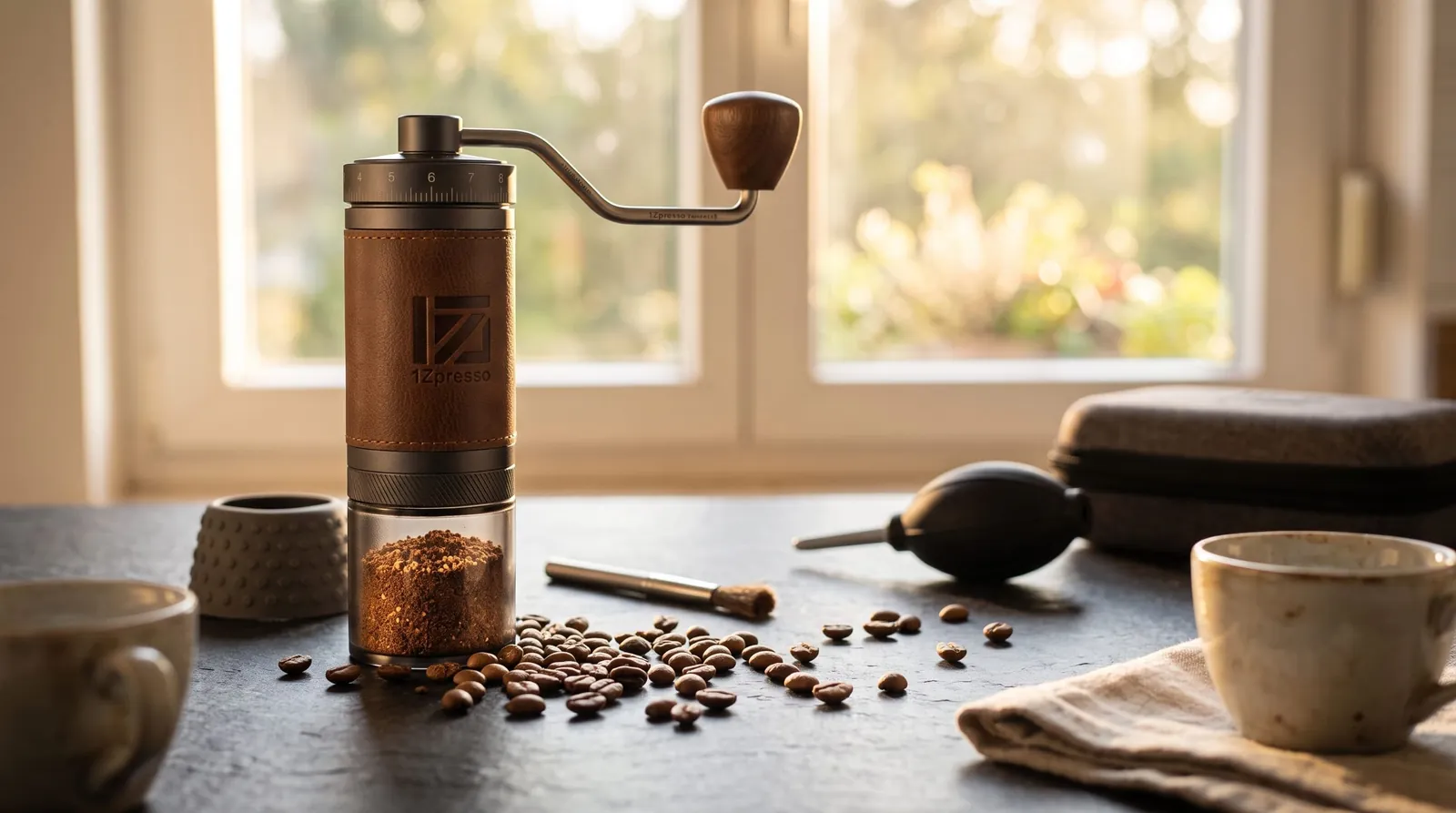
1Zpresso K-Ultra vs Comandante C40, Mavo Phantox Pro and KINGrinder K6
Which hand grinder fits which buyer
| Grinder | Burr | Capacity | Weight | Current price |
|---|---|---|---|---|
| 1Zpresso K-Ultra | 48mm conical | 35g | 540g | Check current price |
| Comandante C40 | 39mm conical | 25–35g | 510g | Check current price |
| Mavo Phantox Pro | 38mm conical | 40g | not listed | Check current price |
| KINGrinder K6 | 48mm conical | 55g | 620g | Check current price |
- Versus the Comandante C40: The Comandante C40 review shows a grinder with a long track record and a wider service reputation. The K-Ultra's finer steps make espresso easier, while the C40 suits buyers who value its established support and mainly brew filter.
- Versus the Mavo Phantox Pro: The Phantox Pro's stepless dial appeals to filter drinkers who like continuous control. Choose the K-Ultra if you want clicks you can count and repeat for espresso.
- Versus the KINGrinder K6: The K6 has the larger capacity and a lower price, so it fits batch filter brewing. The K-Ultra is the better choice if espresso matters.
If you only want the best electric option instead, see our best coffee grinders roundup.
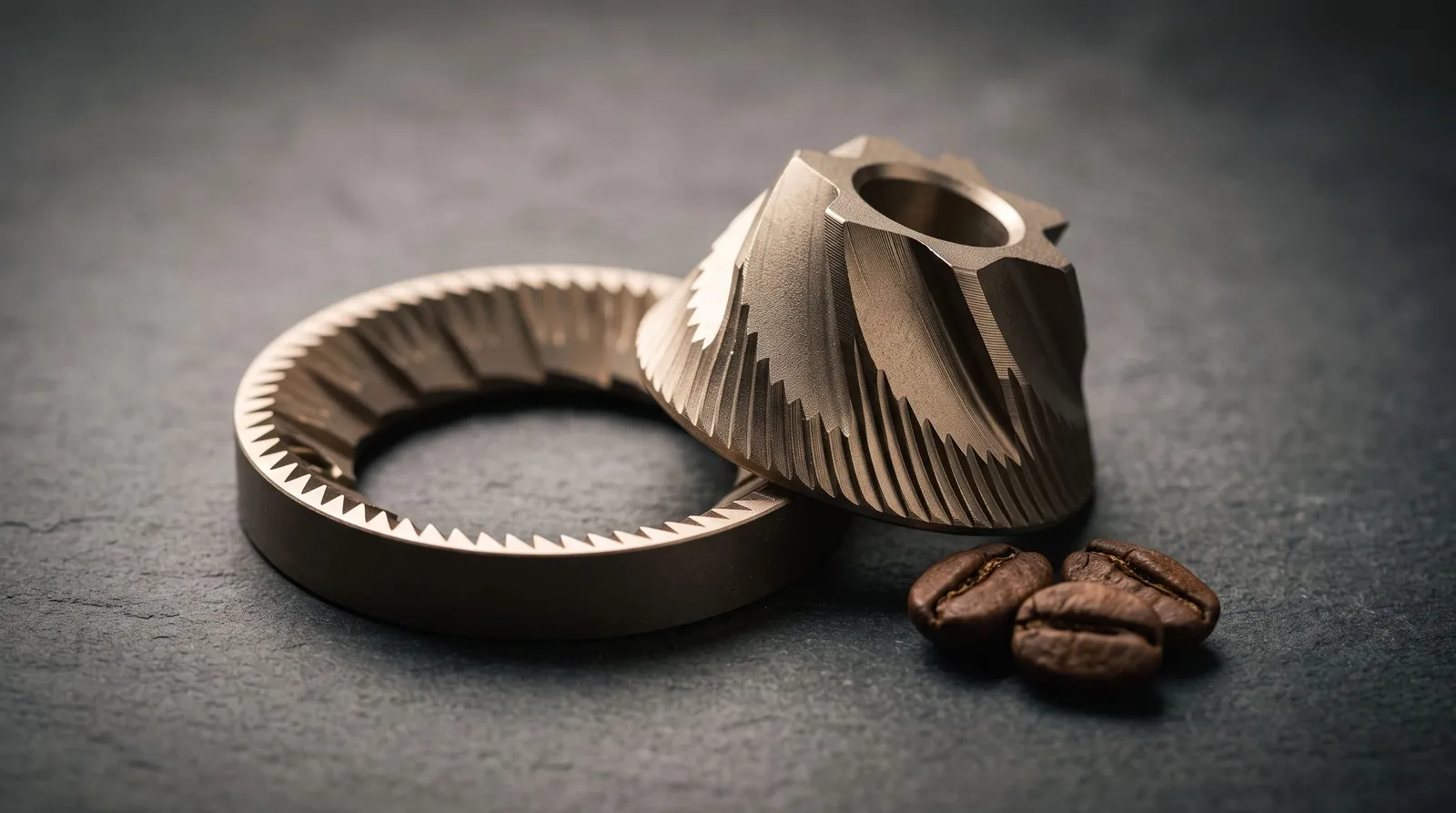
Who should skip the 1Zpresso K-Ultra?
Honest reasons to buy something else
Skip it if you pull several espresso shots a day. Hand grinding fine espresso takes time and effort, and an electric grinder will serve you better.
Skip it if your budget is tight and you only make filter coffee. A less expensive manual grinder will get you most of the way there.
Skip it if you regularly brew for a group, since the 35g capacity means repeated refills. And if you prefer a stepless dial, consider the Phantox Pro instead.
Once you own a grinder, the coffee grind size calculator helps you pick a starting point for each brew method.
How it works and why it matters
Conical burrs, a stepped dial and hand power: how a manual grinder shapes the cup
The K-Ultra turns the handle to crush beans between a conical burr pair. A larger burr cuts more beans per turn and produces more even particles, which lowers both sour fines and bitter boulders in the cup.
The external dial moves the burr gap by tiny steps, so you can change grind size without opening the grinder. That matters for espresso, where a small change alters flow time a lot.
A manual grinder has no motor heat, so aroma is preserved, but it takes effort and time. The manual vs electric grinders guide compares.
Common problems and modern fixes
Retention, static and slow grinding: common issues and fixes
- Static and clumps: add a spritz of water to the beans before grinding (RDT) and tap the catch cup. A WDT tool breaks up clumps in the portafilter.
- Inconsistent shots: count clicks from zero and log settings. See the dial-in guide.
- Hard to grind light roasts: brace the grinder and use a steady rhythm. A longer handle or clamp helps.
- Residue: brush the burrs regularly and avoid washing with water; the burr grinder guide explains what to look for.
- Grind size confusion: check the grind size chart.
For dial numbers per brew method and how to find true zero, see our 1Zpresso K-Ultra grind settings chart.
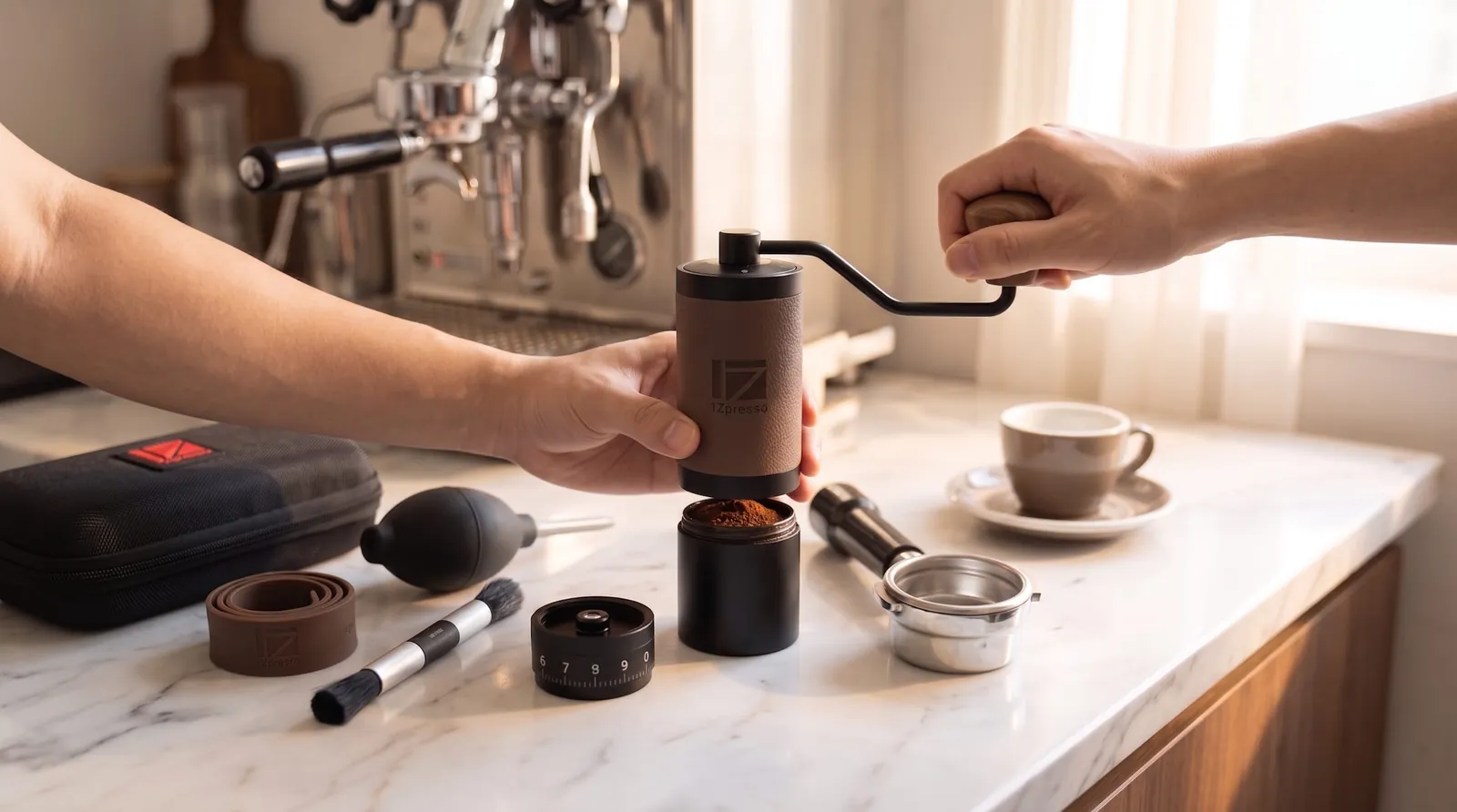
Before you decide
The Case for a Manual Grinder That Does Both Espresso and Filter
Most home baristas own one grinder and use it for everything, but most manual grinders are built around a single brewing style rather than true dual-use performance. The 1Zpresso K-Ultra is the exception: its 8-micron adjustment is precise enough for serious espresso dialing, and its 48mm burrs produce the even particle distribution that filter coffee rewards.
Larger burrs matter here because more grinding surface area cuts beans more consistently, and more uniform particle sizes mean water extracts evenly. The result is a cleaner, more balanced cup, especially noticeable with demanding single-origin light roasts. If you're buying one manual grinder to cover multiple brewing methods, the K-Ultra is the strongest case available at this price.
See how the K-Ultra stacks up against electric options in our best espresso grinders under $300, where it is our top hand-grinder pick.
How It Measures Up on Key Grinder Criteria
- Grind range and adjustment
- An external numbered dial moves about 20 microns per click and covers espresso through French press. The fine steps make espresso dialing practical on a hand grinder, and you can change settings without taking it apart.
- Dose accuracy and retention
- As a hand grinder you weigh each dose and grind all of it. The magnetic catch cup empties cleanly and very little coffee stays behind between brews.
- Heat, noise and vibration
- No motor means no electrical heat and only the sound of the burrs. The trade-off is effort: espresso-fine doses take noticeably longer to grind.
Long-Term Ownership
Durability, upkeep and running costs once the novelty wears off.
- Durability
The high-alloy steel burrs showed no measurable change in grind distribution across the full test, and the machined aluminum body picked up no scratches or wear during daily handling.
- Reliability
No mechanical issues during testing — the dial clicked as consistently at the end of testing as on day one, with zero burr wobble at any setting.
- Parts
Replacement burr sets are available directly from 1Zpresso at $30–$50; the service network is smaller than Comandante's global reach.
- Upkeep cost
Minimal — roughly $10/year in routine upkeep, with a possible burr set replacement around year 5–6 (~$40).
More detail
Estimated 5-year total cost of ownership: $225–$355 including the grinder itself.
- Warranty
Standard manufacturer warranty through 1Zpresso; burrs are rated to hold calibration for 5–8+ years at typical home-use volumes.
- Resale value
1Zpresso has a strong specialty-coffee following, and well-maintained units typically resell for a solid share of the original price.
This grinder was purchased at retail for this review. No commercial relationship with 1Zpresso. All grind measurements were made with a Kruve Sifter Pro.
Final Verdict
Our rating, who it fits, and what it costs.
1Zpresso K-Ultra Manual Coffee GrinderHighly recommended
4.7 / 5 — Is it worth buying?
After extended testing, the 1Zpresso K-Ultra earns a clear recommendation for one specific buyer: the home barista who wants one manual grinder that handles espresso and filter coffee at a high level.
✓ Best for
- Home espresso with precise dialing
- Single-origin V60 pour-over
✕ Skip if
- High-volume daily espresso (4+ shots)
- Large-batch filter brewing for groups
Score breakdown
Grinds tested
400+
Testing period
35 days
Ready to decide?
Our verdict: 4.7/5, highly recommended. Independently tested; commissions never change a rating.
Where It Ranks in Our Buying Guides
See how the 1Zpresso K-Ultra Manual Coffee Grinder compares with the other picks in each tested roundup. Owner guides for this model are listed below the roundups.
Tools That Pair With This Review
Put it into practice with a free calculator built for what you just read.
- Coffee Grind Size CalculatorPick your brew method and get the right grind size, texture, and grinder setting.
- Espresso Dial-In CalculatorEnter your actual shot results to see whether you're on target — and what to adjust.
- Coffee to Water Ratio CalculatorThe general-purpose ratio tool for drip machines and pour-over — enter water or coffee, pick your strength.
Reader questions
Questions or tips? Leave a comment
Ask about your setup or share what worked for you. Comments are checked before they appear.