 4.2
4.2Blue Bottle Coffee
Blue Bottle Coffee Three Africas
A fruit-forward, third-wave roast that shines in pour-over and rewards a dialed-in espresso setup — not a beginner-friendly dark roast.
Senior Coffee Reviewer & Grinder Specialist
Updated October 14, 2026
Sarah Chen is the Senior Coffee Reviewer & Grinder Specialist at The Coffee Locator, with 13 years in specialty coffee. Sarah covers coffee grinders, grinder technology, sensory evaluation.

Role, experience, credentials and the areas covered.
What Sarah reviews
See how products are tested and our editorial guidelines.
Equipment reviews, with the star rating on each card.
4.2Blue Bottle Coffee
A fruit-forward, third-wave roast that shines in pour-over and rewards a dialed-in espresso setup — not a beginner-friendly dark roast.
 4.4
4.4illy
A smooth, balanced 100% Arabica blend with caramel and chocolate notes — best enjoyed as straight espresso rather than buried in milk.
 4.6
4.6Intelligentsia
An approachable specialty-grade espresso blend with milk chocolate and dried cherry notes, consistent enough for daily milk drinks.
 4.2
4.2Lavazza
A forgiving, classic Italian-style espresso blend that builds reliable crema and performs especially well in flat whites and cappuccinos.
 4.5
4.5Onyx Coffee Lab
An award-winning medium-light blend with dark chocolate and dried stone fruit complexity — versatile across espresso and pour-over alike.
 4.4
4.4Peet's Coffee
A bold, chocolatey dark roast with no sourness, well suited to French press, lattes, and entry-level espresso machines.
 4.3
4.3Stumptown Coffee Roasters
A Pacific Northwest-style dark roast with a bold, chocolatey body that holds up well across espresso, Americanos, and French press.
 4.2
4.2aarke
A clean, Scandinavian-designed drip maker with consistent SCA-range brew temps and a built-in bloom cycle.
 4.1
4.1BALMUDA
A design-forward automatic brewer using swing-arm tech to mimic pour-over — best for smaller households with a grinder on hand.
 4.3
4.3Fellow
A precision brewer with app-controlled bloom, flow, and temperature per recipe — for enthusiasts who rotate coffees.
 4.1
4.1Keurig
A Wi-Fi-connected single-serve machine built for busy, multi-person households wanting app-scheduled brews over extraction precision.
 4.4
4.4Miele
A notably quiet bean-to-cup super-automatic making fresh-ground espresso drinks at the push of a button.
 3.9
3.9Mr. Coffee
An affordable, large-batch programmable drip maker built for fast wake-up brewing rather than precise extraction.
 4.1
4.1Outin
A pocket-sized portable espresso maker for travelers and campers who want espresso-style concentrated coffee on the go, charging via USB-C.
 4.4
4.4OXO
A tap-release cold brew system that delivers cleaner concentrate than a basic pitcher, without the mess of straining by hand.
 4.2
4.2VINCI
An on-demand cold brew maker for anyone who wants concentrate without planning an 18-hour steep in advance.
 4.7
4.71Zpresso
A manual grinder with 8-micron adjustment precision that handles both espresso dialing and filter coffee equally well.
 4.6
4.6Baratza
An electric grinder with micro-stepped adjustment under $300 and Baratza's repair-friendly design, spanning espresso through French press.
 4.5
4.5Baratza
A filter-first electric grinder with solid espresso capability, a large hopper, and a digital dosing timer for household use.
 4.4
4.4Breville
A versatile electric grinder for both espresso and filter coffee, with a Dosing IQ feature for consistent shot-to-shot repeatability.
 4.1
4.1Capresso
An affordable conical burr grinder for drip and French press drinkers stepping up from a blade grinder, under $110.
 4.4
4.4Comandante
A premium hand grinder with Nitro Blade burrs delivering lab-grade precision for pour-over and filter coffee.
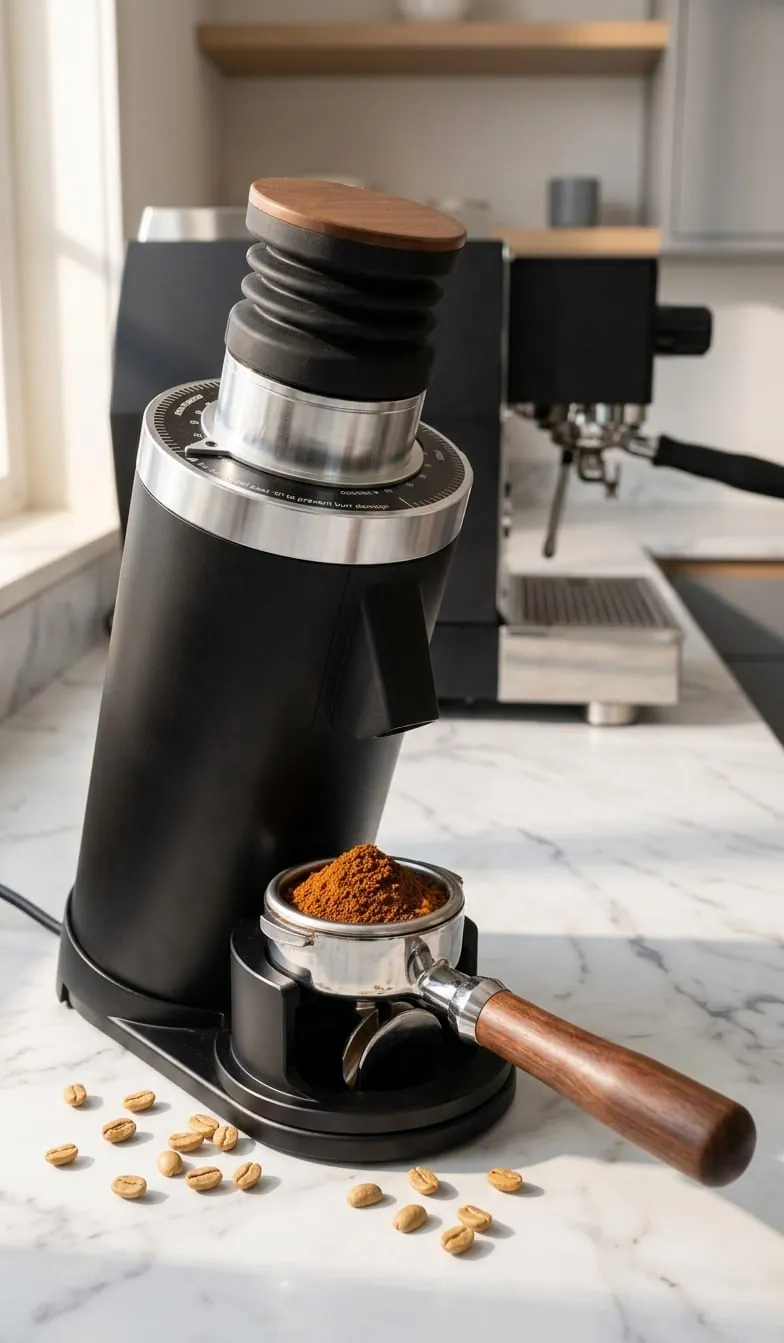 4.8
4.8Turin
An electric grinder with factory-aligned 64mm flat burrs and sub-0.15g retention, built for single-dose espresso workflows.
 4.5
4.5Eureka
A notably quiet 55–58dB Italian flat-burr grinder with commercial-grade durability, built for daily espresso use.
 4.8
4.8Fellow
A single-dose grinder built specifically for pour-over and filter coffee enthusiasts — not intended for espresso.
 4.5
4.5Fellow
A well-rounded electric grinder spanning espresso to French press, with working anti-static tech at a competitive price.
 3.6
3.6Hamilton Beach
A basic, budget electric grinder for casual drip coffee drinkers wanting fresher grounds without much upfront cost.
 4.0
4.0KINGrinder
A high-capacity manual grinder with 48mm titanium-coated burrs, well suited to batch-brewing filter coffee for two or more.
 4.3
4.3Mavo
A stepless manual grinder with titanium burrs and infinite micro-adjustment, built for filter-focused precision brewing.
 4.5
4.5Timemore
A portable, all-metal manual grinder built for travel and manual brewing rather than daily espresso use.
 4.5
4.5Turin
An electric grinder built for true single-dose espresso workflow, with sub-0.2g retention and exceptional grind quality.
Buying guides and how-tos written by this reviewer.
 Explained
Coffee Education6 min read
What is single-origin coffee? How it differs from blends and specialty grade, and what to check on the bag before you buy.
 How to
Brewing6 min read
How to use a French press: the right ratio, coarse grind, water temperature and steep time, plus fixes for bitter or muddy coffee.
 Compare
Grinder7 min read
Burr vs blade grinder: how grind consistency changes taste, who can keep a blade, and what a first burr grinder costs at each budget.
 Explained
Grinder7 min read
Coffee grind size chart with micron ranges for espresso, moka pot, AeroPress, pour over, French press and cold brew, plus how to adjust.
ExplainedGrinder6 min read
Starting K-Ultra settings for espresso, moka pot, AeroPress, pour-over and French press, how to read the numbered dial, and how to zero it.
ExplainedGrinder6 min read
Starting Virtuoso+ settings for pour-over, drip, AeroPress, French press, cold brew and pressurized espresso, plus how to use the timer and dial in.
ExplainedGrinder6 min read
Starting Comandante C40 click settings for espresso, moka pot, AeroPress, pour-over and French press, how to find zero, and what Red Clix changes.
ExplainedGrinder6 min read
Starting KINGrinder K6 click settings for espresso, moka pot, AeroPress, pour-over and French press, plus how to zero the dial and adjust from there.
ExplainedGrinder6 min read
Starting Timemore Chestnut C3 click settings for moka pot, AeroPress, pour-over, French press and cold brew, how the C2 compares, and how to zero the grinder.
 Explained
Grinder6 min read
Starting settings on the Encore ESP for espresso by roast, moka pot, AeroPress, pour-over, Chemex, drip, French press and cold brew, plus how to dial in from there.
 Compare
Espresso6 min read
Pressurized vs non-pressurized espresso baskets: how dual-wall baskets fake resistance, when single-wall gives better shots, and how to switch without waste.
 Compare
Coffee Education6 min read
Looking for a latte alternative? Compare 7 espresso drinks, from cortado to con panna, by milk, strength, sweetness and calories.
 Compare
Coffee Education6 min read
Americano vs espresso: same caffeine per shot, very different strength and taste. See the differences and which to order.
 Explained
Espresso6 min read
Are puck screens worth it? They keep your group head cleaner but won't fix channeling. See who should buy one and which size fits.
 Explained
Coffee Education6 min read
Coffee drinks explained: how lattes, cappuccinos, flat whites and cortados differ by milk, strength and caffeine, and how to order one.
 Fix a problem
Maintenance4 min read
Coffee maker leaking water from the bottom, filter basket or carafe? Match the leak to its cause, fix it step by step, or know when to replace.
 Explained
Coffee Education6 min read
Coffee roast levels chart comparing light, medium and dark roast by flavor, acidity, body and brew method, plus the caffeine myth.
 Compare
Brewing6 min read
Drip vs pour over coffee compared on taste, temperature, effort and cost, with a simple rule for which brewer fits your routine.
 Compare
Coffee Education6 min read
Flat white vs cappuccino vs cortado: milk ratio, foam, size and taste compared, plus which to order or make at home.
 Compare
Grinder6 min read
How to choose a burr grinder: conical vs flat burrs, features worth paying for, and the best grinder by brew method and budget.
 How to
Brewing6 min read
How to make a latte at home: the espresso-to-milk ratio, steam-wand technique, best milk, and options without a machine.
 How to
Brewing6 min read
How to make an Americano at home: the 1:4 ratio, water-first pour, an iced version and fixes for a thin or bitter cup.
 How to
Brewing6 min read
Cold brew recipe: 100 g coarse coffee to 800 ml water, steeped 18 hours, then diluted. Includes fixes for bitter or weak batches.
 How to
Brewing6 min read
How to make an iced latte: ice, 150 ml cold milk, then a hot double espresso on top. Ratio, milk choice and fixes for a watery cup.
 Compare
Buying6 min read
Pick espresso beans by roast, blend type, roast date and price, with a simple match-to-taste guide and reviewed bags to start with.
 How to
Brewing6 min read
How to use a moka pot for smooth stovetop coffee: medium-fine grind, pre-boiled water, medium-low heat, plus fixes for bitter cups.
 Compare
Coffee Education6 min read
Latte vs cortado: same espresso, different strength. Compare milk ratio, size and flavor, then pick one to order or make.
 Compare
Coffee Education6 min read
Macchiato vs latte: compare size, espresso strength and calories, then pick what to order or make at home.
 Compare
Grinder6 min read
Manual vs electric coffee grinder compared on speed, grind quality, noise and cost, with a pick for espresso, pour-over and travel.
 Explained
Coffee Education6 min read
What is a cortado? A 1:1 mix of 2 oz espresso and 2 oz steamed milk. See its taste, how to make one and how it differs from a latte.
 Explained
Coffee Education6 min read
What is a flat white? A double espresso with silky microfoam. Learn how it differs from a latte, plus how to make one at home.
 Explained
Espresso6 min read
What is a lungo? A long espresso shot at 1:3 to 1:4: taste, caffeine, lungo vs americano, and which roasts suit it.
 Explained
Coffee Education6 min read
What is a macchiato? Espresso macchiato vs latte macchiato: size, taste, how each is made, and which one to order.
 Explained
Espresso7 min read
What is a ristretto? A short 1:1 to 1:1.2 espresso that tastes sweeter. See how to pull one, the grind change, and caffeine.
 Explained
Coffee Education6 min read
What is a cappuccino? The 1:1:1 ratio, dry vs wet styles, how it differs from a latte, and how to order or make a proper one.
 Explained
Coffee Education6 min read
What is coffee bloom? CO2 degassing explained, how to bloom with a 2:1 water ratio, and which beans and brew methods benefit most.
 Explained
Espresso6 min read
What is a doppio? The standard double espresso: how it differs from a single shot, its caffeine, the drinks it makes and how to pull one.
 Explained
Espresso6 min read
What is espresso crema? What causes it, what good crema looks like and whether it means a better-tasting shot.
 Explained
Espresso6 min read
What is espresso? Learn how a shot is made, why 9 bar matters, how it differs from coffee and what gear you need at home.
 Explained
Coffee Education6 min read
What is a moka pot? How this stovetop coffee maker works, how it differs from espresso, what it tastes like and who should buy one.
 Explained
Brewing6 min read
What is pour over coffee? Learn how it works, a starting recipe, grind size and water temperature, and which dripper to buy.
 Explained
Coffee Education6 min read
What is specialty coffee? It scores 80+ on the SCA scale. Learn how it is graded, how it differs from commercial coffee, how to spot it.
 Explained
Espresso6 min read
What is WDT in espresso? Breaks up clumps before tamping to reduce channeling. What it fixes, whether you need a tool, and how to use it.
 Fix a problem
Espresso5 min read
Why does coffee taste bitter? Find your cause (grind, water temperature, stale beans, dirty gear) and fix bitter coffee one change at a time.
Questions about a review, or a correction to suggest.
How this reviewer's work is produced and checked.
Learn more: Why trust us · Affiliate disclosure