

Our pick
Breville Bambino Plus
Pick it if you are a beginner. Skip it if you want a built-in grinder.
Brewing Guides
Last updated
Ratio, pour order and milk choice for a strong iced latte
Affiliate disclosure: this page contains Amazon affiliate links. We may earn a commission if you buy through them, at no extra cost to you, and it never affects our rankings. Learn more
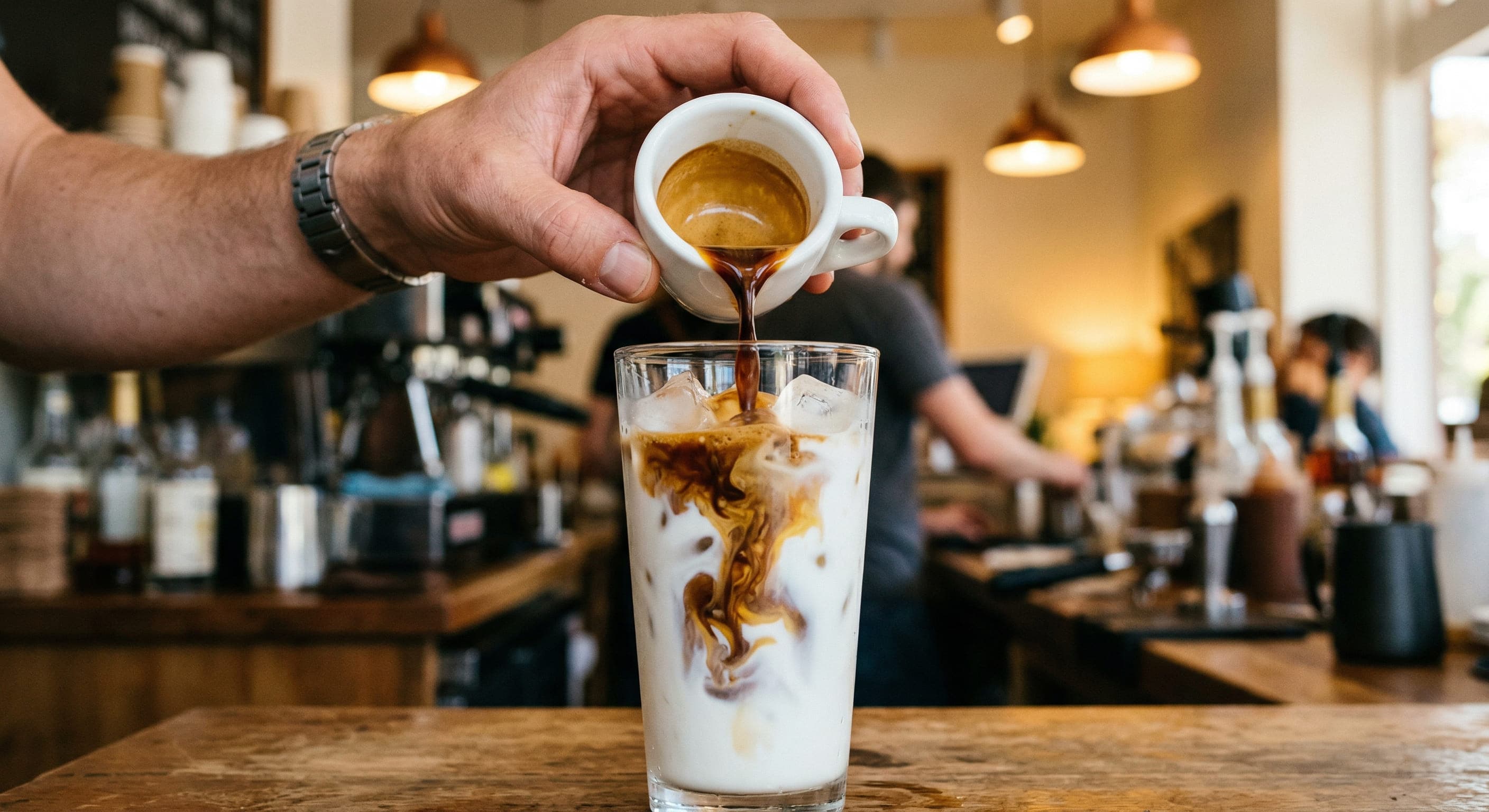
Fill a 350-400 ml glass half to two-thirds with ice, add 150 ml cold milk, then pull a hot double espresso straight over it. Build at about 1:2.5 to 1:3 espresso to milk so melting ice does not wash it out.
One double shot, cold milk and cubes.
| Item | Amount / why |
|---|---|
| Espresso | 1 double, 18-20 g in, 36-40 g out, 25-30 seconds |
| Milk | 150 ml cold, straight from the fridge; do not steam |
| Ice | Cubes, filling half to two-thirds of the glass |
| Glass | 350-400 ml; a 5-minute freeze slows melt |
Caffeine is about 120-140 mg, the same as a double espresso.
Five steps, about 5 minutes.
Prep the espresso. Dose, distribute and tamp, but do not pull yet. See how to make espresso at home.
Fill the glass. With cubes.
Add 150 ml cold milk.
Pull the double directly over. The milk and ice.
Wait 15-20 seconds, then stir once. , or leave it layered.15-20 seconds
Ice melt adds 30-50 ml of water, so build strong.
A 60 ml double, 150 ml milk and ice filling half the glass finishes around 1:3-1:3.5 after melt. A 1:5 or 1:6 build ends as vaguely coffee-flavored milk.
Fat gives the texture, since the milk is not steamed.
| Milk | Result |
|---|---|
| Whole | Richest; best overall |
| Semi-skimmed (2%) | Clean, slightly less body |
| Skimmed | Thin; worsens dilution |
| Barista oat | Creamy; best plant-based option |
| Almond | Thin, nutty; some brands grainy when cold |
| Soy | Good body; can curdle slightly, so stir at once |
Each cause has a quick fix.
| Problem | Fix |
|---|---|
| Thin or sour shot | Grind finer or raise the dose. See why espresso is sour |
| Too much milk | Return to 150 ml rather than adding syrup |
| Pre-chilled espresso | Pour it hot; slow cooling loses aroma |
| Crushed ice | Use cubes; crushed melts fast |
| Warm milk | Use fridge-cold milk |
Add flavor without drowning the espresso.
Not a true one, but there are workable stand-ins.
Plain drip coffee turns thin against a full glass of milk. Compare with coffee drink differences.
Ice melts into the drink, so strength has to be built in.
A cold drink hides flavour, and melting ice adds water every minute. A single shot poured over a full glass of ice and milk dilutes fast, which is why many home iced lattes taste thin by the time they are half finished.
Hot espresso also melts the first layer of ice on contact. Pouring it onto the ice first, then adding cold milk, loses more strength than pouring it over cold milk and a little ice. Milk fat carries flavour, so whole milk holds up better than skim.
Brew strength is the lever: a double shot, a slightly shorter ratio, or less ice all keep the espresso-to-milk balance intact.
Better ice, better shots and simple tools that keep the cup balanced.
Oat and barista-blend milks froth and mix well over ice, while thin almond milk can separate; shake or stir a chilled test cup before committing to a milk.
Ice dilutes the drink; plan for it.
Ice melts as soon as hot espresso hits it, which waters the drink down. Fill the glass about two-thirds with large, solid cubes; large cubes melt more slowly than small or crushed ice. Pour the espresso over the ice first so it chills quickly, then add cold milk. If your iced lattes taste watery, use a double or triple shot rather than a single, or chill the espresso briefly before pouring.
Stir the drink once before the first sip, as the espresso settles under the milk. A wide straw or a quick stir with a long spoon mixes it evenly.
Adjust espresso and milk to taste.
| Strength | Espresso | Cold milk | Ice |
|---|---|---|---|
| Mild | Single shot (about 30 ml) | About 200 ml | Two-thirds of a tall glass |
| Standard | Double shot (about 60 ml) | About 180–200 ml | Two-thirds of a tall glass |
| Strong | Double or triple shot | About 120–150 ml | Half a glass |
Mild
Standard
Strong
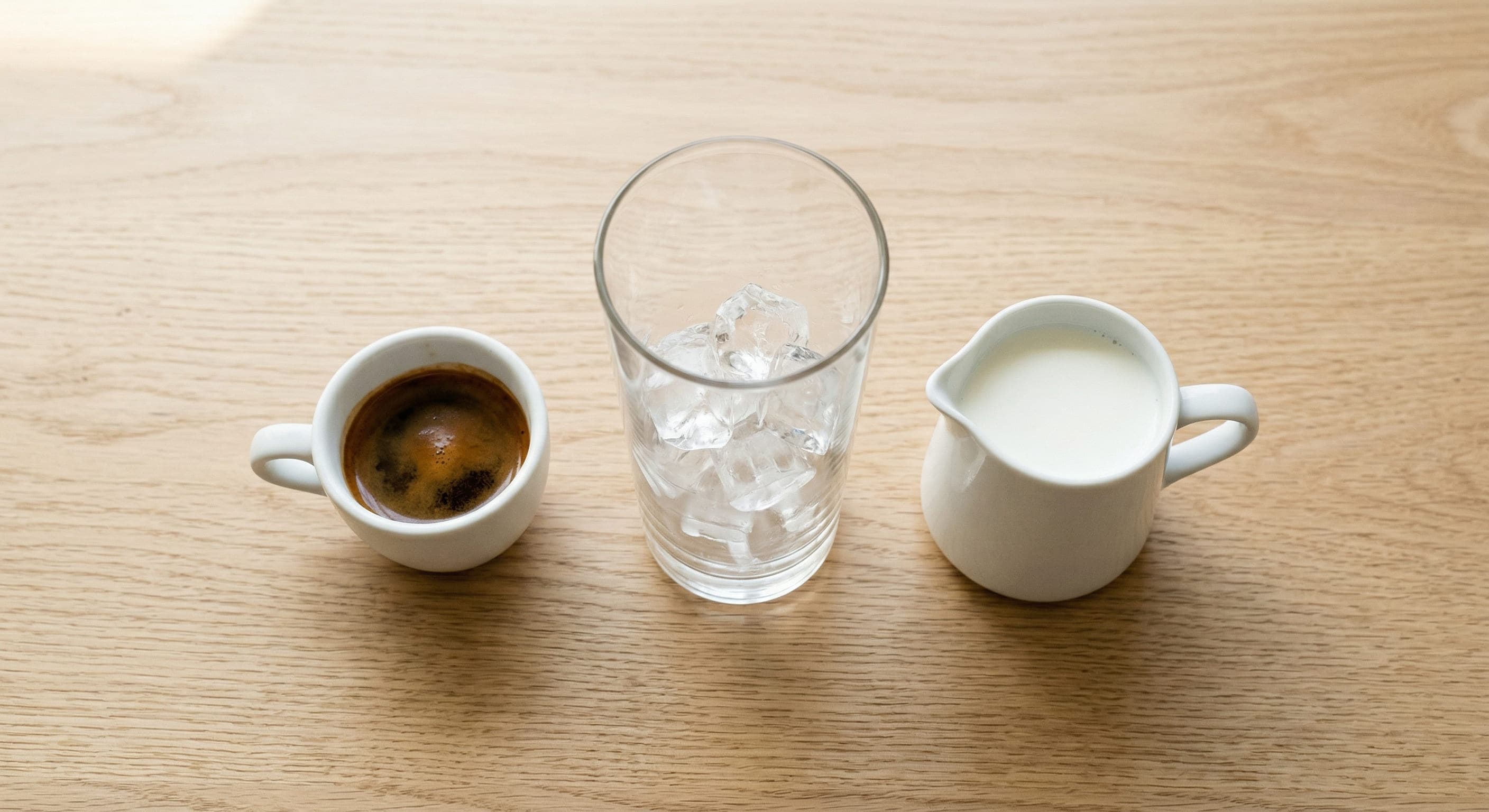
Start with the standard version and adjust. If you add syrup, stir it into the hot espresso first so it dissolves properly; syrups and sugar do not mix well into cold milk. Our how to make a latte guide covers the hot version, and how to make cold brew is an alternative base if you do not have an espresso machine.
For a sweeter, dessert-style iced latte, add a small amount of vanilla or caramel syrup to the hot espresso, or use sweetened condensed milk for a Vietnamese-style twist. Taste as you go; it is easy to overdo sweetener in cold drinks.
Whole milk for creaminess, oat for plant-based.
Whole milk gives the creamiest iced latte. Semi-skimmed works but tastes lighter. For plant milks, oat milk is the most popular because it is creamy and naturally sweet; almond is lighter and nuttier; soy is richer but can taste beany. Barista versions are designed to foam and blend smoothly, which helps if you want cold foam on top.
For cold foam, froth cold milk with a handheld frother or a French press until it thickens, and spoon it over the drink. Skimmed milk and barista oat milk make the most stable cold foam.
Taste before adding sweetener; cold milk tastes less sweet than steamed milk, so iced lattes often need a little more than hot ones.
Pick for shot consistency, since ice dilutes a weak shot.
Our pick
Pick it if you are a beginner. Skip it if you want a built-in grinder.
Our pick
Pick it if you want value at about $225. Skip it if you want automatic milk texturing.
Our pick
Pick it if you want a built-in grinder with assisted tamping. Skip it if you own a grinder.
Our pick
Pick it if you want a 58 mm portafilter and accept a steeper learning curve. Skip it for push-button simplicity.
Affiliate links: we may earn a commission at no extra cost to you.
See all tiers in best espresso machines. Pair with a good grinder such as the Capresso Infinity Plus or Baratza Encore ESP.
Quick answers before you buy.
No.
An iced latte is espresso plus a full glass of milk; iced coffee is chilled brewed coffee with an optional splash, and it turns thin against that much milk.
Not for a classic one.
Hot milk melts ice fast and leaves a diluted, lukewarm drink.
Use cold milk, or froth it cold for a foamy top.
Some plant milks split when hit by hot, acidic espresso.
Barista versions are formulated to resist this.
Pouring espresso over ice first, or using a barista oat milk, usually fixes it.
Yes.
Brew an espresso-size capsule over cold milk and ice.
Capsule shots are lighter than a fresh double, so use two capsules or less milk to keep it from tasting weak.
Best fresh, since ice melts and espresso loses aroma as it sits.
If you must prep, chill the glass and measure the milk, then pull the shot right before drinking.
Not by caffeine, which comes from the same espresso.
It can taste milder because melting ice dilutes it, so build it a little stronger than the hot version.
Keep reading: more guides on the same topic.
 How to
Brewing6 min read
Cold brew recipe: 100 g coarse coffee to 800 ml water, steeped 18 hours, then diluted. Includes fixes for bitter or weak batches.
 How to
Brewing6 min read
How to make an Americano at home: the 1:4 ratio, water-first pour, an iced version and fixes for a thin or bitter cup.
 Compare
Brewing6 min read
Drip vs pour over coffee compared on taste, temperature, effort and cost, with a simple rule for which brewer fits your routine.
 How to
Brewing6 min read
How to make a cappuccino at home: the 1:1:1 ratio, dry vs wet style, how to steam thick foam, and no-machine options.


Reader questions
Questions or tips? Leave a comment
Ask about your setup or share what worked for you. Comments are checked before they appear.