The Coffee LocatorFind the gear. Brew it right.

Expert comparison

Updated October 26, 2026

Best Cold Brew Coffee Makers 2026: 4 Picks

Four cold brew makers compared on taste, sediment, cleanup and fridge fit.

Affiliate disclosure: this page contains Amazon affiliate links. We may earn a commission if you buy through them, at no extra cost to you, and it never affects our rankings. Read our full affiliate disclosure

Quick answer: which cold brew coffee maker should I buy?

Short answerThe OXO Good Grips Cold Brew Maker is the best cold brew coffee maker for most homes: it cupped highest of the pitchers at 84/100, drains through a tap with no spills and comes with a glass carafe.

Cold brew is steeped in cold water for hours, so a maker mostly decides how clean the concentrate is and how easy the straining and cleanup are. The cup itself varied less than you might expect: the three pitchers scored within two points of each other in blind cupping.

How we chose: every pick was tested in its own full review and ranked on that evidence, not on commission. See how these picks were ranked.

Which cold brew coffee maker fits your kitchen and routine?

Find your situation, then jump to the matching cold brew maker.

Which cold brew coffee maker is best: steep time, price and rating compared

Ratings reflect cup quality, sediment control, cleanup and fridge fit across four to six weeks of home testing.

ProductBest forSteep timePriceRatingLink

Best overall

OXO Good Grips Cold Brew Maker

Best overall

Best forWeekly brewers who want the cleanest, least messy routineSteep time12–24 hrsPrice$52–$62Rating4.4/5Check current price

Best for beginners and budgets

Takeya Tritan Cold Brew Maker

Best for beginners and budgets

Best forFirst cold brew maker, small fridges, tight budgetsSteep time20–24 hrsPrice$22–$32Rating4.4/5Check current price

Best glass pitcher

KitchenAid 38 oz Cold Brew Maker

Best glass pitcher

Best forDaily drinkers who want glass that never holds odorsSteep time20–24 hrsPrice$135–$145Rating4.3/5Check current price

Best for speed

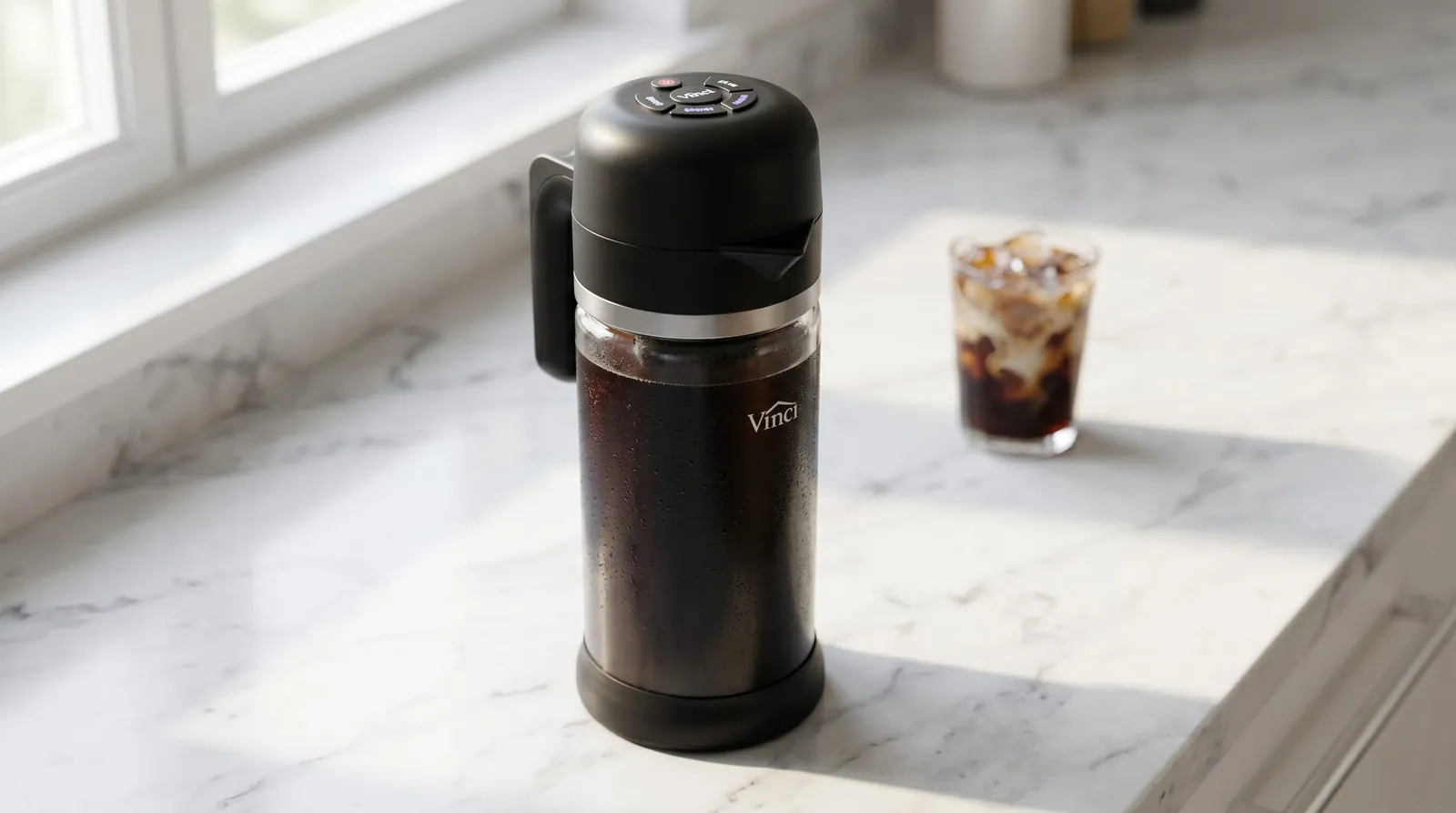
VINCI Express Cold Brew Maker

Best for speed

Best forSolo drinkers, desks, travel and last-minute cold brewSteep time5–7 minPrice$79–$99Rating4.2/5Check current price

What are the strengths and trade-offs of each cold brew coffee maker?

Each pick lists who it suits, who should skip it and the trade-offs.

Best overall

OXO Good Grips Cold Brew Maker

★ 4.4/5

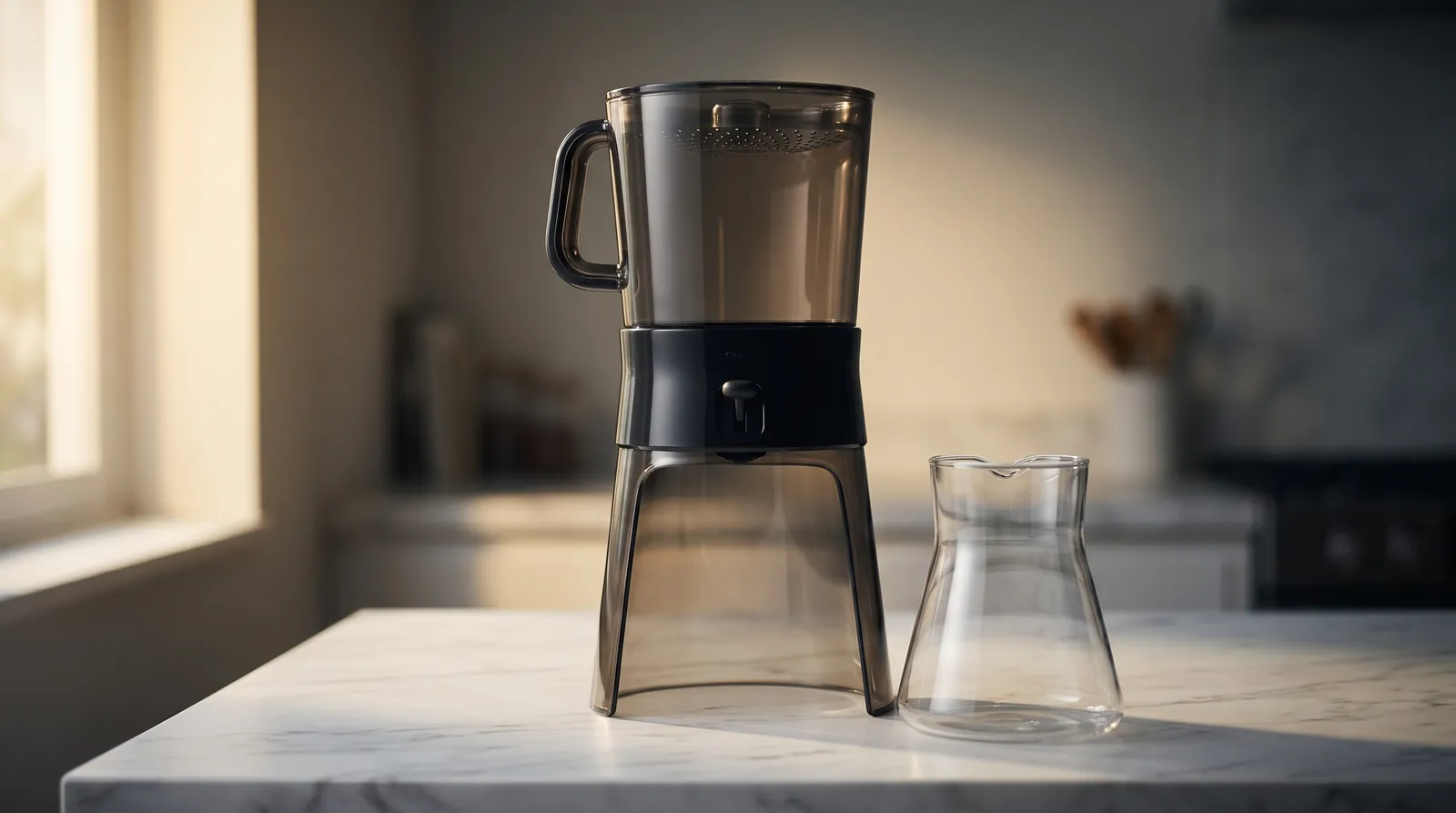
The best all-round cold brew maker in testing. A perforated Rainmaker lid wets the grounds evenly, a paper liner keeps sediment out, and a switch-release tap drains the brew into the included glass carafe without tilting or pouring. It scored highest of the three pitchers in blind cupping. The costs are a steady supply of paper liners and a smaller batch than the KitchenAid.

Best for
Anyone who brews cold brew every week, wants the cleanest cup of the pitchers and hates spilling grounds during straining.
Skip if
You do not want to keep buying filter liners, or you need a slim pitcher for a fridge door. The Takeya Tritan needs no liners and fits a door shelf.
  • Rainmaker lid raised extraction yield 8–12% against the same recipe without it
  • Tap drain means no tilting and no spilled grounds, with about 30 seconds of hands-on time
  • Paper liner plus mesh gave zero sediment in 22 of 24 batches
  • Scored 84/100 in blind cupping, ahead of the Takeya (82) and KitchenAid (83)
  • Paper filter liners are a required consumable; without one the concentrate carries sediment
  • 32 oz capacity yields less concentrate than the 38 oz KitchenAid
  • Wide base needs a full fridge shelf during the steep
  • Plastic body can absorb coffee oils after 12+ months of heavy use

Best for beginners and budgets

Takeya Tritan Cold Brew Maker

★ 4.4/5

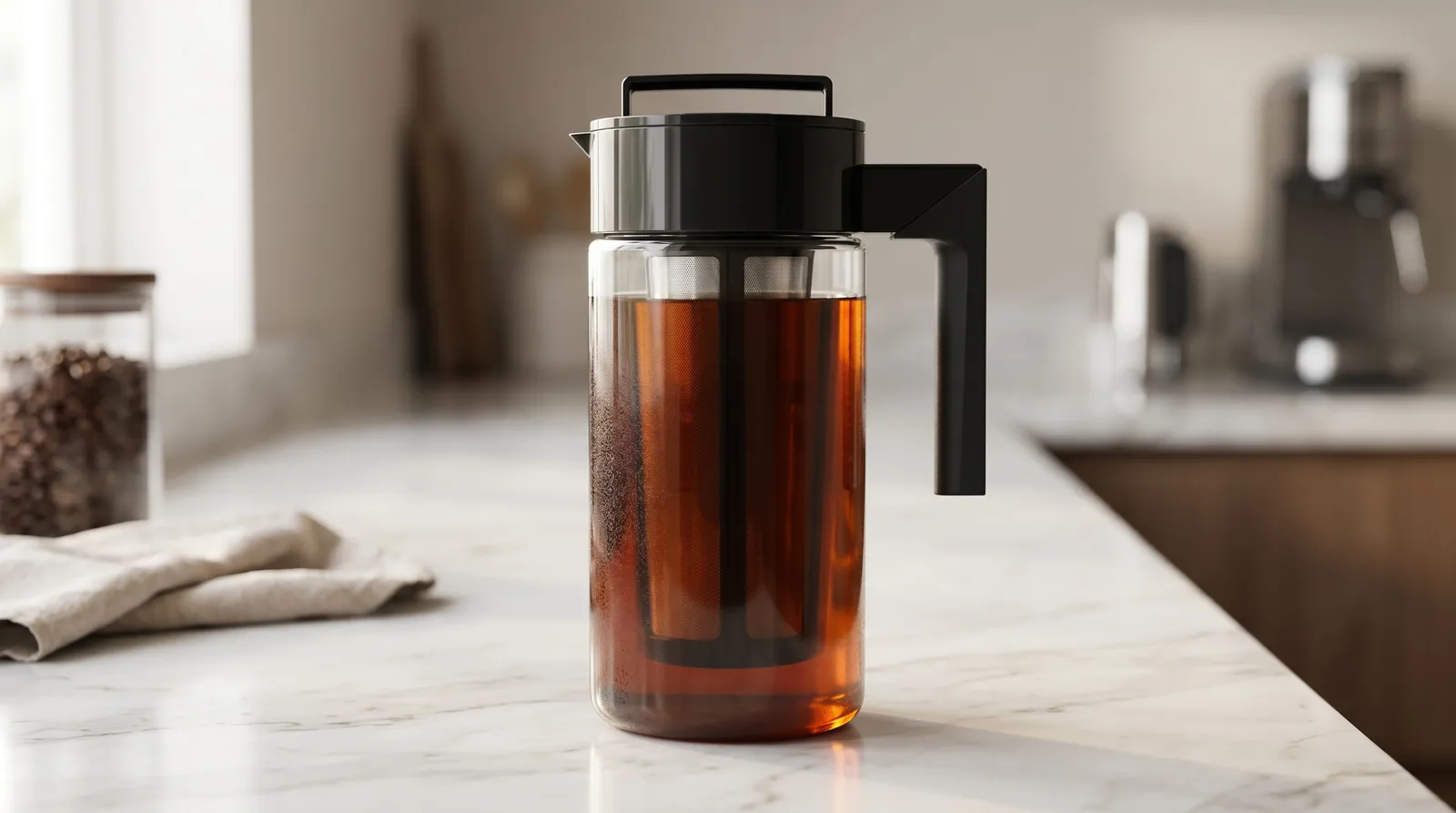
A low-fuss starter pitcher that makes clean concentrate for a fraction of the price of the others. The Tritan plastic did not pick up odors, the lid passed an inverted leak test, and the slim shape fits a fridge door shelf. It is sized for one or two drinkers, and it needs a coarse grind to keep sediment out.

Best for
First-time cold brewers, apartment fridges and anyone replacing a daily canned or café cold brew habit.
Skip if
You want the cleanest possible cup or need more than 500–600 ml of concentrate per batch. The OXO filters finer, and the KitchenAid makes more.
  • Fine-mesh filter gave sediment-free concentrate at medium-coarse and coarser grinds
  • Slim profile fits refrigerator door shelves during the 20–24 hour steep
  • Survived two drops onto tile and an inverted-over-the-sink leak test
  • Top-rack dishwasher safe and fully disassembles for cleaning
  • Medium-fine grinds can bleed sediment through the mesh
  • 1 quart makes only 500–600 ml of concentrate
  • Needs a deliberate stir at the start to saturate all the grounds
  • Lid hinge is the part most worth watching for long-term wear

Best glass pitcher

KitchenAid 38 oz Cold Brew Maker

★ 4.3/5

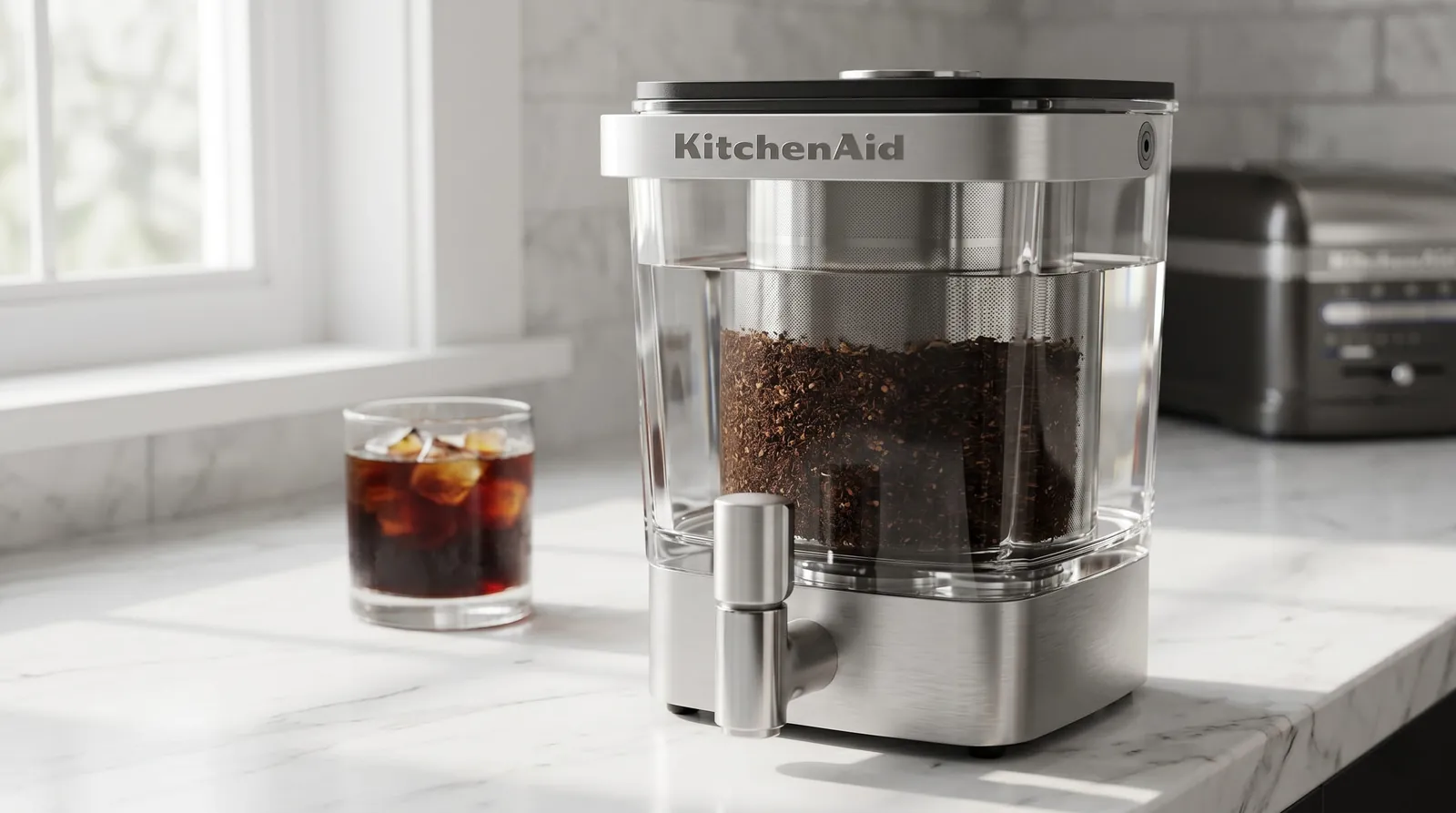
A very good glass cold brew pitcher that looks the part and will not absorb oils or odors over months of daily use. The cup itself landed at 83–84/100, close to the far cheaper plastic pitchers, so the extra money buys glass, capacity and design rather than better flavor.

Best for
Daily cold brew drinkers who want long-term flavor neutrality, plus anyone who already owns KitchenAid appliances and likes the look.
Skip if
You only care about taste per dollar, or your fridge shelves are tight. The 4.5 inch width needs a full shelf, and the Takeya makes nearly the same cup for far less.
  • Borosilicate glass shows no odor or oil build-up after 28 batches
  • Batch 10 tasted indistinguishable from batch 1 in a blind test
  • Mesh filter lifts out in one motion, with concentrate kept 14 days in the fridge
  • Largest pitcher here: 38 oz producing 24–28 oz of concentrate
  • 4.5 inch diameter cannot sit on a fridge door shelf
  • Costs far more than a Takeya for a near-identical cup
  • Friction-fit lid, so it must stay upright and is not for travel
  • Glass can break if dropped; mesh needs a deep clean every 8–10 batches

Best for speed

VINCI Express Cold Brew Maker

★ 4.2/5

A different kind of tool: a turbine-driven brewer that makes concentrate in five to seven minutes, scoring within two points of an 18 hour batch in blind cupping. The flavor is brighter and lighter-bodied than a steeped pitcher. The small chamber suits one person, and a basic pitcher matches the quality for less if you can plan a day ahead.

Best for
Office desks, travel and anyone who never remembers to start cold brew the night before, especially with light roasts.
Skip if
You feed three or more people or you prefer the heavier body of a long steep. A pitcher produces four times the volume per batch.
  • Concentrate at 13.5–15.2% TDS in 5–7 minutes, within two cupping points of traditional cold brew
  • Bright profile that flatters light roasts better than passive steeping did
  • Under 1 lb and rechargeable by USB-C, with 12–15 cycles per charge
  • Ninety-second daily cleanup with no special tools
  • 14 oz chamber gives only 8–10 oz of concentrate per cycle
  • Narrow grind window (around setting 18–20 on a Baratza Encore); finer grinds bleed particles
  • Not dishwasher safe; the turbine disc needs hand-cleaning
  • Rubber gasket is the part most likely to wear over time

How do I choose a cold brew coffee maker?

If this is your situation, then this is the trade-off to make.

Pitcher or electric brewer

IfYou can plan a day ahead

Buy a pitcher. Steeping is hands-off, makes a family-sized batch and costs less. Three of the four picks here are pitchers, and their blind cupping scores sat within two points of each other (82, 83 and 84 out of 100), so the choice comes down to filtering, material and size rather than flavor.

IfYou decide to drink cold brew on the day

The VINCI Express is the only pick that delivers in minutes. Expect a brighter, lighter-bodied cup than a steeped batch and about 8-10 oz of concentrate per cycle. It suits one person, a desk or a trip, not a household.

IfYou drink more than a glass a day

Choose by batch size. The KitchenAid yields 24-28 oz of concentrate, the OXO is slightly smaller at 32 oz total capacity, and the Takeya makes 500-600 ml. A two-person household that drinks daily will brew the Takeya roughly twice as often as the KitchenAid.

Material, filtering and fridge space

IfYour fridge is small or the door shelf is all you have

The Takeya is the only pitcher slim enough for a door shelf. The OXO and the KitchenAid (4.5 inches wide) need a full shelf for the 12-24 hour steep, which is a daily annoyance in a crowded apartment fridge.

IfYou want the cleanest cup with the least grit

The OXO with its paper liner gave zero sediment in 22 of 24 batches. Mesh-only pitchers are good at coarse grinds but can let fines through at medium-fine, so grind setting matters more with the Takeya and KitchenAid. If your grinder struggles at coarse, see our best coffee grinders.

IfYou worry about plastic holding coffee flavors

Glass avoids it entirely: the KitchenAid looked and tasted the same on batch 28 as on batch 1. In testing, the Takeya's Tritan plastic did not retain odors across weeks of use, but long-term plastic wear beyond the test period is unproven, so heavy daily users who care most about purity should lean to glass.

Budget and ongoing costs

IfYou want to spend as little as possible

The Takeya Tritan costs roughly $22-$32 and produced sediment-free concentrate at coarse grinds. It is also the cheapest way to find out whether you will actually keep making cold brew. A batch costs about $2-$3 in beans against a canned cold brew at around $5.

IfYou are happy to pay a little more for convenience

The OXO sits at $52-$62 and adds the tap, the lid and the glass carafe. Budget about $5-$8 a year for liners at weekly brewing.

Spec sheets are inflated. These are the choices that change your daily cold brew.

What other ways are there to make cold brew?

Options that fit narrower needs than the picks above.

How to make cold brew

A jar, a strainer and a paper filter make good cold brew without a dedicated maker.

Cold brew ratio calculator

Grams of coffee and water for any batch size, as concentrate or ready to drink.

Best drip coffee makers

If you also want hot coffee on demand, a drip machine can cover that and you can keep a pitcher for cold brew.

Best single-serve coffee makers

For iced coffee on demand without a steep: pod machines with an iced mode brew a stronger cup meant for ice.

Best coffee makers under $500

A wider look at brewers across styles if cold brew is only one of several things you want.

Best coffee grinders

Cold brew needs a coarse, even grind; these grinders hold it better than a blade.

Paper-filter systems such as the Toddy

These appear on this page only as a cupping benchmark (85/100) and are not ranked here. They are an option for people who want the clearest, haze-free concentrate.

How were these cold brew coffee makers tested and ranked?

Each maker was used for four to six weeks at home, with 24 to 30+ batches per product.

  • Cup quality: Blind cupping on a 100-point form, with the three pitchers and a paper-filter benchmark brewed from the same coffee. The VINCI Express was scored by a panel of Q Grader-trained tasters.
  • Concentrate strength: Measured as TDS or extraction yield with a refractometer where recorded, for example 15-17% TDS on the Takeya and 14-16% extraction on the OXO.
  • Sediment and clarity: Checked at coarse and medium-fine grinds, noting how many batches came out clean and how well the filter held up when pouring.
  • Cleanup and daily routine: Minutes of hands-on time from loading to straining to washing, plus which parts are dishwasher safe.
  • Fridge fit and durability: Whether the maker fits a door shelf or needs a full one, how the lid seals, and how it handled drops, leaks and repeated batches.

How do you get better cold brew from any maker?

These habits change the cup more than most upgrades.

Weigh the coffee

Testing used 60-65 g of coffee per batch, and the OXO and KitchenAid runs used a 1:8 ratio. Scoops vary a lot, so use a scale, or let our cold brew ratio calculator scale the grams to your pitcher.

Grind coarse

Cold brew filters best on a coarse grind, roughly coarse sea salt. Fine grounds over-extract and slip through mesh. The grind size chart shows what coarse looks like.

Stir once at the start

Give the grounds a deliberate stir after adding water so there are no dry pockets. The Takeya in particular needs the extra 60 seconds to saturate evenly.

Steep in the fridge

Testing took place at refrigerator temperatures of 34-40°F. A cold steep is slower but gives a cleaner, sweeter extraction than a warm counter.

Stop at the right time

Start at the short end of the range for each maker (12 hours for the OXO, 20 for the others) and extend only if the cup tastes thin. Longer steeps keep extracting and bring out bitterness.

Dilute to taste

The result is concentrate, so cut it with cold water or milk. Start near equal parts and adjust, rather than drinking it straight.

Deep clean the filter

Mesh filters build up oil. The KitchenAid wants a deep clean every 8-10 batches, and the VINCI benefits from a short filter soak every 10-15 batches.

Full method

For a start-to-finish walkthrough, including steep times and troubleshooting, see how to make cold brew.

What should you avoid when buying a cold brew coffee maker?

The mistakes that lead to gritty coffee or a second purchase.

Paying for glass to get better flavor

Blind cupping scores for the three pitchers ran 82, 83 and 84 out of 100. Glass avoids odor build-up over years, which is a real benefit, but the first batch from a $25 plastic pitcher tastes very close to one from a $140 glass pitcher.

Using the OXO without a paper liner

The liner is part of how the OXO stays free of sediment. Without it, the concentrate carries fines. If you do not want to stock liners, a mesh-only pitcher is the better fit.

Using a fine grind in a mesh pitcher

Medium-fine grounds can pass through the Takeya mesh when pouring, and fines make cold brew cloudy and bitter. Grind coarse. If your grinder struggles at coarse settings, our best coffee grinders list covers models that hold an even, coarse grind, and the burr vs blade grinder guide explains why blades make more fines.

Buying the electric brewer for a household

At 8-10 oz of concentrate per cycle, supplying three or more people means three or four back-to-back runs. The VINCI is built for one drinker.

Expecting five-minute cold brew to taste identical to a steeped batch

The VINCI scored within two points of traditional cold brew, but its profile is brighter with a lighter body. That suits light roasts; people who love the heavy, round body of an overnight steep may find it a compromise.

Carrying or tilting a friction-fit lid

The KitchenAid lid (and the OXO carafe lid) are friction-fit with no locking mechanism. Store them upright in the fridge and do not carry them in a bag.

What does a cold brew coffee maker cost to own?

Beans, grinder, filters, fridge space and cleaning, so the price on the box is not the whole budget.

Beans

A batch used 60-65 g of coffee, which works out to about $2-$3 in beans. Coffee is the biggest recurring cost, ahead of filters, and it still undercuts a daily café or canned cold brew within a few batches.

Grinder

A true coarse setting matters more here than for any other brew method. If your grinder cannot hold coarse, budget for a burr grinder; our burr grinder buying guide explains what to look for.

Filters

The OXO needs paper liners at roughly $8-$10 a pack, about $5-$8 a year at weekly brewing. The Takeya, KitchenAid and VINCI use reusable mesh with nothing to buy.

Fridge space

The Takeya fits a door shelf. The OXO and KitchenAid (4.5 inches wide) occupy a full shelf for the 12-24 hour steep. Check your fridge before you order.

Cleaning

The Takeya parts are top-rack dishwasher safe, the KitchenAid filter and lid are dishwasher safe with a hand-washed glass carafe, and the VINCI is hand-wash only because the motor housing must stay dry.

Lifespan and parts

Plastic can hold coffee oils after 12+ months of heavy use, glass can break, and the VINCI rubber gasket is the part most likely to wear. Reviews cover about four to six weeks of use, so treat longevity as a watch list rather than a guarantee.

Which cold brew coffee maker wins the common head-to-heads?

Quick verdicts for the pairings buyers search most, decided from each maker's review.

OXO Good Grips vs Takeya Tritan

The OXO makes the cleaner, better-rounded cup (84 against 82 in blind cupping) and is easier to strain thanks to the tap. The Takeya costs roughly half, needs no liners and fits a fridge door. Pick the OXO if you brew weekly and care about the cup; pick the Takeya if you are starting out or short on space. See the OXO review and Takeya review.

OXO Good Grips vs KitchenAid

Both cupped within a point of each other (84 and 83-84). The KitchenAid adds borosilicate glass, a larger 38 oz body and a premium look; the OXO adds the tap and a much lower price. Take the OXO unless glass is a firm requirement. Details in the KitchenAid review.

Takeya Tritan vs KitchenAid

The Takeya matches the KitchenAid closely on the cup for roughly a fifth of the price, and it fits where the KitchenAid cannot. The KitchenAid wins on odor-free long-term materials and capacity. Unless you drink cold brew daily and value glass, the Takeya is the sensible buy.

Takeya Tritan vs VINCI Express

The Takeya costs about a third as much and produces a comparable cup if you start it the day before. The VINCI is for people who will not plan ahead, or who want cold brew at a desk or on a trip. Read the VINCI Express review for the battery and grind details.

OXO Good Grips vs VINCI Express

The OXO makes several times the volume per batch and has the heavier, rounder body. The VINCI makes a brighter cup in minutes. For a household, the OXO; for one person who wants cold brew now, the VINCI.

Frequently Asked Questions

Quick answers before you buy.

Can a mason jar and a strainer replace a cold brew maker?

Yes, a wide jar plus a fine strainer and a paper filter makes good cold brew.

A dedicated maker mainly saves effort: it filters faster, spills less and keeps grounds out of the finished concentrate.

If you brew less than once a week, a jar is a reasonable way to start.

How to make cold brew at home →

What grind size works best in a cold brew maker?

Coarse, roughly the texture of coarse sea salt.

In testing, the Takeya's mesh gave sediment-free concentrate at medium-coarse and coarser grinds but let fines through at medium-fine.

The VINCI Express is the exception, with a narrower window around setting 18-20 on a Baratza Encore.

Coffee grind size chart →

Why is my cold brew cloudy or gritty?

Usually the grind is too fine for the filter. Fines slip through mesh when you pour and make the cup muddy and bitter.

Regrind coarser, pour slowly, or use a paper liner as the OXO does. A blade grinder makes many more fines than a burr grinder.

Burr vs blade grinder →

How long does cold brew concentrate last in the fridge?

About two weeks in an airtight container.

The Takeya held up for two weeks with only slight softening of the brighter notes by week two, and the KitchenAid kept concentrate for 14 days without off-flavors.

Store it sealed and dilute each glass as you pour.

Is a glass or plastic cold brew maker better?

Glass avoids odor and oil build-up over long daily use, but it is heavier, breakable and costs more.

The KitchenAid's glass looked and tasted the same after 28 batches, while the Tritan plastic Takeya also showed no odor transfer across weeks of testing.

The cup from fresh batches scored about the same, so choose on durability and budget.

Is five-minute cold brew from the VINCI Express real cold brew?

It is a cold process: water is never heated, though the temperature rose from about 40°F to 66°F during the cycle.

Blind tasters scored it within two points of traditional cold brew, with a brighter, lighter-bodied profile.

Someone who wants the heavy body of an overnight steep may notice the difference.

How much concentrate does a 1 quart or 32 oz cold brew maker make?

Less than the label suggests, because coarse grounds soak up water.

The Takeya (1 quart) yields 500-600 ml, the KitchenAid (38 oz) 24-28 oz and the VINCI 8-10 oz per cycle.

Plan around the yield, not the capacity.

Cold brew ratio calculator →

How much coffee do I need for one batch of cold brew?

Testing used 60-65 g of coffee per batch, and the OXO and KitchenAid runs used a 1:8 coffee-to-water ratio.

That makes a strong concentrate you dilute before drinking.

Weigh the grounds instead of using scoops, and scale up or down for your pitcher.

Cold brew ratio calculator →

Reader questions

Questions or tips? Leave a comment

Ask about your setup or share what worked for you. Comments are checked before they appear.

Leave a comment

No links please. Comments with links are held for manual review.

By commenting you agree to our privacy policy. We use your email only to contact you about your comment.