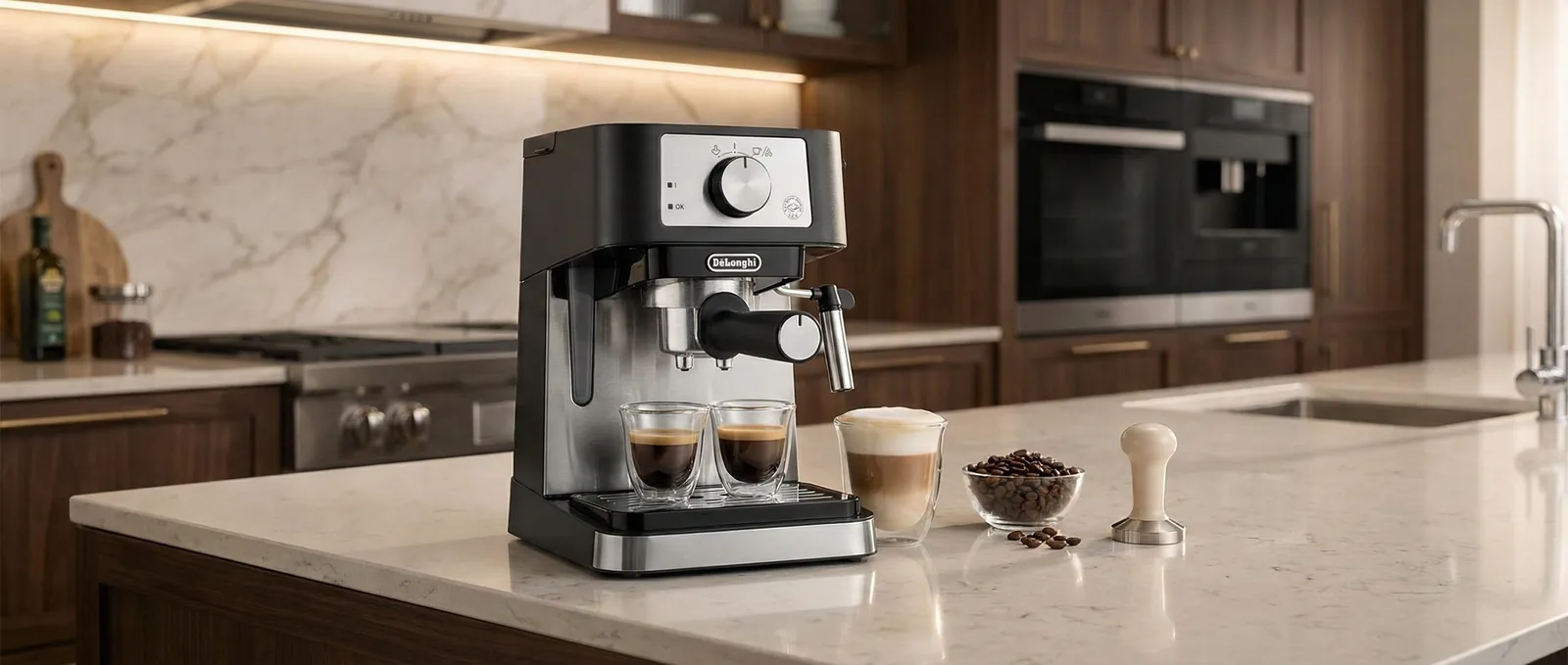
Expert comparison

Updated October 17, 2026

Best Espresso Machines Under $200 in 2026

The best espresso machine under $200 for most people is the Capresso EC100; the Dedica EC680M suits small kitchens and latte learners, and the Mr. Coffee Café Barista makes one-touch milk drinks. Each was tested in its own full review. To browse every model, see our espresso machine reviews hub.

Affiliate disclosure: this page contains Amazon affiliate links. We may earn a commission if you buy through them, at no extra cost to you, and it never affects our rankings. Read our full affiliate disclosure

Which espresso machine under $200 should I buy?

Which cheap espresso machine fits your kitchen and habits?

Find your situation, then jump to the matching machine.

How do the budget machines compare on price and milk?

Ratings are each product's own review rating out of 5. Prices change; check the current listing.

ProductBest forMilkPriceRatingLink

Best overall under $200

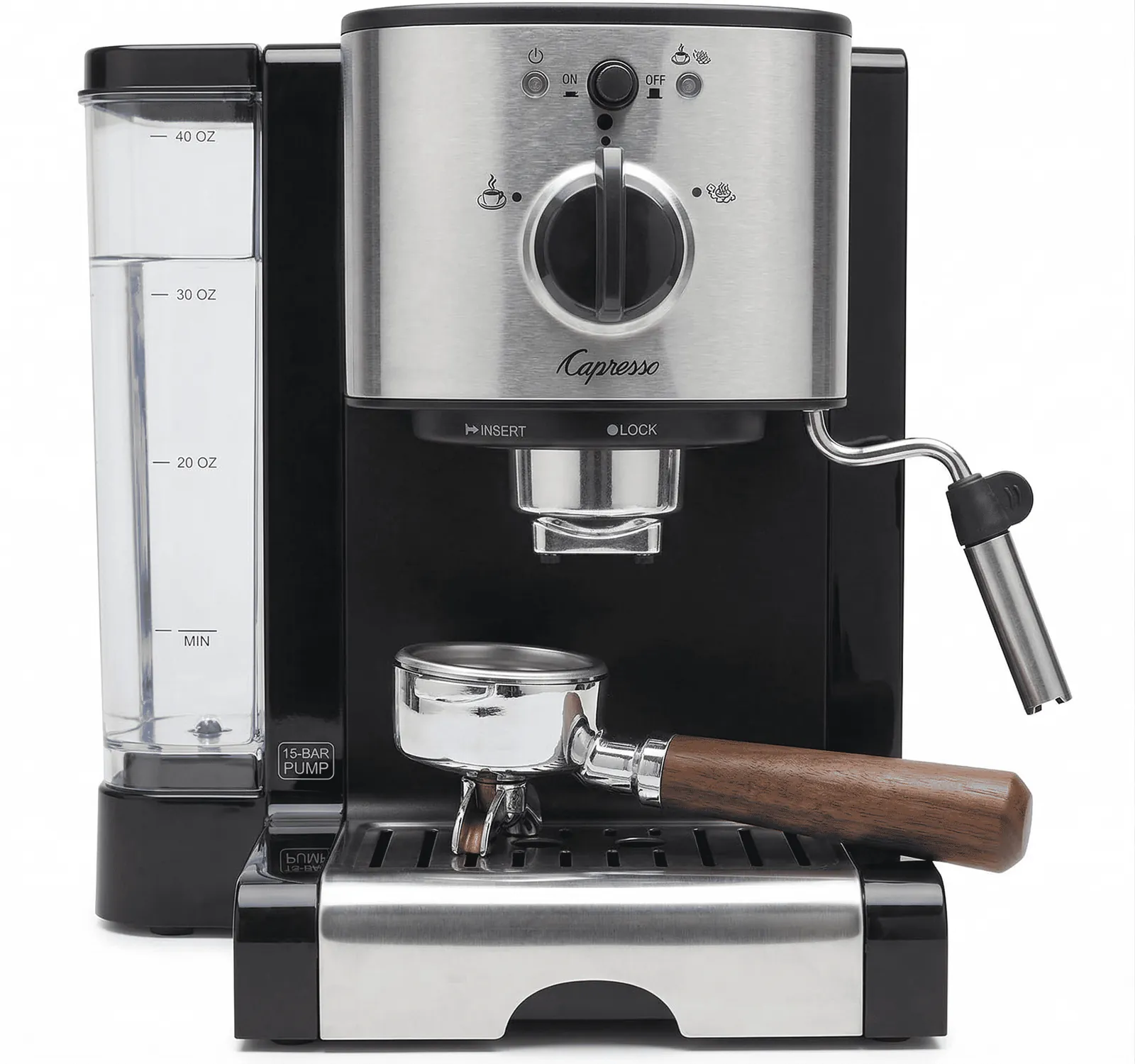
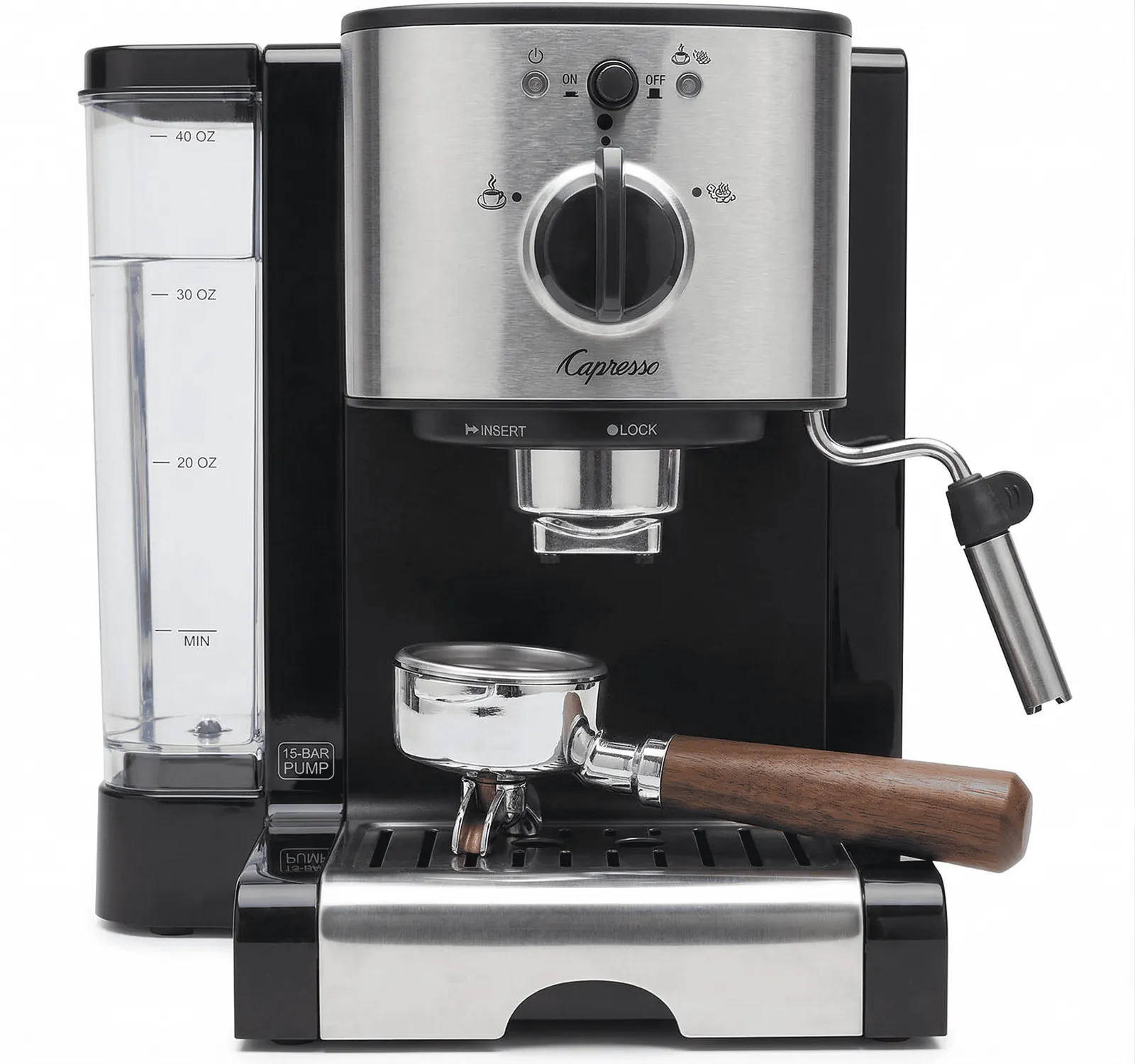
Capresso EC100

Best overall under $200

Best forPod switchers who want a forgiving first pump machineMilkTwin frotherPrice$100-$150Rating4.0/5Check current price

Best for learning milk steaming

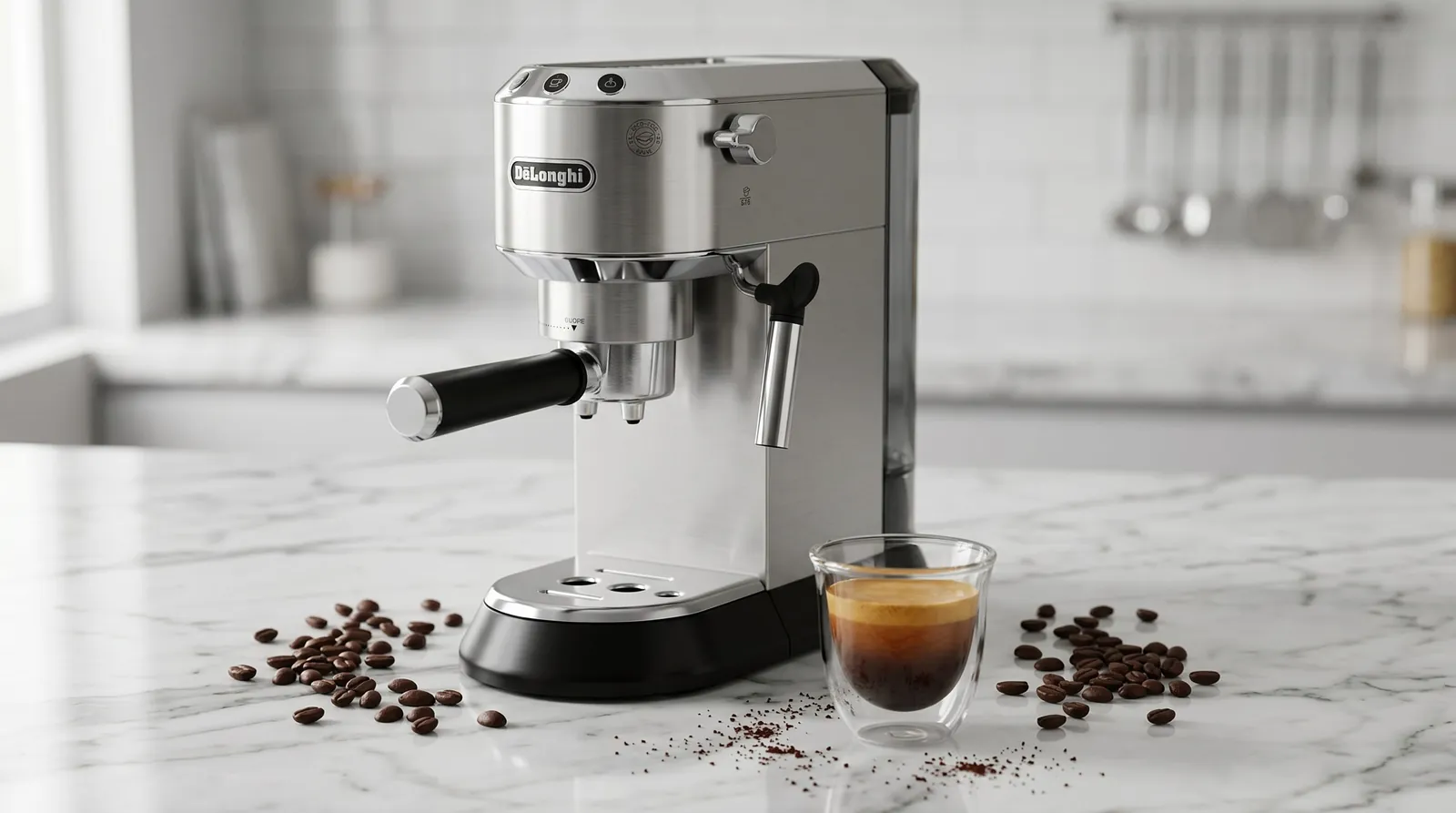
De'Longhi Dedica EC680M

Best for learning milk steaming

Best forTight counters and latte drinkers willing to practise steamingMilkManual steam wandPrice$169-$199Rating3.9/5Check current price

Best one-touch milk drinks

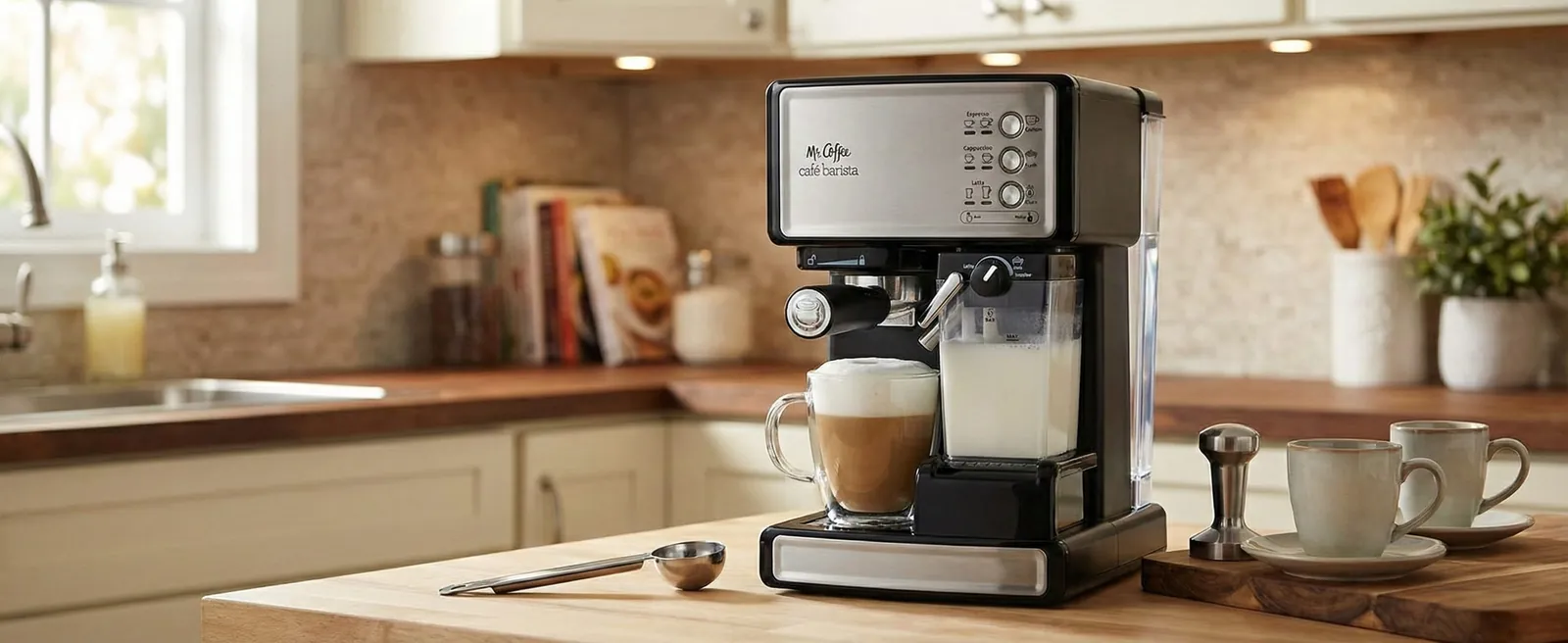
Mr. Coffee Café Barista

Best one-touch milk drinks

Best forBeginners who want lattes with zero techniqueMilkAutomatic frotherPrice$150-$200Rating3.8/5Check current price

Lowest-cost way to try espresso

DeLonghi Stilosa EC260

Lowest-cost way to try espresso

Best forTesting whether you like home espresso for the least moneyMilkManual steam wandPrice$79-$149Rating3.7/5Check current price

Capsule alternative (not espresso)

Nespresso Vertuo Next

Capsule alternative (not espresso)

Best forZero-effort coffee if you will pay per capsuleMilkNone (separate frother)Price$120-$180Rating4.2/5Check current price

Which budget espresso machine suits you? Pros, cons and who should skip each

Four pump machines, then one capsule machine listed separately.

1. Best overall under $200

Capresso EC100

★ 4.0/5

The highest-rated ground-coffee machine under $200 on the site. It heats in about 45 seconds, the pressurized basket forgives an imperfect grind, and the 40 oz front-access tank means fewer refills. The twin frother makes cappuccino foam, not microfoam, and the thermoblock swings enough to hurt light roasts.

Best for
Nespresso or Keurig owners moving to their first pump machine, households making 3-4 drinks a day, and budget buyers who want a commercial-looking portafilter.
Skip if
You drink light-roast single origins, want latte-art microfoam, need a 58mm portafilter, or make 6+ drinks a day.
  • Fast heat-up from a cold start
  • Pressurized basket forgives grind and technique
  • 40 oz front-access tank: 3-4 days between refills at 2 drinks a day
  • Simple two-dial controls
  • Twin frother cannot make true microfoam
  • Thermoblock swing (estimated ±4-5°F) hurts light roasts
  • Plastic chassis: 4-6 years is a realistic expectation
  • 40-50 second wait between brewing and steaming
2. Best for learning milk steaming

De'Longhi Dedica EC680M

★ 3.9/5

The only machine here whose wand made real microfoam, in a body just 5.9 inches wide. Those steaming skills carry over to any machine you buy later. The steam is weak, averaging 98 seconds per jug, and shot temperature swung 9-12°F across 97 shots.

Best for
Milk drinkers with very little counter space who want to learn steaming, and first-time buyers who plan to upgrade later.
Skip if
You want foolproof automatic frothing (the Dedica EC685 has a panarello), you want an unpressurized basket, or you can stretch to a Bambino Plus.
  • Manual wand makes real microfoam
  • Ultra-narrow 5.9-inch body
  • About 40-second heat-up
  • Steaming skills transfer to future machines
  • Weak steam: 98-second average per jug
  • Temperature swings of 9-12°F between shots
  • Expect 2-3 weeks before microfoam is consistent
  • 51mm portafilter and pressurized basket limit upgrades

3. Best one-touch milk drinks

Mr. Coffee Café Barista

★ 3.8/5

One-touch controls and an automatic frother mean a complete beginner can make a drinkable latte on the first try, and it works with pre-ground supermarket coffee. The trade-offs are real: 40% of shots showed flaws from temperature swings, the foam is coarse, and a 12-24 month lifespan is a realistic expectation.

Best for
Students, first apartments and beginners who want milk drinks without learning to steam, using pre-ground coffee.
Skip if
You have tasted good espresso and want to match it, you want latte art, or you make 5+ drinks a day.
  • One-touch controls work for complete beginners
  • Automatic frother removes the learning curve
  • Works with pre-ground coffee, no grinder needed
  • Box to first shot in about 9 minutes
  • 40% of shots showed flaws from temperature swings
  • Coarse foam, not microfoam
  • Plastic build: expected lifespan of 12-24 months
  • Proprietary portafilter blocks upgrades

4. Lowest-cost way to try espresso

DeLonghi Stilosa EC260

★ 3.7/5

Real pump espresso at the lowest price of the picks, in a 7.5-inch-wide body. The pressurized basket produced solid crema despite beginner mistakes, and the manual wand teaches real technique. Temperature swings of ±8°F were the biggest cause of failed shots, and recovery after steaming is slow.

Best for
Absolute beginners exploring espresso without much financial risk, students on a hard budget, and people making 1-4 drinks a week.
Skip if
You drink espresso daily and expect café consistency, you make drinks back to back, or you want to build real barista skills on proper equipment.
  • Lowest price of the ranked picks
  • Pressurized basket forgives beginner mistakes
  • Compact 7.5-inch width
  • Manual wand builds transferable skills
  • ±8°F temperature swings, worst with light roasts
  • 40-60 second recovery after steaming
  • Non-standard 51mm portafilter
  • Lightweight plastic build

5. Capsule alternative (not espresso)

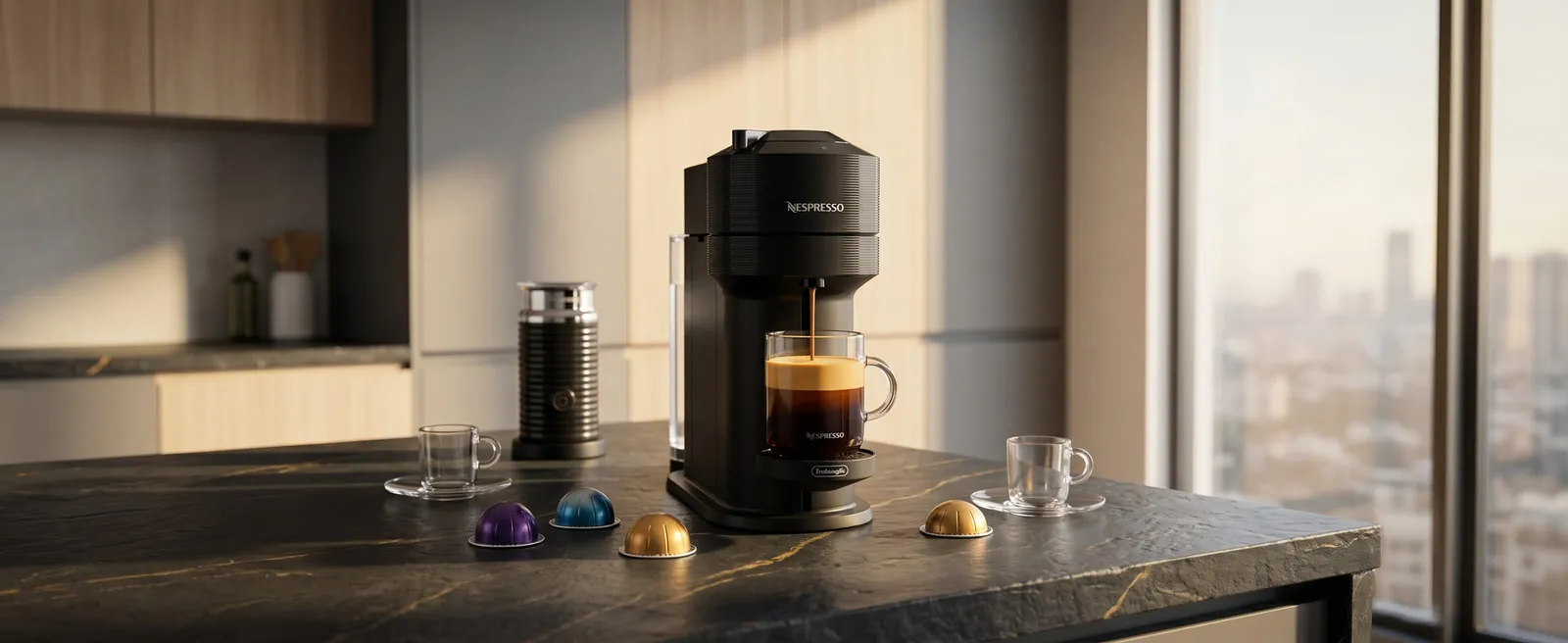
Nespresso Vertuo Next

★ 4.2/5

Listed separately because it is not a ground-coffee espresso machine: it reads a barcode on a Vertuo capsule and brews with one button. It is the best capsule machine on the site and the easiest machine here. The catch is cost: capsules run $1.10-$1.40 each, over $800 a year at two a day, and there is nothing to adjust.

Best for
Convenience-first drinkers, offices and guest kitchens, and very small spaces.
Skip if
You drink two or more coffees a day and watch costs, you want to adjust grind, dose or temperature, or you want milk drinks without buying a frother.
  • One button, zero manual settings
  • Consistent result every time
  • Six cup sizes from one machine
  • 5-inch footprint
  • Capsules cost $1.10-$1.40 each
  • Closed Vertuo ecosystem
  • Alto and Carafe sizes taste thin
  • No milk system

What should you know before buying an espresso machine under $200?

If this is your situation, then this is the trade-off to make.

Which machine fits your situation?

IfYou want the most dependable all-rounder

Capresso EC100. Highest rating of the pump machines here, fast heat-up and a large tank.

IfYou drink lattes and want to learn proper steaming

De'Longhi Dedica EC680M. Its manual wand made real microfoam; be patient with the weak steam.

IfYou want milk drinks with no technique at all

Mr. Coffee Café Barista. The automatic frother does the work, at the cost of coarse foam and shot consistency.

IfYou only want to find out whether you like espresso

DeLonghi Stilosa EC260. The lowest outlay of the picks, with a wand that teaches real skills.

IfYou want coffee with no effort and no learning

Nespresso Vertuo Next, accepting that it is a capsule machine with a high cost per cup.

What should you expect at this price?

IfEvery pump machine here uses a pressurized basket

That double-wall basket builds pressure for you, so shots work with an uneven or pre-ground coffee. The trade-off is less flavour clarity and less feedback when you change the grind. Our pressurized vs non-pressurized baskets guide explains when to switch.

IfEvery pump machine here heats with a thermoblock and no PID

Expect temperature swings: about ±4-5°F estimated on the Capresso, ±8°F on the Stilosa and 9-12°F on the Dedica EC680M. That is why light roasts are a struggle on all of them; medium and dark roasts are far more forgiving.

IfA box says 15 bar

That is a maximum pump rating. Espresso is typically extracted around 9 bar at the puck, so the number tells you little about the shot.

IfYou want to make several milk drinks in a row

All of these brew and steam from one heater, so you wait between steps: 40-50 seconds on the Capresso and 40-60 seconds on the Stilosa. For a household making many drinks, save for a faster machine.

What does a complete setup cost?

IfYou will use pre-ground coffee

Budget only for the machine and fresh coffee. The pressurized baskets here make pre-ground workable, and the Mr. Coffee was tested with supermarket espresso.

IfYou want better espresso from the same machine

A burr grinder makes the biggest difference, and it can cost more than the machine. See our best espresso grinders under $300, and avoid blade grinders (burr vs blade grinder explains why).

IfYou want repeatable shots

Add a small scale so you can weigh dose and yield; it costs little and makes dialing in espresso far easier.

New to espresso? Our best espresso machines for beginners covers forgiving machines at every price, and the espresso machine types guide explains pump, capsule and automatic machines.

Why is the Vertuo Next listed separately?

A capsule machine is not a cheap espresso machine. It brews pre-dosed capsules you buy from one brand, so you cannot choose beans, adjust the grind or learn espresso on it. It earns a place here because some buyers really want the easiest possible coffee for the money, but treat it as a different product with a much higher cost per cup.

Which milk system is easiest to live with?

Automatic frothers (Mr. Coffee) and twin frothers (Capresso) need no technique but make coarse foam. Manual wands (Dedica EC680M, Stilosa) take a few weeks to learn and reward you with better texture; if yours sputters, see why a steam wand is not frothing milk. Purge and wipe any wand after every use.

What if you can spend a little more, or want a capsule machine?

Just over budget, another capsule option, and one we chose not to rank.

De'Longhi Classic Signature

If you can stretch to about $225-$235: a stainless build, a 1.5L tank, a real manual wand and better temperature stability (±5-6°F) than the Dedica machines. Rated 4.0.

De'Longhi Dedica EC685

At $200-$250, just over budget. The same 5.9-inch body with a panarello for easier frothing, but no latte-art microfoam. Rated 3.8.

Nespresso VertuoPlus

Another capsule option at $150-$200 with a fast heat-up and a 5.6-inch width. Rated 4.3, but its review found the highest cost per cup of any system tested and it is not true espresso.

Nespresso Essenza Mini

An Original-line capsule machine that typically sells for about $149-$199: espresso and lungo only, very small, with the open Original capsule range. Research-based review (not tested hands-on), rated 3.8; like the Vertuo, it is not ground-coffee espresso.

Neretva Espresso Machine

At $99-$119 with a 1.5L tank, but rated 3.3: temperature swings of ±8-11°F and 2.5-3 minute recovery after steaming. The Stilosa starts lower in price and rated higher, so the Neretva is not ranked.

With more to spend, our best espresso machines under $500 and the overall best espresso machines rank the next tier up.

How were these budget espresso machines tested and ranked?

Each machine was tested in its own full review; this page ranks them on those findings.

  • Testing periods: Capresso EC100: 55+ shots over 3 weeks. Dedica EC680M: 97 shots over 28 days. Mr. Coffee Café Barista: 100+ shots over 30 days. Stilosa EC260: 67 shots over 4 weeks. Vertuo Next: 90+ capsules over 30 days. Neretva: 52+ shots over 3 weeks.
  • Shot quality and consistency: extraction time, dose and temperature swing across repeated shots, as reported in each review.
  • Milk: foam texture and steaming time per jug.
  • Daily use: heat-up, tank size, footprint, recovery between drinks and expected lifespan.
  • Ranking: pump machines are ordered by each review's overall rating; the capsule machine is listed last because it does a different job. Labels reflect what each machine did best, not commission.

Beans and roast: beans varied by review rather than one shared reference bean, so treat flavour comparisons between machines as a guide rather than a controlled benchmark. From October 2026, espresso machines are tested on two reference coffees.

How do you get better espresso from a budget machine?

Habits that work on any thermoblock machine with a pressurized basket.

Wait past the ready light

On cheap thermoblocks the ready light comes on before the machine is fully stable. The Stilosa review found full temperature stabilisation took closer to 4 minutes, and the Neretva review advises another 60-90 seconds after the light before pulling a shot. Running a blank shot of hot water through the portafilter first warms the metal and helps the first coffee taste less sour.

Brew first, then steam

With one heater, the machine has to change temperature between brewing and steaming. Pull your shot, then steam, and give it time to recover before the next shot. If you make drinks for two, expect a pause in the middle rather than fighting it.

Pick beans that suit the machine

Every review here found medium and dark roasts far more forgiving than light roasts on these machines. Buy fresh, whole-bean espresso blends if you can grind them, or small bags of pre-ground that you finish within a couple of weeks. Our guide to picking espresso beans covers what to look for.

Use the same dose every time

A pressurized basket forgives a lot, but not a dose that changes from shot to shot. Fill the basket to the same level or weigh it, tamp level, and change one thing at a time when a shot tastes off. The reviews used doses of about 14-18g for a double; follow the basket size your machine came with.

Keep it clean and descaled

Rinse the portafilter and basket after each session, purge and wipe the wand after steaming, and descale on the schedule your water needs. Scale buildup gradually affects both flow and temperature. Our descaling guide walks through it.

Know when to upgrade

If you find yourself making espresso every day, chasing light roasts or wanting latte art from a faster wand, you have outgrown this tier. Upgrading the grinder first usually improves the cup more than replacing the machine, and the grinder moves with you to your next machine.

Frequently Asked Questions

Quick answers before you buy.

Yes, the pump machines here make real espresso, though with limits.

Pressurized baskets and thermoblocks without PID mean less flavour clarity and more shot-to-shot variation than pricier machines.

With fresh medium or dark roasts, the results are good for milk drinks and everyday shots.

No, not to start.

Pressurized baskets are designed to work with pre-ground coffee, and the Mr. Coffee Café Barista was tested with supermarket espresso.

A burr grinder is the best upgrade later, but it often costs more than the machine.

Best espresso grinders under $300 →

It is easier, not better. A Vertuo machine gives the same result every time with no learning, but it does not brew ground-coffee espresso and each capsule costs $1.10-$1.40.

Original-line machines such as the Nespresso Essenza Mini take a wider, often cheaper range of capsules, with the same limits. A pump machine costs less per cup and lets you choose any beans.

Mostly because of temperature swings.

Thermoblocks without PID varied from an estimated ±4-5°F on the Capresso to 9-12°F on the Dedica EC680M, and light roasts are the least forgiving of that.

Medium and dark roasts gave much better results across these reviews.

The De'Longhi Dedica EC680M is the only one here whose wand made real microfoam.

Expect 2-3 weeks of practice and a slow 98-second average per jug.

The Capresso twin frother and Mr. Coffee automatic frother make foam that sits on top rather than pouring patterns.

How to make a latte →

Expect a few years, not decades.

The Capresso review puts its plastic chassis at about 4-6 years, and the Mr. Coffee review expects 12-24 months.

Descaling on schedule is the easiest way to get the most out of any of them.

How to descale a coffee machine →

Buy the EC680M if counter space is tight and you want to learn latte-art steaming; it is 5.9 inches wide and its wand made real microfoam.

Buy the Stilosa if you want the lowest outlay to try espresso; it is 7.5 inches wide and steamed 8 oz of milk faster in testing.

De'Longhi Dedica EC680M review →

It is if you will drink espresso daily.

Just over this budget, the Classic Signature adds steadier temperature and a stainless build, and our under-$500 picks add faster heat-up, better steam and, on some, non-pressurized baskets.

If you are only curious about espresso, a machine here is a low-risk start.

Best espresso machines under $500 →