
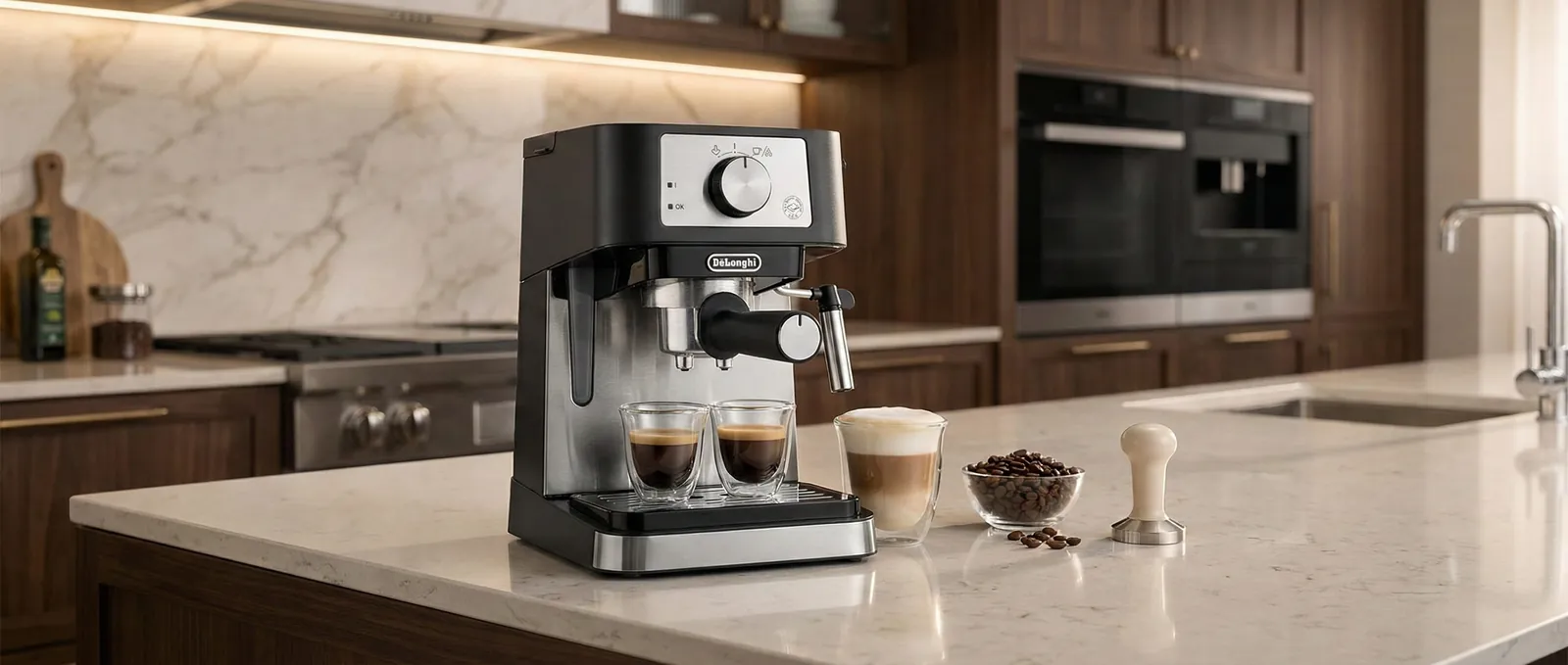
De'Longhi
De'Longhi Stilosa EC260
A true budget starter machine for testing whether home espresso is for you before spending more.
Espresso machine review
Last updated
A compact budget espresso machine with a capable steam wand and forgiving pressurized baskets, held back by a plastic portafilter.
Affiliate disclosure: this page contains Amazon affiliate links. We may earn a commission if you buy through them, at no extra cost to you, and it never affects our rankings. Read our full affiliate disclosure
CASABREWS CM5418 at a GlanceWorth considering
A cheap, compact way into home lattes; the pressurized baskets and post-steam lockout cap how far it can take you.
Budget Thermoblock Espresso Machine with Steam Wand
Why it stands out
Watch out for
✓ Best for
Pod or café-latte drinkers who want milk drinks at home for the lowest outlay
✕ Skip if
You want to learn real espresso technique and taste the difference beans make
Affiliate link: we may earn a commission at no extra cost to you. It never affects our rating.
This CASABREWS espresso machine review covers the CM5418, the model you see most often on Amazon and social media: a compact 20-bar thermoblock machine with a manual steam wand and a pressure gauge on the front.
The short answer: buy it if you want lattes and cappuccinos at home for the smallest outlay and you will mostly use pre-ground coffee. Skip it if you want to get properly into espresso, or if you make several milk drinks in a row each morning.
Check where you fit before you look at the trade-offs below.
A strong match
Consider something else
What earns the rating, and what you give up to get it.
6 reasons it works
6 trade-offs to weigh
The CM5418 against the other CASABREWS models you will see listed
CASABREWS sells several machines that look alike in search results, and the names are easy to mix up. This review covers the CM5418, the original compact model with a pressure gauge and steam wand. It is sold in stainless steel and several colours; coloured versions usually cost a little more and are otherwise the same machine.
If the listing you are looking at does not say CM5418, use this review for the general CASABREWS approach and check that model's specifications before you buy.
Thermoblock heat, a 20-bar pump and pressurized baskets, in plain English
Three parts decide how the CM5418 behaves.
Tank, size, clearance and the parts in the box
| Spec | CM5418 | What it means for you |
|---|---|---|
| Heating | Thermoblock | Ready in under a minute; temperature not adjustable |
| Pump rating | 20 bar maximum | Marketing number; the basket controls brew pressure |
| Portafilter | 51mm, pressurized baskets | Forgiving; upgrade needed for better espresso |
| Water tank | 34 oz (1 L), removable | Roughly a week of morning lattes for one person |
| Size and weight | About 12 x 6 x 12 in, 8.6 lb | Fits narrow counters and most under-cabinet spaces |
| Power | 1350 W | Normal for a thermoblock; fine on a standard US outlet |
The steam wand is the CM5418's best feature, with one big catch
Yes, and this is where the CM5418 earns its popularity. It has a real manual steam wand, not a panarello sleeve that whips milk into stiff foam. A manual wand lets you control how much air goes in, so you can make silky microfoam for a latte or flat white, or drier foam for a cappuccino.
Expect a learning curve. The wand is less powerful than the wands on more expensive machines, so steaming takes longer and it is easier to overheat the milk or end up with big bubbles. Start with cold whole milk and a pitcher filled just below the spout. Keep the tip just under the surface for the first few seconds to add air, then sink it a little to spin the milk until the pitcher is too hot to hold comfortably. Our guide on how to make a latte walks through it step by step.
If lattes are why you are buying, see today's Amazon price and add a 12 oz pitcher to the same order.
The catch: after steaming, the thermoblock is too hot to brew. The shot buttons flash and the machine refuses to pull a shot until it cools. The fix is simple once you know it: open the steam knob over the drip tray or a cup and let it run hot water for several seconds until the lights stop flashing. Better still, change the order of your drink: pull the shot first, then steam. The shot waits happily for the 30 to 60 seconds the milk takes.
If milk drinks are the main reason you are buying, and you make more than one at a time, the Breville Bambino Plus automates milk texturing and has no such lockout. It costs considerably more, which is the honest trade-off.
Good enough under milk, limited as a straight shot
As a base for milk drinks, CM5418 espresso is fine. The pressurized baskets produce a consistent shot with a thick head of foam, and milk smooths over what the shot lacks. As a straight espresso, it tastes flatter and often more bitter than a shot from a non-pressurized basket with fresh, properly ground coffee.
Three things make the most difference without spending much:
If you want espresso that tastes noticeably better, the upgrade is a non-pressurized 51mm basket or bottomless portafilter plus an espresso-capable grinder. That is covered in the modern fixes below.
What you get for the money, and what the total setup really costs
For a beginner who mainly wants milk drinks, yes. The CM5418 often sells for less than a couple of weeks of daily café lattes, and its steam wand is better than the panarello wands on many machines at the same price. Check current price, because CASABREWS listings move often and coloured versions cost a little more.
Count the extras before you buy. The machine alone is not the whole setup:
Where it is not worth it: if you already know you want to learn espresso properly, the cost of upgrading this machine's portafilter, tamper and grinder adds up fast, and you will still have a thermoblock with fixed temperature. In that case, compare it with the machines on our list of best espresso machines for beginners before buying.
The CM5418 against the Stilosa, EC155, Neretva, Bambino Plus and a capsule option
| Machine | Best for | Milk system | Main drawback |
|---|---|---|---|
| CASABREWS CM5418 | Cheap lattes, small kitchens | Manual wand | Overheat lock, plastic portafilter |
| De'Longhi Stilosa EC260 | Lowest-cost starter from a big brand | Manual wand | Finicky to get consistent |
| De'Longhi EC155 | Pre-ground and ESE pods | Panarello wand | Stiff foam, dated design |
| Neretva espresso machine | Lookalike budget buy | Manual wand | Temperature swings, slow steam recovery |
| Breville Bambino Plus | Daily milk drinks, easy upgrade | Automatic or manual wand | Costs much more |
Our roundup of the best espresso machines under $200 ranks the tested budget machines against each other.
A first-day routine and the few minutes of care that keep it running
First use: rinse the tank, portafilter and baskets, fill the tank and run a couple of shots of plain water through the group and steam wand to flush the system. Then program the single and double buttons to the yield you want.
After every drink:
The buyers who will be happier spending a little more, or a lot less
Telling you not to buy is the most useful thing a review can do, so here it is plainly.
Buy it if you want café-style milk drinks for the smallest outlay, you have a narrow counter, you are happy using pre-ground coffee, and you accept that you may replace it in a couple of years if you get hooked. If that is you, check current price on the CM5418.
The issues CM5418 owners report most, and what actually solves them
Most CM5418 complaints come from the overheat lock, the basket fit or milk technique rather than a faulty machine. Work through these first.
Before you decide
Under about $200, almost every machine uses a thermoblock (a fast in-line heater instead of a boiler), a vibratory pump with a 15 or 20 bar maximum rating, and a small portafilter with pressurized baskets. The bar figure on the box is a maximum pump rating, not brew pressure; good espresso is extracted at roughly 9 bar at the puck. So the numbers that decide your mornings are different: how fast the machine heats, how it behaves after steaming, how good the wand is, and whether you can upgrade the basket later.
That is where budget machines split. Some, like the De'Longhi Stilosa EC260, keep things simple and backed by a big brand. Others, like the Neretva espresso machine, look similar but struggle with temperature and steam recovery. The CM5418 sits between them: better at milk than most rivals, held back by its portafilter. Our guide to espresso machine types explains where thermoblock machines fit against boilers, capsules and super-automatics.
Durability, upkeep and running costs once the novelty wears off.
The stainless shell outlasts the plastic parts.
The portafilter, basket clip and drip tray are the pieces most likely to wear, and the 51mm format means third-party replacements are easy to find.
Thermoblock machines in this class tend to fail through scale and seals rather than electronics, so regular descaling matters more than anything else you do.
Genuine spares come mainly through CASABREWS directly.
Aftermarket 51mm portafilters, baskets and tampers are widely sold, but check fit with your exact model before ordering.
Low: descaling solution, a backflush or cleaning tablet now and then, and filtered or softened water if your tap water is hard.
Typically one year; check the terms on the listing, as they can differ by seller and region.
Quick specs
How it scored
Affiliate link: we may earn a commission at no extra cost to you. It never affects our rating.
Our rating, who it fits, and what it costs.
CASABREWS CM5418Worth considering
3.6 / 5 — Is it worth buying?
The CASABREWS CM5418 gets the important things right for a beginner on a budget: it heats quickly, it forgives pre-ground coffee, and its manual steam wand can make real latte milk.
✓ Best for
✕ Skip if
Score breakdown
Ready to decide?
Our verdict: 3.6/5, worth considering. Independently tested; commissions never change a rating.
See how the CASABREWS CM5418 compares with the other picks in each tested roundup.
Closest alternatives in price and purpose, each tested the same way.
De'Longhi
A true budget starter machine for testing whether home espresso is for you before spending more.
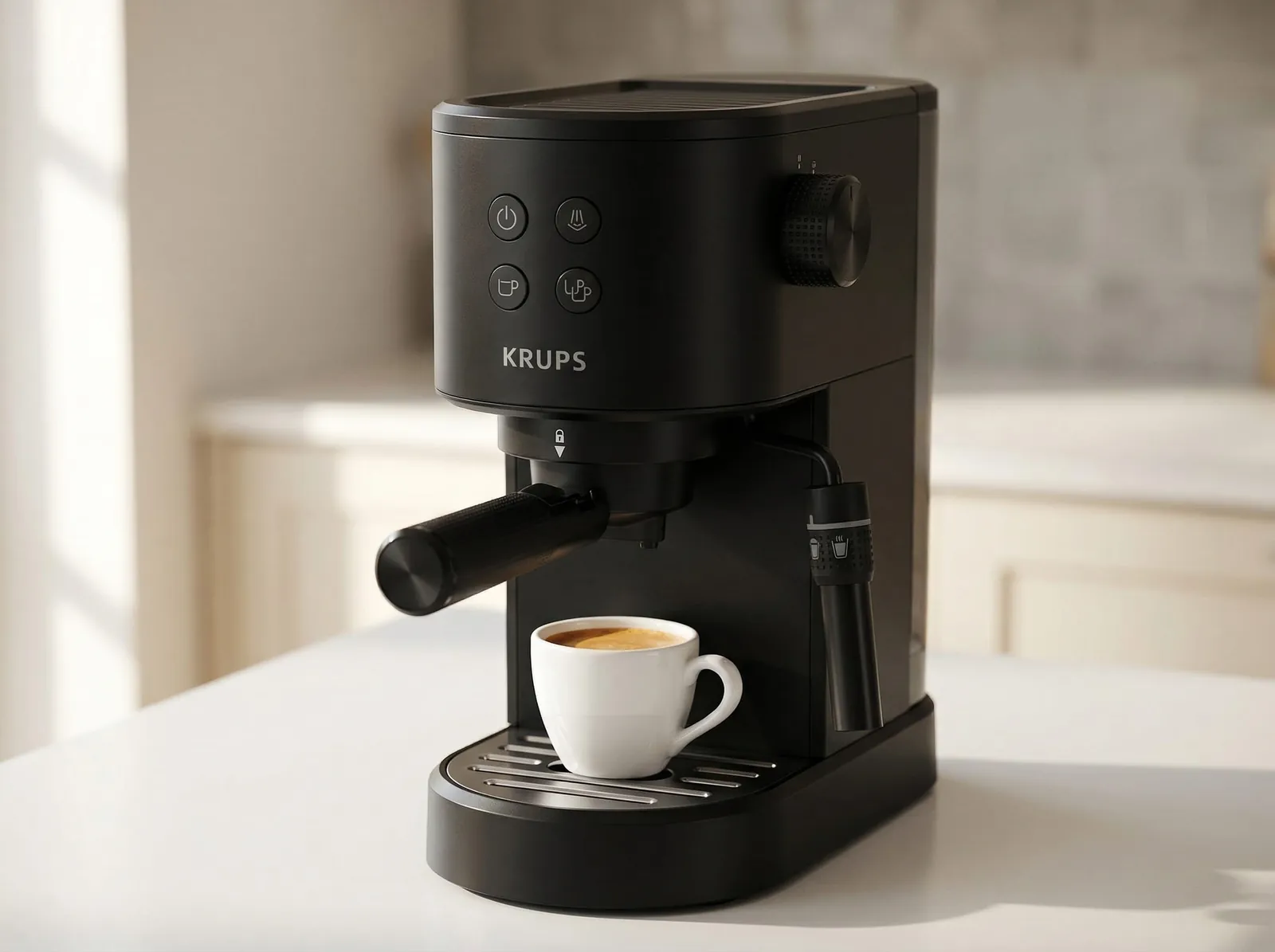
Krups
A tight-budget entry point for first-time espresso owners making one or two drinks a day.
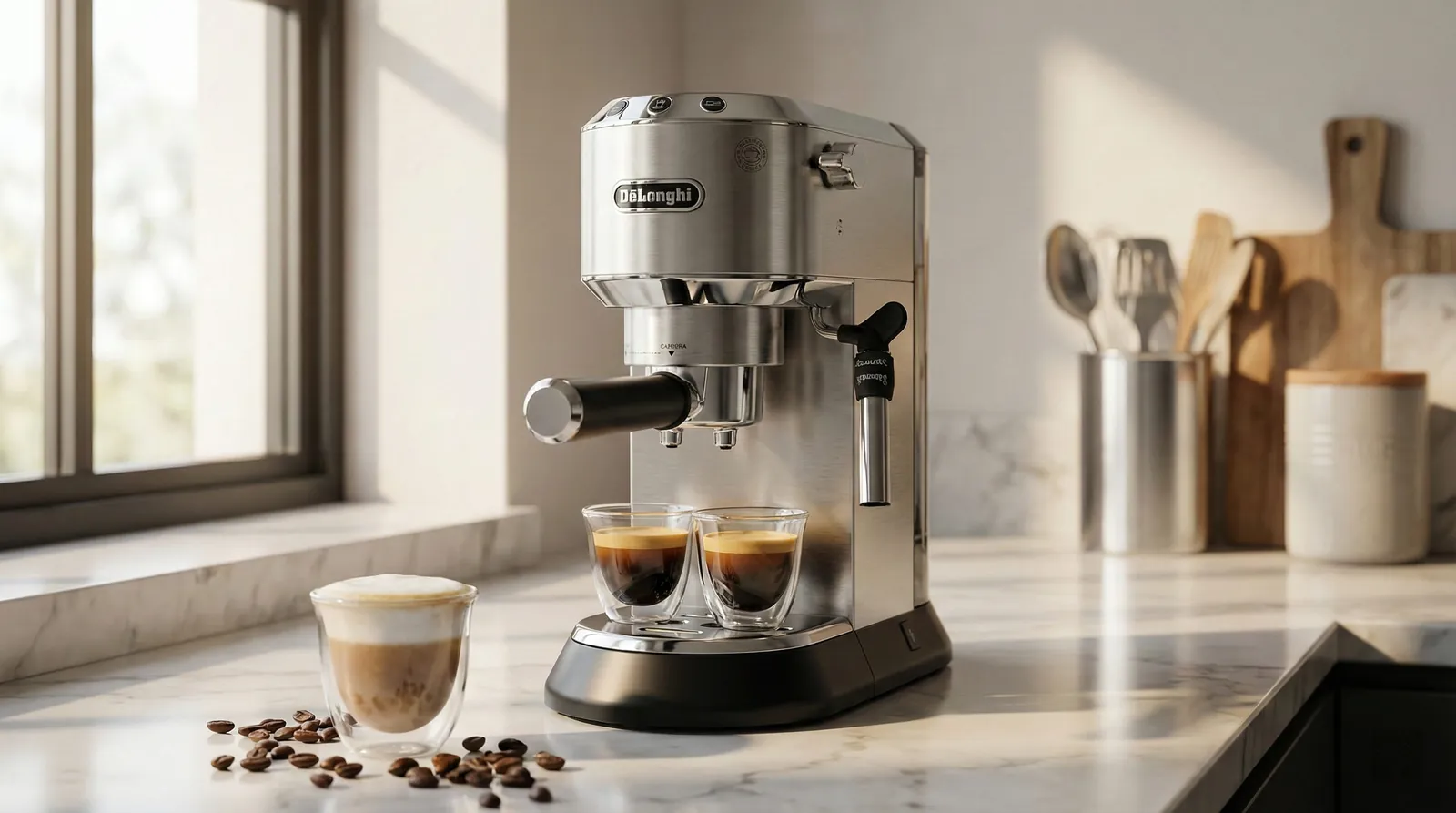
De'Longhi
An ultra-slim machine built for tight counters and a budget entry point into home espresso, with real trade-offs in temperature stability.
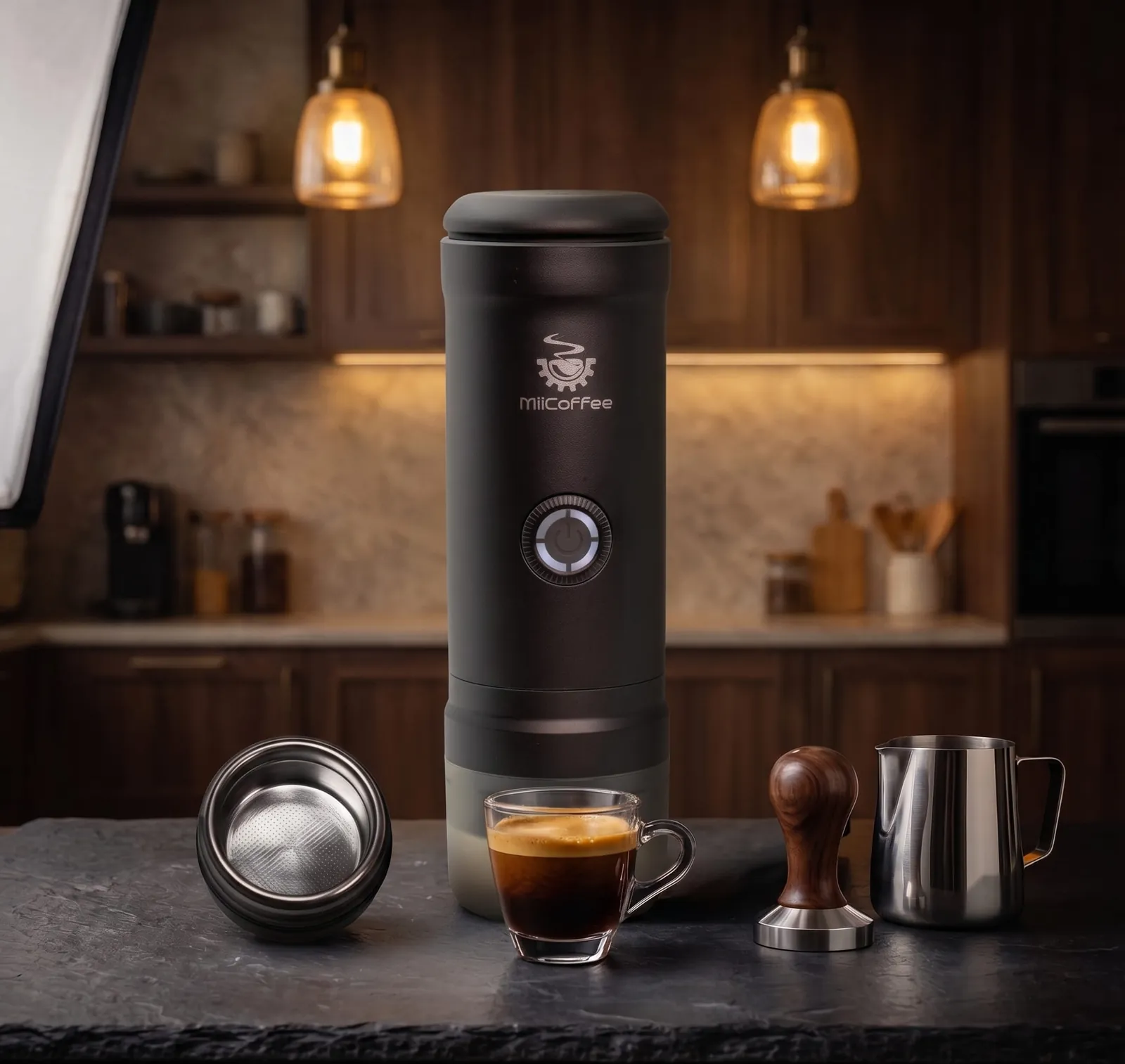
MiiCoffee
A self-heating, battery-powered 51mm travel espresso maker that shines with kettle-hot water.
Put it into practice with a free calculator built for what you just read.
Quick answers before you buy.
Yes, it is one of the more forgiving budget machines.
The pressurized baskets produce a consistent shot even with pre-ground coffee and uneven tamping, and it heats in under a minute.
The steam wand takes a week or two of practice before your milk is consistently silky.
The machine is too hot to brew after steaming, so it locks out shots as a safety measure.
Open the steam knob and run hot water through the wand until the lights stop flashing.
Pulling your shot before steaming avoids the wait entirely.
No, not to start.
The pressurized baskets work well with pre-ground espresso coffee.
You only need an espresso-capable grinder, such as the Baratza Encore ESP, if you upgrade to a non-pressurized basket for better-tasting shots.
Yes, but most owners do it with a separate 51mm bottomless portafilter rather than a basket swap, because the stock portafilter holds baskets loosely.
Pair it with a fine, consistent grinder, or shots will run fast and sour.
Our guide to pressurized vs non-pressurized baskets explains the difference.
A 51mm tamper fits its portafilter.
A solid metal tamper gives a far more even tamp than the included plastic scoop-tamper, and it costs little.
See how to tamp espresso for technique.
Every one to two months in hard-water areas, and every two to three months with filtered or soft water.
Scale slows flow and makes temperatures less stable on a thermoblock.
Our descaling guide walks through the process.
No, the Breville Bambino Plus is the better machine, with automatic milk texturing, a faster heat-up and no post-steam lockout.
The CASABREWS wins only on price, so it suits buyers who want to spend as little as possible to start.
Expect a few years with regular descaling, which is typical for budget thermoblock machines.
Seals, the plastic portafilter and the drip tray wear first, and 51mm replacements are easy to find.
Check the warranty terms on your listing, usually one year.
Reader questions
Questions or tips? Leave a comment
Ask about your setup or share what worked for you. Comments are checked before they appear.