Built-in grinder or separate grinder?
An all in one espresso machine wins on space, price and simplicity. You buy one box, the grinder doses straight into the portafilter, and there is no guessing whether the grinder can go fine enough for that basket. For medium and dark roasts, that is a good deal.
A separate grinder wins on range and on upgrades. Built-in burrs are smaller and adjust in coarser steps, which is why light roasts are the common weak spot. When you outgrow a built-in grinder, you replace the whole machine; a separate one you simply swap.
Stepped grind settings or sensor grinding?
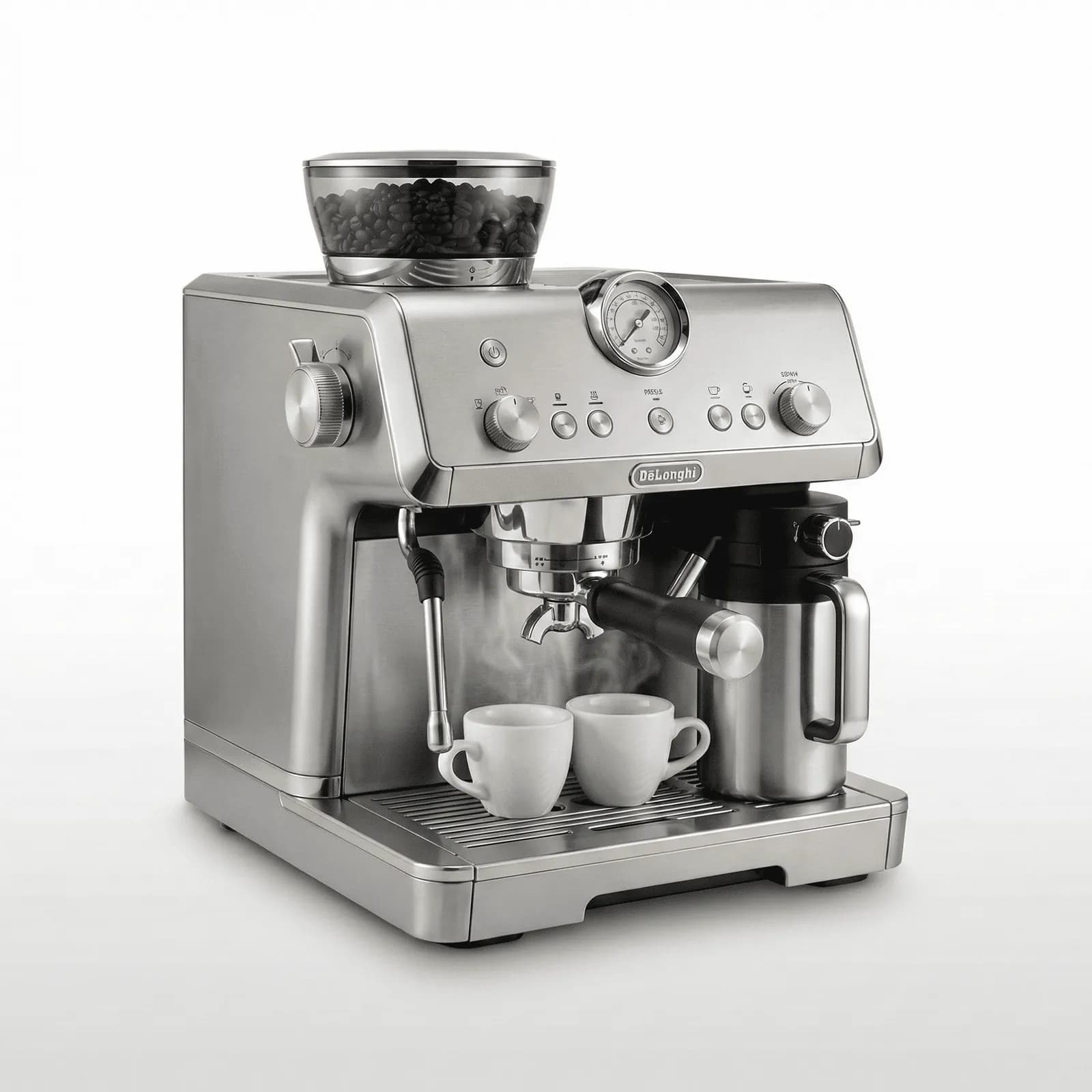
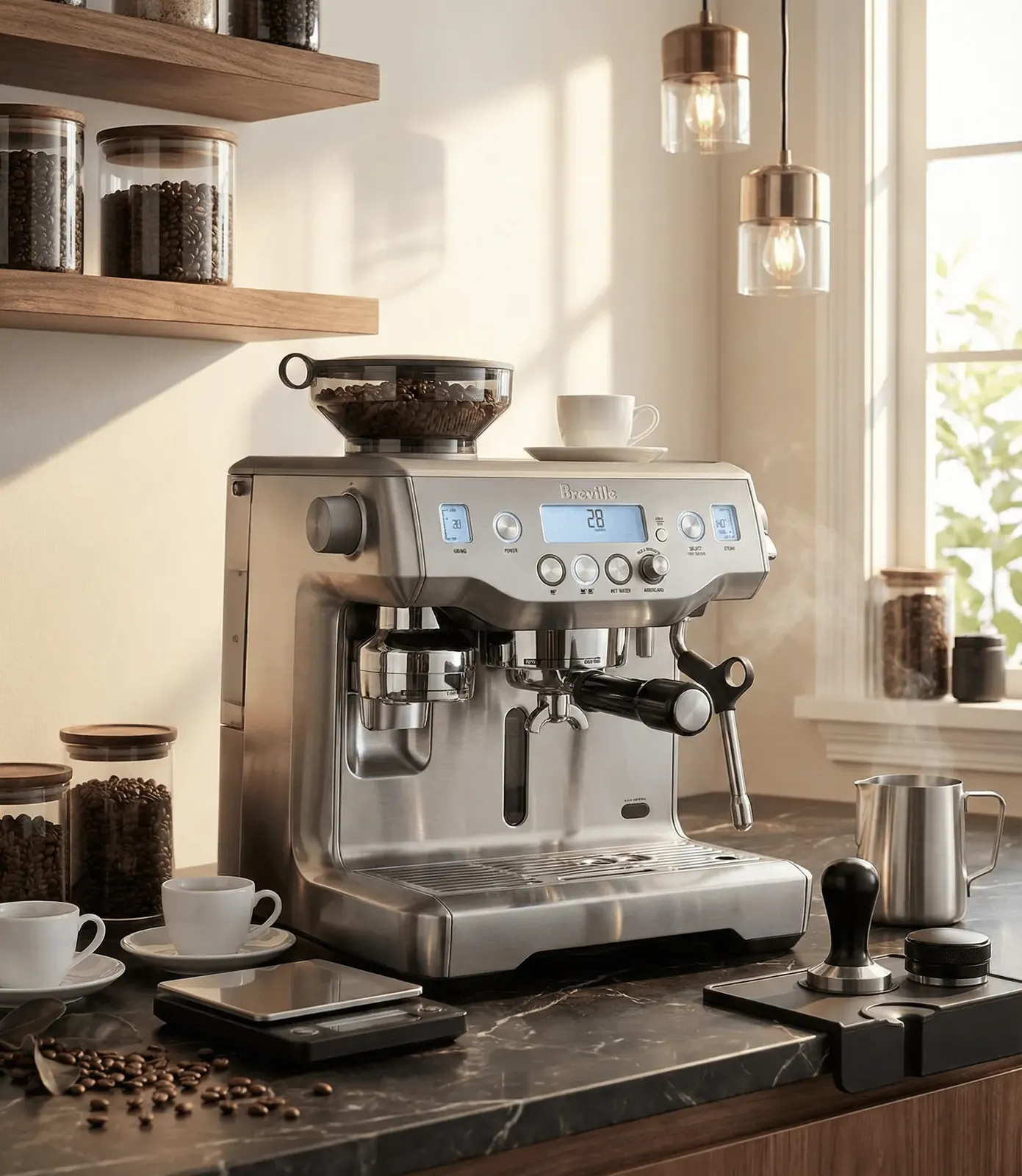
Most built-in grinders use stepped grind settings. More steps mean smaller jumps between them, which helps you land the right shot time. The Arte has 8, the Barista Express 16, the Opera 15, the Ninja 25 and the Oracle 45.
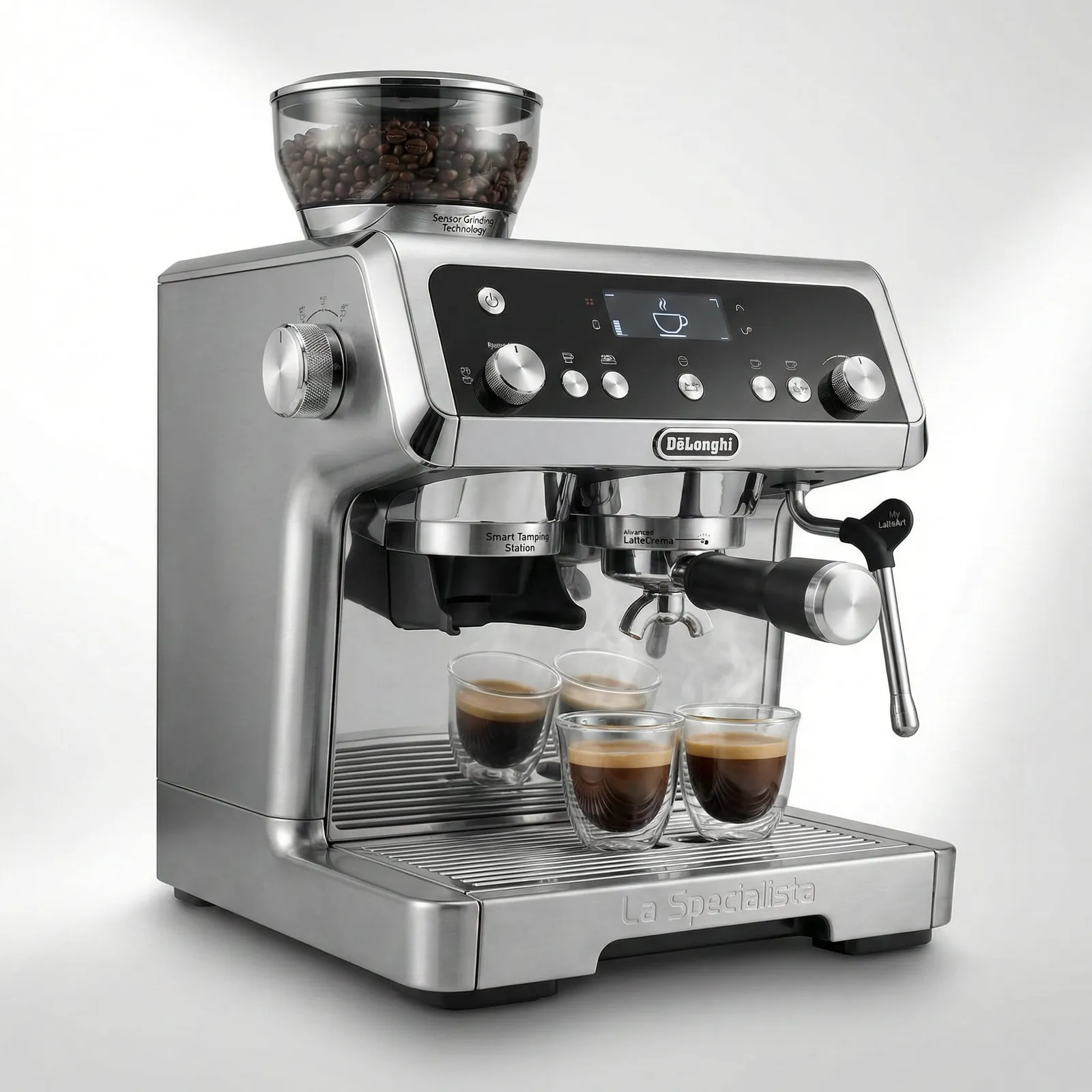
De'Longhi's sensor grinding, on the Prestigio and Opera, aims for a consistent dose each time. It cuts the re-dialing when you switch beans. It does not make the burrs finer, so it does not fix the light-roast limit.
Manual, assisted or automatic tamping?
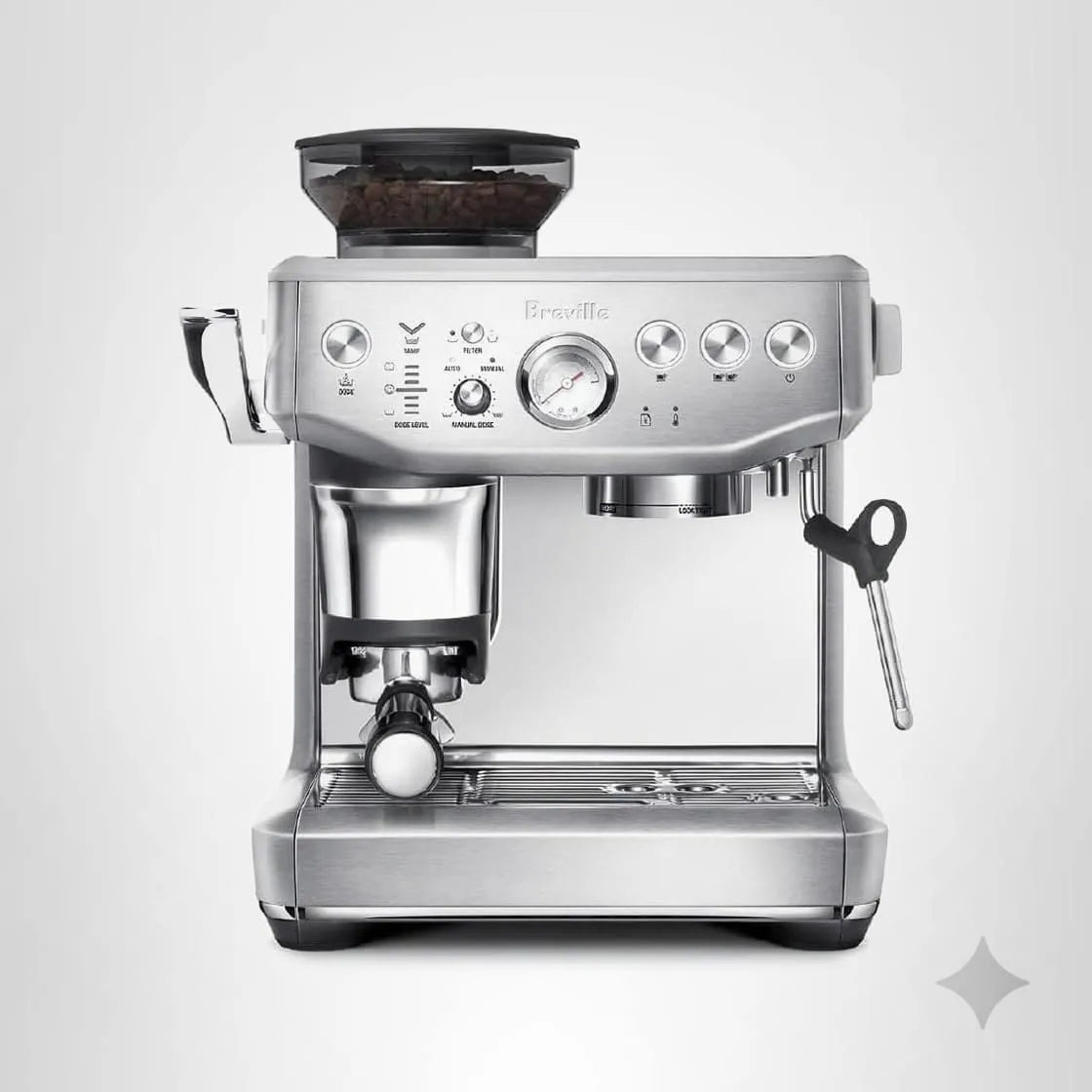
Uneven tamping is the most common beginner fault. Manual tamping (Barista Express, Arte) asks you to learn it. Assisted tamping (Breville Impress, Ninja Barista Assist, De'Longhi Smart Tamping) uses a lever to tamp at a set pressure. The Oracle grinds, doses and tamps on its own.
Assisted tamping matters most if you are new or share the machine with someone who is. Experienced users often prefer manual control, which is the case for the Barista Pro.
Manual steam wand or automatic milk frothing?
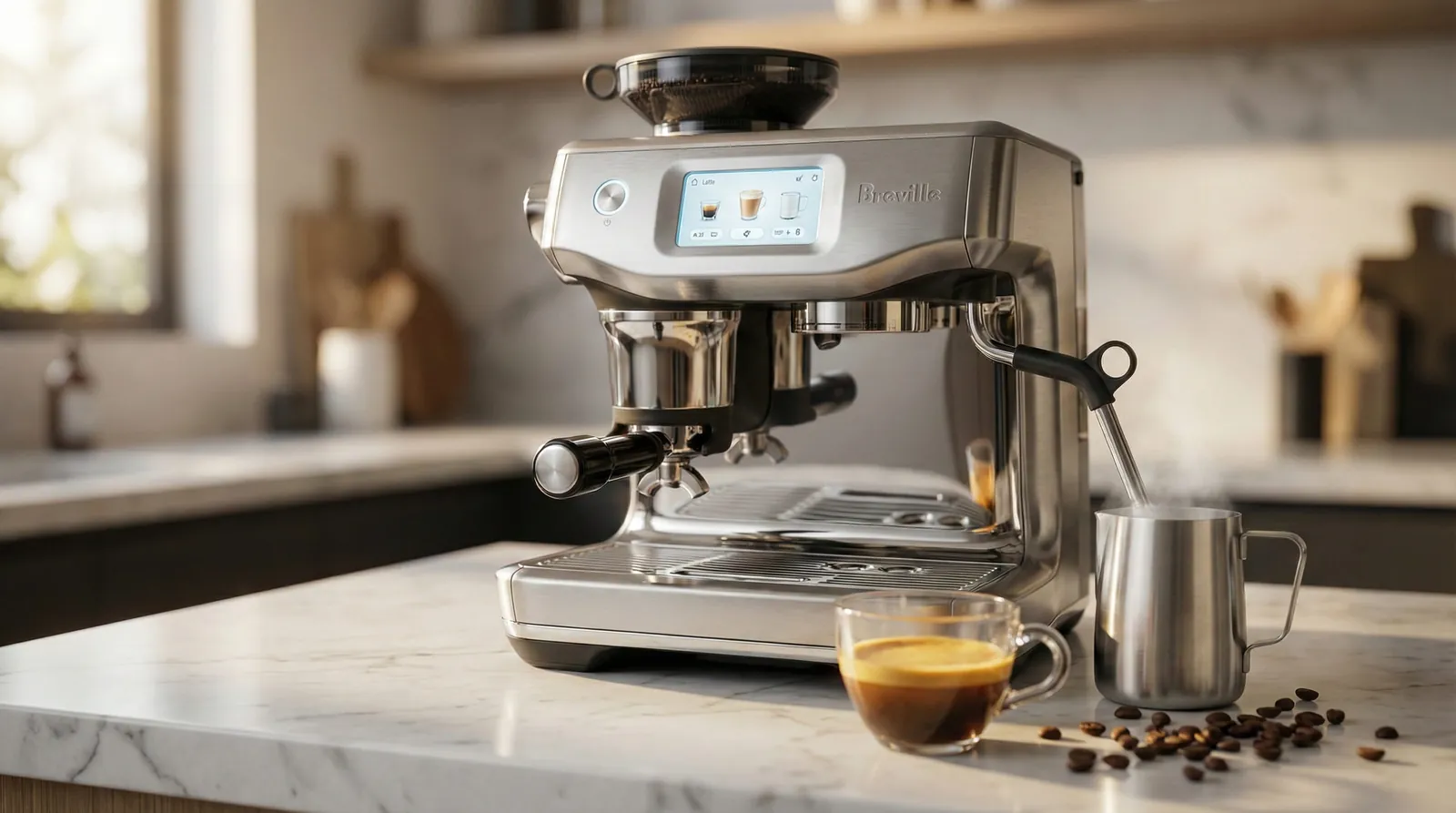
A manual steam wand gives the best control over milk texture once you learn it. Automatic milk frothing, on the Touch Impress, Ninja and Oracle, sets temperature and foam for you, which suits households where several people make lattes.
Heating decides the waiting. Single-heater machines brew and then steam. Dual heating (Prestigio, Opera) and dual boilers (Oracle) do both at once, which saves real time when you make three or more milk drinks in a row.
Basket size: 51mm, 54mm or 58mm?
Basket size sets your upgrade path. 58mm (Opera, Oracle) is the commercial standard, with the widest choice of precision baskets, tampers and bottomless portafilters. 54mm (the Brevilles) has decent third-party support. 51mm (Arte, Prestigio) is the most limited.
Check the bean hopper too. Hoppers on built-in grinders are smaller than on dedicated grinders, which matters if you buy large bags.
Quick decisions
Skill and workflow
IfYou have never made espresso and want the shortest learning curve
Buy the Barista Express Impress. Assisted tamping and PID heating remove two of the biggest variables.
IfYou want to learn by feel and spend less
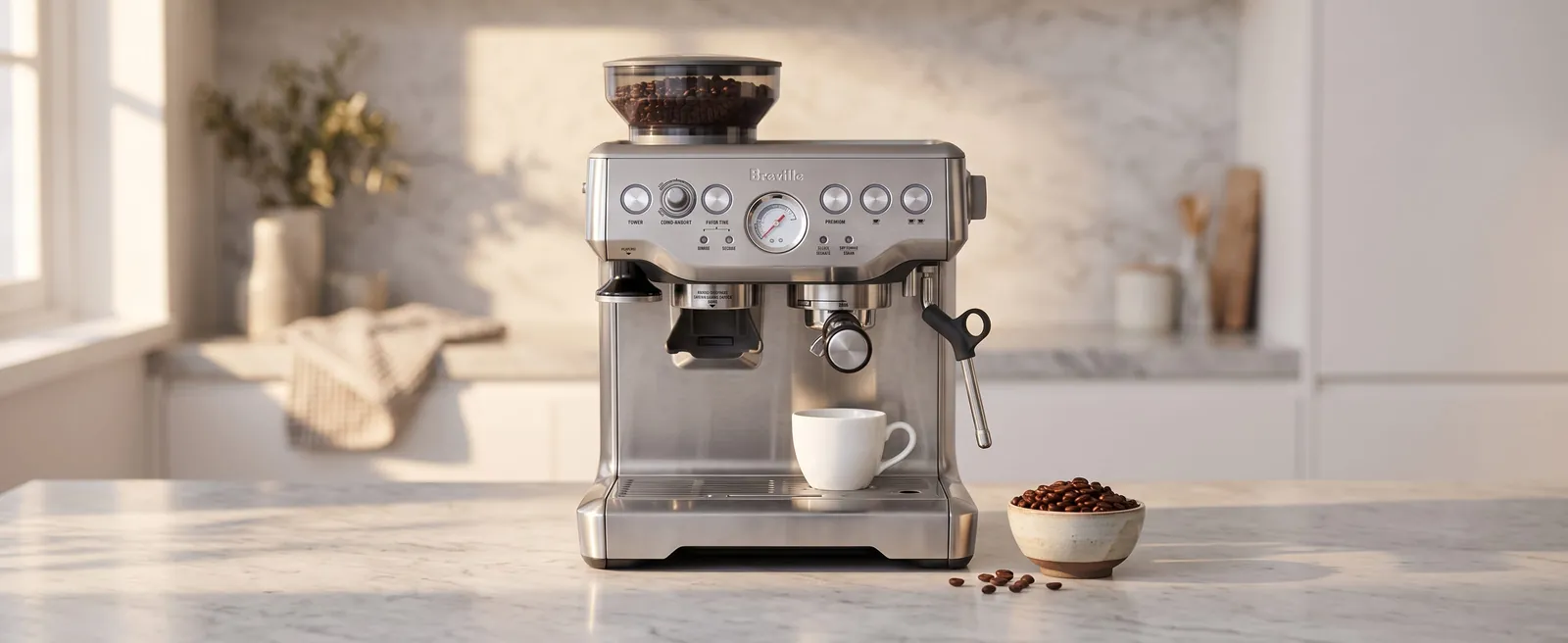
Buy the Barista Express and a decent 54mm tamper. The pressure gauge shows whether each change helped.
IfYou want the screen to guide you and the machine to steam the milk
Buy the Barista Touch Impress, or the Oracle if you also want dual boilers.
Drinks and volume
IfYou make three or more milk drinks every morning
Look at dual heating: the Prestigio or the Opera steam while the shot brews.
IfYou also drink drip coffee or cold brew
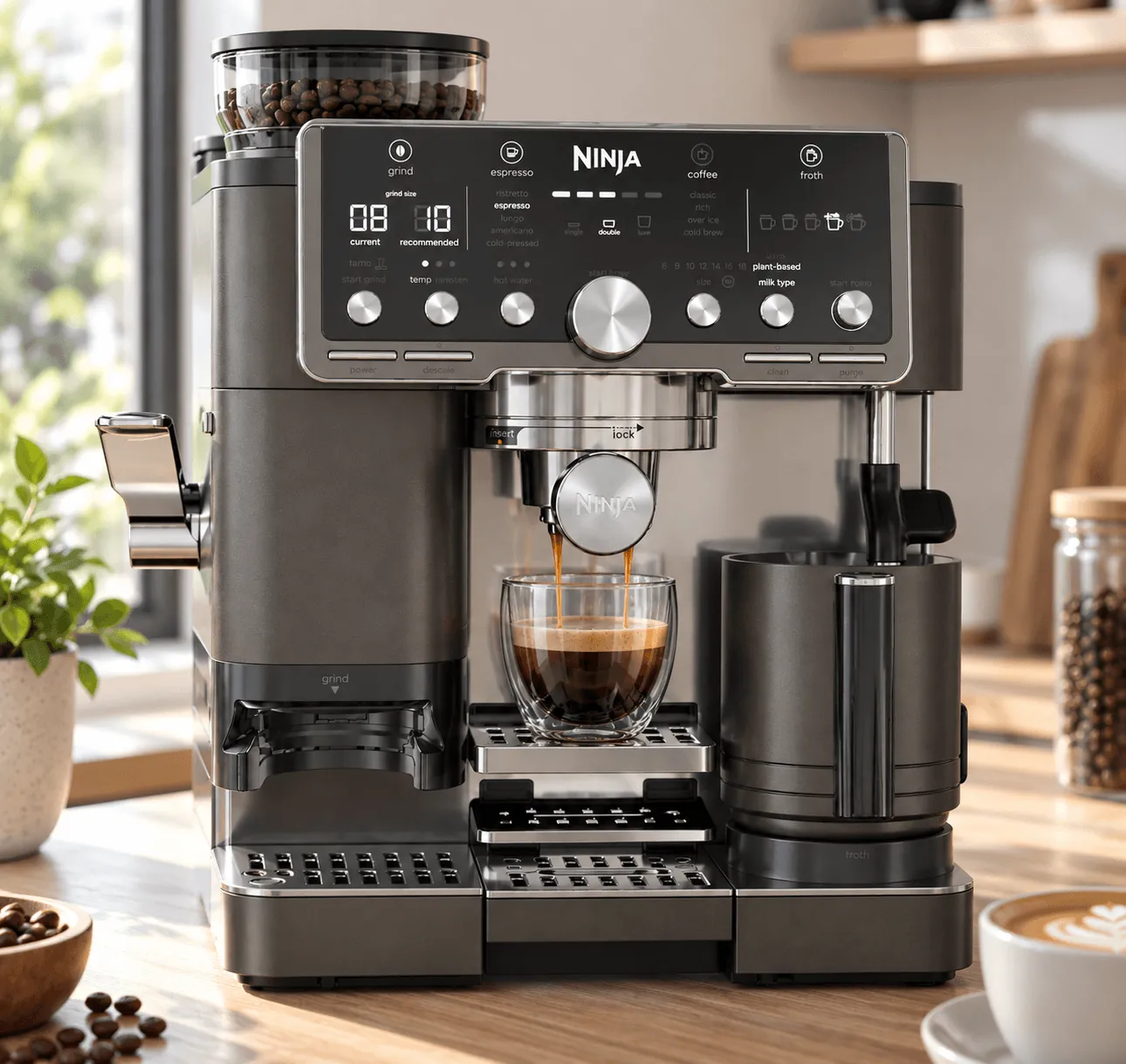
The Ninja Luxe Café Pro is the only pick that does both. Against the Barista Express, it trades manual control for more drink types and guided dosing.
Budget and space
IfYou want the lowest price for a built-in grinder
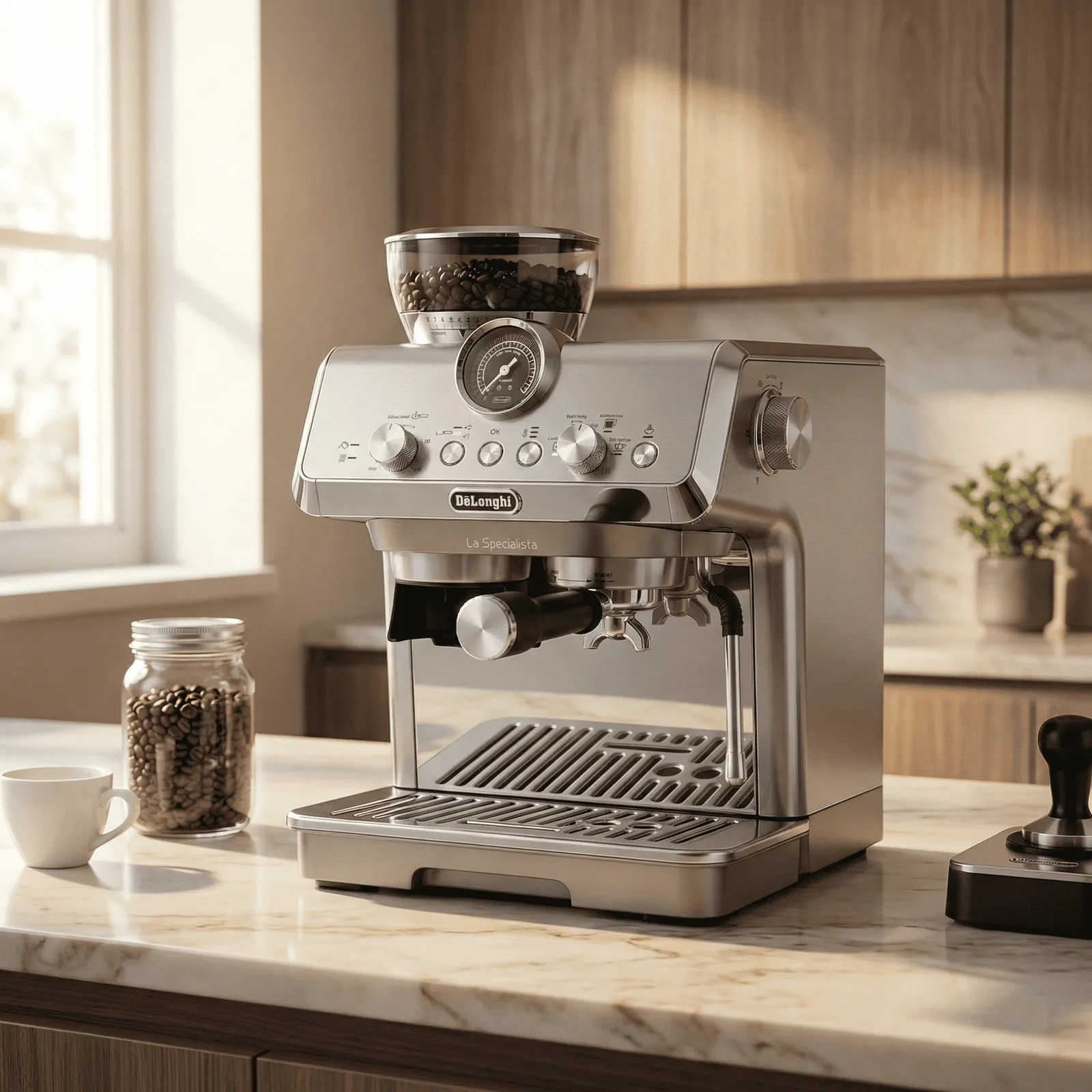
The La Specialista Arte. Against the Barista Express, it is more compact with tidier puck prep, but it has fewer grind settings and a smaller 51mm basket.
IfYour counter is small
The Arte, Barista Express and Express Impress are the compact options. The Opera and Oracle are both over 14 inches wide.
Comparing the Breville models side by side? See our Barista Express vs Barista Pro vs Express Impress comparison.

Reader questions
Questions or tips? Leave a comment
Ask about your setup or share what worked for you. Comments are checked before they appear.
Write a comment or question