

Pick this if you want the best value
Breville Barista Express
Grinder, pressure gauge and manual wand in one unit. You learn dosing and tamping yourself.
Espresso Guides
Last updated
Breville Barista Express vs Barista Pro vs Barista Express Impress: three all-in-ones with built-in grinders, and what the extra money actually buys.
Affiliate disclosure: this page contains Amazon affiliate links. We may earn a commission if you buy through them, at no extra cost to you, and it never affects our rankings. Learn more
Buy the Barista Express if you want the lowest price and are happy to learn dosing and tamping yourself. Buy the Barista Express Impress if you are new to espresso and want the machine to help with dose and tamp. Buy the Barista Pro if you want it ready in seconds, finer grind steps and a shot timer, and you already tamp consistently.
Same family, three different upgrades. Choose the one that fixes your problem.
| Barista Express | Barista Express Impress | Barista Pro | |
|---|---|---|---|
| Best for | Value, learning the full process | Beginners who want help with dose and tamp | Speed, shot data, already-confident tampers |
| Heating | Thermocoil with PID | Thermocoil with PID | ThermoJet with PID, about 3 seconds |
| Grinder | 16 settings | 25 settings, auto dose correction | 30 settings |
| Tamping | Manual, small tamper included | Assisted lever tamp | Manual |
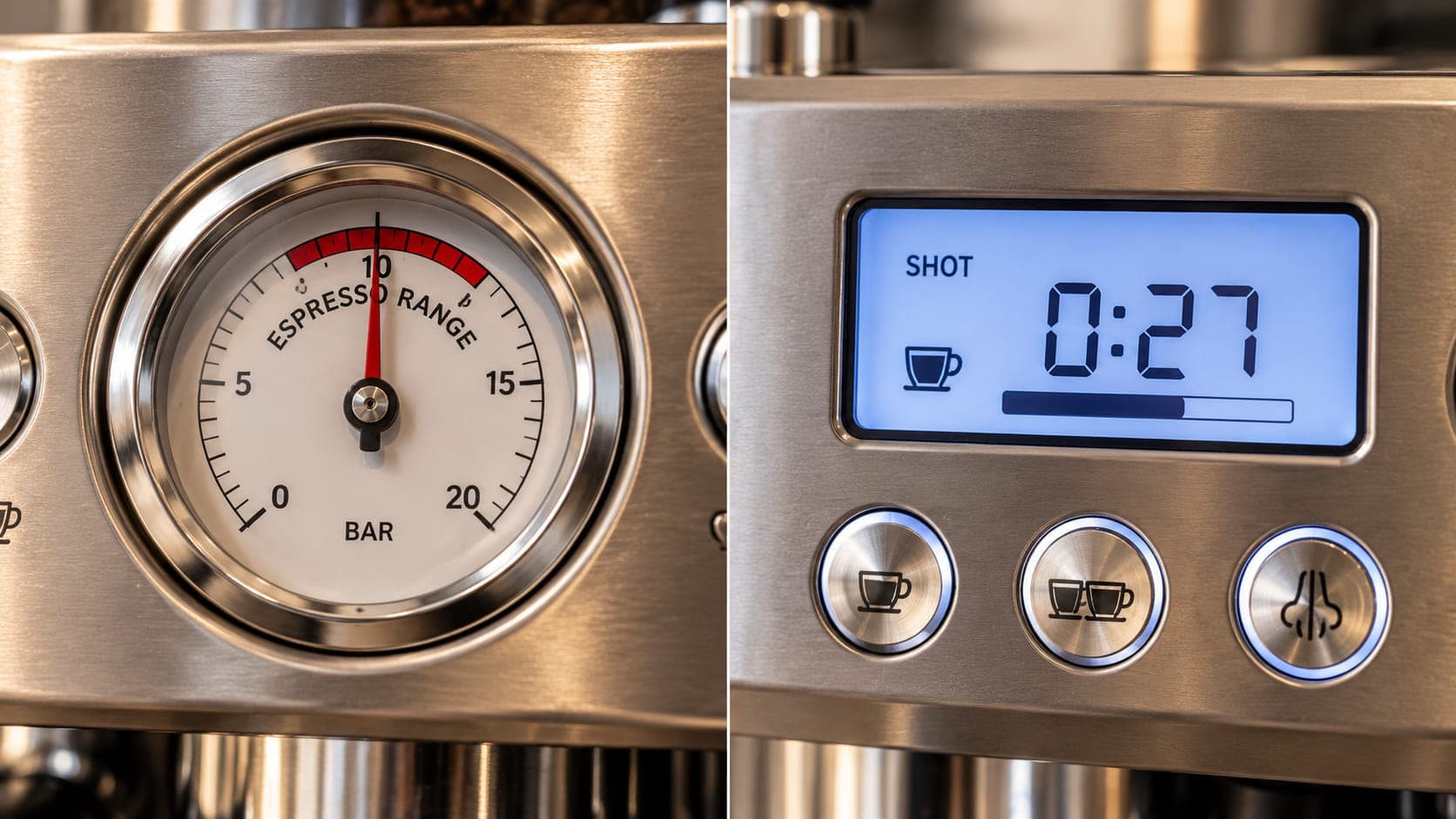
| Feedback | Pressure gauge | Pressure gauge and dose gauge | LCD with shot timer, no gauge |
| Typical price range | $449–$699 | $750–$850 | $849–$899 |
Best for
Heating
Grinder
Tamping
Feedback
Typical price range
Pick this if you want the best value
Grinder, pressure gauge and manual wand in one unit. You learn dosing and tamping yourself.
Pick this if you are new to espresso
Measures the dose and tamps for you, so shots are consistent from the first week.
Pick this if you want speed and a timer
Ready in seconds, with 30 grind steps and a shot timer on the screen. No assisted tamping.
Affiliate links: we may earn a commission at no extra cost to you.
Warm-up, dosing and tamping are where they split.
The Barista Pro has the quickest routine. Its ThermoJet heats water as it flows, so it is ready to brew about 3 seconds after you switch it on, and the screen counts the shot time for you. You still dose and tamp by hand, so it is quick only once your puck prep is consistent.
The Express Impress is the easiest to get right. It grinds into the portafilter, a gauge tells you whether the dose is right, and a lever tamps the coffee with the same pressure every time. If the dose was off, it adjusts the next grind. That removes the two most common beginner mistakes, uneven tamping and the wrong dose.
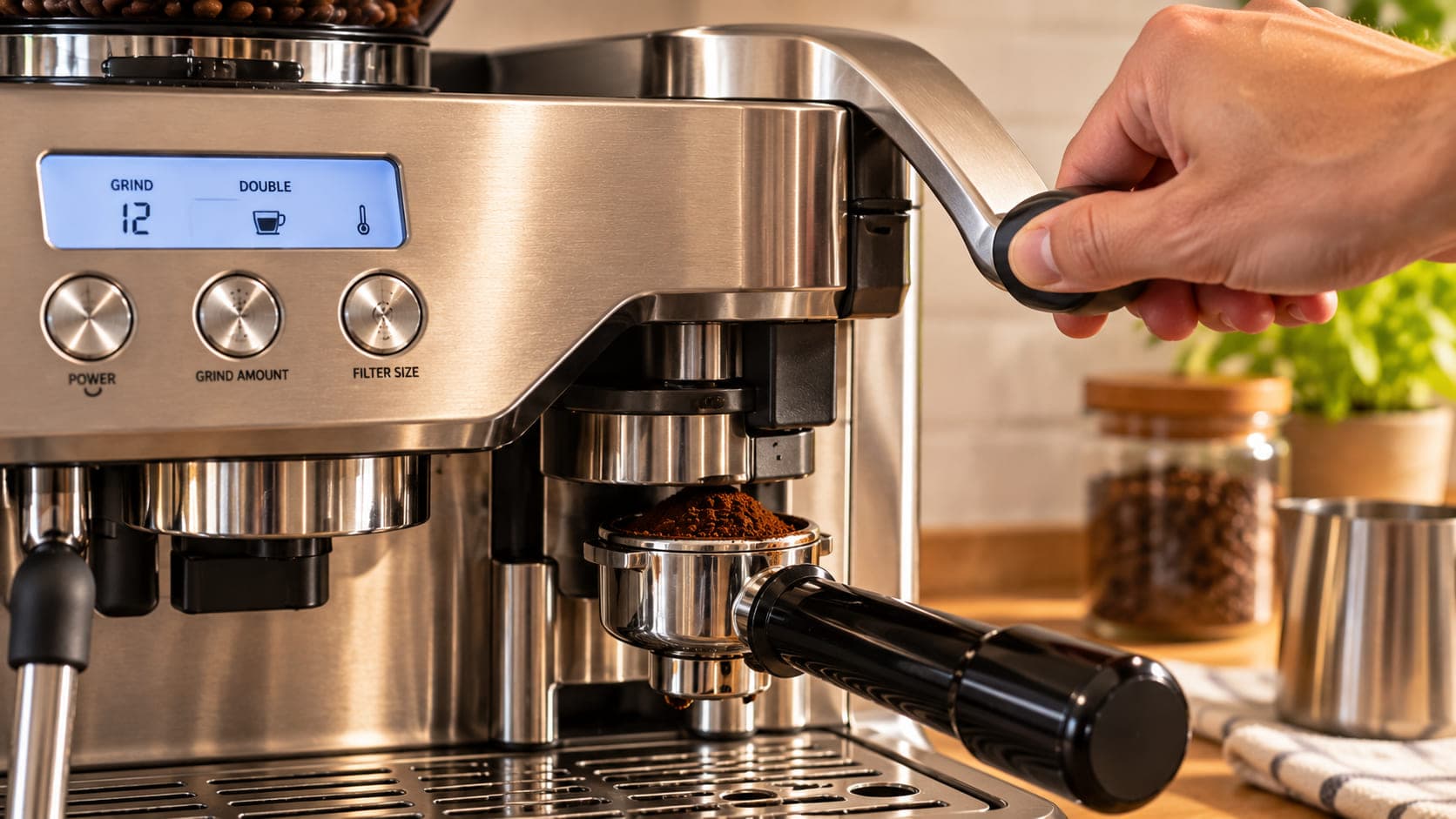
The Barista Express asks the most of you. You set the grind amount, level the coffee and tamp with the included tamper, then read the pressure gauge to see whether the shot was in range. Both Express models use a thermocoil, so expect a short wait after switching on rather than the Pro's near-instant start.
Thermocoil versus ThermoJet, and a gauge versus a timer, in plain English.
A thermocoil is a coiled pipe inside a heated block. It warms faster than a traditional boiler but needs a little time to settle at temperature. A ThermoJet is a smaller, faster heater that brings water to brewing temperature in seconds. Both are controlled by PID, so brewing temperature is stable on all three once they are warm.
The pressure gauge on both Express models shows whether your grind and dose are in a sensible range during the shot. The Pro's timer gives you a number to repeat instead. Neither is better in itself: a gauge teaches you what is happening, while a timer plus a scale is how most people dial in today. Our dial-in guide works with either.
The grinders differ mainly in step size. More settings mean smaller jumps between them, so it is easier to land on the right shot time. The Express's 16 steps are the coarsest, which shows most with lighter roasts. Our Barista Express grind settings guide covers where to start on each model.
Close in the cup; the difference is how easily you get there.
With fresh medium or dark beans, all three can make very good espresso and milk drinks. The machines share the same basic design, so the bigger differences are consistency and grind range, not flavour.
Cheap changes that make a bigger difference than moving up a model.
What each step up in price buys you.
Going from the Barista Express to the Impress buys consistency. If you have never made espresso, that is the step most likely to save you weeks of frustration and wasted beans. If you are patient and happy to learn, the Express gets you to the same cup for less.
Going to the Barista Pro buys speed and finer control, not help. It suits someone who already makes good shots and is tired of waiting for the machine or wants smaller grind steps. A beginner can learn on it, but expect a few days of uneven shots while your tamping settles.
There is one more step up in the same family: the Barista Touch Impress adds a touchscreen and automatic milk texturing to the Impress system. It suits households that drink mostly lattes and want the machine to handle both the puck and the milk, but it costs noticeably more than any of the three here.
If you are spending this much mainly for straight espresso or light roasts, compare the best espresso machines with a separate grinder. A built-in grinder can't be upgraded later, so when you outgrow it you replace the whole machine.
Our pick for each type of buyer.
Quick decision guide
You want the lowest price and are happy to learn dosing and tamping
Get the Breville Barista Express, and add a better tamper and a scale.
You are new to espresso and want good shots from the first week
Get the Breville Barista Express Impress.
You already tamp well and want speed, a shot timer and finer grind steps
Get the Breville Barista Pro.
You mostly drink very light roasts or want to upgrade the grinder later
Skip all three. Pair a machine from our best espresso machines for beginners with one of the best espresso grinders under $300.
You want milk drinks with no learning curve
Look at the Bambino Plus vs Barista Express comparison; the Bambino Plus textures milk automatically.
Pick this for value
The original all-in-one, with a pressure gauge that teaches you as you go.
Pick this if you are a beginner
Assisted dosing and tamping for consistent shots with less practice.
Pick this for speed and control
ThermoJet heat-up, 30 grind steps and a shot timer.
Quick answers before you buy.
It is faster and has finer grind steps and a shot timer, but it is not easier.
It has no pressure gauge and no tamping help.
If you are a beginner, the Express Impress usually suits you better than the Pro.
Yes, if you are new to espresso.
Assisted dosing and tamping remove the most common beginner mistakes.
If you are patient and want to learn every step, the Barista Express makes the same quality of shot for less.
No.
The Barista Express and Express Impress have an analog pressure gauge.
The Barista Pro replaces it with a screen showing shot time.
No.
All three have a manual steam wand, so you texture the milk yourself.
For automatic milk, look at the Bambino Plus or the Barista Touch Impress.
None is ideal.
All three built-in grinders struggle to grind fine enough for very light roasts.
The Barista Pro's smaller steps help a little, but a separate grinder is the real fix.
Yes.
All three use a 54mm portafilter, so baskets, tampers and puck screens made for 54mm Breville machines fit each of them.
Keep reading: more guides on the same topic.
 Compare
Buying6 min read
Nespresso Vertuo vs Original compared on espresso quality, mug sizes, capsule range and cost per cup, so you pick the right system.
 Compare
Buying6 min read
Types of espresso machines compared: manual, semi-automatic, super-automatic and pod, by skill level, price and milk drinks.

