

Best for milk drinks and small kitchens
Breville Bambino Plus
Ready in seconds, with automatic microfoam. Needs a separate grinder.
Espresso Guides
Last updated
Gaggia Classic Pro vs Breville Bambino Plus: a 58mm machine you learn and modify versus a 3-second, auto-milk compact. Which suits your routine.
Affiliate disclosure: this page contains Amazon affiliate links. We may earn a commission if you buy through them, at no extra cost to you, and it never affects our rankings. Learn more
Buy the Breville Bambino Plus if you mostly drink lattes and cappuccinos, want a machine that is ready almost instantly and have a small kitchen. Buy the Gaggia Classic Pro if you want to learn espresso properly, drink more straight shots and like the idea of a 58mm machine you can repair and upgrade for years.
Choose by what you drink and how much you want to learn.
| Gaggia Classic Pro | Breville Bambino Plus | |
|---|---|---|
| Best for | Learning technique, straight espresso, tinkerers | Milk drinks, small kitchens, busy mornings |
| Heating | Aluminium single boiler, about 5–8 min warm-up | ThermoJet, ready in about 3 seconds |
| Milk | Manual commercial-style steam wand | Automatic wand with temperature and texture settings, manual override |
| Portafilter | 58mm, fits standard pro baskets and tampers | 54mm, fewer aftermarket options |
| Brew to steam | Wait about 45–60 seconds | Switches in about 10–15 seconds |
| Upgrades | Large modding community (OPV spring, PID) | Little to modify; upgrade the grinder instead |
| Typical price range | $450–$550, plus a grinder | $399–$449, plus a grinder |
Warm-up, milk and workflow are where the two really split.
The Bambino Plus heats water on demand with a ThermoJet, so it is ready about 3 seconds after you switch it on. Press a button, pull the shot, put the jug under the wand and choose a milk temperature and foam level. It stops by itself, which is why a cold machine can turn out a latte in a couple of minutes.
The Gaggia Classic Pro has a small aluminium boiler that needs roughly 5–8 minutes to warm up, longer if you want the group head fully hot. Brewing and steaming share that boiler, so after a shot you flip the steam switch and wait about 45–60 seconds before the wand is ready. Steaming is fully manual: you control the stretch and the swirl yourself.
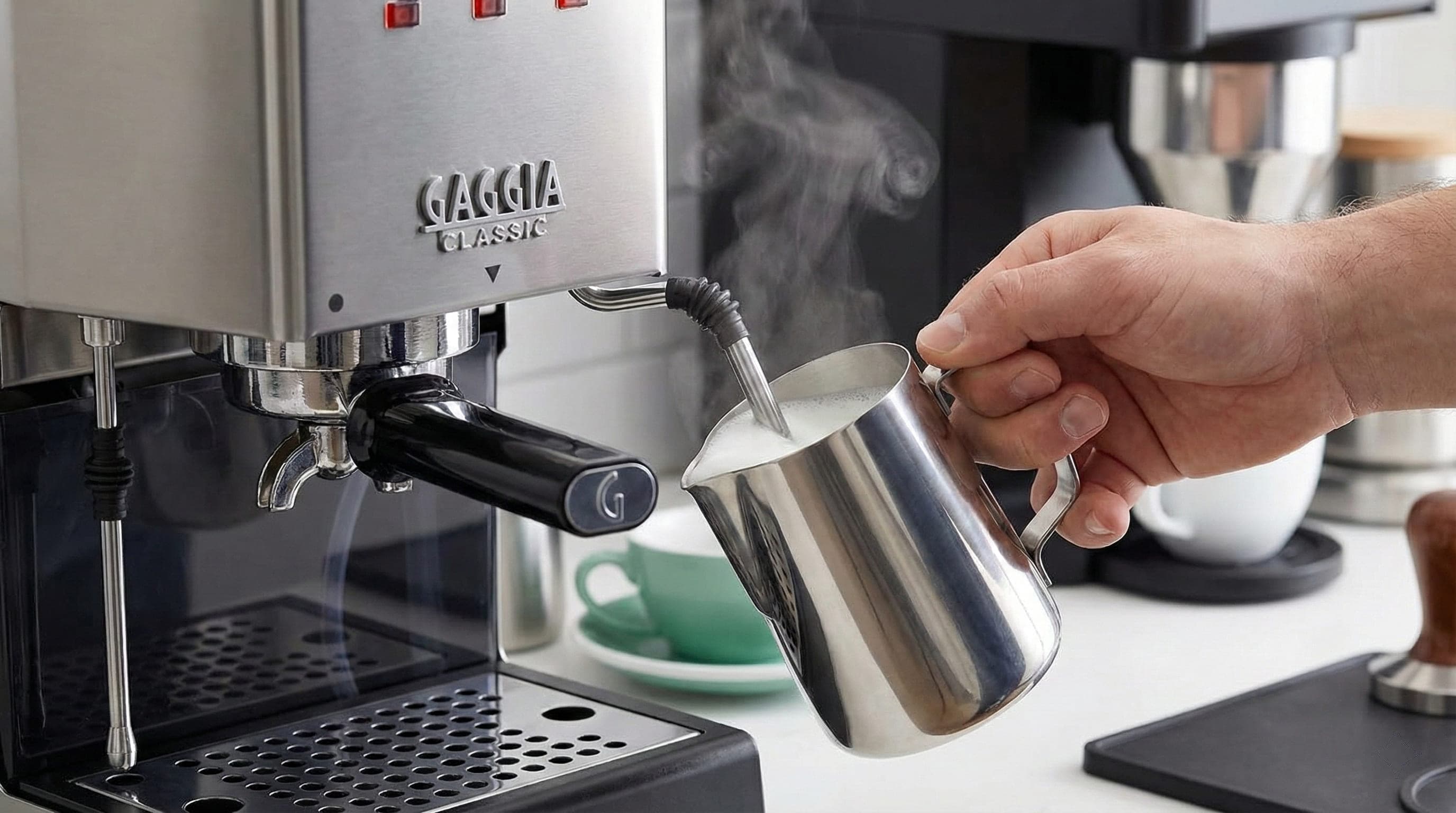
That manual wand is the Gaggia's real strength once you learn it. It is powerful enough for latte-art microfoam, but the first weeks of milk can be bubbly or too hot. On the Bambino Plus the automatic wand gives consistent microfoam from day one, and you can still switch to manual when you want to practise.
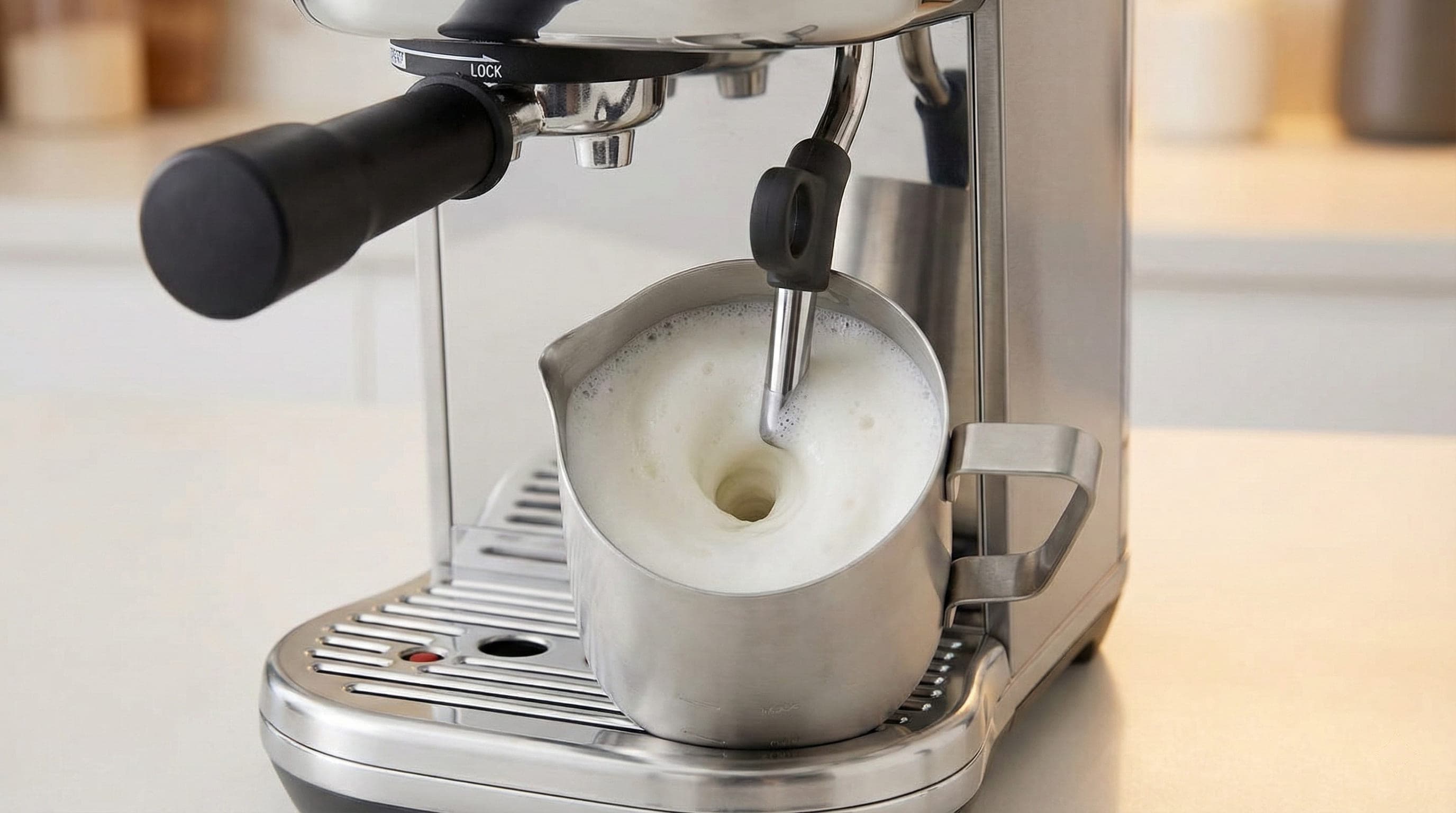
Boiler versus ThermoJet, and 58mm versus 54mm, in plain English.
A boiler holds a reserve of hot water and steam. That gives the Gaggia strong, dry steam, but its temperature drifts between the heater switching on and off, so owners often "temperature surf": they run a little water through the group before pulling a shot so it starts at a predictable point. A PID controller, a popular add-on, removes most of that guesswork.
A ThermoJet heats water as it flows, with no tank to drift. The Bambino Plus held brewing temperature tightly in our testing, which makes shots repeatable without any technique. The trade-off is that steam comes from the same small heater, so you cannot brew and steam at once, and back-to-back drinks take a little longer.
Portafilter size matters more than it sounds. The Gaggia's 58mm basket is the café standard, so precision baskets, tampers, puck screens and distribution tools from any brand fit. The Bambino Plus uses 54mm: accessories exist, but the choice is narrower. If you enjoy upgrading tools, that tilts towards the Gaggia.
Close in the cup once both are dialled in; the path there differs.
With the same good grinder and fresh beans, both machines can make excellent espresso. The difference is how you get there. The Bambino Plus is consistent with little effort, which suits medium and dark roasts in milk drinks. The Gaggia rewards practice: once you manage temperature and puck prep, its 58mm basket and solid group give more room to fine-tune light roasts and straight shots.
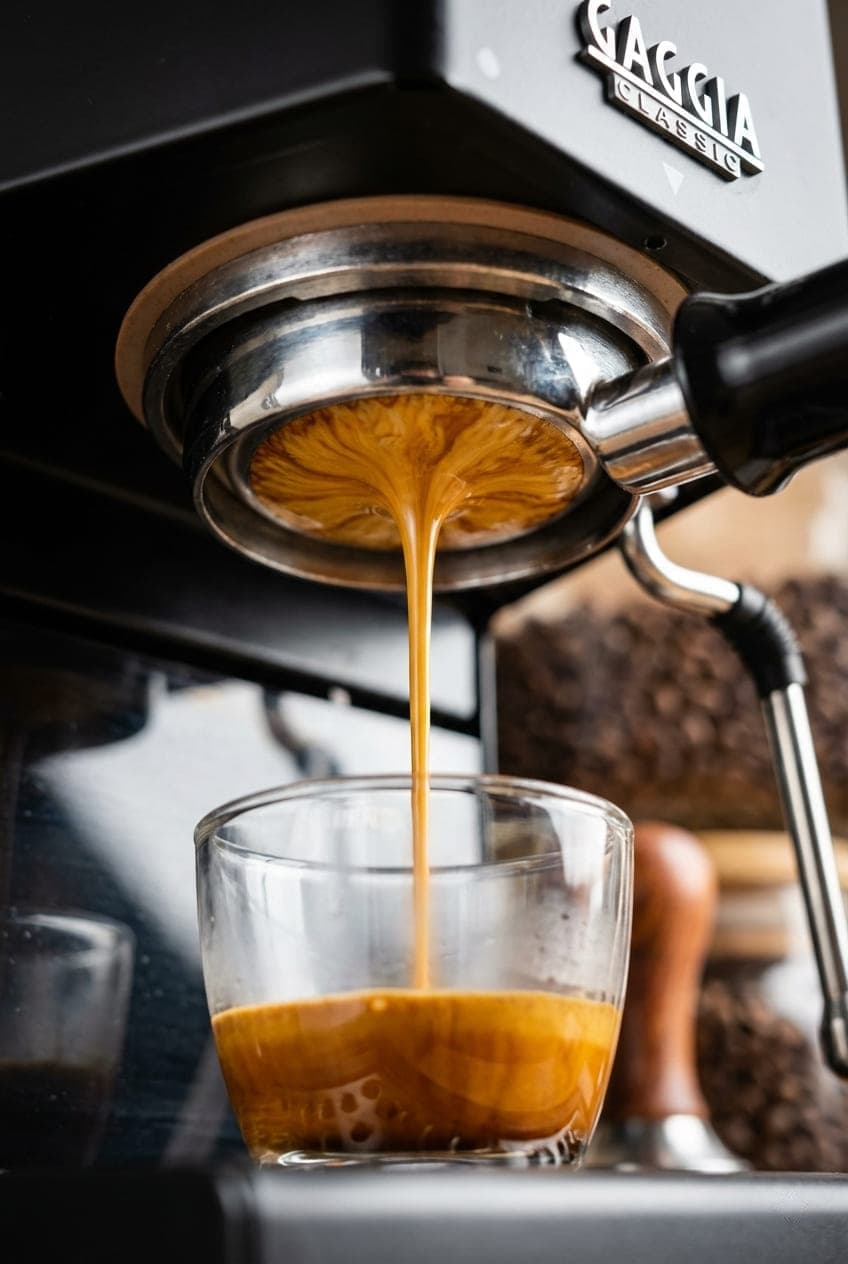
Modern tools and small mods that close the gap with pricier machines.
Gaggia owners have a long list of proven upgrades. The two most common are fitting a 9-bar spring to the over-pressure valve, which lowers the brewing pressure to a more forgiving level, and adding a PID for stable temperature. Our Gaggia Classic Pro 9-bar OPV mod guide explains whether the spring swap is worth it for you.
Footprint, upkeep and what ownership looks like after a few years.
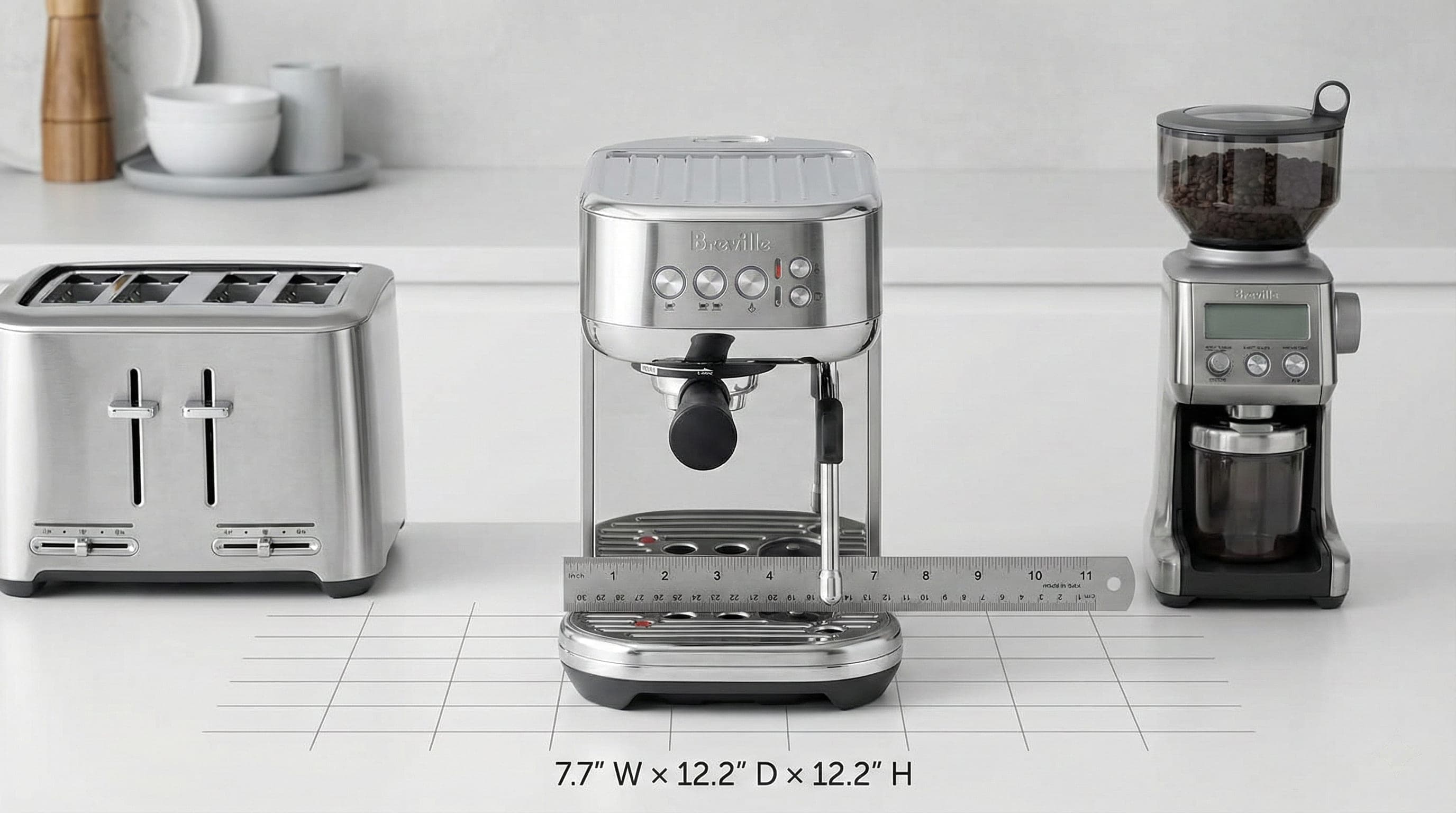
The Bambino Plus is one of the narrowest real espresso machines, at 7.7 inches wide, and its water tank fills from the back. The Gaggia is a little wider and taller, and its tank sits under the top cover, so check the clearance under your cabinets before buying.
For long-term ownership, the Gaggia is the more repairable machine. It uses standard parts that every espresso retailer stocks, and owners commonly keep them running for a decade or more with gaskets and descaling. The Bambino Plus is solidly built and Breville stocks spare parts, but its electronics and ThermoJet are less owner-serviceable. Breville's warranty is longer, at 2 years against Gaggia's 1 year; check the terms in your country.
Our pick for each type of buyer, plus the grinder to pair with it.
Quick decision guide
You drink lattes most days, want speed and have limited counter space
Get the Breville Bambino Plus.
You want to learn espresso, drink straight shots or enjoy tinkering
Get the Gaggia Classic Pro, and plan for the 9-bar spring.
You do not want to buy a separate grinder
Skip both. An all-in-one like the Barista Express makes more sense; see Bambino Plus vs Barista Express.
You want drinks at the push of a button with no grinding or tamping
Skip both and look at super-automatic or capsule machines in our espresso machine types guide.
Best for milk drinks and small kitchens
Ready in seconds, with automatic microfoam. Needs a separate grinder.
Best for learning and long-term upgrades
58mm commercial-style group and steam wand, built to be repaired and modified.
A grinder that suits either machine
Fine micro-steps in the espresso range and a repair-friendly design.
Affiliate links: we may earn a commission at no extra cost to you.
Quick answers before you buy.
Yes.
The Gaggia needs warm-up time, some temperature management and manual milk steaming.
The Bambino Plus heats in seconds and steams milk automatically, so it is easier from day one.
Day to day, the Bambino Plus: its automatic wand gives consistent microfoam with no skill.
A practised Gaggia owner can match it and has more steam power, but it takes weeks to learn.
Yes.
Any grinder that can make fine, adjustable espresso grounds works with either.
See our best espresso grinders under $300.
No, it makes good espresso stock.
Many owners fit a 9-bar spring because it makes shots more forgiving, and some add a PID for stable temperature.
Probably the Gaggia, because it uses standard, easy-to-replace parts.
Both last for years with regular descaling and gasket changes.
The Bambino Plus.
At 7.7 inches wide it is one of the narrowest espresso machines, and it needs no warm-up time.
Keep reading: more guides on the same topic.
 Compare
Buying3 min read
Nespresso Vertuo vs Original compared on espresso quality, mug sizes, capsule range and cost per cup, so you pick the right system.
 Compare
Brewing3 min read
Moka pot vs espresso machine: compare pressure, taste, milk drinks and cost to choose the right brewer for black coffee or lattes.
 Compare
Buying6 min read
Types of espresso machines compared: manual, semi-automatic, super-automatic and pod, by skill level, price and milk drinks.

