Expert comparison

Updated October 17, 2026

Best Super-Automatic Espresso Machines 2026

The best super-automatic espresso machine for most households is the Jura E8; the Philips 5500 is the pick for lattes and the Philips 3200 LatteGo the best value. Each of the seven was tested in its own full review. To browse every model, see our espresso machine reviews hub.

Affiliate disclosure: this page contains Amazon affiliate links. We may earn a commission if you buy through them, at no extra cost to you, and it never affects our rankings. Read our full affiliate disclosure

Which super-automatic espresso machine should I buy?

Which bean-to-cup machine fits your household?

Find your situation, then jump to the matching machine.

How do the super-automatics compare on price and milk system?

Ratings are each product's own review rating out of 5. Prices change; check the current listing.

ProductBest forMilk systemPriceRatingLink

Best overall

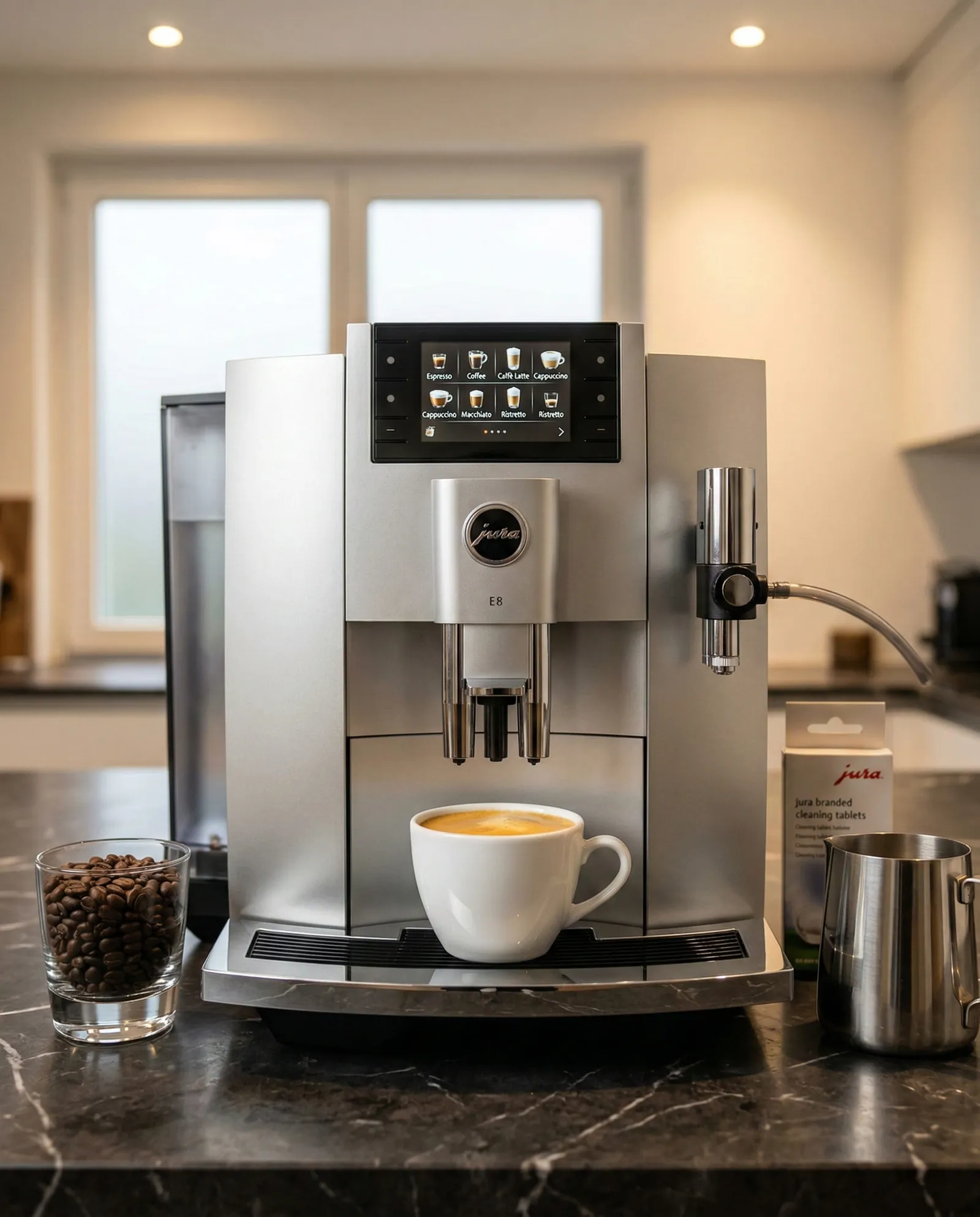
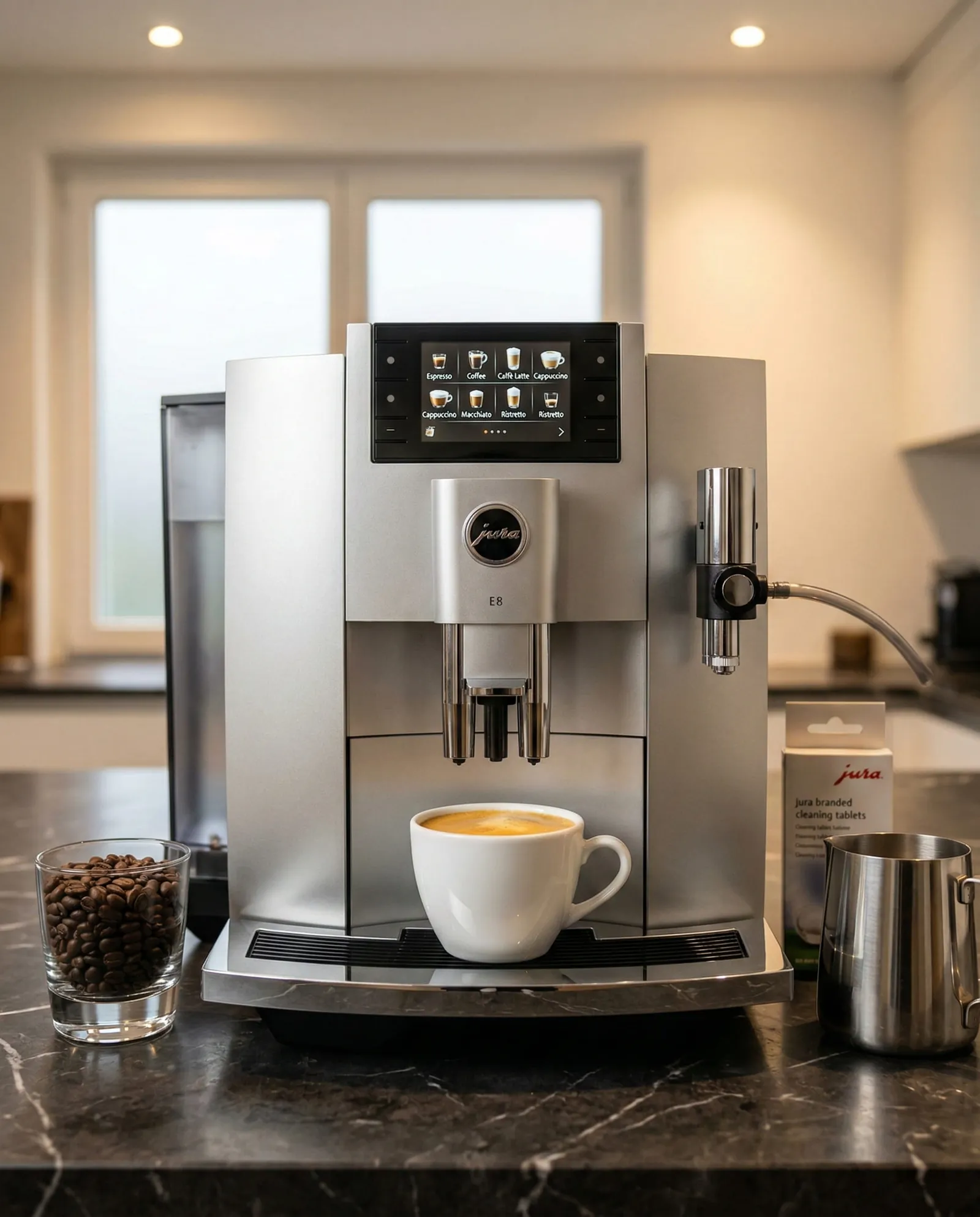
Jura E8

Best overall

Best forBusy households who want the best push-button espresso and milkMilk systemAutomatic (Fine Foam)Price$2,599-$2,799Rating4.5/5Check current price

Best for milk drinks

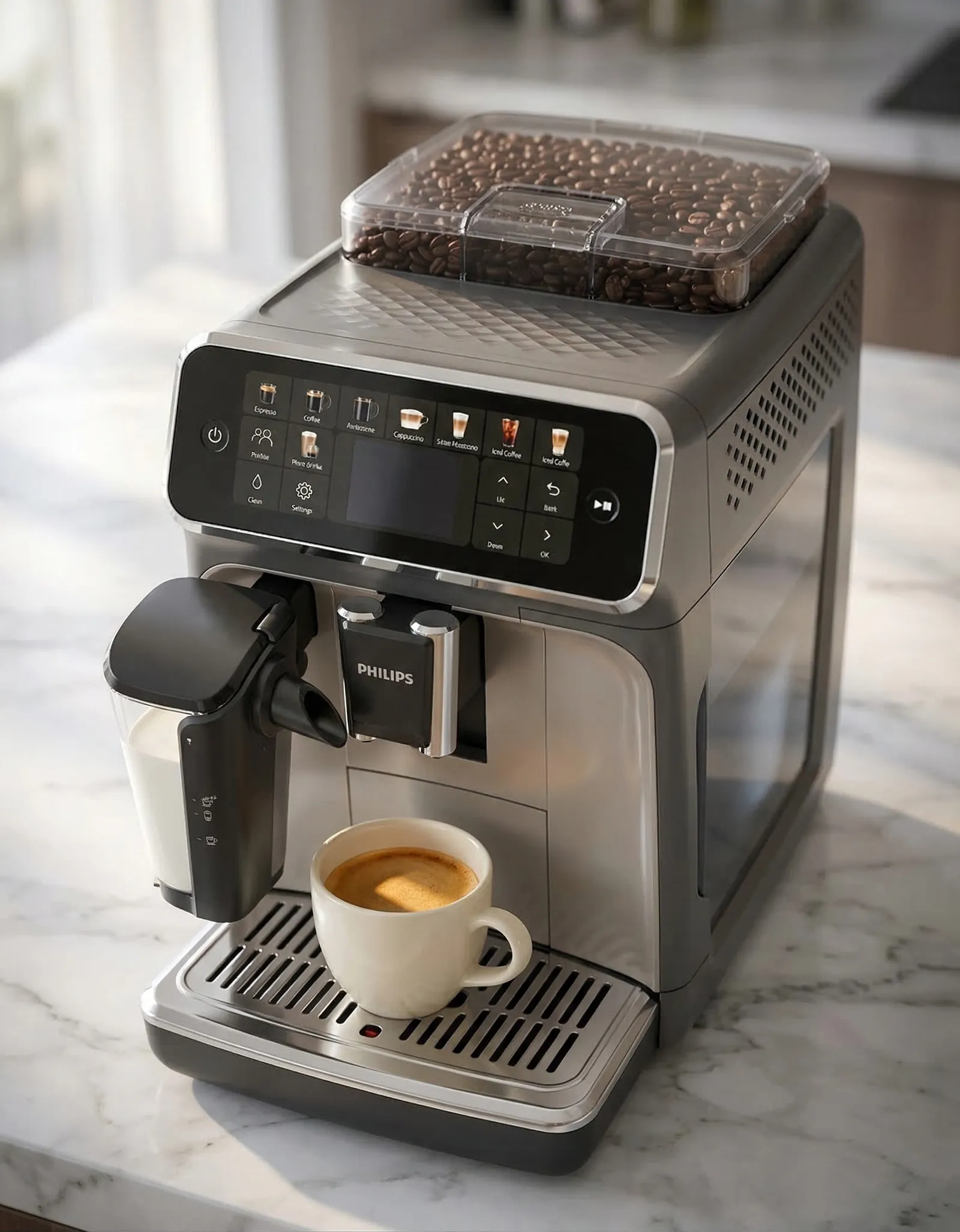
Philips 5500 Series

Best for milk drinks

Best forLatte and cappuccino households making 3–6 drinks a dayMilk systemAutomatic (LatteGo)Price$799-$899Rating4.4/5Check current price

Quietest

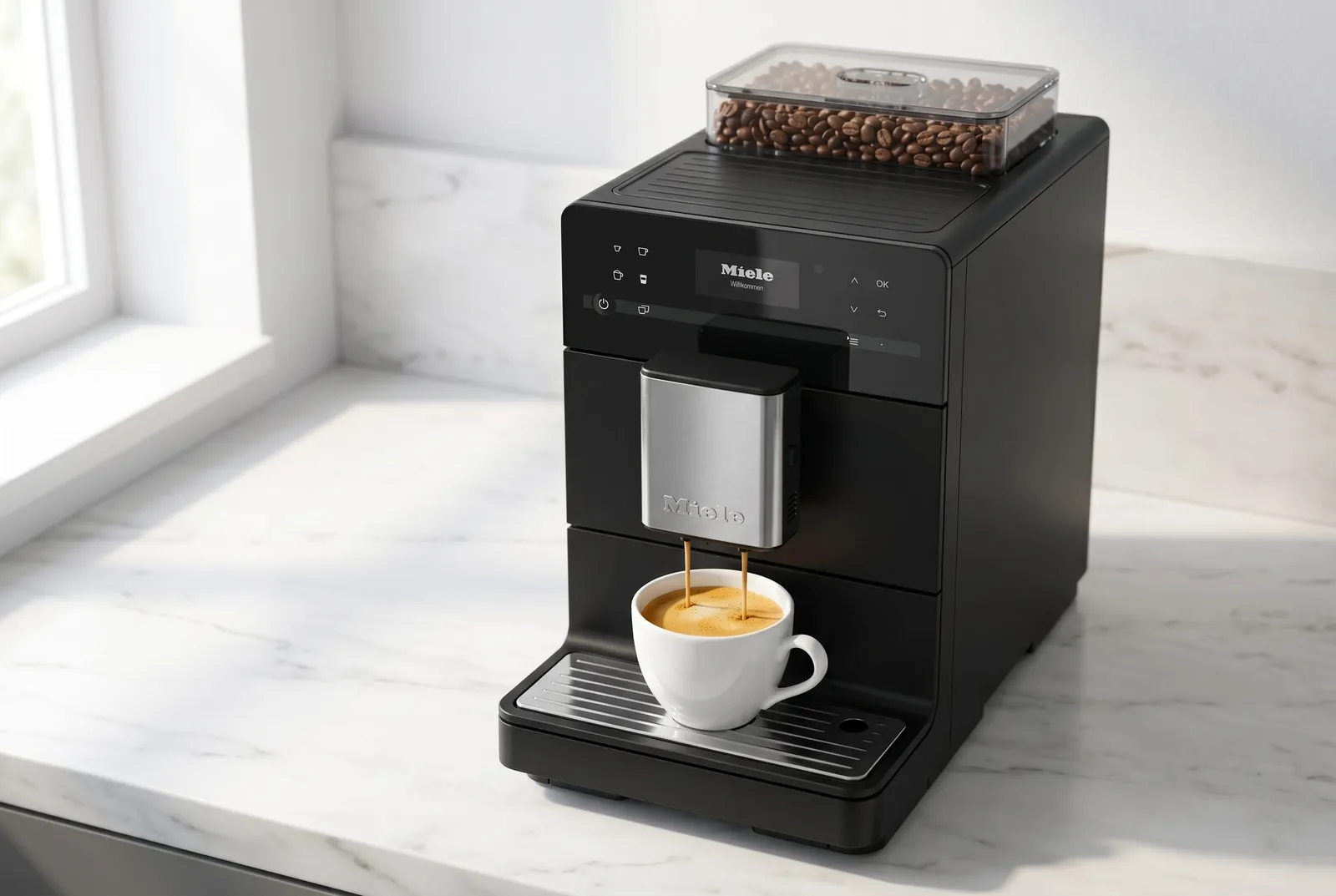
Miele CM 5310 Silence

Quietest

Best forOpen-plan homes and early risers who hate grinder noiseMilk systemSeparate cappuccinatore attachmentPrice$1,999-$2,199Rating4.4/5Check current price

Best value

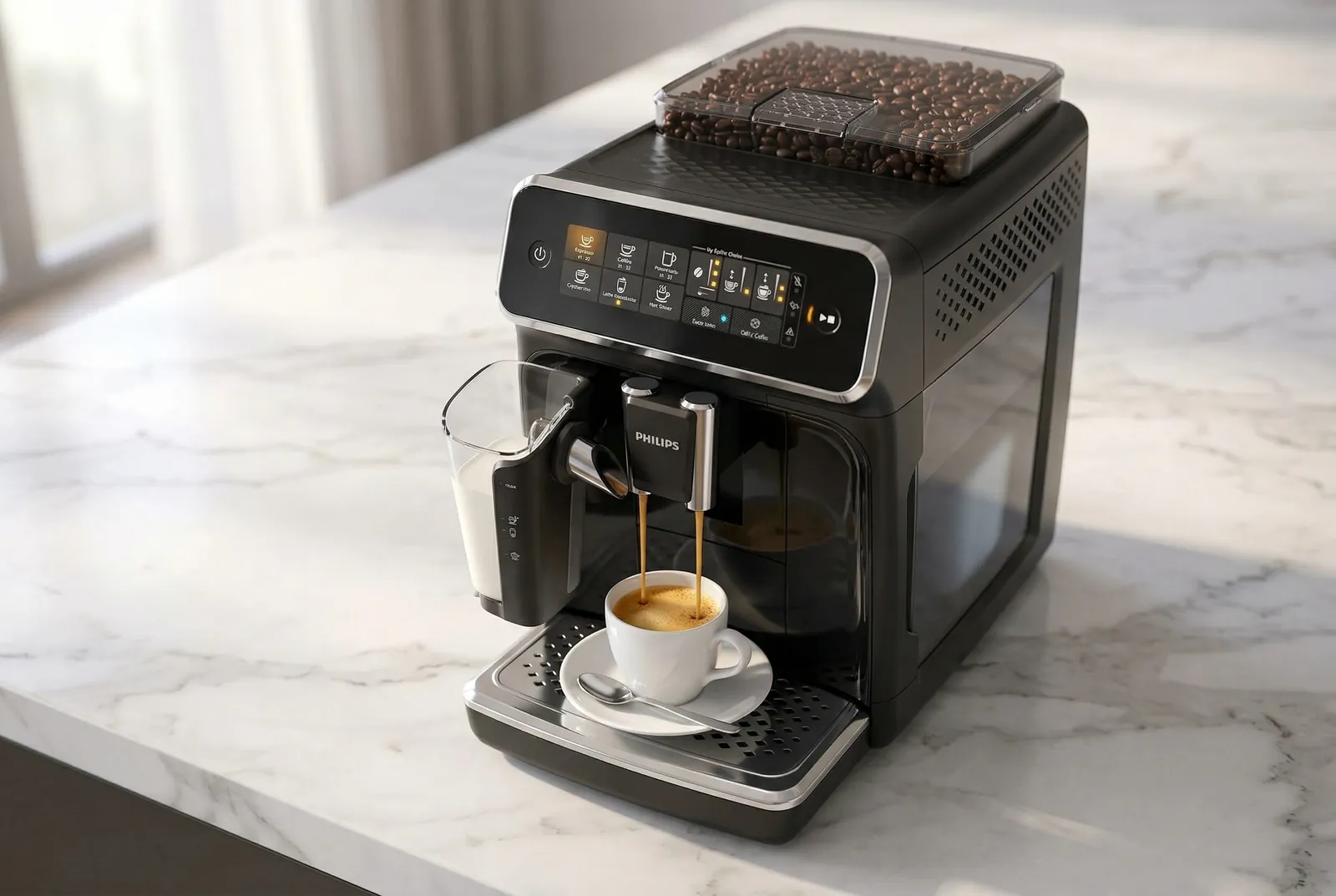
Philips 3200 LatteGo

Best value

Best forPod upgraders who want lattes for the lowest outlayMilk systemAutomatic (LatteGo)Price$459-$549Rating4.3/5Check current price

Best for drink variety

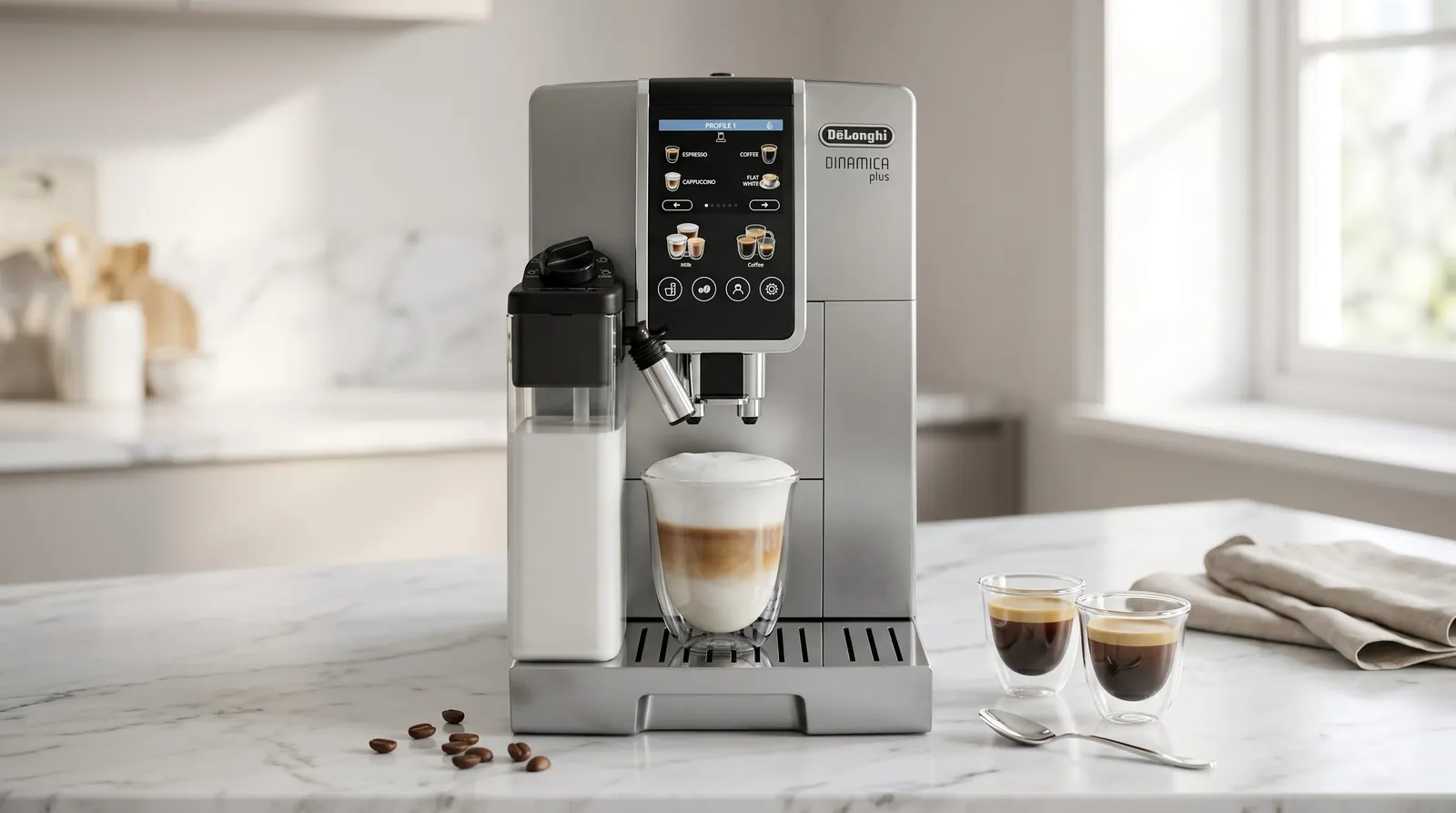
De'Longhi Dinamica Plus

Best for drink variety

Best forMulti-user homes that want iced drinks and saved profilesMilk systemAutomatic (LatteCrema carafe)Price$899-$1,149Rating4.2/5Check current price

Best app-connected

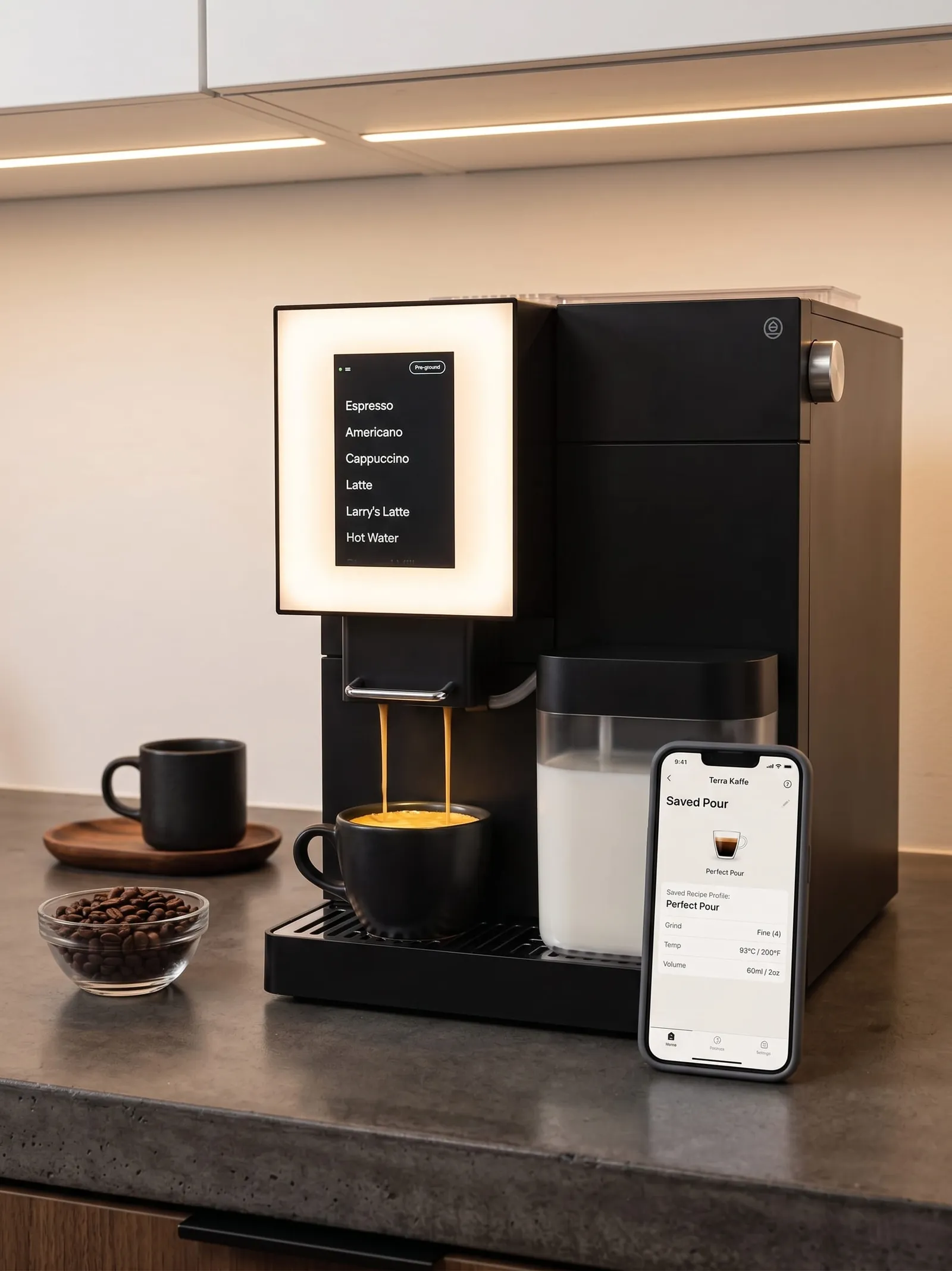
Terra Kaffe TK-02

Best app-connected

Best forBlack-espresso drinkers who want app-saved recipesMilk systemManual steam wandPrice$1,995-$1,999Rating4.2/5Check current price

Best for black espresso on a budget

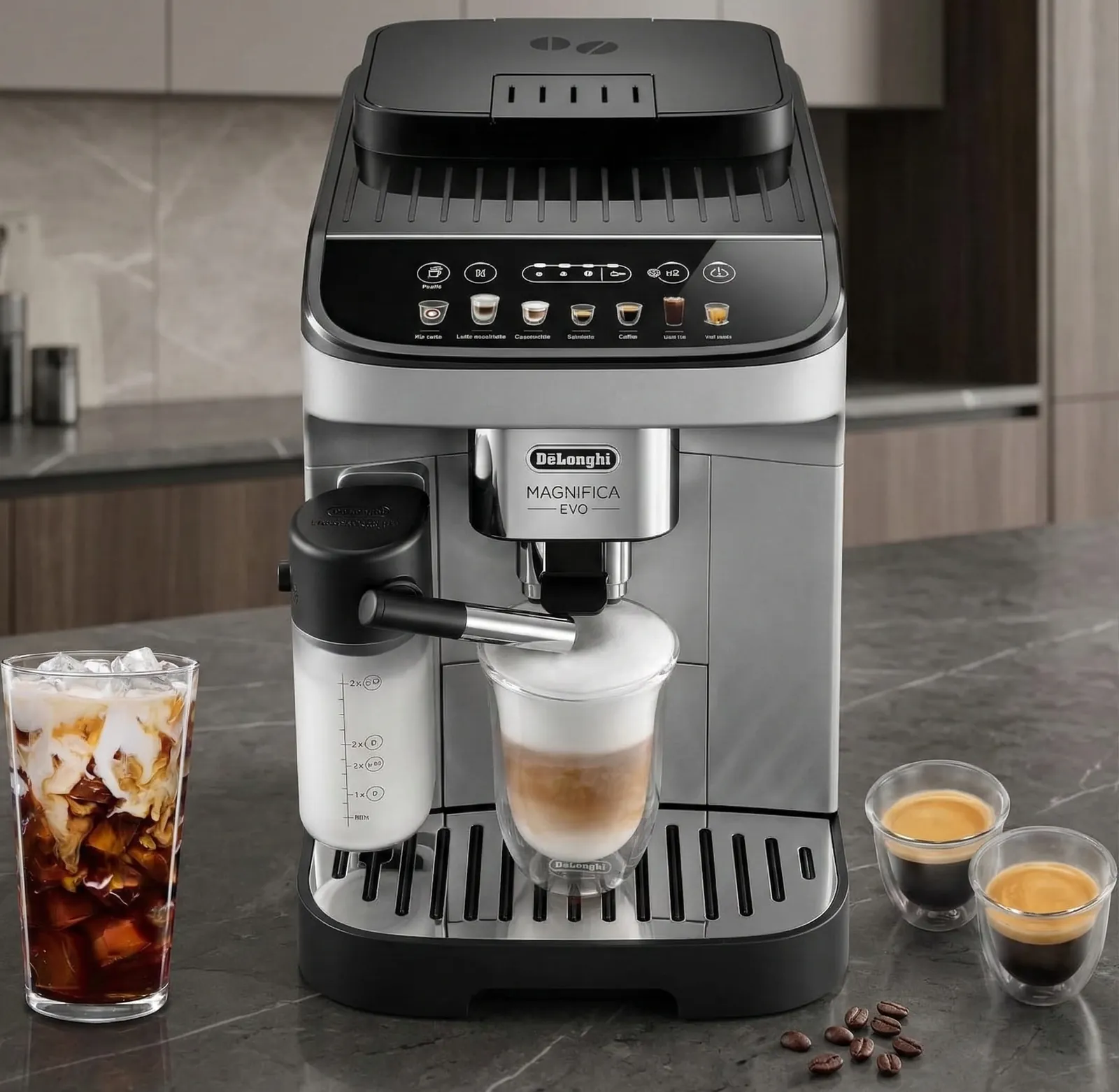
De'Longhi Magnifica Evo

Best for black espresso on a budget

Best forEspresso and Americano drinkers who want simple and cheap to runMilk systemManual Panarello wandPrice$699-$749Rating4.1/5Check current price

Which super-automatic suits you? Pros, cons and who should skip each

Each pick lists who it suits, who should skip it and the trade-offs.

1. Best overall

Jura E8

★ 4.5/5

The highest-rated super-automatic on the site. Brew temperature held at 195–200°F across 20 shots and shot-to-shot TDS varied by under 4%, so the drink you liked yesterday is the drink you get today. Milk comes out as silky, small-bubble foam suited to flat whites and cappuccinos. It earns its price only if you use it every day.

Best for
Busy households where two people want two different drinks in a few minutes, pod-machine owners ready for real beans without learning technique, and home offices with several users.
Skip if
You enjoy dialing in grind and extraction yourself, you mainly drink light-roast single origins, you want latte art, or budget matters: the Magnifica Evo and Philips 3200 cover the basics for far less.
  • Consistent 195–200°F brew temperature across 20 shots
  • Shot-to-shot TDS variance under 4%
  • Silky microfoam suited to flat white and cappuccino
  • Automatic milk system cleaner takes care of the step most owners neglect
  • Full setup took under 12 minutes from the box
  • Highest price in this guide
  • Only 6 grind settings; light roasts can be finicky
  • 17.4" depth may not fit under standard upper cabinets
  • Foam does not support latte art pours
  • Single thermoblock: milk drinks are made in sequence, not at once
2. Best for milk drinks

Philips 5500 Series

★ 4.4/5

The easiest milk system to live with in this group. LatteGo has no tubes, rinses itself and goes in the dishwasher, and the machine heats from cold in about 25 seconds. Shots stayed consistent across back-to-back drinks. What you give up is any real control over the shot.

Best for
Households that drink lattes and cappuccinos daily, small offices making 3–6 drinks a day, and families with different drink preferences.
Skip if
You want control over dose, temperature or extraction, you put shot quality ahead of convenience, you drink light roasts, or you foam almond milk and other thin alternatives.
  • About 25-second heat-up from cold
  • LatteGo rinses automatically and is dishwasher-safe
  • 12 programmable recipes with memory
  • No thermal drop until 15+ consecutive drinks
  • AquaClean filter cuts how often you descale
  • No manual extraction control or adjustable brew temperature
  • Factory dose (about 8–10g) is light by specialty standards
  • Light roasts give mediocre results
  • Almond and other thin plant milks foam poorly
  • Grinder is audible at 68–72 dB

3. Quietest

Miele CM 5310 Silence

★ 4.4/5

The one to buy if noise is the deal-breaker. The grinder measured 58–62 dB, 10–12 dB quieter than the Dinamica Plus side by side, and the ceramic flat burrs produced a tighter grind than most built-in grinders tested. The removable brew unit is the quickest daily clean of any bean-to-cup machine on the site. Milk drinks need an attachment that is not always in the box.

Best for
Open-plan homes, households where people wake at different times, and buyers who want solid build quality and plan to keep the machine for years.
Skip if
You want an integrated automatic milk system out of the box, you dial in light-roast single origins by hand, you already own a good grinder and brewer, or a 1-year warranty at this price bothers you.
  • Quietest grinder tested: 58–62 dB
  • Ceramic flat burrs with tight particle distribution
  • Removable brew unit cleans in about 90 seconds under the tap
  • Automatic grounds management
  • Solid build with no flex in moving parts
  • Premium price for its feature list
  • Milk system is a separate cappuccinatore, often not included
  • Only a 1-year warranty
  • Single thermoblock limits steaming while brewing
  • Pre-ground bypass doser is fiddly

4. Best value

Philips 3200 LatteGo

★ 4.3/5

The cheapest way into automatic milk drinks on the site. It shares the 5500’s self-rinsing, dishwasher-safe LatteGo and quick heat-up, and its ceramic burr grinder beat steel-burr rivals under $600. The trade is a short menu of 5 drinks and no control over the shot.

Best for
Pod-machine users moving to whole beans, latte and cappuccino drinkers on a budget, and smaller kitchens that need an all-in-one under the cabinets.
Skip if
You want flat whites or ristretto presets, control over dose and extraction, or good results from light roasts. If the household wants more drink variety, the Philips 5500 is the step up.
  • About 25-second heat-up from cold
  • LatteGo rinses in 2–3 seconds and is dishwasher-safe
  • Ceramic burrs beat steel-burr rivals under $600
  • 9.8" wide, fits under most upper cabinets
  • Low maintenance compared with a semi-automatic
  • Only 5 drink programs: no ristretto or flat white
  • No manual control over dose, tamp or extraction time
  • Factory dose (about 7–9g) is light by specialty standards
  • Light roasts taste sour and inconsistent
  • No brew temperature adjustment

5. Best for drink variety

De'Longhi Dinamica Plus

★ 4.2/5

Sixteen one-touch recipes, including iced espresso and iced cappuccino, plus three saved profiles make it the most flexible family machine here. LatteCrema milk is a clear step up from a Panarello wand. For black espresso, though, the gain over the cheaper Magnifica Evo is modest.

Best for
Households that drink cappuccinos, lattes or latte macchiatos daily, homes where each person wants their own saved drink, and anyone who wants iced coffee built in.
Skip if
You mostly drink black espresso on a budget (the Magnifica Evo matches it for less), you want to develop espresso technique, or you favour light roasts and single origins.
  • LatteCrema milk texture beats Panarello wands
  • 16 one-touch recipes, including iced drinks
  • Three saved user profiles
  • 35–40 second cold-start heat-up
  • 10 back-to-back shots at one setting were indistinguishable blind
  • LatteCrema needs a daily clean cycle
  • Small black-espresso gain over the Magnifica Evo
  • Light roasts underperformed at every setting
  • New steel burrs gave faint metallic notes for the first shots
  • No PID or adjustable brew temperature

6. Best app-connected

Terra Kaffe TK-02

★ 4.2/5

The app is the point: five personalised recipes reproduced reliably across the test, and remote brew start worked in 19 of 20 attempts. Medium and dark roasts were consistent, with TDS variance under 5.2%. It has no automatic milk system, so latte households should look elsewhere.

Best for
Daily espresso drinkers who want app-based recipe personalisation, multi-user households with different preferences, and pod upgraders who mostly drink their coffee black.
Skip if
Lattes and cappuccinos are your daily drinks and you want them automated (pick a Philips LatteGo or the Dinamica Plus), you mostly drink light roasts, or price is the main concern.
  • App-saved recipes repeat the same shot reliably
  • Remote brew start worked in 19 of 20 attempts
  • 10-step grind adjustment, more than the Jura E8’s 6
  • TDS variance under 5.2% on medium and dark roasts
  • Compact enough for standard under-cabinet space
  • No automatic milk system; the wand needs technique
  • Temperature variance of ±2.1°F, looser than the Jura E8
  • Light-roast single origins were inconsistent
  • App takes 4–6 seconds to reconnect from sleep
  • Grounds container fills after about 14 double shots

7. Best for black espresso on a budget

De'Longhi Magnifica Evo

★ 4.1/5

One button takes fresh beans to espresso in about 45 seconds, and crema and body were consistent on medium-dark roasts after a one-time calibration. Maintenance is light. The Panarello wand makes thick foam rather than microfoam, so it suits black-coffee drinkers more than latte lovers.

Best for
Busy households that want real espresso without learning technique, former pod users, and offices or shared kitchens where anyone can press a button and get a consistent result.
Skip if
You want automatic milk or latte-art microfoam, you drink light roasts, or you want to develop espresso skill on a semi-automatic.
  • One-touch espresso from fresh beans in about 45 seconds
  • All 13 grind settings usable, above average for the category
  • Consistent crema on medium-dark roasts
  • Auto-rinse, descale reminder and dishwasher-safe parts
  • Panarello wand makes thick foam, not microfoam
  • Light roasts underperformed at every grind setting
  • Full grounds container sensor halts back-to-back shots
  • No PID; thermoblock needs recovery time between rapid shots

How do I choose a super-automatic espresso machine?

If this is your situation, then this is the trade-off to make.

Is a super-automatic the right type of machine for you?

IfYou want café drinks at the push of a button

A super-automatic grinds, doses, tamps, brews and dumps the puck for you. You trade control over the shot for speed and consistency, which is the right trade for most busy households.

IfYou want to learn espresso as a craft

Choose a semi-automatic instead. You control grind, dose and tamp, and the ceiling is higher, especially with light roasts. Our espresso machine types guide explains the difference, and the best espresso machines for beginners covers forgiving semi-automatics.

IfYou mostly drink light-roast single origins

Every super-automatic reviewed here underperformed on light roasts. Fixed brew temperature, light factory doses and built-in grinders tuned for medium and dark roasts are the reasons. A semi-automatic with a separate grinder suits you better.

Which milk system should you choose?

IfYou want the easiest cleanup

Philips LatteGo (3200 and 5500). Two parts, no tubes, automatic rinse and dishwasher-safe.

IfYou want the best foam texture

Jura E8. Its automatic system made silky, small-bubble foam suited to flat whites, though not latte art.

IfYou want a carafe and many milk recipes

De'Longhi Dinamica Plus. LatteCrema beats a Panarello wand but needs a daily clean cycle.

IfYou rarely drink milk, or want to steam by hand

Magnifica Evo (Panarello wand) or Terra Kaffe TK-02 (manual steam wand). Neither froths automatically; our how to make a latte guide covers hand steaming.

What does each budget buy?

IfUnder about $600

Philips 3200 LatteGo: automatic milk, ceramic burrs and 5 drinks.

IfAbout $700 to $1,150

Magnifica Evo for black espresso, Philips 5500 for milk drinks and more recipes, Dinamica Plus for iced drinks and three profiles.

IfAbout $2,000 and up

Terra Kaffe TK-02 for the app, Miele CM 5310 for quiet, Jura E8 for the best all-round cup and milk.

Still deciding on machine type? Our best espresso machines guide ranks every type side by side.

What does owning one involve?

Cleaning and maintenance

Daily: empty the drip tray and grounds container and rinse the milk system. The Philips LatteGo rinses itself and goes in the dishwasher; the Dinamica Plus LatteCrema needs a daily clean cycle; the Jura E8 has an automatic milk system cleaner. The Miele and Bosch have removable brew units you rinse under the tap, which makes the job harder to skip. Our espresso machine cleaning guide covers the routine, and the coffee machine cleaning tablets guide covers what to use.

Grinder and bean freshness

The built-in grinder is fixed for life, so its range matters. Settings run from 3 (Bosch) to 13 (Magnifica Evo and Dinamica Plus). Fresh medium and dark roasts gave the best results on every machine here. Oily, very dark beans can clog built-in grinders, so check your machine’s manual before using them. See how to pick espresso beans and our best coffee beans for espresso.

Water and descaling

Water filters such as Philips AquaClean and Jura CLARIS reduce how often you descale. Whatever you buy, follow the descale prompts, because scale buildup gradually slows flow and affects brew temperature. See how to descale a coffee machine.

Capacity

Water tanks range from 1.3L (Miele) to 1.8L (Philips 5500, Magnifica Evo, Dinamica Plus), and hoppers from 200g (Philips 5500) to 300g (Dinamica Plus). The TK-02’s grounds container fills after about 14 double shots, so heavy users empty it daily.

What are you paying extra for at the top?

Moving from the Philips 3200 to the Jura E8 does not buy you a different kind of coffee. It buys tighter temperature and shot consistency, better milk texture, more drink programs and features like an app and automatic milk cleaning. The Miele adds quiet and build quality rather than more features. If you drink one or two black coffees a day, the cheaper machines give you most of the benefit.

Do pump pressure numbers matter?

Not much. Spec sheets quote figures like 15 or 19 bar, but espresso is typically extracted around 9 bar at the puck. Judge a super-automatic on its grinder, milk system and how easy it is to clean, not on the pressure number.

What are the alternatives to these super-automatics?

Machines that fit narrower needs than the picks above.

Bosch 300 Series VeroCafe

Simple physical buttons and a dishwasher-safe brew group, with shots consistent to about ±1.5 seconds. Left out of the ranked picks for its lower 3.9 rating, only 3 grind levels, a loud grinder and an in-cup frother with no hands-on wand.

Breville Oracle

Not a super-automatic: it automates grinding, dosing, tamping and milk on a dual-boiler semi-automatic, for buyers who want automation with better extraction quality.

De'Longhi La Specialista Arte

A semi-automatic with a built-in grinder and Smart Tamping Station, if you want some hands-on control without learning to tamp.

On a tighter budget, our best espresso machines under $500 covers cheaper semi-automatics that pair with a separate grinder.

How were these super-automatic machines tested and ranked?

Each machine was tested in its own full review; this page ranks them on those findings.

  • Testing periods: Jura E8: 60+ shots over 30 days. Philips 5500: 180+ drinks over 45 days. Philips 3200 LatteGo: 60+ drinks over 30 days. Dinamica Plus: 65+ shots over 6 weeks. Magnifica Evo: 190+ shots over 9 weeks. Terra Kaffe TK-02: 45+ shots over 30 days. Miele CM 5310: 180+ cups over 45 days. Bosch VeroCafe: 70+ drinks over 30 days.
  • Shot consistency: extraction time, temperature and, where measured, TDS across repeated shots, as reported in each review.
  • Milk performance: foam texture, time per drink and how much cleaning the milk system needs each day.
  • Daily ownership: heat-up time, noise, capacity, footprint and how easy routine cleaning is.
  • Ranking: picks are ordered by each review's overall rating, with labels based on what each machine did best in its own testing, not on commission.

Beans and roast: beans varied by review rather than one shared reference bean, so treat flavour comparisons between machines as a guide rather than a controlled benchmark. From October 2026, espresso machines are tested on two reference coffees.

Frequently Asked Questions

Quick answers before you buy.

Yes, if you drink espresso-based coffee every day and will not learn barista technique.

You pay more up front than for a semi-automatic, but every drink is one button away and consistent.

If you enjoy the process or drink light roasts, a semi-automatic and separate grinder give better results for the money.

A super-automatic grinds, doses, tamps, brews and ejects the used grounds for you.

A semi-automatic leaves grinding, dosing and tamping to you and only controls the pump.

That extra control is why semi-automatics have a higher ceiling and a steeper learning curve.

Espresso machine types explained →

Mostly because of fixed brew temperature and built-in grinders tuned for medium and dark beans.

Every machine in this guide underperformed on light roasts in its review, from the Magnifica Evo to the Jura E8.

Factory doses of roughly 7–10g on several models also suit darker coffee better.

Every day for the milk system, drip tray and grounds container, plus periodic descaling and brew-group care.

Milk systems vary most: LatteGo rinses itself and is dishwasher-safe, while the Dinamica Plus LatteCrema needs a daily clean cycle.

Machines with a removable brew unit, such as the Miele and Bosch, let you rinse it under the tap.

Espresso machine maintenance guide →

The Miele CM 5310 Silence.

Its grinder measured 58–62 dB in its review, 10–12 dB quieter than the Dinamica Plus side by side.

The Philips 5500 grinder measured 68–72 dB, and the Bosch VeroCafe is loud for the category.

Miele CM 5310 Silence review →

Not with its automatic milk system.

The Jura E8 makes silky foam, but its review found it does not support latte-art pours, and the Magnifica Evo’s Panarello wand makes thick foam.

The Terra Kaffe TK-02 has a manual steam wand that can texture milk if you learn the technique.

Buy the 3200 if you drink a few standard espresso and milk drinks and want to spend less.

Buy the 5500 if your household wants more variety: it has 12 programmable recipes against the 3200’s 5 drink programs.

Both use the same LatteGo milk system and heat up in about 25 seconds.

Philips 5500 review →

Only if milk drinks and consistency matter a lot to you.

The Jura adds silky automatic microfoam, 17 drink programs and very tight shot-to-shot consistency.

For black espresso, the Magnifica Evo review concluded the gap does not justify close to four times the price for most buyers.

De'Longhi Magnifica Evo review →