Expert comparison

Updated October 7, 2026

Best Coffee Makers Under $500 (2026): Ranked

The best coffee maker under $500 for most people is the Technivorm Moccamaster; the OXO Brew 9-Cup is the best value at $200–$250. We tested 6 drip, grind-and-brew and precision brewers across 400+ brew cycles over 4–8 weeks. Here is which one fits which kitchen.

  • By Sarah Chen
  • 14 min read
  • 4.7/5 Top Pick · $80–$449

Affiliate disclosure: this page contains Amazon affiliate links. We may earn a commission if you buy through them, at no extra cost to you, and it never affects our rankings. Learn more

What is the best coffee maker under $500?

The best coffee makers under $500 split into three types: set-and-forget drip brewers, grind-and-brew machines with a built-in burr grinder, and app-controlled precision brewers. The $150–$500 range is where drip coffee quality improves most. Below $150, most machines brew too cool to extract properly; above $500 you mostly pay for looks and niche programmability. For every drip machine at every price, see our full best drip coffee makers comparison.

Which coffee maker is best for your kitchen and budget?

Match your budget, kitchen and routine to a pick.

How do the best drip and grind-and-brew coffee makers compare?

Our Score weighs brew temperature accuracy, cup quality, value, build longevity and features for the under-$500 category.

ProductBest forCarafe / grinder / bloomPriceScoreLink

Best overall

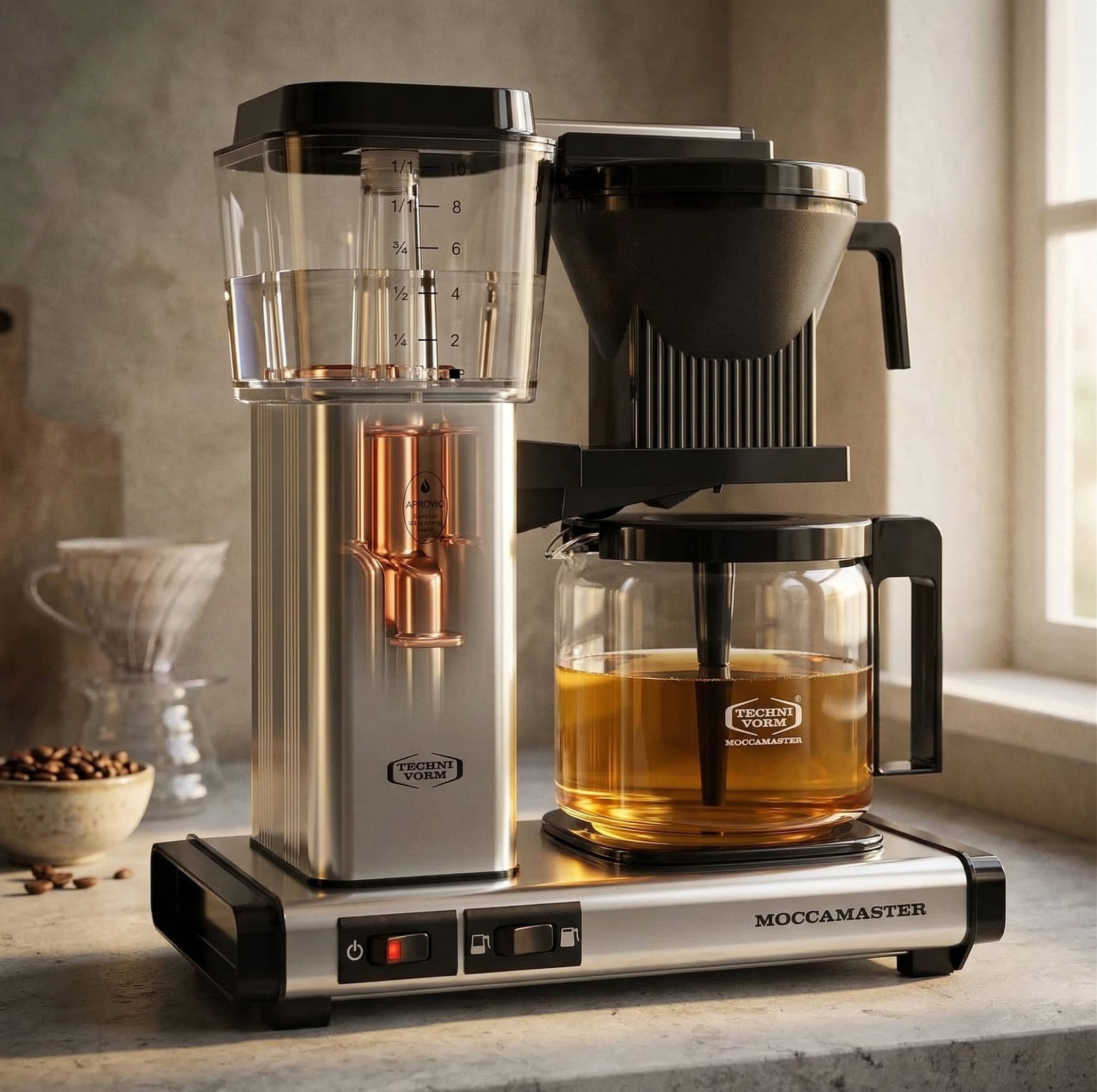
Technivorm Moccamaster

Best overall

Best forDrip, set-and-forgetCarafe / grinder / bloomGlass carafe, separate grinder, bloom: manual switchPrice$349–$369Score92 (4.7/5)Check current price

Best precision

Fellow Aiden

Best precision

Best forPour-over style, automatedCarafe / grinder / bloomThermal carafe, separate grinder, bloom: programmablePrice$379–$399Score90 (4.3/5)Check current price

Best value

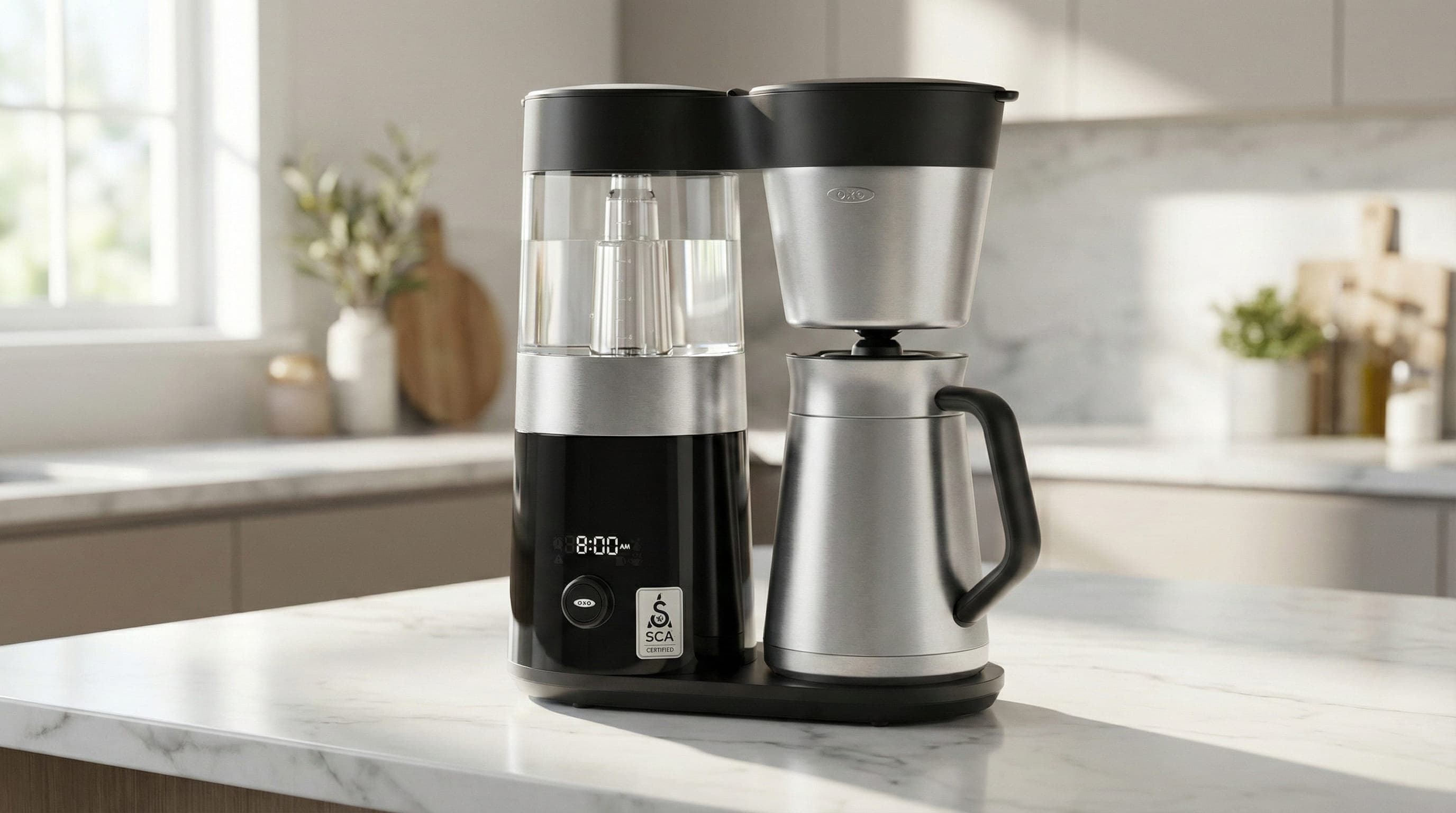
OXO Brew 9-Cup

Best value

Best forDrip, programmableCarafe / grinder / bloomThermal carafe, separate grinder, bloom: autoPrice$200–$250Score88 (4.5/5)Check current price

Best grind and brew

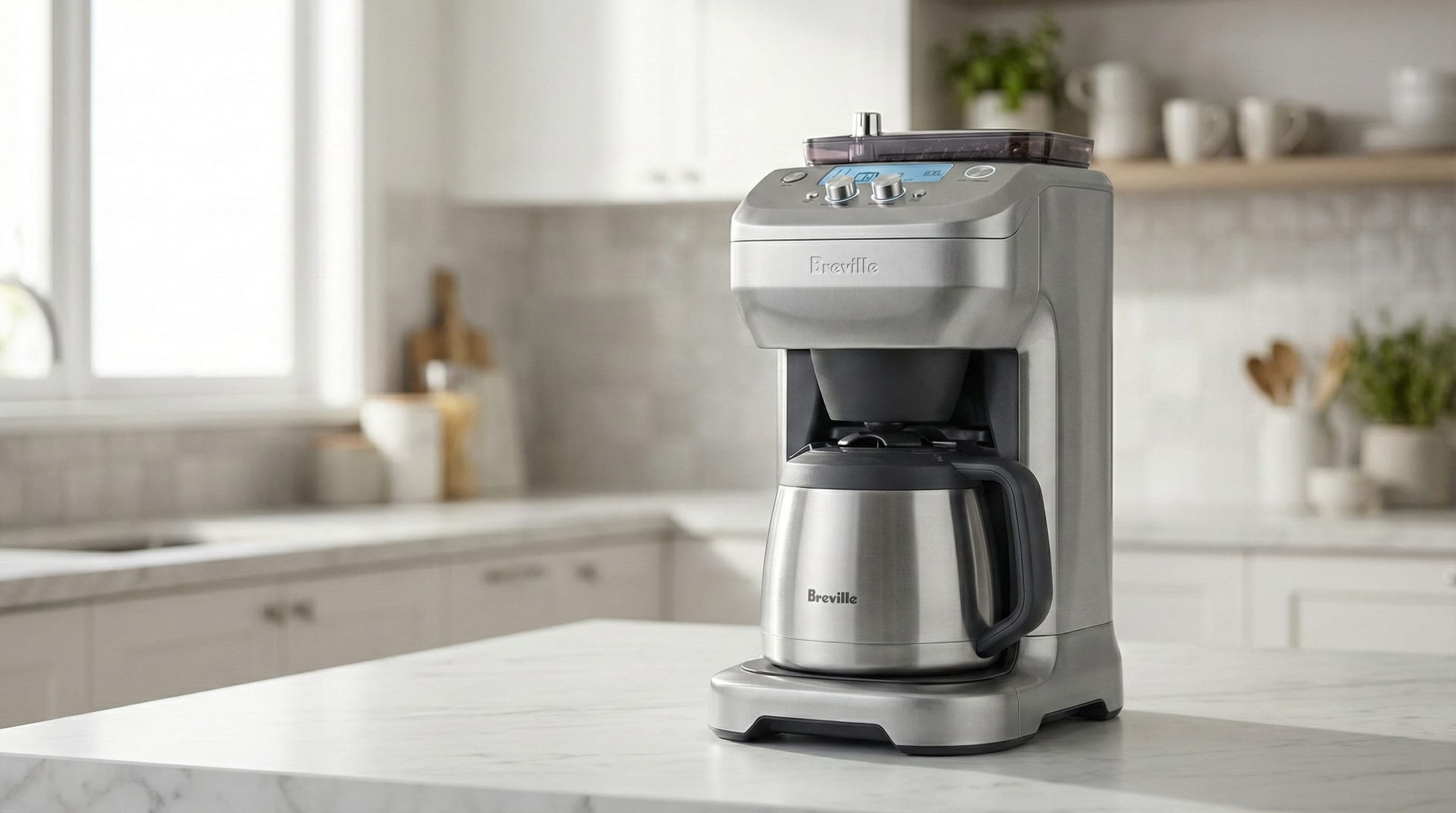
Breville Grind Control

Best grind and brew

Best forGrind-and-brewCarafe / grinder / bloomThermal carafe, built-in burr grinder, bloom: adjustablePrice$399–$449Score85 (4.5/5)Check current price

Best value grind-and-brew

De’Longhi TrueBrew

Best value grind-and-brew

Best forGrind-and-brewCarafe / grinder / bloomGlass carafe, built-in burr grinder, bloom: noPrice$299Score80 (4.3/5)Check current price

Budget, large capacity

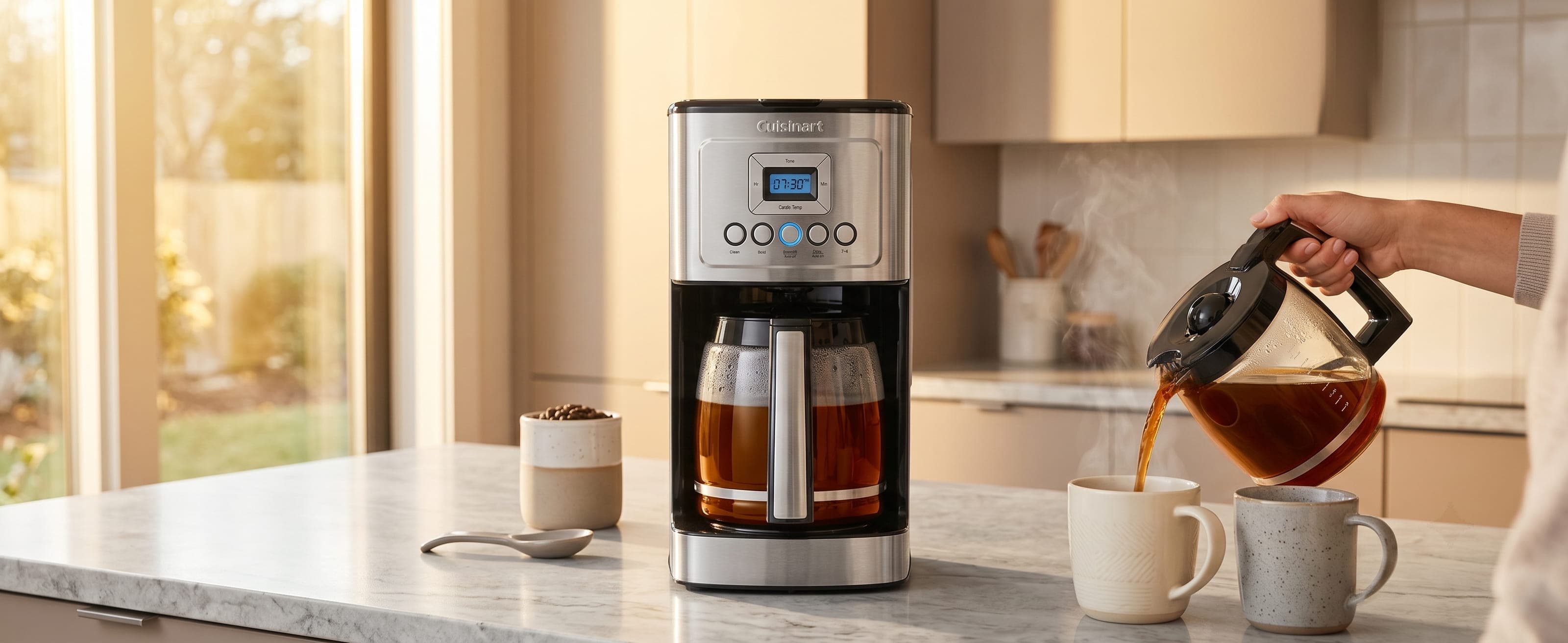
Cuisinart 14-Cup

Budget, large capacity

Best forDrip, high volumeCarafe / grinder / bloomGlass carafe, separate grinder, bloom: noPrice$80–$150Score72 (4.4/5)Check current price

Are these coffee makers worth the money? Pros, cons and who should skip each

Who each pick suits, who should skip it, and the trade-offs.

1. Best overall

Technivorm Moccamaster

$349–$369★ 4.7/5Score 92/100

A handmade drip machine built around a copper boiler that heats water quickly and keeps it in the ideal brewing range. It is the pick for steady, repeatable cups year after year. The price buys consistency and durability rather than convenience features.

Best for
Drinkers who want the most reliable brew quality under $500 and a machine that can last 10–15 years.
Skip if
You want a programmable wake-up brew or app scheduling. It has neither.
  • Most consistent brew temperature of any machine tested
  • 10–15+ year documented lifespan, 5-year warranty, parts guaranteed through at least 2034
  • No app or programming needed
  • No programmable scheduling, so you brew manually each time
  • Bloom needs a manual switch on the KBGV model
  • No temperature adjustment or app connectivity
2. Best precision

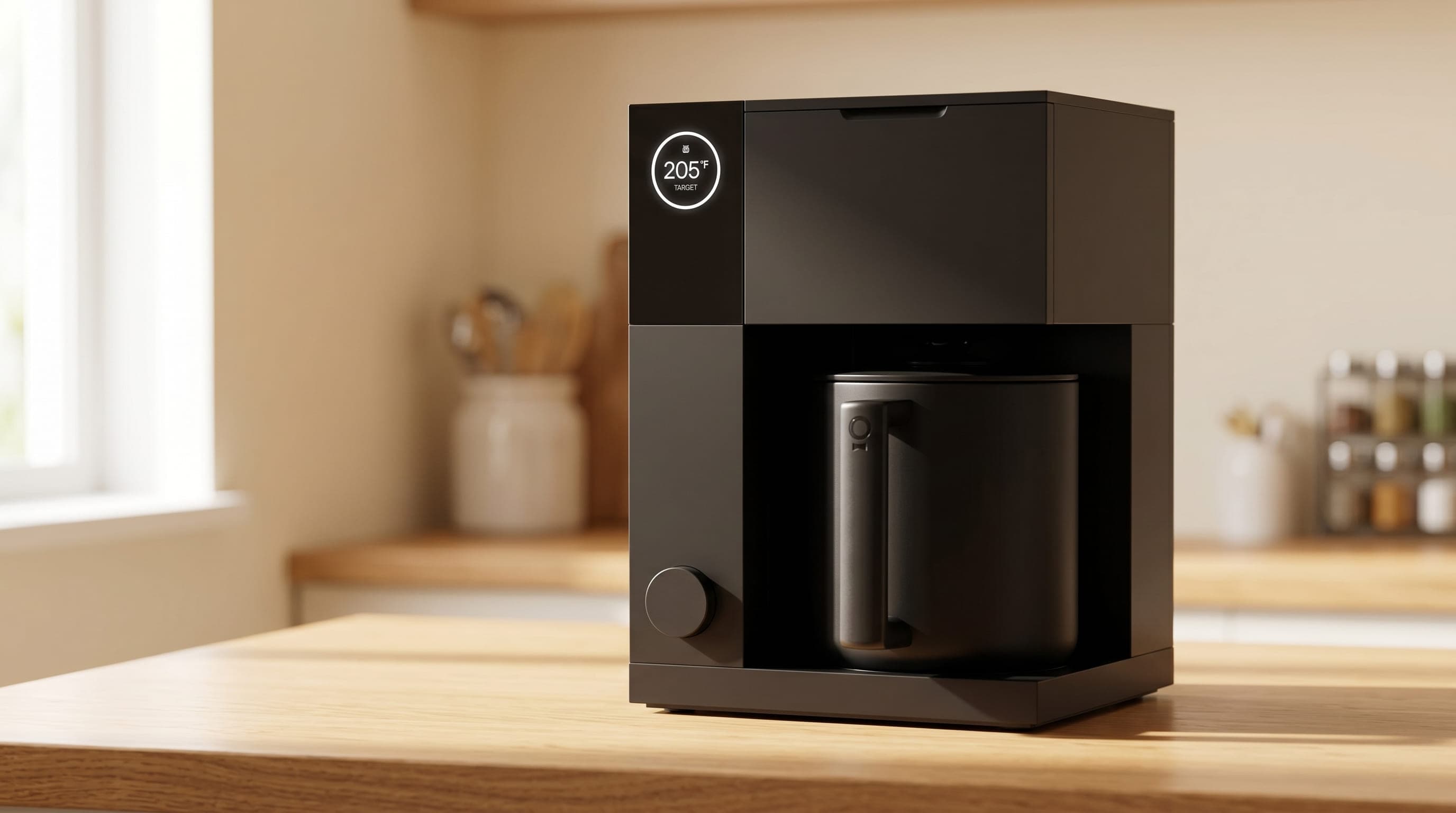
Fellow Aiden

$379–$399★ 4.3/5Score 90/100

The most capable home drip machine here, copying a manual pour-over through app-controlled temperature, bloom and flow. It rewards anyone who already has a recipe worth repeating. The trade-off is that its flexibility only pays off if you enjoy adjusting settings.

Best for
Enthusiasts and pour-over drinkers who enjoy dialling in different brew profiles for different coffees.
Skip if
You want a machine you can set once and ignore. The best results come from actively tuning temperature, bloom and flow.
  • Fully adjustable brew temperature, best in class here
  • Programmable bloom pause and recipe memory with app scheduling
  • Thermal carafe holds 75°C+ (168°F+) after 90 minutes
  • Needs the app for full feature access
  • Smaller 8-cup (40 oz) capacity
  • Near the top of this guide’s price range

3. Best value

OXO Brew 9-Cup

$200–$250★ 4.5/5Score 88/100

Delivers certified drip quality at roughly half the Moccamaster's price, with an even-spreading showerhead and automatic bloom. The timer and easy filling make daily use simple. The saving shows up in a lighter build that should not be expected to last as long.

Best for
Drinkers who want SCA-certified quality without the Moccamaster price, plus a timer and automatic bloom.
Skip if
Longevity matters more than price. Its lighter build and 3–4 year expected life make the Moccamaster the better long-term buy.
  • SCA Gold Cup certified at $200
  • Automatic bloom, no manual step
  • 24-hour programmable timer; easiest water tank to fill of any machine tested
  • Lighter build feel than the Moccamaster
  • Shorter expected lifespan: 3–4 years vs 10–15
  • No temperature adjustment or app connectivity
4. Best grind and brew

Breville Grind Control

$399–$449★ 4.5/5Score 85/100

The strongest grind-and-brew machine in this range, pairing a true burr grinder with correct brewing temperature and separate control of dose and strength. It removes the need to manage a separate grinder. The compromise is extra upkeep and a grinder that cannot match a dedicated one.

Best for
Households that want whole-bean freshness and a programmable wake-up brew without a separate grinder.
Skip if
You already own a good burr grinder. A dedicated grinder with a standalone brewer will out-grind this, and a grinder failure takes the whole machine out of service.
  • Conical burr grinder with adjustable grind size, 8 strength settings and dose adjustment
  • Correct brew temperature at the grounds
  • Grinds and brews on a 24-hour timer; thermal carafe
  • More cleaning than a standalone brewer
  • Grinder less precise than a dedicated burr grinder
  • Loud grinder (75–80 dB) and a 16-inch-tall footprint

5. Best value grind-and-brew

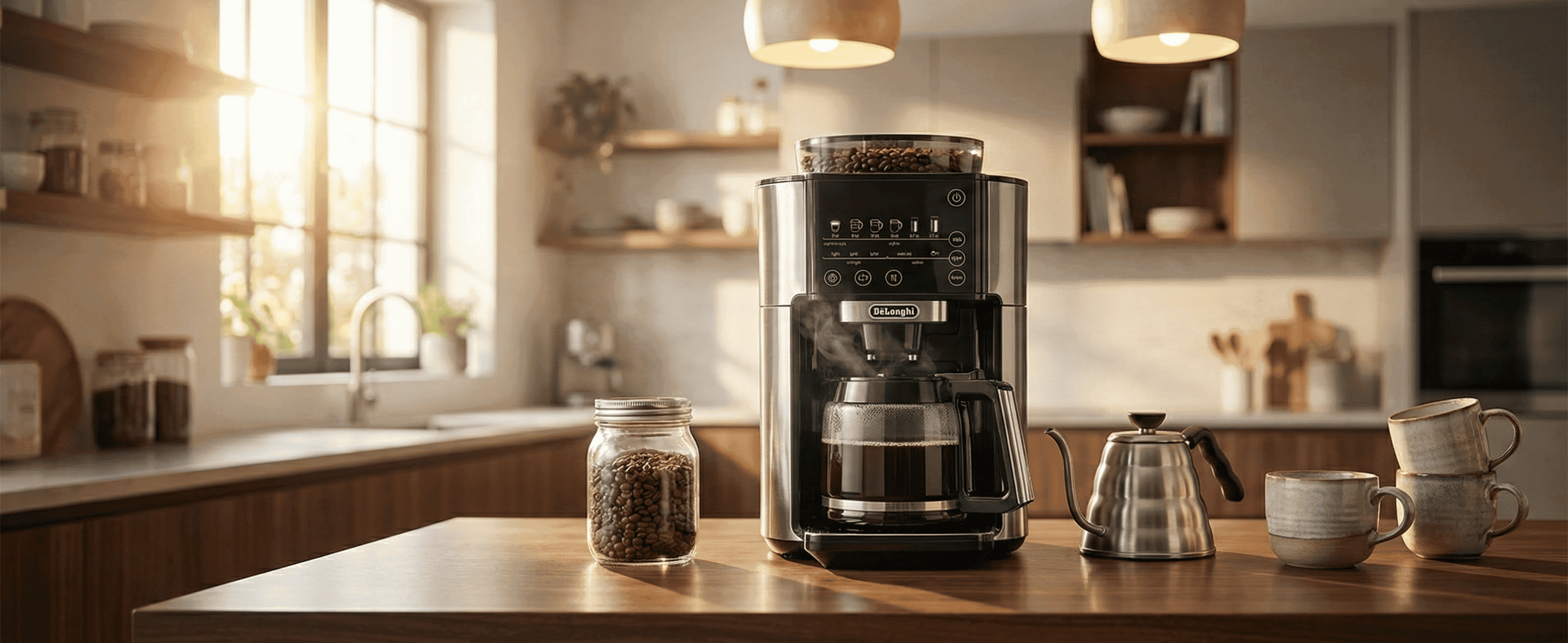
De’Longhi TrueBrew

$299★ 4.3/5Score 80/100

A lower-cost route to fresh-ground coffee, since a burr grinder is built in and brew temperature stays in the SCA range. It is the cheaper of the two grind-and-brew picks here. The main concessions are a glass-only carafe and no manual grind adjustment.

Best for
Budget buyers who want whole-bean freshness without a separate grinder, and a possible step before upgrading to the Grind Control.
Skip if
You want a thermal carafe or manual grind control. The carafe is glass-only on a warming plate, and the grind is automatic.
  • Conical burr grinder comparable to $100–$150 standalone units
  • Six brew styles, including Over Ice
  • 5 brew strength settings; expected lifespan 5–8 years with descaling
  • Glass-only carafe on a warming plate, with a breakage risk
  • Automatic grind only, no manual grind adjustment
  • No bloom pre-infusion cycle

6. Budget, large capacity

Cuisinart 14-Cup

$80–$150★ 4.4/5Score 72/100

A dependable high-volume brewer that makes sense when quantity matters more than finesse, such as offices, big families or gatherings. It is simple and inexpensive to run. The trade-off is a fixed brew temperature and a glass pot that cannot hold quality for long.

Best for
Large households, offices or entertaining, where volume matters more than precision and the pot is served right away.
Skip if
You brew a partial pot and let it sit. The glass carafe and warming plate degrade coffee after about 90 minutes.
  • 14-cup capacity, the highest in this comparison
  • 24-hour timer with auto shut-off
  • Dishwasher-safe carafe and basket; parts widely available
  • Glass carafe and warming plate degrade coffee after about 90 minutes
  • Brew temperature fixed at 196–200°F with no adjustment
  • No bloom pause; plastic build with shorter expected lifespan

How do I choose a coffee maker under $500?

If this is your situation, then this is the trade-off to make.

By budget and grinder

If: Your budget is under $200 and you already have a burr grinder

Get the SCA-certified OXO. Below about $100, most machines brew too cool for proper extraction. OXO Brew 9-Cup

If: You want whole beans but no separate grinder, on a tight budget

Take the TrueBrew and accept the glass carafe and automatic grind. De’Longhi TrueBrew

If: You want whole beans and the best grinder-equipped result

The Grind Control has the better burr grinder, a thermal carafe and adjustable bloom. Breville Grind Control

By how you brew

If: You want one machine to last 10+ years

A $350 machine lasting 10 years costs $35 a year; a $100 machine lasting 2 years costs $50 a year. Technivorm Moccamaster

If: You want to dial in temperature and bloom per coffee

Pay for the control and expect to use the app. Fellow Aiden

If: You wake up wanting coffee ready on a timer

Both have 24-hour scheduling; the Grind Control also grinds fresh beans first. OXO Brew or Breville Grind Control

By how you serve

If: You serve 10+ cups at once and drink it straight away

Choose capacity over precision and skip the warming-plate wait. Cuisinart 14-Cup

If: You drink slowly through the morning

Choose a thermal carafe. Glass carafes on a warming plate keep coffee hot by continuing to cook it. Any thermal-carafe pick above (OXO, Fellow Aiden, Breville)

Brew temperature (90.5–96°C) is the spec that matters most; a good showerhead and bloom come next. This price tier gives you SCA-compliant brew temperatures and thermal carafes, and the jump from sub-$100 machines is obvious in the cup. Do you need a separate grinder? The biggest quality upgrade for most home drinkers is a decent burr grinder, not a better coffee maker. Pre-ground coffee goes stale within 15–30 minutes of grinding. A $150–$200 burr grinder paired with the OXO Brew 9-Cup will beat a $500 drip machine used with supermarket pre-ground. If the budget is tight, prioritise the grinder. For one-machine convenience, the Grind Control and TrueBrew both use conical burrs, which are substantially better than the blade grinders in cheaper integrated machines. See our best coffee grinders comparison, or our best programmable coffee makers if the timer matters most.

What features actually matter in a coffee maker?

Brew temperature

Feature: water temperature at the grounds. Impact: the SCA target of 90.5–96°C (195–205°F) extracts sweetness without harshness, while cooler brewing tastes flat and sour. Who benefits: everyone, since it is the one spec you cannot fix later. Trade-off: machines that hit the range cost more, which is why most sub-$100 brewers fall short.

Bloom and showerhead

Feature: a short pre-wet of the grounds and a wide spray pattern. Impact: bloom lets trapped gas escape and helps water reach all the coffee evenly. Who benefits: anyone brewing fresh, recently roasted beans. Trade-off: the Moccamaster needs a manual switch, while the OXO does it automatically.

Carafe type

Feature: thermal or glass. Impact: a thermal carafe holds heat without a warming plate, so the last cup tastes like the first. Who benefits: slow sippers and anyone brewing a full pot. Trade-off: you cannot see the level inside, and thermal carafes are harder to wash by hand. Check the listing for the carafe supplied with your exact model.

Capacity

Feature: advertised cups, which in coffee-maker terms are usually 5 oz, so a 9-cup machine makes about 45 oz. Impact: brewing far below capacity can change contact time and extraction. Who benefits: households that know their typical pot size. Trade-off: a 14-cup machine suits a crowd but is oversized for one or two people.

Built-in grinder

Feature: grind-and-brew. Impact: whole beans ground just before brewing taste fresher than pre-ground. Who benefits: people who want one appliance and one cleanup routine. Trade-off: the grinder cannot be upgraded or replaced separately, so a fault affects the whole machine. Our burr vs blade grinder guide explains why conical burrs matter.

Longevity and repairability

Feature: warranty length and parts support. Impact: it changes the real cost per year. Who benefits: buyers keeping a machine for a decade. Trade-off: durable machines cost more up front, and lighter builds like the OXO are a reasonable choice if you accept a shorter lifespan.

What should you avoid buying at this price?

Machines that never state a brew temperature

If a listing talks about wattage and cup count but never mentions brewing temperature or certification, assume it brews cool. Verify current specifications on the product page before buying.

Glass carafe plus warming plate for slow drinkers

Coffee left on a hot plate keeps cooking and turns bitter within roughly 45–90 minutes. If you sip through the morning, a thermal carafe is the better design.

Paying extra for connectivity you will not use

App control only pays off if you enjoy changing recipes. If you brew the same way every day, a simpler machine gives the same cup for less money.

A bigger brewer to cover a weak grinder

Spending your whole budget on the machine and pairing it with pre-ground coffee wastes the upgrade. If beans are the weak link, fix that first.

What other coffee makers are worth considering?

Strong options that fit narrower needs than the picks above.

How were these coffee makers tested and ranked?

400+ brew cycles over 4–8 weeks, with each machine ranked within the under-$500 tier, not against $800+ premium options.

  • Brew temperature accuracy: Water temperature measured at the coffee bed with a calibrated thermocouple across 10 consecutive brews. Top machines hold 90.5–96°C throughout the cycle.
  • Water distribution: Judged from spent-grounds saturation. Poor showerheads leave dry patches that under-extract while channelling over-extracts others.
  • Bloom and pre-infusion: Tested with freshly roasted beans (3–7 days post-roast). Machines with bloom cycles produced measurably higher TDS and more even extraction.
  • Thermal carafe retention: Temperature logged at 30, 60 and 90 minutes. Top machines keep roughly 75°C+ (168°F+) for 90+ minutes without a warming plate.
  • Build and durability: Assessed through extended use, warranty terms, parts availability and manufacturer repair support.

How do I get better coffee from any drip machine?

Ratio, grind, descaling and cleaning habits that matter more than most upgrades.

Use a consistent ratio

Start near 55 grams of coffee per litre of water, the ratio used in SCA Gold Cup standards, then adjust to taste. Our coffee ratio calculator does the arithmetic for any batch size.

Match grind to the basket

Medium grind suits most flat-bottom and cone baskets. If coffee tastes sour or watery, grind a little finer; if it tastes harsh or bitter, go coarser. See the coffee grind size chart.

Descale on a schedule

Mineral scale slows heating and can leave a machine brewing cooler over time. Descale regularly, more often with hard water, following the manufacturer instructions. Our descaling guide covers the process.

Wash the parts that touch coffee

Rinse the basket, carafe and lid after each use, because stale oils add bitterness to the next pot. Grind-and-brew machines also need the grinder chamber brushed out on a regular basis.

Preheat a thermal carafe

Rinsing a thermal carafe with hot water before brewing helps it hold heat longer. It takes a few seconds and costs nothing.

Check the machine if it leaks

Overfilled baskets, a misaligned carafe or a worn seal are the usual causes. Our coffee maker leaking water guide walks through the fixes.

Frequently Asked Questions

Quick answers before you buy.

The SCA (Specialty Coffee Association) recommends 90.5–96°C (195–205°F) at the point of contact with the coffee grounds. Most budget coffee makers brew 10–15°C below this, producing under-extracted, flat-tasting coffee even with excellent beans.

SCA-certified machines, like the OXO Brew 9-Cup and the Technivorm Moccamaster, brew in this range. It is the single most important spec to check before buying.

Only if convenience is your top priority. Grind-and-brew machines like the Breville Grind Control and De’Longhi TrueBrew deliver noticeably better coffee than pre-ground because they grind fresh for each brew.

However, the integrated grinder is harder to clean, less adjustable than a standalone burr grinder, and a single point of failure: if the grinder breaks, the whole machine needs servicing. If you already own a decent burr grinder, a dedicated drip machine with that grinder will produce better results.

Thermal carafes are better for coffee quality in almost every scenario. Glass carafes sit on a warming plate that keeps coffee hot by continuing to cook it, degrading flavour within roughly 45–90 minutes.

A good thermal carafe holds roughly 75°C (168°F) for about 2 hours without a heat source. If you will not drink the full pot immediately, choose thermal.

SCA certification means a machine has passed independent lab testing confirming it brews within the correct temperature range (90.5–96°C), holds that temperature through the brew cycle, and completes a brew within the correct contact time.

It removes the guesswork.

The downside is that certification adds $30–$80 to the machine cost, and not every great brewer pursues it.

It can be, mainly for brew temperature and build life. Machines in the $150–$500 range are far more likely to reach the SCA temperature range than sub-$100 models, and the Technivorm Moccamaster carries a 5-year warranty.

If you drink one or two cups a day and are happy with the result, a cheaper machine can still be sensible. Compare the OXO Brew 9-Cup against the Cuisinart 14-Cup above to see the trade-offs.

A well-designed drip machine can get close, because both depend on correct temperature, even wetting and steady contact time.

The Fellow Aiden is built to automate a pour-over recipe, while the Moccamaster and OXO aim for a consistent result with no effort.

Drip vs pour-over coffee →

It is the best upgrade you can make if you are using pre-ground coffee.

A separate burr grinder gives fresher, more even grounds, which helps any brewer.

Grind-and-brew machines like the Breville Grind Control are a convenient alternative if you prefer one appliance.

Best coffee grinders →

Rinse removable parts after every use and descale on a regular schedule, more often if you have hard water.

Follow your manufacturer instructions for the descaling solution and frequency.

How to descale a coffee machine →