

A drip option to compare
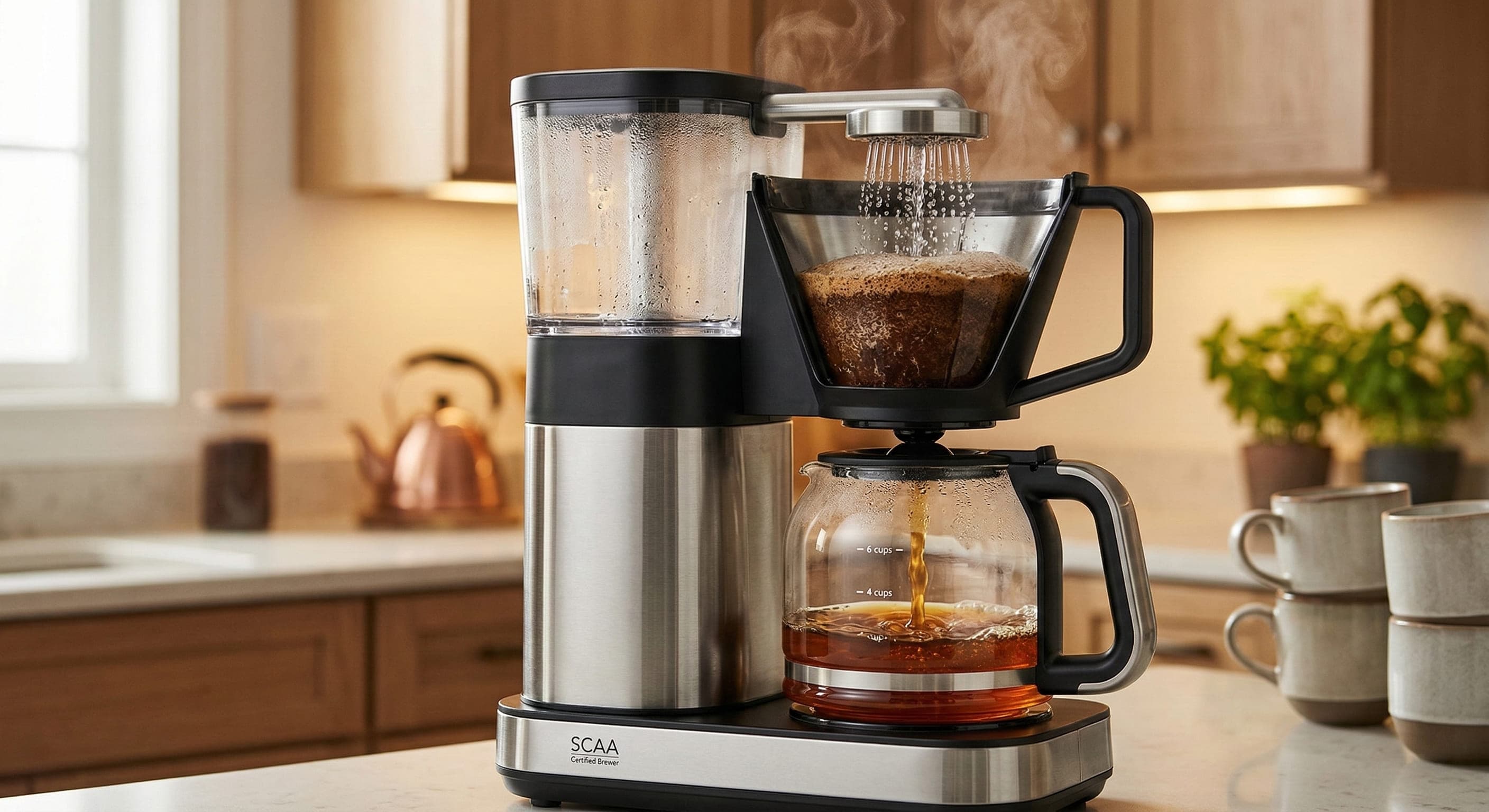
OXO Brew 9-Cup Coffee Maker
Certified drip machine with a built-in bloom step.
Brewing Guides
Last updated
Drip vs pour over coffee compared on taste, temperature, effort and cost, with a simple rule for which brewer fits your routine.
Affiliate disclosure: this page contains Amazon affiliate links. We may earn a commission if you buy through them, at no extra cost to you, and it never affects our rankings. Learn more
Drip vs pour over comes down to control. Pick pour over if you buy fresh specialty beans and brew one or two cups. Pick drip if you want a full carafe or a timer, ideally from a certified machine, since budget drip machines under $60 often brew too cool.
Side by side on control, temperature, time, taste and cost.
| Drip machine | Pour over | |
|---|---|---|
| Who controls the brew | The machine | You: pour rate, bloom, temperature |
| Water temperature | Often 82–88°C; certified machines reach 91–96°C | Whatever you set |
| Bloom | Usually skipped | 30–45 second bloom |
| Grind | Medium | Medium-fine |
| Brew time | 6–10 minutes, full carafe | 2.5–3.5 minutes, one cup |
| Cup character | Fuller body, consistent | Cleaner, brighter, more detail |
| Typical cost | $25–$400+ machine | $10–$40 dripper plus kettle, scale, grinder |
Control of flow, temperature and contact time separates them.
A drip machine heats water and sprays it over the grounds on a fixed schedule. Pour over lets you decide how fast and where water goes, so you can control bloom, saturation and total contact time. The step-by-step brew timer tells you when to pour and how much.
Planning a full carafe? The brew yield calculator shows how much water to pour to end up with the amount of coffee you want.
Control is the point. A good drip maker with a wide shower head and stable temperature can match pour over; a cheap one often brews cool and unevenly, leaving flat, sour coffee. Pour over rewards technique but varies with the person pouring.
Closing the gap in either method.
For pour over use a gooseneck kettle, a scale and a timer, and follow a recipe by weight. A flat-bottom dripper can be more forgiving than a cone. For drip, look for machines certified for temperature performance and consider a pre-infusion or bloom feature. Our water temperature calculator gives a range in °C and °F by method and roast.
Rinse paper filters, use filtered water of moderate mineral content and grind fresh with a burr grinder (see the bloom guide and pour over guide). A thermal carafe keeps drip coffee from stewing on a hot plate.
A plain decision rule based on beans, volume and budget.
Quick decision guide
You buy fresh specialty beans and brew one or two cups
choose pour over: it shows origin character most clearly.
You brew for several people or want coffee on a timer
choose drip, ideally a certified machine at $150 or more.
Your brewer budget is under $60
choose pour over: a $10–$40 dripper plus a decent kettle beats a budget drip machine.
Pour over has the higher ceiling, but sloppy technique loses to a certified drip machine on its default program. Many people run both: drip on weekdays, pour over at weekends.
Too hot tastes harsh, too cool tastes flat. Budget drip machines run cool.
Above about 96°C you extract harsh, bitter compounds. Below about 90°C coffee turns sour and thin. Budget drip machines often land under that range; certified ones are far more likely to hit it.
With pour over you set it: about 94°C for medium roasts, 91–92°C for very light, high-altitude washed coffees.
The pre-wet step releases roast gas so water flows evenly.
Fresh grounds trap CO2 from roasting. Letting it escape first gives more sweetness and less astringency. Most drip machines pour one continuous stream, so the bloom never happens; certified models add a pre-infusion cycle or flow switch.
Timing and ratios are in what coffee bloom is and how to do it.
Medium for drip, medium-fine for pour over, from a burr grinder.
Drip wants medium (rough sand); pour over wants medium-fine (closer to table salt). A pour over filter drains faster, so the finer grind restores contact time. Too coarse gives weak, sour coffee.
Uniformity matters more than the exact setting, so use a burr grinder for either method; a blade grinder undermines a V60. A $50–$100 hand grinder matches most electric grinders under $150, and the Fellow Ode Gen 2 is a flat-burr electric built for filter coffee. Starting settings are in the grind size chart.
Pour over is clearer and cheaper to start; drip is fuller and hands-off.
Pour over is lighter-bodied and transparent: fruit in an Ethiopian Yirgacheffe, bright acidity in a Kenyan AA. A good drip machine leans fuller and rounder, trading brightness for body and caramel sweetness, which suits medium-to-dark blends. Different, not worse.
| Item | Pour over | Certified drip |
|---|---|---|
| Brewer | $10–$40 | $150–$400 |
| Gooseneck kettle (temp control) | $40–$90 | Not needed |
| Burr grinder | $50–$150 | $50–$150 |
| Scale (0.1 g) | $15–$30 | Not needed |
| Total | $123–$325 | $205–$560 |
Pour over is cheaper up front but needs more gear. Filters add roughly $5–$15 a year either way.
Pour-over needs a few more tools; drip needs counter space.
| Drip machine | Pour-over | |
|---|---|---|
| Brewer | Automatic drip coffee maker | Dripper (V60, Kalita, Chemex and others) |
| Filters | Paper or permanent filter | Paper filters for most drippers |
| Kettle | Not needed | Gooseneck kettle recommended |
| Scale | Optional | Recommended |
| Counter space | A machine-sized footprint | A dripper and kettle |
| Hands-on time | About a minute | About 3–5 minutes |
A good drip machine makes very good coffee with almost no effort, especially machines that heat water properly and wet the grounds evenly. Pour-over gives you more control and usually a clearer cup, but it needs a few extra tools and a few minutes of attention each time.
Small changes make a big difference.
Use freshly ground coffee at a medium grind.
Weigh coffee and water; around 60 g of coffee per litre of water is a good starting point.
Use fresh, filtered water rather than water that has sat in the tank.
Rinse paper filters to remove any papery taste.
Pour the coffee into a thermal carafe or drink it soon; a hot plate keeps cooking the coffee and makes it bitter.
Descale the machine regularly; scale lowers the brewing temperature.
Many people dismiss drip coffee because of stale, over-heated office coffee. With fresh beans and correct ratios, a good drip machine makes excellent coffee. Our best drip coffee makers lists machines that brew at the right temperature, and how to descale a coffee machine covers upkeep.
Match the method to your mornings.
If you are moving from pour-over to drip or the other way round, keep the same beans and ratio for a few days so you can taste the method rather than the coffee. Our what is pour-over coffee guide covers the method in detail.
Both methods benefit most from the same two upgrades: freshly ground beans from a burr grinder and weighing coffee and water. Make those changes first; they improve either method more than switching between them.
Reviewed drip machines and an automated pour-over option.
Certified drip options include the Technivorm Moccamaster and the Fellow Aiden (app-controlled bloom profiles). See the best drip coffee makers for the full ranking.
A drip option to compare
Certified drip machine with a built-in bloom step.
An automated pour-over option
Automates the pour over process for a Chemex.
Affiliate links: we may earn a commission at no extra cost to you.
Quick answers before you buy.
Not automatically; strength comes from your coffee-to-water ratio.
Use the pour over ratio calculator to set it.
Usually under-extraction: grind too coarse, water too cool, a rushed bloom or too short a brew.
Go one notch finer first.
Paper filters remove cafestol and kahweol, which raise LDL cholesterol in large amounts; metal filters leave them in.
Mostly yes.
Filter coffee is any paper-filtered brew, and an automatic drip machine and a manual pour over are both versions of it.
They differ in who controls temperature and pouring.
Not strictly, but it makes a slow, steady pour far easier, which helps even extraction.
Any kettle works if you pour carefully; see what pour over coffee is.
Common causes are too fine a grind, stale beans or leaving the pot on a hot plate.
Grind a notch coarser and move coffee to a thermal carafe; see why coffee tastes bitter.
Keep reading: more guides on the same topic.
 Explained
Brewing6 min read
What is pour over coffee? Learn how it works, a starting recipe, grind size and water temperature, and which dripper to buy.
 Explained
Coffee Education6 min read
What is coffee bloom? CO2 degassing explained, how to bloom with a 2:1 water ratio, and which beans and brew methods benefit most.
 How to
Brewing6 min read
Cold brew recipe: 100 g coarse coffee to 800 ml water, steeped 18 hours, then diluted. Includes fixes for bitter or weak batches.
 How to
Brewing6 min read
How to use a moka pot for smooth stovetop coffee: medium-fine grind, pre-boiled water, medium-low heat, plus fixes for bitter cups.

Reader questions
Questions or tips? Leave a comment
Ask about your setup or share what worked for you. Comments are checked before they appear.