
 4.5
4.5Turin
Turin DF64 V5
An electric grinder built for true single-dose espresso workflow, with sub-0.2g retention and exceptional grind quality.
Coffee grinder review
Last updated
What changed on the Turin DF64 Gen 2 burr grinder? Our review ran 300+ single-dose grinds at 0.1-0.15g retention. See if it beats the V5 and Niche Zero.
Affiliate disclosure: this page contains Amazon affiliate links. We may earn a commission if you buy through them, at no extra cost to you, and it never affects our rankings. Read our full affiliate disclosure
Turin DF64 Gen 2 at a GlanceHighly recommended
A clear recommendation for serious espresso drinkers; just don't expect it to double as a filter grinder.
Value Prosumer Single-Dose Espresso Grinder
Affiliate link: we may earn a commission at no extra cost to you. It never affects our rating.
On the grind bench· 300+ grinds · 45 days
Why it stands out
Watch out for
✓ Best for
Dedicated espresso enthusiasts wanting factory-aligned single-dose performance
✕ Skip if
Multi-method brewers who rely on filter coffee as much as espresso
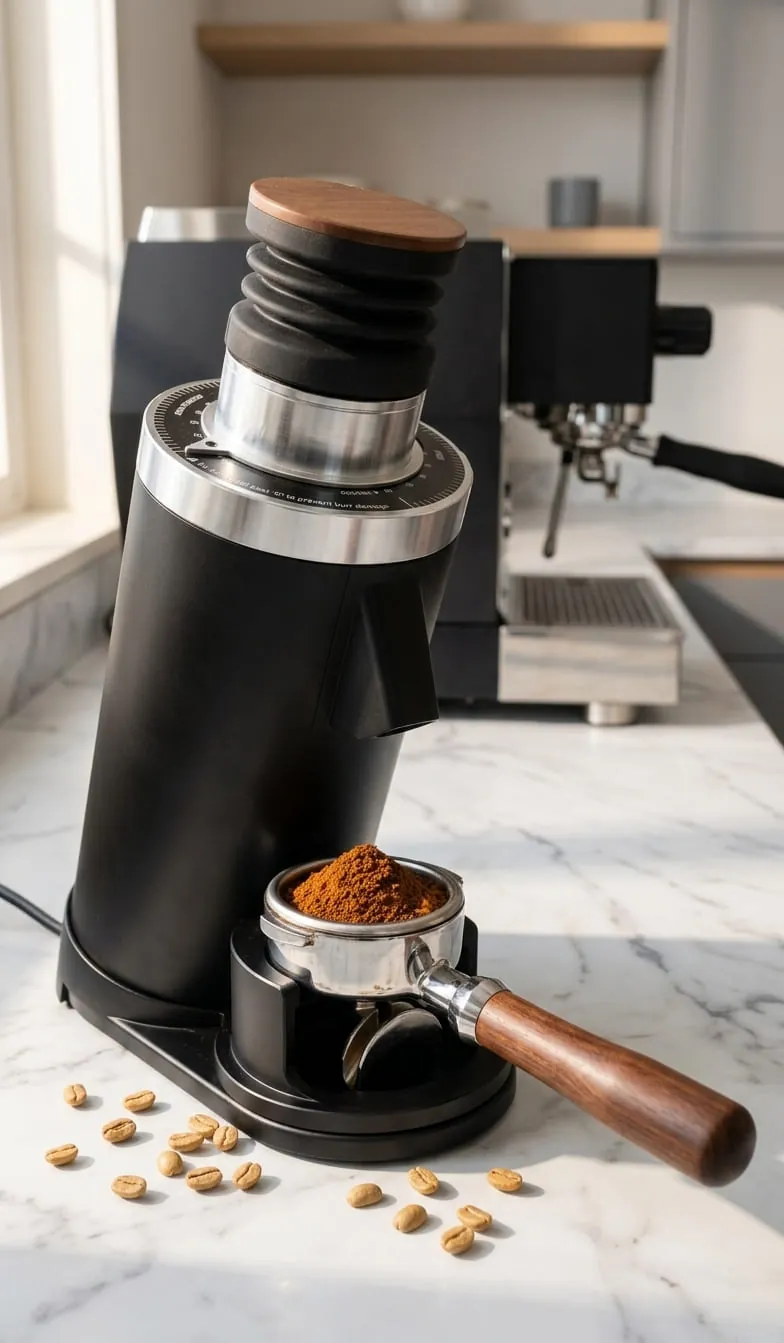
The Turin DF64 Gen 2 review question is simple: does the new single-dose tray and tighter alignment justify the update? Turin's marketing promised a "single-dose tray" and "improved factory alignment," and we've learned those phrases can mean a real overhaul or a cosmetic touch-up. After 300+ espresso shots, the Gen 2 turned out to be the real thing.
The short answer: yes, it's worth it over the V5 for anyone who takes espresso seriously and wants single-dose flexibility. It fixes the V5's real annoyances without touching the 64mm flat burr performance.
For broader context, see our burr grinder buying guide and our espresso extraction guide.
Check where you fit before you look at the trade-offs below.
A strong match
Consider something else
What earns the rating, and what you give up to get it.
10 reasons it works
7 trade-offs to weigh
How it performed in day-to-day use, in the order you will meet it.
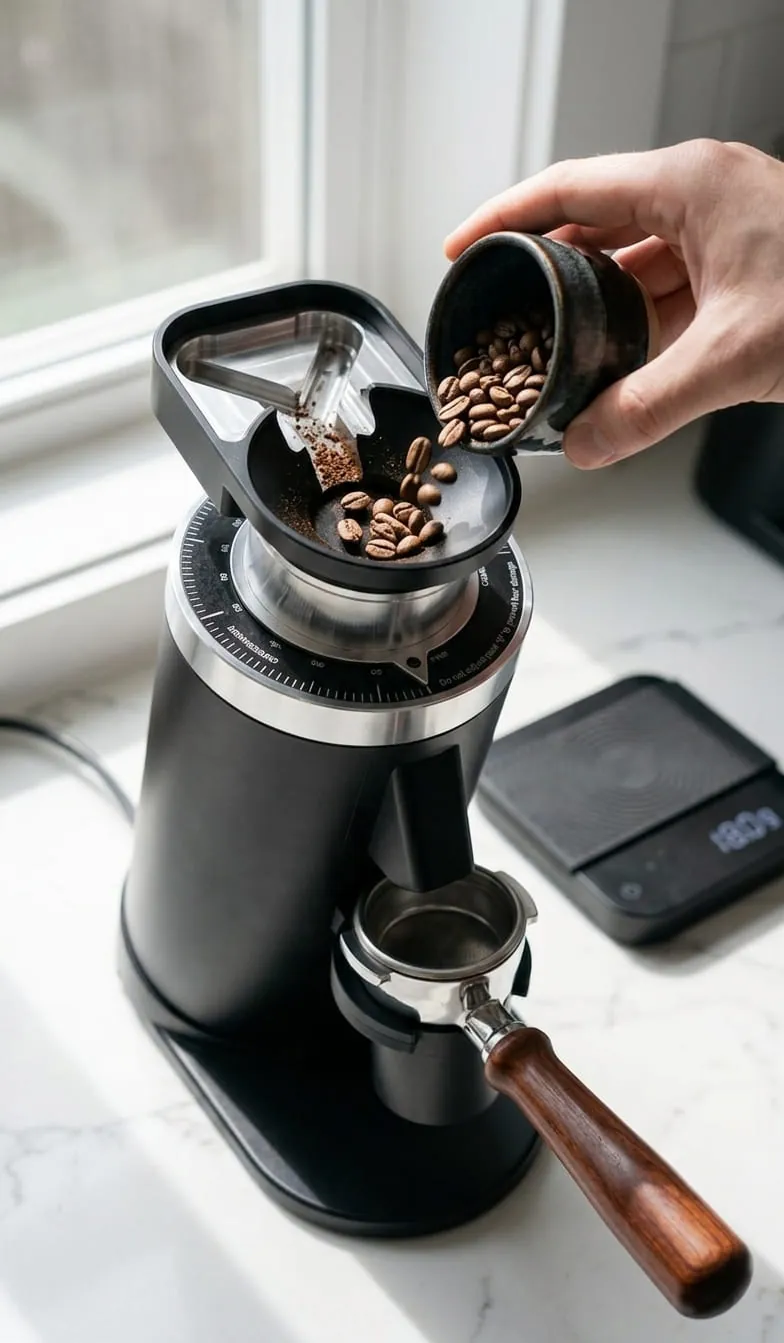
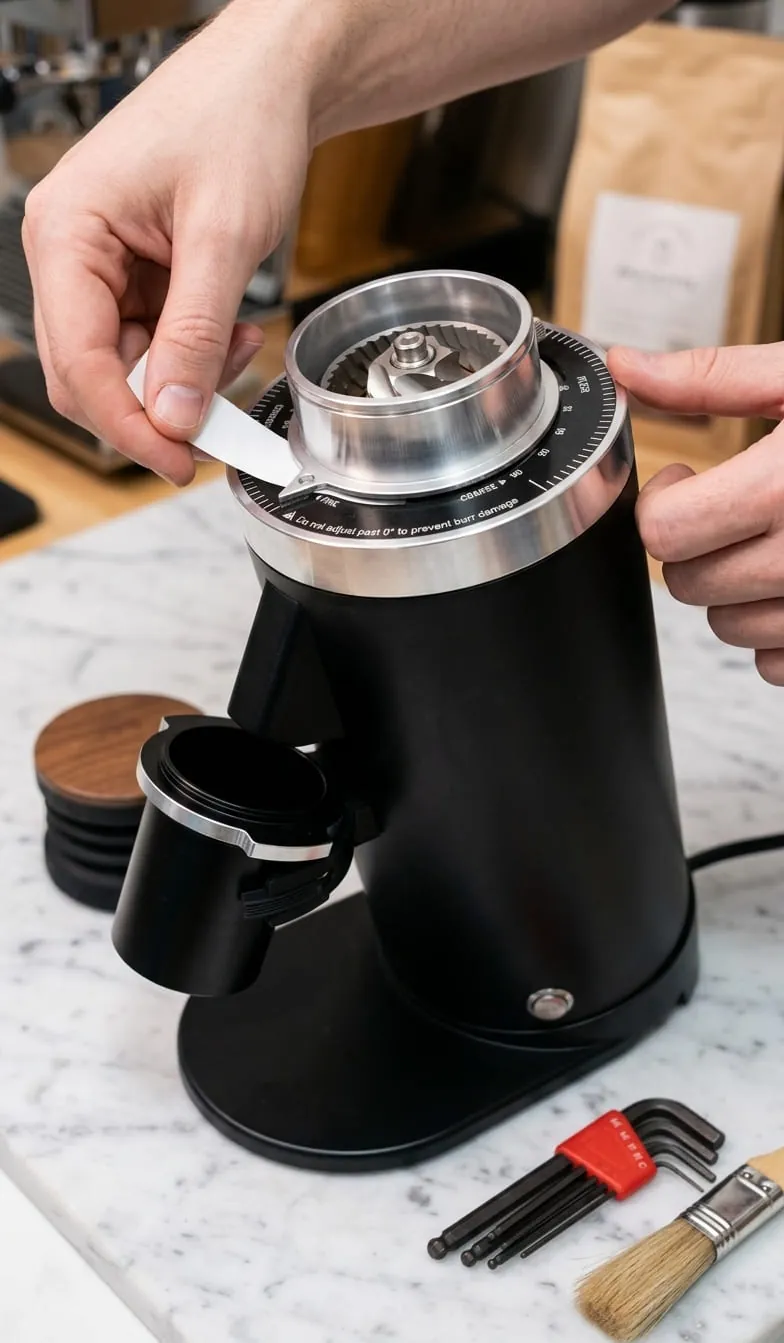
Unboxing to first grind took about four minutes. The single-dose tray snaps in cleanly, and a 20g seasoning dose cleared manufacturing residue before the paper shim alignment check.
Beans to portafilter takes 30-35 seconds, roughly 8-10 seconds faster than the V5's bellows step.
The 64mm flat burrs are the foundation of everything this grinder does well.
We tracked retention across 100 consecutive shots (weigh 18.0g beans in, weigh grounds out). Gen 2 average: 0.12g, versus 0.17g on the V5 with the bellows technique — both good, but the Gen 2 hits that number with no technique required.
Value against the alternatives, reasoned from the price and performance data above
For a dedicated espresso drinker, the value case rests on one comparison: the Gen 2 costs $399-$479 and delivers 64mm flat burr clarity that, in this review's scoring, rates 9.5 for value. The grinders it is usually shopped against sit well above it. The Eureka Mignon Specialita is a different design (hopper-fed, stepless) and the Niche Zero costs roughly $350 more.
What you are really paying for is a short list: a single-dose tray that keeps retention near 0.1-0.15g, a metal body, and a stepless collar that lets you fine-tune at espresso fineness. What you are *not* paying for is a polished finish, stepped adjustment, or a hopper. If those matter more than raw espresso cup quality per dollar, a different grinder will make you happier.
Worth it if you pull espresso most days, rotate beans, and enjoy dialing in. Probably not worth it if you split your time evenly between espresso and filter, or you want to set a number on a dial and forget it.
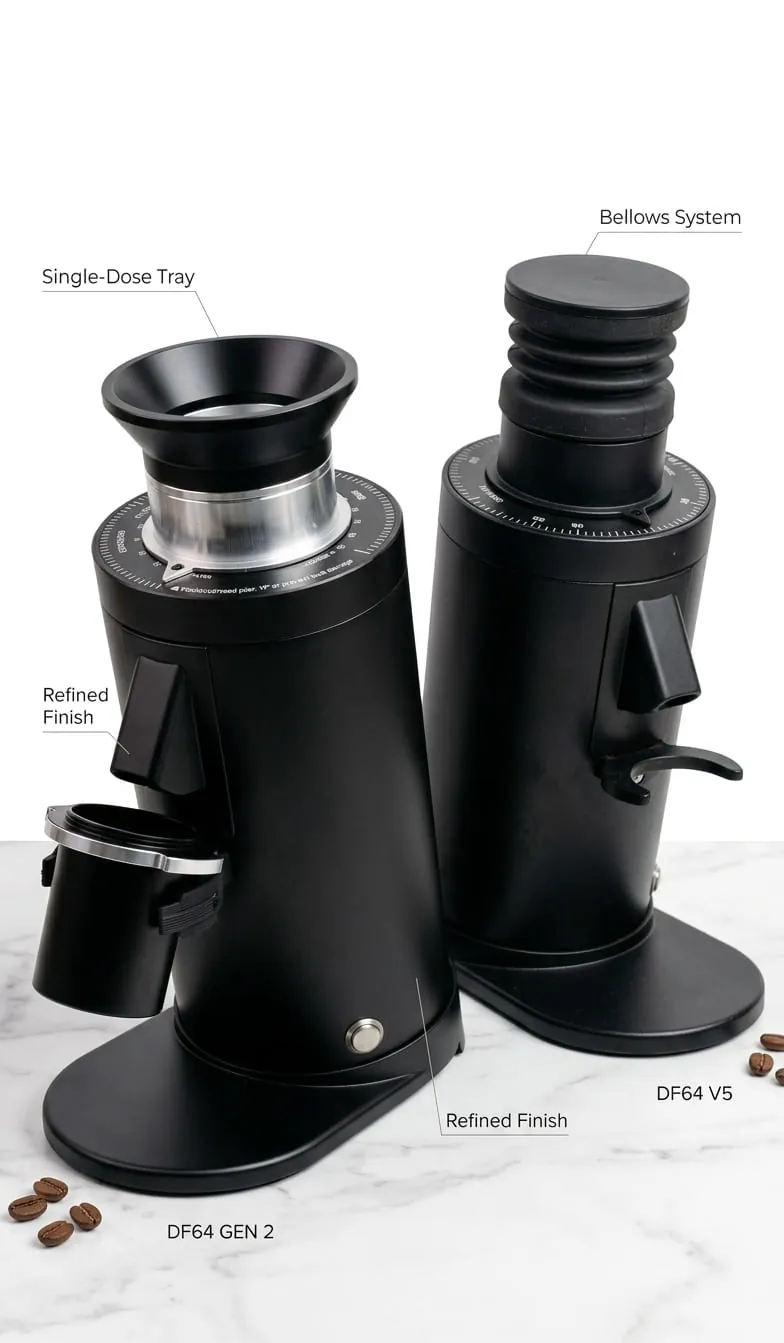
Which DF64 is this review? This page covers the DF64 Gen 2, the current model with a single-dose tray. If you own or are considering the older bellows version, read the Turin DF64 V5 review instead.
The two share the same 64mm flat burrs, stepless collar, motor and ionizer, so the choice is about workflow rather than cup quality. The Gen 2 swaps the bellows for a tray, which removes a technique step from every shot.
If you want a deeper walkthrough of how grind quality affects shots, the dialing-in guide and the espresso dial-in calculator help you chase a target ratio and time after any cleaning or re-alignment.
| Grinder | Burr | Capacity | Weight | Current price |
|---|---|---|---|---|
| Turin DF64 Gen 2 | 64mm flat | not listed | not listed | Check current price |
| Eureka Mignon Specialita | 55mm flat | 300g | 13 lb | Check current price |
| Fellow Opus | 41mm conical | 110g | not listed | Check current price |
| Baratza Encore ESP | 40mm conical | not listed | not listed | Check current price |
| Mavo Phantox Pro | 38mm conical | 40g | not listed | Check current price |
See the full ranking in our coffee grinder picks and the manual vs electric grinders comparison.
The mechanism behind the grind, in plain English, and what it changes in your cup
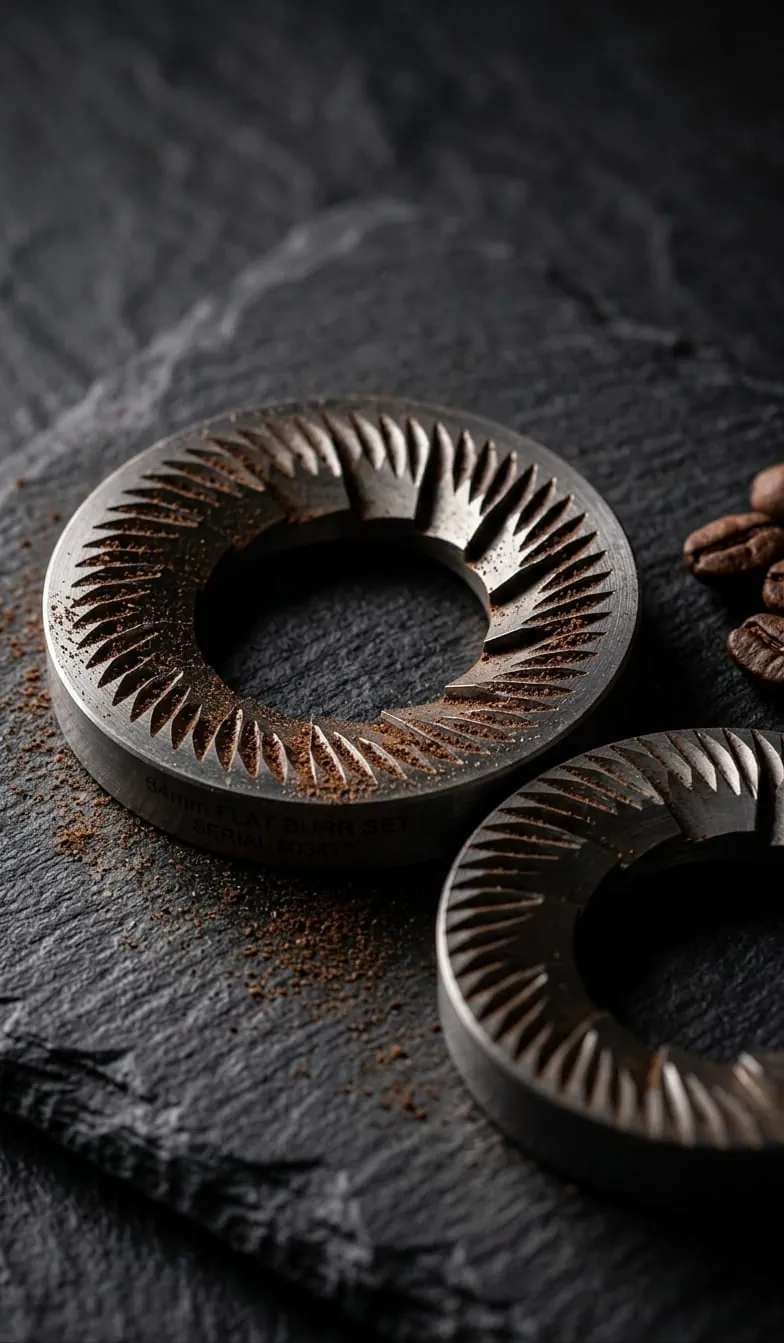
The DF64 Gen 2 is a single-dose flat burr grinder. Two large flat burrs, 64mm across, face each other. Beans fall between the rings and are cut as the top burr spins. Wider burrs cut more beans per rotation, so the motor can run slower and cooler for a given output.
Flat burrs usually give a more uniform particle size, which makes espresso taste more defined and layered, with brighter acidity on lighter roasts. They also expose differences in beans more clearly than conical burrs.
The stepless collar lets you move between settings with no fixed steps, so you can fix a shot that runs a second too fast. Single-dose design means you weigh beans in and grind them out, keeping retention low and letting you switch coffees freely.
Who this mechanism suits: This is the grinder for people who already know their way around an espresso machine and want sharper flavor from lighter roasts. First-time buyers may prefer a simpler, numbered adjustment while learning.
Typical ownership issues for this grinder type, and the tools and habits that solve them
The main issues are alignment, static, and dialing in.
Compare against Turin DF64 V5 if you want the older design.
Before you decide
The Turin DF64 Gen 2 sits at a specific inflection point in the single-dose espresso grinder market: 64mm flat burrs and sub-0.15g retention at $399–$479, a price point where comparable performance previously required spending $700–900.
It sits below the Eureka Mignon Specialita ($700–800) and Niche Zero ($750–850) on price while matching or exceeding them on light roast espresso clarity — thanks to the larger burr diameter producing cooler grinding temperatures and tighter particle distribution. The SSP upgrade path ($150–180) extends capability further, bringing the total investment to roughly $550–$660 — still well below single-dose alternatives at the same performance ceiling.
If you want a high-performing espresso grinder under $500 and are comfortable with a stepless dial and single-dose workflow, the Gen 2 is the one to buy.
Durability, upkeep and running costs once the novelty wears off.
The all-metal housing feels more solid than the V5, and the 64mm flat burrs are commonly expected to last 7-10 years of home use.
Plastic parts are limited to the single-dose tray and catch cup body — neither contacts the burrs.
Improved factory alignment QC means less setup work on arrival — worth a quick paper shim check anyway, since even minor variance affects particle uniformity at espresso fineness.
Motor and electronics ran flawlessly through testing, and the anti-static ionizer is passive with no maintenance required.
Good — Turin maintains parts availability, SSP burr upgrades are widely stocked ($150-180), and the tray, catch cup, and other key components are all replaceable.
The active Home Barista modding community is a useful sourcing resource.
Roughly $20-30 a year for cleaning supplies, $100-150 over five years.
The optional SSP burr upgrade runs $150-180; replacement stock burrs cost ~$80-100 after 7-10 years.
1-year manufacturer warranty, with extended coverage available through some retailers.
Strong — the single-dose flat burr category holds value well, with well-maintained units (especially with SSP burrs) reselling for a solid share of the original price after two years.
Our rating, who it fits, and what it costs.
Turin DF64 Gen 2Highly recommended
4.8 / 5 — Is it worth buying?
The Turin DF64 Gen 2 earns a clear recommendation: the single-dose tray and improved factory alignment fix the V5's real pain points, while the unchanged 64mm flat burrs keep delivering light roast espresso clarity otherwise seen only from $700-900 grinders.
✓ Best for
✕ Skip if
Score breakdown
Shots tested
300+
Testing period
45 days
Ready to decide?
Our verdict: 4.8/5, highly recommended. Independently tested; commissions never change a rating.
See how the Turin DF64 Gen 2 compares with the other picks in each tested roundup.
Closest alternatives in price and purpose, each tested the same way.
4.5Turin
An electric grinder built for true single-dose espresso workflow, with sub-0.2g retention and exceptional grind quality.
 4.8
4.8Fellow
A single-dose grinder built specifically for pour-over and filter coffee enthusiasts — not intended for espresso.
 4.5
4.5Eureka
A notably quiet 55–58dB Italian flat-burr grinder with commercial-grade durability, built for daily espresso use.
 4.4
4.4Comandante
A premium hand grinder with Nitro Blade burrs delivering lab-grade precision for pour-over and filter coffee.
Put it into practice with a free calculator built for what you just read.
Quick answers before you buy.
The Gen 2 makes four meaningful changes over the V5: a new single-dose tray replaces the old bellows system (cleaner workflow, <0.15g retention without technique), improved factory alignment QC (our Gen 2 arrived closer to aligned than any V5 we've tested), stronger magnetic catch cup seating, and refined surface finishing on the housing and collar. The 64mm flat burrs, stepless adjustment, motor, and anti-static ionizer are unchanged from the V5.
If you already own a well-aligned V5, the Gen 2 improvements are real but incremental—consider SSP burrs before upgrading the whole grinder. New buyers should choose the Gen 2 over the V5.
We'd position this as intermediate-to-advanced rather than beginner territory. The grind quality is exceptional and the single-dose tray is simpler than the old bellows workflow—but the stepless collar still requires patience to dial in (no reference markings), and we recommend checking alignment out of box even with improved factory QC.
Beginners who enjoy the learning process will be well-rewarded. For those wanting a simpler starting point, the Fellow Opus or Baratza Encore ESP offer stepped adjustment and less initial setup friction.
If you're already past the beginner stage and want to take espresso seriously, the DF64 Gen 2 is an exceptional investment.
The Gen 2 is the cheaper, clarity-focused option and the Niche Zero is the more polished, sweetness-focused one. The Gen 2 uses 64mm flat burrs (brightness, clarity, distinct origin character), the Niche Zero uses 63mm conical burrs (sweetness, body, integration). In direct side-by-side testing with an Ethiopian washed, the Gen 2 produced cleaner, more distinct floral and citrus notes; the Niche returned better body and sweetness.
Neither is better—they're different flavor philosophies. The practical differences: the Gen 2 is roughly $350 cheaper, and even adding SSP burrs keeps you under the Niche's price. The Niche has tighter QC, simpler workflow, and better fit/finish.
Choose Gen 2 for value and light roast clarity; Niche Zero for polish and conical sweetness.
With the single-dose tray (standard on the Gen
2), we've measured 0.1-0.15g retention consistently across 100+ tracked shots. Method: weigh 18.0g beans, grind, weigh grounds output.
The tray geometry achieves sub-0.15g without any special technique—unlike the V5 bellows, which required a deliberate 3-4 squeeze protocol to hit that number. This is among the lowest retention figures we measured at this price, and it's what makes the Gen 2 useful for bean rotation.
Probably not at first. In our V5 testing (results apply equally to the Gen 2 since the burr carrier is identical): SSP multipurpose burrs reduced fines by approximately 15-20% in sieve testing and enhanced sweetness in light roasts, requiring the collar adjusted about 15 degrees finer to hit equivalent extraction times.
The difference is real but subtle — refinement, not transformation. Our recommendation: run stock burrs for 2-3 months first, then upgrade if you want it.
Total investment (roughly $399-$479 plus $150-$180, or about $549-$659) still undercuts the Niche Zero.
It is workable but not ideal.
Flat burrs produce more fines than a dedicated brew grinder, and visible fines showed up in V60 testing.
If filter coffee is half your routine, consider a grinder built for both, such as the Fellow Opus.
A quick check is still worth running.
Factory alignment is improved over the V5, but unit-to-unit variation can affect particle uniformity at espresso fineness.
A paper-shim check takes only a few minutes.
About 60 dB measured with an SPL meter app, which is quiet enough for early-morning grinding.
A grind takes roughly 10-15 seconds per dose.
Reader questions
Questions or tips? Leave a comment
Ask about your setup or share what worked for you. Comments are checked before they appear.