
 4.5
4.5Turin
Turin DF64 V5
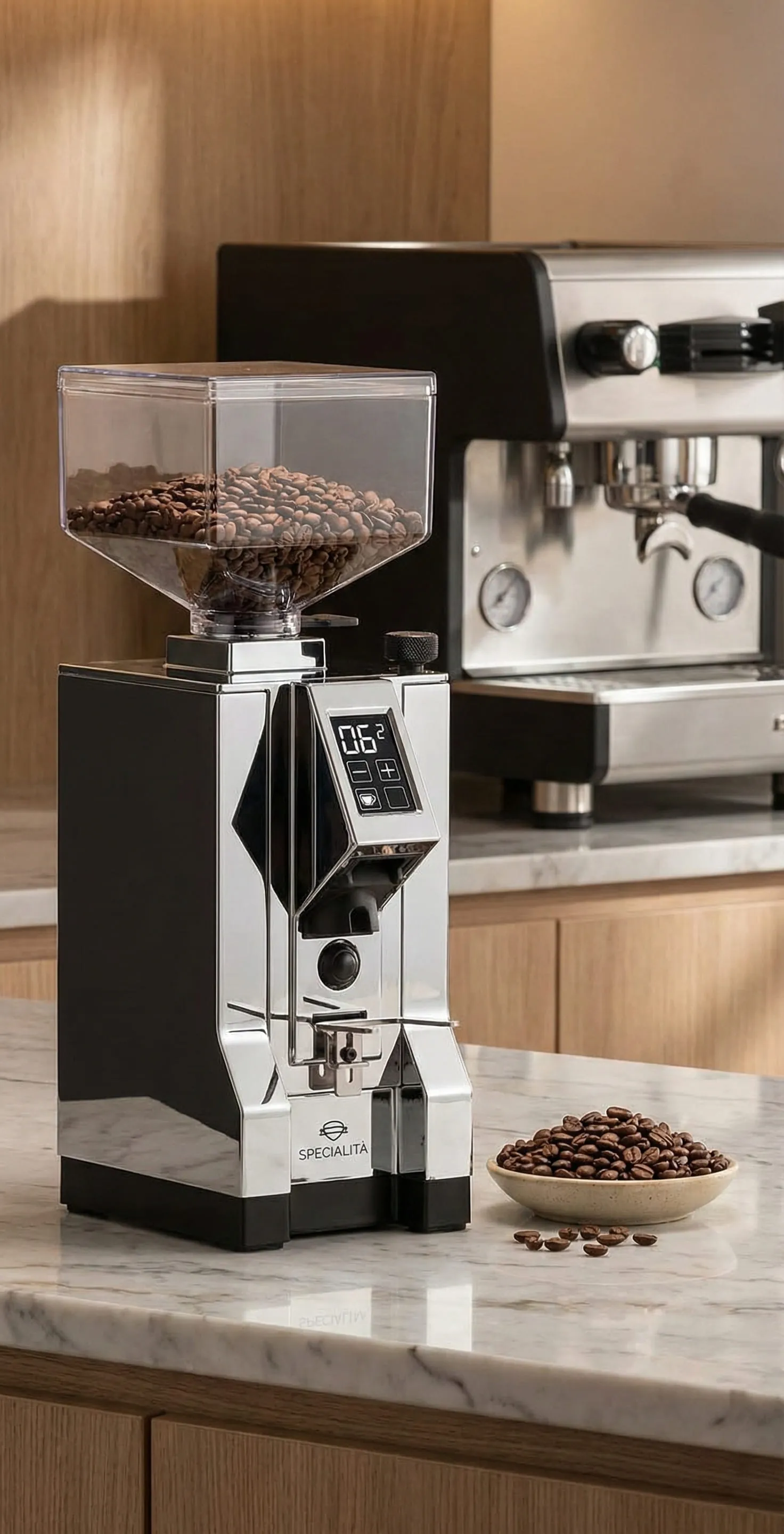
An electric grinder built for true single-dose espresso workflow, with sub-0.2g retention and exceptional grind quality.
Coffee grinder review
Last updated
Eureka Mignon Specialita review: can a near-silent espresso grinder justify its cost? We ran 500+ shots over 60 days and compared it with the Niche Zero.
Affiliate disclosure: this page contains Amazon affiliate links. We may earn a commission if you buy through them, at no extra cost to you, and it never affects our rankings. Read our full affiliate disclosure
Eureka Mignon Specialita at a GlanceHighly recommended
A confident pick for quiet, hopper-based espresso at $700–$800; the wrong spend if you rotate coffees weekly.
Prosumer Italian Espresso Grinder
Affiliate link: we may earn a commission at no extra cost to you. It never affects our rating.
On the grind bench· 500+ grinds · 60 days
Why it stands out
Watch out for
✓ Best for
Home espresso enthusiasts making multiple drinks daily who value quiet operation for early morning grinding
✕ Skip if
Single-dose enthusiasts who frequently switch between three or more coffee origins daily
The Specialita grinds espresso in near-total silence while keeping particle uniformity we've only seen from machines costing $900–$1,200.
The short answer: it earns its premium if silent operation, Italian build quality and a traditional hopper workflow matter more to you than single-dose flexibility. If you rotate coffees constantly or need to stay under $500, it doesn't.
If you're building out a full setup, see our espresso machines guide and top-rated coffee grinders roundup.
Check where you fit before you look at the trade-offs below.
A strong match
Consider something else
What earns the rating, and what you give up to get it.
8 reasons it works
6 trade-offs to weigh
How it performed in day-to-day use, in the order you will meet it.
Out of the box, the Specialita arrives heavily protected — foam-wrapped with the burr chamber sealed against shipping damage. After a sacrificial cleaning grind to clear manufacturing residue, the first dialed-in shot came together in under 30 minutes — 18g in, 36g out, 28 seconds.
A daily routine starts by locking the portafilter into the hands-free fork and pressing the programmed 18g preset — the grinder delivers a timed dose directly into the basket while both hands are free to prep the machine, at a noise level that has never once woken anyone sleeping in the next room. Measured against a traditional catch-cup workflow (grind, transfer, tap, clean), the hands-free fork trims the process from about 20 seconds to 12 — a difference that adds up over a household making several drinks each morning.
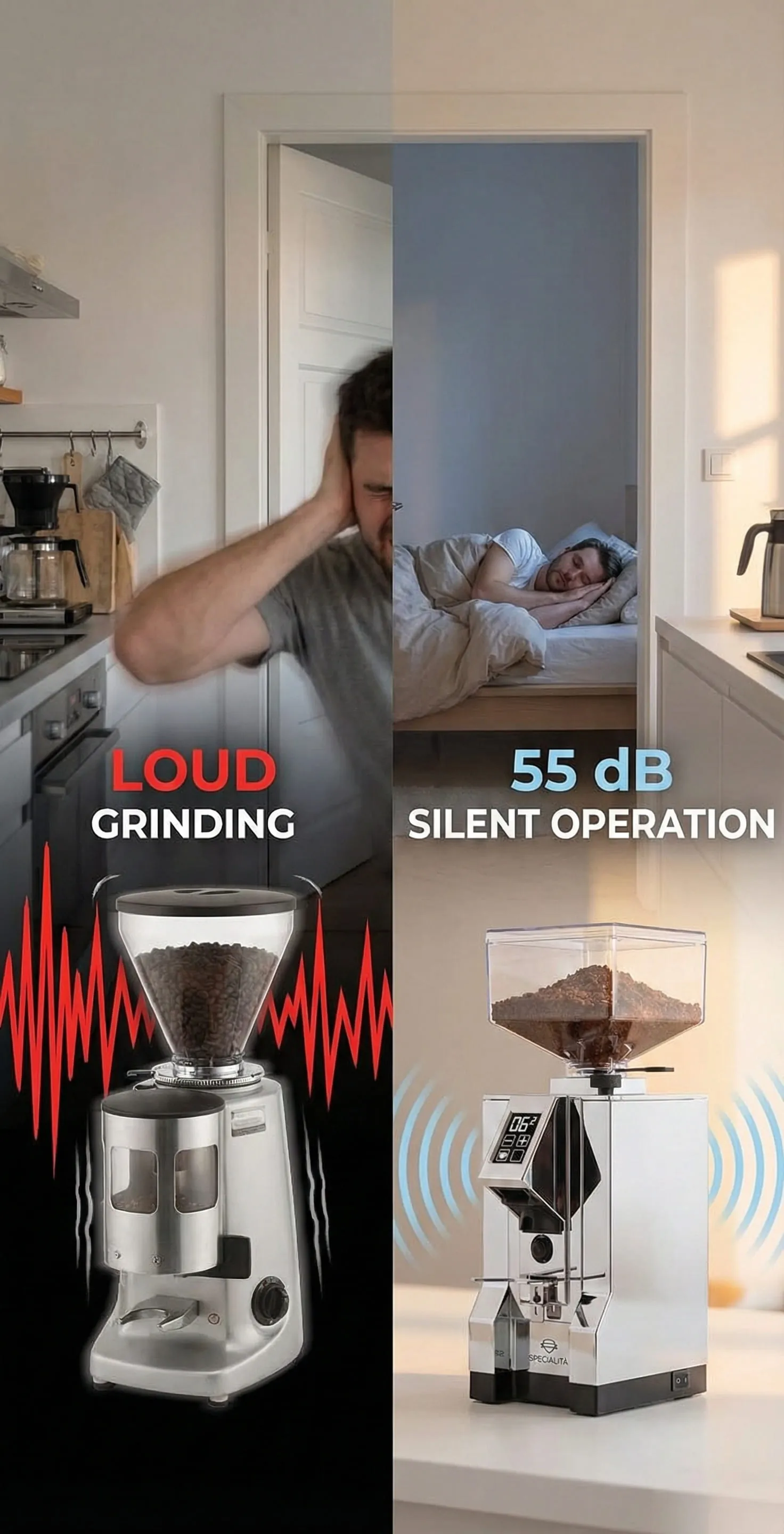
On decibels specifically, measurement with a calibrated meter put the Specialita at 55–58dB — a different category of quiet, not a marketing claim. For comparison:
The trade-off is grind speed: expect 8–10 seconds for an 18g dose, a few seconds slower than louder competitors. For anyone grinding espresso before the rest of the house is awake, that trade is worth making. The 300g hopper covers several days of typical household use before a refill, keeping the workflow simple rather than requiring weigh-and-load single-dosing.
Dialing in a new bean on the stepless collar typically takes two to three test shots once you understand how much collar movement changes extraction time.
For anyone who grinds the same bean for days at a stretch, this is a non-issue; for those rotating through four or five origins a week, it's a real annoyance.
Across six origins spanning light Ethiopian and Kenyan roasts to dark Italian blends, the 55mm flat burrs delivered extraction clarity that held up consistently — clean floral notes on light roasts without the sourness that trips up lesser grinders, and full body on dark roasts without burnt or muddy flavors. Shot-to-shot consistency at a fixed setting stayed tight across repeated grinds, a result that matches grinders costing several hundred dollars more.
Compared to the grinders it was tested against, particle uniformity is on par with the Niche Zero's conical burrs but with more flavor separation and clarity, and it clearly outperforms the Baratza Sette 270, especially on light roasts. Filter coffee is where the Specialita shows its limits — it can produce a workable pour-over grind, but the flat burr's fines leave it a step behind a grinder built specifically for filter brewing.
Routine cleanup is quick, and retention is the one figure worth knowing before you buy.
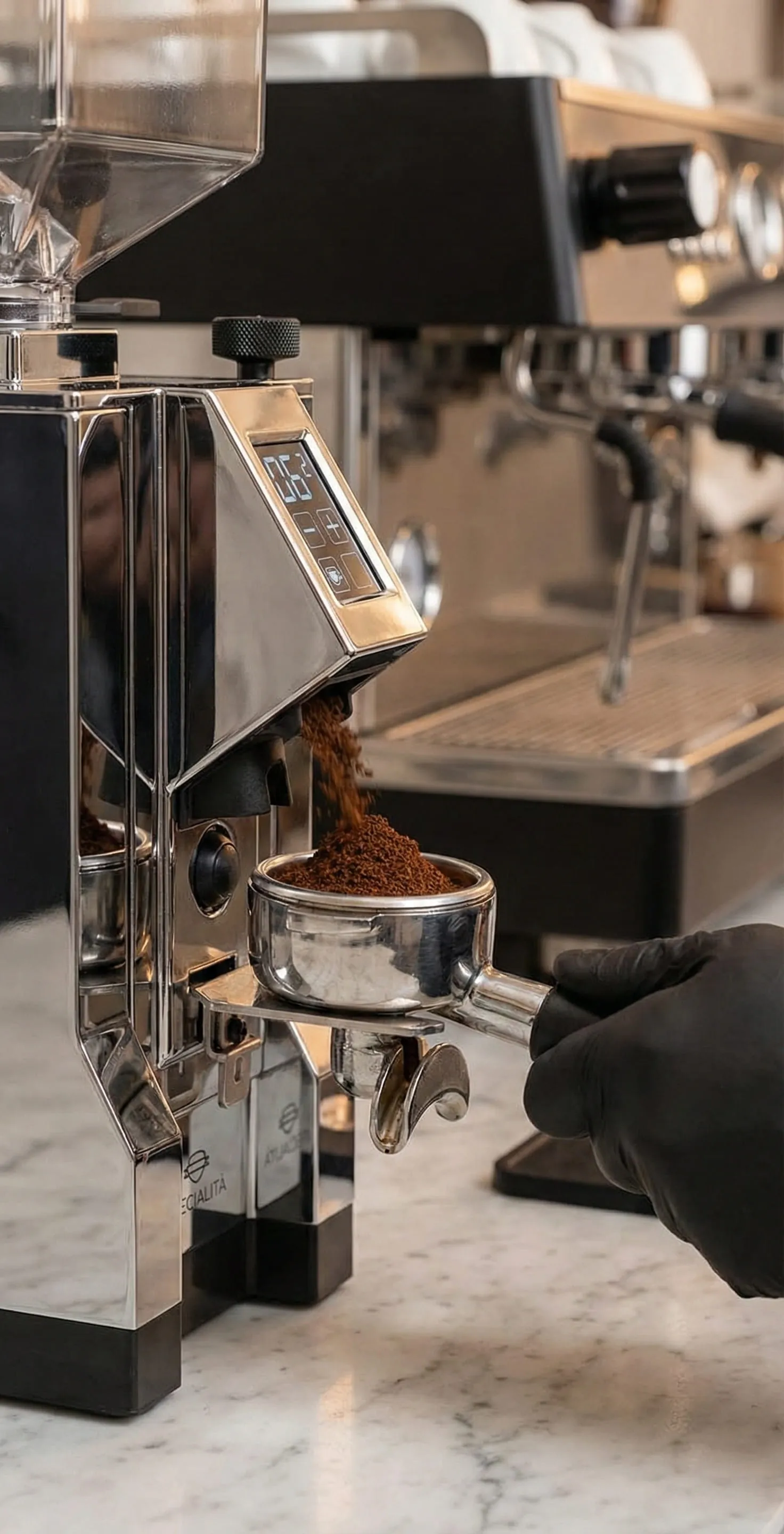
The mechanism behind the grind, in plain English, and what it changes in your cup
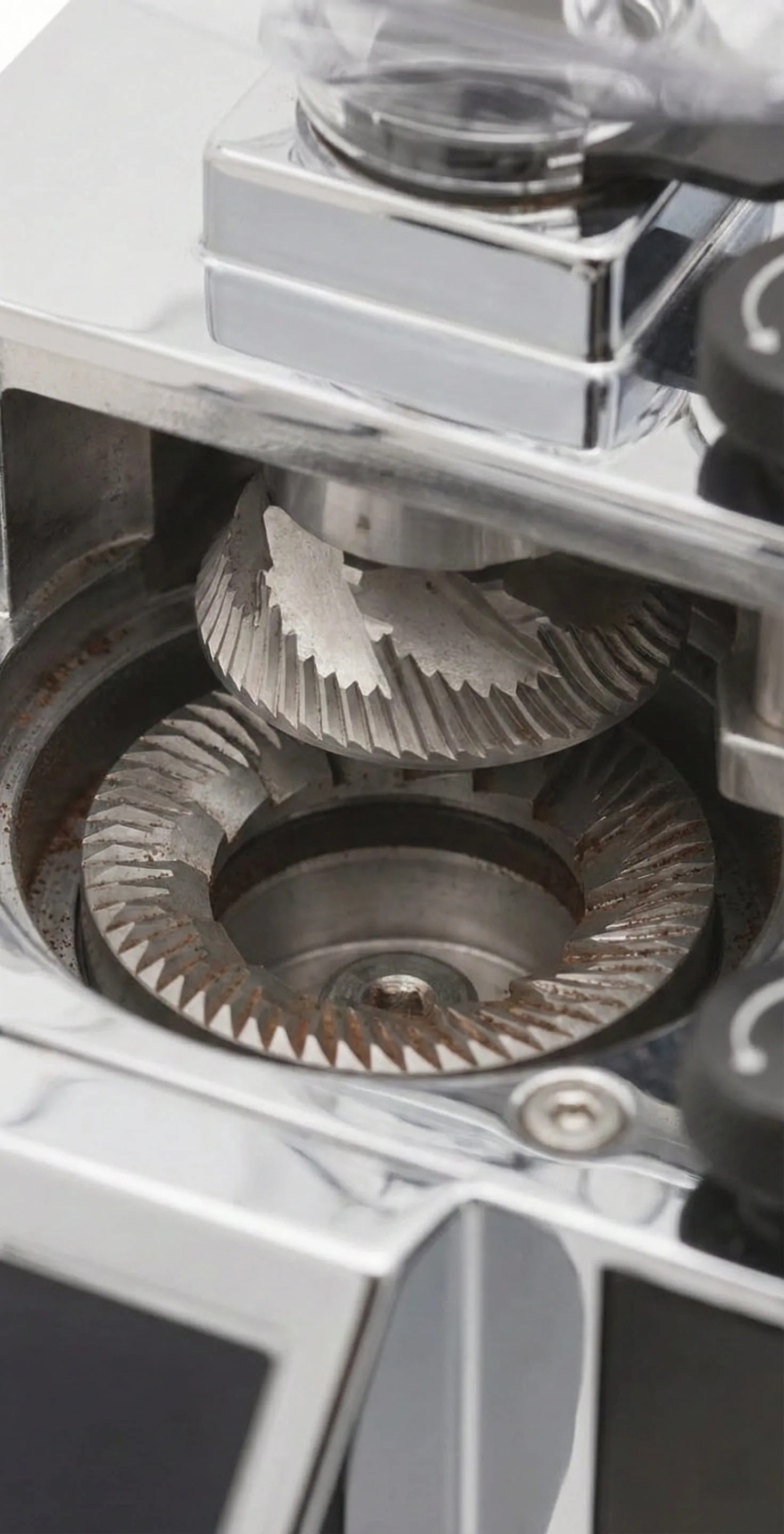
The Specialita is a flat burr grinder with 55mm burrs and a stepless adjustment. A flat burr set slices beans between two parallel discs, usually producing a tight range of particle sizes. That tight range is why espresso from this style often tastes clear and sweet rather than muddy.
The motor and housing are built around a hopper, timed dosing and a notably quiet motor. A stepless knob moves the burrs in tiny increments, so you can chase the ideal extraction time within a second or two.
The benefit in a real home: consistent shots, low noise for early mornings and apartments, and a grinder that works with most espresso machines. The cost is dialing effort, since stepless adjustment has no printed numbers.
Who this mechanism suits: Its main audience is espresso drinkers who need a quiet, tidy, always-ready grinder for a household that drinks the same blend daily. Anyone rotating many single origins weekly should look at a single-dose model.
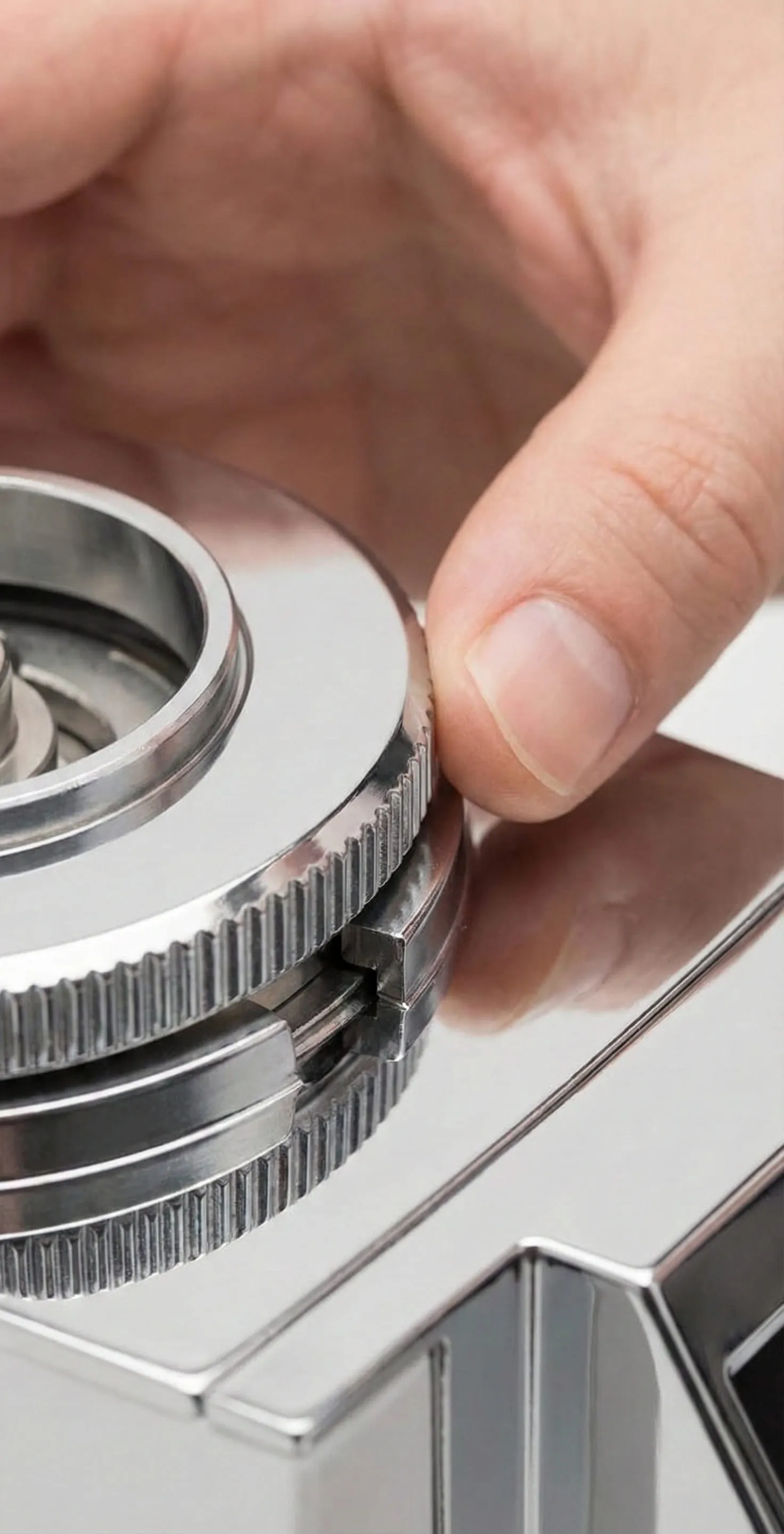
Typical ownership issues for this grinder type, and the tools and habits that solve them
Typical ownership issues are about retention, the doser and dialing in.
If you want a single-dose design, compare DF64 Gen 2.
Before you decide
Marketing leans on burr size and feature counts, but real espresso performance comes down to particle uniformity, precision of grind adjustment, and — often overlooked — how much noise the grinder makes in your kitchen.
The Specialita earns its place on all three: the 55mm Italian flat burrs deliver particle uniformity that punches well above the price, the stepless collar offers finer control than any stepped alternative once you learn it, and the noise level runs meaningfully lower than every direct competitor tested. At $700–$800 it's a real investment, but one built on Italian commercial-grade manufacturing rather than marketing spend.
It's the right choice for espresso-first buyers who value quiet mornings and hopper convenience over single-dose flexibility. Skip it if you need to rotate frequently between coffee origins, or if $500 is your ceiling — the Baratza Sette 270 or Eureka Mignon Manuale serve those needs better.
Durability, upkeep and running costs once the novelty wears off.
Zero visible wear on burrs or housing over the test period of daily grinding, with the adjustment collar holding calibration throughout.
All-metal Italian construction should reasonably outlast plastic-bodied competitors by years, with burr replacement the main wear item to plan for.
No mechanical issues surfaced during testing, and the stepless collar never drifted out of calibration.
Reported long-term issues are minor — occasional static in dry climates and rare burr-alignment drift after years of heavy use.
Burr sets (roughly $80–$120) and other components are available through Eureka's dealer network, though international parts shipping can take one to two weeks.
Routine cleaning supplies run roughly $15–$25 a year, with burr replacement the main expense expected around the five-to-seven-year mark for typical home use.
A 2-year manufacturer's warranty covers defects; post-warranty service through authorized dealers is available but not free, so factor that into total ownership cost.
Well-maintained units reportedly hold 60–70% of original price after two to three years — stronger resale than plastic-bodied competitors.
This grinder was purchased independently and was not provided by Eureka.
Our rating, who it fits, and what it costs.
Eureka Mignon SpecialitaHighly recommended
4.5 / 5 — Is it worth buying?
Daily testing across six coffee origins and three espresso machines confirm the Specialita's core claim: this is a prosumer Italian espresso grinder that delivers real commercial-grade quality, for buyers whose priorities match its strengths.
✓ Best for
✕ Skip if
Score breakdown
Shots tested
500+
Testing period
60 days
Ready to decide?
Our verdict: 4.5/5, highly recommended. Independently tested; commissions never change a rating.
See how the Eureka Mignon Specialita compares with the other picks in each tested roundup.
Closest alternatives in price and purpose, each tested the same way.
4.5Turin
An electric grinder built for true single-dose espresso workflow, with sub-0.2g retention and exceptional grind quality.
 4.8
4.8Turin
An electric grinder with factory-aligned 64mm flat burrs and sub-0.15g retention, built for single-dose espresso workflows.
 4.8
4.8Fellow
A single-dose grinder built specifically for pour-over and filter coffee enthusiasts — not intended for espresso.
 4.6
4.6Baratza
An electric grinder with micro-stepped adjustment under $300 and Baratza's repair-friendly design, spanning espresso through French press.
Put it into practice with a free calculator built for what you just read.
Quick answers before you buy.
It justifies the premium if you value three specific things: near-silent operation, commercial-grade Italian construction that showed zero wear across extensive testing, and a hands-free workflow that saves real time on busy mornings.
The 55mm flat burrs deliver particle uniformity matching grinders costing $900-$1,200+.
If you're budget-constrained under $500, the Baratza Sette 270 or Eureka Mignon Manuale (lower price) deliver excellent espresso without the workflow conveniences — the premium here buys quiet, durability, and convenience, not fundamentally better coffee.
It's quiet — measured with a calibrated decibel meter at 55–58dB, versus 63–65dB for the Niche Zero, 68–72dB for the DF64, and 78dB for the Baratza Sette 270Wi.
That's a meaningfully different category of quiet, not a marketing claim: in daily testing, grinding at 6:15 AM never once woke a sleeping household member, something that was simply impossible with louder grinders.
The trade-off is a slightly slower grind time — a fair exchange for anyone in an apartment or a noise-sensitive household.
It depends on your priorities. For silent operation and hands-free hopper workflow, the Specialita wins — it measured meaningfully quieter, and the timed dosing with portafilter fork saves real time in daily use.
For single-dose flexibility and lower retention, the Niche Zero is the better choice. Grind quality from both is excellent: the Specialita's flat burrs deliver more flavor clarity and separation, while the Niche Zero's conical burrs produce sweeter, rounder espresso.
Choose the Specialita if you grind the same beans from a hopper most days; choose the Niche Zero if you rotate between origins daily.
It's espresso-specialized and only adequate for filter brewing. The 55mm flat burrs can produce the coarser grind pour-over needs, but particle distribution includes more fines than a grinder optimized for filter brewing, and timed dosing calibrated for espresso needs full recalibration for filter-sized doses.
If you're mostly espresso with occasional filter brewing, it handles both fine. If you split evenly between espresso and pour-over, a more versatile grinder — or a second dedicated filter grinder — will serve you better.
Eureka backs the Specialita with a 2-year manufacturer's warranty covering defects.
Post-warranty service through authorized dealers is available but not free, so include that in your total ownership cost.
Burr sets run roughly $80-$120 and are available through Eureka's dealer network, though international shipping can take one to two weeks.
For typical home use, burr replacement is expected around the five-to-seven-year mark.
Retention runs higher than on dedicated single-dose grinders, which is acceptable for a hopper workflow but not ideal if you swap beans daily.
If you need retention below 0.3g, a single-dose grinder such as the DF64 Gen 2 fits better.
Buy the Specialita if you grind the same beans from a hopper most days and want the quietest workflow; buy the DF64 Gen 2 if you single-dose and switch beans often. The Specialita's timed dosing and portafilter fork make daily espresso fast and hands-free, and its low noise suits early mornings in shared homes.
The DF64 Gen 2 is built around single dosing, so it holds back less coffee between shots and suits people who rotate origins. Both use flat burrs, so the choice is mostly about workflow rather than cup quality.
Reader questions
Questions or tips? Leave a comment
Ask about your setup or share what worked for you. Comments are checked before they appear.