Expert comparison

Updated October 14, 2026

Best Coffee Grinders 2026: Espresso & Filter

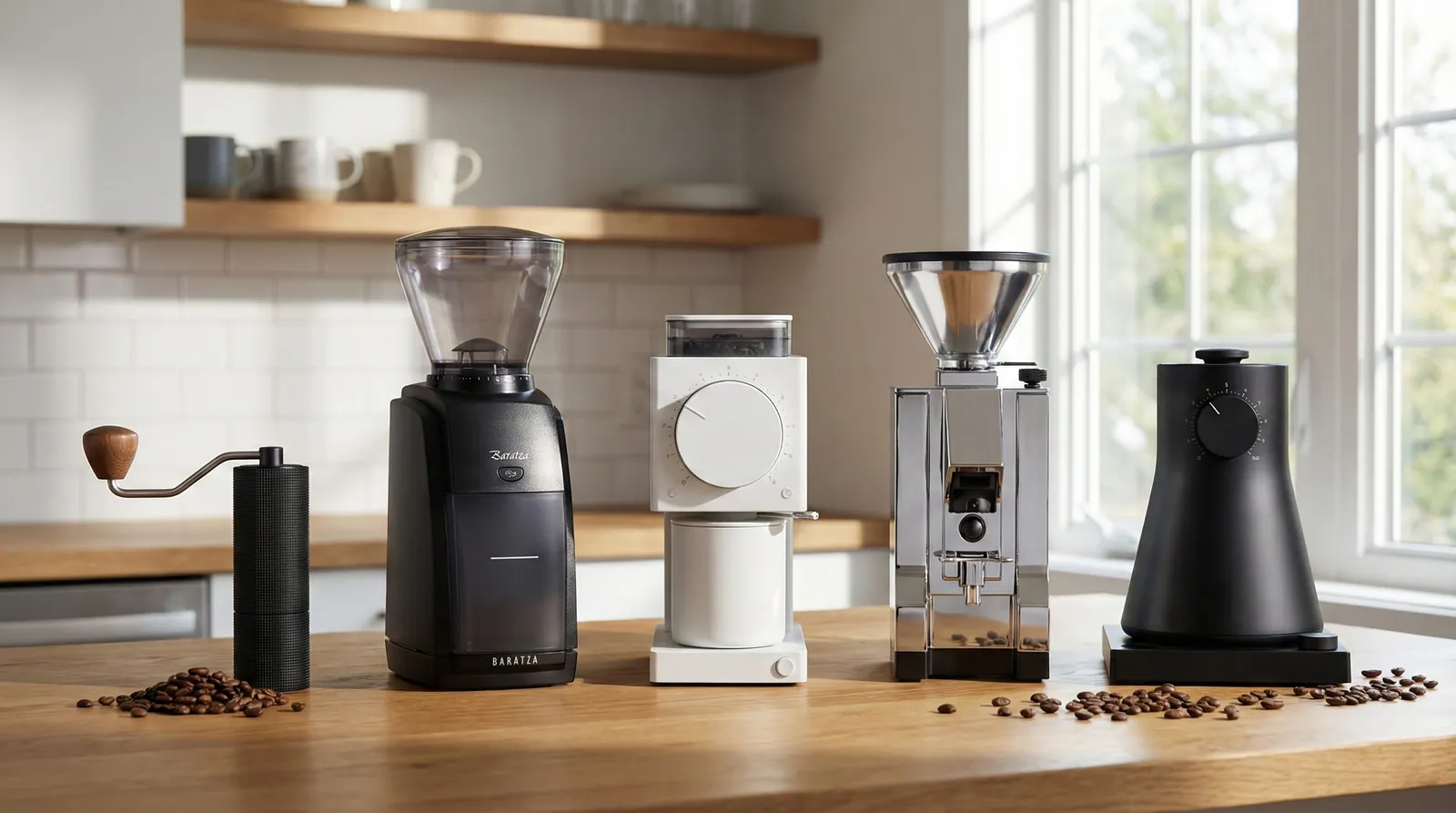
The best coffee grinder for most people is the Baratza Encore ESP for espresso on a budget or the Fellow Opus for every brew method. Six burr grinders compared, plus who should skip each.

Affiliate disclosure: this page contains Amazon affiliate links. We may earn a commission if you buy through them, at no extra cost to you, and it never affects our rankings. Read our full affiliate disclosure

Which is the best coffee grinder for most people?

Which coffee grinder is right for you?

Find your situation, then jump to the matching grinder.

Coffee grinder comparison: how do the six stack up?

Scores out of 100 from 4-9 weeks of testing per grinder: consistency, retention, dial-in, durability and value.

ProductBest forType and burrPriceScoreLink

Best overall

Baratza Encore ESP

Best overall

Best forEntry-level espresso plus filterType and burrElectric, 40mm conicalPrice$199-$299Score89Check current price

Best value

Fellow Opus

Best value

Best forOne grinder for every methodType and burrElectric, 41mm conicalPrice$195-$225Score91Check current price

Best for espresso

Eureka Mignon Specialita

Best for espresso

Best forSerious, quiet espressoType and burrElectric, 55mm flatPrice$700-$800Score94Check current price

Best for filter

Fellow Ode Gen 2

Best for filter

Best forPour-over, drip and French pressType and burrElectric, 64mm flatPrice$350-$450Score90Check current price

Best manual

Timemore Chestnut C3

Best manual

Best forBudget, travel, 1-2 cups a dayType and burrManual, 38mm conicalPrice$99-$149Score88Check current price

Best single-dose

Turin DF64 Gen 2

Best single-dose

Best forSingle-dose espresso under $500Type and burrElectric, 64mm flatPrice$399-$479Score93Check current price

Best burr grinders reviewed: strengths and trade-offs

Each pick lists who it suits, who should skip it and what you give up.

1. Best overall

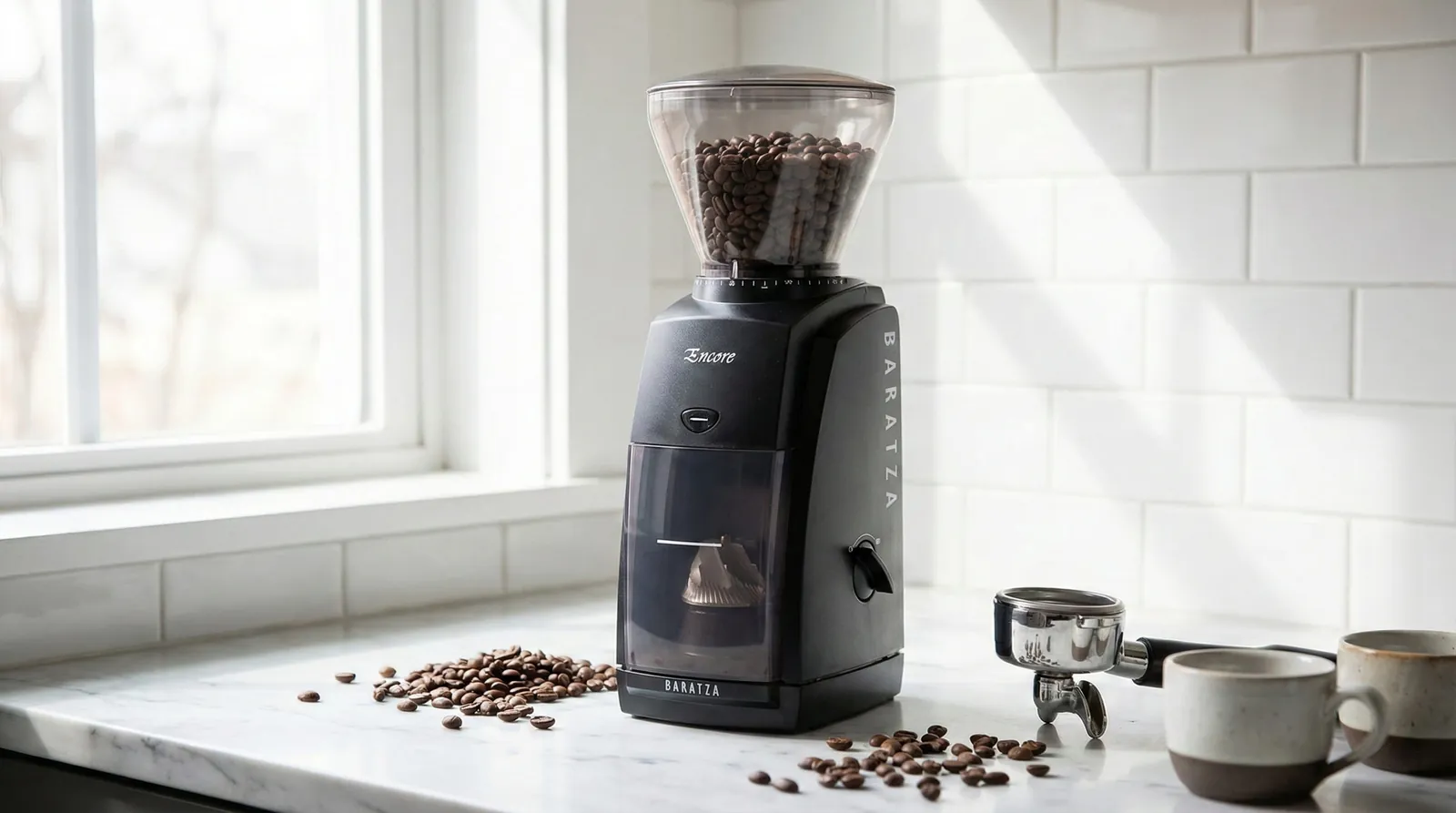
Baratza Encore ESP

★ 4.6/5Score 89/100

Handles espresso as well as filter brewing, with 25-30 second extractions at an 18g dose and a fine range that still stretches to French press. Parts and support are easy to get. The trade-off is a noisier, slower grind than the other picks.

Best for
Home baristas moving into espresso who also brew pour-over, pulling 1-3 shots a day and wanting a repairable grinder.
Skip if
You are a dedicated espresso enthusiast chasing sub-0.1g retention and stepless dial-in, or you want a premium feel out of the box. The plastic housing and micro-stepped adjustment will start to limit you.
  • Espresso-capable at $199-$299
  • Covers espresso to French press with 40 settings
  • Fully repairable, replacement parts available
  • Grinds into a portafilter or bin; simple pulse button
  • Removable upper burr for cleaning; 1-year warranty
  • Plastic construction
  • Retention of 2.8-3.2g measured without RDT (1.6-2.1g with it), higher than single-dose grinders
  • Micro-stepped adjustment, not fully stepless
  • Louder than the others tested (70-75 dB measured)
  • Slower: 18-19 seconds for an 18g dose

Own it already? Baratza Encore ESP Grind Settings Chart.
2. Best value

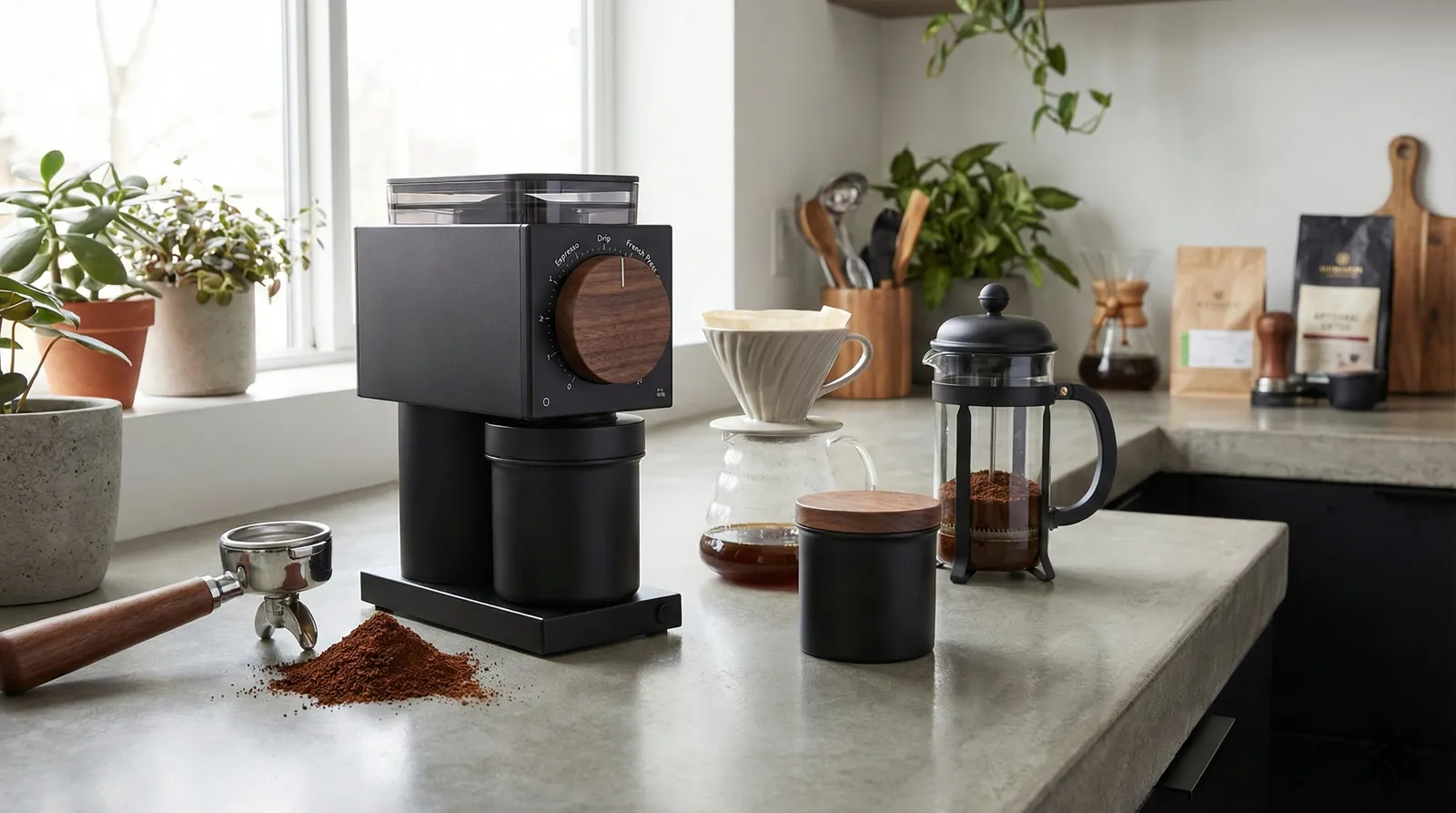
Fellow Opus

★ 4.5/5Score 91/100

Delivers clean 25-30 second extractions on medium and dark roasts, with lower retention than the Baratza. The two-ring dial makes switching methods quick. The trade-off is that the espresso end of the range may not go fine enough for every setup.

Best for
Enthusiasts who brew several methods a day, such as espresso in the morning and pour-over in the afternoon, and want good design at $195-$225.
Skip if
You need the finest possible espresso grind or want to grind straight into a portafilter. Part of the price is design, not just performance.
  • 41 settings from espresso to cold brew
  • Anti-static design with 0.2-0.3g retention
  • Premium build with a magnetic hopper
  • Volumetric dosing with adjustable cup settings
  • Intuitive adjustment, moderate noise (70-75 dB)
  • Espresso range could be finer for some setups
  • Stepped, not stepless
  • Burr cleaning needs a hex key
  • No direct-to-portafilter grinding
  • Some users report calibration variance

3. Best for espresso

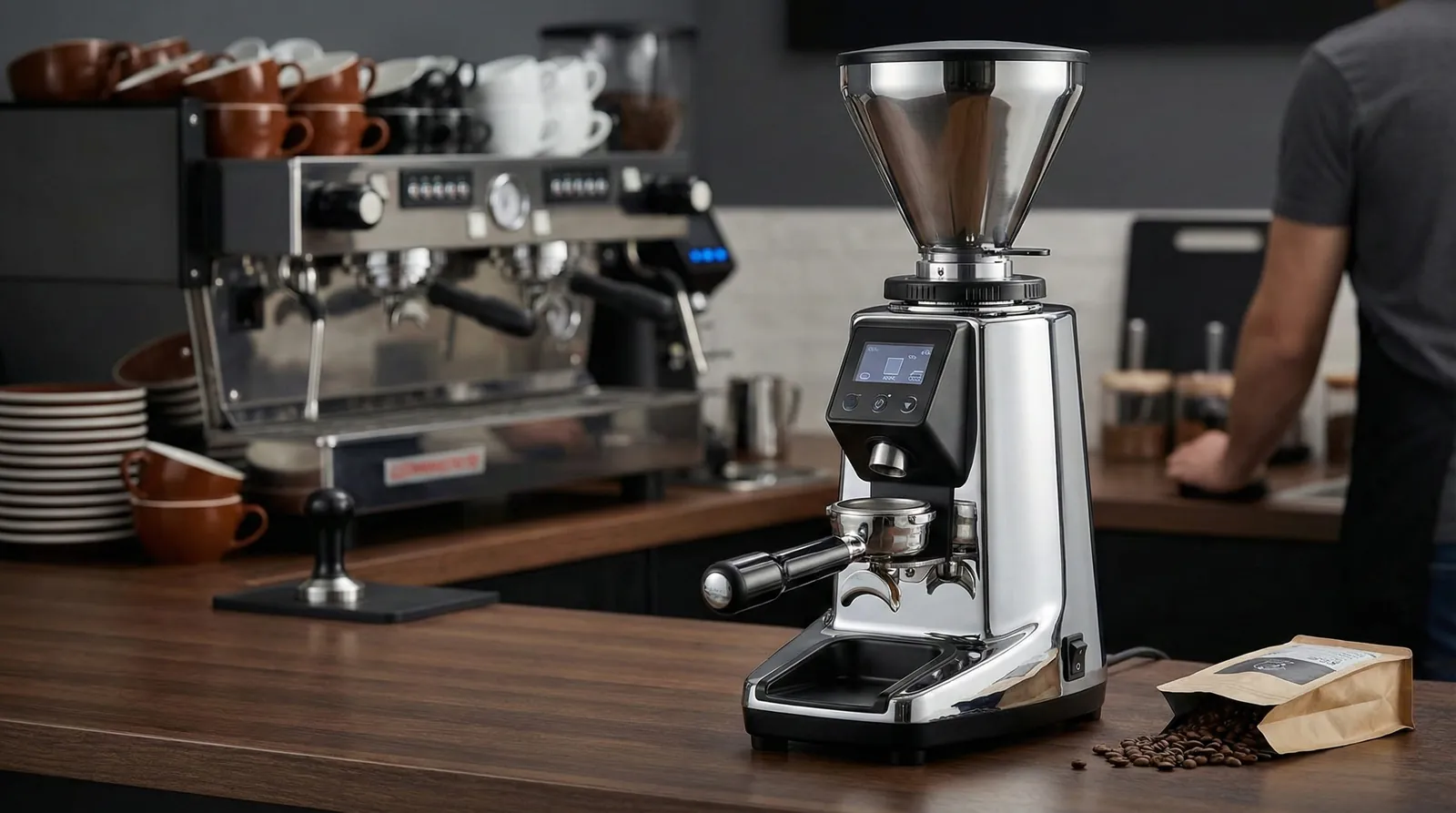
Eureka Mignon Specialita

★ 4.5/5Score 94/100

Quiet and repeatable, with stepless adjustment that makes dialing in straightforward across very different roasts. Programmed doses landed within 0.2g of target. It is built around espresso, so filter brewers pay a high price for strengths they will not use.

Best for
Espresso-first home baristas pulling 2-4+ shots a day who want repeatable shots and low noise, stepping up from an intermediate setup.
Skip if
You mostly brew filter coffee, are on a tighter budget, or would rather have simple mechanical dials than touch controls.
  • Stepless micrometric adjustment
  • 55-58 dB while grinding
  • Programmable timed dosing, 18.0-18.2g repeatability
  • About 0.5g retention
  • Commercial-grade build, 12cm wide
  • Espresso-focused, not versatile for filter
  • Highest price of the six
  • Static and clumping at certain settings
  • Touch controls can be finicky
  • Hopper not removable on all models; limited availability in some regions

4. Best for filter

Fellow Ode Gen 2

★ 4.8/5Score 90/100

Designed around filter coffee, where V60 brews showed more clarity, fruit and cleaner finishes than the all-purpose grinders. The single-dose workflow is tidy and accurate. It cannot grind fine enough for espresso at any setting, so espresso drinkers need a dedicated grinder.

Best for
Filter purists who brew 80%+ pour-over, V60 or Chemex and value clarity and sweetness, with only occasional light espresso.
Skip if
Espresso is your main or only method. The Ode cannot grind for espresso at any setting, and the price is hard to justify for occasional filter use.
  • Cup clarity and sweetness for filter
  • Single-dose design with knocker and anti-static tech
  • Gen 2 burrs produce roughly 30% fewer fines than Gen 1
  • Auto-stop and magnetic catch cup
  • Quiet, premium build
  • Cannot grind for espresso at any setting
  • Premium price for a filter-focused grinder
  • Stepped adjustment, narrower range than all-purpose grinders
  • Small 80g hopper (built for single dosing)
  • No auto-dosing or grind-by-weight features

5. Best manual

Timemore Chestnut C3

★ 4.5/5Score 88/100

Pour-over grind quality matched a similarly priced $140 Baratza Encore in blind tastings, in a body small enough to travel. The cost is effort: a 20g dose took 60-90 seconds of cranking (90-120 seconds at espresso fineness), though the dual bearings keep the action smooth.

Best for
Budget buyers, travelers and anyone making 1-2 cups a day, or as a backup grinder. Silent, so it works while others sleep.
Skip if
You brew for a household or grind several cups back to back each morning, or want stepless micro-adjustment for dialing in espresso.
  • Grind quality matched a similarly priced $140 Baratza Encore in blind tastings
  • Portable (420g), foldable handle, no electricity
  • Silent operation
  • Aluminum body, easy to clean
  • Works from espresso to French press
  • 60-90 seconds of cranking per dose
  • Arm fatigue on finer settings
  • Stepped adjustment (20 clicks)
  • 20-25g capacity
  • Glass catch jar can break if dropped

Own it already? Timemore Chestnut C3 Grind Settings Chart.

6. Best single-dose

Turin DF64 Gen 2

★ 4.8/5Score 93/100

Delivers flat-burr consistency usually seen from pricier grinders, with very low retention and shots that varied by only about 1.5 seconds once dialed. Gen 2 adds a new single-dose tray and better factory alignment. It is a specialist tool that still asks for some setup.

Best for
Dedicated espresso enthusiasts who want single-dose workflow and 64mm flat burr performance under $500, especially when upgrading from a stepped grinder.
Skip if
You mainly brew filter, want a hopper for grab-and-go grinding, or expect zero setup. It is single-dose only and worth an alignment check before your first shot.
  • Under 0.15g retention without technique
  • Stepless micro-adjustment
  • Anti-static ionizer (about 70% static reduction)
  • About 60 dB, all-metal housing
  • SSP upgrade path and an active modding community
  • Espresso-specialized, filter is secondary
  • Stepless dial has no reference markings
  • Single-dose only, no hopper
  • Alignment check recommended on day one
  • Less polished than $700+ alternatives

How do I choose a coffee grinder for espresso, filter or budget?

If this is your situation, then this is the trade-off to make.

By what you brew

IfEspresso is your main brew method

Plan on $200+ for a precision burr grinder. Entry: Baratza Encore ESP ($199-$299). Serious: Eureka Mignon Specialita or Turin DF64 Gen 2. The DF64 is a single-dose grinder: you weigh the beans for each shot and grind them all, which suits switching beans often (see our DF64 Gen 2 review). Pair it with a machine from our espresso machine reviews. If you pull ristretto shots, consistency matters even more.

IfYou mostly brew pour-over or drip

Burr grinders at $150-300 excel. Fellow Ode Gen 2 for clarity, or Fellow Opus and Baratza Virtuoso+ for less. Going to $400+ brought no meaningful improvement for drip. See compatible brewers in our coffee maker reviews.

IfYou brew French press or cold brew

A budget burr or manual grinder ($100-150) is enough, since coarse grinds are not demanding. The Timemore C3 does this well.

IfYou want espresso and filter from one grinder

Fellow Opus is the most versatile, the Encore ESP the best value, and the DF64 Gen 2 the best if espresso leads. Espresso-optimized grinders (stepped fine adjustment, low retention) work across methods; filter-first ones do not reach espresso well.

By budget

IfAbout $100-$150

Manual only. The Timemore C3 ($99-$149) trades 60-90 seconds of cranking per dose for grind quality that matched a $140 electric Baratza Encore. Not sure hand grinding suits your routine? Our manual vs electric grinders guide weighs the effort against the savings.

If$150-$300

Entry electric burr: Baratza Encore (about $150, filter), Fellow Opus ($195-$225) or Encore ESP ($199-$299) for espresso capability. Under $200 and want dosing control, see the Breville Smart Grinder Pro.

If$300-$800

Premium espresso: DF64 Gen 2 ($399-$479) or Eureka Mignon Specialita ($700-$800). Diminishing returns begin here.

IfYou are weighing grinder against machine

Spend at least as much on the grinder as on the coffee maker. The grinder has more effect on cup quality, and a $150 grinder can bottleneck a $1,000 machine.

By how you live with it

IfYou make 1-2 cups a day, travel, or grind while others sleep

Go manual: 60-90 seconds per dose and silent. See manual vs electric grinders.

IfYou make 2+ drinks in the morning or pull back-to-back shots

Go electric: 8-19 seconds per 18g dose (18-19 for the Baratza, 15-18 for the Opus), 8-10 seconds for the Eureka.

IfNoise matters (apartment, early mornings)

Eureka Mignon (55-58 dB) and DF64 Gen 2 (about 60 dB) are the quietest electrics tested; the Baratza measured 70-75 dB. A manual grinder is silent.

IfYou want the lowest waste and freshest dose

Choose low retention: DF64 Gen 2 under 0.15g, Fellow Opus 0.2-0.3g, Eureka about 0.5g, Baratza 2.8-3.2g (1.6-2.1g with RDT). Even the Baratza figure is manageable for hopper-fed daily use.

IfYou dial in espresso often

Prefer stepless adjustment (Eureka, DF64). Stepped dials (Baratza, Opus, Ode, C3) make it easier to return to a favorite setting, which suits filter brewing. Flat burrs suit dedicated espresso; all the all-purpose picks here use conical burrs, and both types can produce excellent results when well made.

New to the terms? Our guides cover burr vs blade grinders, how to choose a burr grinder and a grind size chart. Buying mainly for espresso on a budget? See the best espresso grinders under $300.

What other coffee grinders are worth considering?

Strong options that fit narrower needs than the picks above.

KINGrinder K7

$85-$99, 48mm titanium-coated burrs and a 55g hopper. Best manual for brewing two or more servings; in Kruve Sifter Pro testing it outperformed every 38mm budget grinder on filter distribution.

Comandante C40

$269-$349 hand grinder. Nitro Blade burrs showed zero measurable wear across 600 grinds, and blind filter cups matched the Fellow Ode Gen 2.

Breville Smart Grinder Pro

Under $200 with 60 settings, a Dosing IQ timer and a built-in portafilter cradle. A fit if you want dosing control and both espresso and filter from one grinder.

Baratza Virtuoso+

Excellent for filter coffee, especially V60 and Chemex.

Mavo Phantox Pro

Titanium nitride burrs and infinite micro-adjustment for stepless single-origin filter work; matched the Ode Gen 2 in about half of blind cup sessions.

How did we test and rank these coffee grinders?

Bought independently, tested at home for 4 to 9 weeks each across 1000+ grinds. No paid placements.

  • Grind consistency: particle distribution and fines percentage measured with a calibrated sieve set; a narrow distribution means more balanced extraction and fewer bitter fines.
  • Retention and static: dose-in against dose-out across 10 consecutive grinds; under 0.3g earns top marks. Static build-up in the chute is also scored.
  • Dial-in precision: espresso-capable grinders run through at least 30 calibration shots, logging dose, yield and extraction time.
  • Noise and workflow: sound level measured at 1 metre during a 15g grind; workflow covers hopper loading, grounds delivery and clean-up.
  • Build and durability: materials, burr tolerances and motor consistency, re-evaluated at 3-month intervals where possible.
  • Value: ranked within its price tier against direct competitors, not against grinders at three times the price.

How do I clean a coffee grinder?

Coffee oils go rancid: three months of uncleaned daily use left oxidized oil on the burrs.

Daily: Brush out grounds

Takes 30 seconds and removes about 0.5g of stale coffee that would contaminate the next dose. A soft or paint brush works.

Weekly: Vacuum the chamber

A small handheld vacuum or brush attachment clears fine particles and chaff from the chamber and chute in about 2 minutes.

Monthly: Run cleaning tablets

Urnex Grindz tablets, per package directions, worked better and faster than manual cleaning for removing coffee oils.

Every 3-6 months: Deep clean the burrs

Disassemble and clean the burrs (about 20 minutes). Check your manual: some burrs can be washed with mild soap, others should stay dry.

Frequently Asked Questions

Quick answers before you buy.

Yes. In a test of 50 espresso shots with a blade grinder and 50 with the Baratza Encore ESP (same beans, same machine), the blade grinder produced everything from powder to chunks under 30x magnification, with extraction times swinging between 15 and 40 seconds and bitter, sour shots.

The burr grinder gave uniform particles, 25-30 second extractions and balanced, sweet espresso. Blades also heated the grounds (a 15°F rise measured).

A blade grinder costs $20-40, but for espresso a burr grinder is necessary, and for drip the $100-150 step up improves consistency and clarity. The only case for blades is a very tight budget with French press or cold brew only.

Yes, with compromises. The Fellow Opus and Baratza Encore ESP were tested for both espresso and pour-over over 60 days.

Both covered the range: the Opus was stronger on filter coffee, while the Encore ESP edged ahead on espresso thanks to its micro-stepped fine adjustment. Dialing in espresso took more effort than on a dedicated espresso grinder.

Filter-focused grinders like the Fellow Ode cannot grind fine enough for espresso at any setting. If you are serious about both, two grinders, for example a Eureka for espresso and a Fellow Ode for pour-over, is worth the extra workflow.

Yes, if you accept the effort. The Timemore Chestnut C3 gave acceptable 25-30 second extractions at settings 5-8 on a Flair manual machine, and the 1Zpresso JX-Pro ($130-$150) matched electric grinders costing $400+.

The catch is time: grinding 18g for espresso by hand takes 90-120 seconds on the C3, against 8-10 seconds on the Eureka Mignon. Manual suits one or two drinks a day; if you pull back-to-back shots, buy electric.

Buy the Fellow Opus ($195-$225) if you brew several methods and want lower retention (0.2-0.3g), quieter operation and anti-static design. Buy the Baratza Encore ESP ($199-$299) if espresso is the priority, you want to grind into a portafilter and you value easy repairs and replacement parts.

The Encore ESP is louder (70-75 dB measured) and holds more coffee in the chamber (2.8-3.2g without RDT). Read both full write-ups in our Fellow Opus review and Baratza Encore ESP review.

It can be if you want dosing control. The Breville Smart Grinder Pro costs under $200, offers 60 settings, a Dosing IQ timer and a portafilter cradle, while the Encore ESP is the simpler, more repairable machine with a fine range built for espresso.

Choose the Breville for timed doses and the Baratza for parts availability. See the Breville Smart Grinder Pro review.

Neither is better in every case. Flat burrs are often preferred for espresso and for clarity in filter cups, while conical burrs tend to be more forgiving and are common in all-purpose grinders.

Burr quality, alignment and the grinder's adjustment system usually matter more than the shape alone. Our guide to choosing a burr grinder explains the differences in more detail.

A useful rule is to spend at least as much on the grinder as on the coffee maker. For filter coffee, $99-$250 covers excellent hand and entry electric grinders; for espresso, expect to start around $200-$300.

Past about $400-$800, gains are smaller and are mostly about workflow, noise and adjustment precision. Use our espresso dial-in calculator once you have a grinder.

Retention is the coffee left inside the grinder after you finish grinding.

It matters most when you single-dose or change beans often, because leftover grounds can end up in your next dose and change its freshness and weight.

A grinder with about 0.5g retention (Eureka) or under 0.15g (DF64 Gen
2) is cleaner than one at 2.8-3.2g without RDT (Baratza), though daily users will rarely notice the lower figure.