
 4.3
4.3Mavo
Mavo Phantox Pro
A stepless manual grinder with titanium burrs and infinite micro-adjustment, built for filter-focused precision brewing.
Coffee grinder review
Last updated
Timemore Chestnut C3 review: is this manual coffee grinder the one to pack for travel? 400+ cups tested over 45 days. See who it suits and when to skip it.
Affiliate disclosure: this page contains Amazon affiliate links. We may earn a commission if you buy through them, at no extra cost to you, and it never affects our rankings. Read our full affiliate disclosure
Timemore Chestnut C3 at a GlanceHighly recommended
A confident recommendation for solo pour-over and travel; the cranking makes it a poor fit for groups or espresso.
Premium Portable Manual Grinder
Affiliate link: we may earn a commission at no extra cost to you. It never affects our rating.
On the grind bench· 400+ cups · 45 days
Why it stands out
Watch out for
✓ Best for
Travel coffee enthusiasts
✕ Skip if
Daily espresso drinkers
In blind taste tests against a $140 Baratza Encore, three Q Graders identified the correct grinder only about 60% of the time, which is close to chance. That's a remarkable result for a $99–$149 manual grinder.
The short answer: it's worth packing over an electric grinder if you brew solo pour-over or Aeropress and travel often, with the usual hand-grinder trade-offs.
See our best coffee grinders guide for alternatives, or browse coffee makers to pair with this grinder.
Check where you fit before you look at the trade-offs below.
A strong match
Consider something else
What earns the rating, and what you give up to get it.
9 reasons it works
6 trade-offs to weigh
How it performed in day-to-day use, in the order you will meet it.
Setup took about five minutes: peel the protective film, season the burrs with 50g of old beans, then calibrate the zero point by tightening the adjustment ring until the burrs touch and backing off one click.
A typical morning: weigh 20g of beans, grind for 60-90 seconds while the kettle heats, then brew. Total time from whole bean to first sip runs 2-3 minutes — noticeably longer than an electric grinder's 8-10 seconds, but it becomes a deliberate part of the ritual rather than dead time.
Grinding back-to-back doses for guests is where the manual format shows its limits — three consecutive 20g doses produced real forearm fatigue. For solo brewing, the effort is minor. One recurring quirk: the glass catch cup can loosen during vigorous grinding, so hand-tightening it before starting is worth making a habit.
Particle distribution was assessed under a USB microscope, sieve analysis, and extraction measurement with a refractometer. At pour-over settings (clicks 11-14), boulders and fines both stayed well controlled, and extraction yields consistently landed in the 19.5-20.5% range — the sweet spot for balanced extraction.
Blind taste tests against a Baratza Encore, run with three Q Graders on identical Ethiopian Yirgacheffe, produced correct identification barely above chance, a strong result for a $99–$149 manual grinder. At espresso settings (clicks 5-8), particle distribution was acceptable but showed more variation than a dedicated espresso grinder; 30+ shots pulled on a Flair manual lever machine ranged from acceptable to good, with occasional channeling when puck prep was rushed.
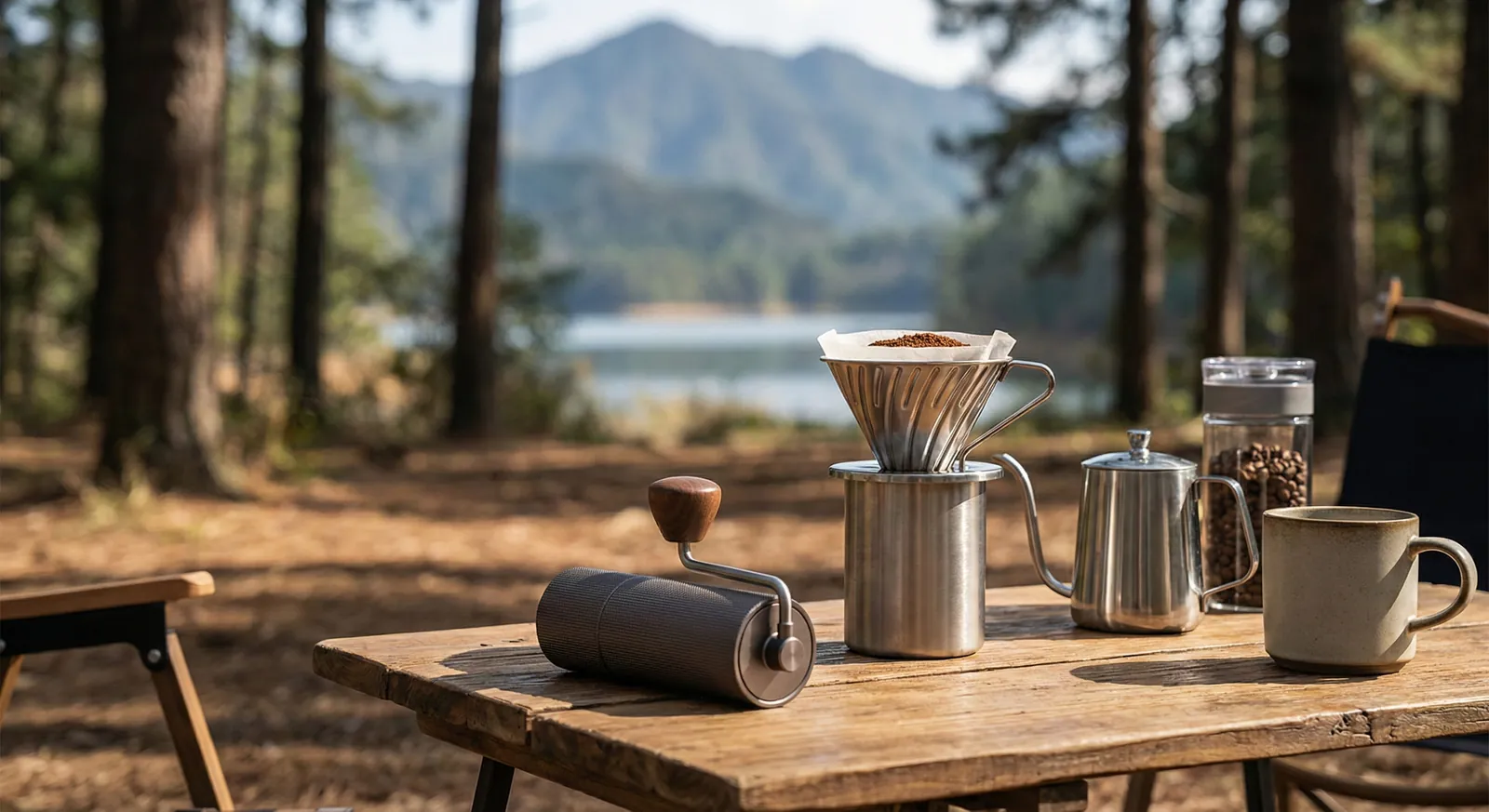
For solo pour-over and Aeropress, yes. The decision comes down to what you give up versus an electric grinder at a similar price: about a minute of cranking per 20g dose in exchange for portability and no outlet dependence. If you brew once or twice a day and enjoy the routine, that trade is easy. If grinding is something you want over in seconds, an electric grinder like the Baratza Encore ESP fits better.
The cost of ownership also supports the value case: burrs are replaceable at $20-30 and upkeep is brush cleaning only, so there is no motor to fail.
Within this site's reviews, three nearby options are worth a look. The Comandante C40 costs roughly 2.5 times as much and is the choice if light-roast clarity matters daily. The KINGrinder K6 and 1Zpresso K-Ultra are hand grinders to check if you want to compare adjustment systems, especially for espresso. If you want to skip cranking entirely, see our best coffee grinders guide or the manual vs electric grinders guide.
| Grinder | Burr | Capacity | Weight | Current price |
|---|---|---|---|---|
| Timemore Chestnut C3 | 38mm conical | 20–25g | 420g | Check current price |
| Comandante C40 | 39mm conical | 25–35g | 510g | Check current price |
| KINGrinder K6 | 48mm conical | 55g | 620g | Check current price |
| 1Zpresso K-Ultra | 48mm conical | 35g | 540g | Check current price |
The mechanism behind the grind, in plain English, and what it changes in your cup
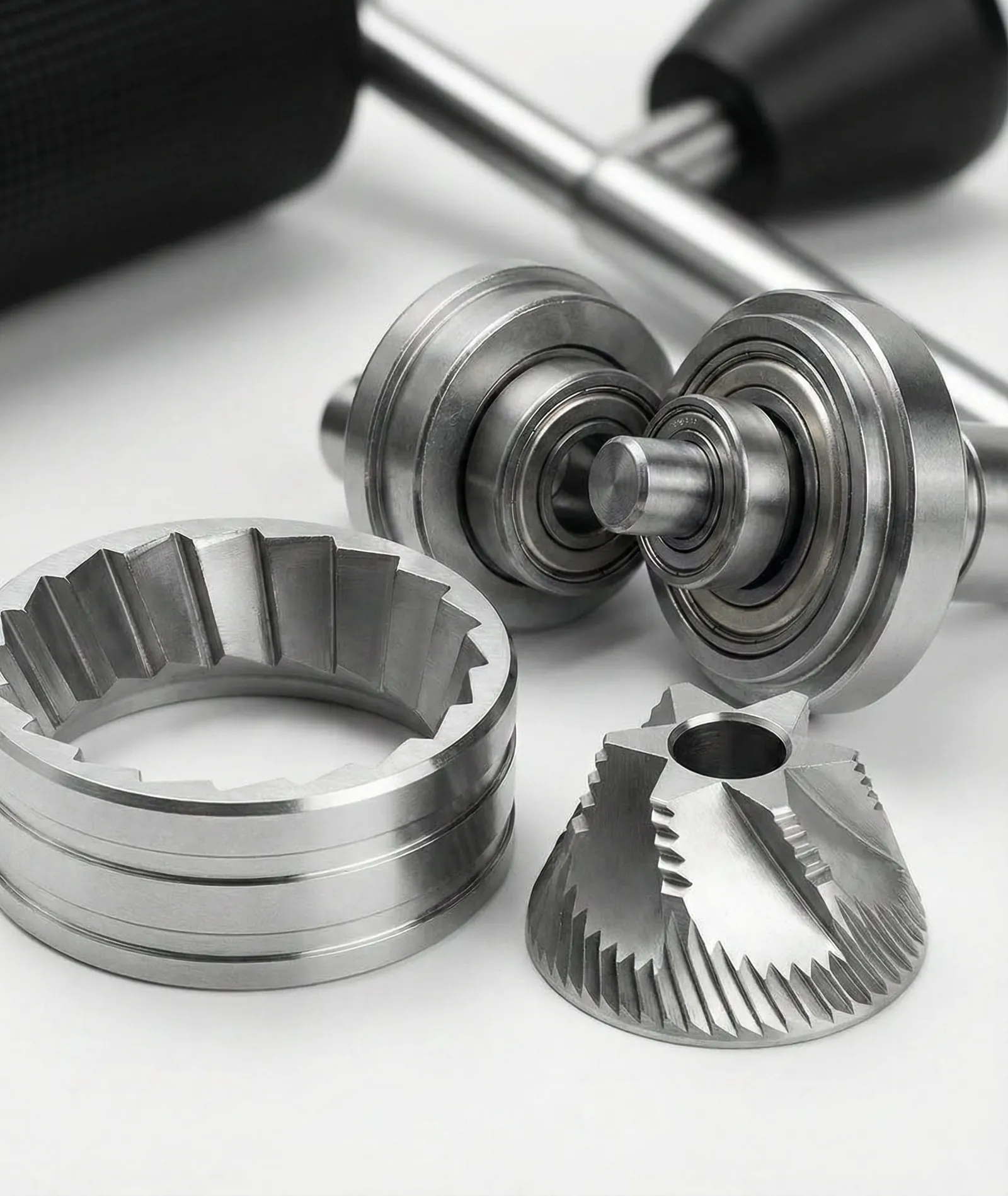
The Chestnut C3 is a hand grinder with a 38mm burr set held by dual bearings. The bearings keep the burr steady, which stops wobble and keeps the gap between burrs consistent as you turn. Steady burrs make for more even particles.
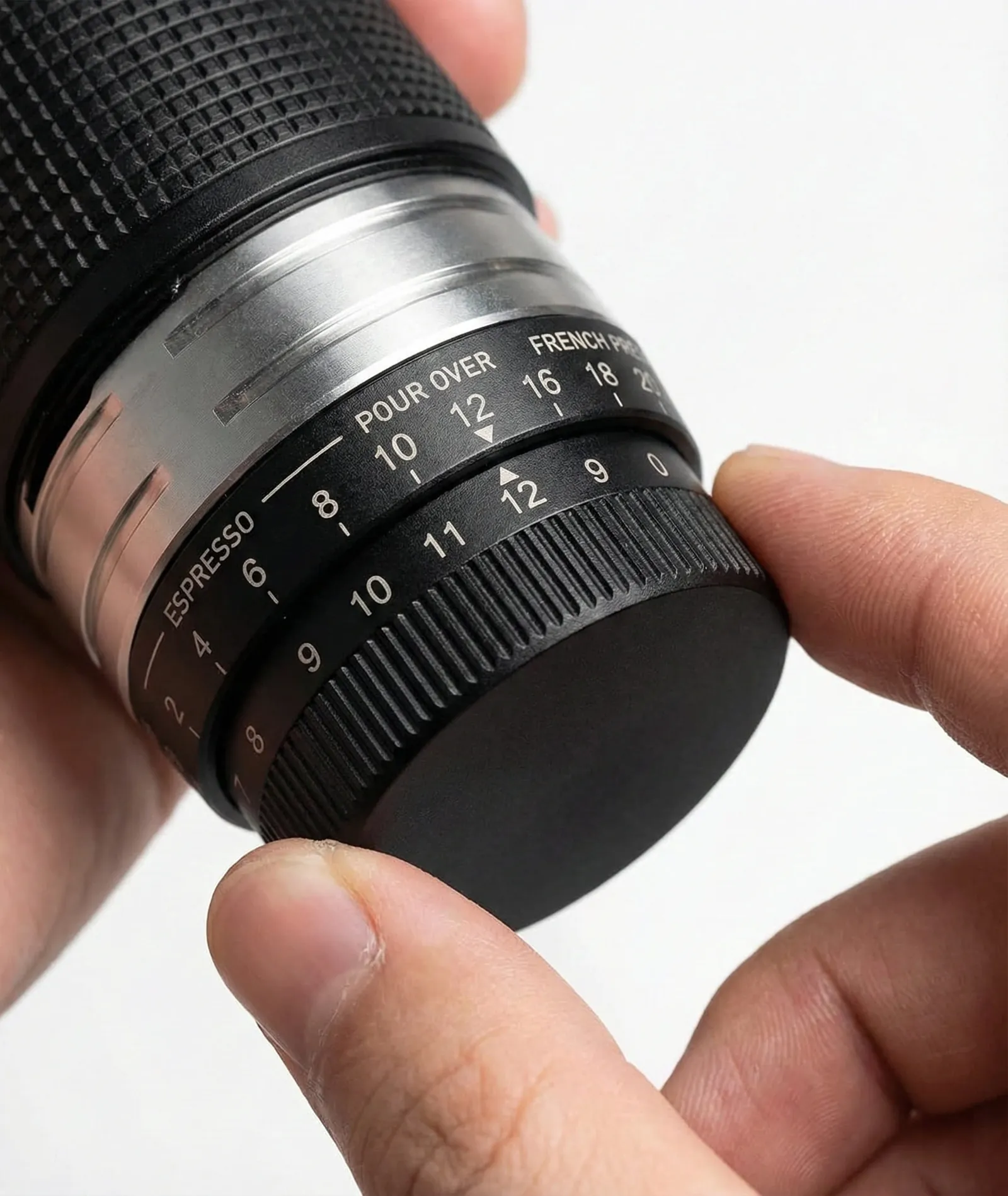
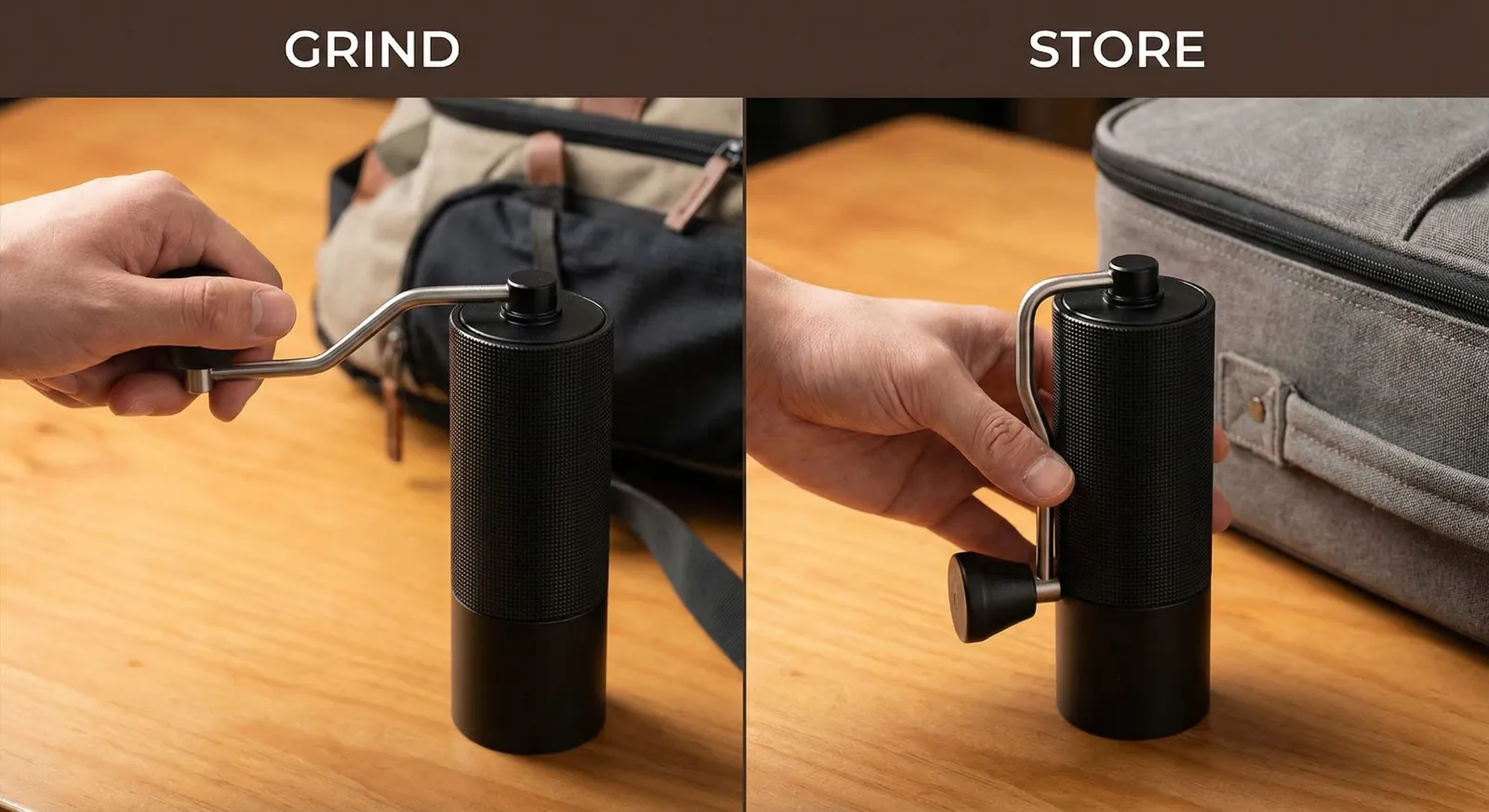
The aluminum body is rigid and the handle folds, so it fits in a bag. Adjustment is by fixed clicks, which is easy to note for each brew method.
In practice, it suits pour-over, AeroPress and French press for one or two cups. A small chamber and manual effort limit group brewing. Compared with an electric model, it saves money and space but costs time. See manual vs electric grinders.
Who this mechanism suits: It suits solo pour-over and AeroPress brewers, desk setups and trips, where its size beats electric convenience. Households brewing multiple mugs daily will find it slow. Our AeroPress calculator works out water and bloom for standard or inverted brewing.
Typical ownership issues for this grinder type, and the tools and habits that solve them
Common issues are fatigue, grind drift and static.
Compare KINGrinder K6 for capacity or Comandante C40 for precision.
For click counts per brew method, see our Timemore C3 grind settings chart.
Skip it if you make daily espresso, grind for several people, or have wrist or arm limitations. Also skip it if you expect to micro-adjust shots, because click 5 and click 6 can sit on either side of the ideal espresso grind with nothing between them.
If you buy it, season the burrs with about 50g of old beans, zero the burrs before first use, hand-tighten the catch cup, and use our coffee grind size chart as a starting reference before dialing in by taste. Log a shot in the espresso dial-in calculator to see whether to grind finer or coarser.
Before you decide
The Timemore Chestnut C3 occupies the sweet spot in the budget portable manual grinder market: 38mm dual-bearing stainless steel burrs and all-metal construction at $99–$149, directly above the $30-50 ceramic-burr grinders that produce inconsistent grind quality and below the premium segment where the Comandante C40 ($269-$349) and higher-end 1Zpresso models compete.
What separates it from everything in its price tier is the dual-bearing stabilization system — most sub-$100 hand grinders use single-bearing designs that introduce wobble and uneven wear. The foldable handle is an engineering decision, not a marketing feature: it reduces packed length by about 30% and enables travel use that plastic-bodied alternatives cannot reliably survive.
Against the closest similarly priced rival, the Hario Skerton Plus (~$60-70), the C3's advantage is clear: the Skerton's ceramic burrs and mixed plastic/glass build produce noticeably less uniform grounds and feel less durable in daily use. The C3's roughly $30–$90 premium buys meaningfully better grind consistency, build quality, and travel usability. For filter-focused travelers and pour-over enthusiasts, it's one of the most capable manual grinders at this price point.
Durability, upkeep and running costs once the novelty wears off.
No detectable degradation over the test period, including travel abuse.
At a 20g daily dose the C3 grinds about 7kg of coffee a year, so the burrs should last many years of daily solo use, and OEM replacement burrs run $20-30, among the cheapest in the manual grinder category.
No mechanical issues during testing beyond an occasional loose glass catch cup, solved by hand-tightening before grinding.
The adjustment dial held its calibration precisely across weeks of repeated use.
Replacement burrs, catch cups, and adjustment dial parts are available through Timemore retailers for $20-30, with aftermarket support improving as the brand's US presence grows.
Upkeep is minimal — brush cleaning only, no motor or electronics.
Expect roughly $10-15 a year in supplies, a five-year total near $50-75, and $20-30 if the burrs ever need replacing.
A standard 1-year manufacturer warranty applies, though build quality suggests most owners will never need it.
Well-maintained units typically resell for 60-70% of original price after 1-2 years and 40-50% after 3-4 years, reflecting strong demand in the used manual-grinder market.
Our rating, who it fits, and what it costs.
Timemore Chestnut C3Highly recommended
4.5 / 5 — Is it worth buying?
Testing across seven coffee origins and travel from hotel rooms to 8,000 feet in the Cascades confirms the Chestnut C3 delivers on its core promise: pour-over grind consistency that rivals a similarly priced $140 Baratza Encore, in a portable, all-metal body.
✓ Best for
✕ Skip if
Score breakdown
Grinds tested
400+
Testing period
45 days of daily use plus travel testing
Ready to decide?
Our verdict: 4.5/5, highly recommended. Independently tested; commissions never change a rating.
See how the Timemore Chestnut C3 compares with the other picks in each tested roundup. Owner guides for this model are listed below the roundups.
Closest alternatives in price and purpose, each tested the same way.
4.3Mavo
A stepless manual grinder with titanium burrs and infinite micro-adjustment, built for filter-focused precision brewing.
 4.5
4.5Baratza
A filter-first electric grinder with solid espresso capability, a large hopper, and a digital dosing timer for household use.
 4.3
4.3OXO
A budget conical burr grinder for drip and pour-over brewers upgrading from a blade grinder, about $82-$120.
 4.1
4.1Capresso
An affordable conical burr grinder for drip and French press drinkers stepping up from a blade grinder, under $110.
Put it into practice with a free calculator built for what you just read.
Quick answers before you buy.
For occasional or travel espresso, yes. For daily home espresso, probably not. Across 30+ shots pulled on a Flair manual lever machine (clicks 5-8), the C3 hit espresso-fine particle size and produced acceptable shots — but grinding took 90-120 seconds per 18g dose versus 60-90 seconds for pour-over, and the stepped 20-click dial doesn't allow the micro-adjustment espresso demands. Click 6 often extracted too fast, click 5 too slow, with no setting in between.
If you're traveling and want occasional espresso, the C3 works. For daily home espresso, a grinder with stepless adjustment — the 1Zpresso JX-Pro ($130-150) or an electric option like the Baratza Encore ESP — is the better investment. Pour-over and filter brewing remain the C3's real strength.
Yes, for pour-over and travel brewing. The all-metal aluminum body, 38mm dual-bearing burrs, and foldable handle outperform the $30-50 ceramic-burr grinders typically found at this price, and grind consistency rivals a similarly priced electric grinder — confirmed in blind taste tests against a $140 Baratza Encore, where tasters could barely tell the two apart.
The value case strengthens further for travelers: skipping one $5 café pour-over daily during a week-long trip saves roughly $35, about a third of the grinder's entry price. Compared with $40-50 plastic ceramic-burr grinders, the extra spend buys meaningfully better consistency, durability, and portability.
Pour-over and filter brewing are where the C3 excels — V60 at click 12, Aeropress at clicks 9-11, and Chemex at click 14 all produced clean, well-extracted cups consistently in the 19.5-20.5% range. French press (clicks 17-20) showed noticeably less sediment than ceramic-burr grinders at this price.
Espresso (clicks 5-8) works but requires more effort and lacks fine-tuning precision — see the espresso FAQ above. As a starting point: espresso 5-8, Aeropress 9-11, V60 11-13, drip 13-15, Chemex 14-16, French press 17-20, then adjust to taste.
Yes, travel is one of this grinder's core strengths. The foldable handle cuts length by about 30% (roughly 17.5cm to 12cm), letting it fit in a backpack side pocket, carry-on, or jacket pocket. Real-world testing across international and backcountry trips confirmed it survives travel handling without damage, and it draws no attention from airport security.
At 420g with no power requirement, it eliminates the outlet-hunting and voltage concerns that come with electric grinders. The one item worth protecting in transit is the glass catch cup — wrap it in a shirt, or buy Timemore's optional metal catch cup for frequent travel.
The Comandante C40 ($269-$349) is the better grinder, but the gap is narrower than the roughly 2.5x price difference suggests. Its 39mm nitro blade steel burrs produce marginally cleaner clarity on light roasts.
If you brew daily with specialty light roasts and the fine details of extraction matter to you, the Comandante's premium is justified. For most pour-over drinkers and travelers, the C3 delivers most of the Comandante's performance at roughly 40% of the price — the smarter value for most buyers.
Brush cleaning is all it needs.
There is no motor or electronics, so upkeep is limited to brushing out grounds and occasionally checking the catch cup is tight.
Replacement burrs run $20-30 if they ever wear out.
It depends on how you brew.
In blind tests against a $140 Baratza Encore, tasters could barely tell the two apart for pour-over, and the C3 adds portability.
An electric grinder wins on speed (8-10 seconds versus 60-90) and for daily espresso or group brewing.
Reader questions
Questions or tips? Leave a comment
Ask about your setup or share what worked for you. Comments are checked before they appear.