Coffee grinder review
Last updated
KINGrinder K6 Review 2026: Limited for Espresso
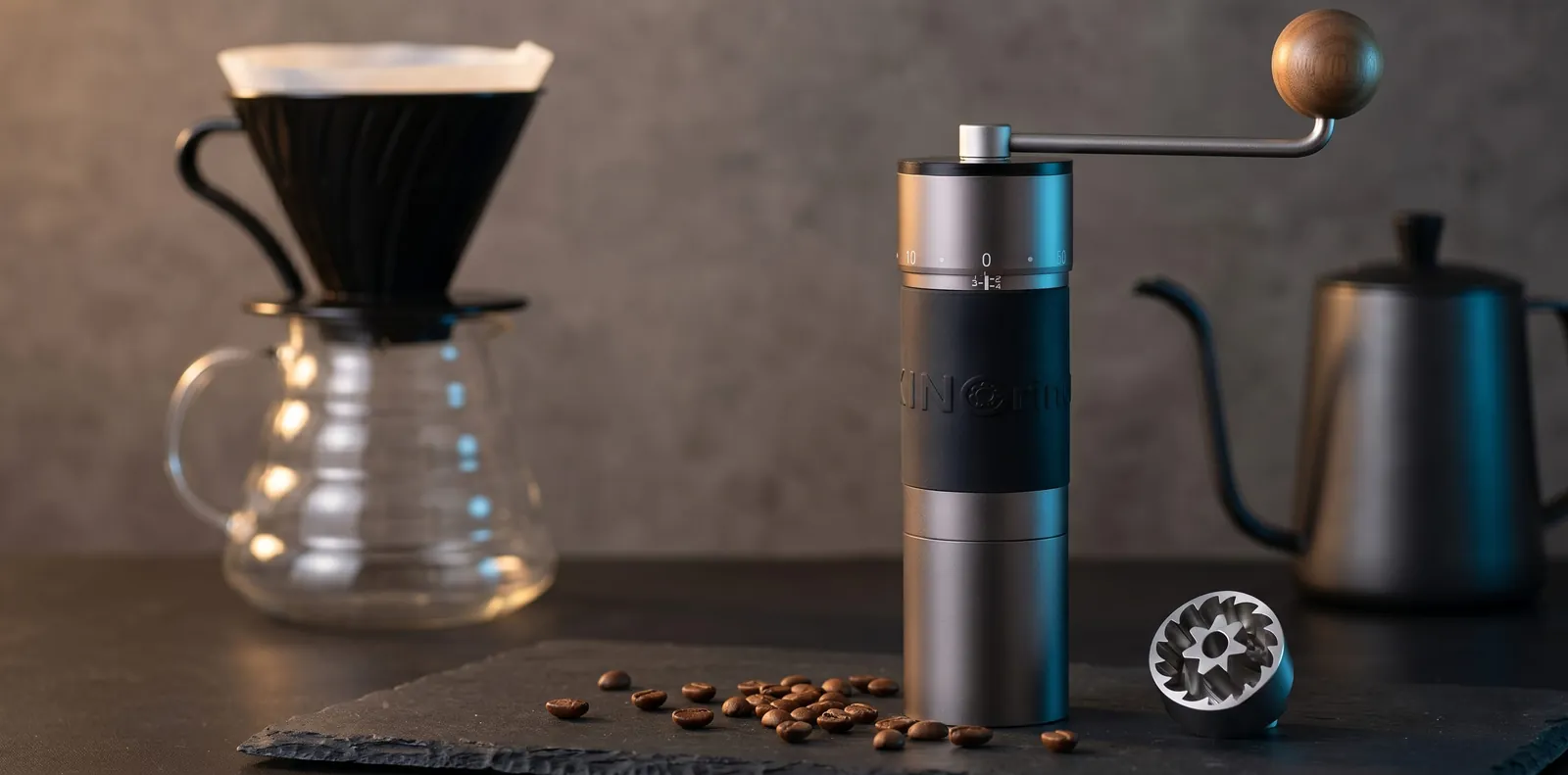
KINGrinder K6 review: a manual coffee grinder with 55g capacity and 48mm burrs, great for filter batches but limited for espresso. Versus the Timemore C3.
- Our rating 4.0/5
- By Sarah Chen
- 22 min read
- Independently tested: 50+ grinds over 30 days
Affiliate disclosure: this page contains Amazon affiliate links. We may earn a commission if you buy through them, at no extra cost to you, and it never affects our rankings. Read our full affiliate disclosure
KINGrinder K6 at a GlanceRecommended
A clear step up for multi-cup filter brewers; stepped adjustment holds it back for daily espresso.
High-Capacity Mid-Range Manual Grinder
Affiliate link: we may earn a commission at no extra cost to you. It never affects our rating.
- 48mm titanium
- Burrs
- 55g
- Capacity
- 620g
- Weight
On the grind bench· 50+ grinds · 30 days
Why it stands out
- 48mm coated burrs beat 38mm sets on filter clarity
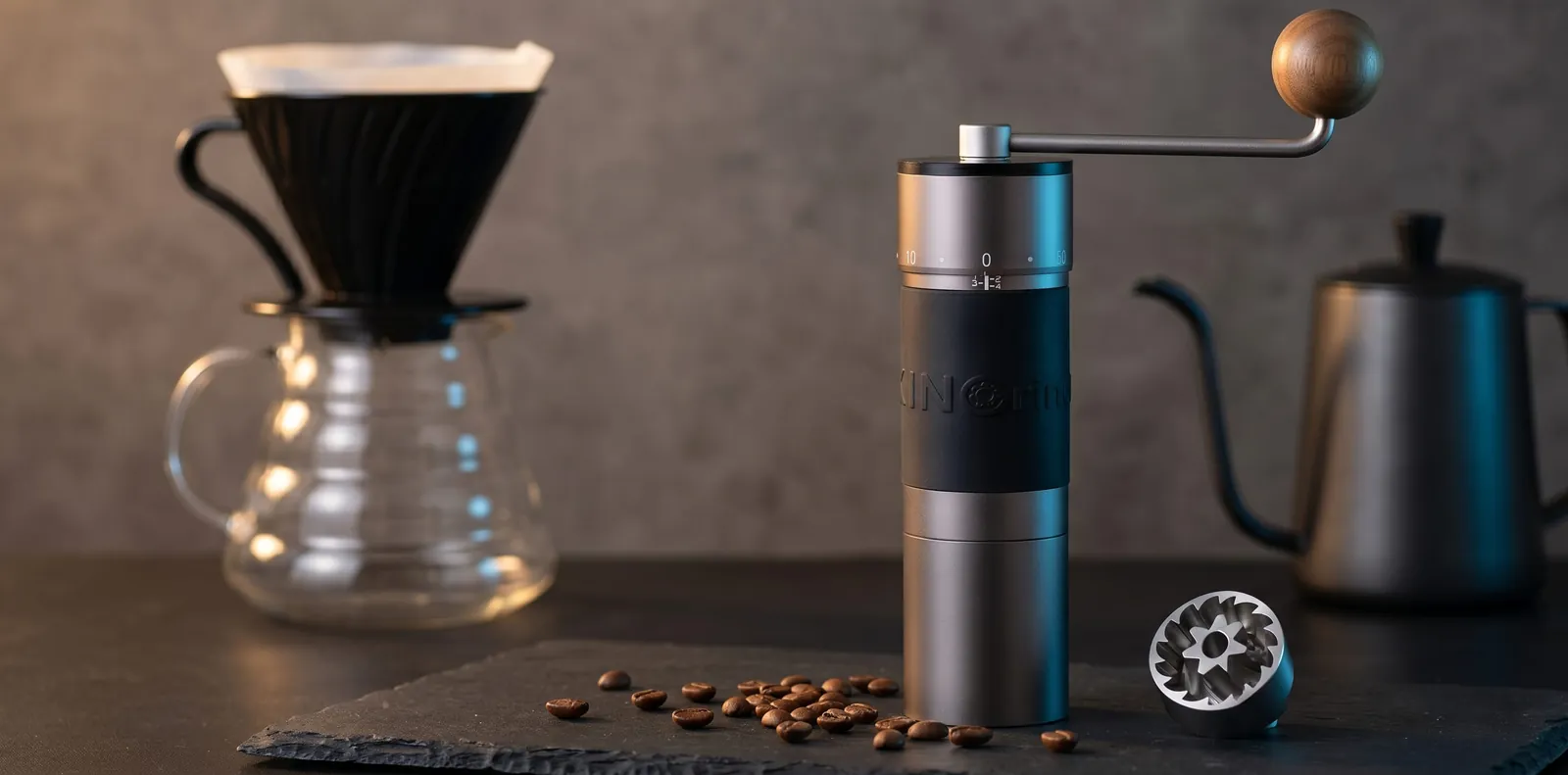
- 55g capacity grinds a full batch in one load
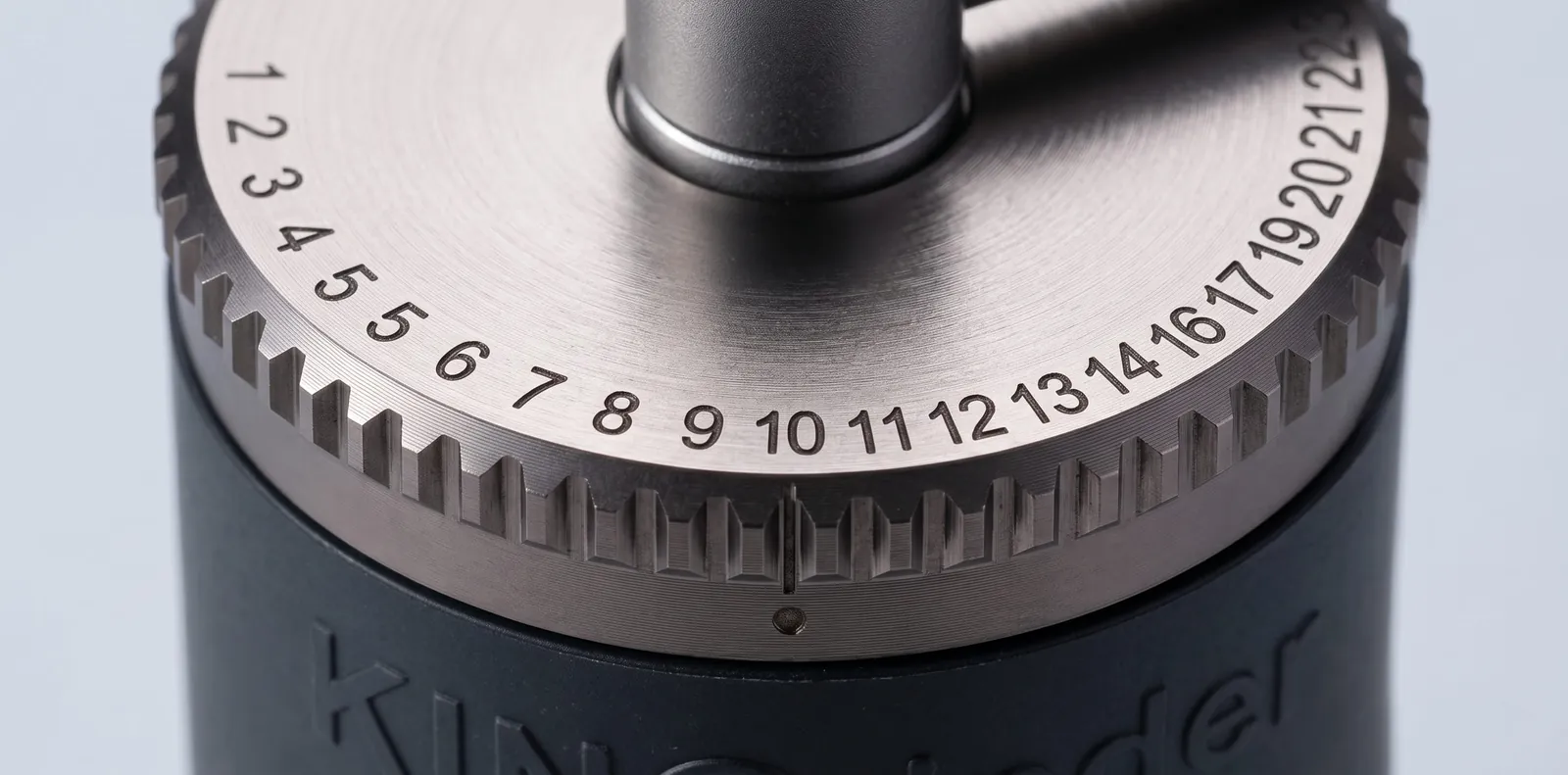
- Numbered stepped ring is easy to repeat
Watch out for
- Stepped adjustment limits espresso micro-tuning
- Heavy at 620g and bulkier than most manual grinders
✓ Best for
Home baristas who regularly brew two or more servings
✕ Skip if
Daily espresso users who need finer micro-adjustment
The K6 isn't the most refined manual grinder at $100–$110, but it beats the Timemore C3 and 1Zpresso JX-Pro on capacity, which changes how you brew for two.
The short answer: for multi-cup filter brewing it's the best value in its category. For daily espresso, the stepped adjustment ring is a real limitation.
- What held up: The 48mm titanium-coated conical burrs measurably outperform the smaller 38mm sets common at this price.
- Big batches: The 55g hopper handles a full V60-for-two or AeroPress batch in one load.
- Where it fell short: Stepped adjustment limits espresso micro-tuning, and at 620g it isn't a travel grinder.
- Who it's for: Home brewers regularly making two or more servings.
See our manual vs electric grinders guide and burr grinder buying guide, or compare every tier in our best coffee grinders guide.
Who Is This Right For?
Check where you fit before you look at the trade-offs below.
A strong match
It suits you if you are
- Home baristas who regularly brew two or more servings — the 55g capacity is the primary practical advantage
- AeroPress and French press enthusiasts who want to grind a full batch without stopping to refill
- Single-origin pour-over brewers who want better filter distribution than 38mm grinders provide in the $100–$110 range
- Manual grinder upgraders who've outgrown a 38mm budget grinder and want a meaningful step up
- Buyers who prioritize numbered dial repeatability over stepless precision — the K6's ring is easy to dial in and return to
Consider something else
Look elsewhere if you are
- Daily espresso users who need finer micro-adjustment — invest in 1Zpresso JX-Pro or Mavo Phantox Pro
- Travelers who need a lightweight, compact grinder — 620g is heavy for backpacks
- Single-serve-only brewers who don't need high capacity
- Buyers who want premium build aesthetics — Timemore C3 feels more refined at a similar price
- Buyers who pull 4+ espresso shots daily — electric grinders are the right tool
- Skill level
- All levels — beginner to enthusiast
- Drink style
- Filter coffee, pour-over, AeroPress, batch brewing; occasional espresso
- Upgrade path
- 1Zpresso JX-Pro for espresso precision; Mavo Phantox Pro for stepless filter control; Comandante C40 for best-in-class premium manual
Pros & Cons
What earns the rating, and what you give up to get it.
6 reasons it works
Pros
- 48mm titanium-coated conical burrs: measurably better filter distribution than 38mm competitors at this price
- 55g capacity — highest in the mid-range manual grinder category we've tested, eliminates refilling for large filter doses
- Numbered stepped adjustment ring is intuitive and repeatable — easy to return to your dialed-in settings
- Wide ergonomic grip reduces cranking fatigue compared to narrow-body manual grinders
- Solid, consistent filter extraction performance at V60 settings, above the Timemore C3 benchmark
- Titanium coating shows no performance degradation across 50+ test grinds
5 trade-offs to weigh
Cons
- Stepped adjustment limits espresso micro-tuning — dedicated espresso grinders (1Zpresso JX-Pro, Mavo Phantox Pro) give more resolution
- Heavier than most manual grinders at 620g — not ideal for travel or compact setups
- Stainless steel body lacks the refined machined-aluminum feel of the Timemore C3 at a similar price
- Single bearing contributes slightly more burr wobble at fine settings than dual-bearing systems
- High-capacity body is bulkier — takes up more counter space and bag space than typical manual grinders
Real-World Testing
How it performed in day-to-day use, in the order you will meet it.
Setup & Learning Curve
The K6 needed little setup, so here is the test routine and the beans used across the 30 days.
- Routine: Daily V60 pour-over, AeroPress and French press batch brewing three times weekly, and espresso on a Flair and La Marzocco Linea Mini two to three times weekly.
- Analysis: Kruve Sifter Pro particle analysis ran on days 1, 15, and 30.
- Ethiopian Yirgacheffe natural: A demanding light-roast that tests distribution evenness.
- Kenya Kiambu AA: A bright acidic profile, sensitive to extraction variance.
- Colombian Huila washed: A forgiving mid-range, all-purpose benchmark.
- Brazil Cerrado dark roast: Oily beans that test burr resilience.
Dial-In Workflow
Dialing in comes down to burr size, click size and how sensitive the espresso range is.
- Burr size: The 48mm titanium-coated conical burrs are 10mm larger than the 38mm sets on the Timemore C3 and Mavo Phantox Pro. That extra grinding surface shows up mainly at filter settings, where particle distribution evenness matters most, and the titanium coating showed no measurable wear across the test period.
- Click size: The stepped ring moves in roughly 12–15 micron increments per click — coarser than a stepless design, but fine enough for repeatable filter dial-in. The numbered positions make it easy to return to a saved setting without reference marks.
- Espresso: At espresso-fine settings, each click shifts extraction time by about 4 seconds. That is workable for a set-and-leave espresso routine, not ideal for daily micro-adjustment.
Grind Consistency Notes
V60 testing at position 14 (93°C, 1:15 ratio, 3:00 brew time) put the K6 ahead of the Timemore C3 on both average extraction yield and shot-to-shot consistency.
- Cupping: Blind cupping from two SCA-certified colleagues rated K6 brews above the C3 on clarity and sweetness for demanding Ethiopian and Kenyan light-roasts.
- Versus the Phantox Pro: The Mavo Phantox Pro's stepless dial still edged out the K6 on consistency, but the gap narrowed on medium-roast Colombians where distribution evenness matters less.
- Hopper: The 55g hopper meant there was never a need to stop and refill mid-grind for a 400ml V60 or a 350ml AeroPress batch — an advantage the smaller-hopper C3 can't match.
- Stability: There was no measurable change in particle distribution between day 1 and day 30; the titanium coating held up well.
- Versus the 1Zpresso JX-Pro: The K6 delivered cleaner, more consistent particle distribution at V60 settings than the C3, closing much of the gap to the pricier JX-Pro.
Shot Extraction Notes
Espresso is workable on the K6 but not its strength.
- Shots: At position 5–6, the K6 pulled workable 27–32 second shots on both a Flair and a La Marzocco Linea Mini with 18g doses, though flavor showed slightly more bitterness than grinders with finer distribution control at espresso settings.
- Effort: Cranking 18g at fine settings took 95–110 seconds, comparable to other manual grinders, and the wide grip made it noticeably less fatiguing than the narrower Timemore C3.
- Dial-in: Espresso dialing took 3–4 adjustment cycles over 2 days before locking in — longer than stepless grinders but shorter than expected from a stepped system.
- Who it suits: The stepped ring is fine for occasional espresso; for daily dialing on demanding light-roasts, the Mavo Phantox Pro or 1Zpresso JX-Pro's finer adjustment is the better tool.
Cleanup & Maintenance
Build and handling are where the K6 shows where its budget went.
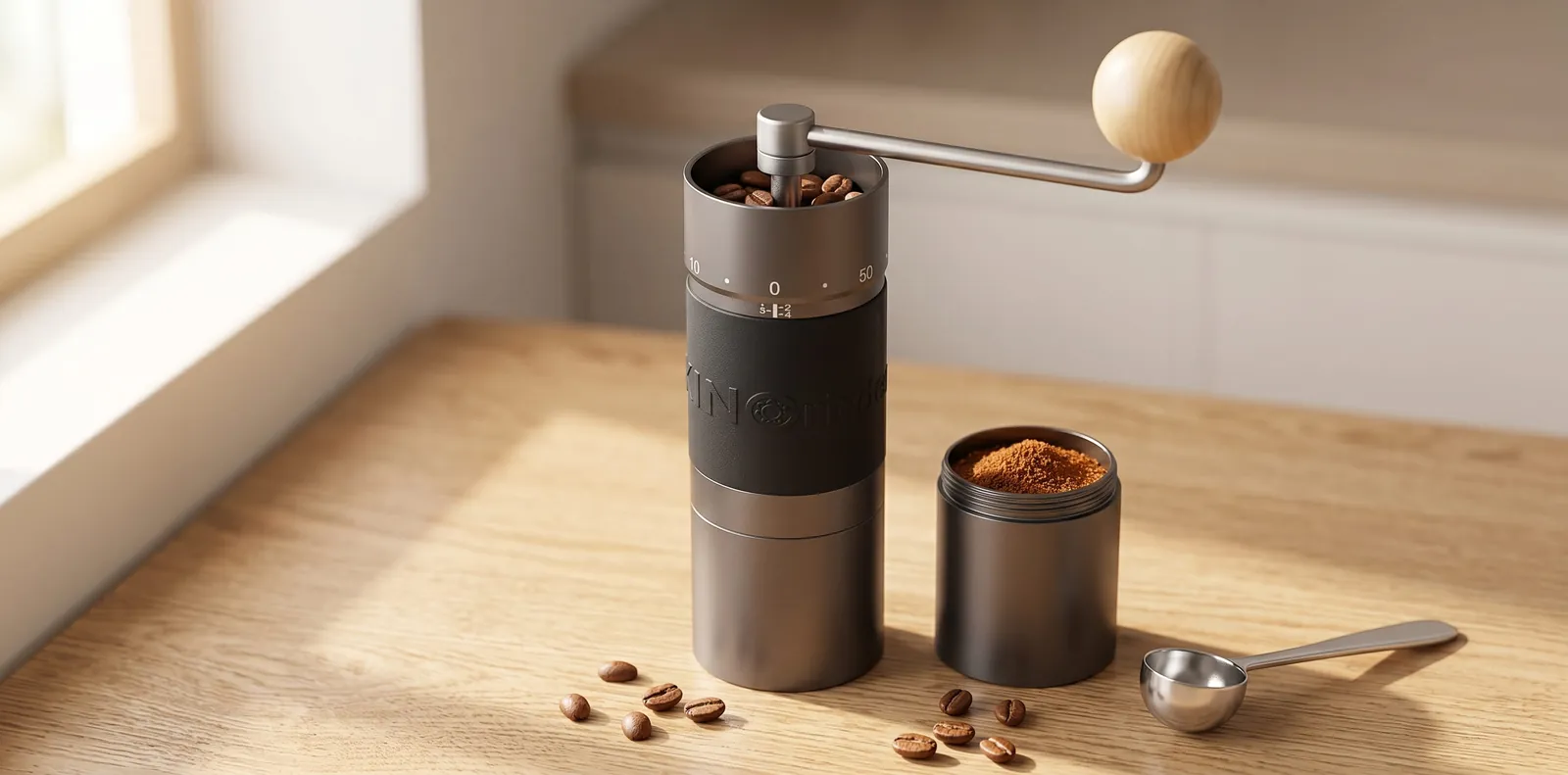
- Grip and cup: The stainless steel body with a wide ergonomic grip reduced forearm fatigue during extended fine-grind sessions, and the catch cup sealed well with no dust escaping during testing.
- Weight and finish: At 620g it's meaningfully heavier than the 420g Timemore C3, and the finish feels a tier below the C3's machined-aluminum build — the engineering budget clearly went into the burr set rather than cosmetics.
- Bearing: A single bearing, versus dual-bearing designs on some competitors, added slightly more burr wobble under load at fine settings, though the effect on cup quality was minor outside of very fine espresso grinds.
- Batch size: Single-load 50g batches were practical — the only manual grinder at this price where mid-grind refilling was unnecessary.
KINGrinder K6 vs Timemore C3, 1Zpresso K-Ultra and Comandante C40
Which manual grinder suits which kind of brewer
Manual grinders are bought on trade-offs, so it helps to see where the K6 sits among the usual shortlist.
| Grinder | Burr | Capacity | Weight | Current price |
|---|---|---|---|---|
| KINGrinder K6 | 48mm conical | 55g | 620g | Check current price |
| Timemore Chestnut C3 | 38mm conical | 20–25g | 420g | Check current price |
| 1Zpresso K-Ultra | 48mm conical | 35g | 540g | Check current price |
| Comandante C40 | 39mm conical | 25–35g | 510g | Check current price |
| Mavo Phantox Pro | 38mm conical | 40g | not listed | Check current price |
- Timemore Chestnut C3: lighter, more compact and better suited to one cup at a time. The K6 earns its place when you grind larger doses, thanks to its higher capacity.
- 1Zpresso K-Ultra: a step up in refinement and adjustment resolution, and the more natural choice if espresso matters. It also costs noticeably more, so the K6 is the value pick.
- Comandante C40: the premium reference for manual filter grinding. It is a different price class, and the K6 is the answer if you want a big-batch workhorse instead.
- Mavo Phantox Pro: stepless adjustment for people who want to fine-tune. The K6's numbered ring is easier to repeat but less flexible.
The pattern is simple. Buy the K6 if capacity and filter quality per dollar drive the decision. Buy something else if you want portability, espresso precision or a refined feel in the hand. Our manual vs electric grinders guide covers when it makes more sense to stop hand-grinding altogether.
Is a manual grinder like the K6 practical for daily use?
What to expect from the routine, the effort and the cleaning
Hand grinding is a trade of money and counter space for effort. Whether the K6 suits you depends on how you brew.
- Effort scales with dose: A bigger hopper means you can grind a whole batch in one go, but you still turn the handle for every gram. The wide grip helps at fine settings, and grinding for two is a short routine rather than a chore. If you brew several cups every morning, weigh up whether an electric grinder would serve you better.
- Stability matters: Brace the grinder against your body or on a non-slip surface, and keep the handle turning at a steady pace. Smooth, even cranking tends to give more consistent results than short bursts.
- Settings are easy to track: The numbered ring lets you write down the setting that suits each brew method and return to it. This is the main practical reason to like stepped adjustment: repeatability without measuring anything.
- Cleaning is quick: The tool-free disassembly noted in the ownership section means a brush-out takes minutes. Because the burrs are coated rather than bare steel, a quick rinse of the body parts is less worrying, though you should dry every part fully before reassembly.
- Know your limits: At 620g it is not a bag-friendly travel grinder, and it takes more counter space than slimmer models. If portability is a priority, look elsewhere. For a home brewer making filter coffee for two, the routine is manageable and the batch capacity is the payoff.
Pair it with a scale and a repeatable recipe, and the K6 becomes a dependable part of a manual filter setup.
How the KINGrinder K6 works and why it matters
The mechanism behind the grind, in plain English, and what it changes in your cup
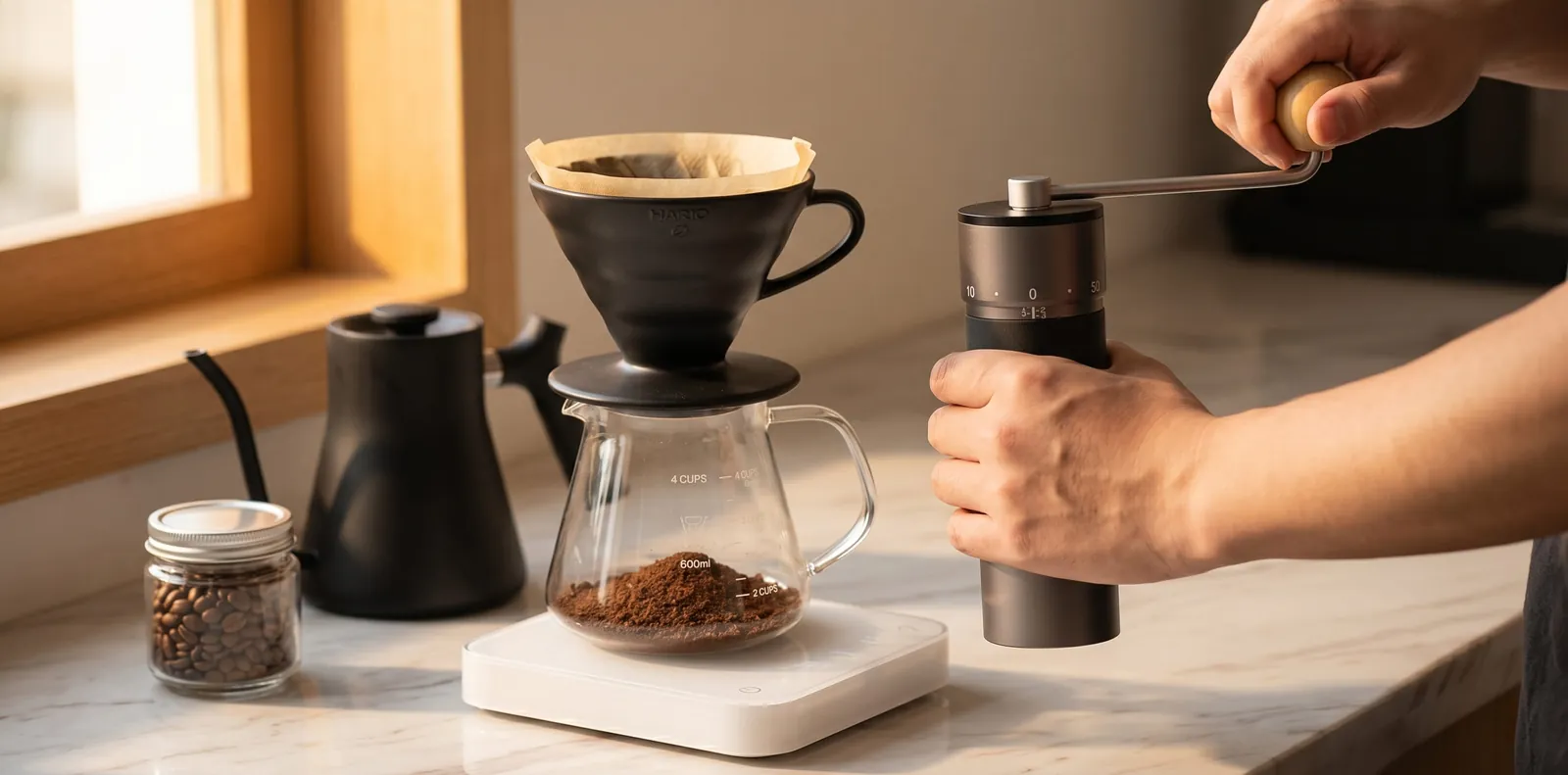
The K6 is a manual grinder with 48mm conical burrs that have a titanium coating. A bigger burr has more cutting edge, so fewer turns are needed to grind a given dose. That is why a 48mm burr feels faster than a 38mm one.
The adjustment is a numbered ring with fixed steps, easy to write down and repeat. You trade stepless precision for repeatability. Filter coffee works well, because a step is small enough for V60 and AeroPress. Our V60 ratio calculator works out the water and pour schedule for your dose.
The larger chamber means you can grind a bigger batch, which suits two people or a larger French press. It is heavier than slim travel models, so it works better on a counter than in a backpack. See manual vs electric grinders.
Who this mechanism suits: Choose it for a mid-priced manual grinder that handles two mugs of filter coffee, AeroPress or French press without a refill. Choose something lighter if you hike or fly with your gear. Our AeroPress calculator works out water and bloom for standard or inverted brewing.
Common problems and modern fixes
Typical ownership issues for this grinder type, and the tools and habits that solve them
Common issues are burr wobble, fine settings and fatigue.
- Grind size drift after cleaning: re-seat the burr and set zero again. Log your clicks per brew method.
- Hard cranking at fine settings: grind in smaller doses and keep the handle steady.
- Static: RDT mist and a brush.
- Espresso limits: fixed steps are coarse for espresso. Read dialing in espresso before committing.
- Muddy filter cups: check the coffee grind size chart and go coarser.
- Loose parts: check the handle and burr nut before every few uses.
If you want finer control, compare with Mavo Phantox Pro.
For click counts per brew method and how to zero the dial, see our KINGrinder K6 grind settings chart.
Before you decide
Who the KINGrinder K6 Is Actually Competing For
The K6 isn't trying to be the most refined manual grinder. It's trying to be the most practical one in the $100–$110 range for home brewers who regularly make more than one serving.
If you're comparing manual grinders and your main brewing context is a single V60 for yourself each morning, the Timemore Chestnut C3 is a better fit — lighter, more portable, and better built for single-serve use. The K6's advantages only show up when you're grinding larger doses or brewing for two or more people regularly. In that context, the capacity and the 48mm burr performance gap over 38mm budget grinders becomes a real, daily-use argument.
For espresso specifically, our best espresso grinders under $300 explains where the K6 fits and when the K-Ultra or Encore ESP is worth the extra money.
How It Measures Up on Key Grinder Criteria
- Grind range and adjustment
- 48mm heptagonal conical burrs and an external stepped dial at about 16 microns per click take it from espresso to French press without disassembly.
- Dose accuracy and retention
- Holds about 35g and grinds one weighed dose at a time with very little left behind, so what you weigh in is close to what lands in the cup.
- Heat, noise and vibration
- Hand-cranked, so no motor heat and only a quiet crunch. The trade-off is effort and time at espresso settings.
Long-Term Ownership
Durability, upkeep and running costs once the novelty wears off.
- Durability
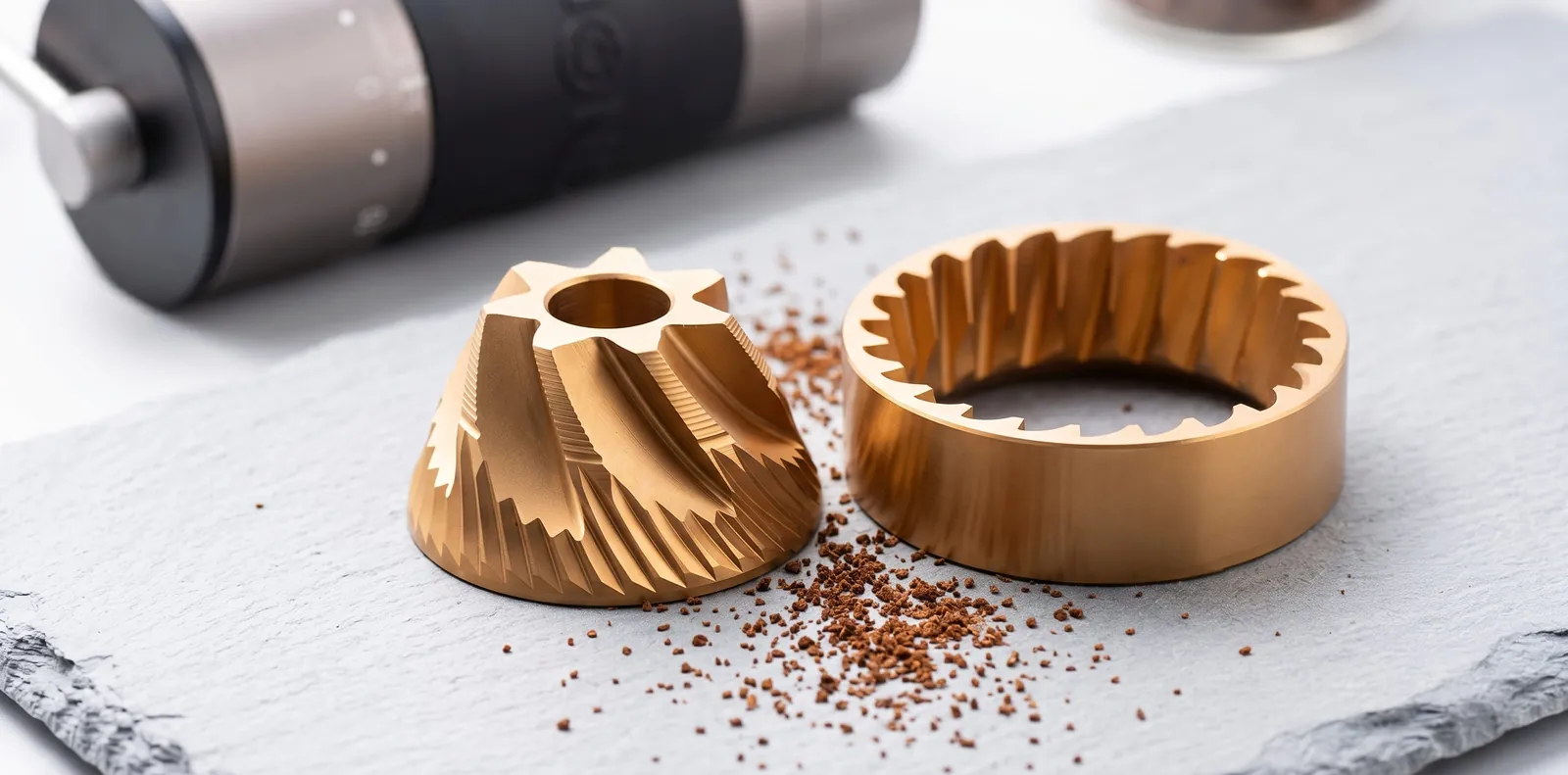
The titanium coating shows no measurable distribution change across the test period, and the stainless steel body showed no visible wear after daily use.
More detail
KINGrinder doesn't publish a rated burr lifespan, but based on the coating quality we'd expect it to hold calibration through years of daily home use. Replacement burr sets are sold separately; check the manufacturer for current pricing. Well-maintained units tend to hold reasonable value on the used market.
- Upkeep
The K6 disassembles tool-free for cleaning — brush the burr chamber weekly and do a full strip-down monthly under heavy use.
More detail
The titanium coating tolerates a water rinse without the surface-rust risk of bare steel burrs.
Final Verdict
Our rating, who it fits, and what it costs.
KINGrinder K6Recommended
4.0 / 5 — Is it worth buying?
Testing confirms the KINGrinder K6 earns its place for a specific buyer: someone who regularly brews more than one cup and wants better filter extraction than budget 38mm grinders deliver, without paying for a stepless design they may not need.
✓ Best for
- High-capacity manual batch grinding (AeroPress, French press, large V60)
- Multi-cup filter brewing for two or more people
✕ Skip if
- Daily espresso-primary users wanting stepless precision
- Travel and portable grinding
Score breakdown
Grinds tested
50+
Testing period
30 days
Ready to decide?
Our verdict: 4.0/5, recommended. Independently tested; commissions never change a rating.
Where It Ranks in Our Buying Guides
See how the KINGrinder K6 compares with the other picks in each tested roundup. Owner guides for this model are listed below the roundups.
Tools That Pair With This Review
Put it into practice with a free calculator built for what you just read.
- Coffee Grind Size CalculatorPick your brew method and get the right grind size, texture, and grinder setting.
- Espresso Dial-In CalculatorEnter your actual shot results to see whether you're on target — and what to adjust.
- Coffee to Water Ratio CalculatorThe general-purpose ratio tool for drip machines and pour-over — enter water or coffee, pick your strength.
Reader questions
Questions or tips? Leave a comment
Ask about your setup or share what worked for you. Comments are checked before they appear.