Coffee grinder review
Last updated
Fellow Ode Gen 2 Review 2026: Filter-Only
Fellow Ode Gen 2 burr grinder review: 64mm flat burrs and 0.3-0.4g retention over 250+ grinds, but no espresso at all. Is a filter-only grinder for you?
- Our rating 4.8/5
- By Sarah Chen
- 20 min read
- Independently tested: 250+ grinds over 4 weeks
Affiliate disclosure: this page contains Amazon affiliate links. We may earn a commission if you buy through them, at no extra cost to you, and it never affects our rankings. Read our full affiliate disclosure
Fellow Ode Gen 2 at a GlanceHighly recommended
The strongest filter-only grinder we've tested under $500, but it can't do espresso at all.
Premium Filter Coffee Grinder
Affiliate link: we may earn a commission at no extra cost to you. It never affects our rating.
- 64mm flat
- Burrs
- 80g
- Hopper capacity
On the grind bench· 250+ grinds · 4 weeks
Why it stands out
- Cleaner, brighter cups from reduced fines
- Extremely low retention, ideal for single-dosing
- Quiet at ~65dB with a solid aluminum build
Watch out for
- Cannot grind for espresso at any setting
- Small 80g hopper and a $350-$450 price
✓ Best for
Pour-over enthusiasts who care about extraction and cup clarity
✕ Skip if
Espresso drinkers
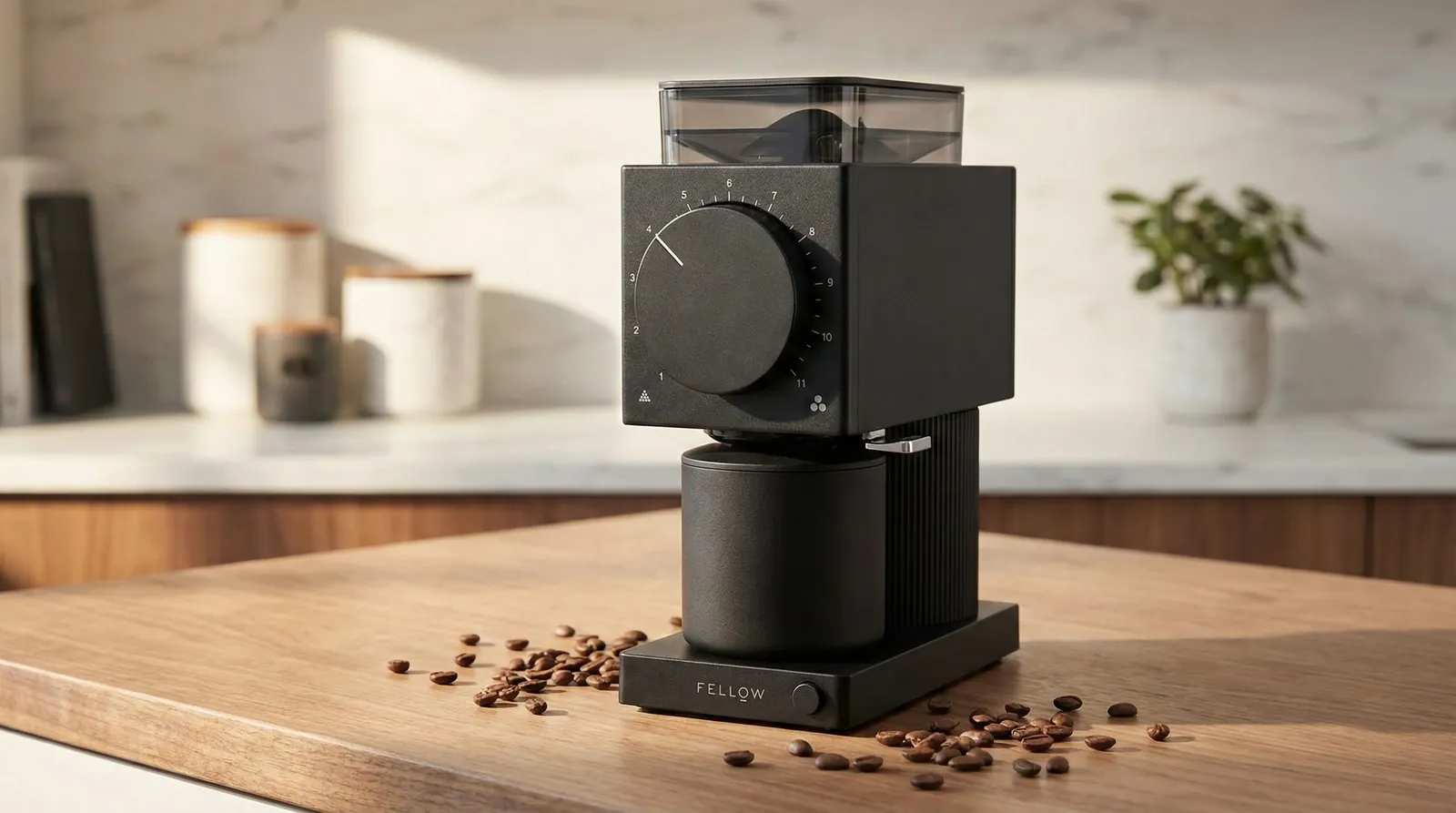
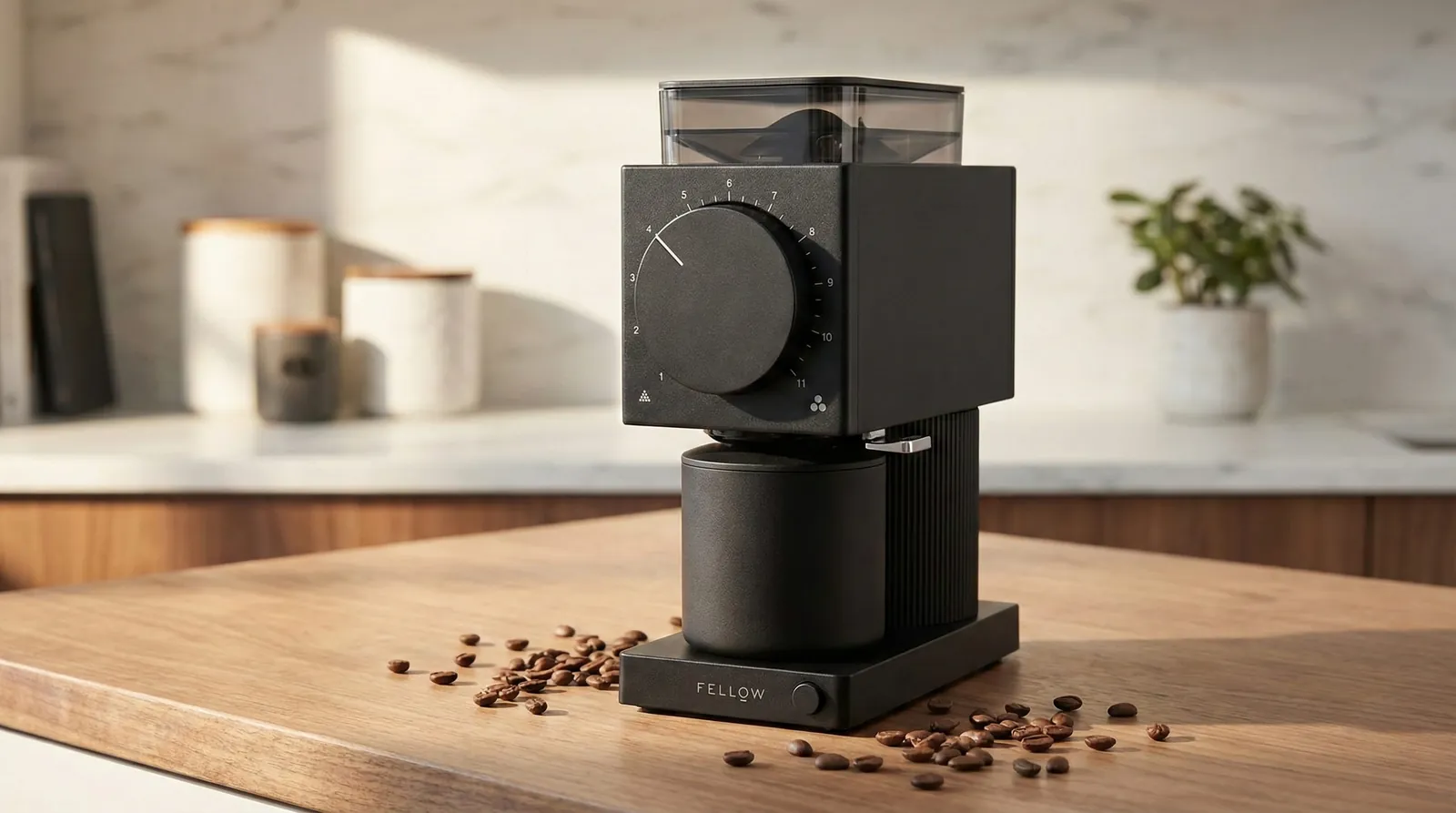
This Fellow Ode Gen 2 review comes down to one verdict: it's the strongest filter-coffee grinder we've tested at its price. We tested the original Ode a couple of years ago and weren't impressed enough to recommend it over a cheaper conical-burr grinder. Gen 2 changes that: the redesigned 64mm flat burrs measurably reduce fines, and the cups came out cleaner and brighter.
The short answer: if filter coffee is your only brew method and you're ready to pay for a specialist tool, it's the strongest option we've tested at this price. If you need espresso or one grinder for everything, look elsewhere.
- What held up: Extraction yield rose to 21–22% from 19–20% on the previous grinder, and the raspberry and jasmine notes showed up.
- Easy to live with: Retention averaged 0.3–0.4g, which suits single-dosing expensive beans.
- Where it falls short: It cannot grind for espresso, and the 80g hopper means frequent refills.
- Who it's for: Pour-over purists paying $350–$450 for a specialist tool.
For the full category ranking, see our best coffee grinders guide.
Who Is This Right For?
Check where you fit before you look at the trade-offs below.
A strong match
It suits you if you are
- Pour-over enthusiasts who care about extraction and cup clarity
- Single-dose workflow users who don't want to waste expensive beans
- Buyers who want a grinder that looks as good as it performs
- Filter coffee purists doing V60, Chemex, Kalita, or AeroPress exclusively
- Anyone willing to pay for a specialized tool that does one thing exceptionally well
Consider something else
Look elsewhere if you are
- Espresso drinkers — the Ode Gen 2 cannot grind fine enough for espresso extraction
- Budget shoppers looking for the most versatility per dollar
- People wanting one grinder for everything, including Turkish coffee
- Buyers for whom $350–$450 is simply too much to spend on a grinder
- Coffee shops or high-volume settings — this is a home grinder
- Skill level
- Beginner to advanced. There's no espresso-style complexity, so the learning curve is minimal at any experience level.
- Drink style
- Built for filter coffee: pour-over, drip, Chemex, AeroPress, French press, cold brew. Not for espresso.
- Upgrade path
- For most filter coffee drinkers, this is the upgrade path — owners commonly keep theirs for years with no urge to switch. Optional aftermarket SSP burrs are available for enthusiasts who want to chase incremental gains, though the stock burrs are already excellent.
Pros & Cons
What earns the rating, and what you give up to get it.
9 reasons it works
Pros
- Grind consistency is next-level for a home grinder — the 64mm flat burrs deliver particle distribution most grinders can't match
- Minimalist design that looks good on a kitchen counter
- Retention is extremely low (0.3–0.4g average) — ideal for single-dosing expensive beans
- Quiet operation at ~65dB — usable early morning without disturbing a household
- Premium build quality — solid aluminum with no creaky plastic
- Simple to use — one dial, one button, consistent results
- Gen 2 burrs produce roughly 30% fewer fines than Gen 1
- Burrs pop out without tools for fast cleaning
- SSP burr upgrade path exists for enthusiasts who want to go further
7 trade-offs to weigh
Cons
- Cannot grind for espresso under any setting
- Expensive at $350-$450 relative to versatile grinders
- Filter-coffee only — no versatility if your needs change
- 80g hopper is small, requiring frequent refills
- No auto-dosing or grind-by-weight features
- Coarsest settings run slightly fine for 24-hour cold brew concentrate
- Static can appear in low-humidity conditions despite the knocker
Real-World Testing
How it performed in day-to-day use, in the order you will meet it.
Setup & Learning Curve
Setup took about four minutes: attach the magnetic hopper, plug in, and run a seasoning grind with cheap beans to clear burr residue. Anyone comfortable with a basic kitchen appliance can operate this on day one.
- Dial: 31 numbered settings with firm, tactile clicks. Fellow recommends 10–12 for V60, 16–19 for Chemex, and 24–27 for French press.
- First brew: Setting 11 worked immediately for V60, with no real dialing-in required.
- Operation: There's no espresso-style pressure profiling or timers to learn. Turn the dial, press the button, and the grind finishes in under 15 seconds.
Daily Workflow Experience
Daily use is simple: weigh 20g of beans, load the hopper, confirm the dial position, press the button, and grounds are ready in 12–15 seconds.
- Catch cup: A magnetic catch cup and a metal knocker tab that releases the last 0.2–0.3g keep the workflow fast and mess-free.
- Noise: The 350 RPM motor runs at roughly 65dB — conversational volume, quiet enough for early-morning grinding without disturbing anyone nearby.
- Hopper: The 80g hopper is the main friction point. It needs refilling for back-to-back brews or multiple servings, which is the trade-off of a single-dose design.
Grind Consistency Notes
Grind quality was strong at pour-over settings and showed one weakness at the coarse end.
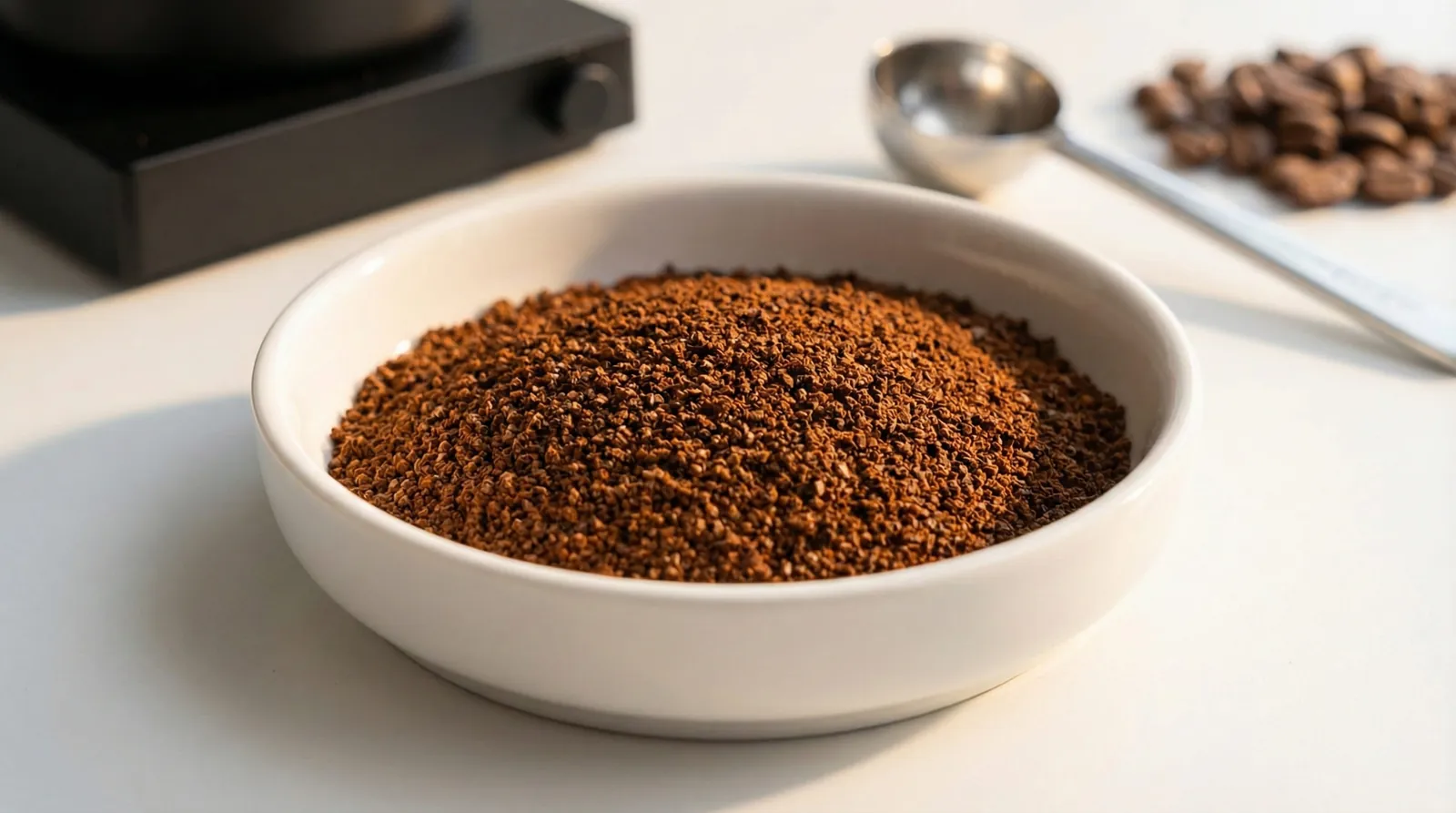
- Sieve analysis: Across V60, Chemex, and French press settings, 85–89% of particles landed within the target range for pour-over, with roughly 30% fewer sub-300-micron fines than the original Ode. The redesigned burr geometry is the reason extraction yields improved in testing.
- Chemex: Settings produced clean, uniform medium-coarse grounds with no channeling.
- French press: At the coarsest settings, particle size runs a touch finer than ideal for 24-hour cold brew concentrate, producing more sediment than a dedicated coarse grinder would.
- Versus the DF64 V5: Against the borrowed Turin DF64 V5, grind quality was close, though the DF64 wins on versatility since it also grinds for espresso.
Retention & Static Management
Across 30 tests weighing 20.0g of beans in and grounds out, average retention was 0.3–0.4g — among the lowest we've measured on a grinder without a bellows or forced-air system.
- Knocker tab: The metal tab clears the remainder in about two seconds.
- Static: Fellow's anti-static coating and ionizer keep grounds clean at normal humidity (40–60%), but static returns below 20% humidity. The Ross Droplet Technique (a light bean misting before grinding) resolves it.
For single-dose users, the workflow wastes almost nothing.
Is the Fellow Ode Gen 2 worth it for pour-over?
Where the $350–$450 goes, and where it doesn't
Most of the premium buys three things: tighter particle distribution (85–89% within target range), very low retention (0.3–0.4g average), and a quiet, fast motor. The trade-off is that the grinder does only one job. If you brew filter coffee every day with good beans, those gains show up in the cup. If you brew a few times a week, or you mostly brew coarse methods such as French press, the gap over a cheaper conical-burr grinder will matter less. Our French press ratio calculator works out coffee for 12, 17 or 34 oz presses.
Price is the other consideration. The Baratza Encore ESP ($199–$299) and Fellow Opus ($195–$225) cost far less and handle more brew methods. Resale softens the cost: used Gen 2 units resell for $280–$320, and five-year cost lands near $495 including the grinder.
Fellow Ode Gen 2 vs Opus, Encore ESP and Turin DF64
Which grinder fits which brewer
| Grinder | Burr | Capacity | Weight | Current price |
|---|---|---|---|---|
| Fellow Ode Gen 2 | 64mm flat | 80g | not listed | Check current price |
| Fellow Opus | 41mm conical | 110g | not listed | Check current price |
| Baratza Encore ESP | 40mm conical | not listed | not listed | Check current price |
| Turin DF64 V5 | 64mm flat | not listed | not listed | Check current price |
- Ode Gen 2: Best filter grinder here, no espresso under any setting, 80g hopper.
- Fellow Opus: The cheaper, more flexible Fellow, at $195–$225. See the Opus review.
- Baratza Encore ESP: $199–$299, the sensible pick if you want one grinder for filter and espresso-leaning brewing. See the Encore ESP review.
- Turin DF64 V5: $399–$499, close on grind quality, adds espresso, but more retention and noise (about 72dB).
If you're still choosing, the best coffee grinders guide ranks the whole category.
How the Fellow Ode Gen 2 works and why it matters
The mechanism behind the grind, in plain English, and what it changes in your cup
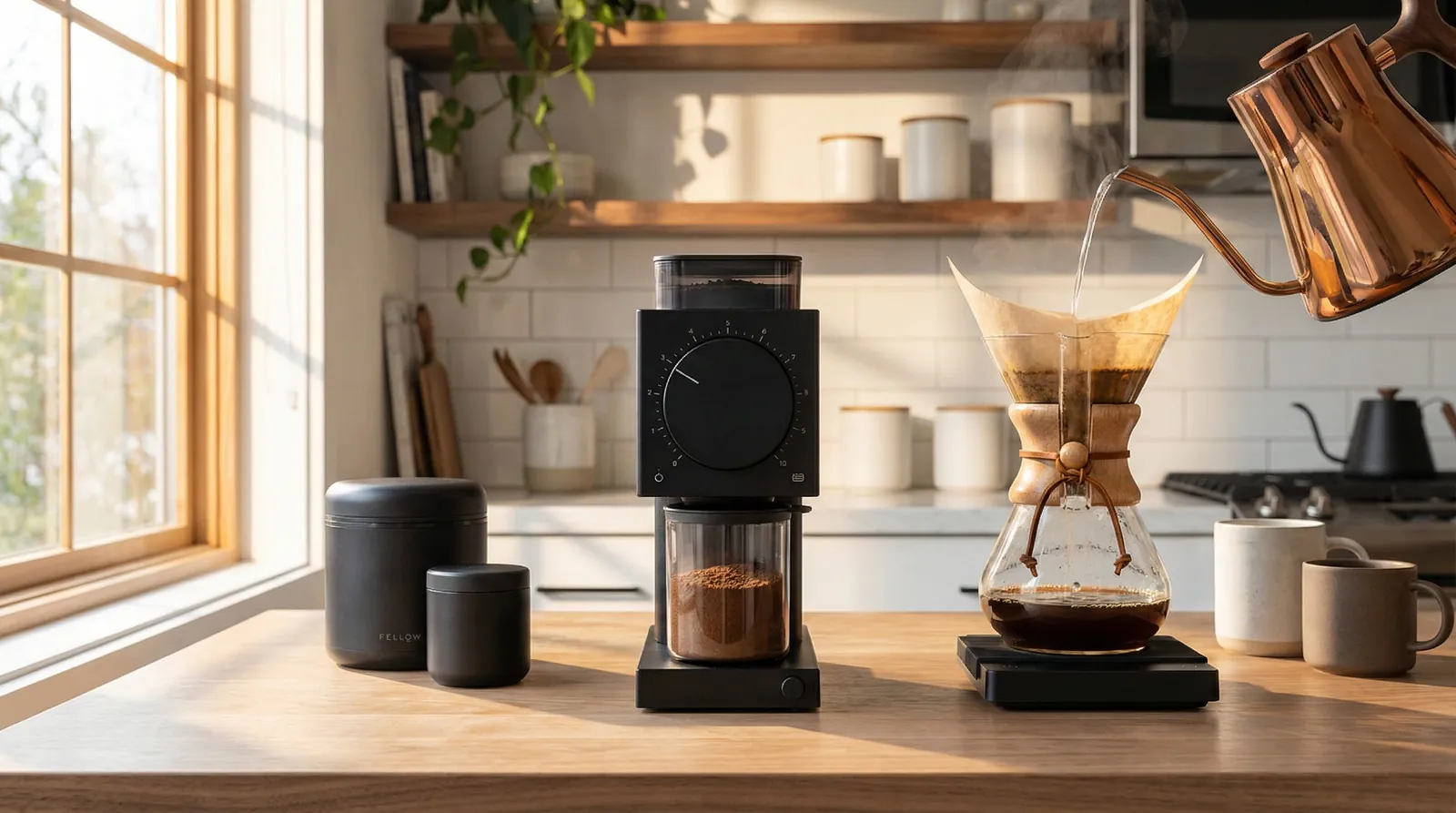
The Ode Gen 2 is built only for filter coffee. It uses 64mm flat burrs. With no espresso range, the design is optimized for bloom, drawdown and clarity in V60, Chemex, Kalita and French press. For exact pour targets, use the V60 ratio calculator.
Flat burrs make a more uniform particle distribution, which usually means a cleaner cup with more defined flavors. In pour-over coffee, uniform grounds drain at a steady rate, so you get fewer bitter notes from over-extracted fines and fewer sour notes from under-extracted boulders.
The single-dose design (weigh your beans, load, grind) keeps retention low, so fresh beans stay fresh and switching coffees is simple.
Who this mechanism suits: It is a counter-friendly choice for pour-over, Chemex and French press drinkers who value clarity and low waste. Because it cannot reach espresso, it is a poor fit if you may buy an espresso machine later.
Common problems and modern fixes
Typical ownership issues for this grinder type, and the tools and habits that solve them
The common issues are static, small hopper and pour-over drift.
- Static and flying chaff: spray beans lightly (RDT) and wipe the catch cup.
- Slow drawdown or bitter cups: move one or two steps coarser using the coffee grind size chart.
- Refilling a small hopper: weigh doses ahead and use a funnel or dosing cup.
- Sour or flat cups: old oils in the burr chamber. Clean the burrs regularly.
- Wanting espresso later: this grinder will not do it. Consider Turin DF64 V5 or the Fellow Opus instead.
- Pour-over technique: read drip vs pour-over when comparing brewing styles.
Who should skip the Fellow Ode Gen 2?
Honest reasons to buy something else
Skip it if you make espresso, even occasionally, because it cannot grind fine enough. Skip it if you regularly brew for several people, because the 80g hopper means refilling between batches. Skip it if you drink mostly dark roasts, which can clump, or if you live somewhere very dry and don't want to use the Ross Droplet Technique to manage static.
It's also not the right buy if the grinder is the only upgrade you can afford: a good brewer and fresh beans usually improve a cup more than moving from a decent grinder to a great one.
Before you decide
What Actually Matters in Premium Filter Coffee Grinders
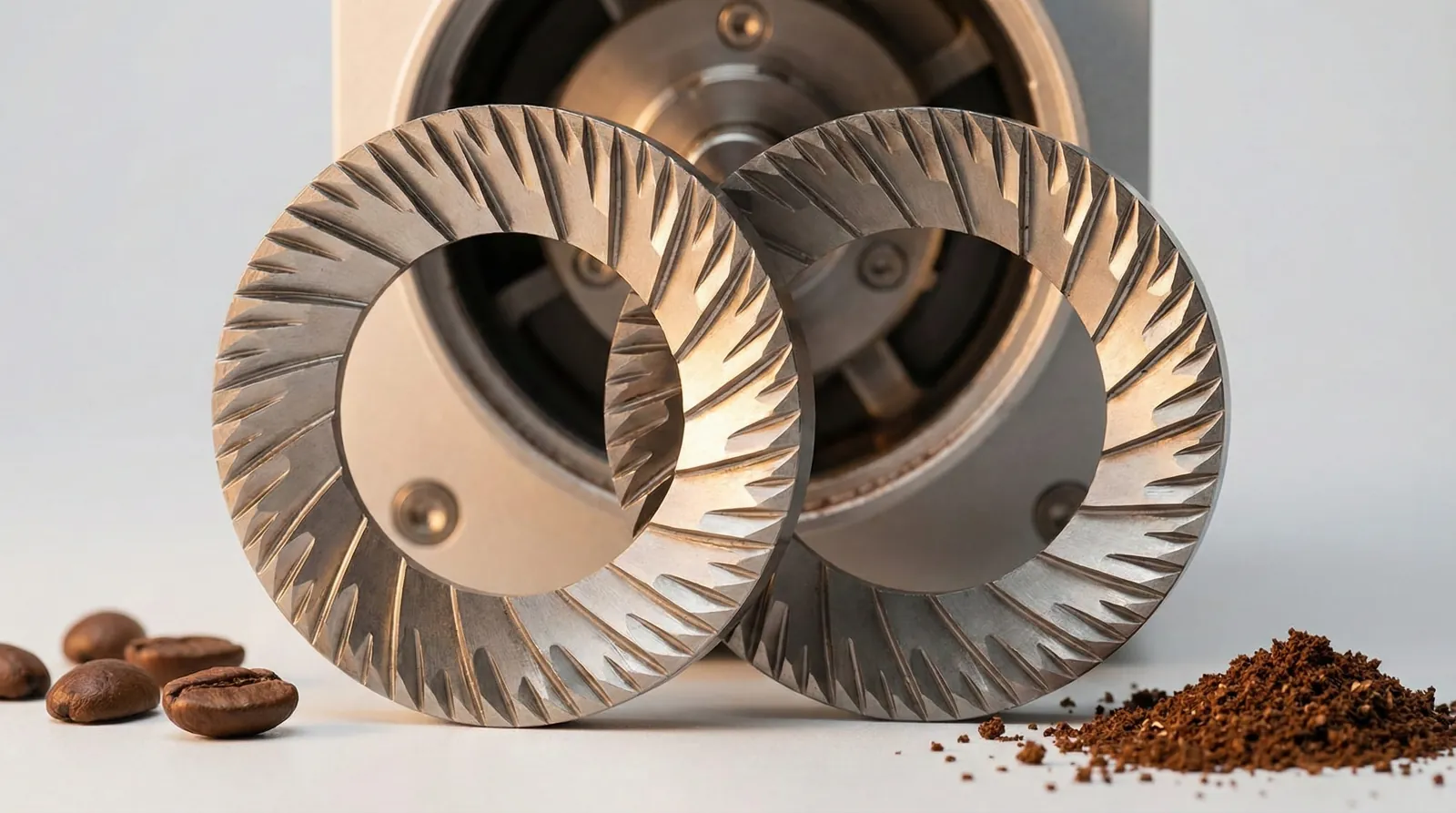
The Fellow Ode Gen 2 is a 64mm flat burr grinder designed exclusively for filter coffee and pour-over — not espresso. Unlike all-purpose grinders that compromise to handle every method, the Ode Gen 2 focuses entirely on pour-over, drip, Chemex, AeroPress, and French press, delivering grind consistency and cup clarity that typically requires $800+ commercial equipment.
In the premium filter grinder category, what separates good from exceptional is burr geometry, retention, and motor speed. Flat burrs produce a more uniform particle distribution than conical burrs, especially at the coarser settings used for filter coffee. Lower motor RPM (the Ode Gen 2 runs at ~350 RPM vs. the 1,400+ RPM of typical home grinders) reduces heat and friction during grinding, preserving volatile aromatics. Ultra-low retention (0.3–0.4g average) matters most for single-dose workflow with expensive specialty beans — every gram you waste is money thrown away.
The Ode Gen 2 sits at $350–$450 in a category where most competitors either cost more (Kafatek Monolith at $1,200+) or sacrifice filter coffee quality for versatility (Turin DF64 V5 at $399–$499, which adds espresso but introduces more retention and noise). The deliberate specialization is the point: if filter coffee is your primary method, the Ode Gen 2 delivers $800+ grind quality at a significant discount. See our best coffee grinders guide for the full category ranking.
How It Measures Up on Key Grinder Criteria
- Grind range and adjustment
- 31 stepped settings on 64mm flat burrs for pour-over, drip, cold brew and French press. It does not grind fine enough for espresso.
- Dose accuracy and retention
- A single-dose load bin holds about a pot's worth and it stops automatically when the beans run out. An anti-static feature reduces chaff and grounds clinging to the catch cup.
- Heat, noise and vibration
- An electric flat-burr grinder made to run quieter than the first Ode: still audible, but less harsh than many high-speed grinders.
Long-Term Ownership
Durability, upkeep and running costs once the novelty wears off.
- Durability
Gen 1 Odes commonly reach 7–10 years in home use, and the Gen 2's aluminum construction and long burr life (well beyond a decade at 20g a day) point to a similar lifespan.
- Reliability
The most common complaint is static in dry climates, resolved with RDT; a few owners report a loose hopper lid, which Fellow's support replaces without hassle.
- Parts
OEM burrs run $60–$80, with an optional $150–$200 SSP upgrade for enthusiasts chasing marginal gains beyond the already strong stock performance.
- Upkeep cost
Burrs pop out tool-free for a quick brush every 2–3 weeks, plus an occasional Grindz cleaning cycle.
More detail
Five-year cost lands near $495 including the grinder — about $0.14 per brew at two daily 20g doses.
- Warranty
Fellow backs the Ode Gen 2 with a 1-year warranty and a responsive support team that has replaced reported defects, like loose hopper lids, without argument.
- Resale value
Used Gen 2 units resell for $280–$320, and Gen 1 units still command $200–$250 — strong retained value for a specialty grinder.
This grinder was purchased independently and was not provided by Fellow.
Final Verdict
Our rating, who it fits, and what it costs.
Fellow Ode Gen 2Highly recommended
4.8 / 5 — Is it worth buying?
Across testing, the numbers confirm the Ode Gen 2 earns its reputation: the 64mm flat burrs produce particle distribution and extraction yields that typically require $800+ commercial grinders, and the ultra-low retention and quiet motor make single-dosing effortless.
✓ Best for
- Pour-over enthusiasts who care about extraction and cup clarity
- Single-dose workflow users who don't want to waste expensive beans
✕ Skip if
- Espresso drinkers
- Budget shoppers looking for the most versatility per dollar
Score breakdown
Grinds tested
250+
Testing period
4 weeks
Ready to decide?
Our verdict: 4.8/5, highly recommended. Independently tested; commissions never change a rating.
Where It Ranks in Our Buying Guides
See how the Fellow Ode Gen 2 compares with the other picks in each tested roundup.
Tools That Pair With This Review
Put it into practice with a free calculator built for what you just read.
- Coffee Grind Size CalculatorPick your brew method and get the right grind size, texture, and grinder setting.
- Espresso Dial-In CalculatorEnter your actual shot results to see whether you're on target — and what to adjust.
- Coffee to Water Ratio CalculatorThe general-purpose ratio tool for drip machines and pour-over — enter water or coffee, pick your strength.
Reader questions
Questions or tips? Leave a comment
Ask about your setup or share what worked for you. Comments are checked before they appear.