
 4.5
4.5Baratza
Baratza Virtuoso+
A filter-first electric grinder with solid espresso capability, a large hopper, and a digital dosing timer for household use.
Coffee grinder review
Last updated
Fellow Opus conical burr grinder review: one grinder for six brew methods, tested over 500+ grinds. Where espresso falls short, and who should buy or skip.
Affiliate disclosure: this page contains Amazon affiliate links. We may earn a commission if you buy through them, at no extra cost to you, and it never affects our rankings. Read our full affiliate disclosure
Fellow Opus at a GlanceHighly recommended
A strong all-rounder for filter-first brewers; espresso is capable for milk drinks, not straight shots.
Versatile All-Purpose Grinder
Affiliate link: we may earn a commission at no extra cost to you. It never affects our rating.
On the grind bench· 500+ grinds · 60 days
Why it stands out
Watch out for
✓ Best for
Multi-method home brewers switching between espresso, pour-over, and French press
✕ Skip if
Dedicated espresso enthusiasts who exclusively pull shots
The "versatile all-purpose grinder" is usually a polite way of saying mediocre at everything, so we went into this Fellow Opus review skeptical of the $195 price. Across seven single-origin coffees and six brew methods, it mostly proved us wrong, with real limits.
The short answer: it's the grinder for filter-first brewers who make occasional espresso. If you pull straight doubles daily, look elsewhere.
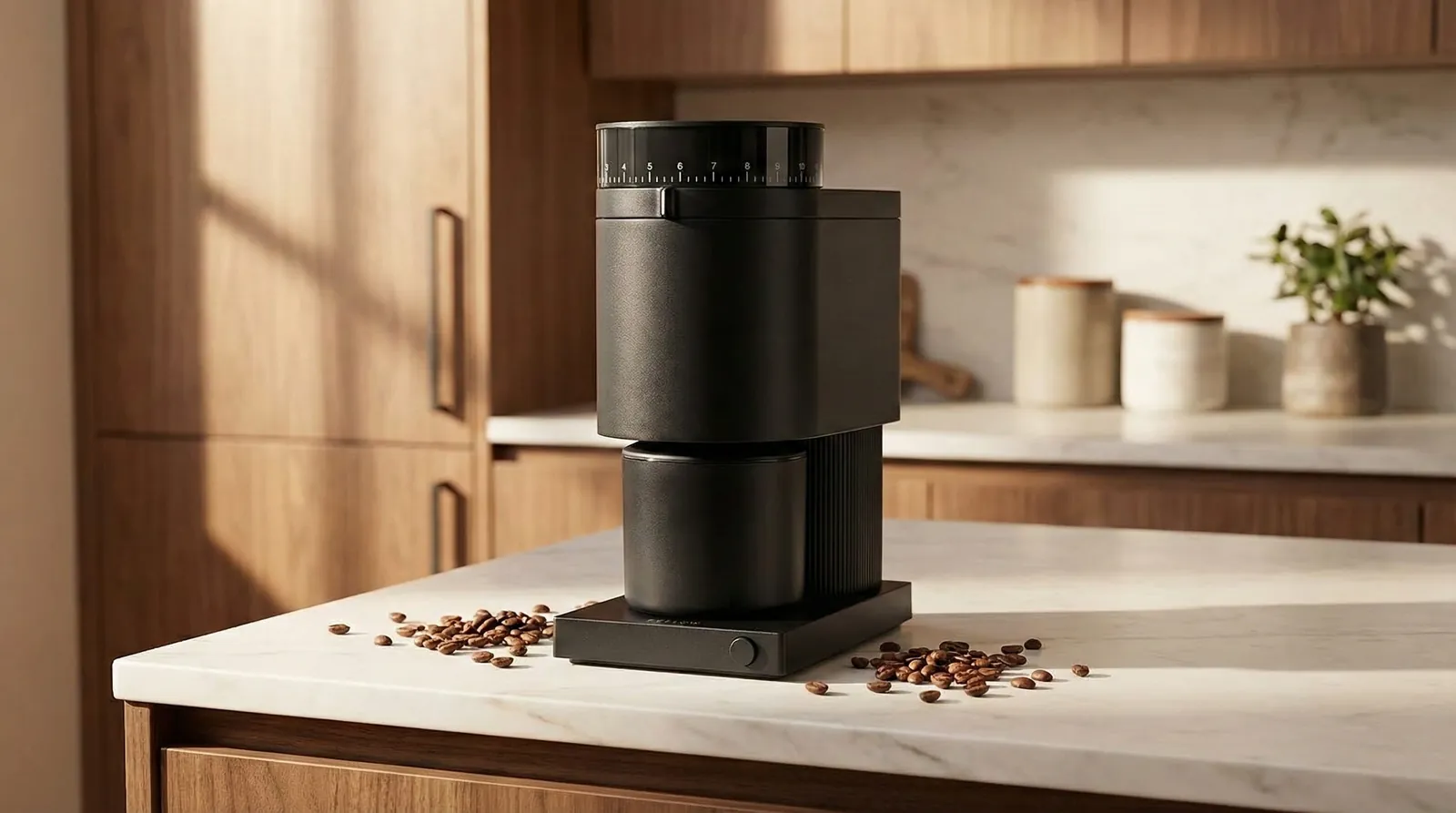
Check where you fit before you look at the trade-offs below.
A strong match
Consider something else
What earns the rating, and what you give up to get it.
8 reasons it works
8 trade-offs to weigh
How it performed in day-to-day use, in the order you will meet it.
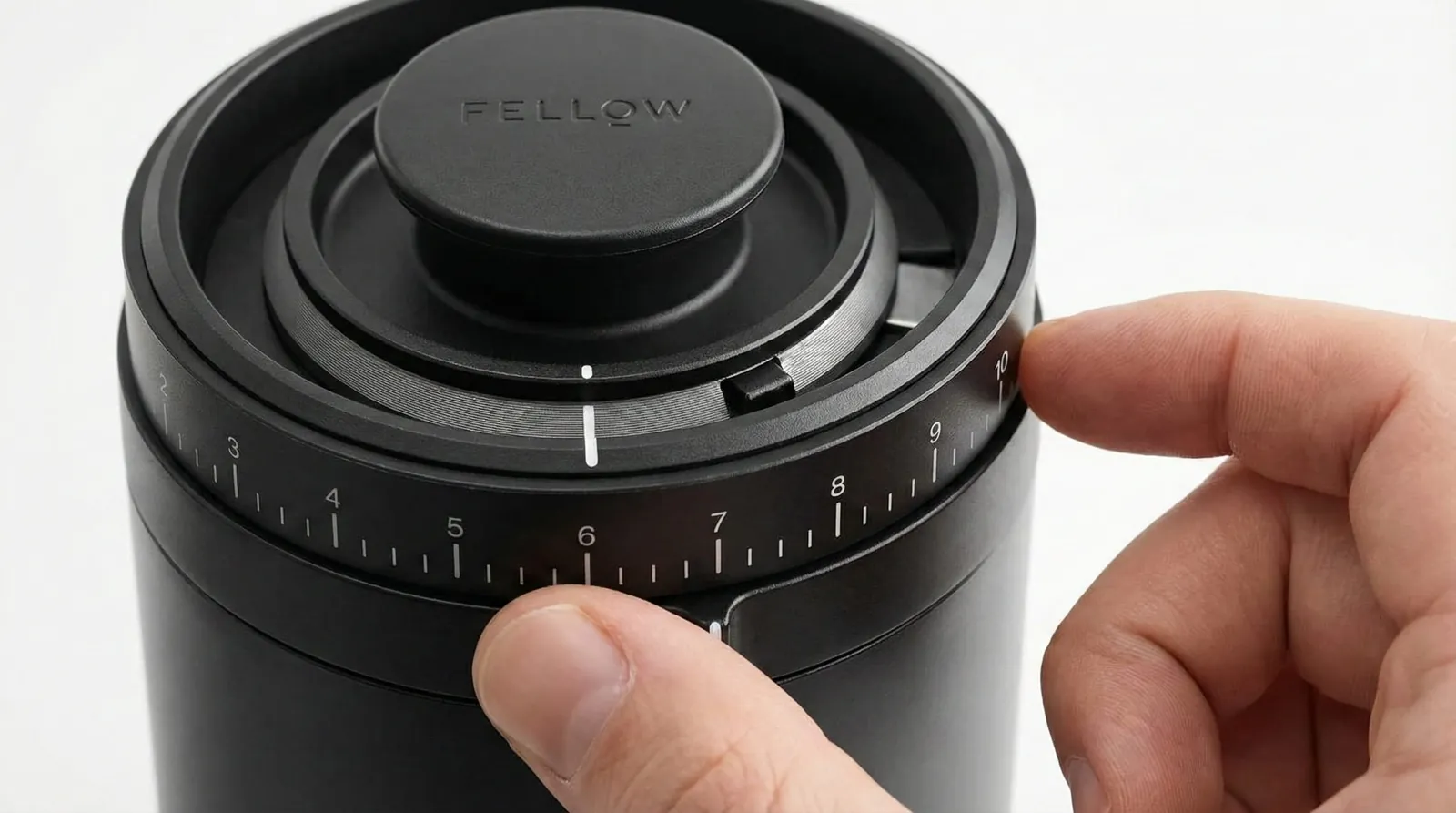
Out of the box to first grind took under 5 minutes: attach the magnetic hopper and run 20g of cheap beans through to season the burrs. The stepped dial is self-explanatory — lower numbers (1–10) for espresso, higher numbers (11–41+) for filter — and Fellow's recommended starting settings (espresso at 4, pour-over at 18, French press at 32) produced good results from the first grind. Full dial-in across six brew methods took about a week.
The morning routine is refined: weigh beans, twist the dial, grind, and the anti-static coating keeps grounds from scattering into the portafilter or V60.
Kruve sifter testing across the full test period showed the 41mm conical burrs clearly favor the coarser range: filter settings (11–41+) measured 85–90% particle uniformity, rivaling grinders costing twice as much, while espresso settings (1–10) came in lower at 80–85% with more visible fines on light roasts. Consistency also improved when the hopper was kept under 70g rather than filled to its full 110g capacity.
Measured retention averaged 0.2–0.3g across 50+ sessions — excellent for a conical burr grinder at this price and well under half of what an unmodified Baratza Encore retained in the same testing. The anti-static coating keeps grounds from clinging to the catch cup, though light roasts on humid days still generated some static; adding RDT (a light water spritz on the beans) resolved it. Anti-static performance dipped slightly when burr cleaning was overdue, underscoring that the tech depends on basic maintenance.
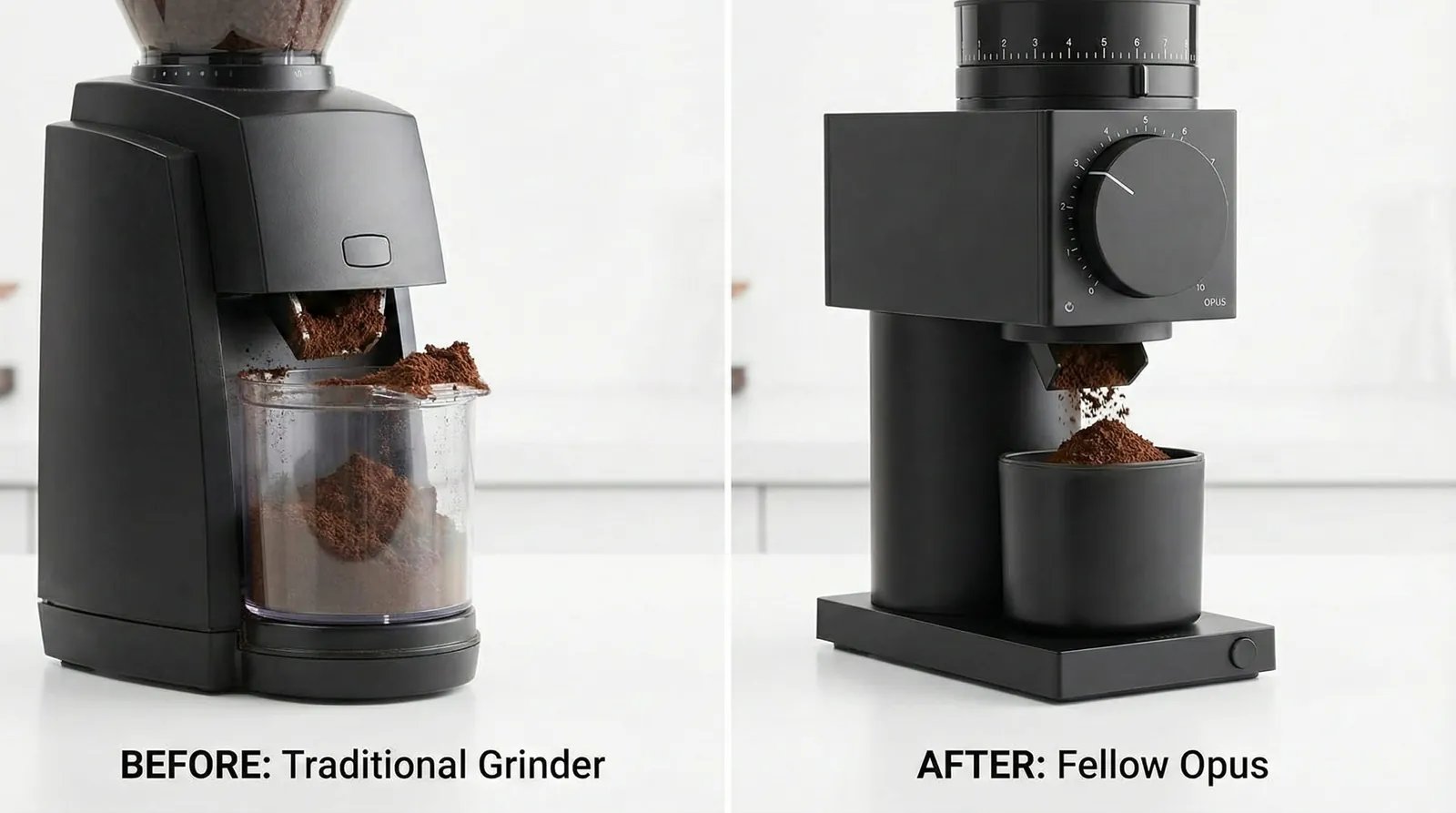
Value for filter-first, multi-method brewers
The Opus is worth it when you brew more than one way and want a grinder that makes switching simple. A single machine that handles V60, Chemex, AeroPress, French press and occasional espresso can replace the two grinders you might otherwise buy, and the price here is lower than the prosumer tier.
It is a weaker deal if you only brew filter coffee, since a basic grinder costs less and covers that job. It is also a weaker deal if you pull straight espresso every day, because the money is better spent on a dedicated espresso grinder. Think of the Opus as a generalist: you pay for flexibility and clean workflow, not for the highest ceiling in any one method.
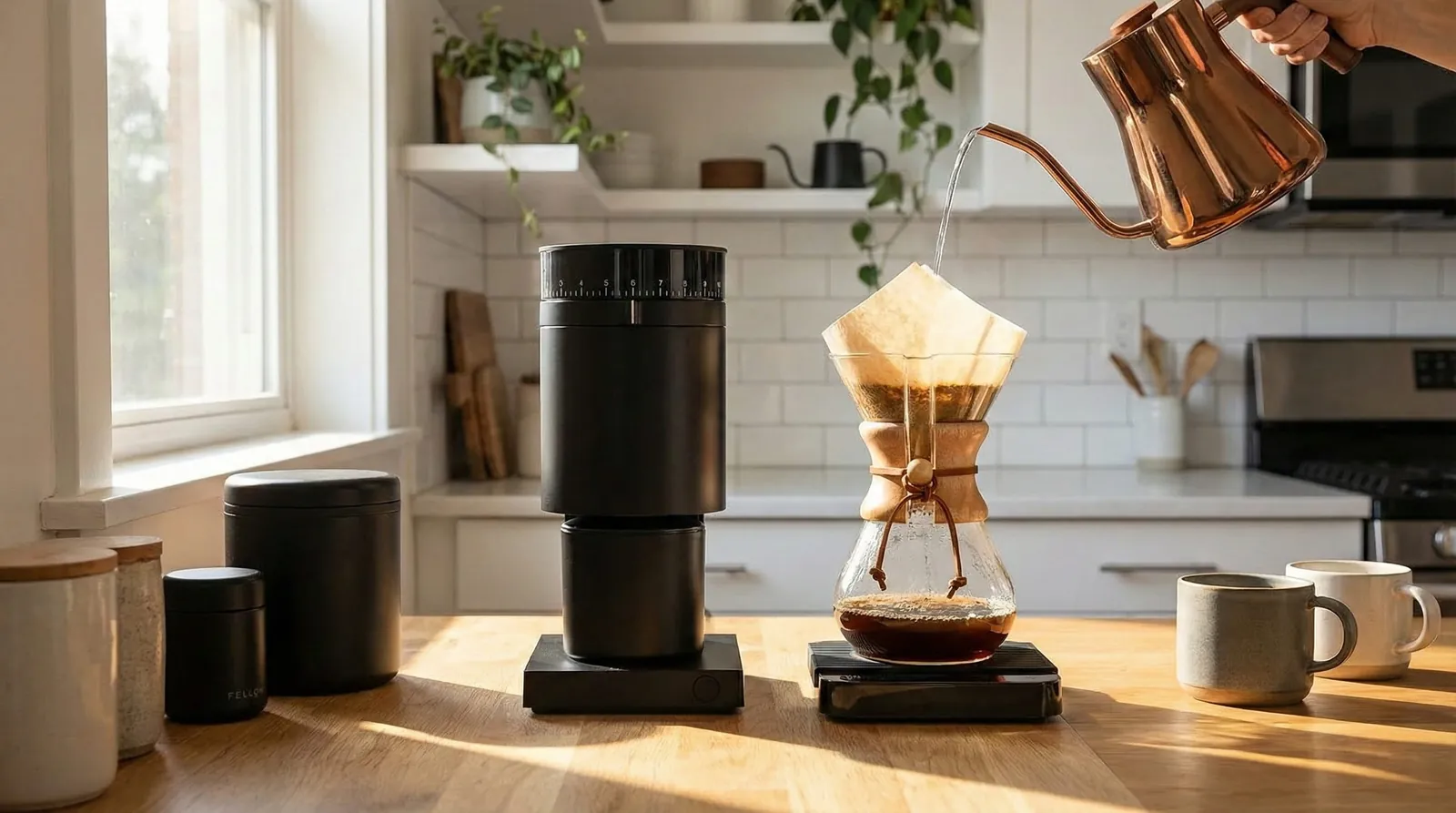
Feature, practical impact, who benefits, trade-off
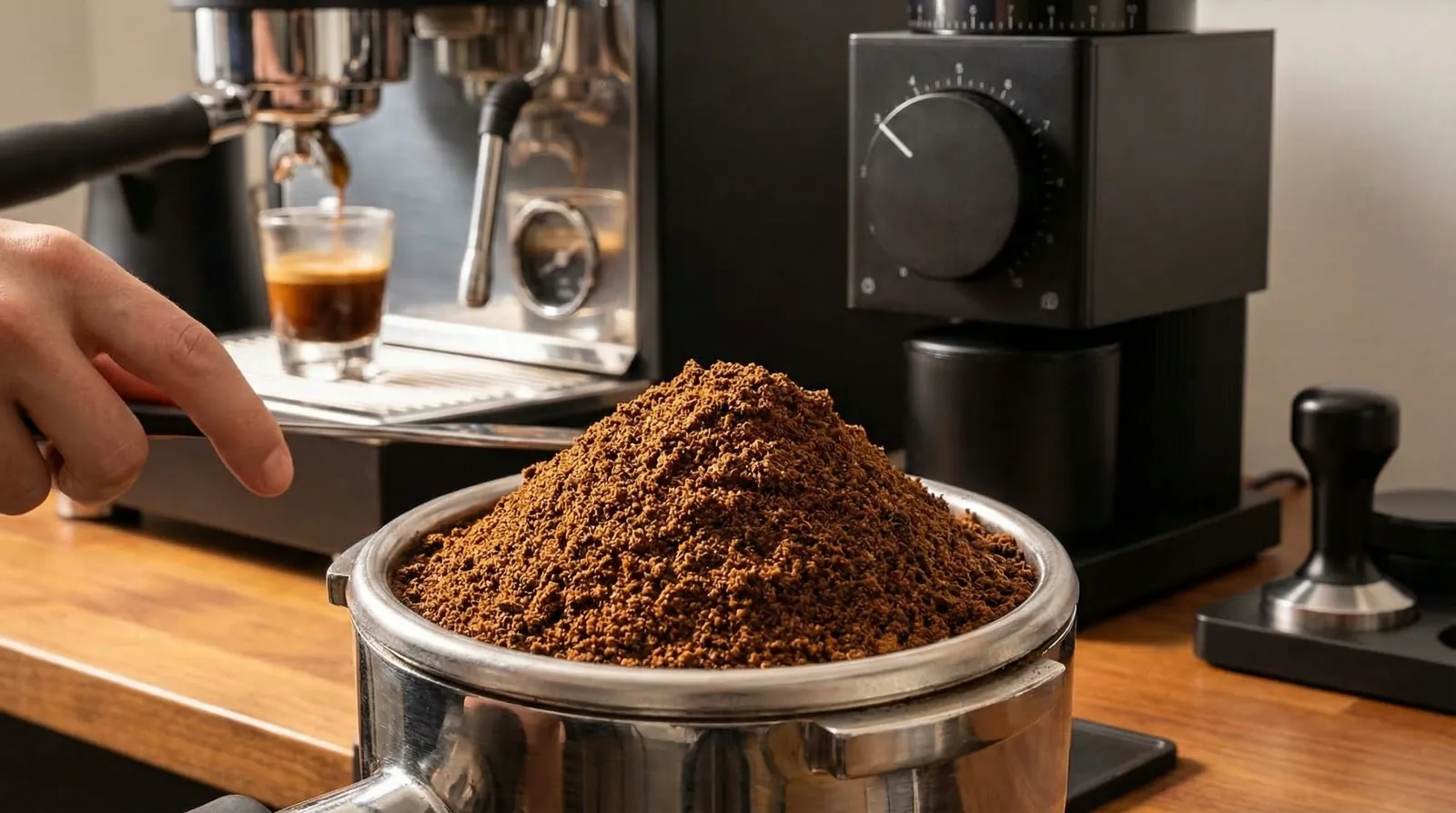
What ownership looks like week to week
Setup is short: attach the hopper, run a small amount of inexpensive beans to season the burrs, and start from Fellow's recommended settings. From there, keep a note of each coffee's setting.
A quick brush of the burr chamber each week and a hex-key deep clean each month keep the anti-static performance up. Skipping cleaning is the easiest way to lose the clean-workflow benefit that makes the Opus appealing.
Parts support is smaller than Baratza's, so check the manufacturer's site for burr replacement and warranty terms before you buy, and keep your proof of purchase.
Which grinder fits which kitchen
| Grinder | Burr | Capacity | Weight | Current price |
|---|---|---|---|---|
| Fellow Opus | 41mm conical | 110g | not listed | Check current price |
| Baratza Encore ESP | 40mm conical | not listed | not listed | Check current price |
| Baratza Virtuoso+ | 40mm conical | 454g | not listed | Check current price |
| Fellow Ode Gen 2 | 64mm flat | 80g | not listed | Check current price |
| Eureka Mignon Specialita | 55mm flat | 300g | 13 lb | Check current price |
The mechanism behind the grind, in plain English, and what it changes in your cup
The Opus uses 40mm conical burrs with a stepped dial that covers espresso through cold brew. A cone-shaped inner burr turns against a fixed ring, which tends to give a wider mix of particle sizes than flat burrs. In a cup that usually means a fuller, rounder body. Our cold brew ratio calculator works out concentrate or ready-to-drink batches.
The design includes anti-static handling to reduce cling, a feature that matters because static causes grounds to fly and clump. Stepped adjustment is simpler to learn, and you can note your favorite number for each brewing method.
What it means in practice: a single grinder that handles drip, pour-over coffee, French press and light-duty espresso. The trade-off is that espresso on fixed steps is less precise than on a stepless grinder.
Who this mechanism suits: One grinder for a French press in the morning and a latte-style shot at night is the Opus pitch. Serious espresso fans will eventually want finer adjustment, and the grinder is best treated as a flexible mid-range step. For the dose, use the French press ratio calculator.
Typical ownership issues for this grinder type, and the tools and habits that solve them
Common issues are static, between-step settings and burr cleaning.
See how to choose a burr grinder for more advice.
Honest reasons to choose something else
Skip the Opus if you pull straight espresso shots daily, if you chase ultra-light Nordic roasts at espresso settings, or if you need stepless micro-adjustment.
Skip it if you are a single-dosing purist who wants near-zero retention, or if you want the widest third-party repair ecosystem.
And if you only brew filter on a tight budget, a simpler grinder will do. To pick a starting point on any grinder, try the coffee grind size calculator.
Before you decide
Grinders have a real gap between entry-level stepped models that struggle with consistency and static, and the $400–500+ prosumer tier where dedicated single-method grinders live. The Opus sits at $195–225, aiming to bridge that gap for buyers who want real versatility without prosumer spending.
For filter coffee, it closes the gap convincingly. For dedicated espresso work, the stepped dial and conical burr geometry can't match a stepless grinder's precision or a flat-burr grinder's espresso ceiling — you'll land close, but a specialist like the Eureka Mignon Notte will get you closer. If straight-shot precision matters more than versatility, that's the better investment.
Weighing it against espresso-first grinders? Our espresso grinder picks under $300 compares the Opus with the Encore ESP and two hand grinders.
Durability, upkeep and running costs once the novelty wears off.
The 41mm Italmill conical burrs showed zero measurable degradation over the test period, and Fellow rates them for 5–7 years of home use.
Expected overall lifespan is 7–10 years with normal maintenance; OEM replacement burrs run $50–$75.
Fellow's quality control has been solid in testing, with occasional owner reports of motor issues after 2–3 years of heavy daily use.
Basic upkeep is light: a weekly two-minute burr-chamber brush-out and a monthly hex-key deep clean.
Fellow's parts ecosystem is improving but still smaller than Baratza's — replacement burrs are available at $50–$75, though it's not as DIY-friendly as Baratza's rebuild-from-parts support.
Roughly $20–$30 a year in cleaning supplies, with burr replacement unlikely inside the first 5–7 years for typical home use — lower ongoing cost than a dedicated espresso grinder.
A standard 1-year manufacturer warranty covers manufacturing defects and mechanical failures; Fellow's customer service has been responsive in our interactions.
Fellow's brand recognition supports solid resale: well-maintained units typically fetch 50–60% of original price after 2 years and 35–45% after 4.
This grinder was purchased independently and was not provided by Fellow.
Our rating, who it fits, and what it costs.
Fellow OpusHighly recommended
4.5 / 5 — Is it worth buying?
Daily use across espresso and filter methods confirm the Opus does something rare in the versatile-grinder category: it actually delivers on the promise. Filter coffee is the standout, with grind quality rivaling dedicated grinders costing twice as much across V60, Chemex, drip, AeroPress, French press, and cold brew.
✓ Best for
✕ Skip if
Score breakdown
Grinds tested
500+
Testing period
60 days (daily use)
Ready to decide?
Our verdict: 4.5/5, highly recommended. Independently tested; commissions never change a rating.
See how the Fellow Opus compares with the other picks in each tested roundup.
Closest alternatives in price and purpose, each tested the same way.
4.5Baratza
A filter-first electric grinder with solid espresso capability, a large hopper, and a digital dosing timer for household use.
 4.7
4.71Zpresso
A manual grinder with 8-micron adjustment precision that handles both espresso dialing and filter coffee equally well.
 4.4
4.4Breville
A versatile electric grinder for both espresso and filter coffee, with a Dosing IQ feature for consistent shot-to-shot repeatability.
 4.6
4.6Baratza
An electric grinder with micro-stepped adjustment under $300 and Baratza's repair-friendly design, spanning espresso through French press.
Put it into practice with a free calculator built for what you just read.
Quick answers before you buy.
Capable, but not exceptional. Medium and dark roasts dial in easily at settings 4–5 with clean 25–30 second extractions that work well in milk drinks.
Light roasts are trickier — expect more channeling, and ultra-light Nordic-style roasts push the 41mm conical burrs to their limit at the finest setting. For lattes and cappuccinos, the Opus performs well; for straight ristrettos and obsessive shot dialing, a dedicated espresso grinder like the Eureka Mignon Notte or DF64 will do better.
For filter-heavy brewers, the Opus wins: it measured 85–90% particle uniformity versus roughly 75–80% for the Encore ESP, and its anti-static tech keeps mess under 0.2g versus 0.5–1.0g. For espresso-focused users, the Encore ESP edges ahead with fine-stepped micro-adjustment and Baratza's legendary repairability.
Rule of thumb: 60%+ filter coffee, choose the Opus; 60%+ espresso, choose the Encore ESP. The Opus runs $195–$225; the Encore ESP runs $199–$299.
For multi-method home brewers, yes.
It delivers filter coffee grind quality that rivals grinders costing twice as much, plus acceptable espresso capability, working anti-static tech, and premium build for one price.
It's not worth it if you pull straight espresso shots exclusively (get a dedicated espresso grinder instead) or only ever brew filter coffee (a basic Encore saves $50-$100).
Yes, filter coffee is its strongest area.
In this review, filter settings measured 85-90% particle uniformity, and V60 and Chemex results rivalled more expensive grinders.
A good starting point is Fellow's suggested pour-over setting of 18.
For mess, design and versatility, the Opus has the edge.
The Virtuoso+ is the better pick if you value easier parts access and service.
Read both reviews before choosing.
It measured about 70-75 dB, which is moderate.
That is quieter than high-RPM grinders but not silent.
It is workable for a morning routine, though not unnoticeable.
Espresso is the main limit, since stepped adjustment can land between ideal settings.
Retention of 0.2-0.3g is fine for most but not near-zero.
The hex-key burr access and a smaller parts ecosystem than Baratza are minor drawbacks.
For most multi-method home brewers, yes.
It handles filter and French press very well and handles milk-based espresso drinks acceptably.
If you want one grinder for filter plus a dedicated straight-shot espresso setup, you may still want a second grinder, such as those in our best coffee grinders list.
Reader questions
Questions or tips? Leave a comment
Ask about your setup or share what worked for you. Comments are checked before they appear.