Comparison lineup of seven budget espresso machines under $500, from the compact Breville Bambino Plus to the commercial-style Gaggia Classic Pro, demonstrating single-boiler and thermoblock configurations across price tiers from $79 to $550

Best Espresso Machines Under $500 in 2026

Great espresso doesn't require a $2,000 machine. We individually tested seven of the best budget espresso machines — each for three to six-plus weeks, with shot counts and dates documented in its own review — to find out which ones actually deliver café-quality results without breaking the bank. Our top pick, the Breville Bambino Plus, isn't the highest-rated machine in the group; it's the one that gets the most people to consistently good espresso with the least frustration.

Last Updated: September 18, 2026
22 min read

🏆 Top Picks Under $500

Independently tested • Best value for budget-conscious espresso buyers

Breville Bambino Plus compact espresso machine
BEST OVERALL

Breville Bambino Plus

★★★★☆(4.4/5)

3-second ThermoJet heat-up and automatic milk texturing that held up in blind tests against hand-steamed milk. $399-$449 street price — comfortably under budget, no promotion required.

Gaggia Classic Pro espresso machine with commercial 58mm portafilter
BEST FOR TRADITIONALISTS

Gaggia Classic Pro

★★★★★(4.7/5)

Commercial 58mm portafilter, brass boiler, and a huge modding community. Our highest-rated pick in this group — but note its real street price is $450-$550, which can run over $500 depending on retailer and promotions.

7
Machines Compared
21-45 Days
Per-Machine Testing
Independent
No Sponsored Placements
Michael Anderson
SCA Level 2 Certified

How We Rank the Best Espresso Machines Under $500

  • ✓Temperature stability — measured shot-to-shot variance during each machine's individual testing window (see each product's independent review for its exact figures).
  • ✓Shot-to-shot consistency — tracked dose, yield, and extraction time across dozens of pulls per machine.
  • ✓Steam power and milk performance — wand or automation quality, recovery time, and microfoam results evaluated across lattes and cappuccinos.
  • ✓Build quality and long-term durability — assessed through component materials, manufacturer track record, and documented parts availability.
  • ✓Real-world usability — how easily a typical buyer, not just an experienced barista, gets consistently good results. This is why the Bambino Plus ranks above the higher-rated Gaggia Classic Pro for most readers: it gets more people to good espresso faster.
  • ✓Value relative to the under-$500 tier — ranked within this budget category, not against machines at twice the price.
Budget espresso machines under $500 including Breville Bambino Plus and Gaggia Classic Pro on modern kitchen counter

Today's budget espresso machines under $500 deliver features once exclusive to prosumer models. From the ultra-compact Breville Bambino Plus with its 3-second heat-up to the legendary Gaggia Classic Pro with a commercial 58mm portafilter, you no longer need to sacrifice quality for affordability. Below, we break down which machine fits your budget, skill level, and kitchen space. For a broader look at all price ranges, including machines above $500, see our full best home espresso machines comparison.

Who Should Buy an Espresso Machine Under $500?

  • Beginners — Sub-$500 machines offer real hands-on learning with quality results and a manageable investment. Models like the Bambino Plus have a near-zero learning curve.
  • Apartment users — Compact options like the Dedica (5.9") and Bambino Plus (7.7") fit easily on tight counters without sacrificing performance.
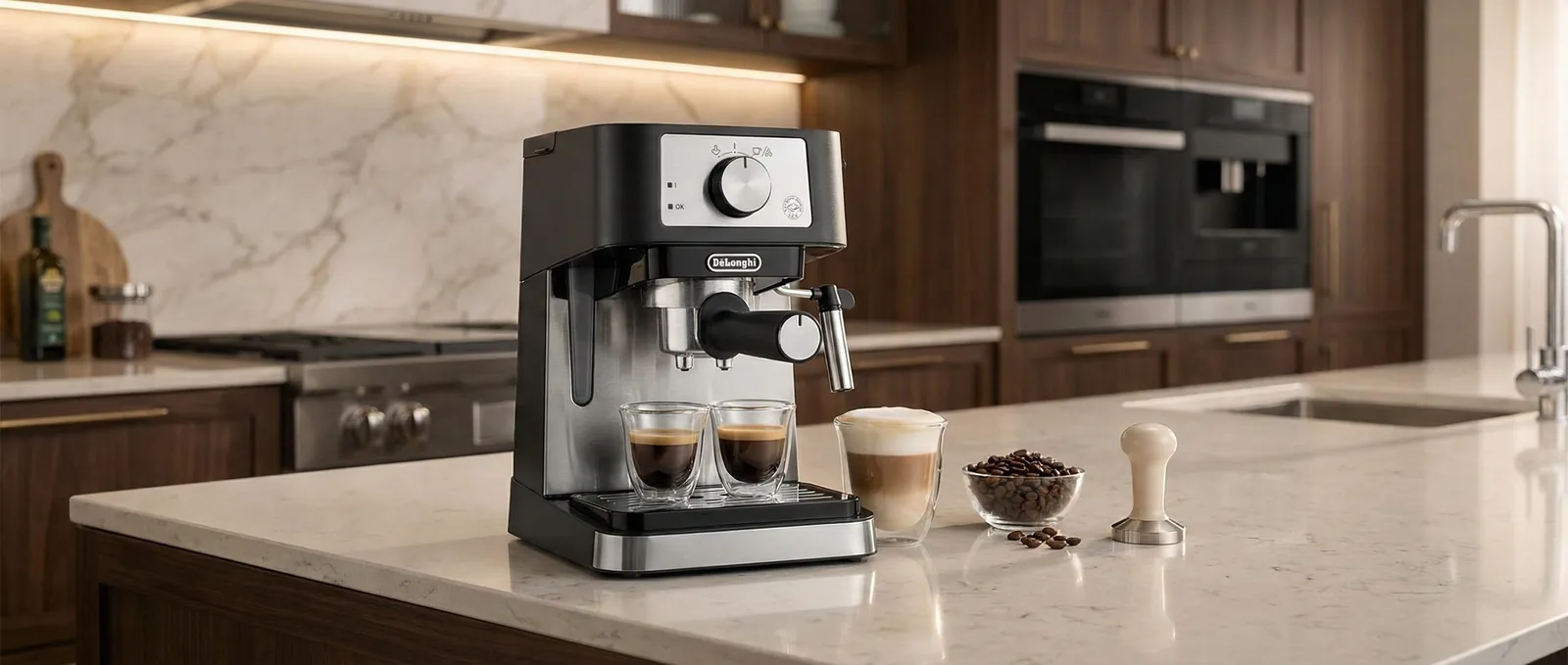
  • Students — Affordable options like the Neretva espresso machine ($59–$99), the De'Longhi Stilosa ($79–$149), the Krups XP444C50 ($99–$129), and the De'Longhi EC155 ($249–$349, with ESE pod compatibility for grinder-free brewing) make genuine home espresso accessible on a student budget.
  • First-time home baristas — This range covers everything from beginner-friendly automation to hands-on commercial gear, so you can start where you're comfortable and grow from there.
  • Users upgrading from pod machines — You'll immediately notice the difference in espresso quality and freshness, and the long-term savings on pods add up quickly. Browse the full espresso machine range to compare your options.

Performance Benchmarks Under $500

Findings below are drawn from each machine's individual testing period (21-45 days each) — full methodology and shot counts are in each product's own review.

  • Best automatic temperature stability: Breville Bambino Plus — its ThermoJet system held brewing temperature at 200°F ±1°F throughout testing, tighter than several PID dual-boilers costing hundreds more.
  • Fastest heat-up: Breville Bambino Plus — 3-second ThermoJet heat-up, measured at 2.8-3.2 seconds across 50+ cold-start tests using a thermocouple probe.
  • Best automatic milk performance: Breville Bambino Plus — automatic milk texturing was indistinguishable from hand-steamed microfoam in five of eight blind tests with trained tasters.
  • Best manual steam power: Gaggia Classic Pro — a genuine commercial steam wand (no panarello) capable of competition-level microfoam once the technique is learned.
  • Best expected longevity: Gaggia Classic Pro — brass boiler and commercial parts give it a 10-20+ year expected lifespan, versus 2-5 years for the plastic-bodied budget machines in this group.

Complete Comparison: All 7 Machines Under $500

BEST OVERALL
4.4/5

Breville Bambino Plus

Price: $399-$449
Type: Semi-Auto
Grinder: ❌ Separate
Skill: Beginner
BEST FOR TRADITIONALISTS
4.7/5

Gaggia Classic Pro

Price: $450-$550*
Type: Semi-Auto
Grinder: ❌ Separate
Skill: Intermediate
BEST TRADITIONAL VALUE
4.0/5

Breville Café Roma ESP8XL

Price: $249-$299
Type: Semi-Auto
Grinder: ❌ Separate
Skill: Beginner
EASIEST TO USE
4.0/5

Nespresso VertuoPlus

Price: $150-$200
Type: Pod System
Grinder: N/A Pods
Skill: Beginner
ULTRA COMPACT
3.8/5

De'Longhi Dedica EC685

Price: $200-$250
Type: Semi-Auto
Grinder: ❌ Separate
Skill: Beginner
EASIEST FOR BEGINNERS
3.8/5

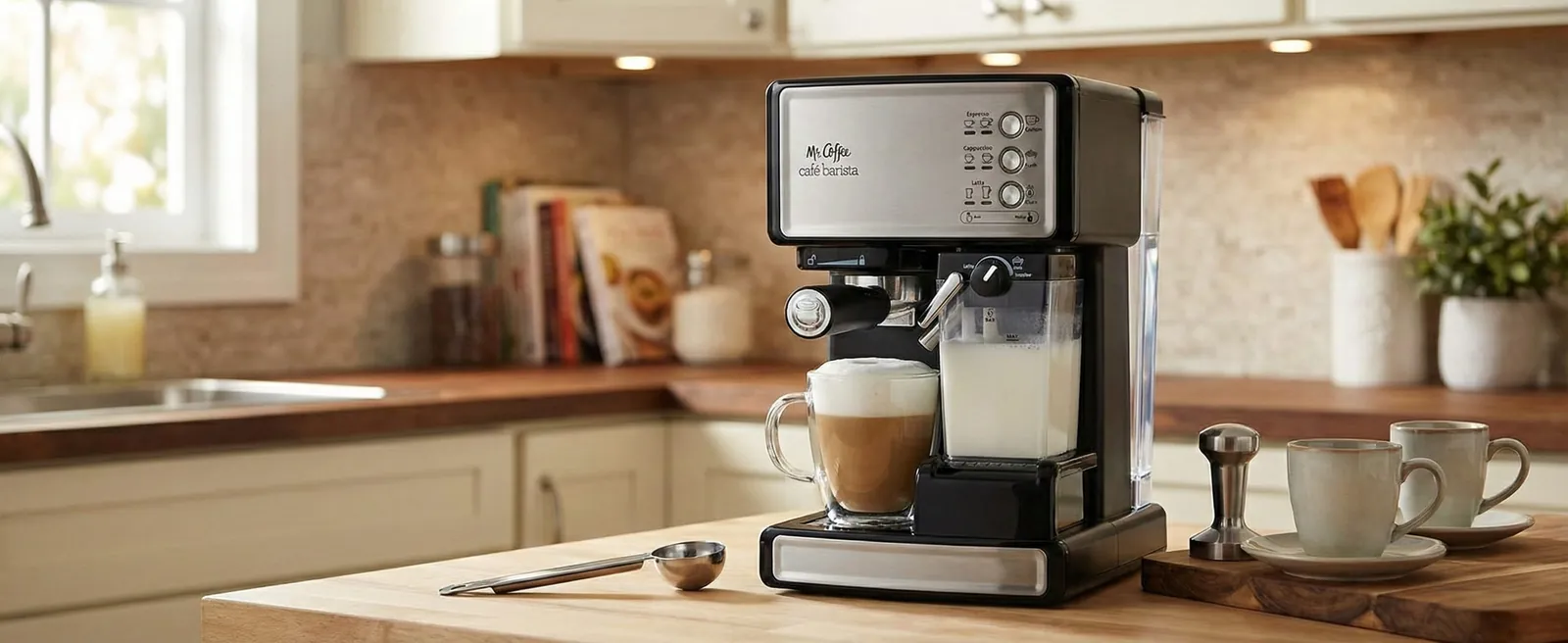
Mr. Coffee Café Barista

Price: $150-$200
Type: Semi-Auto
Grinder: ❌ Separate (optional)
Skill: Beginner
LOWEST-RISK ENTRY POINT
3.7/5

De'Longhi Stilosa EC260

Price: $79-$149
Type: Semi-Auto
Grinder: ❌ Separate
Skill: Beginner

Ratings are each product's overall editor rating out of 5, drawn from its own independent review. *The Gaggia Classic Pro's real street price ($450-$550) can run above $500 depending on retailer and promotions — see its review below for the full explanation.

In-Depth Reviews: 7 Espresso Machines Under $500

1. Breville Bambino Plus – Best Overall Under $500

Breville Bambino Plus compact espresso machine

Price: $399-$449 | Rating: ⭐⭐⭐⭐☆ (4.4/5)

This is the budget angle: at $399-$449, the Bambino Plus reliably stays under $500 with room to spare, and testing found its ThermoJet system held brewing temperature to within ±1°F — tighter control than several PID dual-boiler machines costing hundreds more. That kind of temperature stability at this price is unusual, and it's the main reason it tops this list.

The trade-off for the budget: no built-in grinder, a 54mm portafilter (rather than the commercial 58mm standard), and a 64oz tank that needs refilling every 2-3 days for a two-person household. In blind tests against a $1,200 Lelit MaraX using the same beans and grinder, most tasters couldn't reliably tell the shots apart — the one who guessed correctly put the quality gap at roughly 5%, for three times the price. For the full testing breakdown, grinder pairing data, and milk-steaming results, see the complete Breville Bambino Plus review.

Key Features:

  • ThermoJet Heating System (3-second heat-up, measured 2.8-3.2 seconds)
  • Auto MilQ automatic microfoam milk texturing
  • 54mm portafilter, 9-bar extraction pressure
  • Ultra-compact design (7.7" wide, 7.7 lbs)
  • Includes single- and dual-wall baskets, tamper, Razor dosing tool, and cleaning tool

Pros:

  • ✅ 3-second ThermoJet heat-up, verified with a thermocouple
  • ✅ Automatic milk texturing matched hand-steamed microfoam in blind tests
  • ✅ Ultra-compact 7.7" width
  • ✅ Temperature stability rivaling $1,200+ dual-boilers
  • ✅ Comes with baskets, tamper, and dosing tool — no separate purchases needed to start

Cons:

  • ❌ No built-in grinder
  • ❌ Small 64oz water tank (refill every 2-3 days for two people)
  • ❌ 54mm proprietary portafilter limits some aftermarket accessories
  • ❌ Single boiler — no simultaneous brewing and steaming

Best For: Small kitchens, apartment dwellers, beginners wanting café-quality milk texturing without a learning curve, anyone who already owns a quality grinder.

Skip this if:

You want an all-in-one machine with a built-in grinder, you're a manual-wand purist who wants full hands-on steaming control, or your household needs 6+ drinks daily — the single boiler and 64oz tank aren't built for that volume.

2. Gaggia Classic Pro – Best for Traditionalists & Modding Potential

Gaggia Classic Pro espresso machine with commercial 58mm portafilter

Price: $450-$550 | Rating: ⭐⭐⭐⭐½ (4.7/5, our highest-rated pick in this group)

Price caveat, stated plainly: the Classic Pro's real street price is $450-$550, not a firm under-$500 figure. Depending on retailer and current promotions, it can land above $500. We're keeping it on this page because it frequently sells within budget and remains one of the best values in home espresso at the low end of that range — but check the current price before assuming it fits.

The budget angle: this is the only machine here with a genuine commercial 58mm portafilter and brass boiler, and testing found it pulled shots competitive with machines costing $800-$1,200 once dialed in — assuming a decent grinder and real technique. That's a meaningfully higher performance ceiling than anything else on this page, at the cost of a real learning curve. First-week testing produced roughly 40% drinkable shots; by week three that climbed above 85%.

For the full modding breakdown (including the free one-screw OPV adjustment), the extraction-by-roast-level data, and the complete pros and cons, see the complete Gaggia Classic Pro review.

Key Features:

  • Commercial 58mm portafilter (professional standard)
  • Brass boiler for excellent thermal stability
  • Professional steam wand (no panarello)
  • 3-way solenoid valve for dry pucks
  • Made in Italy with commercial-grade components

Pros:

  • ✅ Commercial 58mm portafilter compatibility
  • ✅ Brass boiler with a 10-20+ year expected lifespan
  • ✅ Free one-screw OPV mod meaningfully improves extraction
  • ✅ Professional steam wand producing competition-level microfoam
  • ✅ Deep, well-documented modding community

Cons:

  • ❌ Real learning curve — expect an inconsistent first week or two
  • ❌ No built-in grinder
  • ❌ Single-boiler 45-60 second wait between brewing and steaming
  • ❌ Requires temperature surfing without a PID mod
  • ❌ Street price can exceed $500

Best For: DIY enthusiasts, modding community members, and budget-conscious quality seekers who already own (or will buy) a separate grinder and want a machine that can grow with them for a decade or more.

Skip this if:

You're a complete beginner wanting plug-and-play simplicity, you need a built-in grinder, you can't tolerate single-boiler wait times, or you're unwilling to spend a few weeks dialing in technique.

3. Breville Café Roma ESP8XL – Best Traditional Design for the Money

Breville Café Roma ESP8XL traditional stainless steel espresso machine

Price: $249-$299 | Rating: ⭐⭐⭐⭐☆ (4.0/5)

Genuine brushed stainless steel construction that testing found comparable to machines costing $350-$400 more, at a $249-$299 street price. The 15-bar pump is regulated down to 9 bars at the basket — the pressure that actually matters — and it comes with both pressurized and single-wall baskets, giving beginners a progression path toward real technique.

Key Features:

  • Classic stainless steel design with chrome-plated portafilter
  • Thermoblock heating, 90-second heat-up (measured across 60+ cold starts)
  • Dual-wall and single-wall filter baskets included
  • Manual swivel steam wand
  • 1.5L (50 oz) removable water tank

Pros:

  • ✅ Stainless steel build quality above its price point
  • ✅ Includes both pressurized and single-wall baskets
  • ✅ Fast 90-second heat-up
  • ✅ Larger 50 oz water tank

Cons:

  • ❌ Thermoblock temperature variance of ±3-4°F, noticeable with light roasts
  • ❌ 51mm proprietary portafilter
  • ❌ 45-60 second single-boiler recovery between brewing and steaming
  • ❌ Steam wand technique took 15-20 practice sessions to reach 70% microfoam success in testing

Best For: Users valuing traditional café aesthetics and Breville reliability on a mid-tier budget, intermediate users wanting both dual-wall and single-wall basket options.

Skip this if:

You drink mostly light-roast specialty coffee (the thermoblock's temperature swings hurt those the most), or you regularly make multiple milk drinks back-to-back — the single-boiler recovery gets tedious.

4. Nespresso VertuoPlus – Best for Pure Convenience

Nespresso VertuoPlus pod espresso and coffee maker with automatic capsule system

Price: $150-$200 | Rating: ⭐⭐⭐⭐☆ (4.0/5)

The budget angle here isn't just the $150-$200 machine price — it's that this is the one machine on the page that needs no separate grinder purchase, which typically adds $150-$400 to any of the other six. The trade-off shows up in ongoing cost instead: capsules run roughly $0.80-$1.25 each, making this the highest cost-per-cup of anything reviewed here once you factor in regular use.

It's not authentic espresso — centrifugal spin brewing at up to 5,000 RPM, not 9-bar pump pressure — and that's worth being direct about before you buy. For the honest breakdown of what it is and isn't, see the complete Nespresso VertuoPlus review.

Key Features:

  • Centrifusion spin-brewing technology, 15-20 second heat-up
  • Barcode recognition for automatic brew optimization
  • Five cup sizes (1.35 oz to 14 oz)
  • Automatic capsule ejection
  • 1.2L (40 oz) rotating water tank

Pros:

  • ✅ Zero learning curve, identical results every time
  • ✅ Ultra-compact 5.6" width — smallest footprint of any machine we've measured
  • ✅ No grinder needed — saves $150-$400 up front
  • ✅ 15-20 second heat-up

Cons:

  • ❌ Not true espresso — spin brewing, not 9-bar pump pressure
  • ❌ Highest cost-per-cup of any machine on this list ($0.80-$1.25/capsule)
  • ❌ Locked into the Vertuo capsule ecosystem exclusively
  • ❌ No milk frother included (Aeroccino is a separate $80-$100 purchase)

Best For: Busy professionals and convenience seekers who want consistent, one-button coffee drinks and don't want to invest in a grinder at all.

Skip this if:

You want authentic pump-based espresso extraction, you make 3+ drinks daily (capsule costs add up fast), or you want to experiment with different beans and roasters — you're locked into Nespresso's capsule lineup.

5. De'Longhi Dedica EC685 – Best Ultra-Compact

De'Longhi Dedica EC685 ultra-slim espresso machine

Price: $200-$250 | Rating: ⭐⭐⭐⭐☆ (3.8/5)

At 5.9" wide, the Dedica is the narrowest machine we tested — it fits spaces where even the Bambino Plus won't. Testing confirmed a zero-experience user pulled a decent shot on the second attempt, thanks to a pressurized basket that forgives grind inconsistency. The trade-off is a thermoblock that swung ±8-12°F across shots during testing, which shows up most with light roasts.

Two versions exist: the EC685 reviewed here (automatic panarello frother) and the EC680M (manual steam wand version), which teaches steaming technique that transfers to any future machine.

Key Features:

  • Ultra-slim 5.9" width, 9 lbs
  • 15-bar pump with thermoblock heating, 40-second heat-up
  • Manual and automatic (panarello) milk frothing
  • 35 oz removable water tank

Pros:

  • ✅ Narrowest machine we tested (5.9" wide)
  • ✅ Fast 40-second heat-up
  • ✅ Pressurized basket forgives grind inconsistency
  • ✅ Simple three-button operation

Cons:

  • ❌ ±8-12°F temperature variance across shots
  • ❌ Weak panarello frother — no real microfoam
  • ❌ 51mm proprietary portafilter with pressurized basket only
  • ❌ Small 35 oz tank needs refilling every 6-8 drinks

Best For: Extreme space constraints — dorm rooms, RVs, tiny kitchen counters — and budget shoppers under $350 total.

Skip this if:

You need consistent temperature control, you drink mostly light roasts, you want real latte-art-capable microfoam, or long-term durability matters — the plastic internals suggest a 2-3 year lifespan.

6. Mr. Coffee Café Barista – Easiest for Total Beginners

Mr. Coffee Café Barista espresso machine with automatic milk frother for beginners

Price: $150-$200 | Rating: ⭐⭐⭐⭐☆ (3.8/5)

This is the true one-button machine on the list: insert cup, press a button, walk away. A test subject with zero espresso experience made a drinkable latte on the second attempt. It even works acceptably with pre-ground grocery-store espresso, so you can skip a grinder purchase entirely if you're just testing whether you like espresso drinks.

The cost of that simplicity: testing found roughly 40% of shots showed clear extraction flaws from temperature fluctuation and the lack of any PID control, and the milk system produces coarse macrofoam, not the microfoam needed for latte art.

Key Features:

  • One-touch control panel (single, double, cappuccino)
  • Automatic whisk-based milk frother with 8 oz pitcher
  • 15-bar Italian pump, thermoblock heating
  • 32 oz removable water tank

Pros:

  • ✅ Genuinely the simplest one-touch operation in this group
  • ✅ Works with pre-ground coffee — no grinder required to start
  • ✅ Very affordable at $150-$200
  • ✅ Automatic frothing removes all technique from milk drinks

Cons:

  • ❌ ~40% of test shots showed clear extraction flaws (no temperature control)
  • ❌ Plastic construction, expected 12-24 month lifespan
  • ❌ Coarse macrofoam only — no latte art possible
  • ❌ Proprietary portafilter blocks any future upgrades

Best For: Budget-conscious total beginners, users testing whether they like espresso drinks before investing more, gift recipients new to home espresso.

Skip this if:

You're a serious coffee enthusiast wanting consistent extraction, your household needs 4+ drinks daily, you want latte-art-capable microfoam, or you're looking for a machine that will still be worth using in three years.

7. De'Longhi Stilosa EC260 – Lowest-Risk Entry Point

De'Longhi Stilosa EC260 compact espresso machine with manual steam wand

Price: $79-$149 | Rating: ⭐⭐⭐½☆ (3.7/5)

The most affordable legitimate pump-driven espresso machine in this roundup, and genuinely compact at 7.5" wide. Its manual steam wand actually teaches transferable technique — a real advantage over the Mr. Coffee's automatic frother if you think you might upgrade later. Testing measured ±8°F temperature variance, which was the single biggest source of failed shots, particularly with light roasts.

Key Features:

  • 15-bar pump (regulated to roughly 9 bar at the puck)
  • Single thermoblock, 45-60 second heat-up
  • Manual swivel steam wand
  • 35 oz (1L) removable water tank

Pros:

  • ✅ Genuinely affordable at $79-$149 street price
  • ✅ Compact 7.5" width
  • ✅ Manual steam wand builds real, transferable technique
  • ✅ Pressurized basket forgives beginner mistakes

Cons:

  • ❌ ±8°F temperature instability — the top cause of failed shots in testing
  • ❌ 2-3 minute recovery after steaming, slow for back-to-back drinks
  • ❌ 51mm non-standard portafilter
  • ❌ Light roasts extract poorly on the thermoblock

Best For: Weekend coffee drinkers making 2-4 drinks per week, students and budget buyers testing whether they'll commit to home espresso, dark/medium roast drinkers.

Skip this if:

You make 4+ drinks daily, you drink mostly light roasts, you want a fast morning routine (realistically 7-8 minutes from cold start to latte), or you're upgrading from a Bambino or Silvia expecting a step up — this is a step down on every performance metric.

Also worth comparing: the Krups XP444C50 — a direct budget alternative with a 34 oz removable water tank at a similar price point. For the tightest budgets, see our Neretva espresso machine review — a 20-bar pump machine tested at $59–$99.

Note: Click the product review links above for detailed specifications, extensive testing data, and complete reviews of each machine.

What Actually Matters in a Budget Espresso Machine?

Key Features to Consider

Not sure which machine type fits you? Our espresso machine types guide breaks down every category.

1. Pump Pressure

  • Look for 15-bar pumps regulated to roughly 9 bars at the basket — the pressure that actually drives extraction
  • A higher advertised bar rating alone doesn't predict better espresso; every machine on this page is rated 15-bar, and quality varies enormously between them

2. Boiler Type

  • Single boiler (Gaggia): Best stock temperature stability of this group, but expect a 45-60 second wait between brewing and steaming
  • Thermoblock (Dedica, Stilosa, Café Roma, Mr. Coffee): Faster heat-up, but every thermoblock machine we tested showed ±3-12°F variance across shots
  • ThermoJet (Bambino Plus): The exception — a thermoblock-family system that held ±1°F in our testing, closer to what a PID dual-boiler achieves

3. Portafilter Size

  • 58mm (Gaggia Classic Pro): Commercial standard, widest accessory and upgrade compatibility
  • 54mm (Bambino Plus): Breville standard, decent third-party support
  • 51mm (Dedica, Café Roma, Stilosa, Mr. Coffee): Proprietary, pressurized-basket-only on most of these — limited upgrade path, but the pressurized basket forgives grind inconsistency

4. Build Quality

  • Metal construction (Gaggia's brass boiler, Bambino Plus and Café Roma's stainless steel bodies) outlasts the plastic-bodied machines (Dedica, Stilosa, Mr. Coffee) in long-term use
  • Expected lifespans in this group range from roughly 2-3 years (Dedica, Mr. Coffee) to 10-20+ years (Gaggia)

Which Grinder Pairs With Which Machine?

Critical truth:

The grinder matters as much as the machine — but which grinder makes sense depends heavily on your machine's portafilter and basket. See our burr grinder buying guide for a deeper breakdown.

Gaggia Classic Pro (58mm commercial basket)

A commercial-size basket rewards a grinder that can dose accurately for it. The Baratza Encore ESP ($150-$200) and Fellow Opus are both recommended pairings in our own Gaggia testing; the 1Zpresso JX-Pro ($159, manual) is a strong budget-electric alternative for anyone willing to hand-grind.

Breville Bambino Plus (54mm basket)

Our Bambino Plus testing found the Baratza Sette 270 ($300-$400) delivered the best results across all roast levels — this is where we'd spend if budget allows. The Baratza Encore with an upgraded burr ($200-$250) is a usable budget option for medium-dark roasts, and the Eureka Mignon Specialita ($600-$800) is the premium step-up.

Dedica, Stilosa, Café Roma, and Mr. Coffee (51mm / proprietary, pressurized baskets)

Because these machines use fixed pressurized baskets that forgive grind inconsistency, a premium grinder is somewhat wasted on them — a budget-to-mid grinder like the Baratza Encore ESP ($150-$200) is sufficient. The Stilosa and Mr. Coffee specifically will run on pre-ground grocery-store coffee, though fresh-ground still improves results.

Nespresso VertuoPlus

No grinder needed — it's capsule-based. This is the only machine on this page where you can skip the grinder line item in your budget entirely.

Manual or Automatic Milk Steaming — Which Do You Need?

  • Automatic frothing (Bambino Plus, Mr. Coffee): one-touch, no technique required. The Bambino Plus produces genuine microfoam suitable for latte art; the Mr. Coffee produces coarse macrofoam only, sufficient for a basic latte but not latte art.
  • Manual steam wand (Gaggia Classic Pro, Café Roma, Stilosa, Dedica EC680M): full texture control and, on the Gaggia specifically, competition-level microfoam — but it requires real practice (15-20+ sessions in our testing) before results are reliable.
  • No steam wand (Nespresso VertuoPlus): milk drinks require a separate Aeroccino frother ($80-$100).
Complete budget home espresso setup with machine, grinder, and accessories on apartment kitchen counter

Best Picks by Use Case

Already know your top overall pick (Bambino Plus) or the traditionalist's choice (Gaggia) from above. Here's how the rest of the lineup sorts by specific situation.

Absolute Beginner, Zero Learning Curve

Mr. Coffee Café Barista

If you've never made espresso and just want to know whether you'll like it, this is the lowest-friction way to find out. One-touch operation, works with pre-ground beans, and a $150-$200 price that keeps the financial risk low if espresso turns out not to be your thing.

Check Price →

Smallest Possible Footprint

De'Longhi Dedica EC685

At 5.9" wide, this fits spaces where even the compact Bambino Plus (7.7") won't. Right for dorm rooms, RVs, and the tightest apartment kitchens — as long as you can live with a thermoblock that isn't as temperature-stable as the pricier machines.

Check Price →

Zero Espresso Technique, Ever

Nespresso VertuoPlus

Not real espresso, and we won't pretend otherwise — but if you want a genuinely foolproof coffee drink with no grinder to buy, no technique to learn, and no maintenance beyond wiping it down, this is the machine that delivers.

Check Price →

Traditional Café Looks on a Mid-Tier Budget

Breville Café Roma ESP8XL

Genuine stainless steel construction and a stepped-up feature set (both pressurized and single-wall baskets) for $249-$299 — a middle ground between the entry-level budget machines and the Bambino Plus / Gaggia at the top of this list.

Check Price →

Testing the Waters, Lowest Financial Risk

De'Longhi Stilosa EC260

At $79-$149, this is the cheapest way to find out whether you want to commit to home espresso at all — and unlike the Mr. Coffee, its manual steam wand teaches real technique that transfers directly to a Gaggia or Bambino Plus if you upgrade later.

Also worth comparing: the Krups XP444C50 and, for the tightest budgets, the Neretva espresso machine ($59–$99).

Check Price →

Every recommendation on this page is based on independent testing — we never accept paid placements or sponsored rankings.

Frequently Asked Questions

The Gaggia Classic Pro carries our highest editor rating (4.7/5) for this group, and it earns that: commercial 58mm hardware and a brass boiler at $450-$550 is a genuinely excellent spec sheet. But "highest rating" and "best pick for most people" aren't the same question.

The Bambino Plus tops this list because it does the best job of actually delivering good espresso to a typical budget buyer — 3-second heat-up, automatic milk texturing, and a stock $399-$449 price that reliably stays under $500, without the temperature-surfing learning curve the Gaggia requires. If you want to learn real espresso technique and don't mind a few weeks of inconsistent shots while you get there, the Gaggia is still the better long-term machine — see its full writeup below for the honest trade-off.