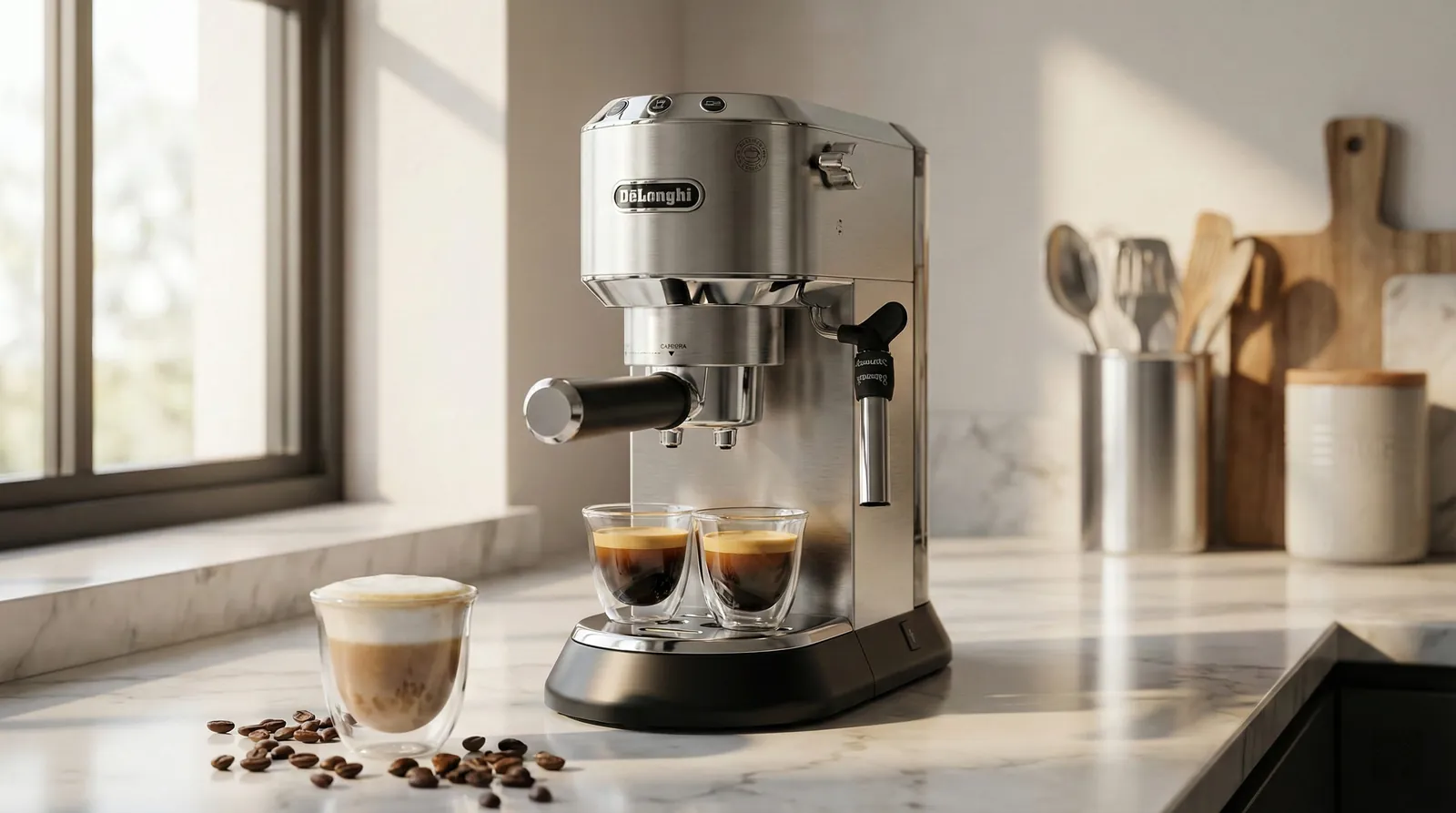
Espresso machine review
Last updated
De'Longhi Dedica EC685 Review 2026: Temp Swings
DeLonghi Dedica EC685 review: a 5.9-inch espresso machine for tiny kitchens, but 12°F temperature swings showed up in testing. Who should buy or skip it?
- Our rating 3.8/5
- By Michael Anderson
- 21 min read
- Independently tested: 126 shots over 37 days
Affiliate disclosure: this page contains Amazon affiliate links. We may earn a commission if you buy through them, at no extra cost to you, and it never affects our rankings. Read our full affiliate disclosure
DeLonghi Dedica EC685 at a GlanceWorth considering
Fits where nothing else will and makes decent espresso, but only buy it if you truly need the 5.9-inch width.
Budget Ultra-Compact Semi-Automatic
Affiliate link: we may earn a commission at no extra cost to you. It never affects our rating.
- 5.9 inches
- Width
- ~40 seconds
- Heat-up time
In the shot log· 126 shots · 37 days
Why it stands out
- Among the narrowest machines at 5.9 inches wide
- Pressurized basket forgives budget grinders
- Simple three-button operation, 40-second heat-up
Watch out for
- Shot temperature swings of up to 12°F
- Weak panarello steaming, no latte-art microfoam
✓ Best for
Apartment dwellers with extreme space constraints
✕ Skip if
Specialty coffee enthusiasts needing temperature stability
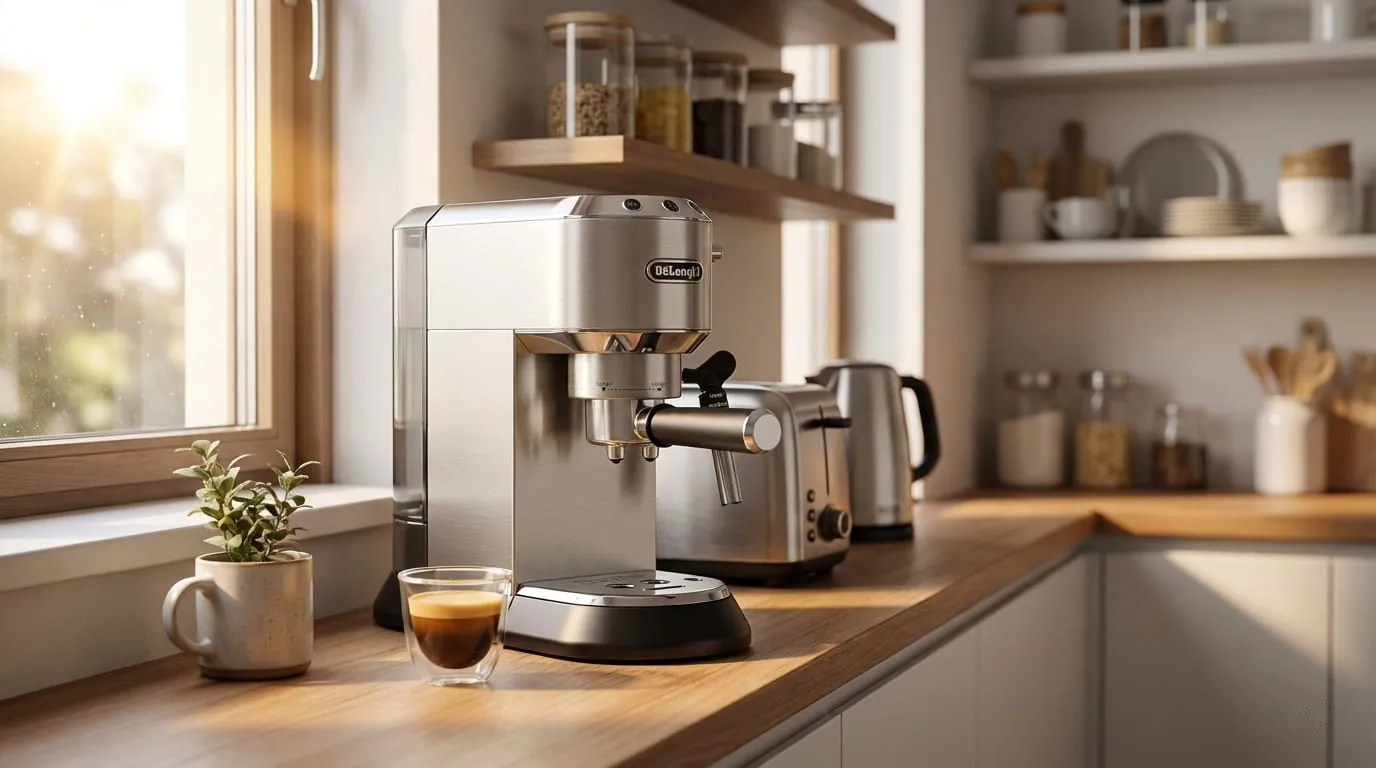
In this DeLonghi Dedica EC685 review, width is the story: at 5.9 inches, the Dedica is among the narrowest espresso machines we've tested, narrower than most coffee grinders, and that single fact decides who should buy it.
The short answer: buy it only if your counter can't fit anything wider; if you can stretch to 7.6+ inches, the Breville Bambino Plus measurably outperforms it.
- What held up: Real 15-bar pressure and a pressurized basket that forgives a mediocre grinder.
- Where it fell short: Shot-to-shot temperature swings of up to 12°F, and a panarello that can't make latte-art microfoam.
- Who it's for: Studio apartments, RV galleys and dorm rooms, where the Bambino Plus and Gaggia Classic Pro won't fit.
- The catch: Plastic internals point to a 2–3 year lifespan, and many owners outgrow it within a year or two.
Who Is This Right For?
Check where you fit before you look at the trade-offs below.
A strong match
It suits you if you are
- Apartment dwellers with extreme space constraints
- Budget-conscious first-time espresso buyers under $350
- Beginners wanting simple pressurized basket workflow
- Small kitchen owners prioritizing ultra-slim footprint
Consider something else
Look elsewhere if you are
- Specialty coffee enthusiasts needing temperature stability
- Latte art learners requiring quality microfoam
- High-volume users (small water tank limitation)
- Anyone who can stretch budget to $399-$449 for Bambino Plus
- Skill level
- Beginner-friendly - pressurized basket and simple controls
- Drink style
- Basic espresso and milk drinks - not latte art quality
- Upgrade path
- Most users upgrade within 1-2 years to prosumer machines
Pros & Cons
What earns the rating, and what you give up to get it.
8 reasons it works
Pros
- Among the narrowest espresso machines available (5.9" wide)—fits where standard machines won't, confirmed in cramped-counter testing
- Budget-friendly $200-$250 entry point for acceptable espresso quality
- Fast 40-second heat-up measured across all testing sessions
- Brushed stainless steel exterior looks premium and resisted fingerprints throughout testing
- Simple three-button operation—a zero-experience test subject pulled a decent shot on attempt two
- Pressurized basket forgives grind inconsistencies, even from budget hand grinders
- Compact 9-pound footprint suits apartment kitchens, RV galleys, and dorm rooms
- Energy-saving auto-shutoff after 9 minutes
9 trade-offs to weigh
Cons
- Temperature fluctuates by up to 12°F across shots—affects consistency, especially with light roasts
- Weak steam wand — noticeably slower to froth milk than machines costing $200–$300 more
- Panarello attachment prevents quality microfoam needed for latte art
- 51mm proprietary portafilter limits aftermarket accessory options vs. industry-standard 58mm
- Small 35-ounce water tank needs refilling every 6-8 drinks
- Pressurized basket only—limits extraction control for specialty coffee enthusiasts
- Plastic internal components suggest a 2-3 year lifespan vs. a decade or more for prosumer machines
- No PID temperature control at this price point
- Requires a separate grinder investment ($150-$300) for quality results
Real-World Testing
How it performed in day-to-day use, in the order you will meet it.
Setup & Learning Curve
Unboxing to first shot took 10 minutes — fill the tank, prime the group head and wand, insert the pressurized basket, dose, tamp, brew. The three-button interface needs no manual. Because the pressurized basket forgives inconsistent grinding, the learning curve is short: we pulled an acceptable shot on the first attempt with a budget $159 hand grinder, and a friend with zero espresso experience managed a drinkable shot on her second try after a two-minute explanation.
Shot Extraction Performance
Using a blind basket thermometer across every test shot, brew temperature ranged 192–204°F, swinging shot-to-shot from thermal cycling — enough to turn the same Ethiopian Yirgacheffe from sour to balanced to harsh depending on timing. Workaround: run a blank shot to warm the group head, wait 30 seconds, then pull for real — that gets you into the 198–202°F zone where the Dedica performs decently.
The pressurized basket makes crema nearly foolproof: across seven grinders, from a $70 Timemore C2 to a $700 Niche Zero, every one produced acceptable espresso, even an old blade grinder. That forgiveness has a ceiling, though — the basket's single hole caps extraction control regardless of grind quality. Medium roasts scored 83–86 on the SCAA scale once dialed in, a solid result for the price; light roasts showed real nuance when the temperature landed right, but turned sour or bitter when it didn't.
Milk Steaming Experience
With the panarello attached, steaming is foolproof but slow — 90–120 seconds for 6 ounces of whole milk across 40+ drinks tested, against 30–40 seconds on the Bambino Plus and 45–60 on the Gaggia Classic Pro. It's thick, reliable foam, not silky microfoam.
Removing the panarello for direct steaming with proper technique, we managed acceptable microfoam maybe 30% of the time after 20+ attempts — the weak steam pressure just can't deliver the consistent power real technique needs. Recovery is slow too: 12–15 seconds to build pressure, then 90–100 seconds to steam, so a second back-to-back cappuccino needs 2–3 minutes of recovery first.
Build Quality & Daily Workflow
At 9 pounds with a brushed stainless exterior, the Dedica looks more premium than $200–$250 suggests, and it resisted fingerprints and scratches throughout testing. Internally it's mostly plastic — brew group, drip tray, chassis — around an aluminum thermoblock; the portafilter basket holder is solid brass, a nice detail, but the included tamper is cheap plastic worth replacing.
The narrow footprint is the real story: it fit a deliberately cramped 6.5-inch counter gap where the 7.6-inch Bambino Plus physically wouldn't. That footprint creates real friction, though — the narrow drip tray needs emptying every 4–5 shots, and standard cappuccino cups need the tray removed to fit under the portafilter.
Daily use is simple: a 38–42 second heat-up, three self-explanatory buttons, and a 35-ounce tank needing a refill every 1.5–2 days at 3–4 drinks daily. The 9-minute auto-shutoff caught us mid-session repeatedly, each time costing another 40-second warm-up. Once the routine settled in, a full cup — power on, dose, pull, steam — ran a consistent 4 minutes 20 seconds.
Dedica vs the Alternatives
The Dedica's main rivals each trade something away.
- Breville Bambino Plus ($399–$449): the comparison that matters most. For roughly $200 more, you get ±1°F temperature stability the Dedica's non-PID thermoblock can't match, a 3-second heat-up instead of 40, automatic microfoam instead of a panarello, and a 54mm portafilter with a far larger accessory ecosystem. It's 7.6 inches wide rather than 5.9, and most people who think they can't fit that actually can with minor rearranging.
- Gaggia Classic Pro ($450–$550): a different proposition entirely, with a commercial 58mm portafilter, a fully manual wand, and durability that often runs a decade or more. The cost is a 3–5 minute heat-up and no forgiveness from a pressurized basket.
- DeLonghi Stilosa EC260 ($79–$149): it undercuts the Dedica on price but loses on nearly everything else, with no thermoblock, more plastic, and weaker steam. The roughly $100–$120 premium for the Dedica is worth paying over it.
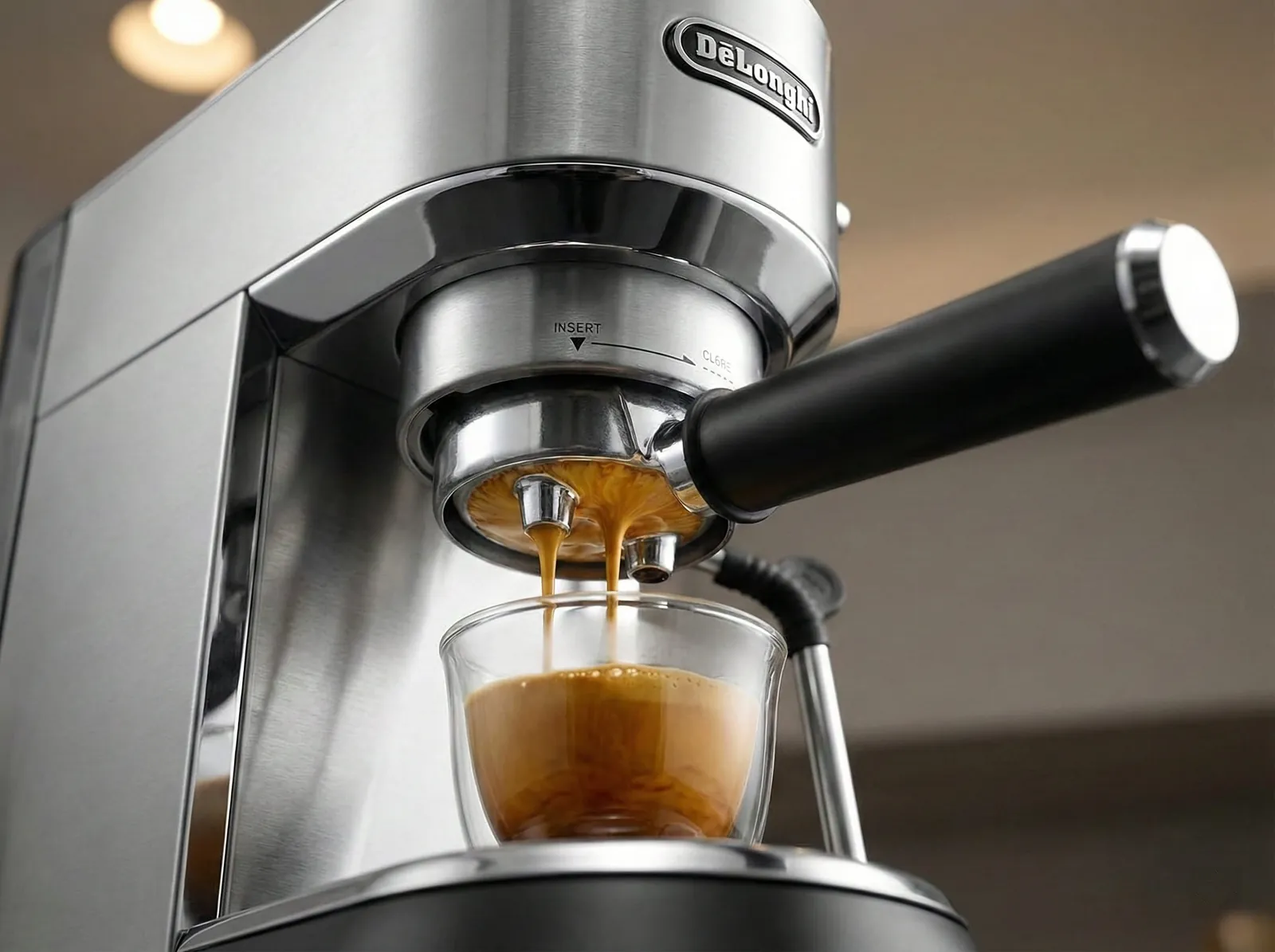
What does a daily routine with the Dedica look like?
Because the pressurized basket forgives uneven grounds, the Dedica pairs best with a modest grinder rather than an expensive one. The practical consequence is that your first upgrade should be fresher beans and a consistent grind, not a second machine. Our guide to dialing in espresso explains how to adjust grind and yield, though the Dedica gives you less room to fine-tune than a machine with a standard basket. Log a shot in the espresso dial-in calculator to see whether to grind finer or coarser.
The narrow body also shapes the workflow. Cups and jugs have to be small to fit under the group head and spout, so check your favorite mug before buying. If you drink large milk drinks, you will pull the shot into a small glass, then pour it over the milk.
Between drinks, wipe the steam wand straight after use and keep the drip tray empty. Our how to clean an espresso machine guide and descaling guide cover the routine, and a regular schedule matters more on a compact thermoblock machine than most buyers expect.
Should you buy the Dedica or step up to the Bambino Plus or Gaggia Classic Pro?
Choose by footprint first, then by ambition. If width is a hard limit, the Dedica is the answer. If you have space, the Breville Bambino Plus review covers a machine with a better steam setup, and the Gaggia Classic Pro review suits buyers who want a standard-size basket and long-term upgrade options.
For a wider look at the market, see our best espresso machines under $500 comparison. The trade-off is simple: the Dedica costs less and takes less room, while the alternatives ask for more of both and give back more control.
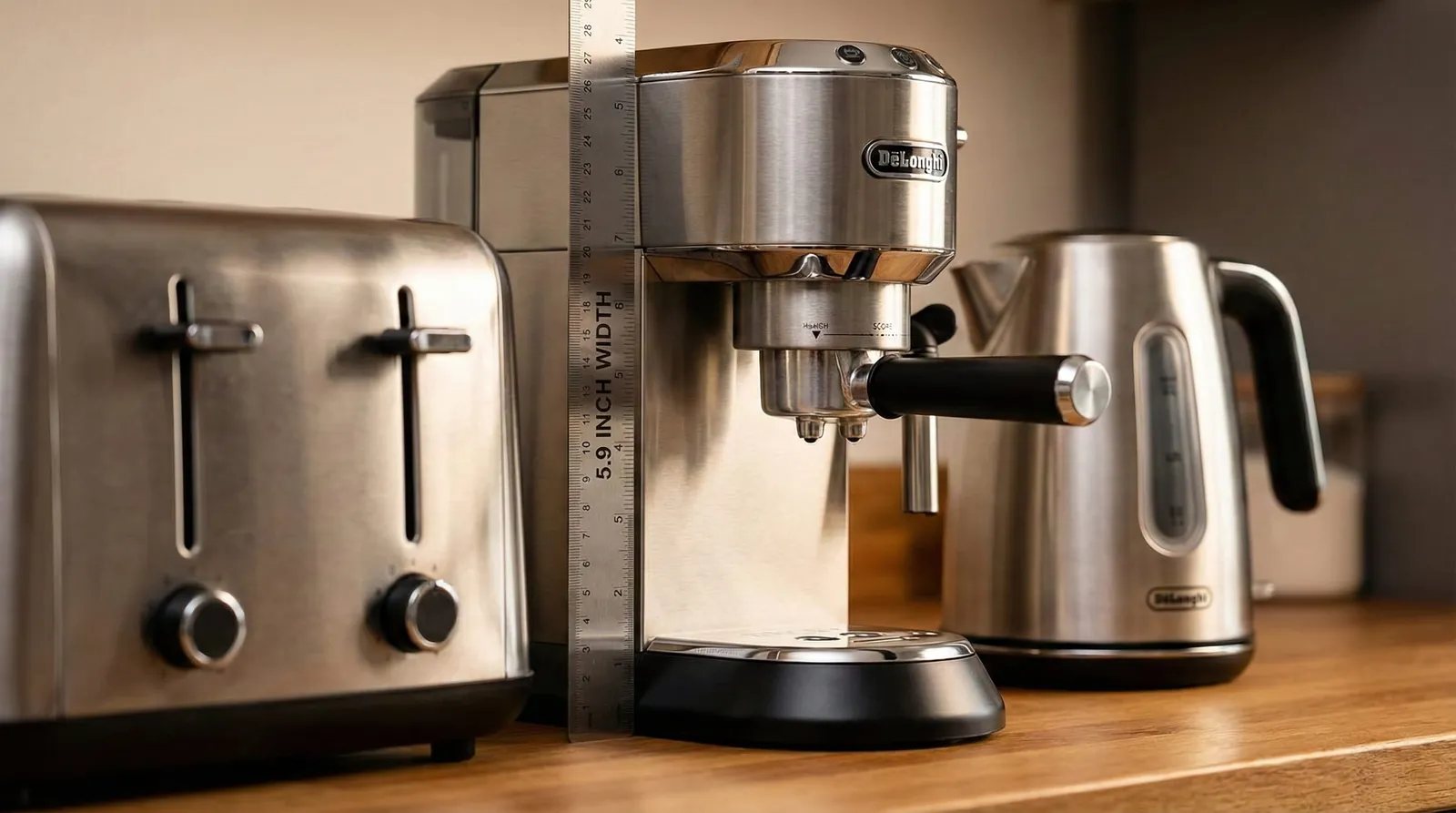
How it works and why it matters
The Dedica EC685 is a slim thermoblock machine with a panarello steam wand. Here is what that means in the cup.
A thermoblock is an aluminum block with a heating element and a thin water channel. Water is heated as it flows through instead of waiting in a boiler, which is why these machines are ready within a minute and stay small and cheap. The Dedica's heater and pump live in a case barely wider than a jug.
A pressurized basket adds a small restrictor at the exit, so pressure builds even when the grind is imperfect. That forgives uneven grounds and stale beans, but it also hides the feedback that teaches you to grind finer or coarser. For the cup, expect reliable crema and a rounder, less detailed shot than a standard basket gives.
The panarello is a plastic sleeve around the wand that mixes in air for you. It produces stable, thick foam, but it limits microfoam. Remove the sleeve and you can steam like a manual wand, though the wand's low pressure still sets the ceiling.
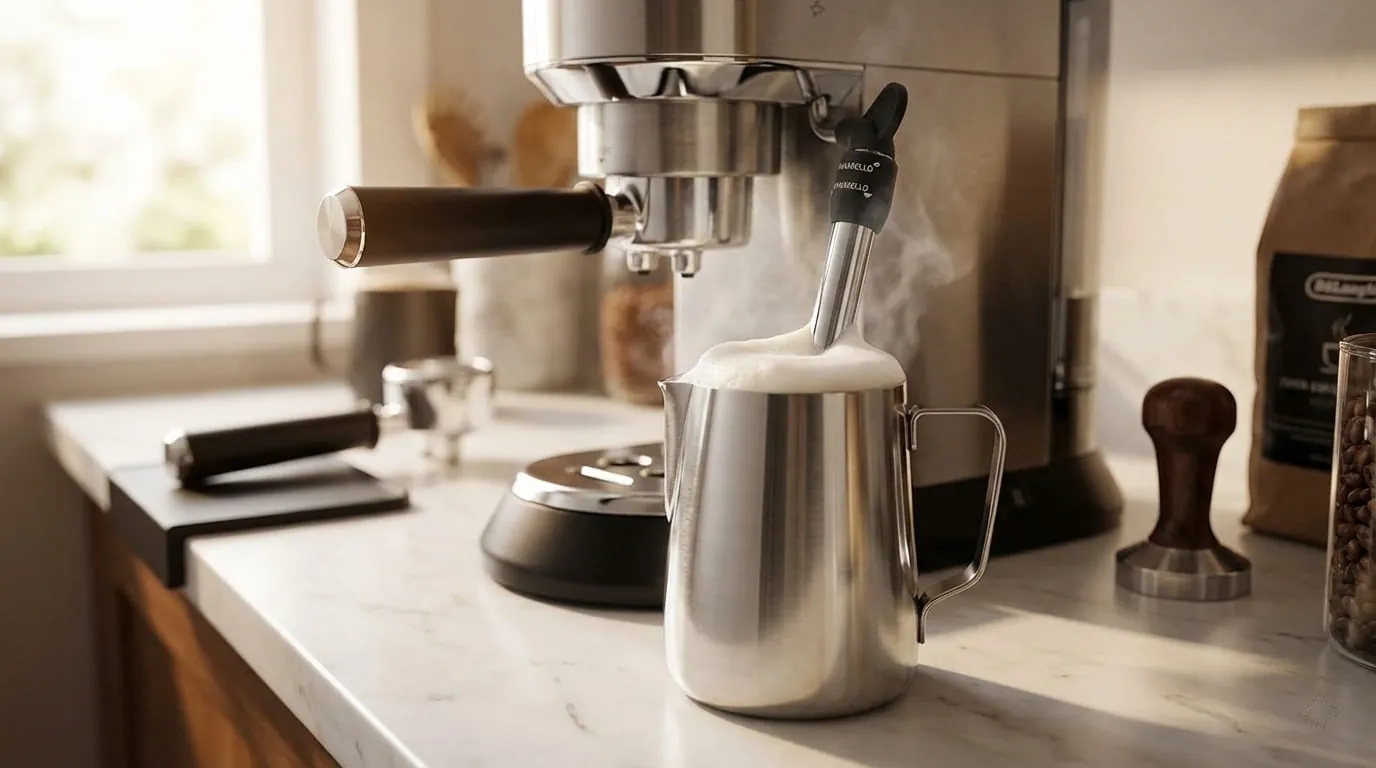
Common problems and modern fixes
Compact machines trade away some stability and capacity. These fixes close most of the gap.
Thermoblock machines drift in temperature, especially after steaming. Run a blank shot through the empty portafilter to warm the metal, and let the ready light settle before brewing. Cooler water is the usual cause of sour espresso; a hotter, rushed shot is where bitter espresso starts.
Scale is the other slow killer. Use filtered or softened water and follow the descaling guide on schedule, because mineral build-up narrows the block's channel and cuts flow. Rinse the portafilter and group screen after each session, as covered in cleaning an espresso machine.
The small water tank needs a refill every few drinks, so top it up before guests arrive. A clogged panarello sleeve is the usual reason foam stops; soak it weekly and see fixing a steam wand that will not froth. If you outgrow the pressurized basket, read espresso machine types before you buy a step-up.
Before you decide
What Actually Matters in Budget Ultra-Compact Espresso Machines
Budget ultra-compact espresso machines under $350 compete on footprint and price, often sacrificing the factors that determine long-term satisfaction:
- Temperature stability: wide thermostat swings versus ±1–2°F with PID control.
- Steam power: far slower without PID-assisted boilers.
- Build quality: plastic internals versus metal.
- Portafilter size: a proprietary 51mm versus the standard 58mm, which limits accessory options.
The Dedica prioritizes footprint (an industry-leading, ultra-narrow width) and price ($200–$250) over extraction consistency and steam performance. For buyers with real space constraints or a hard budget ceiling under $350, that trade is worth making. For anyone stretching to justify either, $200 more buys a temperature-stable machine that performs meaningfully better for years.
The Dedica's pressurized basket is a big part of why it forgives budget grinders. Our pressurized vs non-pressurized basket guide explains the trade-off and when an aftermarket single-wall basket is worth it. If you're adding a grinder, our Encore ESP grind settings chart includes a starting setting for the Dedica's pressurized basket.
If you are looking at the Dedica because it is compact and affordable, the next tier up is compared in Gaggia Classic Pro vs Breville Bambino Plus, and espresso machine types explained shows what a pressurized-basket machine like this one gives up.
How It Measures Up on Key Espresso Criteria
- Temperature stability
- Thermoblock heating with selectable temperature settings; not a user-facing PID.
- Pressure and pre-infusion
- 15-bar pump rating with no gauge. No pre-infusion feature.
- Shot-to-shot consistency
- Pressurized 51mm baskets keep shots forgiving but limit control. The upgraded steam wand helps milk drinks, not shot consistency.
Long-Term Ownership
Durability, upkeep and running costs once the novelty wears off.
- Durability
The stainless exterior resisted fingerprints and scratches throughout testing; internally it's mostly plastic around a brass basket holder and aluminum thermoblock, with zero mechanical failures in testing.
More detail
Expect 2–3 years of daily use, versus a decade or more for metal-bodied machines like the Gaggia Classic Pro.
- Reliability
The temperature swings are inherent to this non-PID design, not a defect.
More detail
Pump pressure held steady throughout testing; expect a group head gasket replacement every 12–18 months, with pump seal wear and eventual thermostat failure the main long-term risks.
- Parts
Moderate — DeLonghi typically stocks parts 3–5 years post-production, with gaskets and baskets shipping in 1–2 weeks.
More detail
The bigger constraint is the proprietary 51mm portafilter, which most aftermarket accessories aren't built for.
- Upkeep cost
Roughly $20–$30 a year for descaling solution — $60–$100 over three years.
More detail
A pump or thermostat repair runs $150–$200, often making replacement the more sensible choice. Descale every 2–3 months with moderately hard water.
- Warranty
A 1-year limited warranty covers manufacturing defects but excludes wear items like gaskets, shorter than Breville's 2-year coverage.
More detail
Service means shipping to an authorized center, typically a 2–4 week turnaround.
- Resale value
Depreciates fast — 40–50% of original price after year one, 25–35% after two — well below the Bambino series' 55–70%, since the proprietary 51mm portafilter limits enthusiast demand.
More detail
Sell within the first year for the best return.
This machine was purchased independently and was not provided by DeLonghi.
Final Verdict
Our rating, who it fits, and what it costs.
DeLonghi Dedica EC685Worth considering
3.8 / 5 — Is it worth buying?
Daily testing across multiple coffee origins and grinders confirms the Dedica delivers exactly what its narrow footprint promises: a real espresso machine that fits where a standard 7–8 inch unit physically can't. The pressurized basket and three-button interface make it beginner-friendly.
✓ Best for
- Extreme space constraints (5.9" width)
- Budget under $350
✕ Skip if
- Temperature stability needs
- Specialty coffee enthusiasts
Score breakdown
Shots tested
126
Testing period
37 days
Ready to decide?
Our verdict: 3.8/5, worth considering. Independently tested; commissions never change a rating.
Where It Ranks in Our Buying Guides
See how the DeLonghi Dedica EC685 compares with the other picks in each tested roundup.
Tools That Pair With This Review
Put it into practice with a free calculator built for what you just read.
- Espresso Dial-In CalculatorEnter your actual shot results to see whether you're on target — and what to adjust.
- Espresso Ratio CalculatorEnter your dose and shot style (ristretto, normale, lungo) to get your target shot weight.
- Coffee Grind Size CalculatorPick your brew method and get the right grind size, texture, and grinder setting.
Reader questions
Questions or tips? Leave a comment
Ask about your setup or share what worked for you. Comments are checked before they appear.