
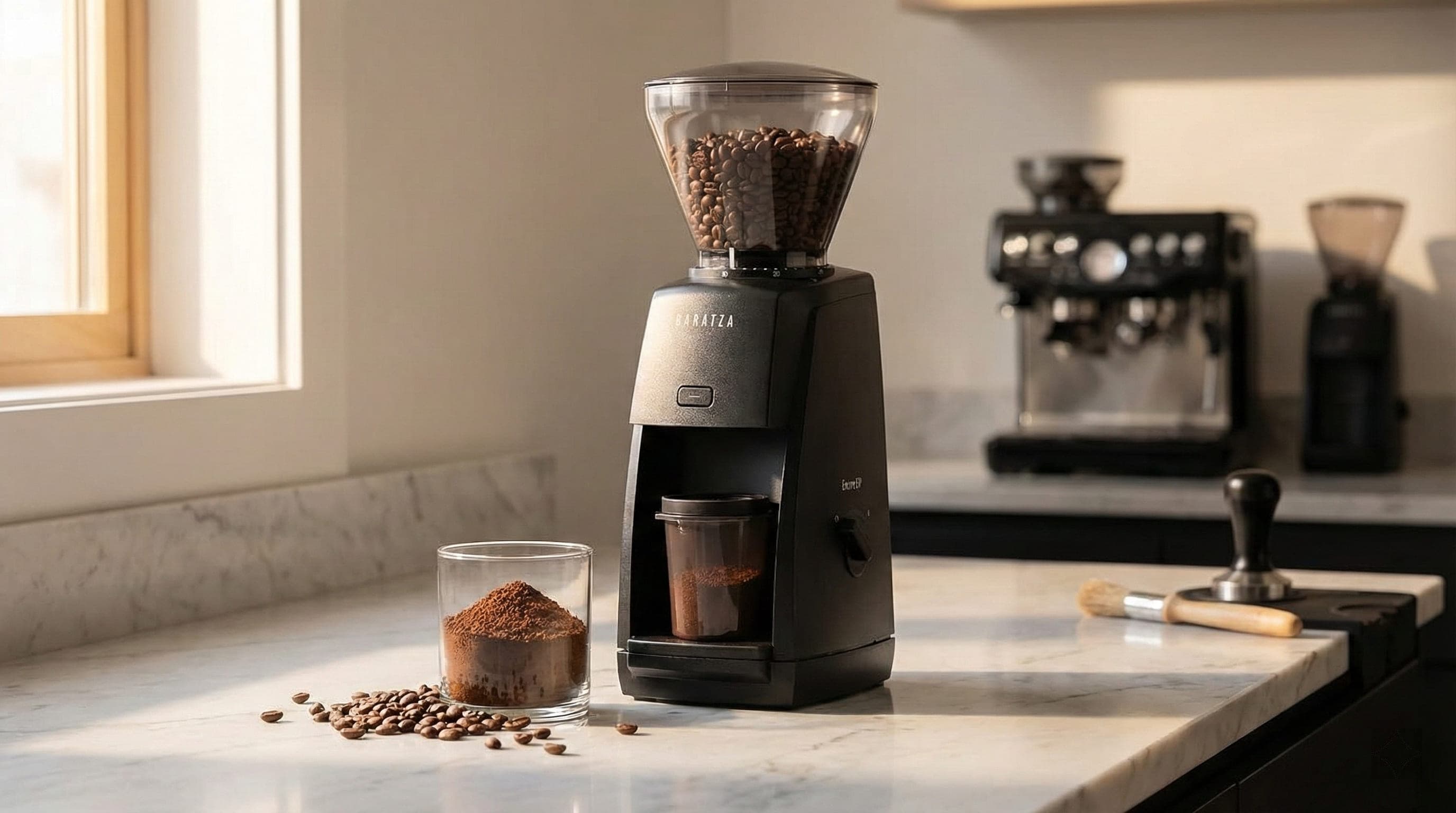
The grinder this chart covers
Baratza Encore ESP
Micro-stepped espresso adjustment, clean filter grinds and a repairable design.
Grinder Guides
Last updated
Starting settings on the Encore ESP for espresso by roast, moka pot, AeroPress, pour-over, Chemex, drip, French press and cold brew, plus how to dial in from there.
Affiliate disclosure: this page contains Amazon affiliate links. We may earn a commission if you buy through them, at no extra cost to you, and it never affects our rankings. Learn more
Espresso: start at 12 for a medium roast and aim for about 36g out in 25–30 seconds. Pour-over: 24. French press: 36. Spray the beans once or twice with water before grinding to stop static. Full review: Baratza Encore ESP.
Starting ranges for every common brew method; lower numbers are finer.
| Brew method | Setting range | Start at |
|---|---|---|
| Espresso, light roast | 6–10 | 8 |
| Espresso, medium roast | 10–14 | 12 |
| Espresso, medium-dark or dark roast | 14–18 | 16 |
| Moka pot | 12–16 | 14 |
| AeroPress, short or concentrated | 14–20 | 16 |
| AeroPress, standard 3–4 minutes | 20–28 | 24 |
| Pour-over (V60) | 22–26 | 24 |
| Chemex | 26–30 | 28 |
| Drip coffee maker | 26–32 | 28 |
| French press | 34–38 | 36 |
| Cold brew | 36–40 | 38 |
Espresso, light roast
Espresso, medium roast
Espresso, medium-dark or dark roast
Moka pot
AeroPress, short or concentrated
AeroPress, standard 3–4 minutes
Pour-over (V60)
Chemex
Drip coffee maker
French press
Cold brew
These ranges come from daily use in our Encore ESP testing. Your beans, roast date and brewer will move the ideal number a little, so treat each as a starting point and adjust by taste and brew time.
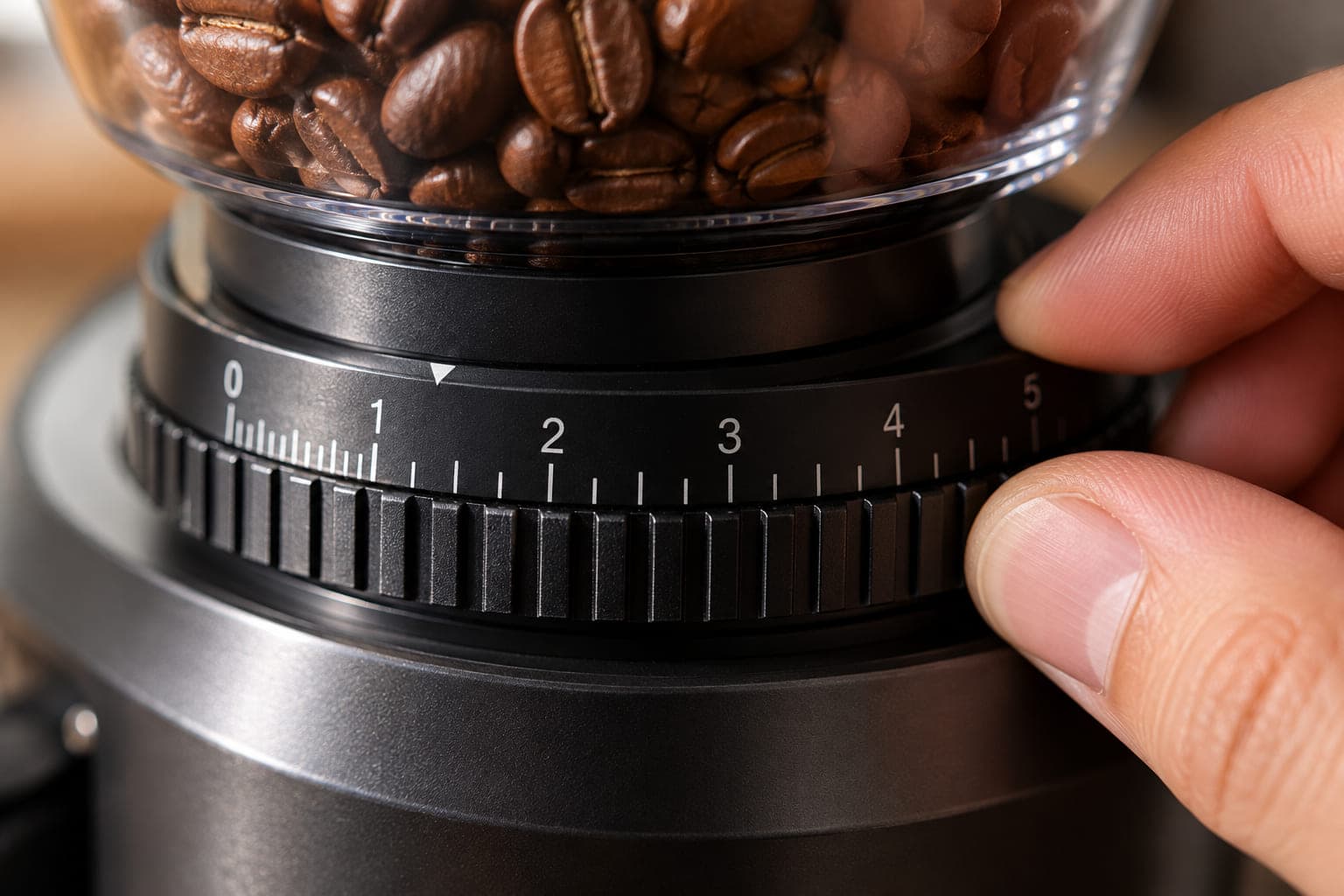
Why the espresso range behaves differently from the filter range.
The Encore ESP uses 40mm conical burrs: a cone-shaped burr turns inside a fixed outer ring, and the gap between them sets the particle size. Turning the collar moves that gap.
The collar is split into two zones. In the espresso range, each number is divided into small micro-steps, so you can stop between whole numbers. In the filter range, the steps are larger, because pour-over and French press tolerate bigger changes. That's why a setting like 12.5 makes sense for espresso but not for a French press.
Espresso is the most sensitive brew method by far. A tiny change in grind can move a shot from fast and sour to slow and bitter, which is why fine adjustment in that range matters more than the total number of settings. Our coffee grind size chart explains how grind size changes extraction across methods.
A short routine for a new bag, using the micro-steps.
Weigh about 18g of beans and spray them once or twice with water.
Set the collar to your roast's starting number from the chart.
Grind into the catch bin, then transfer to the portafilter with a dosing funnel.
Distribute evenly, tamp level and pull a shot into a cup on a scale.
Aim for about 36g of espresso in 25–30 seconds.25–30 seconds
Fast and sour: go finer by a micro-step or two. Slow and bitter: go coarser.
Change one thing at a time and note the setting that works for each bag.
Most bags settle within a few shots. Our dial-in guide covers tasting cues in detail, and sour espresso fixes helps when shots won't sweeten up.
Quick decision guide
Even setting 6 runs fast with fresh beans
check that the burrs are clean and seated correctly, and that your dose is full; very light roasts can also push this grinder to its limit.
Your machine uses a pressurized basket
grind a little coarser than the chart; pressurized baskets can choke on very fine coffee. See pressurized vs non-pressurized baskets.
Move between espresso and filter without old grounds spoiling the next cup.
Changing methods is quick: turn the collar to the new setting, run the grinder briefly with a few grams of beans to purge the grounds left inside, then grind your real dose. The purge matters because coffee retained from the previous setting ends up in your next brew.
Mark your favorite settings on the collar with a small piece of tape or a paint pen. Espresso, pour-over and French press are a good start, and it saves guesswork every morning.
Current habits that make this grinder cleaner and more consistent.
Starting points from our machine pairings, for medium roasts.
| Machine | Starting setting | Notes |
|---|---|---|
| Breville Bambino Plus (54mm) | 10–14 | Use a dosing funnel to transfer grounds |
| Gaggia Classic Pro (58mm) | 10–14 | Rewards micro-step adjustment between whole numbers |
| De'Longhi Dedica (51mm, pressurized) | 14–18 | Pressurized basket forgives small grind changes |
| Rancilio Silvia (58mm) | 10–14 | Expect more dial-in shots; careful puck prep helps |
| Manual lever machines | 10–12 | Fine adjustment matters most here |
Breville Bambino Plus (54mm)
Gaggia Classic Pro (58mm)
De'Longhi Dedica (51mm, pressurized)
Rancilio Silvia (58mm)
Manual lever machines
Choosing a grinder for one of these machines? Our best espresso grinders under $300 compares the Encore ESP with electric and manual alternatives, and the Bambino Plus review covers the most common pairing.
Problems that look like a faulty grinder but usually aren't.
| Problem | Fix |
|---|---|
| Grounds spraying everywhere | Use RDT before grinding |
| Shot runs fast at every setting | Check bean freshness, dose and burr cleanliness |
| Grind changes after switching methods | Purge a few grams after every big adjustment |
| Grinder jams when going finer | Adjust with the grinder running or empty |
| Using filter settings for espresso | Stay in the micro-stepped range for espresso |
Grounds spraying everywhere
Shot runs fast at every setting
Grind changes after switching methods
Grinder jams when going finer
Using filter settings for espresso
The grinder this chart covers
Micro-stepped espresso adjustment, clean filter grinds and a repairable design.
Affiliate links: we may earn a commission at no extra cost to you.
Quick answers before you buy.
Start at 12 for a medium roast.
Go finer toward 8 for light roasts and coarser toward 16 for dark roasts, then adjust in micro-steps until a double runs in about 25–30 seconds.
Start at 24 for a V60 and adjust between 22 and 26.
Chemex usually needs a little coarser, around 28, because its thicker filter slows the flow.
Yes.
Settings 34–38 produce an even coarse grind with few fines.
If the plunger is hard to press, go a step coarser.
Old grounds stay inside the grinder.
Purge a few grams of beans after any large adjustment so the leftover coffee from the previous setting doesn't end up in your dose.
Usually, at the fine end of its range around 6–10.
Very light, dense roasts can push it to its limit, where a more expensive flat-burr grinder performs better.
In practice, yes.
Without it, static makes grounds cling and scatter.
One or two light sprays of water on the beans before grinding fixes most of it.
Keep reading: more guides on the same topic.
 Explained
Grinder5 min read
Coffee grind size chart with micron ranges for espresso, moka pot, AeroPress, pour over, French press and cold brew, plus how to adjust.
 How to
Espresso5 min read
Learn how to dial in espresso: a starting recipe, grind changes by shot time and taste, and fixes for sour or bitter shots.
 Compare
Grinder4 min read
How to choose a burr grinder: conical vs flat burrs, features worth paying for, and the best grinder by brew method and budget.
 Explained
Espresso3 min read
What is WDT in espresso? Breaks up clumps before tamping to reduce channeling. What it fixes, whether you need a tool, and how to use it.