
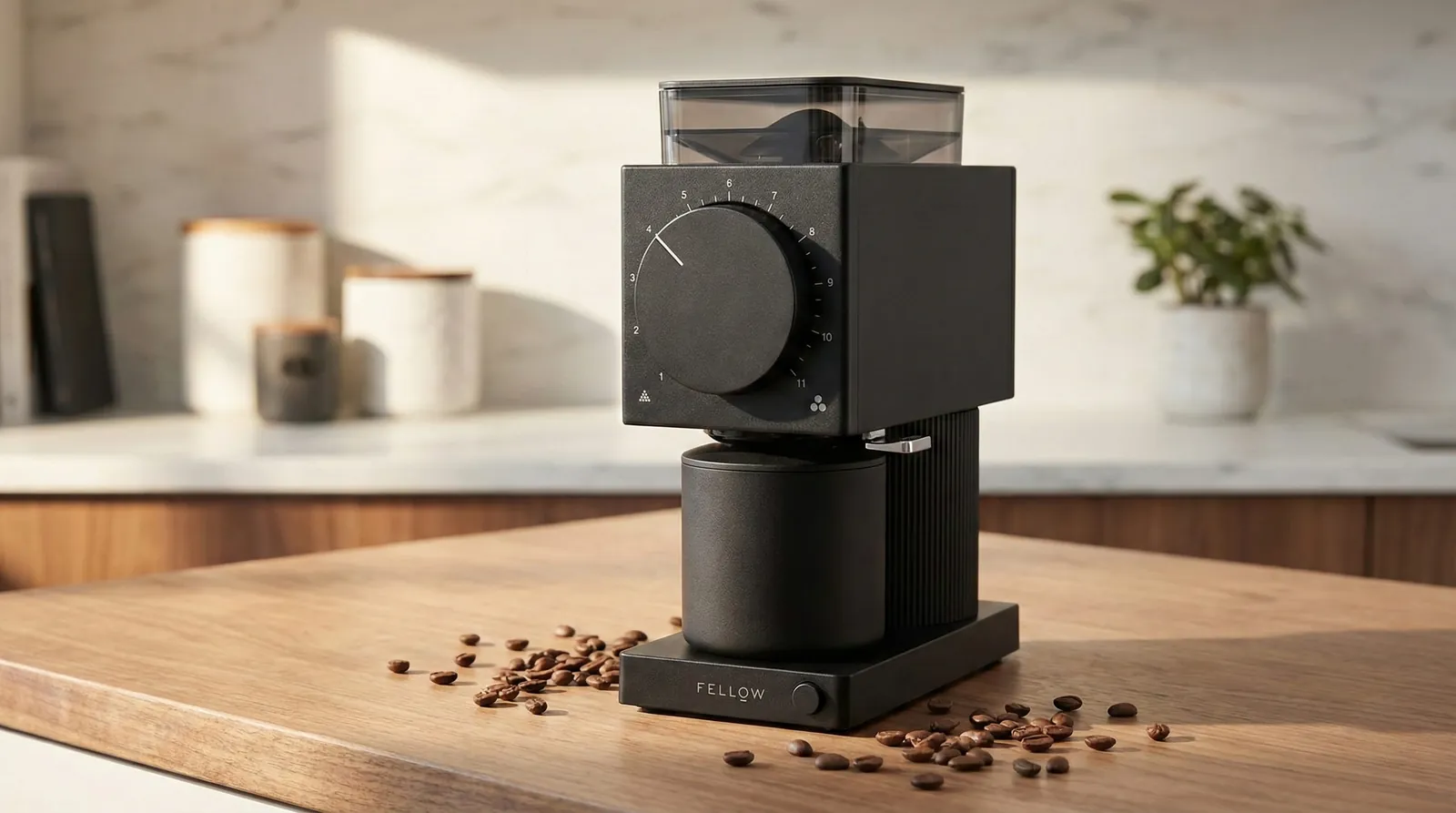
Fellow
Fellow Ode Gen 2 Review
A single-dose grinder built specifically for pour-over and filter coffee enthusiasts — not intended for espresso.
Updated
Pick your French press size and strength to get the exact coarse-ground coffee and water to use. Ratios from 1:12 to 1:15, every time.
Coarse-ground coffee
Balanced37.0g
Water just off boil
500ml
Water in oz
16.9oz
Approx. tbsp
7.4tbsp
Steep time
4 min
Coffee to water by weight
Brew timeline
Pour + stir
0:00
Steep
4:00
Press + pour
right away
Strength
Next: Cup is off? Adjust steep time in 30-second steps before changing the ratio.
The calculator solves coffee (g) = water (ml) ÷ ratio, using a stronger 1:12–1:15 range than drip coffee's 1:15–1:18. French press needs less water per gram of coffee because the grounds stay in full contact with the water for the entire steep — there's no filtering-as-you-go the way a drip machine or pour-over works.
The press size presets convert directly to water volume using each size's standard capacity, so picking a preset just plugs a known water amount into the same ratio formula rather than doing anything different mathematically.
Every fixed figure the maths uses, so you can check the result against your own gear.
A blade grinder produces uneven chunks that clog the mesh filter and leave sediment in the cup. These burr grinders give the uniform coarse grind French press depends on.
Fellow
A single-dose grinder built specifically for pour-over and filter coffee enthusiasts — not intended for espresso.
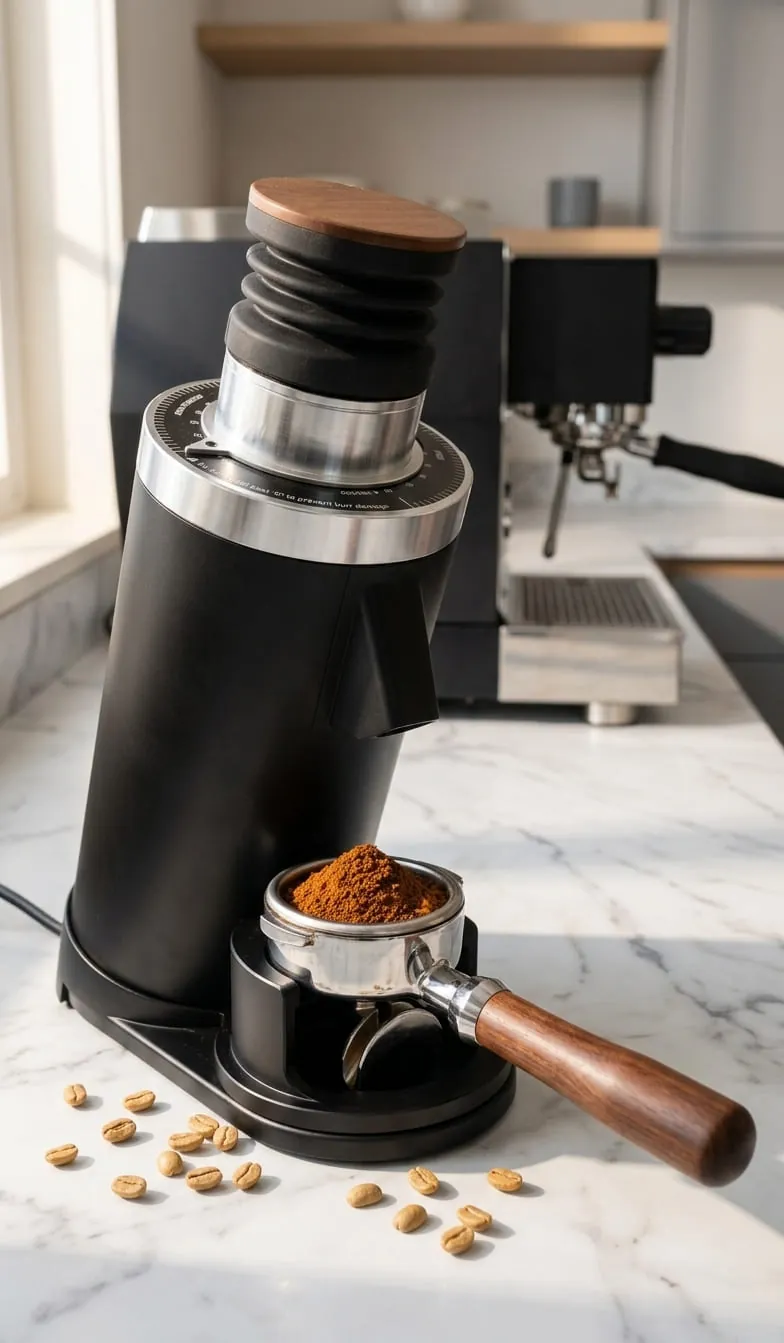
Turin
An electric grinder with factory-aligned 64mm flat burrs and very low retention, built for single-dose espresso workflows.
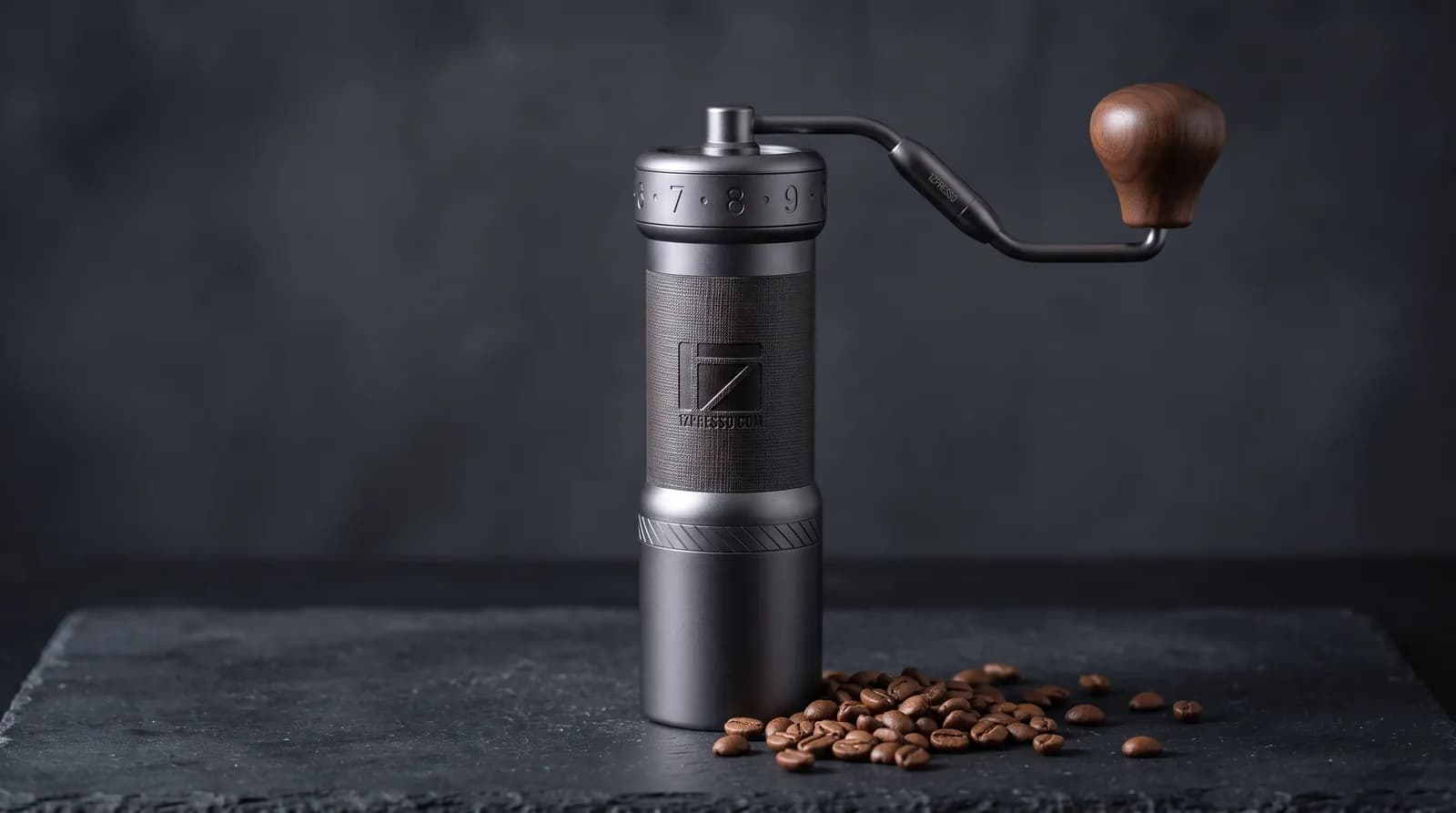
1Zpresso
A manual grinder with fine adjustment precision that handles both espresso dialing and filter coffee equally well.
Quick answers before you buy.
Most French press recipes land between 1:12 and 1:15, noticeably stronger than the 1:16-1:18 used for drip coffee.
A balanced starting point is 1:13.5 — a full-bodied cup without going syrupy.
Go toward 1:12 for a bolder cup or 1:15 if 1:13.5 tastes too heavy.
Because the grounds sit fully immersed in water for the entire brew instead of having water pass through them once, and there's no paper filter removing oils and fine particles.
Both effects add body and strength, so a French press ratio that matched drip's 1:16 would taste thin by comparison.
4 minutes is the standard steep time at a ratio in the 1:12-1:15 range, with water just off the boil (around 200°F / 93°C).
If it tastes over-extracted or bitter at 4 minutes, shorten the steep in 30-second increments rather than changing the ratio first.
Yes — a coarse, uniform grind (similar to sea salt) is essential.
A finer grind slips through the mesh filter into your cup and over-extracts during the long steep, producing sediment and bitterness regardless of how carefully the ratio was measured.
A 34 oz press holds roughly 1,000 ml, so at 1:13.5 you need about 74 g of coffee.
Use the press size preset above to get the exact figure for your strength, since press capacities vary slightly by brand.
Fine particles pass through the mesh filter, mostly from a grind that's too fine or uneven.
Grind coarser with a burr grinder, pour gently, and leave the last sip in the cup.
See our guide to burr vs blade grinders for why uniformity matters.
Water just off the boil, around 200°F (93°C), is a good default for French press.
Much cooler water pulls less flavor and tastes thin; let boiling water sit about 30 seconds first.
Our coffee water temperature calculator adjusts for roast and altitude.
Keep reading: more guides on the same topic.
 How to
Brewing6 min read
How to use a French press: the right ratio, coarse grind, water temperature and steep time, plus fixes for bitter or muddy coffee.
 Explained
Grinder6 min read
Coffee grind size chart with micron ranges for espresso, moka pot, AeroPress, pour over, French press and cold brew, plus how to adjust.
 Compare
Grinder6 min read
Burr vs blade grinder: how grind consistency changes taste, who can keep a blade, and what a first burr grinder costs at each budget.
 Fix a problem
Espresso5 min read
Why does coffee taste bitter? Find your cause (grind, water temperature, stale beans, dirty gear) and fix bitter coffee one change at a time.