
Variable-temperature kettle
Fellow Stagg EKG Variable Temperature Kettle
Lets you set your exact brew temperature and holds it for consistent pours.
Affiliate disclosure: this page contains Amazon affiliate links. We may earn a commission if you buy through them, at no extra cost to you, and it never affects our rankings. Read our full affiliate disclosure
The most likely cause is a grind that is too fine, often from a blade grinder. Go one step coarser and re-taste. If that does not fix it, work down the list: water temperature, bean freshness, then dirty equipment. Change one thing per brew.
Match the taste to the likely cause, then jump to the fix.
Harsh, drying, muddy cup; slow drawdown
Burnt, scorched edge
Flat, dull, papery bitterness
Lingering rancid bitterness
Bitter even with a decent grind
Making espresso? Use how to fix bitter espresso for the machine-specific checks. This guide covers drip, pour-over, French press and AeroPress.
The most common cause: finer grounds extract faster and pull out harsh compounds.
The brew runs past its target time, the French press cup is thick and muddy, or the AeroPress plunger needs real force.
| Method | Target time | Bitter risk |
|---|---|---|
| Pour-over (V60, Chemex) | 3–4 min | 5+ min |
| French press | 4 min | 6+ min |
| AeroPress | 1.5–2.5 min | 4+ min |
| Cold brew | 12–18 hrs | 24+ hrs |
Pour-over (V60, Chemex)
French press
AeroPress
Cold brew
A brew that lands inside its target time with a cleaner, sweeter finish. The grind size chart gives targets by method.
Over-extraction, roast choice and stale or dirty gear all push flavour the same way.
Bitterness comes from compounds that dissolve late in extraction, such as certain phenols and roasted compounds. When water stays in contact too long, runs too hot or meets grounds that are too fine, more of those compounds end up in the cup.
Roast level matters. Dark roasts are naturally more bitter because roasting breaks down acids and creates bitter compounds, so a dark roast can taste bitter even with a good brew.
Taste also changes with the brewing method and water. Hard water, old oils on equipment and stale beans can all make a cup taste harsh or flat, and some bitterness is normal and even desirable in small amounts.
Boiling water scorches coffee, especially darker roasts that extract faster.
A burnt, harsh edge, mostly on pour-over or French press made straight off the boil. A good target is 93–96°C (200–205°F), and dark roasts do better at 90–92°C.
The burnt edge disappears and sweetness comes forward.
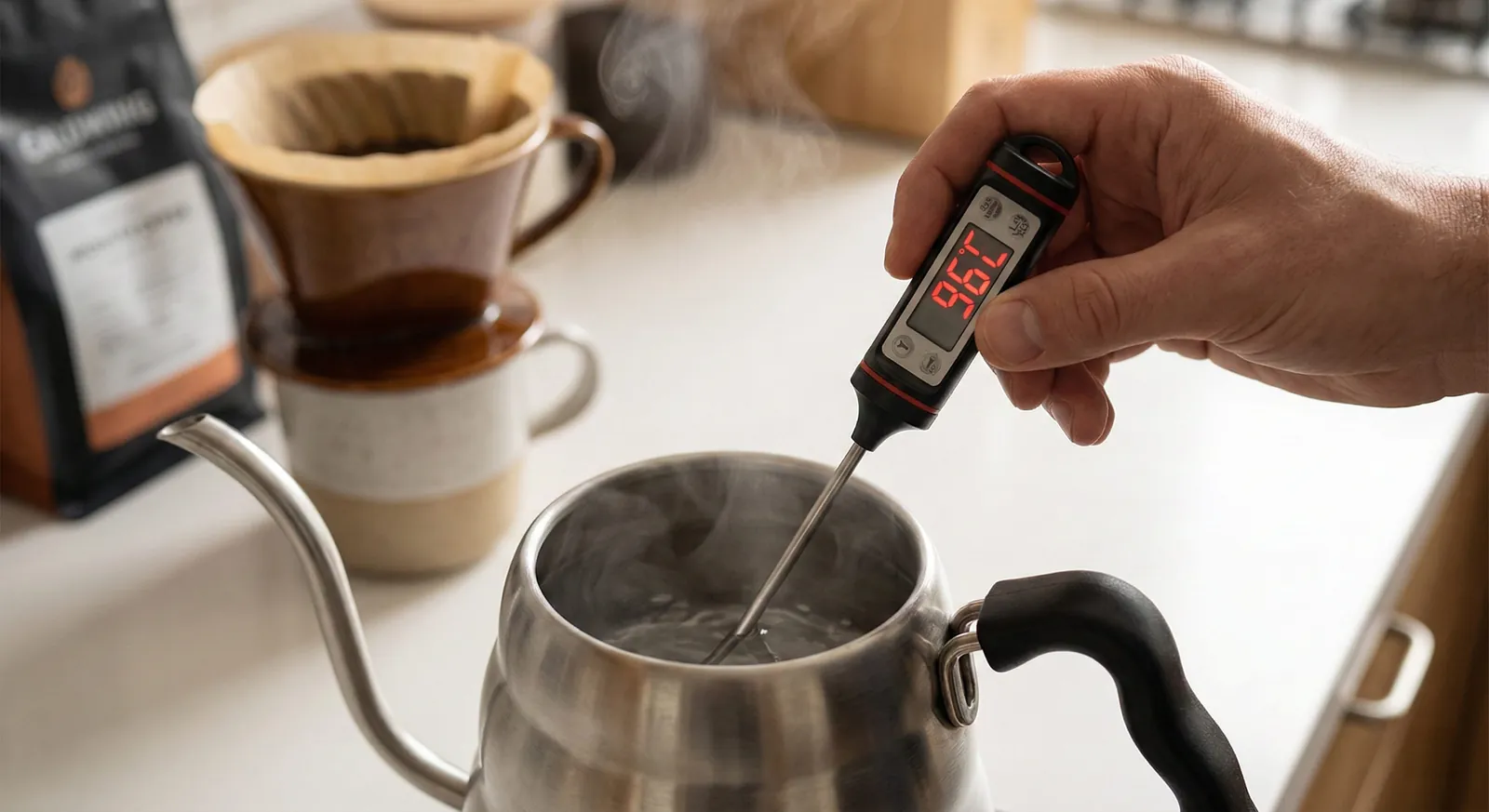
Variable-temperature kettle
Lets you set your exact brew temperature and holds it for consistent pours.
Affiliate links: we may earn a commission at no extra cost to you.
Old or commodity beans lose sweetness, leaving only the harsh notes.
Weak or papery aroma, dry matte beans with no oil sheen, or a bag with no roast date. A "best by" date alone can mean the coffee is 6–18 months past roast.
A sweeter cup that forgives small technique errors. See how to pick espresso beans for what to look for on the label.
Old coffee oils go rancid within hours and flavor every brew after.
Smell the basket, carafe, plunger and lid. A stale smell means they need cleaning.
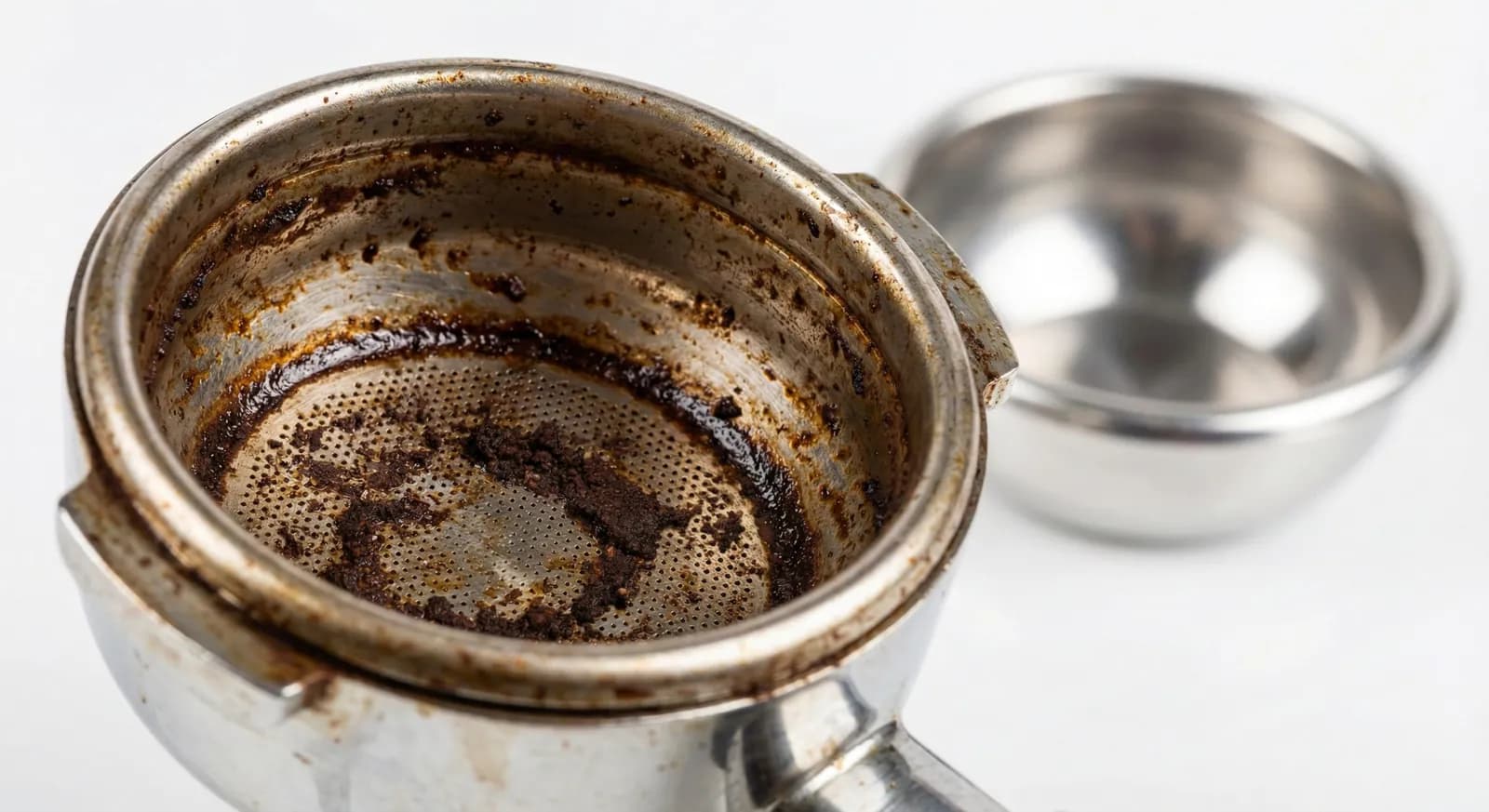
What you should see: a cleaner finish from the very next cup.
Blades produce uneven particles, so fines over-extract no matter your technique.
Blade grinders chop into a mix of espresso-fine and French-press-coarse pieces. The fines turn bitter every brew, so if the steps above did not help, a burr grinder is the highest-impact change. See burr vs blade grinder and how to choose a burr grinder.
Best entry-level burr grinder
For brewers coming from a blade grinder with persistent bitterness. Uniform particle size with micro-stepped fine adjustment from espresso to French press, so grounds extract evenly and you can dial in precisely.
Best mid-range burr grinder for filter coffee
For pour-over, drip or French press. 64mm flat burrs, 31 grind settings, a single-dose workflow and a low-retention design that keeps stale grounds from building up in the chute.
Compare more options in our top-rated coffee grinders.
Practical changes ranked by effort and likely payoff.
For espresso, pre-infusion, WDT and a puck screen reduce channeling, which can cause bitter and sour tastes in the same shot. See also how to fix bitter espresso.
The usual suspect changes with the method.
| Method | Most common cause | First fix |
|---|---|---|
| Espresso | Grind too fine or shot too long | Grind coarser or stop the shot earlier |
| Drip machine | Coffee left on the hot plate | Use a thermal carafe or drink it soon |
| Pour-over | Grind too fine or pouring too slowly | Grind coarser; aim for 3–4 minutes total |
| French press | Steeping too long or fine grounds in the cup | Plunge at about 4 minutes; pour off immediately |
| Moka pot | Heat too high | Lower the heat; remove when it gurgles |
| Cold brew | Steeping too long or too fine a grind | Steep 12–18 hours with a coarse grind |
Espresso
Drip machine
Pour-over
French press
Moka pot
Cold brew
Most bitterness comes from over-extraction, where water pulls out too many of the harsh compounds that dissolve last. Coarser grind, shorter brew time and slightly cooler water all reduce extraction. Our grind size chart lists the right grind for each method. Our grind size calculator matches a texture to each brew method.
French press bitter even at 4 minutes? Our guide on how to use a French press shows the skim-and-settle step that keeps fines out of the cup.
Bitterness is often confused with sourness, astringency or staleness.
Naming the taste correctly points you to the right fix. Sour and bitter call for opposite changes, so if you are not sure, try one small change and see whether it gets better or worse. Our sour espresso guide covers the opposite problem.
Yes: roast, blend and age all affect bitterness.
Dark roasts and blends with robusta are naturally more bitter, and no amount of grind adjustment will make them taste like a light roast. If you find most coffee bitter, try a medium roast of 100% arabica from a roaster that prints a roast date. Very old beans can also taste bitter and flat at the same time, because their sweeter aromatic compounds have faded.
Water matters too. Very hard water can make coffee taste chalky and harsh, while very soft or distilled water can make it flat and sometimes sharper. Filtered tap water is a good middle ground for most people.
Pick the closest situation for your next step.
Quick decision guide
You brew espresso and it is bitter
Use how to fix bitter espresso, which covers yield, channeling and dose.
Your cup is sharp and thin, not bitter
That is under-extraction; see why is my espresso sour for the same logic in reverse.
You want to understand the cause
You are still on a blade grinder
Buy a burr grinder first, before changing anything else.
Quick answers before you buy.
Very hard tap water can add a metallic edge to every brew, so try filtered water.
Partly.
Dark roasts extract faster and carry more roast-derived bitterness, so use cooler water and a slightly coarser grind.
If every dark roast still tastes bitter, you may simply prefer medium roasts.
A few grains of salt in the grounds suppress bitter taste receptors without tasting salty.
It masks the problem rather than fixing the cause.
Good beans can still taste bitter if over-extracted, from a grind that is too fine, water that is too hot, or a dirty brewer.
Change one variable per brew, starting with the grind.
Yes. Longer contact time pulls out more bitter compounds, especially in French press or slow drips.
Shorten steep time or grind coarser. See the grind size chart.
Sometimes. Very dark roasts carry roast-derived bitterness even when brewed well.
Try a medium roast before blaming your technique. The roast levels chart explains the differences.
Keep reading: more guides on the same topic.
 Fix a problem
Espresso4 min read
Espresso pulling too fast (under 20 sec) or too slow (past 40)? Fix shot time by checking grind, dose, tamp, bean age and machine in order.
 Fix a problem
Espresso4 min read
Learn how to fix bitter espresso fast: check grind, temperature, yield, channeling, dirty gear and stale beans, one change at a time.
 Fix a problem
Espresso5 min read
Learn how to spot and fix espresso channeling: uneven flow, sour-and-bitter shots, a holey puck. Ordered fixes from distribution to grinder.
 Fix a problem
Espresso4 min read
Sour, thin espresso is usually under-extraction. Work through grind, dose, water temperature, bean age and ratio, one change at a time.

Reader questions
Questions or tips? Leave a comment
Ask about your setup or share what worked for you. Comments are checked before they appear.