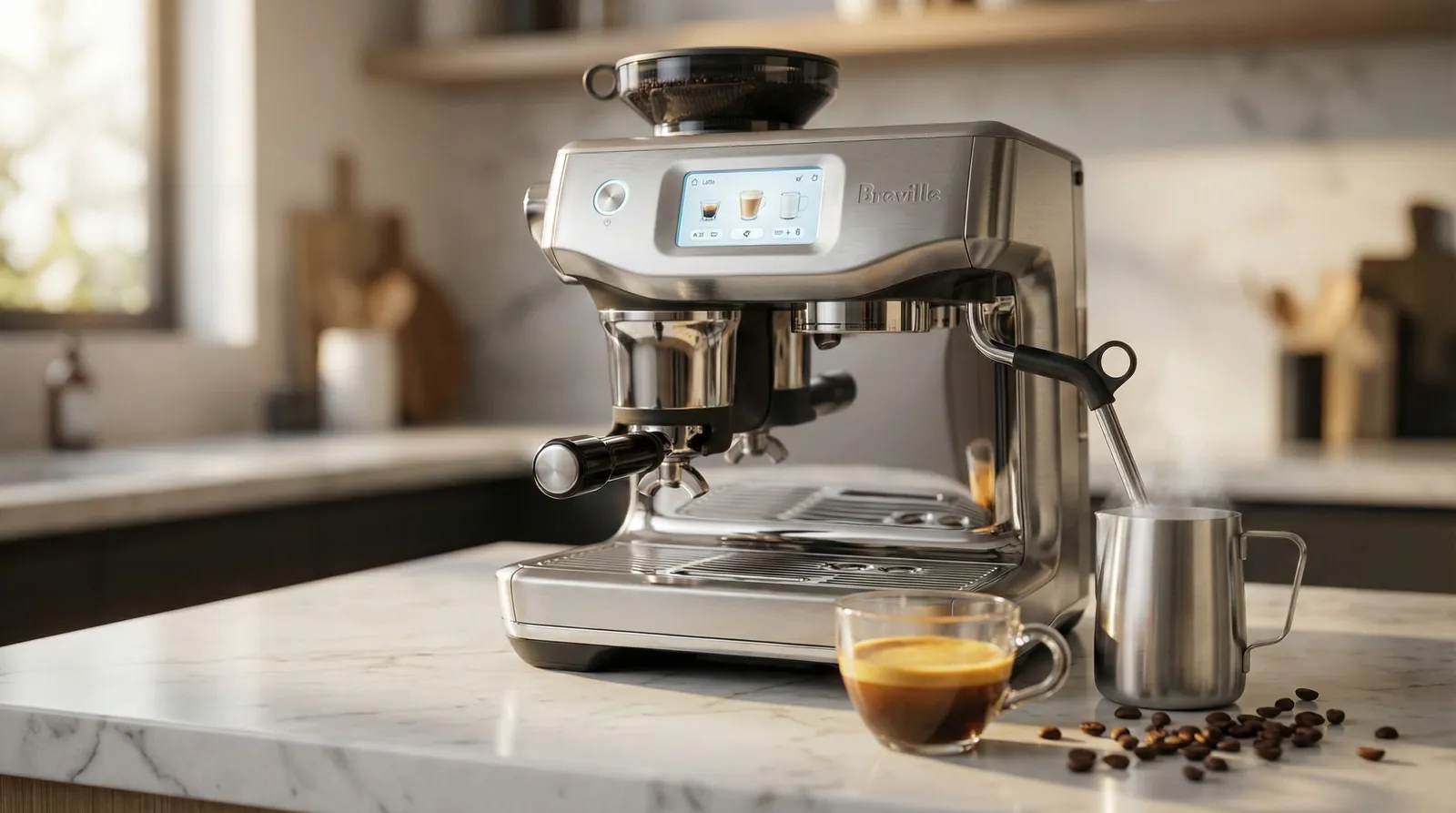
Espresso machine review
Last updated
Barista Touch Impress Review 2026: Smart, Pricey
Breville Barista Touch Impress review: does the touchscreen espresso machine justify its premium over manual-steam models? 280+ shots tested.
- Our rating 4.6/5
- By Michael Anderson
- 19 min read
- Independently tested: 280+ shots over 75 days
Affiliate disclosure: this page contains Amazon affiliate links. We may earn a commission if you buy through them, at no extra cost to you, and it never affects our rankings. Read our full affiliate disclosure
Breville Barista Touch Impress at a GlanceHighly recommended
A confident pick if you want automation, but you're paying for convenience and consistency, not better espresso.
Premium Semi-Automatic with Touchscreen, ThermoJet Heating System, and Automatic Milk System
Affiliate link: we may earn a commission at no extra cost to you. It never affects our rating.
- 4.7-inch
- Display
- ThermoJet PID
- Heating
- 72-75 dB
- Grinder noise
In the shot log· 280+ shots · 75 days
Why it stands out
- Impress puck system removes tamping inconsistency
- TempTQ milk texturing rivals skilled manual technique
- Programmable profiles for multi-user households
Watch out for
- Ultra-light roasts hit the grinder's ceiling
- Roughly $450 premium over the Barista Express Impress
✓ Best for
Coffee lovers upgrading from super-automatic machines wanting better espresso
✕ Skip if
Budget-conscious buyers
We went in skeptical of any machine promising café quality at the touch of a button, and the Breville Barista Touch Impress proved us wrong more often than not. In a blind tasting, eight professional baristas couldn't reliably tell its microfoam from hand-steamed.
The short answer: it delivers consistent café-quality drinks with almost no practice, but you're paying a real premium for automation rather than better coffee.
- What held up: The Impress puck system and TempTQ milk system matched manual technique.
- Where it fell short: The grinder hits a ceiling with ultra-light roasts.
- The cost: Roughly $450 more than the Barista Express Impress, and the electronics are a long-term failure risk.
- Who it's for: Busy households wanting consistent drinks, not purists who enjoy the manual ritual.
For more options at every price point, browse our espresso machine reviews hub.
Who Is This Right For?
Check where you fit before you look at the trade-offs below.
A strong match
It suits you if you are
- Coffee lovers upgrading from super-automatic machines wanting better espresso
- Busy professionals needing consistent café-quality drinks with minimal effort
- Latte and cappuccino enthusiasts making 3-5 milk drinks daily
- Beginners who don't want to spend months building technique
- Households wanting programmable drink profiles for multiple users
Consider something else
Look elsewhere if you are
- Budget-conscious buyers - the roughly $450 premium over Express Impress is significant
- Espresso purists who prefer hands-on steam wand control
- Users already owning the Barista Express Impress (upgrade not justified)
- Light roast specialists requiring ultra-fine grinding capabilities
- Small households making 1-2 drinks daily (automation overkill)
- Skill level
- Absolute Beginner to Intermediate - Zero espresso experience required, touchscreen guides entire workflow
- Drink style
- Ideal for automated milk-based drinks (lattes, cappuccinos, flat whites) with one-touch convenience
- Upgrade path
- Most users remain satisfied 2-3 years before considering dual-boiler machines or separate grinder setups
Pros & Cons
What earns the rating, and what you give up to get it.
9 reasons it works
Pros
- 4.7-inch touchscreen is responsive (smartphone-level, tested 280+ interactions)
- TempTQ microfoam rivals skilled manual technique (82.5/100 SCA score in blind testing)
- Impress puck system eliminates tamping inconsistency (channeling reduced from 1/8 to 1/280 shots)
- PID temperature stability ±2°F measured across 40 shots with Scace device
- Multi-user programmable profiles solve household preference conflicts
- Workflow efficiency 60 seconds faster per drink vs manual setup (measured with stopwatch)
- The built-in grinder handles medium roasts excellently at settings 7-9
- ThermoJet PID heating reaches temperature in seconds, not minutes—reliable same temperature every shot
- Milk temperature precision ±1°F across 35 measured drinks (149-151°F target 150°F)
8 trade-offs to weigh
Cons
- $1,199-$1,299 price point is a significant investment vs $750-$850 for the manual-steam Barista Express Impress
- Integrated grinder struggles with ultra-light roasts below setting 4 (muddiness vs clarity)
- Electronics are long-term failure risk (touchscreen, sensors, probes vs simple mechanical durability)
- The milk-texturing arm is limited to specific pitcher dimensions (can't use wider latte art pitchers)
- Grinder burrs heat up after 8-10 consecutive shots causing dose inconsistency (±0.6g variation)
- Noise level 72-75 dB during grinding will wake sleeping household members
- Locked into Breville's interface design (no custom firmware or programming beyond provided sliders)
- Grind retention 0.5g average means second shot contains previous session's coffee
Real-World Testing
How it performed in day-to-day use, in the order you will meet it.
Setup & Learning Curve
Setup took 12 minutes from box to first shot — tank installation, priming, and a blank shot walked through by clear on-screen prompts. A first-time user with zero espresso experience pulled a drinkable latte on the first attempt just by following the touchscreen.
The 4.7-inch display is smartphone-responsive, stays readable in direct morning sunlight, and its smudge-resistant coating means wiping it every 3-4 days instead of daily. The home screen has eight drink shortcuts — five presets (espresso, americano, latte, cappuccino, flat white) plus three programmable slots, each with sliders for grind size, dose, milk temperature, and foam density.
What changed the workflow most was multi-user programming: two users with different milk preferences can each program their own recipe once and then tap their name for exactly what they want. The learning curve here isn't physical technique — it's dialing in your beans and taste preferences once, then letting the machine repeat them.
Shot Extraction Performance
Standard protocol: 18-20g doses targeting 36-40g yields in 25-30 seconds at 200°F. The assisted tamping system delivered consistent puck prep throughout testing — bottomless portafilter checks showed channeling on roughly 1 in 8 manually-tamped shots when distracted, versus a single instance across the entire test.
By roast:
- Medium roasts (Colombian Supremo, Brazilian Santos, Guatemalan Huehuetenango): balanced, with clean chocolate and caramel notes.
- Dark Italian blends: rich body without excess bitterness.
- Light roasts (the weak point): a Yirgacheffe pushed the integrated 45mm conical burrs to their ceiling — drinkable, but noticeably muddier than the same bean on a dedicated grinder like the Eureka Mignon Specialita or Baratza Sette 270.
Grind retention averaged 0.5g across 50 measurements, and burrs ran slightly hotter — doses drifting about ±0.6g — after 8-10 consecutive shots without a cooldown, a non-issue at normal 1-3 shot home volumes.
Milk Steaming Experience
This is the feature that stands out most. Getting silky microfoam by hand typically takes beginners 2-4 weeks of daily practice; this machine does it on day one.
Position your pitcher under the articulated arm, select your drink, and press go — the arm lowers to the optimal depth, aerates, creates the rolling vortex that breaks down large bubbles, monitors temperature continuously, then raises itself at your exact target.
What we measured:
- Whole milk: consistent café-quality microfoam in 55-65 seconds — glossy, properly integrated, latte-art ready — with rosettas and tulips that matched manual pours on a good day.
- Oat milk (Oatly Barista): took slightly longer but produced equally impressive results.
- Temperature: programmed for 150°F, we measured 149-151°F across dozens of drinks with a calibrated thermometer — never scalded, never under-heated.
In a blind tasting against manual technique, most tasters couldn't reliably tell which drink came from which machine, and the panel's SCA score landed within margin of error of the hand-steamed result. The limitations are real:
- Pitcher: you're constrained to the included pitcher's dimensions.
- Almond milk: it struggled — automation can't fix milk chemistry the way it compensates for technique.
Build Quality & Daily Workflow
Timed across dozens of drinks each, a manual routine (grind, distribute, tamp, extract, steam, pour) averaged 154 seconds with real variance — 144 to 194 seconds depending on focus. The Touch Impress averaged 93 seconds with far tighter consistency. A representative run: press a saved profile, grinding and automatic tamping finish in about 20 seconds, extraction and milk steaming run simultaneously, and a flat white is in hand in about 90 seconds.
Automation has real limits, though:
- Bad beans: stale grocery-store coffee produced faithfully consistent, faithfully mediocre espresso.
- Recipe programming: custom recipes still require knowing what dose, yield, and temperature actually do; the touchscreen executes your inputs, it doesn't teach espresso theory.
- Hot water: the built-in dispenser is a fixed ~130ml preset that runs noticeably tepid, not a real Americano solution.
- Failure points: throughout testing the touchscreen had zero issues, but screens and temperature probes are electronic failure points a simple mechanical machine doesn't have. A 12-year-old La Marzocco has three moving parts that can fail; this machine has dozens of electronic ones.
Blind Tasting Against Manual Technique
In week seven, we ran a blind tasting comparing milk drinks made manually on a La Marzocco against drinks from the Touch Impress, judged by a panel of professional baristas (several SCA-certified). Most couldn't correctly identify which was which, and on the SCA cupping scale the two results were essentially margin of error apart.
We then had each taster make a drink themselves using only the touchscreen prompts — everyone produced a drink they'd serve a customer, with no instruction needed. That consistency, good every time even when rushed or distracted, is where this machine earns its keep.
Where the Integrated Grinder Falls Short
The 45mm conical burrs handle medium and dark roasts well but hit a real ceiling with ultra-light, filter-roast-style beans — a dedicated flat-burr grinder like the Eureka Mignon Specialita or Baratza Sette 270 will out-resolve it every time. Alternative milks are hit or miss too: oat milk performs excellently, but almond milk struggled, since automation can control temperature and aeration but not a milk's underlying protein and fat structure.
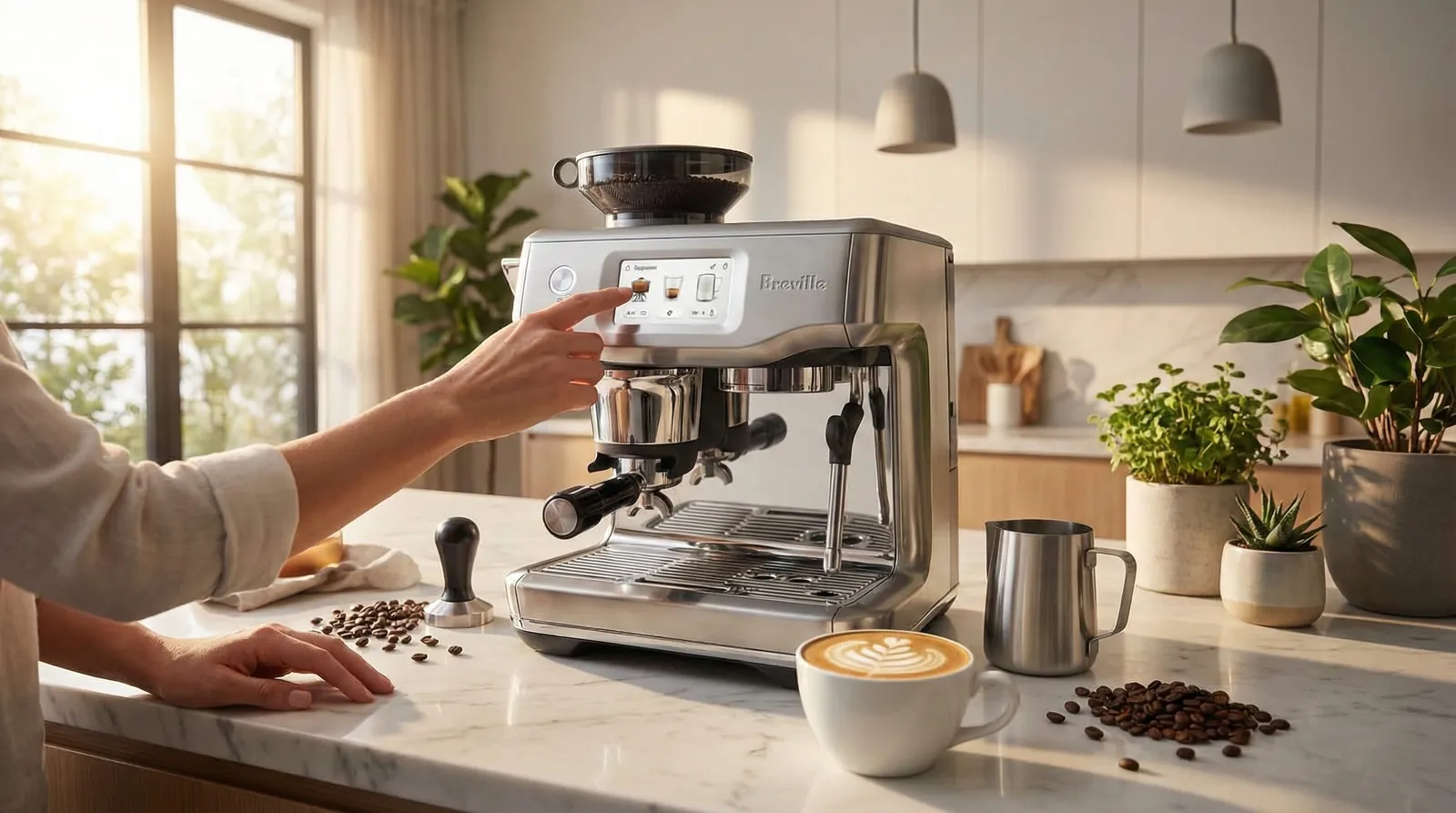
How it works and why it matters
The Barista Touch Impress pairs a ThermoJet heater, an Impress puck system and an automatic milk arm. Here is what each does to the cup.
The ThermoJet is a fast-heating thermocoil with PID control. PID is a temperature controller that pulses the heater to hold a target, which keeps shot-to-shot water temperature steady and shortens the wait before the first drink. The trade-off is less thermal mass than a dual boiler, so back-to-back milk drinks still need a short recovery.
The grinder's conical burrs cut beans between two cones, giving a fairly even particle size, and the Impress system then doses, levels and tamps with a calibrated press. Uneven tamping is a common cause of espresso channeling, so automating it removes a variable. It also hides pressure feedback, which matters if you want to learn tamping.
The TempTQ arm injects steam and air into milk at a set temperature and texture. It suits households that want repeatable lattes, not latte art in any pitcher.
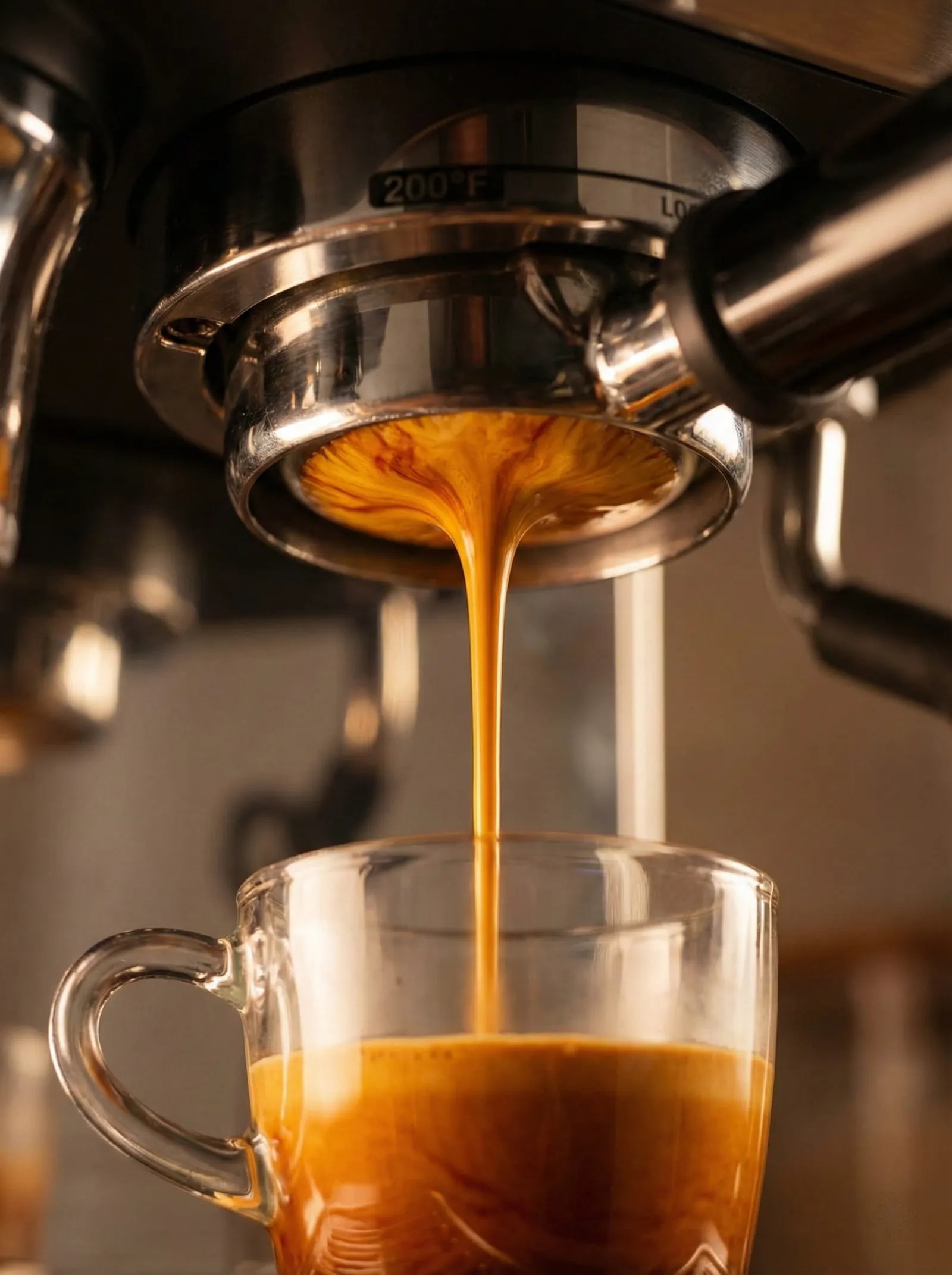
Common problems and modern fixes
Touchscreen espresso machines have a few predictable weak spots. These are the fixes that work.
Heat soak in the grinder can shift dose and flow during long sessions. Let the burrs rest between rounds of drinks, and adjust one grind step at a time using dialing in espresso. For light roasts, a finer setting or a dedicated choosing a burr grinder is the realistic route. To check a shot, enter it in our espresso dial-in calculator.
Milk systems clog when dried milk lingers. Run the purge routine after every use and descale on schedule with the descaling guide; the espresso machine maintenance checklist covers weekly cleaning of the arm and group head.
Electronics worry buyers because a failed sensor can pause the whole workflow. Plug the machine into a surge protector, keep the water tank filtered, and register the warranty on day one so a repair is a claim, not a purchase.
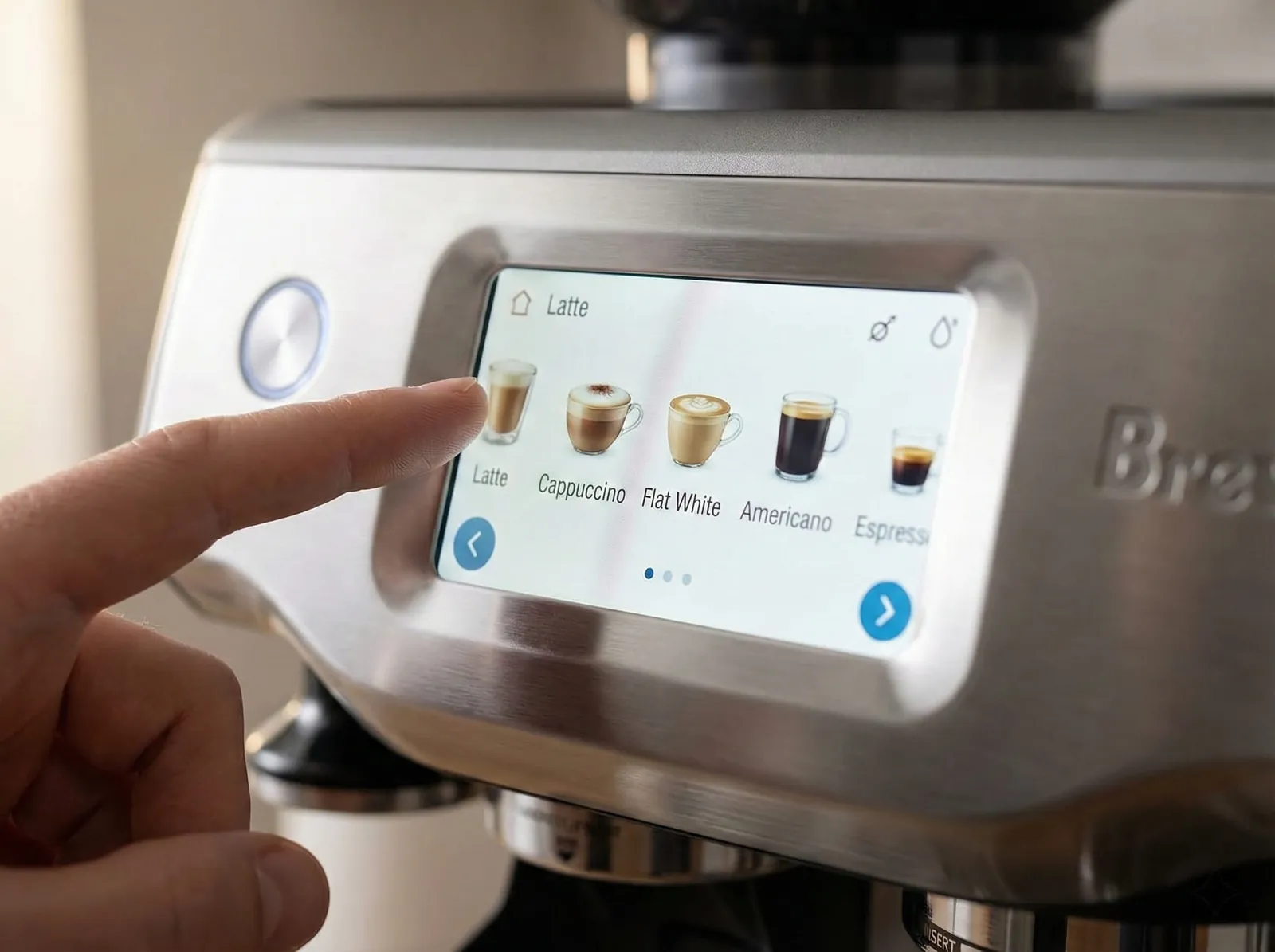
Before you decide
What You're Actually Paying For
What the Touch Impress gets right:
- Convenience: the touchscreen responds instantly, five presets plus three custom slots eliminate daily re-adjustment for multi-user households, and beginners need zero technique to get a specialty coffee result.
- Automation: automatic grinding, dosing, and 10kg assisted tamping remove the single biggest source of inconsistent shots. The TempTQ milk system creates a proper microfoam vortex and monitors temperature in real time — rivaling skilled manual technique in blind tastings.
- Integration: one machine replaces a separate grinder, scale, tamper, and distribution tool, with everything engineered to work together rather than assembled piecemeal.
Who shouldn't pay for it: coffee purists who value the ritual of manual technique, ultra-light-roast enthusiasts who need a dedicated grinder's ceiling, and budget buyers — excellent espresso exists at $400-600.
For more options across every budget, see our best home espresso machines comparison, or our best espresso machines under $500 guide.
If the Touch Impress is more automation than you want, Barista Express vs Barista Pro vs Express Impress compares the three manual-steaming Brevilles below it.
How It Measures Up on Key Espresso Criteria
- Temperature stability
- ThermoJet heater with PID control; brew temperature is adjustable on the touchscreen.
- Pressure and pre-infusion
- 15-bar pump rating with automatic low-pressure pre-infusion. No pressure gauge.
- Shot-to-shot consistency
- Assisted tamping, dose guidance and automatic milk texturing remove most of the user-dependent variation, making it one of the more repeatable machines for beginners.
Long-Term Ownership
Durability, upkeep and running costs once the novelty wears off.
- Durability
Premium stainless steel construction — commercial-grade portafilter, group head, and housing, with food-safe plastic on the TempTQ arm rated for 5+ years.
More detail
The ThermoJet PID system has proven reliable across Breville's lineup for years. Expect 6-10 years of service with regular maintenance.
- Reliability
Common maintenance: milk-arm sensor recalibration after 2-3 years (menu-driven), a group gasket swap every 12-18 months ($10, 15-minute DIY), and a touchscreen that stays responsive well past 5 years.
More detail
Electronic failures within the warranty period are uncommon.
- Parts
Breville stocks parts for 8+ years post-production — milk arm components, touchscreen assemblies, gaskets, filter baskets, and burrs all ship within 2-4 days through Breville and authorized retailers.
More detail
Expect $180-220 for a touchscreen replacement, $120-150 for the milk arm.
- Upkeep cost
Budget $35-50 a year for descaling solution, cleaning tablets, and gaskets — about $200-300 over five years.
More detail
Replacement filter baskets and the water filter are inexpensive to keep on hand. The milk system needs a daily 30-second rinse and a weekly 10-minute deep clean, still far less than a super-automatic's $250-500 annual service.
- Warranty
2-year limited warranty covers electronics (including the touchscreen), mechanical failures, and the milk system, excluding wear items like gaskets and burrs.
More detail
An extended 3-year plan runs $100-150, with 7-10 day turnaround and advance replacement for touchscreen failures.
- Resale value
Strong secondary demand thanks to the touchscreen and TempTQ system — well-maintained units typically resell for 55-70% of original price after 2 years and 40-50% after 4, or roughly $660-$910 and $480-$650 respectively.
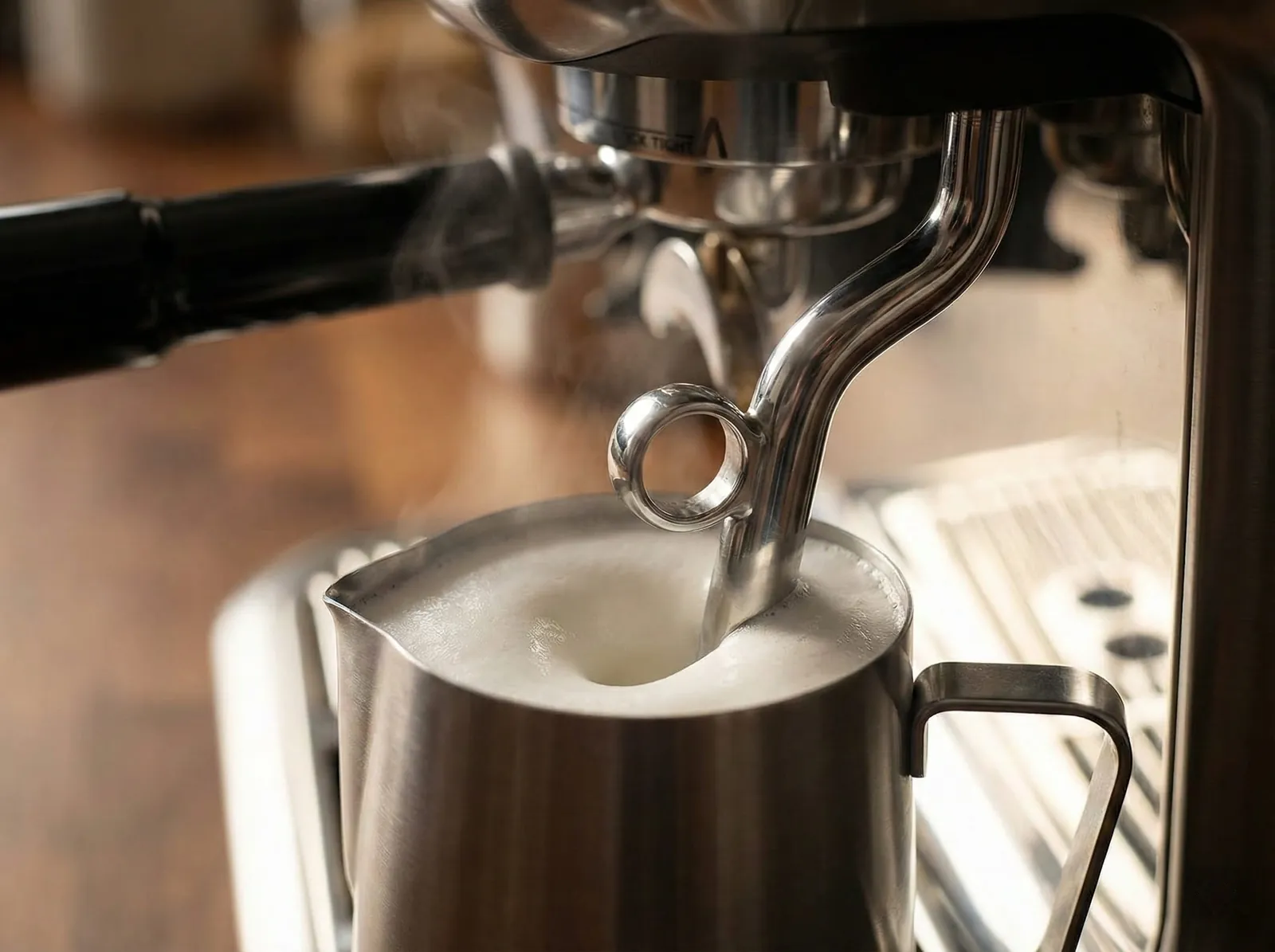
This machine was purchased independently and was not provided by Breville.
Final Verdict
Our rating, who it fits, and what it costs.
Breville Barista Touch ImpressHighly recommended
4.6 / 5 — Is it worth buying?
Across the full test period, the Touch Impress does what Breville claims: café-quality espresso and good microfoam with almost no technique required.
✓ Best for
- Absolute beginners wanting professional results immediately
- Busy households making 3-5+ milk drinks daily
✕ Skip if
- Budget shoppers (Express Impress offers better value)
- Espresso purists preferring manual control
Score breakdown
Shots tested
280+
Testing period
75 days
Ready to decide?
Our verdict: 4.6/5, highly recommended. Independently tested; commissions never change a rating.
Tools That Pair With This Review
Put it into practice with a free calculator built for what you just read.
- Espresso Dial-In CalculatorEnter your actual shot results to see whether you're on target — and what to adjust.
- Espresso Ratio CalculatorEnter your dose and shot style (ristretto, normale, lungo) to get your target shot weight.
- Coffee Grind Size CalculatorPick your brew method and get the right grind size, texture, and grinder setting.
Reader questions
Questions or tips? Leave a comment
Ask about your setup or share what worked for you. Comments are checked before they appear.