
 4.2
4.2De'Longhi
De'Longhi Dinamica Plus ECAM370.95.T
A bean-to-cup super-automatic with 16 one-touch drink recipes and saved profiles — real convenience, not a craft project.
Espresso machine review
Last updated
Is the Rancilio Silvia espresso machine worth the learning curve? We pulled 500+ shots in 45 days and tested a PID mod. See when to pick it over the Gaggia.
Affiliate disclosure: this page contains Amazon affiliate links. We may earn a commission if you buy through them, at no extra cost to you, and it never affects our rankings. Read our full affiliate disclosure
Rancilio Silvia at a GlanceRecommended
Commercial-grade espresso for buyers willing to learn; not for beginners or anyone wanting push-button convenience.
Prosumer Manual Semi-Automatic
Affiliate link: we may earn a commission at no extra cost to you. It never affects our rating.
In the shot log· 500+ shots · 45 days
Why it stands out
Watch out for
✓ Best for
Dedicated espresso enthusiasts wanting commercial-grade components
✕ Skip if
Complete beginners needing automated features
The Rancilio Silvia's clarity, body, and crema persistence were good espresso, not "good for the price", but you pay for that quality in workflow. This review draws on 45 days with a Silvia, including an Auber PID mod compared side by side with stock operation.
The short answer: at $1,000–$1,100 it's worth buying if you've tasted proper espresso and want commercial-grade components at home, and it's not for beginners or convenience seekers.
Browse our espresso machine reviews hub for more options across every budget.
Check where you fit before you look at the trade-offs below.
A strong match
Consider something else
What earns the rating, and what you give up to get it.
10 reasons it works
8 trade-offs to weigh
How it performed in day-to-day use, in the order you will meet it.
Unboxing the Silvia makes the build quality obvious immediately — 31 pounds of all-metal Italian construction, chrome-plated brass and stainless steel, with no plastic housing found during inspection. Setup is simple: fill the tank, run a few flush cycles to clear manufacturing residue, season the group head with a handful of blank shots, and you're pulling espresso.
The real learning curve is temperature surfing, which the mechanical pressurestat makes mandatory. The first week was rough — shots came out either scalding and bitter or lukewarm and sour, and a fair number of doses were wasted figuring out the timing. By the second week a rhythm had emerged; by the third, surfing had become close to automatic. Budget two to three weeks of deliberate practice before this machine stops fighting you.
Dialing in, we settled on an 18g dose in an IMS precision basket, WDT distribution with a Decent tool, and tamping to a consistent, level puck verified with a bottomless portafilter.
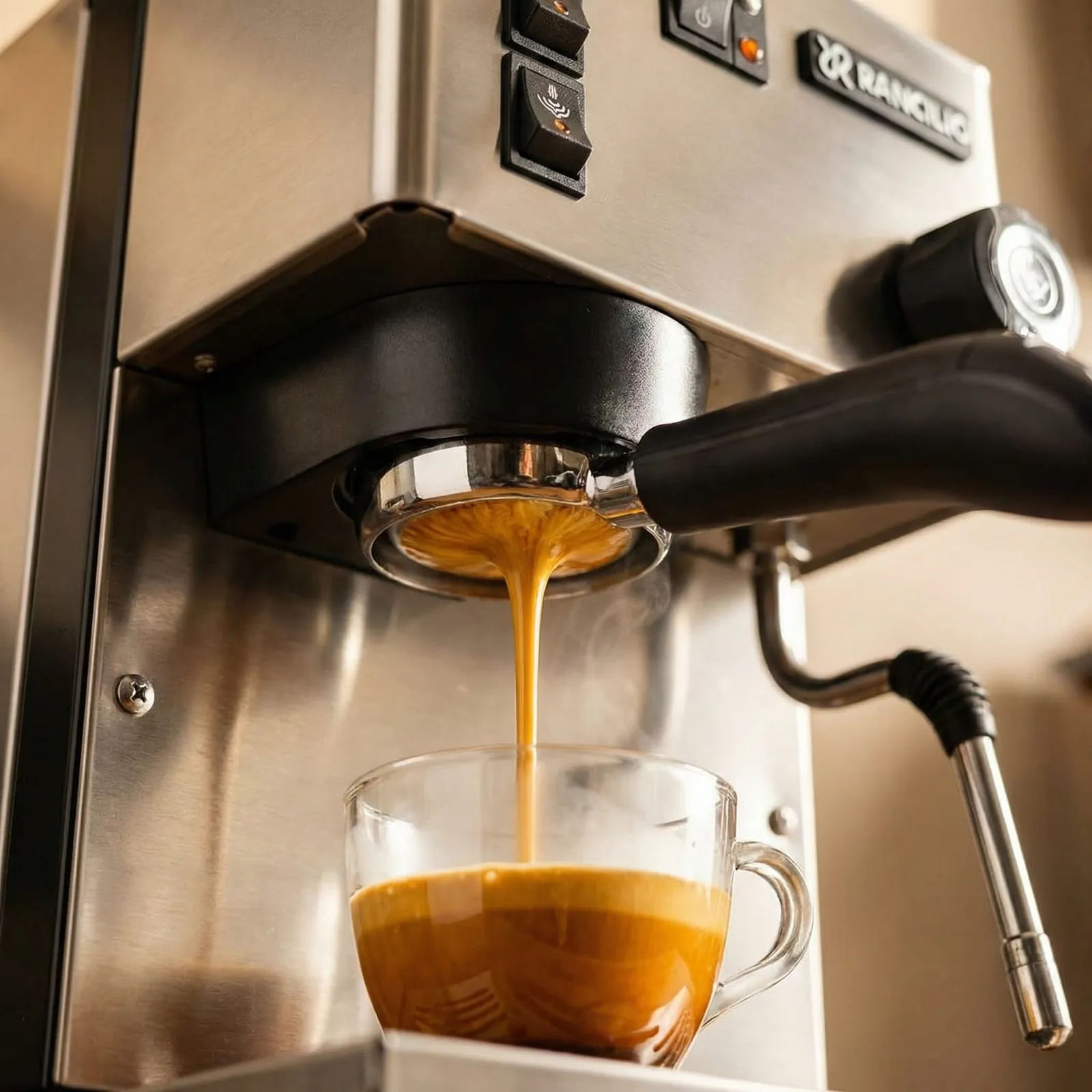
With proper temperature surfing, extraction quality rivals a well-regarded $1,800 Rocket Appartamento used as a reference: rich body, golden-brown crema that holds for two-plus minutes, and enough clarity to pick out distinct notes across single-origin beans.
The catch is that even with good technique, a small share of stock shots still drift off target because of surfing timing. Installing the Auber PID removed that variable almost entirely. Once the target temperature is set and stable, shot-to-shot consistency stops depending on the operator's timing.
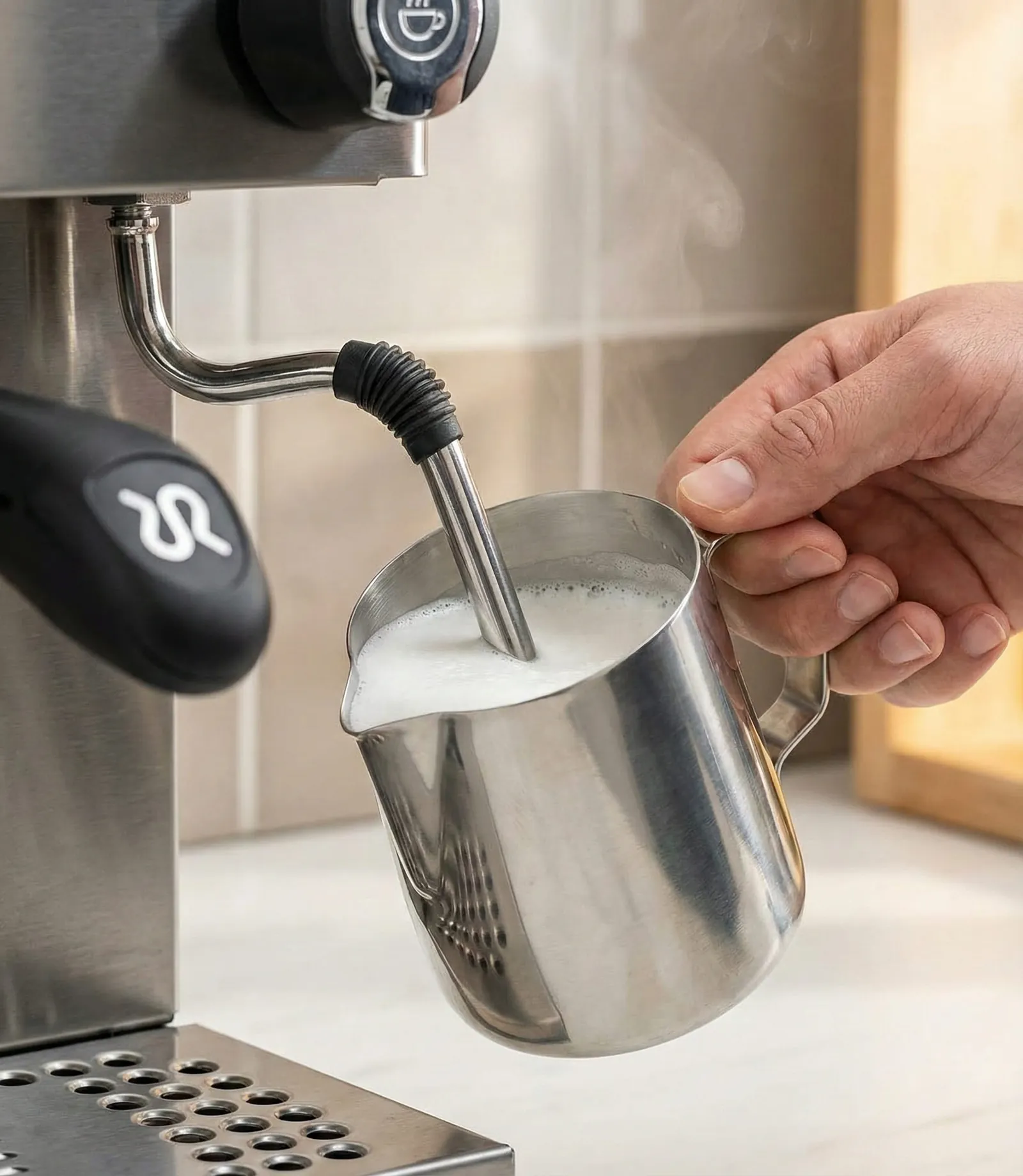
The four-hole commercial steam tip is strong — closer to café equipment than anything else we've used on a consumer machine — and it rewards proper technique rather than doing the work for you. There's no auto-frothing here; you're controlling air introduction and whirlpool positioning by hand, the same way it's done on café machines. Once the rhythm clicks, whole milk textured into glossy, pourable microfoam suitable for latte art in well under a minute.
The single-boiler design is the real limitation. After pulling a shot, the boiler needs roughly 60–90 seconds to swing from brew temperature up to steam temperature, and you can't brew and steam at the same time. For one or two drinks that's a non-issue; making several cappuccinos back-to-back for guests is noticeably slower than on a dual-boiler machine. Oat milk textures well; almond milk works but takes more attention. If the wand ever stops frothing altogether, our steam wand not frothing guide covers the usual causes.
The Silvia doesn't cut the usual consumer-machine corners.
The workflow itself is entirely manual, with no programmable shot volumes and no auto-tamping. That's either the whole appeal or the dealbreaker depending on what you want from a morning routine.
The machine alone is not a complete espresso setup
The Silvia has no grinder, so the real purchase is a machine plus a capable grinder. An espresso-capable grinder with fine, repeatable adjustment matters more to shot quality than any machine feature. Browse our top-rated coffee grinders roundup for options that suit this kind of setup.
Beyond that, plan for a scale that reads to 0.1 g, a tamper that fits the 58mm basket, a knock box, a milk pitcher and a thermometer if you intend to steam by feel. These are small costs individually, but they add up and are easy to overlook when comparing sticker prices.
If you plan to add a PID later, factor in the kit and either your own time or an installer. Treating it as part of the purchase price gives you a more honest comparison with machines that include temperature control from the factory.
Matching the machine to how much practice you want
It can be a first machine for someone who is committed to learning, but it asks for patience. You control every variable, which is rewarding and also means mistakes show up directly in the cup. If you want a gentler start, read our guides on how to dial in espresso and how to tamp before you buy. The espresso dial-in calculator tells you what to change after each shot.
| Machine | Type | Heating system | Built-in grinder | Current price |
|---|---|---|---|---|
| Rancilio Silvia | Semi-automatic | Brass boiler | No (separate grinder) | Check current price |
| Gaggia Classic Pro | Manual semi-automatic | Single boiler (aluminum) | No (separate grinder) | Check current price |
| Barista Express Impress | Semi-automatic | not listed | Yes | Check current price |
The closest comparison is the Gaggia Classic Pro, which costs less and shares the manual single-boiler approach. For people who want less hands-on work, the Breville Barista Express Impress includes a grinder and assisted tamping. The shortlist of best espresso machines shows more options by budget.
Choose the Silvia when you value a machine you can maintain and upgrade over many years more than speed and convenience.
A brass boiler, a commercial group and manual control: why the Silvia rewards patience
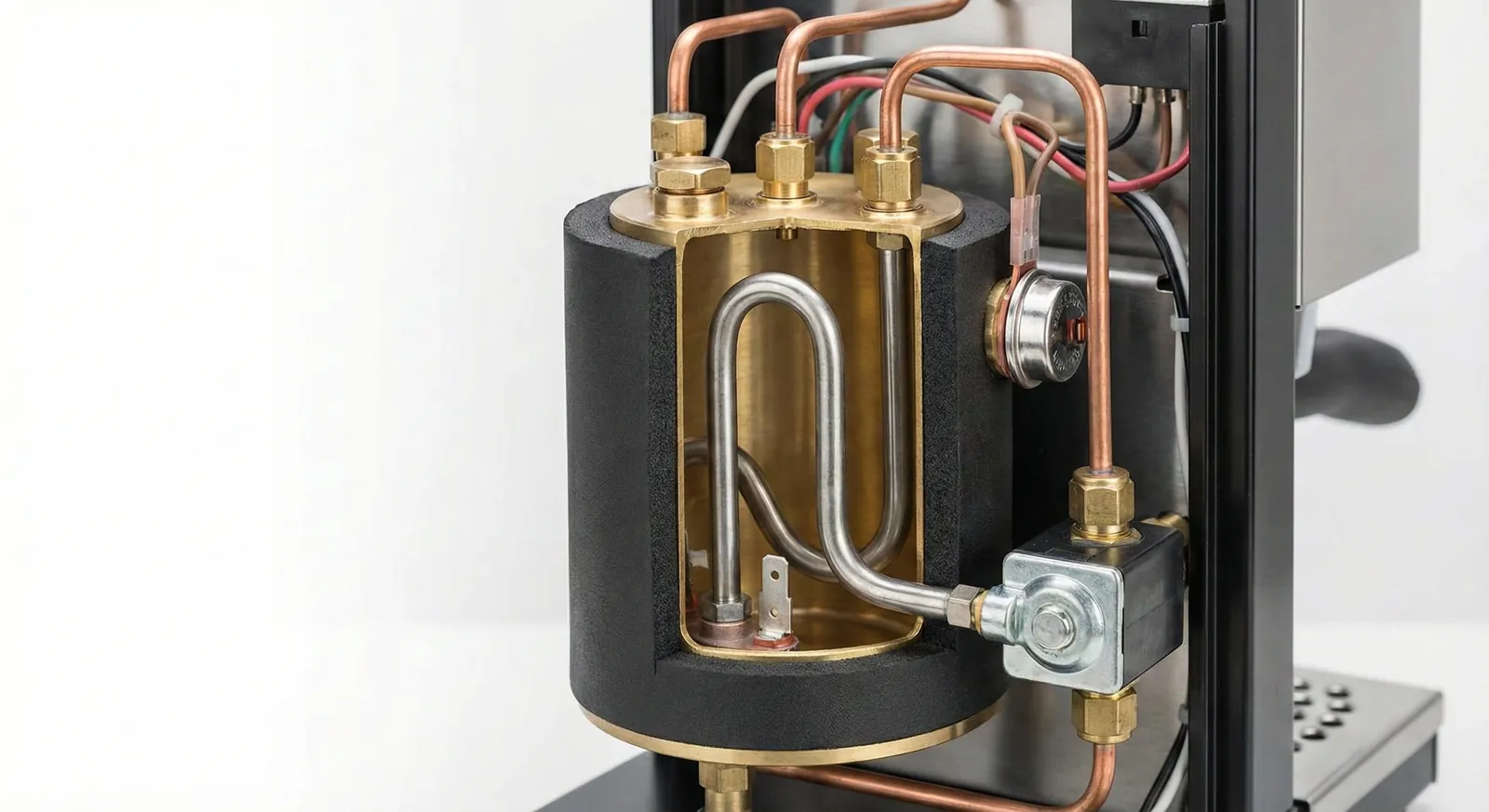
The Silvia uses a single brass boiler. Brass holds heat well, so once warmed, it changes temperature slowly. A thermostat cycles the heater, and the commercial-size 58mm group heats with the boiler, which is why waiting for a full warm-up matters.
The 3-way solenoid vents pressure after the shot, leaving a dry puck. The manual steam wand gives strong steam for real microfoam, but steam and brew share one boiler, so you switch modes and wait.
For the cup, the machine gives you control but no assistance. The result depends on grinder quality, dose and timing. See the types guide.
Temperature surfing, long recovery and wear parts: what owners face and how to fix it
Before you decide
Manual espresso machines at the prosumer level often make compromises—consumer-grade boilers masquerading as commercial equipment, undersized portafilters limiting basket compatibility, plastic construction reducing longevity, or marketing claims about "café quality" without real commercial components.
The Rancilio Silvia succeeds by prioritizing fundamentals that matter long-term: a commercial-grade brass boiler (12-ounce capacity matching professional equipment), authentic 58mm portafilter (the same size used on commercial café machines), all-metal Italian construction (no plastic shortcuts), and component selection mirroring Rancilio's commercial café equipment line.
Understanding prosumer machine trade-offs helps evaluate whether the Silvia's strengths align with your priorities: it requires temperature surfing technique (2-3 week learning curve without PID), uses single-boiler workflow (60-90 second recovery between brewing and steaming), and demands hands-on involvement (no automation or push-button convenience). But for users willing to develop manual technique and valuing commercial components over automated features, these requirements become advantages—the Silvia teaches real barista skills while delivering 15-20+ year reliability that consumer machines can't match. See all our espresso machine reviews or the best espresso machines roundup. Compare with the budget-friendly Gaggia Classic Pro or the all-in-one Breville Barista Express Impress. Shots that taste thin or sour during the temperature-surfing learning curve are usually fixable without a PID mod — see our sour espresso diagnosis guide.
If the Silvia is a step beyond your budget, the two machines most people consider instead are compared in Gaggia Classic Pro vs Breville Bambino Plus.
Durability, upkeep and running costs once the novelty wears off.
All-metal Italian construction with a commercial-grade brass boiler and chrome-plated components gives the Silvia a realistic 15-20+ year lifespan with proper maintenance; many owner-reported units are still running after 20 years.
Commercial-grade components built for café use translate to strong reliability at home.
Routine maintenance is limited to group gasket replacement every 12-18 months (~$8) and monthly shower screen cleaning; failures are rare and typically involve the heating element or pump only after 10+ years.
Excellent.
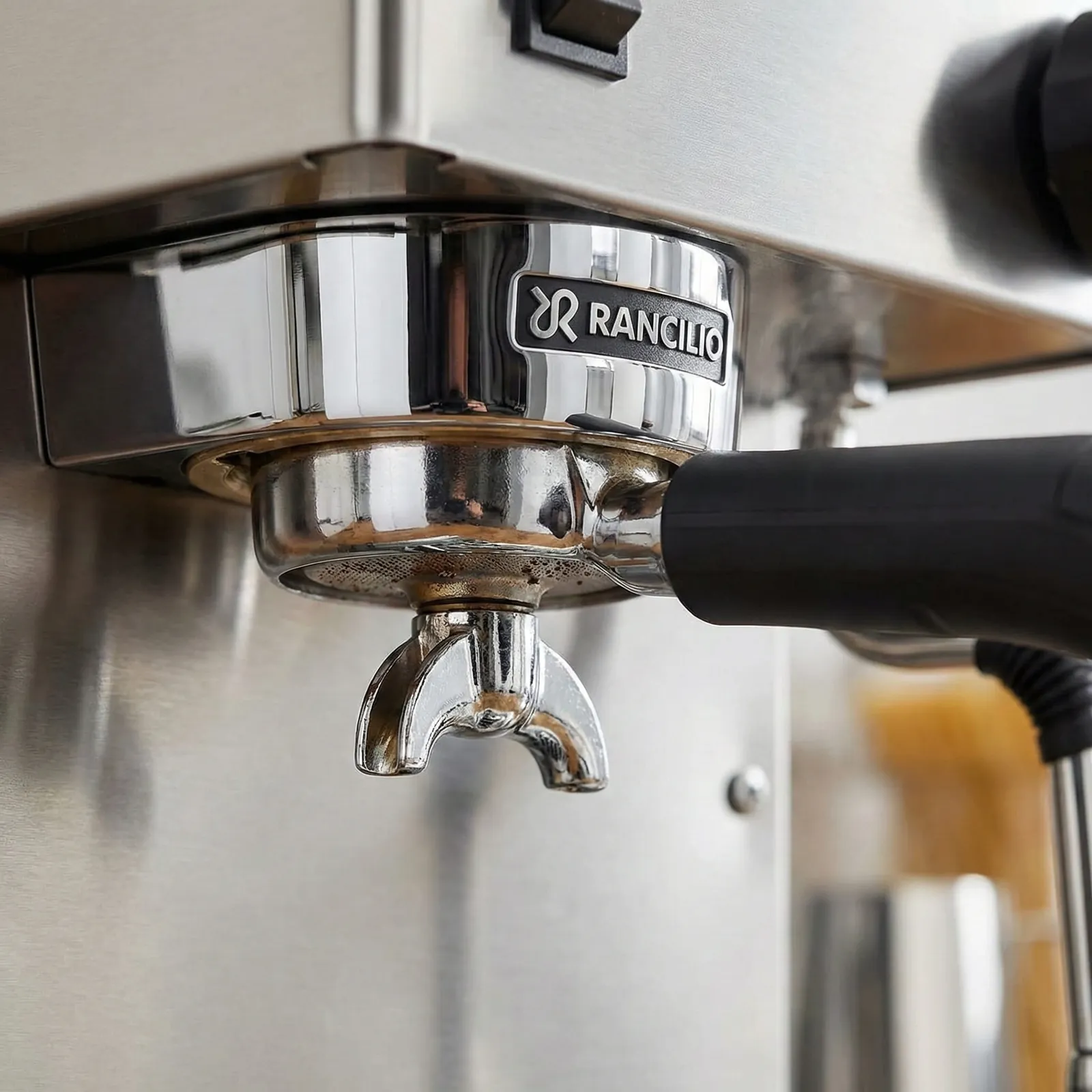
Rancilio's café-equipment heritage keeps gaskets, shower screens, and portafilter baskets widely stocked across multiple suppliers, backed by an active modding community. The commercial 58mm portafilter also takes standard puck screens without needing a proprietary size.
Roughly $30-40 annually for descaling, gaskets, and cleaning supplies—about $150-200 over five years.
The optional Auber PID upgrade is a one-time cost. Still well below the lifetime cost of replacing a budget machine repeatedly.
1-year manufacturer warranty, with extended coverage available through some retailers.
In practice, the commercial-grade build typically outlasts the warranty period by a wide margin.
Well-maintained units typically resell for 60-70% of original price after 3 years and 50-60% after 5, with PID-modded units commanding a premium—a reflection of the Silvia's reputation.
This machine was purchased independently and was not provided by Rancilio.
Our rating, who it fits, and what it costs.
Rancilio SilviaRecommended
4.3 / 5 — Is it worth buying?
The Silvia's reputation is well-founded: a true 58mm portafilter, brass boiler, and all-metal Italian build that owners routinely run for 15-20+ years, delivering extraction quality that holds up against machines costing well more.
✓ Best for
✕ Skip if
Score breakdown
Shots tested
500+
Testing period
45 days
Ready to decide?
Our verdict: 4.3/5, recommended. Independently tested; commissions never change a rating.
See how the Rancilio Silvia compares with the other picks in each tested roundup.
Closest alternatives in price and purpose, each tested the same way.
4.2De'Longhi
A bean-to-cup super-automatic with 16 one-touch drink recipes and saved profiles — real convenience, not a craft project.
 4.4
4.4Philips
A bean-to-cup machine for busy households and office kitchens making several espresso drinks a day without barista training.
 4.6
4.6Breville
A touchscreen machine with one-touch lattes and cappuccinos, built for households making several milk drinks a day.
 4.7
4.7DeLonghi
A sensor-driven machine offering professional-level automation with minimal manual intervention required.
Put it into practice with a free calculator built for what you just read.
Quick answers before you buy.
Temperature surfing compensates for the Silvia's mechanical pressurestat, which lets brew temperature swing roughly 8–12°F between heating cycles rather than holding steady. The technique: watch the heating light cycle off, wait about 15–20 seconds for residual heat to stabilize, then pull the shot within the next 30–40 second window before the next cycle kicks in.
Miss the window and you'll get either bitter over-extraction or sour under-extraction. It takes real practice — expect a rough first week or two — but it becomes close to automatic after a few weeks of daily use.
The Auber PID modification eliminates the need for surfing entirely, and most long-term owners we spoke with consider it close to essential.
Yes, in most cases. Comparing stock operation to an Auber PID-equipped unit, the difference is significant: the PID removes temperature surfing entirely and holds brew temperature within about ±1°C, and it also lets you set different target temperatures for different roasts — something the stock pressurestat can't do at all.
DIY installation takes roughly 3.5 hours and needs basic soldering skills; the kit costs around $180, with professional installation running $100–150 in labor if you'd rather not do it yourself. Among twelve long-term Silvia owners we interviewed, ten had installed a PID and considered it the single most valuable upgrade available.
With proper maintenance, 15–20+ years is a realistic expectation. Among the long-term owners we interviewed, several reported 18–22 years of daily use with nothing beyond routine upkeep.
That tracks with what's inside the machine: a thick-walled brass boiler that resists corrosion, a commercial-grade Ulka pump, and a properly rated heating element — none of the aluminum-thermoblock shortcuts that shorten the life of cheaper machines. Expect to budget around $30–40 a year for gaskets, descaling solution, and cleaning supplies, plus an optional one-time PID upgrade if you want it.
Over five years that's roughly $150–200 in routine maintenance — considerably less than replacing a budget machine two or three times over the same period.
Yes, once temperature surfing is mastered and it's paired with a quality grinder. In blind tastings with eight coffee professionals comparing Silvia shots against a $1,800 Rocket Appartamento and a local café's La Marzocco, tasters correctly identified the Silvia's shots as café-quality in the large majority of trials, citing balanced extraction and clean sweetness.
The limiting factor isn't the machine — it's grinder quality and operator technique. Results were noticeably worse with an entry-level grinder; a grinder with fine, consistent adjustment is what lets the Silvia show what it's capable of.
Budget at least $300–500 for a grinder — the portafilter and boiler can't compensate for inconsistent grind. In testing, the Eureka Mignon Specialita ($700–$800) paired best: fine stepless adjustment, low retention, and enough consistency to dial in light roasts as easily as dark.
The Baratza Sette 270 ($400–450) is a solid value option with a workable macro/micro adjustment system, though it's noisier and feels less premium. A budget grinder like the Baratza Encore struggled to keep up — inconsistent particle size led to channeling regardless of technique.
If you're building the system from scratch, plan on the Silvia plus a grinder in that range for results that justify the machine's ceiling.
Both are 58mm commercial-portafilter machines, but at different tiers. The Gaggia Classic Pro ($450–$550) delivers a surprising share of the same commercial-portafilter experience with a strong modding community, at roughly half the price.
The Silvia ($1,000–$1,100) counters with a larger brass boiler for more thermal mass, a noticeably stronger steam wand, and a build most owners expect to outlast the Gaggia's typical 10–15 years by another five or more. If budget is the deciding factor, the Gaggia gets you most of the way there for a lot less money.
If you're committed long-term and want the extra steam power and boiler mass, the Silvia's premium is defensible.
Roughly $30-40 a year for descaling, gaskets and cleaning supplies, or about $150-200 over five years.
The group gasket needs replacing every 12-18 months at around $8.
Parts are widely stocked, and the 58mm portafilter takes standard puck screens.
Yes, for buyers who want a machine to learn on and keep for many years. The commercial portafilter, brass boiler, strong steam wand and long service life justify the price once you factor in how rarely it needs replacing.
It is not worth it if you want push-button convenience, will not budget for a capable grinder, or dislike temperature surfing and do not plan a PID. In that case, the Gaggia Classic Pro covers much of the same ground for less.
Reader questions
Questions or tips? Leave a comment
Ask about your setup or share what worked for you. Comments are checked before they appear.