

REVIEWED
Gaggia Classic Pro
Top pick. A simple 9-bar spring swap gives consistent 9-bar shots for even crema. Commercial 58mm group head and a well-documented upgrade path suit manual control.
Espresso Guides
Last updated
What crema is, why it forms, and whether it matters for taste.
Affiliate disclosure: this page contains Amazon affiliate links. We may earn a commission if you buy through them, at no extra cost to you, and it never affects our rankings. Read our full affiliate disclosure
Espresso crema is the reddish-brown foam on a fresh shot: CO2 bubbles locked in by coffee oils. Treat it as a freshness and pressure signal, not a flavor guarantee. Thin crema from fresh specialty beans can taste better than thick crema from a dark blend.
Fresh CO2, about 9 bar of pressure and good extraction chemistry.
Hot water at pressure dissolves CO2 from fresh grounds and emulsifies coffee oils. When pressure drops at the portafilter exit, the CO2 expands into tiny oil-coated bubbles. That is why Moka pots, AeroPress and French press make only look-alike foam.
| Factor | Why it matters |
|---|---|
| Bean freshness | Roasting creates CO2 that fades over weeks. Stale beans give thin crema on any machine. |
| Pressure near 9 bar | Dissolves CO2 and emulsifies oils. Reliable pressure control beats a "15 bar" label. |
| Extraction chemistry | Melanoidins coat the bubbles and slow their collapse. Under-extracted shots have fewer. |
| Bean variety | Robusta gives thick, lasting crema. Light-roast Arabica gives thinner crema with no loss in quality. |
Read color, stripes and staying power at a glance.
| Color | What it usually means |
|---|---|
| Pale blonde | Grind too coarse, or beans roasted within the last 24 to 48 hours |
| Golden amber / hazelnut | Fresh beans, sound extraction, steady pressure |
| Reddish-brown | Normal for medium-dark roasts; slight over-extraction risk |
| Near-black patches | Over-extracted or very dark roast; often bitter |
A good double usually shows about 3 to 5 mm of crema that lasts a minute or more. Collapse in under 30 seconds points to stale beans or under-extraction. Rubbery crema that lasts 5+ minutes is typical of Robusta blends or very dark roasts.
Even tiger stripes suggest fresh beans and even extraction. Lopsided patterns point to channeling.
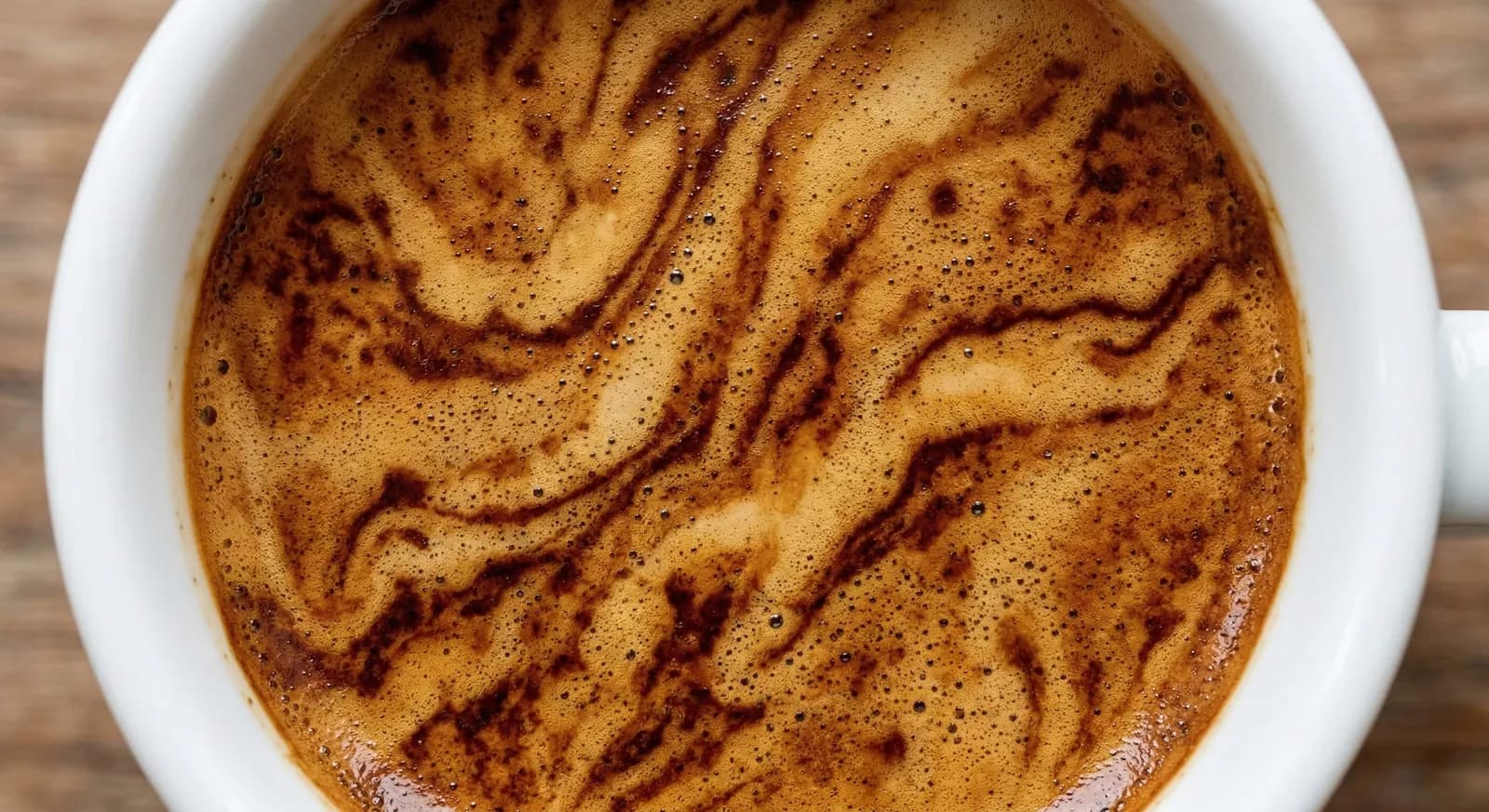
Gas, oils and pressure create the foam; time and heat destroy it.
Fresh roasted beans hold dissolved CO2. Under about 9 bar the gas stays in solution, then it comes out as tiny bubbles when pressure drops at the basket outlet. Coffee oils and melanoidins coat the bubbles and give them a surface skin, which is why crema looks foamy and golden-brown.
Crema fades because bubbles merge and burst, and the gas escapes. Hot cups, long waits and stale beans all speed this up. Robusta contributes thicker crema than arabica, which is why some traditional blends use it.
Pressurised baskets create crema mechanically, using a restrictor, so the foam may look thick even from old beans. Bottomless portafilters expose the real extraction and often show thinner crema.
It helps aroma and diagnosis, but taste is the real test.
Crema tastes bitter and astringent on its own, so stir it into the shot. Its main job is aroma, since volatile compounds concentrate there.
| Crema can tell you | Crema cannot tell you |
|---|---|
| Beans may be stale if it is thin or absent | That thick crema means great flavor |
| Pressure may be off if it is always missing | That thin crema means bad espresso |
Start with beans and grind, then check the machine.
Work through how to increase espresso crema first. Then see how to pick espresso beans and espresso extraction.
Fresher beans, better grinders and puck prep matter more than pressure.
If you are chasing thicker crema for its own sake, remember it is a freshness signal, not a quality score. For problems, start with how to increase espresso crema.
Crema comes from carbon dioxide trapped in recently roasted beans.
Roasting creates carbon dioxide inside coffee beans, which escapes slowly over the following days and weeks. When hot water is forced through freshly roasted coffee under pressure, that gas dissolves and then comes out of solution as the espresso leaves the basket, forming the tiny bubbles that make crema. Coffee oils and other compounds help hold those bubbles in place.
That is why very fresh coffee, within a few days of roasting, can produce a thick, bubbly crema that fades quickly and may taste sharp, while coffee a few weeks old makes a thinner but more stable crema. Coffee that is months old has lost most of its gas and produces little crema at all. A roast date on the bag tells you more about likely crema than the brand or the price.
For the best balance of crema and flavour, many home baristas use espresso beans between about one and four weeks after roasting. Within that window, the crema is stable and the shot tastes settled rather than sharp.
Roast, beans, basket and machine all play a part.
| Factor | Effect on crema |
|---|---|
| Roast level | Medium and dark roasts usually produce more, darker crema than light roasts |
| Robusta in the blend | Robusta produces thicker, longer-lasting crema than 100% arabica |
| Basket type | Pressurized baskets create foamy crema even from stale coffee |
| Grind and dose | Too coarse or too little coffee gives thin, pale crema |
| Machine pressure and temperature | Stable pressure and heat give a more consistent crema |
Crema is a useful clue but not a measure of quality. A pressurized basket can produce impressive-looking foam from stale, pre-ground coffee, and a carefully roasted light espresso may have thin crema but taste excellent. Judge the shot by taste first, then use crema as a hint about freshness and extraction. Our baskets guide explains why pressurized baskets produce so much foam.
If your crema suddenly disappears with the same beans and grinder, check the roast date and how long the bag has been open first; stale beans are the most common cause.
Most people should stir it in.
Crema on its own tastes bitter and slightly ashy, because it carries a concentrated share of the shot's bitter compounds and fine coffee particles. Drinking the espresso without stirring means your first sip is mostly crema and the last is mostly liquid, which can make the shot taste unbalanced. A quick stir with a small spoon blends everything so each sip tastes the same.
Some professional tasters skim the crema off to taste the espresso underneath, but for everyday drinking, stirring gives the most balanced cup. In milk drinks, the crema is what allows latte art to form, so pour the milk while the crema is fresh. Our how to increase espresso crema guide covers what to change if your crema is consistently thin.
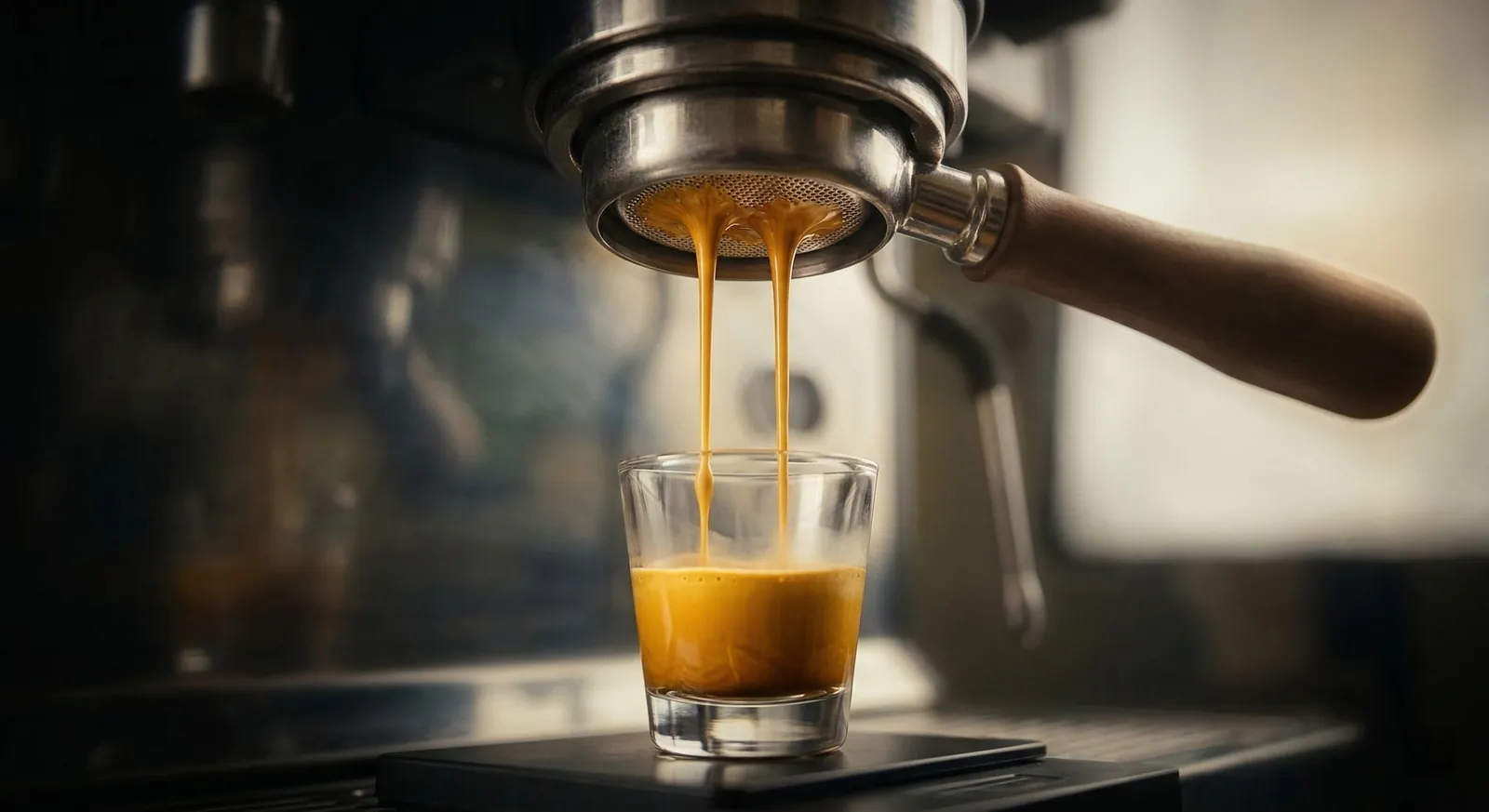
Drink it within a minute or two, before the crema breaks up and the shot cools.
Pick for pressure consistency, then feed it fresh beans.
Quick decision guide
Want to set pressure yourself
Gaggia Classic Pro: a cheap 9-bar spring swap brings brew pressure to 9 bar.
Want an easy start
Breville Bambino Plus: PID temperature control and automatic pre-infusion.
Want the biggest upgrade per dollar
Fresher beans first, then a burr grinder like the Baratza Encore ESP.
REVIEWED
Top pick. A simple 9-bar spring swap gives consistent 9-bar shots for even crema. Commercial 58mm group head and a well-documented upgrade path suit manual control.
REVIEWED
Best beginner. PID temperature control and automatic pre-infusion, which gently saturates grounds before full pressure and improves crema uniformity.
REVIEWED
Best value. A 15-bar pump at a fraction of prosumer cost, with reliable crema from fresh beans. Sensible if budget is the priority.
REVIEWED
Best all-in-one. Built-in burr grinder means freshly ground beans every shot, the biggest factor for crema. Integrated tamping and PID temperature.
Affiliate links: we may earn a commission at no extra cost to you.
Compare more in the top-rated espresso machines guide.
Quick answers before you buy.
Any machine delivering steady 8 to 9 bar through a well-prepared puck of fresh coffee will.
Budget machines with erratic pressure often give thin or patchy crema.
Not true crema.
They run at roughly 1 to 2 bar, so any foam fades in under 30 seconds.
Yes, on its own crema tastes more bitter and drier than the shot under it.
Stirring it in blends the flavors, which is why many baristas stir espresso before drinking.
They often look thicker, but that says little about flavor.
Bean freshness and Robusta content affect crema more than roast level alone, and light roasts can still taste excellent with thin crema.
Usually only thin, quick-fading crema.
Ground coffee loses CO2 fast, and that gas is what builds crema.
Grinding fresh from a burr grinder makes the biggest difference.
No. Crema is gas and coffee oil on top of the shot itself.
Cappuccino foam is steamed milk with air worked in.
See what is a cappuccino.
Keep reading: more guides on the same topic.
 Explained
Espresso6 min read
What is espresso? Learn how a shot is made, why 9 bar matters, how it differs from coffee and what gear you need at home.
 Explained
Espresso6 min read
Are puck screens worth it? They keep your group head cleaner but won't fix channeling. See who should buy one and which size fits.


Reader questions
Questions or tips? Leave a comment
Ask about your setup or share what worked for you. Comments are checked before they appear.