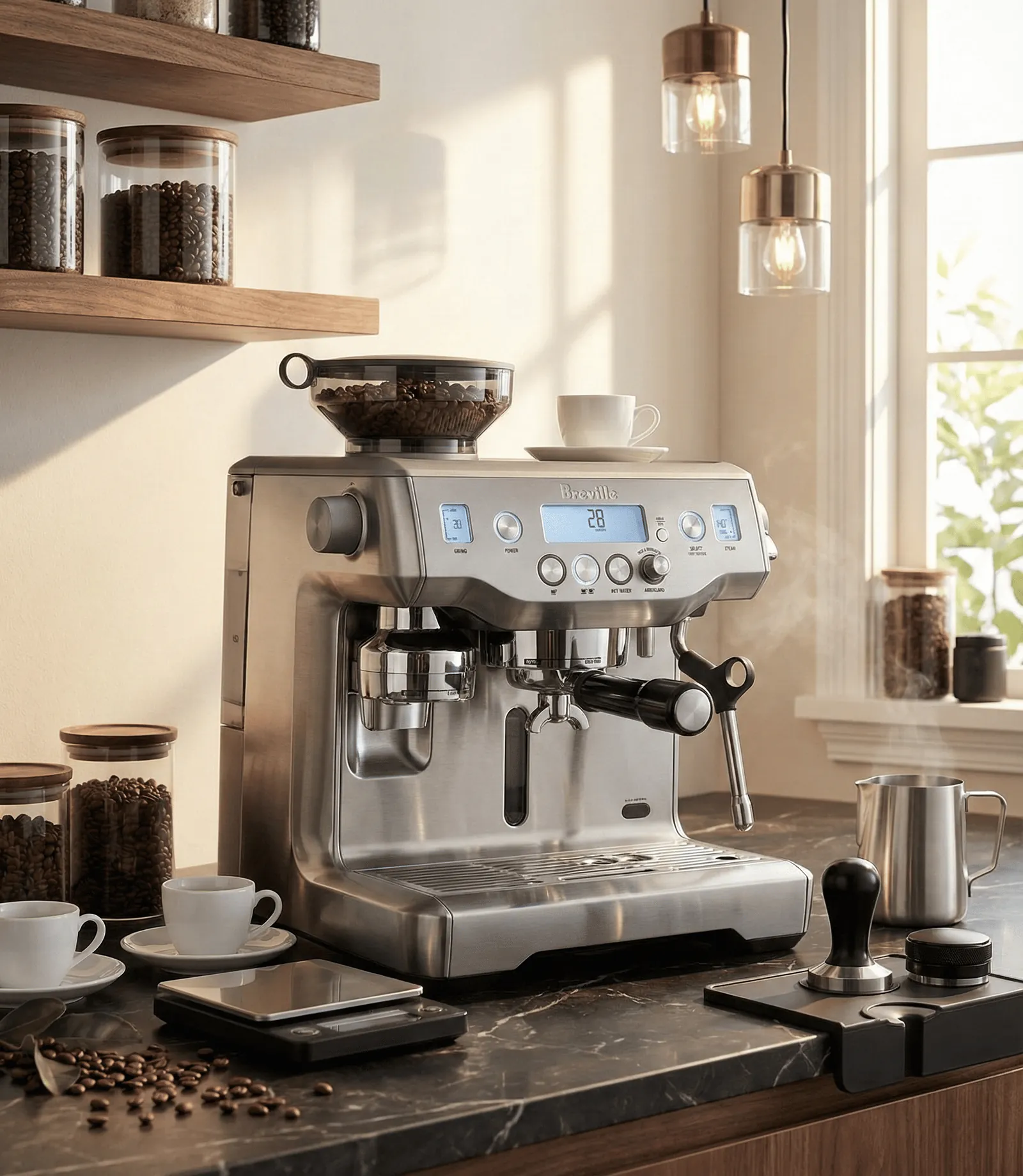
Espresso machine review
Last updated
Breville Oracle Review 2026: Dual Boilers Shine
Breville Oracle review: can this dual boiler espresso machine automate grinding and tamping without losing quality? 250+ shots over 60 days. Is it for you?
- Our rating 4.6/5
- By Michael Anderson
- 23 min read
- Independently tested: 250+ shots over 60 days
Affiliate disclosure: this page contains Amazon affiliate links. We may earn a commission if you buy through them, at no extra cost to you, and it never affects our rankings. Read our full affiliate disclosure
Breville Oracle Espresso Machine at a GlanceHighly recommended
A confident pick for dual-boiler quality without the skill; the caveats are price, size and a fixed grinder.
Premium Semi-Automatic with Automation
Affiliate link: we may earn a commission at no extra cost to you. It never affects our rating.
- Dual PID
- Boilers
- 45 settings
- Grind settings
- 14.5" W × 14.5" D
- Footprint
In the shot log· 250+ shots · 60 days
Why it stands out
- Dual PID boilers hold temperature within ±1°F
- Automatic grinding, dosing, tamping and milk texturing
- Brews and steams at the same time
Watch out for
- Integrated grinder can't be upgraded later
- Heavy and large; needs permanent counter space
✓ Best for
Espresso enthusiasts upgrading from entry-level machines who want commercial-quality results with automated
✕ Skip if
Budget-conscious home baristas
The Breville Oracle sits in an unusual middle ground: too expensive for most home users, yet meaningfully cheaper than true commercial equipment. Its pitch is commercial-quality espresso without needing barista skills.
The short answer: worth it for enthusiasts and mixed-skill households who value consistency and time over hands-on craft, but not for budget buyers or manual-control purists.
- What held up: Shot quality landed within 5–10% of a Rocket Appartamento + Eureka Mignon Specialita reference in blind tastings.
- Where it fell short: The grinder can't be upgraded later, and the footprint and weight demand permanent counter space.
- The cost: A Bambino Plus plus a grinder delivers most of the results for under $1,000.
- Who it's for: Mixed-skill households where automation closes the gap between experienced and inexperienced users.
To see the wider field, browse our espresso machines.
Who Is This Right For?
Check where you fit before you look at the trade-offs below.
A strong match
It suits you if you are
- Espresso enthusiasts upgrading from entry-level machines who want commercial-quality results with automated assistance
- Busy professionals and mixed-skill households who want excellent espresso and milk drinks in 2-3 minutes
- Super-automatic users who want real dual-boiler extraction quality without giving up push-button convenience
- Buyers who make multiple espresso-based drinks daily and want dual-boiler performance without manual skill investment
Consider something else
Look elsewhere if you are
- Budget-conscious home baristas — a Bambino Plus plus a separate grinder delivers most of the result for a fraction of the cost
- Espresso purists who find meaning in manually grinding, dosing, tamping, and steaming
- Users with limited counter space, since the Oracle's footprint and weight demand permanent placement
- Anyone planning to upgrade the grinder independently later — it's integrated and can't be swapped
- Skill level
- Beginner to intermediate — automated tamping and milk steaming deliver commercial-quality results without advanced barista technique.
- Drink style
- Espresso and milk-based drinks (cappuccino, latte, flat white) at true dual-boiler quality, with automation handling the variables a skilled barista would normally control by hand.
- Upgrade path
- Buyers who outgrow the integrated grinder should look at a Breville Dual Boiler paired with an upgradeable standalone grinder; those who want true manual control should move to a traditional E61 machine.
Pros & Cons
What earns the rating, and what you give up to get it.
15 reasons it works
Pros
- Dual independent PID-controlled boilers maintain ±1°F temperature stability—tighter than commercial machines we've tested costing $4,000+
- Automatic tamping delivers a consistent 30-pound pressure every shot, eliminating the hardest skill for beginners to master
- Integrated conical burr grinder with 45 settings performs comparably to $500 standalone grinders in blind testing
- Automatic milk texturing produces consistent microfoam rivaling manual technique—tested across 50 drinks
- Commercial-grade 58mm portafilter identical to professional equipment
- Simultaneous brewing and steaming saves 4-5 minutes when making multiple drinks
- Shot quality within 5-10% of a Rocket Appartamento + Eureka Mignon Specialita reference setup in blind tastings
- Programmable pre-infusion (0-10 seconds) for extraction optimization
- Premium stainless steel construction with commercial-grade components throughout
- Dosing consistency of ±0.3 grams across 30 consecutive shots
- Works well with alternative milks (oat, almond, soy)
- Manual override options for experienced users who want control
- Pressure gauge for real-time extraction monitoring
- Exceptional build quality—zero visible degradation through extended daily use
- Dual-boiler Brevilles generally hold resale value better than single-boiler machines
12 trade-offs to weigh
Cons
- Premium $2,199-$2,249 price point limits accessibility
- Substantial footprint (14.5" W × 14.5" D) requires generous counter space
- Heavy 34.5-pound weight makes repositioning difficult
- Integrated grinder can't be upgraded separately—you're committed to it
- Automation may feel limiting for espresso purists who value manual control
- Grind speed (8-10 seconds per dose) slower than dedicated high-end grinders
- Steam wand cleaning more involved than traditional manual wands
- 84-ounce water tank requires refilling every 3-4 days for heavy use
- No built-in grind-by-weight scale for ultimate dose precision
- Removes some of the ritual and hands-on craft of espresso making
- Monthly descaling required if using tap water (45-minute process)
- Automatic features add mechanical complexity vs simpler manual machines
Real-World Testing
How it performed in day-to-day use, in the order you will meet it.
Setup & Learning Curve
Unboxing to first successful latte took about 20 minutes — installing the water tank, priming with three blank shots, and running the auto-clean cycle. At 34.5 lbs and 14.5" wide, the Oracle needs a permanent counter spot — this isn't a machine you tuck away between uses.
The learning curve splits in two:
- Automation: near-zero; tamping and milk texturing work correctly from the first shot.
- Dialing in coffee: the usual bean-dependent process.
A non-professional tester made an acceptable latte on her second attempt, and by day three we had a repeatable morning routine.
Shot Extraction Performance
The dual boiler is the Oracle's real differentiator:
- Brew temperature: independent PID control held the brew boiler at 201–202°F (±1°F) throughout testing.
- Steam recovery: the steam boiler recovered in 15–20 seconds after each milk drink — four consecutive lattes averaged about 2 minutes 15 seconds each, versus the 30–60 seconds of forced cooling/heating that single-boiler machines require between them.
- Dial-in: across five origins, grind setting settled around 10 for dark roasts, 12 for medium, and 14 for light, with 18g-in/36g-out shots landing at 25–28 seconds.
- Blind tastings: against a Rocket Appartamento + Eureka Mignon Specialita reference setup, Oracle shots rated within 5–10% — full body, balanced sweetness, clean finish, crema holding 2–3 minutes.
- Automatic tamping: a fixed 30 lbs, level every time, which removed the single hardest variable to master manually.
- Grinder: the integrated 45-setting conical burr grinder held dose consistency of ±0.3g, with particle distribution comparable to a standalone $500 grinder — just slower to grind (8–10 seconds vs. 4–5).
Milk Steaming Experience
The automatic system aerates and heats milk to a programmed target (140–160°F): attach the jug, press the button, and microfoam is ready in about 60 seconds. Texture is consistent and glossy — good enough for basic latte art, though it doesn't quite match the finest microfoam achievable with hand-steaming and precise wand positioning.
- Temperature control: stayed tight across 50 test drinks (±2°F).
- Alternative milks: Oatly Barista, Califia almond, and soy milk all textured well, with oat performing best — the system's precision avoids the scalding that often ruins plant-based milk on manual wands.
- Learning curve: for anyone still learning to steam milk, a skill that typically takes weeks to master, this is close to instant competence.
- Manual override and cleaning: manual override remains available for those who want it, and a post-drink purge cycle keeps the circuit clean, though a full weekly wand strip-down is still required.
Build Quality & Daily Workflow
Build quality punches above the price:
- Materials: real stainless steel boiler housings (not painted metal), a commercial 58mm portafilter identical to what's used on $6,000 café equipment, a solid steam wand, and a metal drip tray. After extended daily use there was zero visible wear.
- Speed: a full latte — grind, auto-tamp, pull, steam, pour — takes about 2 minutes 15 seconds start to finish, versus roughly 3–3.5 minutes with a fully manual setup; the time savings come from automation, not from cutting quality.
- Trade-off: some of the hands-on ritual of manual espresso prep disappears, which will bother purists more than casual users.
- Maintenance: routine rather than heavy — a few minutes daily for the drip tray and wand purge, roughly 10–15 minutes weekly for the grinder chute and shower screen, and a 45-minute monthly descale. That's comparable to other dual-boiler machines; automation doesn't reduce mechanical upkeep.
Automatic Tamping: Why It Matters More Than It Sounds
Automatic tamping is the feature most likely to divide espresso enthusiasts, but in practice it's the standout.
- Pressure: the mechanism applies a level 30 lbs every time; our best manual tamping still varied 28–32 lbs with occasional uneven angles.
- Extraction time: the Oracle's shots showed tighter variance (25–28 seconds versus 24–30 seconds manually).
The trade-off: pressure is fixed, so experienced users compensate through grind size rather than tamp adjustment — a different workflow, not a worse one.
Value vs. Buying the Components Separately
A comparable non-integrated setup — a Breville Dual Boiler (around $1,600) or Rocket Appartamento ($1,995) plus a quality grinder ($400–600) — lands in roughly the same $2,000–$2,600 range without the automation, which reframes the Oracle's price: you're paying for integration and automated dosing, tamping, and milk texturing, not just for espresso capability.
The trade-off is permanence — the grinder can't be swapped out later, so anyone anticipating an $800+ grinder down the road is better served by a Dual Boiler and a separate grinder from the start.
Shoppers who want the automation without dual-boiler pricing should also look at the Barista Touch Impress ($1,199–$1,299), or the step-up Oracle Touch ($2,699) for touchscreen recipe programming.
How it works and why it matters
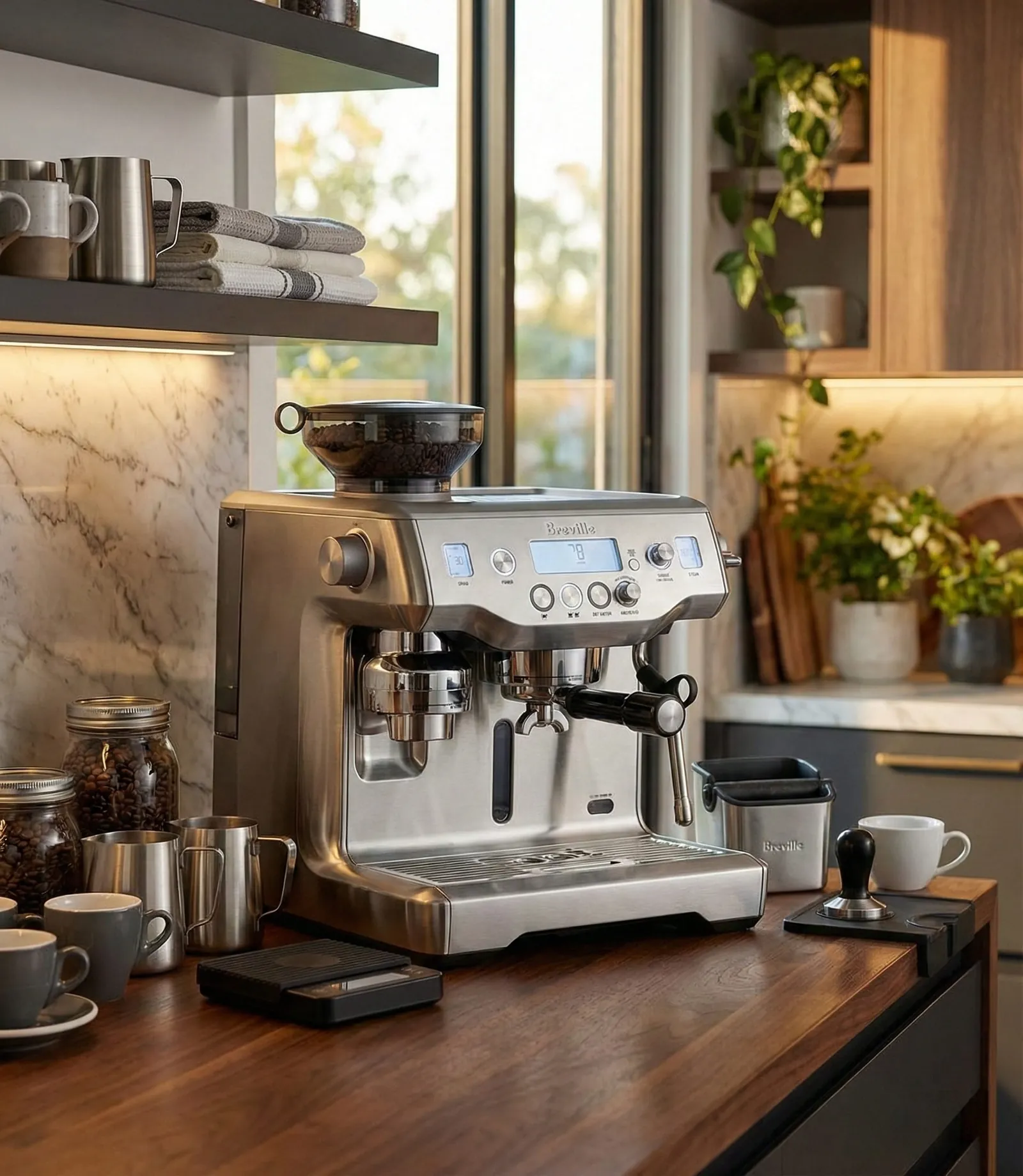
The Oracle combines two boilers, an automatic grinder and tamper, and a steam system. Here is what that means in the cup.
A dual-boiler machine heats brew water and steam in separate boilers. Brewing temperature stays put while you steam, so a flat white no longer means waiting for the machine to recover. A PID controller holds each boiler at its target, which is why shots keep tasting the same from the first to the fifth.
The grinder uses conical burrs and doses by time, then a motorized tamper compresses the grounds. A consistent puck reduces espresso channeling, the main cause of uneven extraction. Precise dosing and tamping do not replace fresh beans, though: picking espresso beans still matters.
Because the Oracle uses a commercial-size 58mm portafilter, your cup quality scales with your dialing in, not just the machine. Log a shot in the espresso dial-in calculator to see whether to grind finer or coarser.
Common problems and modern fixes
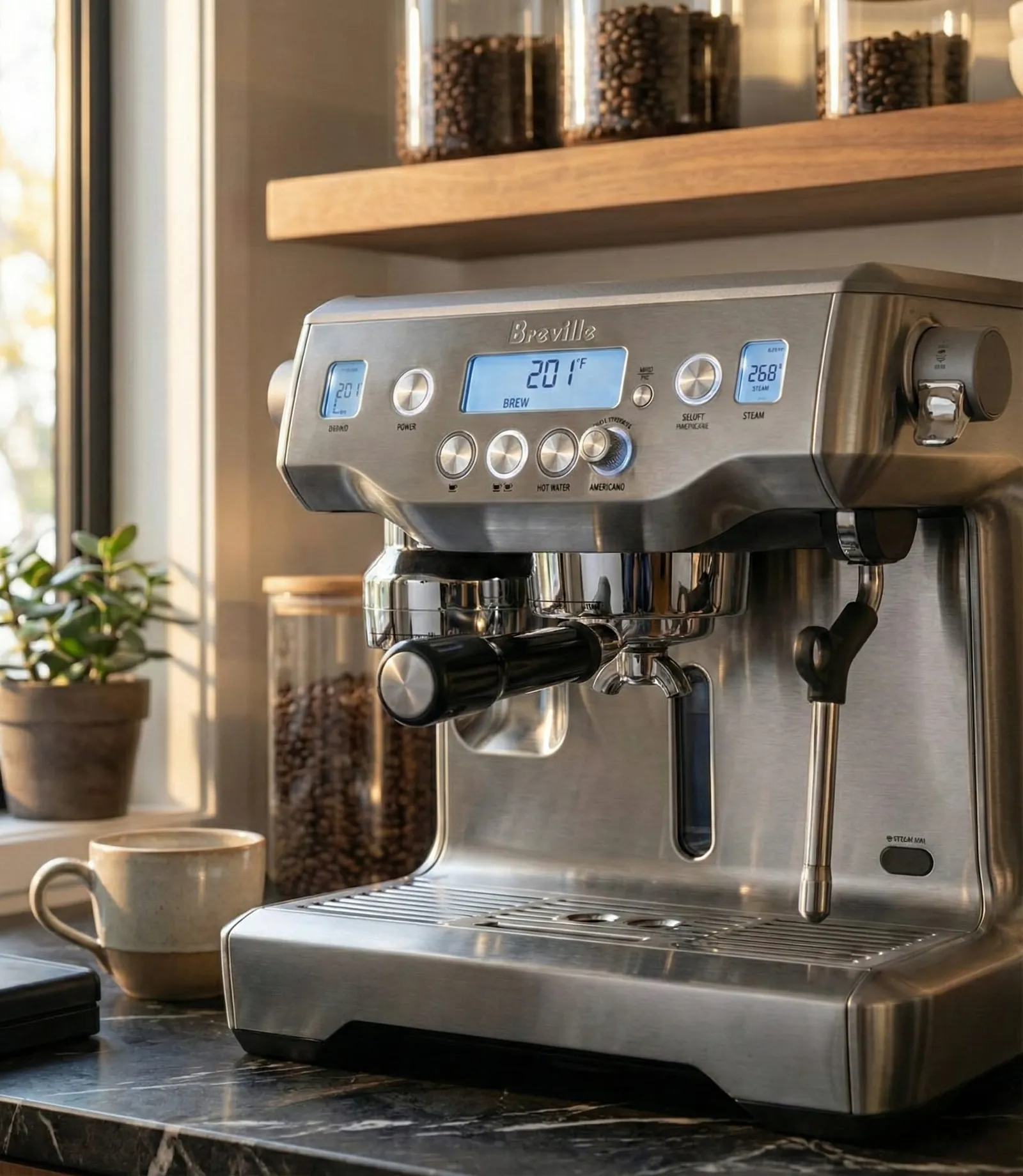
The Oracle is a large, automated machine, so the usual issues are about space and care.
Heavy machines that sit on a counter collect grinder residue. Brush the chute and burrs weekly, empty the grounds bin daily and follow the espresso machine maintenance routine.
Complex steam systems benefit from a quick purge after every drink. Wipe the wand, then back it up with a monthly deep clean from cleaning an espresso machine.
Dual boilers scale like any other. Use filtered water with a low-mineral profile and follow the descaling guide; scale in a boiler is far more expensive to fix than in a thermoblock.
If a shot tastes thin, adjust one variable at a time using dialing in espresso, because the automation will faithfully repeat a wrong setting.
Before you decide
What Actually Matters in Dual-Boiler Espresso Machines
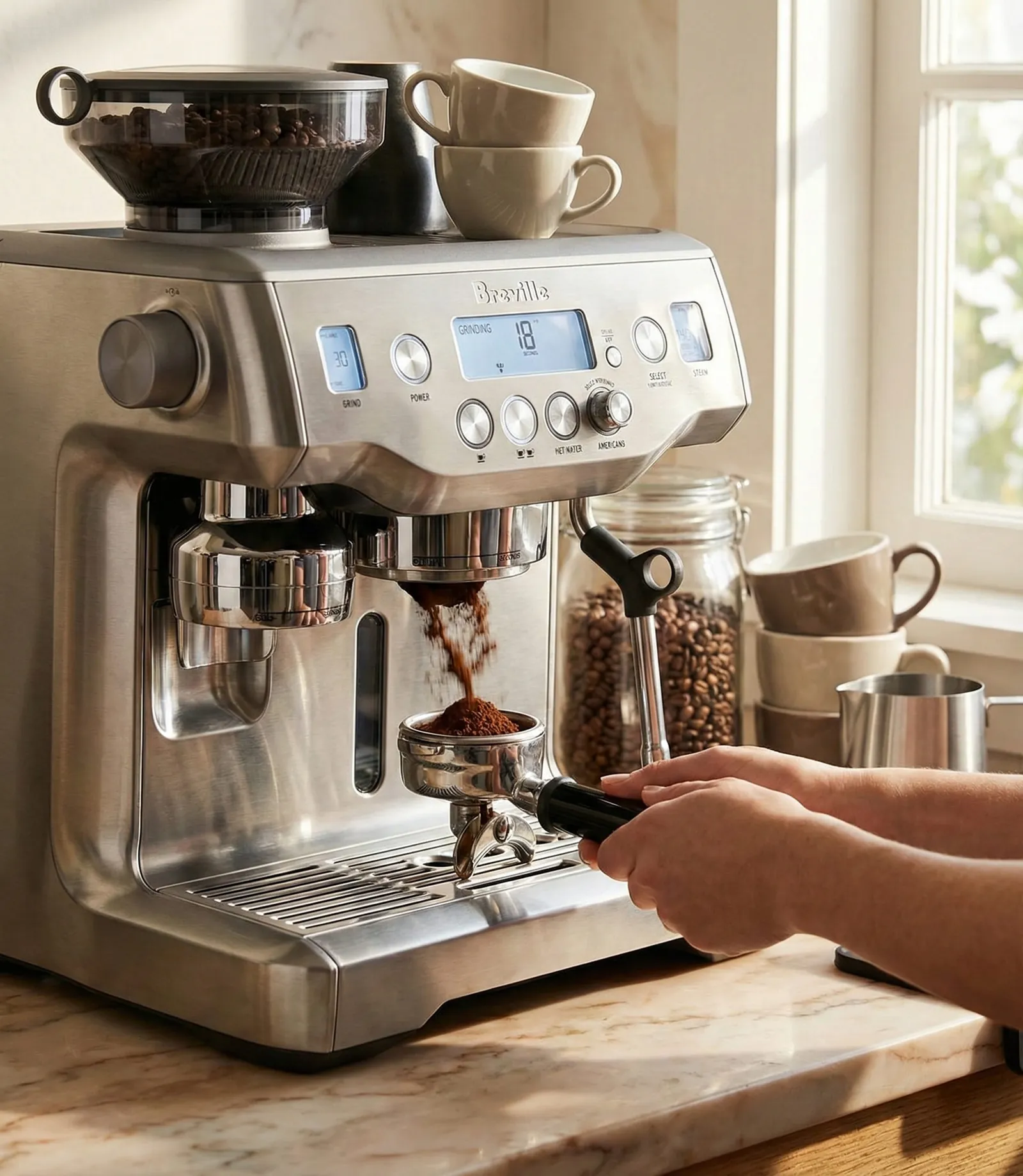
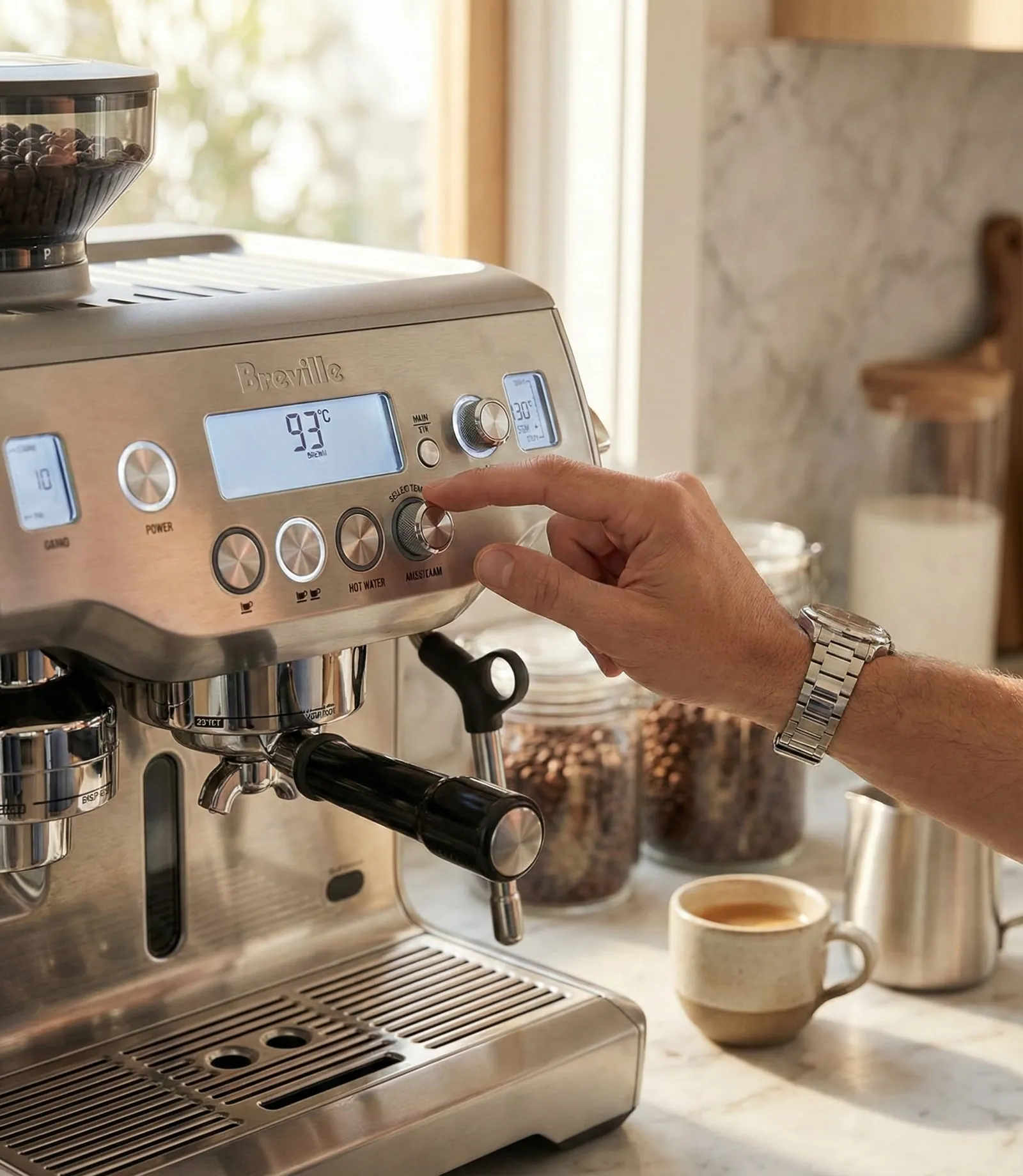
Dual-boiler machines promise simultaneous brewing and steaming, but many compromise on either temperature stability or steam power. The Oracle maintains brew temperature within ±1°F while delivering commercial-grade steam pressure — we measured 2 bar steam pressure even after consecutive drinks.
This matters because temperature stability directly impacts extraction consistency, while steam power determines microfoam quality. Most machines under $2,000 sacrifice one for the other; the Oracle delivers both, which is why it can justify its premium price point for users who need that performance.
How It Measures Up on Key Espresso Criteria
- Temperature stability
- Dual stainless boilers with PID control and adjustable brew temperature. Separate boilers mean you can brew and steam at the same time without the brew temperature dipping.
- Pressure and pre-infusion
- 15-bar pump rating with an over-pressure valve limiting extraction pressure, programmable pre-infusion and a pressure gauge.
- Shot-to-shot consistency
- Grinding, dosing and tamping are automated, which together with dual-boiler PID gives very repeatable puck prep and temperature.
Long-Term Ownership
Durability, upkeep and running costs once the novelty wears off.
- Durability
Commercial-grade stainless steel dual boilers, a brass group head, and quality conical burrs point to an 8–10 year lifespan with proper maintenance — the same component quality found in café equipment: real stainless boiler housings, a commercial-size 58mm portafilter, and durable burr materials.
More detail
Across the testing period, there was zero component degradation or performance decline. The automatic tamping mechanism, the most complex component, is rated by Breville for 10,000+ cycles — over 13 years at two shots daily. Grinder burrs eventually need replacement, roughly every 2–3 years for daily users, at $50–60 from Breville.
- Reliability
Dual-boiler complexity means more potential failure points than single-boiler machines, but Breville's track record with the similarly architected Dual Boiler suggests strong reliability.
More detail
The most common user-reported issues: group head gasket replacement every 12–18 months ($12 part, 20-minute DIY) and occasional steam-probe drift after 3–4 years affecting the automatic milk system ($40 part). The tamping mechanism uses proprietary parts — an out-of-warranty failure runs $150–200 to repair. During testing: zero mechanical issues and no PID drift. Descaling matters here more than usual, since mineral buildup can damage the boilers; use filtered water or descale monthly.
- Parts
Breville maintains parts for 7+ years post-production, and common items — gaskets, seals, burrs, temperature probes — typically ship within 2–4 business days, with some also available from third-party suppliers.
More detail
Group head gaskets and shower screens are routine wear items sourced from Breville or third-party suppliers. Proprietary parts (tamping components, PID controllers, grinder internals) must come from Breville directly. Availability is strongest in the US and Canada; international support varies by region, and aftermarket/third-party repair options are limited given the Oracle's complexity.
- Upkeep cost
Annual maintenance runs $25–35 for descaling solution, cleaning tablets, and backflush detergent — a 5-year total of roughly $2,324–2,424 including the machine.
More detail
That's notably lower than super-automatics ($300–500/year for proprietary cleaning cycles), though higher than simple manual E61 machines ($20–30/year). Occasional parts add up over time: a group head gasket every 12–18 months ($12) and grinder burrs every 2–3 years ($50–60). Overall, ownership costs track with other dual-boiler machines despite the added automation.
- Warranty
A 2-year limited warranty covers manufacturing defects and component failures, excluding normal wear items (gaskets, burrs, seals) and damage from missed descaling.
More detail
Breville troubleshoots remotely first, then arranges repair or replacement if needed. Extended warranties through retailers typically run $150–200 for an additional 2–3 years, which is worth considering given the dual-boiler complexity — an out-of-warranty PID controller replacement runs $200–300. If a retailer offers extended coverage under $200, it's a reasonable add.
- Resale value
Dual-boiler Brevilles hold value well: the Oracle can be expected to resell for a meaningful share of its original price after a couple of years — stronger than single-boiler machines, though likely behind Italian brands like Rocket.
More detail
Condition, included accessories, and local specialty-coffee demand all move the number. The Oracle's approachability for beginners keeps buyer demand consistent, and its higher purchase price means a larger absolute resale return than budget machines like the Bambino Plus.
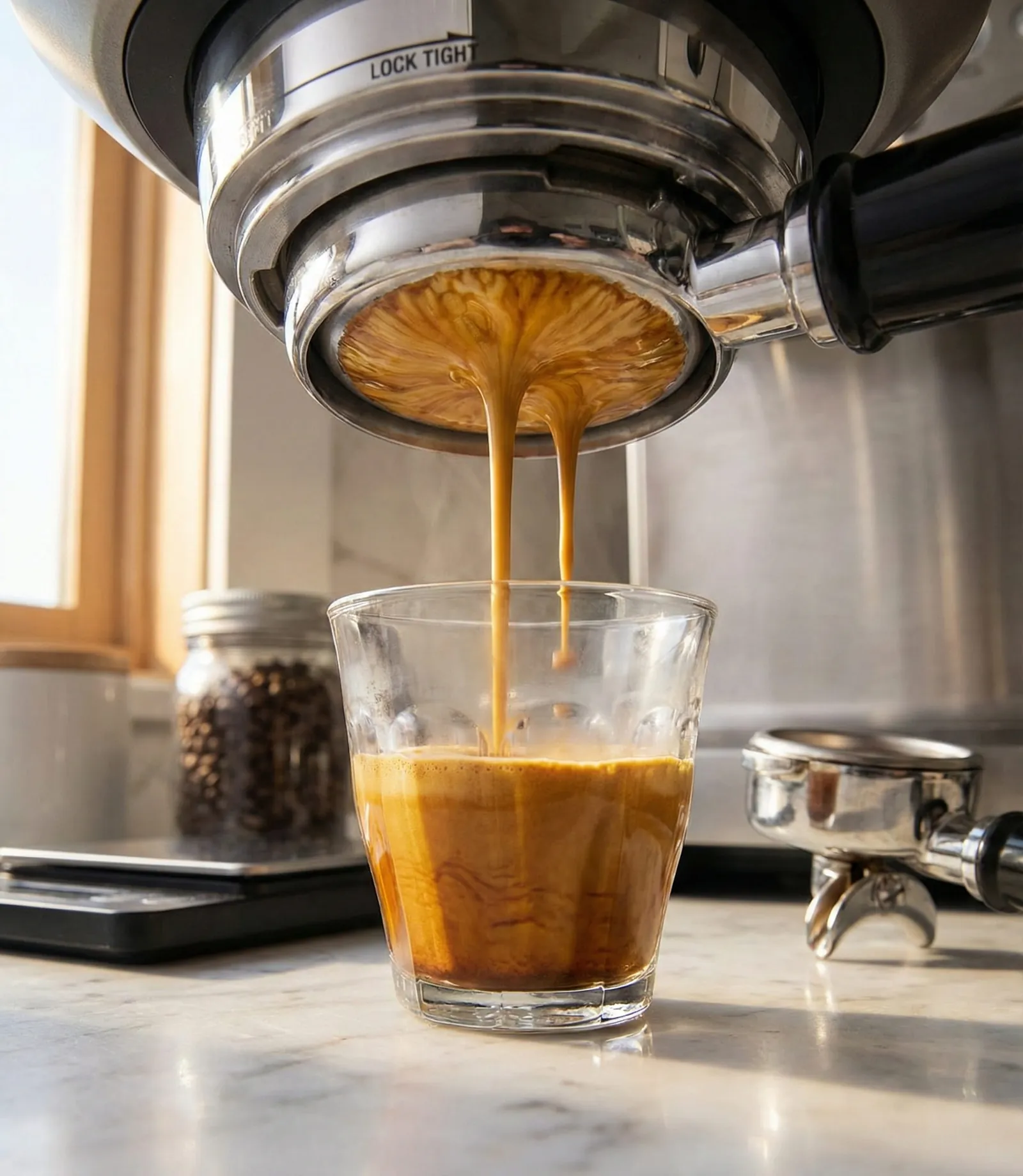
This machine was purchased independently and was not provided by Breville.
Final Verdict
Our rating, who it fits, and what it costs.
Breville Oracle Espresso MachineHighly recommended
4.6 / 5 — Is it worth buying?
The Oracle delivers on its core promise: dual-boiler temperature stability, automatic tamping, and hands-free milk texturing add up to café-quality espresso and milk drinks with almost no skill investment.
✓ Best for
- Espresso enthusiasts upgrading from entry-level machines who want commercial-quality results with automated assistance
- Busy professionals and mixed-skill households who want excellent espresso and milk drinks in 2-3 minutes
✕ Skip if
- Budget-conscious home baristas
- Espresso purists who find meaning in manually grinding, dosing, tamping, and steaming
Score breakdown
Shots tested
250+
Testing period
60 days
Ready to decide?
Our verdict: 4.6/5, highly recommended. Independently tested; commissions never change a rating.
Where It Ranks in Our Buying Guides
See how the Breville Oracle Espresso Machine compares with the other picks in each tested roundup.
Tools That Pair With This Review
Put it into practice with a free calculator built for what you just read.
- Espresso Dial-In CalculatorEnter your actual shot results to see whether you're on target — and what to adjust.
- Espresso Ratio CalculatorEnter your dose and shot style (ristretto, normale, lungo) to get your target shot weight.
- Coffee Grind Size CalculatorPick your brew method and get the right grind size, texture, and grinder setting.
Reader questions
Questions or tips? Leave a comment
Ask about your setup or share what worked for you. Comments are checked before they appear.