
Cleaning powder
Cafiza
Pick it if you dislike measuring: Buy tablets. Buy powder for the lowest cost per clean.
Maintenance Guides
Last updated
How to clean an espresso machine: daily, weekly and monthly steps for the portafilter, group head, steam wand and backflush.
Affiliate disclosure: this page contains Amazon affiliate links. We may earn a commission if you buy through them, at no extra cost to you, and it never affects our rankings. Learn more
Rinse the portafilter and purge the steam wand after every session, backflush with water weekly, and do a powder backflush plus basket and shower-screen soak monthly. Cleaning does not remove limescale, so descale too.
Five items cover the whole routine.
| Item | Why |
|---|---|
| Cleaning powder or tablets (Cafiza, Puly Caff) | Removes coffee oil in backflushes and soaks |
| Blind basket | Needed to backflush three-way solenoid machines |
| Group head brush | Cleans gasket groove and shower screen |
| Two microfiber cloths | One for the steam wand, one for the exterior |
| Steam wand brush | Clears milk-blocked tip holes |
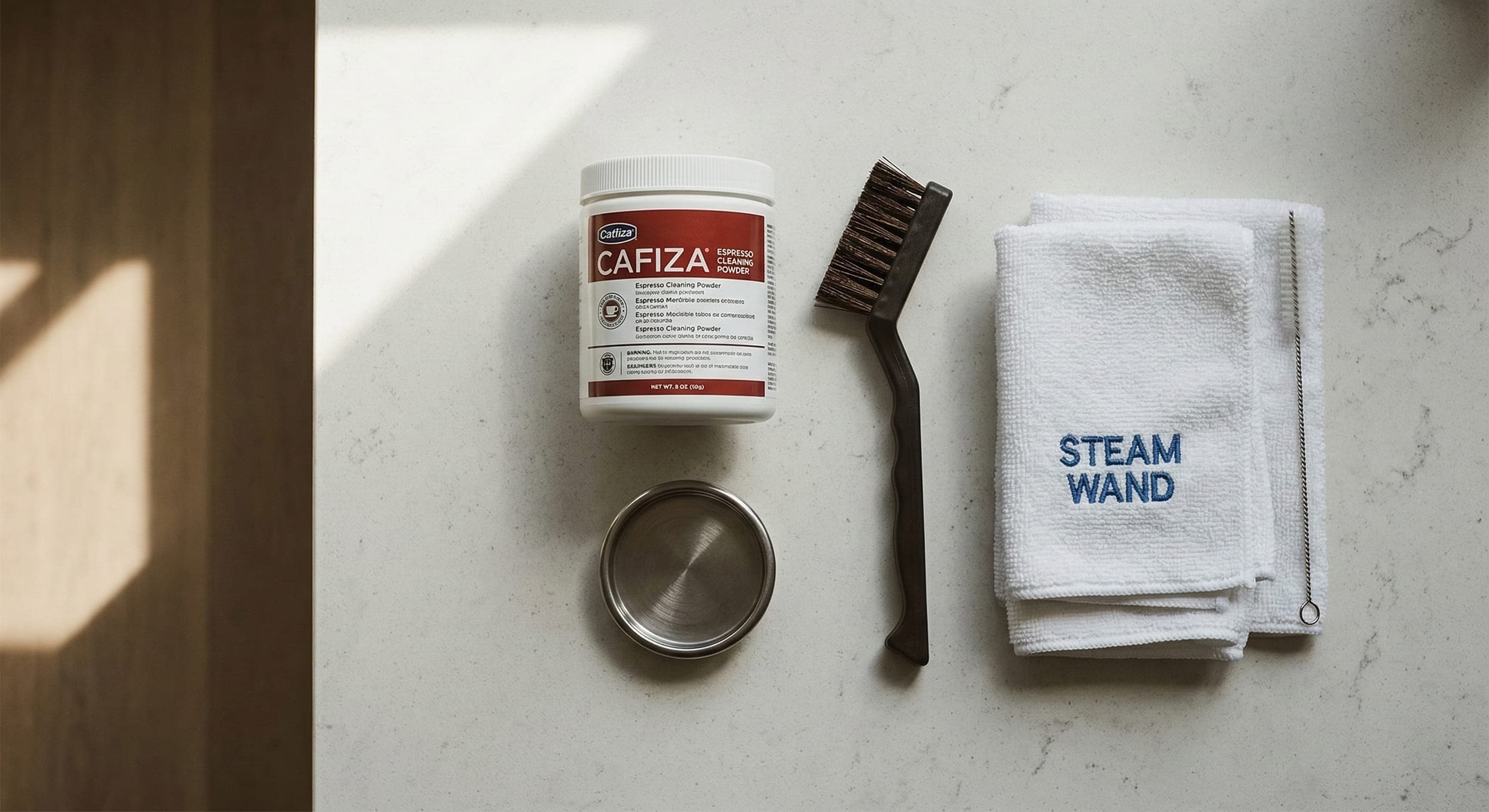
Daily, weekly and monthly tasks.
| Frequency | Time | Focus |
|---|---|---|
| Daily | 2–3 min | Portafilter, group flush, steam wand, drip tray |
| Weekly | 8–10 min | Water backflush, wand tip soak, gasket groove |
| Monthly | 20–25 min | Chemical backflush, basket and screen soak |
Skipping it dulls flavor and encourages channeling as oil coats the shower screen. After rinsing, smell the basket: if it smells oily, it needs a soak.
Four quick steps, each under 30 seconds.
Knock the puck and rinse. The portafilter and basket under hot water straight away.
Flush the group head. For 3–5 seconds with no portafilter attached.3–5 seconds
Purge and wipe the steam wand. With its own damp cloth while warm.
Empty the drip tray. When the float rises; standing water breeds odors.
Water backflush, wand soak and gasket scrub.
Backflush with water. Blind basket in, run 5 cycles of 10 seconds on, 10 seconds off.10 seconds
Soak the steam wand tip. For 15–20 minutes in hot water with a pinch of cleaning powder.15–20 minutes
Scrub the gasket groove. In circles with the group brush; packed grounds cause poor sealing.
A powder backflush plus a soak of removable parts.
Add 1/2 teaspoon of Cafiza or Puly Caff to the blind basket and lock it in.
Run the brew for 10 seconds, stop and wait 10 seconds; repeat for 5 cycles.10 seconds
Rinse the blind basket, then run 5 water-only cycles to flush the cleaner.
Pull one blank shot, then a test shot, and taste for any chemical note.
Soak the basket and shower screen for 20–30 minutes in hot water with 1/2 teaspoon of powder, then rinse and dry.20–30 minutes
Inspect the group gasket while the screen is off; replace it if cracked or hard.
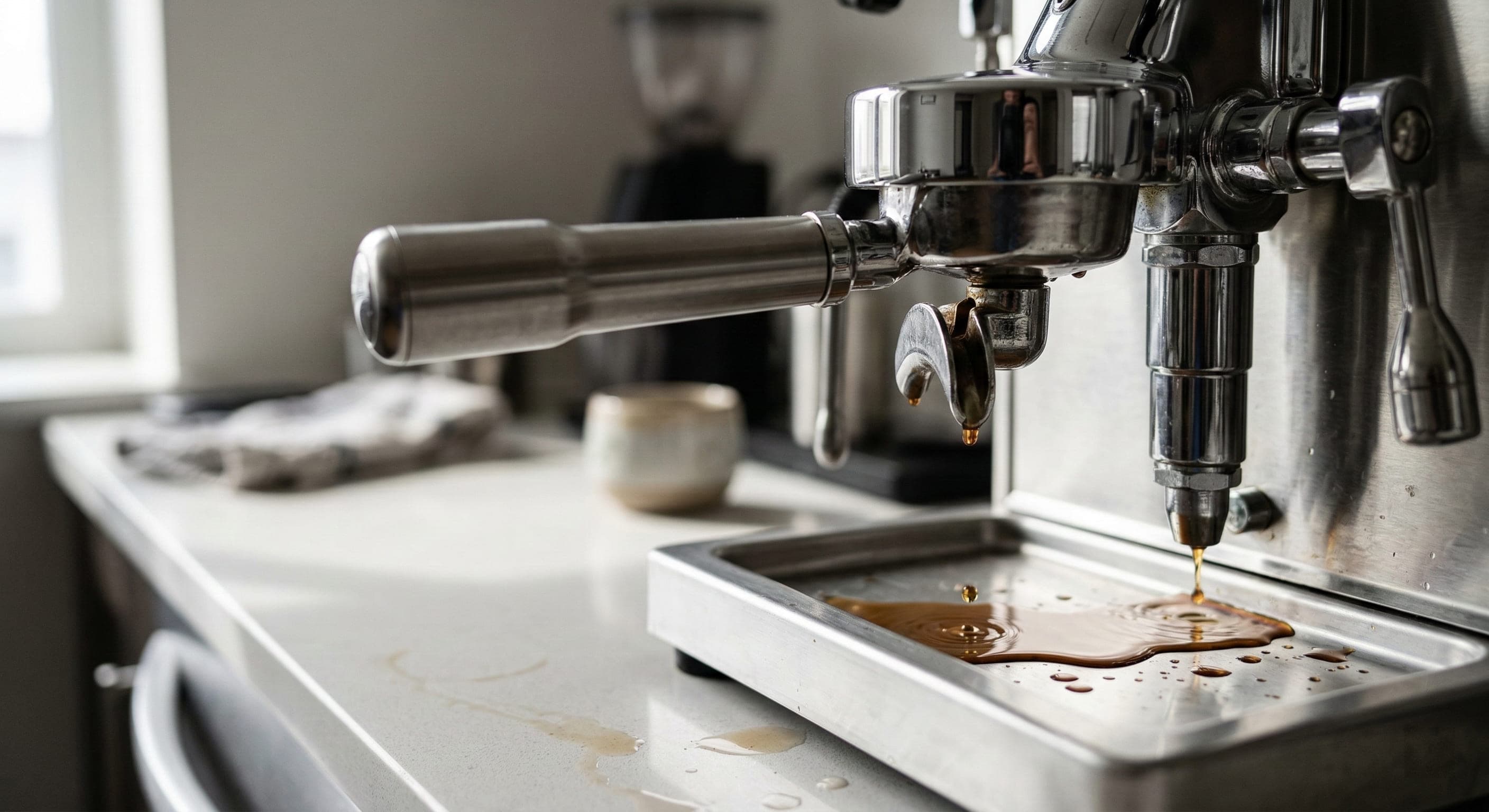
Purge and wipe every time, soak weekly.
Milk protein bakes on fast. Purge for a second or two and wipe straight after steaming. If the jet looks uneven, clear the tip holes with a steam wand brush or straightened paperclip. Still not frothing? See why a steam wand stops frothing.
Common errors and the fix.
| Mistake | Fix |
|---|---|
| Skipping backflush because it seems fine | Oil builds unseen; backflush on schedule |
| Water left in the drip tray for days | Empty and rinse every 1–2 days |
| Scraping the shower screen with metal | Use a soft brush or plastic pick |
Coffee oils go rancid and minerals form scale, and both end up in your cup.
Every shot leaves oils and fine particles in the group head, shower screen and portafilter. Those oils oxidise into a bitter, stale film. Meanwhile, hot water leaves limescale in the boiler and pipes, which slows flow, changes brew temperature and eventually clogs the machine.
Milk residue in the steam wand is a food-safety issue as well as a flavour issue, because warm milk feeds bacteria quickly. Cleaning therefore has three separate targets: oils (group and basket), milk (steam wand) and minerals (descaling). Each needs a different product.
Purpose-made products and a few quick habits replace guesswork and harsh chemicals.
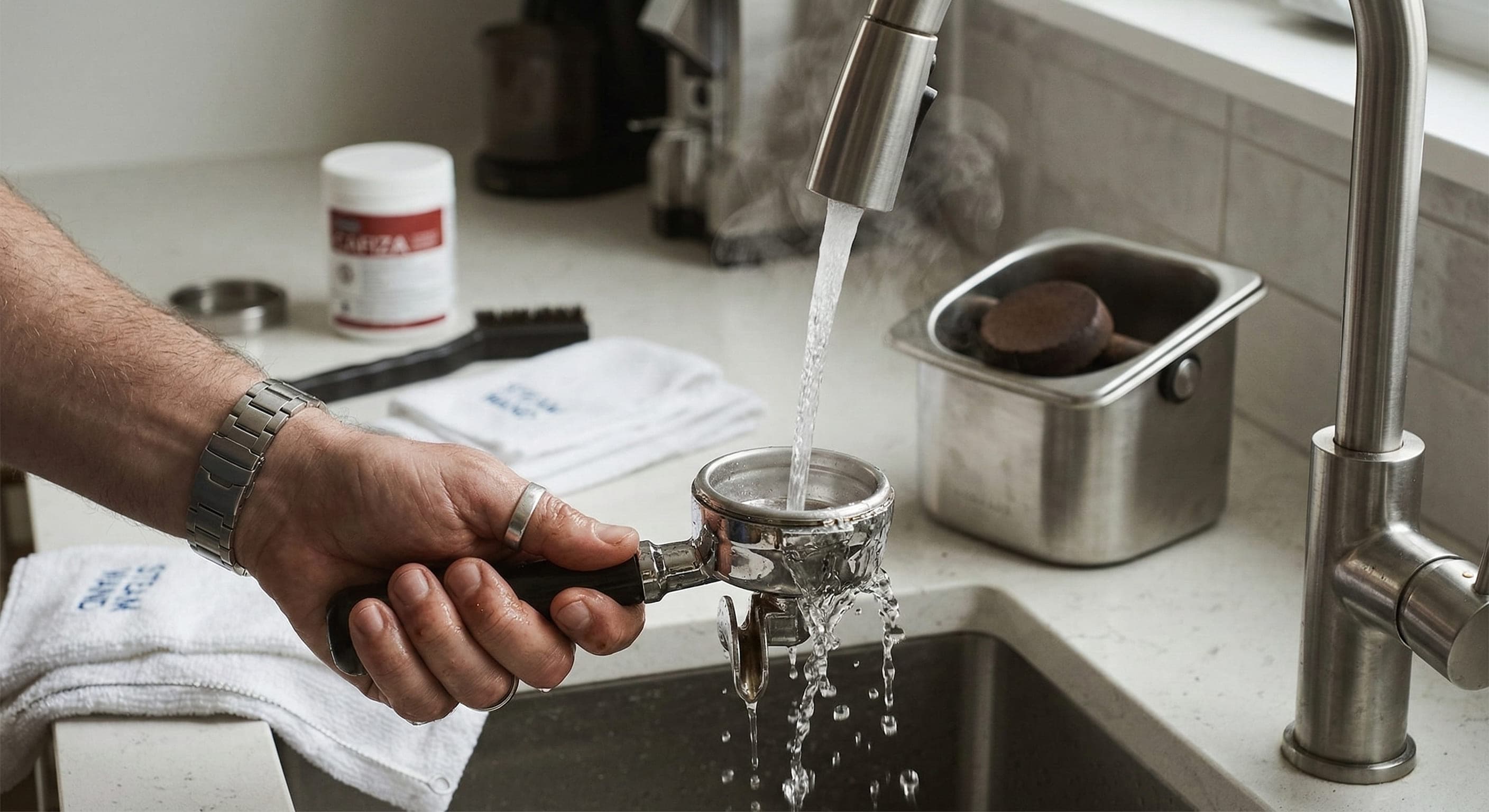
For the full care schedule, see espresso machine maintenance.
The routine depends on the valve, the milk system and the brew group.
| Machine type | Daily | Weekly | Every 1–3 months |
|---|---|---|---|
| Semi-automatic with three-way valve | Flush group, purge and wipe wand, rinse basket | Backflush with cleaner, soak basket and portafilter | Remove and clean shower screen, descale |
| Semi-automatic without three-way valve | Flush group, purge and wipe wand | Scrub group head and shower screen, soak basket | Descale |
| Super-automatic | Empty grounds and drip tray, rinse milk system | Remove and rinse brew group if removable | Cleaning tablets and descaling programme |
| Capsule machine | Empty capsules and drip tray | Run a water-only cycle | Descale |
Semi-automatic with three-way valve
Semi-automatic without three-way valve
Super-automatic
Capsule machine
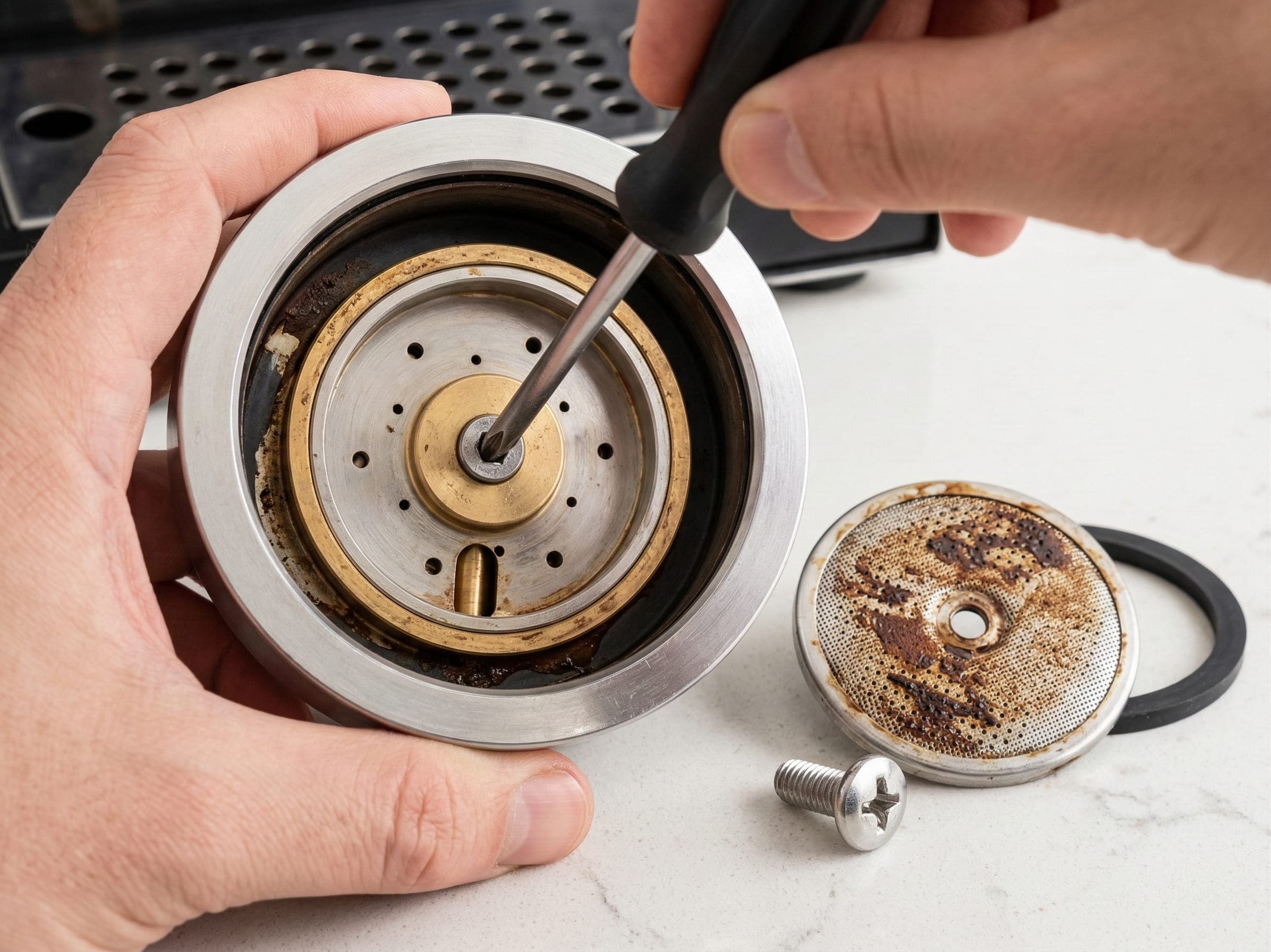
Check your manual before backflushing. Machines without a three-way solenoid valve should not be backflushed, because the pressure has nowhere to escape safely. Our cleaning tablets guide explains which products suit each type.
Whatever the type, wipe the group gasket and the rim of the portafilter after the last shot of the day, so dried coffee does not stop the portafilter sealing properly.
Purge before and after, and wipe immediately.
Purge the wand for a second before steaming to clear condensed water.
Wipe the wand with a damp cloth straight after steaming, before the milk dries.
Purge again for a second or two to blow out milk drawn back into the tip.
Once a day, soak the tip in hot water or a milk system cleaner and clear the holes with a pin if needed.
If the wand still smells sour, remove the tip and soak it separately.
Dried milk inside the wand is the most common reason steaming gets weaker over time. It also harbours bacteria, so wand cleaning matters for hygiene as well as performance. Our steam wand not frothing milk guide covers what to do if the wand is already blocked.
Use a separate cloth for the steam wand so milk residue does not spread to the group or the drip tray.
Taste and flow tell you before the machine does.
Any of these means clean now rather than waiting for the schedule. Our espresso machine maintenance guide has a complete schedule, and how to descale a coffee machine covers scale.
Keep a note of when you last backflushed and descaled; it makes the schedule easier to stick to.
Cleaners, and when to replace the machine.
Cleaning powder
Pick it if you dislike measuring: Buy tablets. Buy powder for the lowest cost per clean.
Cleaning tablets
Pre-measured tablets for backflushes and soaks.
Affiliate links: we may earn a commission at no extra cost to you.
Compare options in the cleaning tablet guide; for a full calendar see espresso machine maintenance. Machine hard to keep clean? Easy-access drip trays and removable shower screens help; see best espresso machines.
Quick answers before you buy.
Likely leftover cleaner.
Run five water-only cycles, then pull one or two blank shots.
Yes.
Filtered water reduces limescale but not coffee oils.
Rinse the portafilter and wipe the steam wand daily, backflush with water weekly, and do a powder backflush monthly.
Heavy use or milk drinks may need more often.
Cleaning removes coffee oils and milk residue; descaling removes limescale inside the boiler and pipes.
You need both.
See how to descale.
Only machines with a three-way solenoid valve need backflushing, and it needs a blind basket.
Check your manual first; many pod, single-boiler or non-solenoid machines should not be backflushed.
Avoid it for routine cleaning.
Vinegar leaves a strong taste and can harm seals; use a coffee-machine cleaner instead.
See the cleaning tablet guide.
Keep reading: more guides on the same topic.
 How to
Maintenance6 min read
How to descale a coffee machine: drip, Nespresso, Keurig or espresso steps, vinegar vs descaler, and how often to descale.
 How to
Maintenance6 min read
Best coffee machine cleaning tablets for espresso, bean-to-cup and drip machines: which to buy for yours and how to use them.
 How to
Maintenance6 min read
Descale a Breville Barista Express step by step: entering descale mode, running the group, steam and hot water, rinsing, and what the Clean/Descale light means.
 How to
Maintenance6 min read
Espresso machine maintenance schedule: daily, weekly and monthly cleaning tasks, backflushing, gasket care and descaling by water hardness.
Reader questions
Questions or tips? Leave a comment
Ask about your setup or share what worked for you. Comments are checked before they appear.