
Best for portafilter machines
Cafiza Espresso Machine Cleaner Tablets
Dissolves rancid oil from group heads and baskets at the lowest cost per tablet. Not for super-automatics or pods.
Maintenance Guides
Last updated
Best coffee machine cleaning tablets for espresso, bean-to-cup and drip machines: which to buy for yours and how to use them.
Affiliate disclosure: this page contains Amazon affiliate links. We may earn a commission if you buy through them, at no extra cost to you, and it never affects our rankings. Read our full affiliate disclosure
Best coffee machine cleaning tablets by type: portafilter machine with a 3-way valve: buy Cafiza. Jura: use Jura tablets. De'Longhi, Philips or Melitta bean-to-cup: use the maker's tablets or Urnex Full-Circle. Tablets remove coffee oil, not limescale.
Pick by machine type.
Quick decision guide
You have a portafilter machine with a 3-way valve
buy Cafiza (or Puly Caff).
You have a bean-to-cup
buy the maker's tablets or Urnex Full-Circle.
You have a Nespresso or Keurig pod machine, or a portafilter machine with no solenoid valve
skip tablets. Pod machines scale rather than gather oil; soak the basket instead.
| Product | Price | Machine | Best for (recommended column) |
|---|---|---|---|
| Cafiza | ~$15-$20 / 100 | Espresso (backflush) | Oil removal, lowest cost per tablet |
| Puly Caff | ~$18-$25 / 100 | Espresso (backflush) | Premium alternative |
| Jura Tablets | ~$12-$16 / 25 | Jura only | Warranty compliance |
| Urnex Full-Circle | ~$14-$18 / 60 | Bean-to-cup | De'Longhi / Philips / Melitta |
| Impresa | ~$12-$15 / 60 | Espresso (backflush) | Lower upfront cost |
Cafiza
Puly Caff
Jura Tablets
Urnex Full-Circle
Impresa
Coffee oils build up where water and grounds touch.
Coffee contains oils that coat the brew group, spouts and internal tubing. Over time they turn rancid and add a bitter, stale note. Tablets contain detergents that dissolve these oils, which a plain water rinse does not remove.
Descaling is a different job. Limescale is mineral deposit from hard water and needs an acid-based descaler; tablets target oils and residue. Using the wrong one can leave scale behind or, in some machines, be ineffective. Super-automatics with milk systems also need separate milk-circuit cleaning.
The amount of oil depends on what you brew. Dark roasts and oily blends leave far more residue than light roasts, so a machine used mainly for dark espresso may need backflushing with a tablet more often than the general weekly guideline. Milk-heavy households need to clean the steam wand and any automatic milk system after every session, because milk residue spoils much faster than coffee oils. Paying attention to how quickly your shower screen darkens is the most reliable way to set your own schedule.
Match the product to the machine and the water.
Follow the machine maker's cleaning programme and use a tablet made for that type, such as a brew-group tablet for super-automatics or a backflush powder for machines with a three-way valve. Keep daily and weekly cleaning separate from descaling.
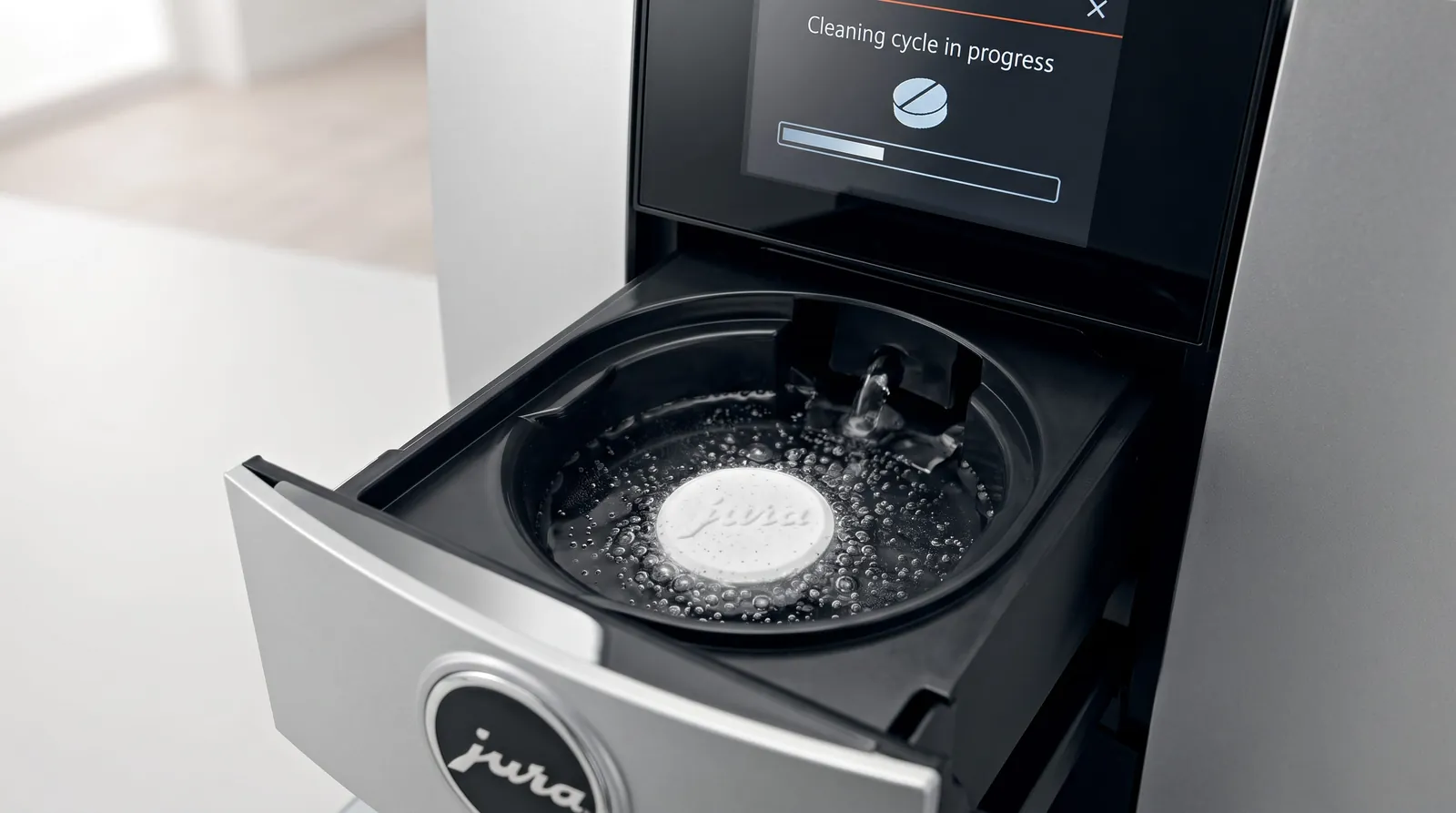
Water chemistry sets how often you need to descale: a filter jug or built-in water filter slows scale, while hard tap water speeds it up. Remove and rinse drip trays and brew groups where allowed, and always run clean water through afterwards so no cleaning residue ends up in the next cup.
Five options, each with the machine it suits.
Best for portafilter machines
Dissolves rancid oil from group heads and baskets at the lowest cost per tablet. Not for super-automatics or pods.
Premium alternative
Same job as Cafiza with a denser backflush foam; costs a little more.
Best for Jura
Third-party tablets can be the wrong size or dissolve rate for Jura cycles, and may affect warranty.
Best for De'Longhi, Philips, Melitta
Dissolves at a rate suited to slow automated cycles. Use the maker's tablets while in warranty; check tablet size in your manual.
Lower upfront cost
Costs more per tablet than Cafiza, but the 60-pack is cheaper to start and suits monthly cleaning.
Affiliate links: we may earn a commission at no extra cost to you.
No: they target different buildup, and most machines need both.
| Cleaning tablets | Descaler | |
|---|---|---|
| Removes | Coffee oil | Limescale |
| Target | Group head, basket, brew path | Boiler, pipes |
| Fixes | Bitter, stale taste | Slow flow, cool coffee |
| How often | Weekly to monthly | Every 1-6 months |
Removes
Target
Fixes
How often
For limescale, see how to descale a coffee machine. Barista Express owners can use our Barista Express descaling steps.
Steps differ by machine type.
Confirm a 3-way solenoid valve. If not, soak the basket instead.
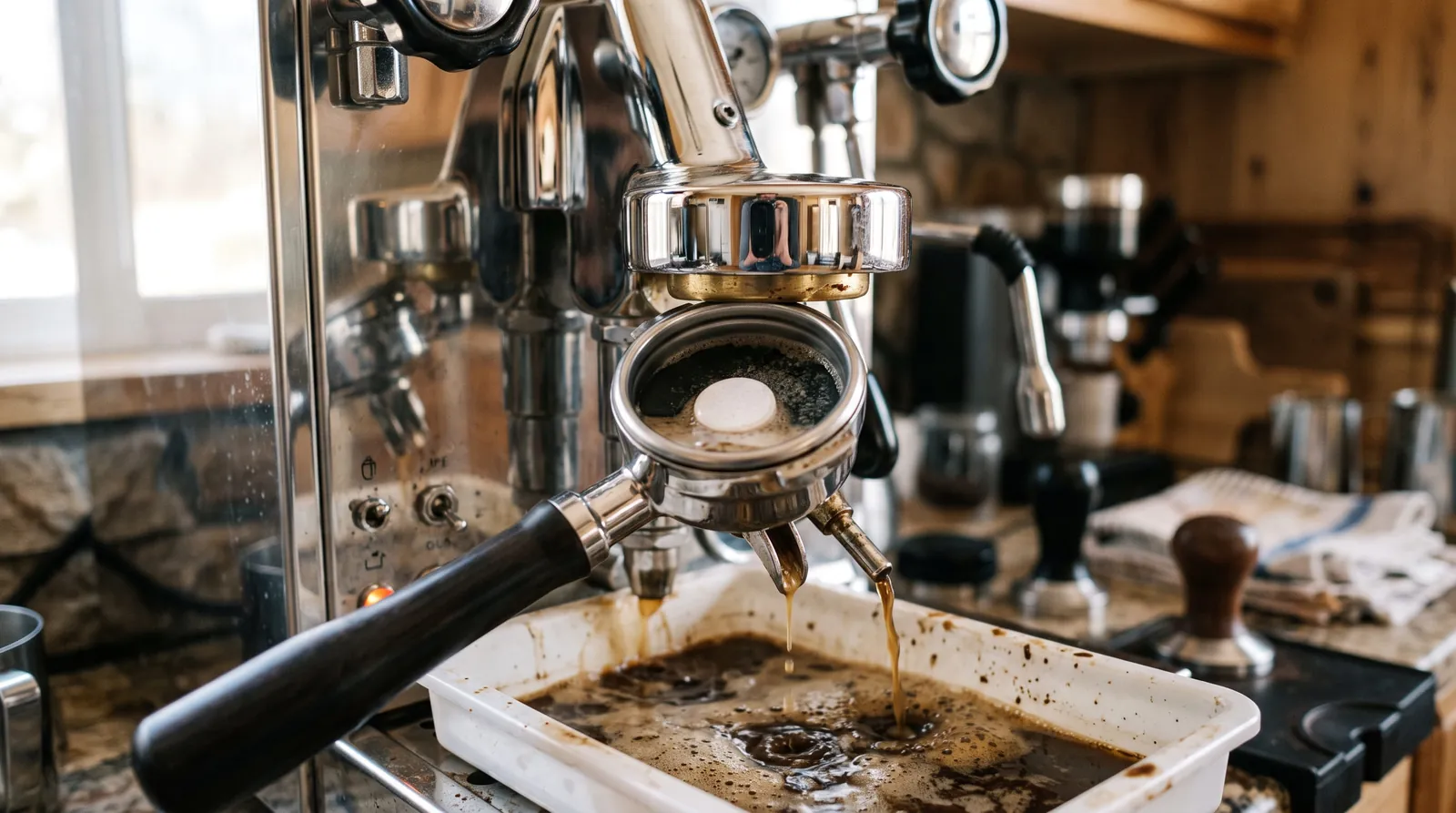
Add one tablet. To a blind basket and lock it in.
Run 5 cycles. Of 10 seconds on, 10 off.10 seconds
Rinse with plain water. In the blind basket until it runs clear.
Soak your regular basket. In hot water with half a tablet for 20 minutes.20 minutes
Wait for the cleaning indicator. (often every 200-300 brews).
Use the maker's or a confirmed-compatible tablet.
Follow the on-screen prompts.
Do not interrupt the 10-20 minute cycle. , which can trigger error codes.10-20 minute
For a monthly deep clean, dissolve one Cafiza tablet in a full reservoir of hot water and run a cycle with no coffee, then run two plain-water cycles.
Frequency depends on how much you brew.
| Machine | Light use | Heavy use |
|---|---|---|
| Espresso (backflush) | Monthly | Weekly |
| Jura | Indicator (~300 cycles) | Indicator (~200 cycles) |
| De'Longhi / Philips | Indicator | Indicator |
| Drip | Every 2-3 months | Monthly |
Espresso (backflush)
Jura
De'Longhi / Philips
Drip
Bitter or flat coffee with the same beans and grind is a sign to clean. See the maintenance schedule and cleaning guide.
Watch for signs that your schedule is too relaxed: a darker, sticky shower screen, coffee that tastes harsher from the same beans, slower or uneven flow from the group, or a super-automatic asking for cleaning more often than usual. Any of these means clean now and shorten the interval. It is far easier to keep a machine clean than to recover one that has built up months of residue.
It depends on whether the machine has a three-way valve.
| Machine type | Cleaning method |
|---|---|
| Semi-automatic with a three-way solenoid valve (most mid-range and higher machines) | Backflush with cleaning tablets or powder in a blind basket |
| Machines without a three-way valve (many entry-level models) | No backflushing; soak the basket and portafilter, scrub the group head and shower screen |
| Super-automatic (bean-to-cup) | The maker's brew-group tablets in the built-in cleaning programme |
| Pod and capsule machines | Usually no tablets; regular water rinses and descaling |
Check your manual before backflushing. Forcing a backflush on a machine without a three-way valve can push coffee and water back into parts that are not designed for it. If you are unsure which type you have, our espresso machine maintenance guide explains how to tell, and how to clean an espresso machine covers the routine for both types. Still choosing a machine? Our top beginner espresso machines guide compares semi-automatic, super-automatic and capsule options, so you know which cleaning routine you are signing up for.
Pod machines such as the Keurig K-Elite and Nespresso Vertuo are the one case where you can skip tablets altogether; their maintenance is rinsing plus descaling, and nothing else.
Taste goes first; parts and warranty can follow.
Coffee oils build up on the shower screen, inside the group head and in the brew group of super-automatics. Within weeks they go stale and add a bitter, rancid edge to every shot, which many people mistake for bad beans. Over months, the residue can partly block the shower screen and valves, so water flows unevenly and shots channel. In super-automatics, a neglected brew group can stick or clog, and some makers note that damage from skipped cleaning is not covered by the warranty.
Generic tablets from reputable brands work well in many machines, but for super-automatics follow the manufacturer's guidance on compatible tablets, especially while the machine is under warranty. If your coffee already tastes bitter even with fresh beans, see how to fix bitter espresso before changing anything else.
Keep the different cleaners for their own jobs. Backflush tablets and powders dissolve coffee oils in the group head; milk system cleaners remove milk proteins from steam wands and automatic milk frothers; grinder-cleaning pellets absorb oils from burrs; and descalers dissolve mineral scale. Using one in place of another either does nothing or, in the case of descaler in a brew group, can be harmful. A simple routine is a daily rinse, a weekly tablet backflush or brew-group clean, milk cleaner whenever you use the milk system, and descaling when the machine asks or every few months with hard water.
Four that damage machines or taste.
Quick answers before you buy.
Many super-automatics ask you to remove or bypass the filter during cleaning.
Check your manual for your model.
No. Pod machines have no portafilter or brew-group to backflush, and tablet cleaners are not designed for them.
Use the maker's descaler and cleaning routine instead, as in the Nespresso Vertuo review.
No, they dissolve coffee oils, not mineral scale.
Use a descaler for that, as covered in how to descale a coffee machine.
Some are, but only if the brand states compatibility with your model.
Super-automatics can throw errors with the wrong chemistry, so check your manual before switching.
Coffee oils go rancid and build up, causing bitter, flat or sour-tasting coffee and eventually clogged parts.
Regular cleaning, as in espresso machine maintenance, prevents it.
For a portafilter machine, you can backflush with plain water between tablet cleans.
For deep cleaning, a purpose-made cleaner works far better than vinegar, which can harm seals and leaves a smell.
Keep reading: more guides on the same topic.
 How to
Maintenance6 min read
How to clean an espresso machine: daily, weekly and monthly steps for the portafilter, group head, steam wand and backflush.
 How to
Maintenance6 min read
Espresso machine maintenance schedule: daily, weekly and monthly cleaning tasks, backflushing, gasket care and descaling by water hardness.
 How to
Maintenance6 min read
How to descale a coffee machine: drip, Nespresso, Keurig or espresso steps, vinegar vs descaler, and how often to descale.
Reader questions
Questions or tips? Leave a comment
Ask about your setup or share what worked for you. Comments are checked before they appear.