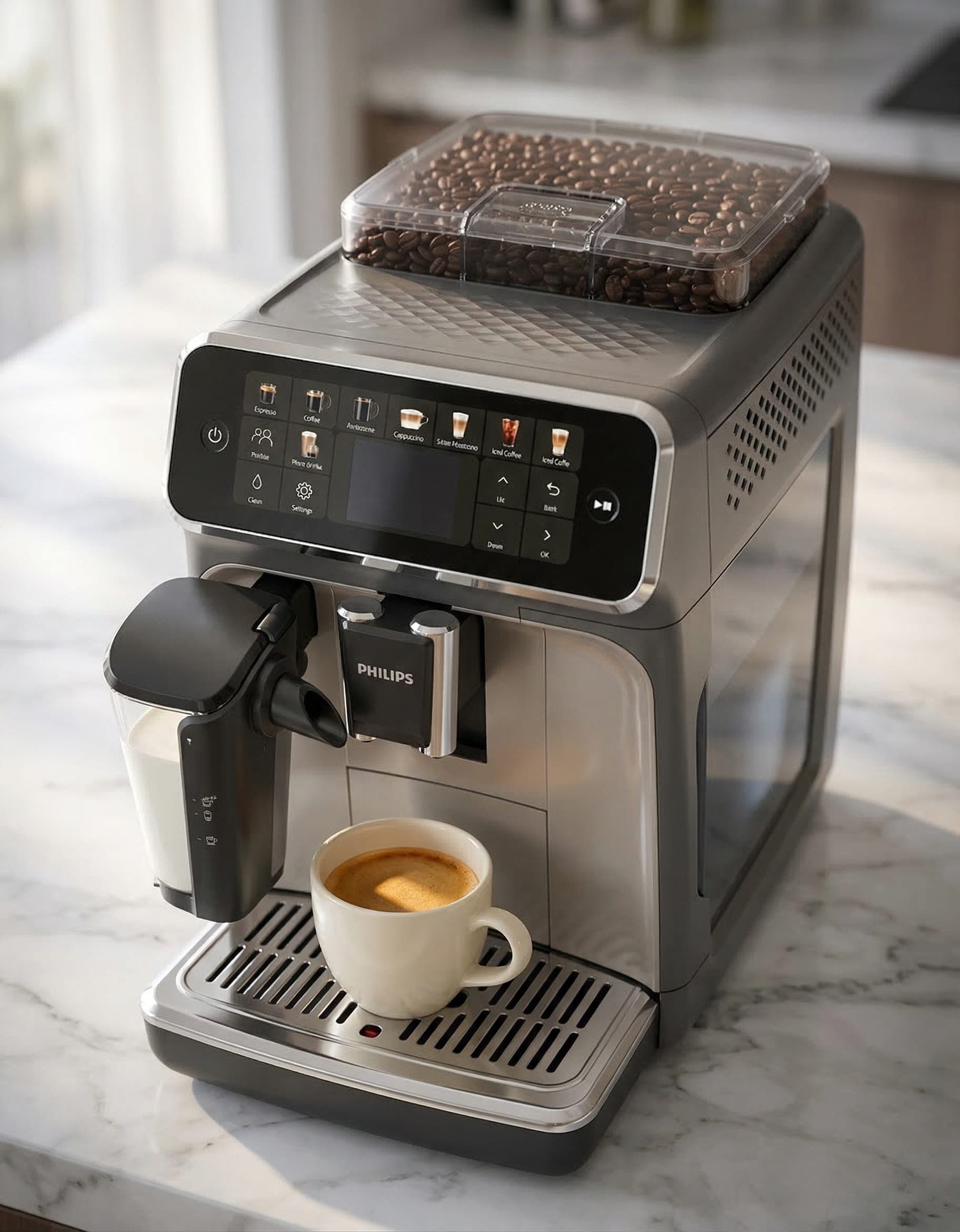
Espresso Machines review
Philips 5500 Review: Lattes, Zero Technique
Philips 5500 Series review: can a super-automatic espresso machine make lattes with zero technique? LatteGo milk and ceramic grinder tested over 180+ drinks.
- By Michael Anderson
- Updated October 8, 2026
- 22 min read
- Independently tested: 180+ shots over 45 days
Philips 5500 Series at a GlanceRecommended
The best super-automatic under $900 for convenience-first households, but a poor fit if you want control over the shot.
Super-Automatic Bean-to-Cup Espresso Machine
Affiliate link: we may earn a commission at no extra cost to you. It never affects our rating.
- 25 seconds
- Heat-up time
- 12
- Programmable recipes
- 1.8L
- Water tank
In the shot log· 180+ drinks · 45 days
Why it stands out
- 25-second heat-up from cold
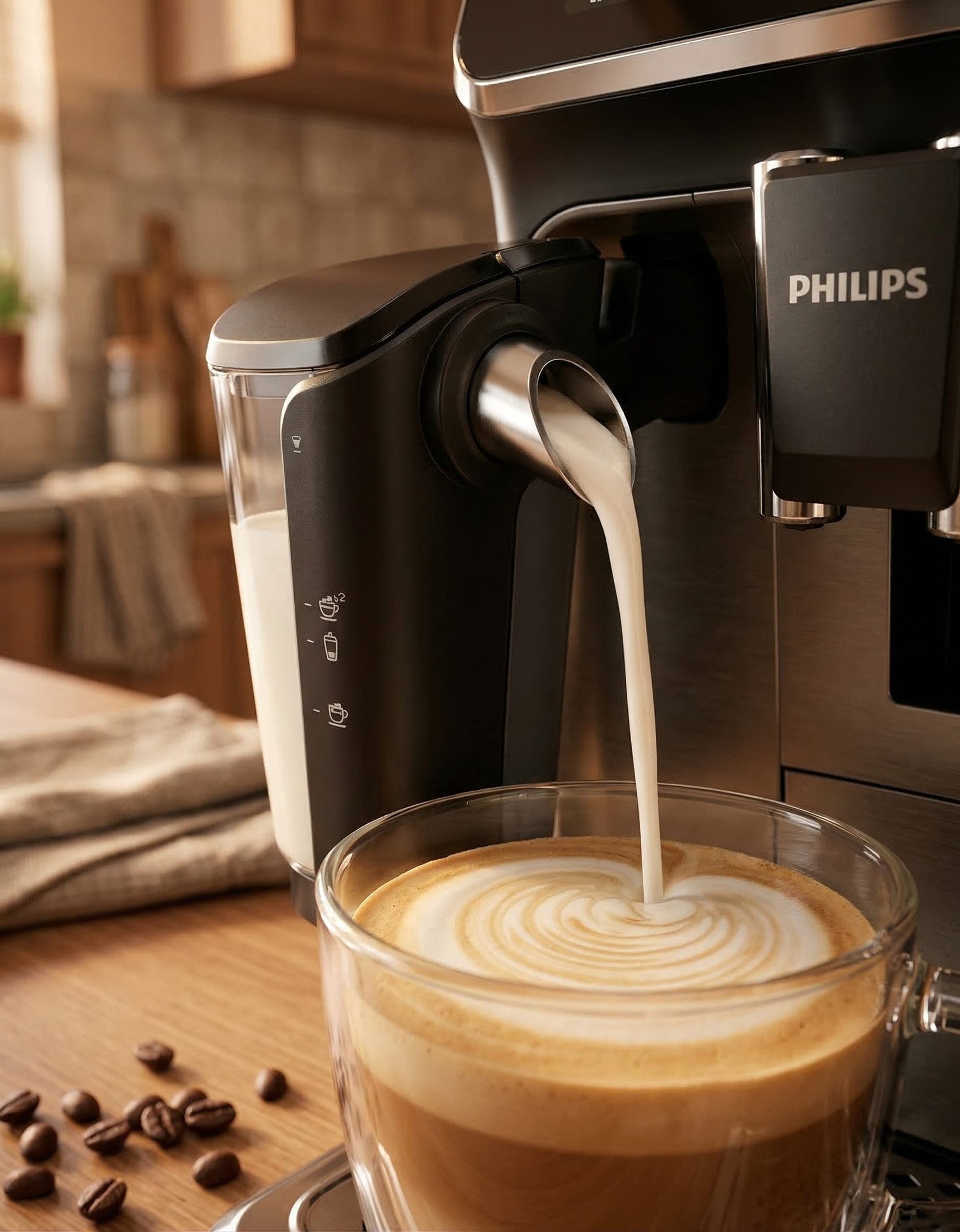
- LatteGo milk system rinses automatically and is dishwasher-safe
- Consistent shots across back-to-back drinks
Watch out for
- No manual extraction control or adjustable brew temperature
- Light roast beans give mediocre results
✓ Best for
Busy professionals wanting fresh-ground espresso without technique learning
✕ Skip if
Manual espresso enthusiasts who want extraction control
Super-automatics that claim café-quality results deserve skepticism, because most trade real espresso quality for push-button convenience without saying so. We tested the Philips 5500 Series EP5544/90 for 45 days to see where it actually lands.
The short answer: it's the best super-automatic under $900 for households that want fresh-ground coffee without technique, and a poor fit for anyone who wants control over the shot.
- What held up: Shot quality stayed consistent across back-to-back drinks, with no thermal drop until 15+ consecutive.
- Easy to live with: LatteGo rinses automatically and the touch display keeps things simple for first-time users.
- Where it fell short: Light roast beans give mediocre results, and there's no manual extraction control or adjustable brew temperature.
- Who should look elsewhere: Espresso purists, who are better served by a semi-automatic.
Who Is This Right For?
Check where you fit before you look at the trade-offs below.
A strong match
It suits you if you are
- Busy professionals wanting fresh-ground espresso without technique learning
- Households making 3–6 drinks daily across different preferences
- New espresso drinkers who find semi-automatics intimidating
- Anyone fed up with Nespresso pods and wanting real beans
- Small offices wanting a low-maintenance quality machine
- Latte and cappuccino fans — LatteGo is excellent for milk drinks
Consider something else
Look elsewhere if you are
- Manual espresso enthusiasts who want extraction control
- Anyone prioritizing shot quality above convenience
- Budget buyers under $600 (better options at that tier)
- Home baristas interested in latte art or milk texturing technique
- Users already owning a good grinder and semi-auto setup
- Skill level
- Beginner-friendly — fully automatic bean-to-cup workflow with one-touch drink selection and no manual dialing-in.
- Drink style
- Espresso, americano, cappuccino, and latte via the LatteGo automatic milk system — a wide drink range without any hands-on milk technique.
- Upgrade path
- Buyers who outgrow the automated workflow and want extraction control should move to a semi-automatic with a separate grinder; those who just want more drink customization can look at the Jura E8.
Pros & Cons
What earns the rating, and what you give up to get it.
8 reasons it works
Pros
- 25-second heat-up from cold — fastest in this price tier
- LatteGo milk system: automatic rinse, dishwasher-safe, easy
- 5 ceramic burr grind settings with real differences between them
- 12 fully programmable drink recipes with memory
- Consistent shot quality across back-to-back drinks (no thermal drop until 15+ consecutive)
- AquaClean filter system dramatically reduces descaling frequency
- Large 1.8L water tank and 200g bean hopper for daily use
- Clean, intuitive touch display — minimal confusion for first-time users
7 trade-offs to weigh
Cons
- No manual extraction control — tamp pressure and temp are fixed, and dose is only adjustable indirectly via the 5 strength settings
- Light roast beans produce mediocre results (optimize for medium/dark roast)
- Proprietary grinder can't be replaced with external unit
- Factory espresso dose (~8–10g) is lighter than specialty coffee standards
- Almond milk and thin non-dairy alternatives foam poorly
- No PID temperature control or user-adjustable brew temp
- Grinder noise is audible at 68–72 dB — not silent in open kitchens
Convinced by the pros? Check today's Amazon price — it regularly goes on sale.
Current price: $799-$849
Real-World Testing
How it performed in day-to-day use, in the order you will meet it.
Setup & Learning Curve
Out of the box, the 5500 was pulling drinks in under 10 minutes. There's effectively no learning curve.
- Setup: fill the 1.8L tank, load the 200g hopper, run the roughly 3-minute priming cycle, and it's ready.
- Heat-up: from a cold start it ran a consistent ~25 seconds to first drink. That's faster than the Gaggia Classic Pro (5–8 minutes) or even the Breville Barista Touch Impress (a few seconds of ThermoJet heat-up plus a quick blank shot).
- Controls: the touch display walks you through drink selection, and the priming/rinsing prompts are self-explanatory. Anyone who has used a Nespresso machine will feel at home within a day.
- The adjustment: the main one is trusting the automation. You're not dialing in a grind or timing a shot, you're picking a drink and waiting under a minute.
For a household replacing a pod machine or a basic drip maker, this is about as frictionless as bean-to-cup coffee gets.
Shot Extraction Performance
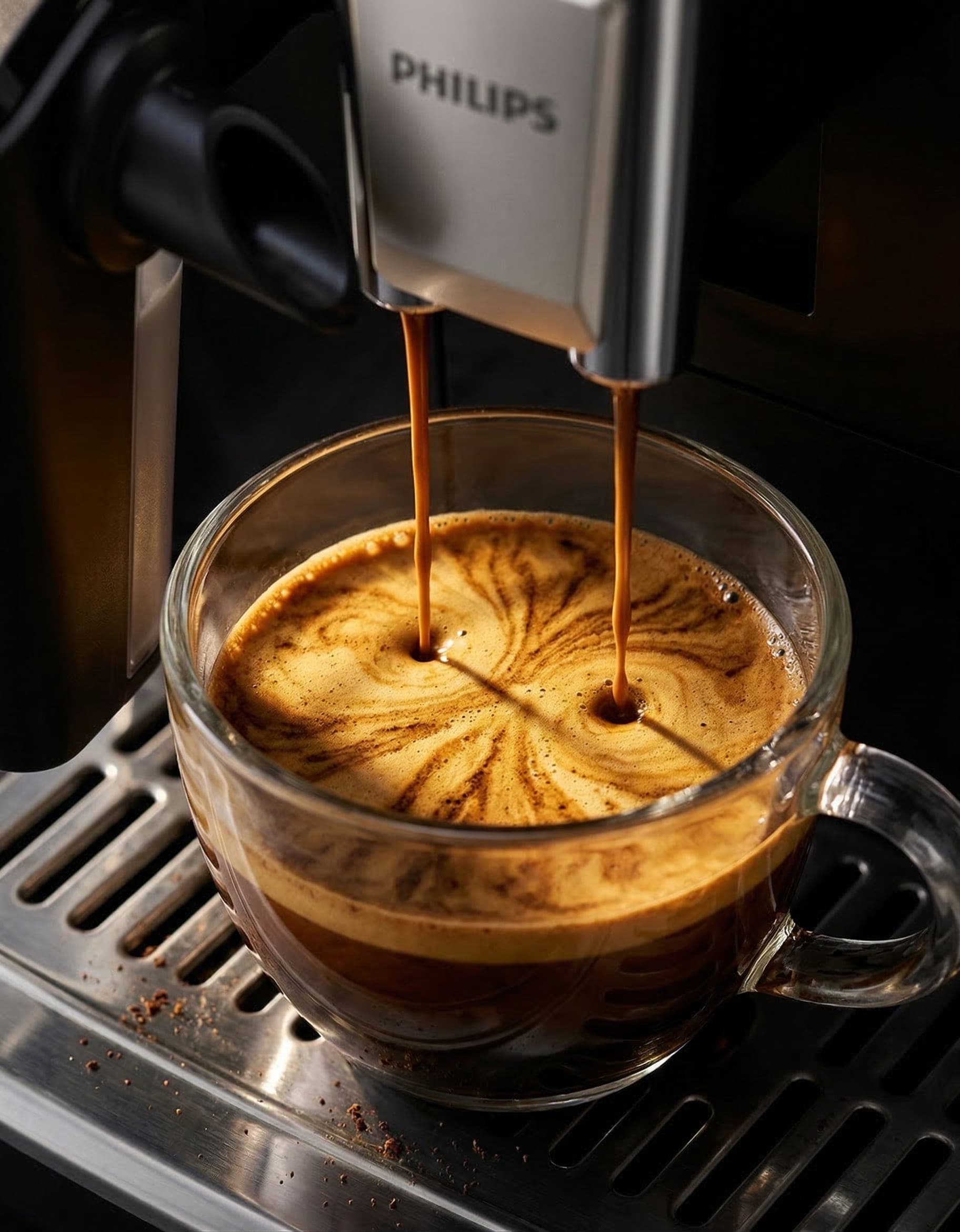
Pulling a double at strength setting 3, grind setting 2, with a medium-roast Colombian, extractions ran 22–25 seconds with a golden-amber crema that held for roughly 60–90 seconds. That's competitive for a super-automatic.
- Grind settings: the five are meaningfully different from each other. Setting 1 pushed extraction past 32 seconds (bitter, over-extracted) and setting 5 ran through in 18 seconds (thin, under-extracted). Settings 2–3 were the sweet spot for medium roasts and 3–4 for darker roasts.
- Light roasts: a natural Ethiopian struggled at every setting and came out sour. The fixed dose and automated tamping aren't built for the fine grind light roasts need.
- Heat recovery: in a 20-drink stress run, extraction time crept up by about 3 seconds after roughly 15 consecutive drinks, recovering fully after a 5-minute rest. Worth knowing if you're hosting or running this in an office.
Milk Steaming Experience
LatteGo is the standout feature. Clip the carafe on, pick a milk drink, and the machine draws, froths, and pours in one motion. Cleanup is a 2–3 second automatic rinse rather than purging and wiping a steam wand.
- Dairy: with whole milk, foam was consistently smooth and pourable, suitable for layered lattes and cappuccinos. It's not competition-grade microfoam (the bubble structure is coarser than hand-steaming on a commercial wand), but well above what most integrated frothers produce.
- Plant milks: Oat milk (Oatly Barista Edition) foamed reliably. Standard oat and unsweetened almond milk gave thin, inconsistent results because LatteGo needs some protein/fat body to build foam. Soy (barista edition) was acceptable but a step below dairy and Oatly.
- Cleanliness: after roughly 90 milk drinks, the carafe showed no staining or odor, a real advantage over wand-style frothers, which need more frequent deep cleaning.
Build Quality & Daily Workflow
Averaging four drinks a day, the bean hopper lasted about 5 days and the water tank needed refilling every 1–2 days.
- Build: the chassis feels solid for the price, heavier than entry-level super-automatics, and the brew unit slides out smoothly with no signs of wear after extended use.
- Programs: the 12 one-touch programs cover the basics well, but in practice most households will settle on 4–5 regulars. The personalized recipe slots are where daily convenience really shows (we set up a custom long black once and never touched it again).
- AromaExtract: Philips' system for varying brew profile by drink type produces a noticeable difference between the espresso and lungo programs. It's not semi-auto-level nuance, but more than a simple volume change.
- Maintenance: low-effort. Wipe the drip tray weekly, rinse LatteGo automatically after every drink, and empty the grounds bin roughly every 8–12 drinks.
Philips 5500 vs Philips 3200, Jura E8 and a semi-automatic setup
Which step up or down makes sense for your household
The closest comparison is the Philips 3200 LatteGo. It shares the LatteGo milk system, so the 5500's extra money buys drink variety (12 programs against 5) and more personalization rather than a different style of milk drink. If your household settles on espresso, a latte and a cappuccino, the cheaper machine is the more rational purchase.
| Machine | Type | Heating system | Built-in grinder | Current price |
|---|---|---|---|---|
| Philips 5500 | Super-automatic | not listed | Yes (ceramic burr) | Check current price |
| Philips 3200 LatteGo | Super-automatic | not listed | Yes (ceramic burr) | Check current price |
| Jura E8 | Super-automatic | Single thermoblock | Yes (ceramic burr) | Check current price |
| De'Longhi Magnifica | Super-automatic | Thermoblock | Yes (ceramic conical burr) | Check current price |
| Barista Touch Impress | Semi-automatic | ThermoJet | Yes | Check current price |
The Jura E8 is the usual step-up comparison for people who want more drink customization. Read both reviews side by side and weigh price, milk-system cleaning and the drinks your household actually orders, because the 5500's case rests on a 2-3 second automatic rinse and a 25-second heat-up.
The De'Longhi Magnifica is worth a look if you want another bean-to-cup machine in the same broad category.
The other direction is a semi-automatic. The Breville Barista Touch Impress offers guided assistance, and the Gaggia Classic Pro gives manual control but takes much longer to heat and needs a separate grinder. Those machines reward patience with control over the shot. The 5500 rewards a household that wants the same result every morning without thinking about it.
For a wider shortlist, see our best espresso machines guide.
Is the Philips 5500 worth $799-$849 for a busy household?
The price makes sense when you count what you stop buying and doing. Compared with a pod machine, you move to fresh beans. Compared with a semi-automatic, you skip the separate grinder, the tamping routine and the steam-wand cleanup, all of which cost money and morning minutes.
The value case is weakest for two kinds of buyer. If you drink mostly straight espresso and care about a concentrated, syrupy shot, the lighter factory dose will bother you, and the same budget spent on a semi-automatic and a good grinder would likely suit you better. If you make one or two drinks a day, the cheaper 3200 covers the basics.
The value case is strongest for households making several milk drinks a day, because LatteGo's quick rinse removes the chore that makes people give up on milk drinks at home. That is the practical reason the 5500 earns a 4.4 rather than a lower score: it removes friction, and friction is why many home machines gather dust.
One honest caveat on ownership. The lifespan range of 5-8 years is owner-reported, not something a 45-day test can confirm, so treat it as a reasonable expectation rather than a guarantee.
What the Philips 5500 specs mean in daily use
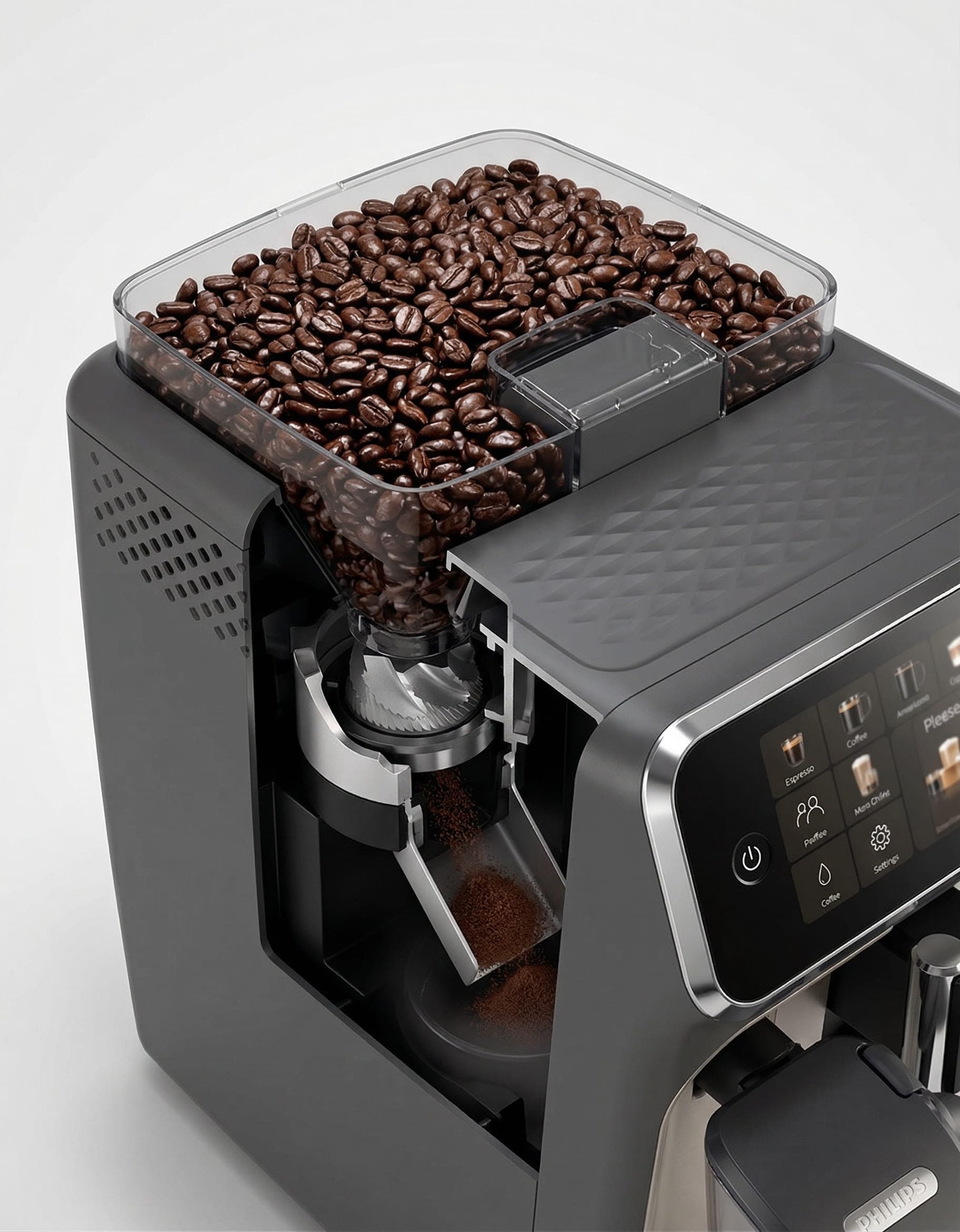
- Ceramic burr grinder: ceramic does not heat up as steel can, which helps when several drinks are made back to back. The trade-off is that you cannot swap in a better grinder, so what ships is what you live with.
- 5 strength settings and 5 grind settings: easy to understand and meaningfully different, which suits beginners. People who want to tune dose and grind independently, as in a semi-automatic, will find the range limiting.
- Bypass doser: lets you run a pre-ground coffee, which is the practical route for decaf without contaminating your main hopper.
- 1.8L tank and 200g hopper: sized for a household, not a café. Smaller households will refill the tank less often than a four-drinks-a-day household.
- AquaClean filter: the filter stretches descaling intervals, so it saves effort, but it is a consumable you need to replace on schedule.
- Touch display and memory: the interface is simple enough that guests can use it, which matters in shared kitchens and small offices.
The pattern is consistent: this machine makes fewer decisions available so the result stays repeatable. That is a feature for most buyers and a limitation for a few.
Who should skip the Philips 5500 Series?
Skip it if you drink light-roast single origins, since the fixed basket and automated tamping are calibrated for medium and dark roasts. Skip it if you want to learn milk texturing or latte art, because LatteGo produces the foam for you. Skip it if you already own a good grinder, as that investment is unused in a bean-to-cup machine.
Also reconsider it if your kitchen is open-plan and noise-sensitive: the grinder is audible. And if you are under about $600, our best espresso machines under $500 guide covers options that fit that budget better.
When you set it up, follow the maintenance steps in our how to descale a coffee machine guide so the filter and descaling schedule do not catch you out.
How it works and why it matters
Ceramic grinder, brew group and LatteGo: programmable drinks with fixed extraction
The 5500 grinds with ceramic burrs that can be adjusted across settings, tamps in a removable brew group and extracts at a fixed temperature. Ceramic burrs generate less heat than steel, which protects aroma.
LatteGo whips milk in a chamber without tubes, so cleanup is a rinse and there is no milk line to descale. More drink profiles can be saved, which helps households where people want different strengths without resetting every time.
The practical limit is that dose, tamp and temperature are not adjustable in the way a manual machine allows. See the machine types guide.
Common problems and modern fixes
Scale, grinder jams and milk residue: common ownership issues and the current fixes
Flat or thin drinks: move one grind step finer and raise strength. The grind size chart shows direction.
Brew group residue: rinse the group weekly and let it dry. See the cleaning guide.
Scale: the filter cartridge extends time between descales; follow the descaling guide.
Oily or flavored beans: these gum up grinders. Medium roasts work best.
Milk residue: rinse the LatteGo parts after every use and wash them in the dishwasher. If foam falls flat, read milk frothing fixes.
Maintenance: the maintenance guide helps plan a schedule.
Before you decide
What Actually Matters in Super-Automatic Espresso Machines
Super-automatic espresso machines live and die by four things: grinder quality, milk system design, maintenance simplicity, and drink consistency shot-to-shot. The Philips 5500 hits all four reasonably well at its price point.
- Grinder: the ceramic burr grinder is the right call for daily convenience use. Ceramic doesn't heat up the way steel burrs do, which matters when grinding back-to-back.
- Grind range: the 5 grind settings differ noticeably from each other (some machines have 5 'settings' that are nearly identical).
- Milk system: the LatteGo is the standout feature. Compared to attached milk wands or separate frother jugs on competing machines, the integrated design is meaningfully more practical.
Where the 5500 falls short is extraction control. Super-automatics pre-dose, pre-tamp, and extract automatically, which means you're trading customization for repeatability. The 5500 does its job well within those constraints, but coffee lovers who want to experiment with ratios, temperatures, or pre-infusion should look at a semi-automatic.
Long-Term Ownership
Durability, upkeep and running costs once the novelty wears off.
- Durability
The chassis feels robust for the price — heavier than entry-level super-automatics, with a brew unit that slides out smoothly and shows no wear from extended testing.
More detail
The LatteGo carafe is BPA-free plastic, which reads as consumer-grade next to the brew unit but makes sense given it needs to be dishwasher-safe.
- Reliability
Philips super-automatics have a solid reliability track record among long-term owners, with an expected lifespan around 5–8 years at moderate use (3–5 drinks/day).
More detail
The removable brew unit is the main serviceable part, and Philips sells replacements directly.
- Parts
AquaClean filters and brew unit replacements are widely available on Amazon, and Philips' North American parts support is generally good.
More detail
The official descaling solution works, though citric acid is a cheaper substitute.
- Upkeep
Lower than any semi-automatic on the market.
More detail
LatteGo rinses automatically in 2–3 seconds, the grounds bin prompts for emptying every 8–12 drinks, and the AquaClean filter stretches descaling to roughly 5,000 cups. Weekly upkeep is a drip-tray wipe; monthly, a quick rinse of the brew unit under running water.
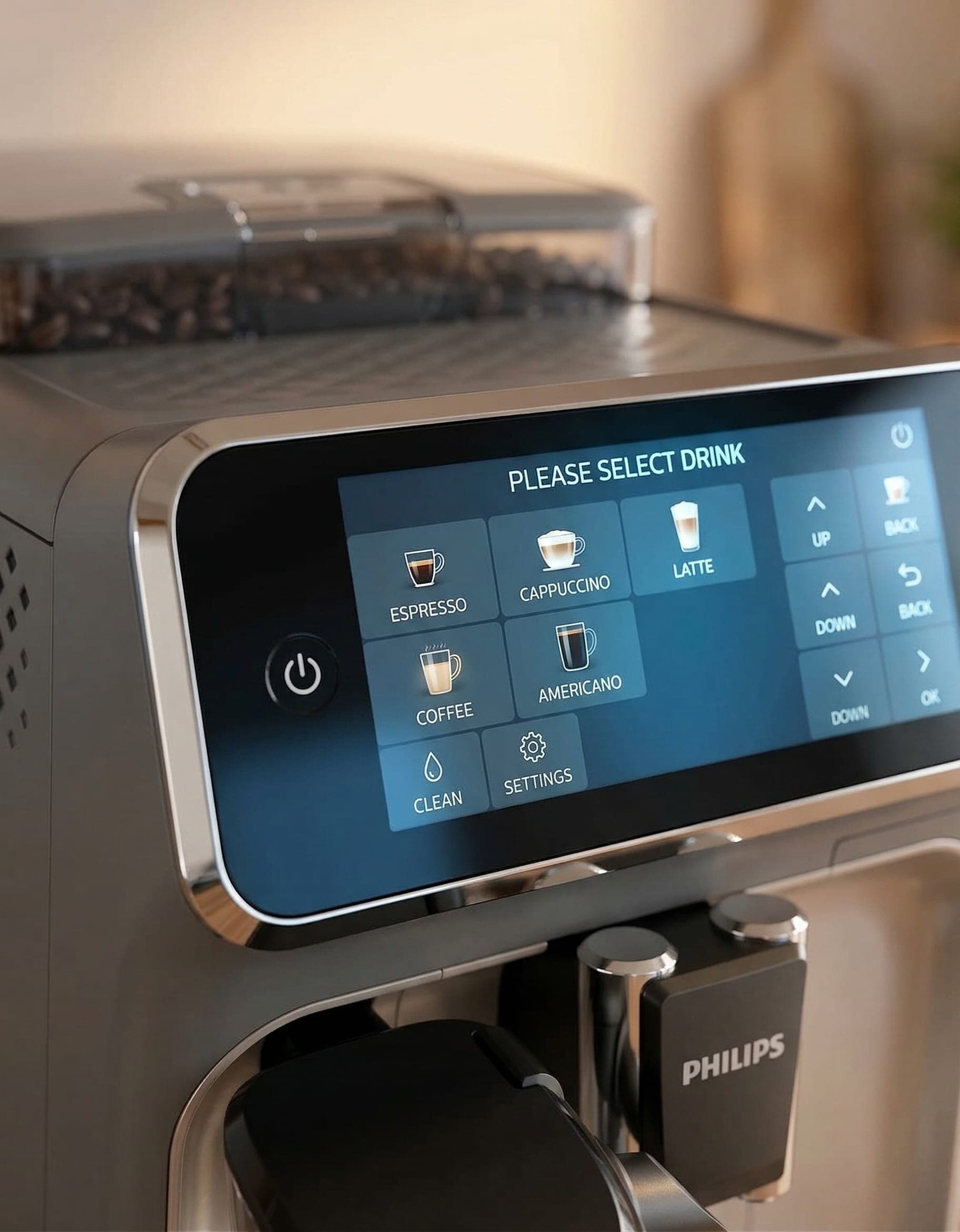
This machine was purchased independently and was not provided by Philips.
Final Verdict
Our rating, who it fits, and what it costs.
Philips 5500 SeriesRecommended
4.4 / 5 — Is it worth buying?
It's the right machine for the right person and a poor fit for others.
✓ Best for
- Busy households wanting fresh-ground coffee with zero technique
- Latte and cappuccino drinkers
✕ Skip if
- Espresso purists prioritizing extraction quality over convenience
- Manual espresso enthusiasts or latte art practitioners
Score breakdown
Shots tested
180+
Testing period
45 days
Ready to decide?
$799-$849typical street price
Our verdict: 4.4/5, recommended. Independently tested; commissions never change a rating.
Tools That Pair With This Review
Put it into practice with a free calculator built for what you just read.
- Espresso Dial-In CalculatorEnter your actual shot results to see whether you're on target — and what to adjust.
- Espresso Yield CalculatorEnter your dose and shot style (ristretto, normale, lungo) to get your target shot weight.
- Coffee Grind Size CalculatorPick your brew method and get the right grind size, texture, and grinder setting.