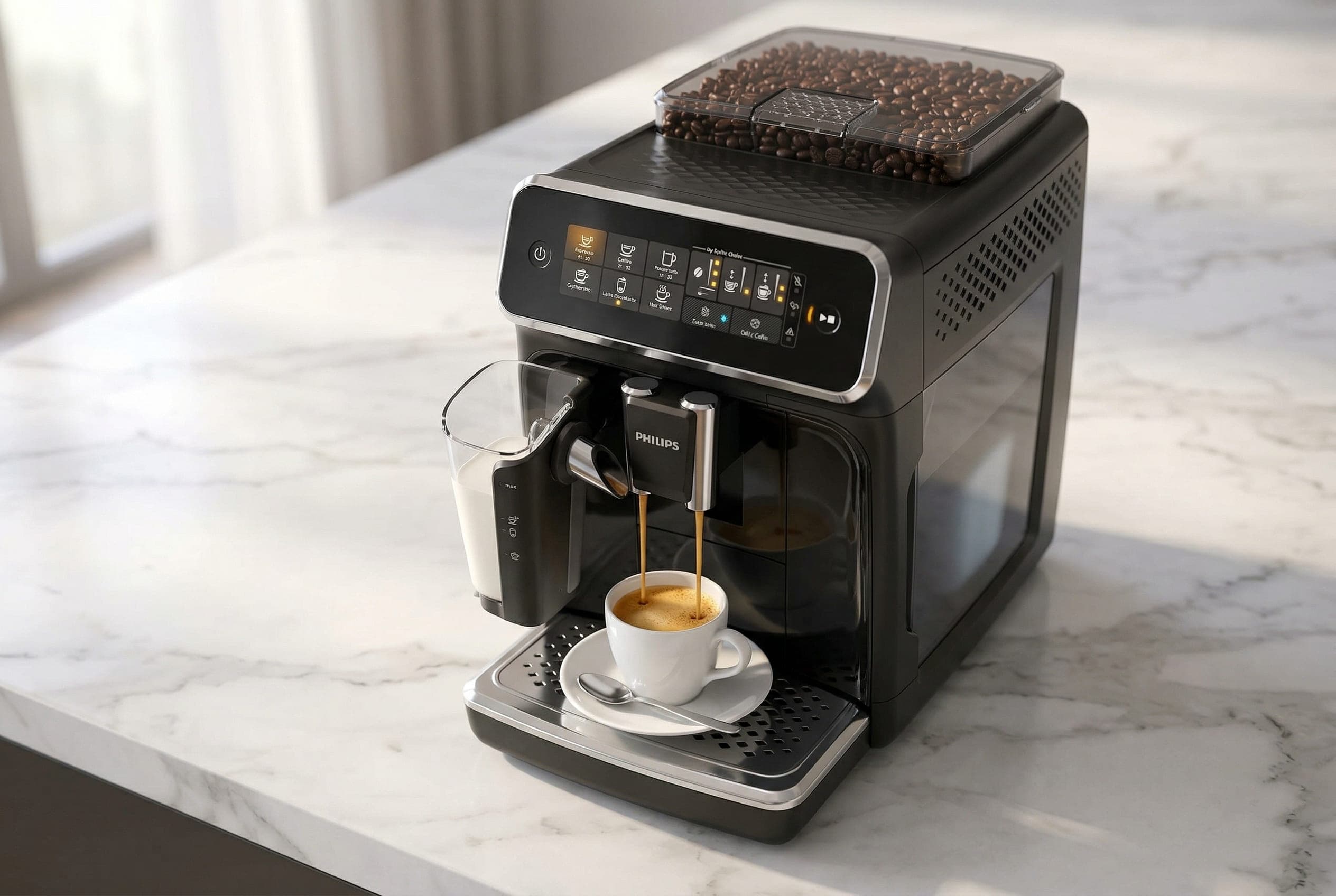
Espresso machine review
Last updated
Philips 3200 LatteGo Review 2026: Made for Milk Drinks
Philips 3200 LatteGo espresso machine review: 25-second heat-up and an easy-rinse milk system, but weak on light roasts. 60+ drinks tested. Who should skip?
- Our rating 4.3/5
- By Michael Anderson
- 22 min read
- Independently tested: 60+ shots over 30 days
Affiliate disclosure: this page contains Amazon affiliate links. We may earn a commission if you buy through them, at no extra cost to you, and it never affects our rankings. Learn more
Philips 3200 LatteGo at a GlanceRecommended
A confident pick for milk-drink households that want push-button coffee; skip it if you want control over the shot.
Super-Automatic Bean-to-Cup Espresso Machine
Affiliate link: we may earn a commission at no extra cost to you. It never affects our rating.
- 25 seconds
- Heat-up time
- 9.8" wide
- Footprint width
- 5
- Drink programs
In the shot log· 60+ drinks · 30 days
Why it stands out
- 25-second heat-up from cold
- Dishwasher-safe LatteGo milk system rinses itself
- Ceramic burr grinder beats steel-burr rivals under $600
Watch out for
- No manual control over dose, tamp or extraction time
- Light roast beans taste sour and inconsistent
✓ Best for
Busy households wanting fresh-ground coffee with zero technique or learning curve
✕ Skip if
Espresso purists who want control over dose, grind, and extraction time independently
This Philips 3200 LatteGo review comes to a clear verdict: it isn't the best espresso maker in the $450–$550 range, and it doesn't try to be. After 30 days of real-world testing, what stood out was how consistently it delivers exactly what it promises.
The short answer: it's a solid recommendation for convenience-first households that mostly drink lattes and cappuccinos, and a poor fit for espresso purists.
- What held up: The ceramic burr grinder outperforms the steel grinders in most competing super-automatics under $600.
- Daily convenience: The 25-second heat-up and the dishwasher-safe LatteGo carafe make morning coffee frictionless.
- Where it fell short: There's no manual control over extraction, and light roast beans come out sour and inconsistent.
- Who should look elsewhere: Anyone who wants more than the basic drink presets or independent control of dose and grind.
If you want the full category picture, start with our espresso machine types guide; for how the 3200 fits the broader market, see our best espresso machines guide.
Who Is This Right For?
Check where you fit before you look at the trade-offs below.
A strong match
It suits you if you are
- Busy households wanting fresh-ground coffee with zero technique or learning curve
- Latte and cappuccino drinkers — LatteGo's 2–3 second automatic rinse changes the daily workflow
- Pod machine users ready to upgrade to whole beans without the barista training
- Anyone who values convenience over manual extraction control
- Smaller kitchens that benefit from the compact 9.8" wide footprint
- New coffee enthusiasts making 2–4 drinks per day
Consider something else
Look elsewhere if you are
- Espresso purists who want control over dose, grind, and extraction time independently
- Light roast specialty coffee enthusiasts — automated extraction isn't optimized for it
- Experienced baristas who enjoy the ritual of manual espresso preparation
- High-volume households (5+ drinks daily) — step up to the Philips 5500 Series instead
- Budget-conscious buyers under $500 — better options exist at lower price tiers
- Skill level
- Beginner-friendly — one-touch drink buttons and automatic milk system require no espresso technique or calibration.
- Drink style
- Espresso, americano, cappuccino, and latte via the LatteGo automatic milk system — not built for manual milk texturing or latte art.
- Upgrade path
- Buyers wanting more drink programs or a bigger water tank should look at the Philips 5500 Series; those wanting manual control should move to a semi-automatic with a separate grinder.
Pros & Cons
What earns the rating, and what you give up to get it.
8 reasons it works
Pros
- 25-second heat-up from cold — fastest in the $450-$550 class, and it changes the morning routine
- LatteGo milk system: 2–3 second automatic rinse, dishwasher-safe, cleanest integrated frother at this price
- Ceramic burr grinder preserves aromatics better than steel-burr competitors under $600
- Compact 9.8" wide footprint fits under most kitchen upper cabinets
- AquaClean filter compatibility reduces descaling frequency (filter rated for approximately 5,000 cups)
- Adjustable drink volumes memorized — set once, consistent daily delivery
- Low maintenance burden — less than a typical semi-automatic requires
- Consistent shot-to-shot quality with medium and dark roast beans
7 trade-offs to weigh
Cons
- Only 5 drink programs — no ristretto, flat white, or specialty variants
- No manual extraction control: dose, tamp, and extraction time are fully automated
- Light roast specialty beans produce sour, inconsistent results
- Factory espresso dose (~7–9g) is lighter than specialty coffee standards (18–20g double)
- Almond milk and thin non-dairy alternatives produce unreliable foam
- No temperature adjustment — single factory-set extraction temperature
- Limited compared to Philips 5500 if household needs variety or volume
Weighed the pros and cons? Check today's price on Amazon; prices change often.
Current price: $459-$549
Real-World Testing
How it performed in day-to-day use, in the order you will meet it.
Setup & Learning Curve
Out of the box, the 3200 LatteGo was pulling its first drink in under 10 minutes.
- Setup: clip on the LatteGo carafe, fill the 1.8L tank, load the 275g hopper, and run the 90-second priming cycle. There's no calibration step and no nested menu.
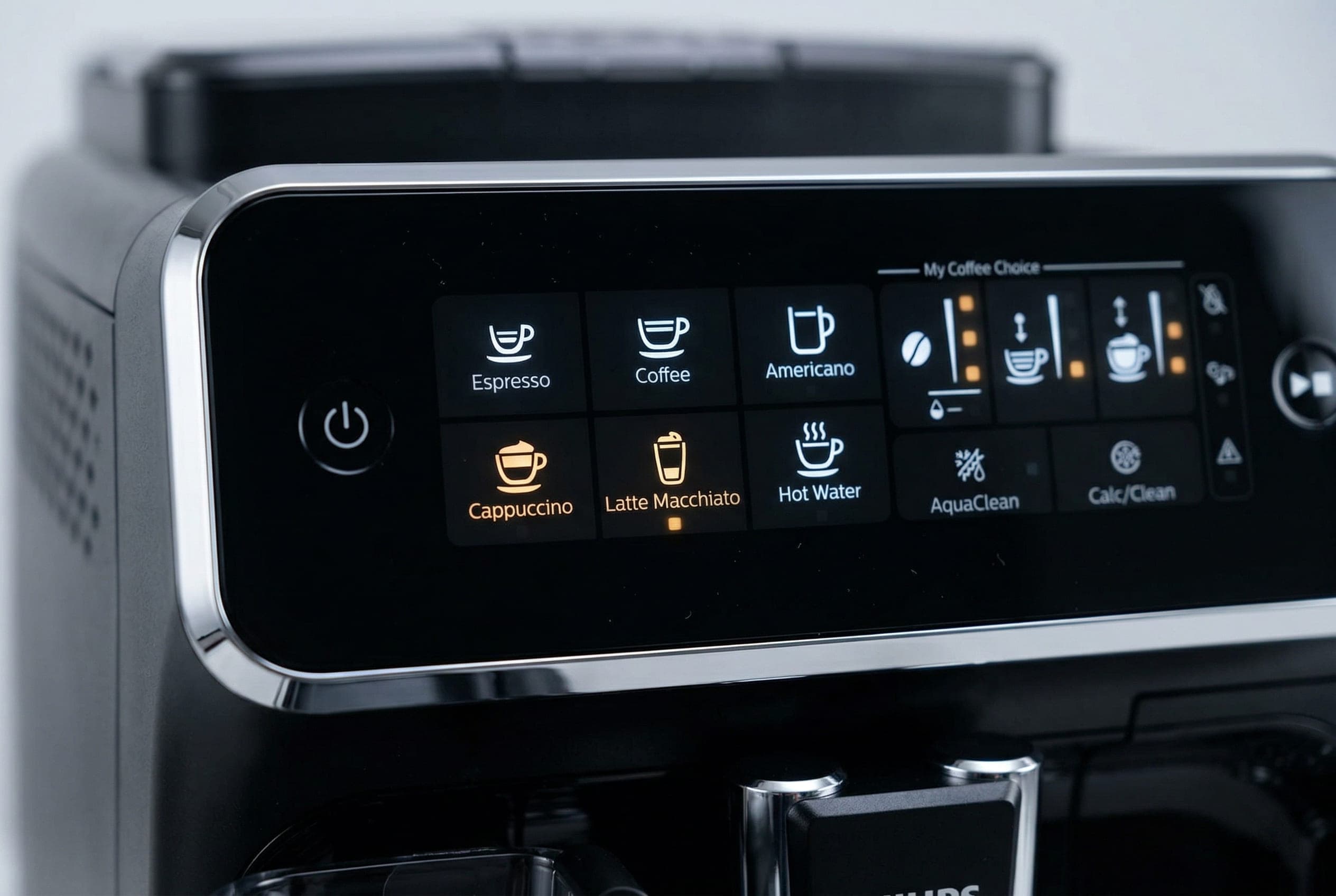
- Controls: the single row of five drink icons is self-explanatory, even for a first-time super-automatic owner.
- First adjustment: factory settings default to a coarser grind and mid strength, which under-extracts. Moving to grind setting 3 fixed this right away.
- Footprint: the machine is compact (9.8" wide, 14.2" tall) and light for the category at 17.6 lbs, so it's easy to reposition or tuck under upper cabinets. The 15.6" depth does mean it sits close to the counter edge when pushed back.
Shot Extraction Performance
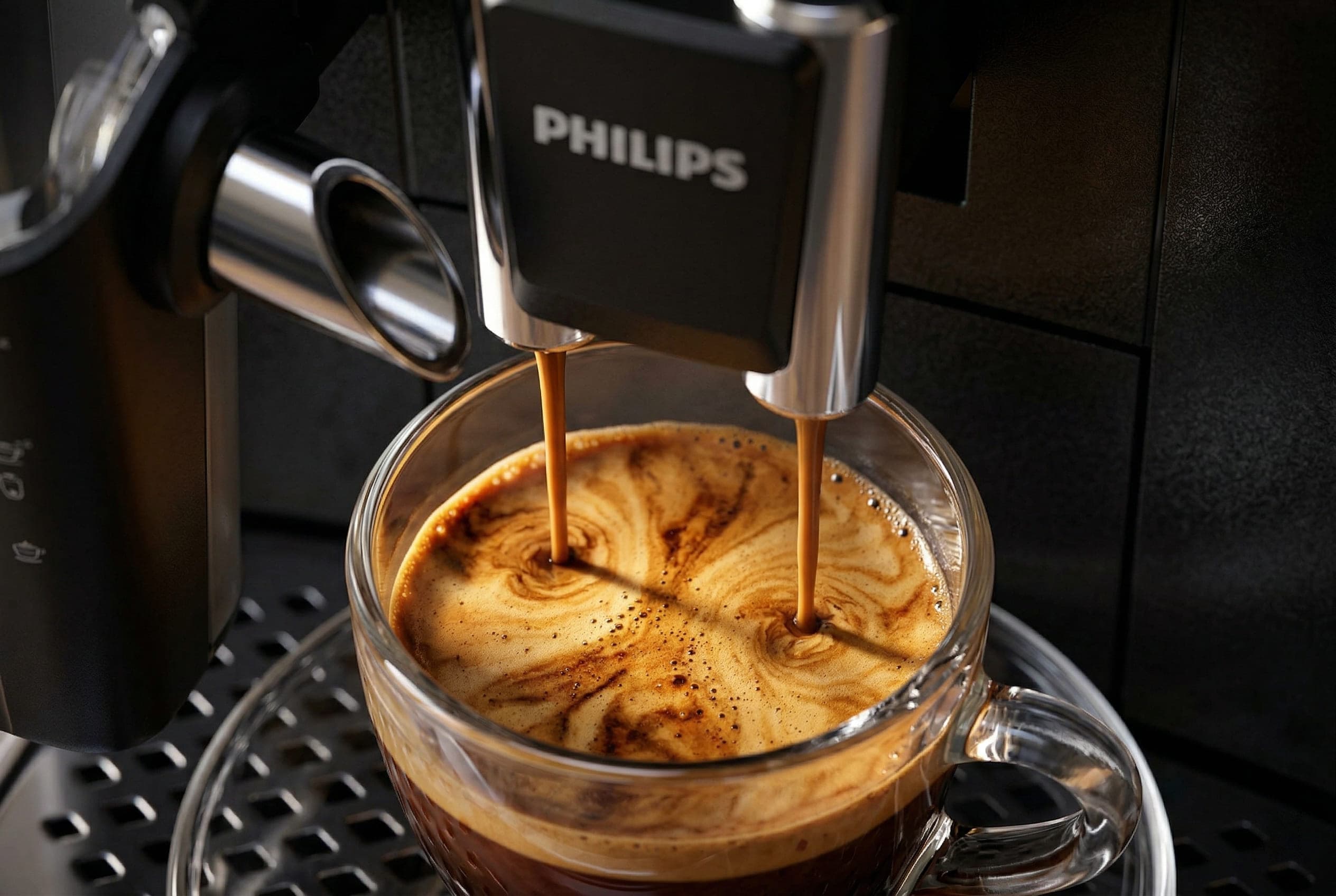
The ceramic burr grinder is the machine's real differentiator against steel-burr competitors at this price. It runs cooler, which helps preserve aromatic compounds that heat tends to cook off during grinding.
- Medium Colombian roast: across all five grind settings, setting 3 was the sweet spot, with balanced 22–26 second extractions and good crema structure. Setting 1 over-extracted and turned bitter; setting 5 ran short and tasted flat.
- Medium-dark Italian-style blend: the machine performed even better, with thicker crema and a touch of chocolate and nut sweetness.
- Light roasts: this is the hard ceiling. Across multiple origins and every grind/strength combination, extractions stayed sour and thin roughly 60% of the time.
This machine is calibrated for medium to dark roasts, not third-wave light roast coffee.
Milk System Experience
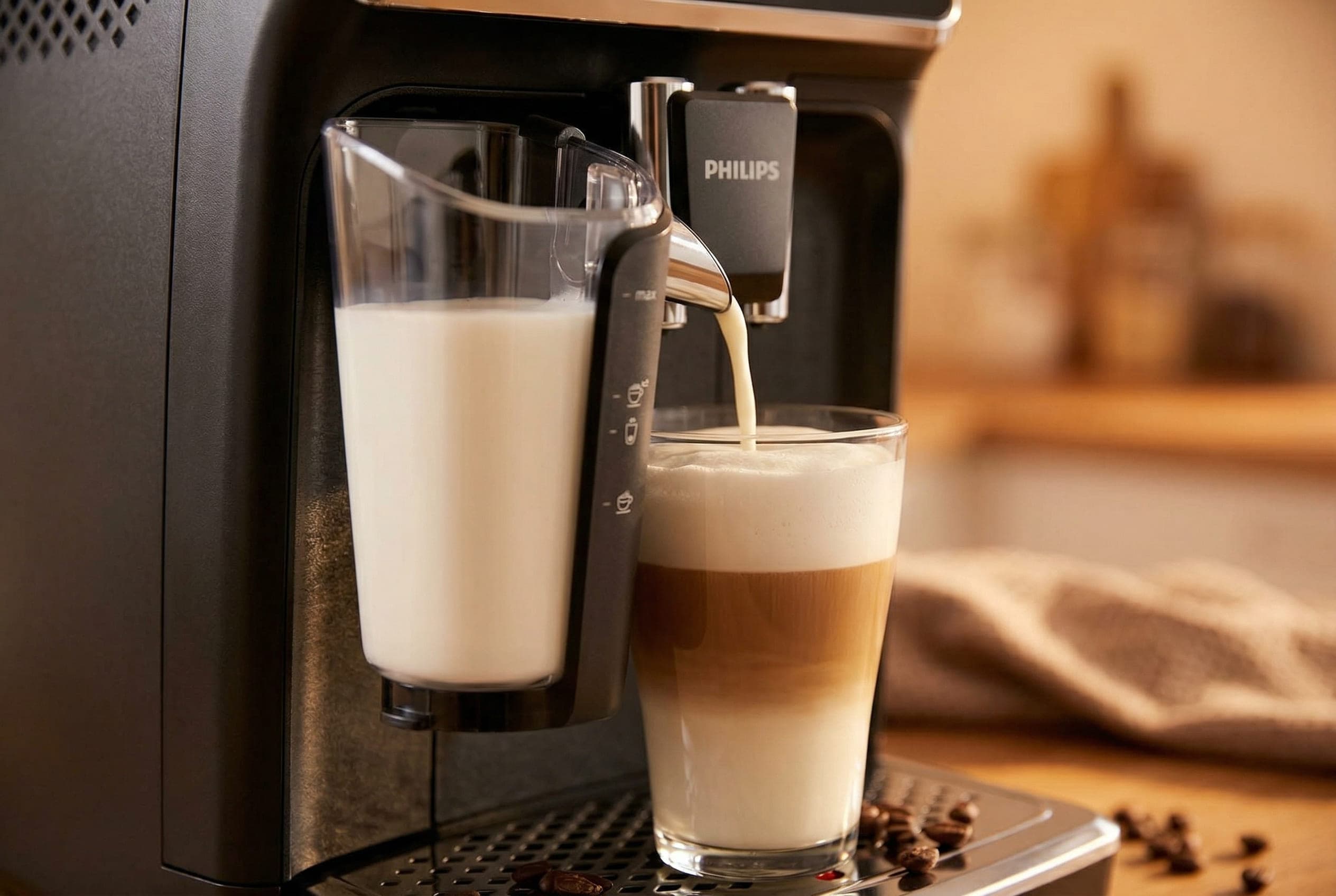
The LatteGo is not a steam wand. It's a dishwasher-safe rectangular carafe that clips onto the side of the machine.
- Process: select cappuccino or latte macchiato and the machine draws cold milk through an internal channel, aerates it, and dispenses foam directly into the cup in 12–18 seconds, followed by an automatic 2–3 second rinse.
- Cleanup: there's no tube to unclog and no wand to purge or wipe down.
- Foam quality: smooth and pourable, good enough for layered lattes and cappuccinos. The bubble structure is coarser than hand-steamed microfoam from a commercial wand, so it's not built for latte art.
- Milk types: whole dairy milk produced the most consistent foam, and Oatly Barista oat milk performed nearly as well. Standard almond milk was unreliable, producing thin foam on more than half of attempts.
Build Quality & Daily Workflow
Making an average of three drinks daily, the 275g hopper lasted roughly 10–13 days and the water tank needed refilling every 2–3 days.
- Programs: the five one-touch programs (espresso, cappuccino, latte macchiato, americano, coffee) cover the drinks most households actually make. Cappuccino was the most-used and consistently produced a properly layered result.
- Memory: volumes are adjustable and memorized per program, so a preference set once sticks.
- Build: the chassis feels a step down from the pricier 5500 Series, with lighter plastic and slightly less substance, but nothing rattles or feels cheap.
- Carafe durability: the LatteGo carafe held up to two dishwasher cycles a week without warping or staining.
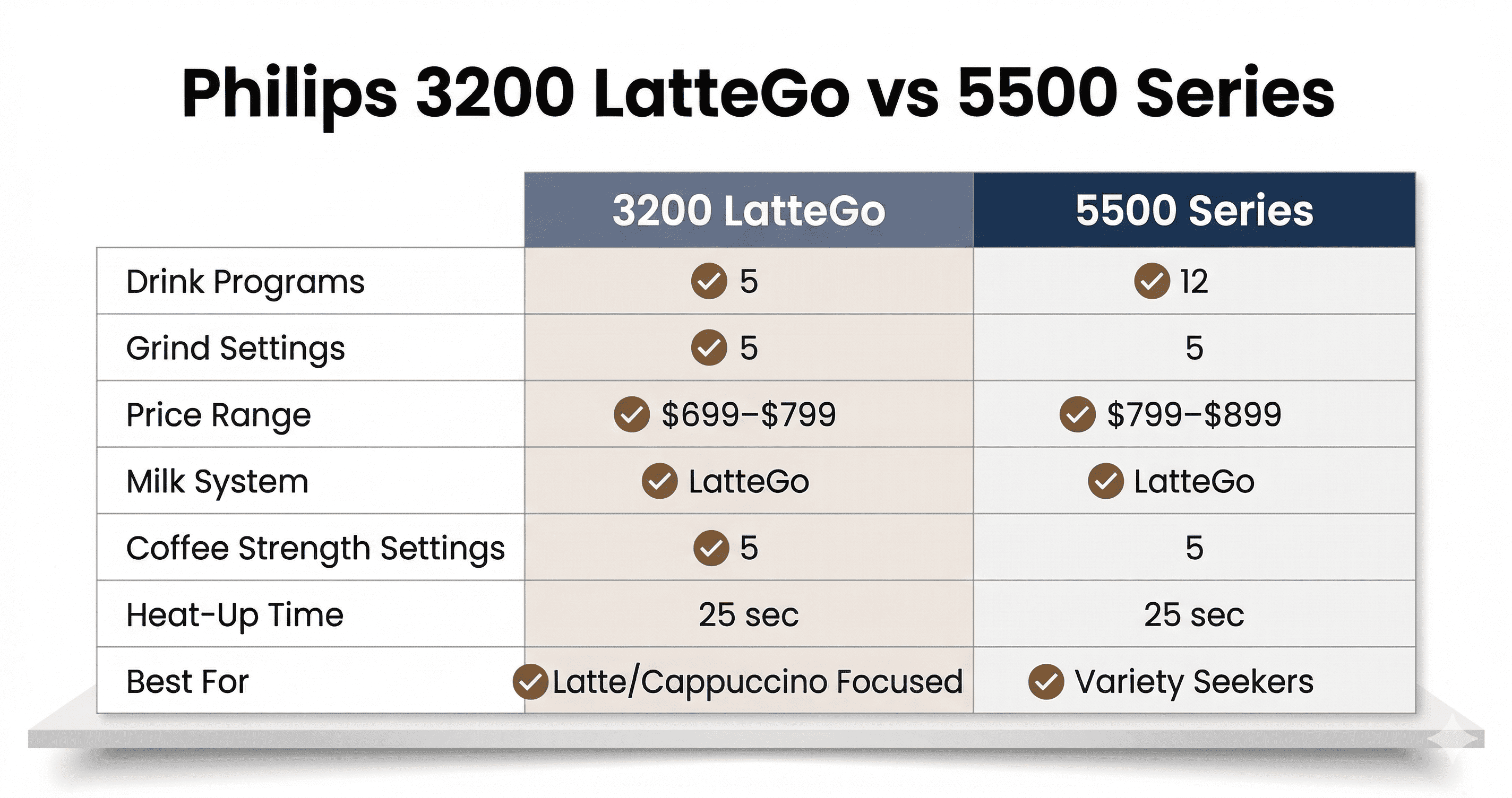
Philips 3200 LatteGo vs Philips 5500, Magnifica and Jura E8
Where the 3200 sits in the super-automatic ladder
The 3200 is the entry point of a ladder, and the useful question is what each step up buys.
| Machine | Type | Heating system | Built-in grinder | Current price |
|---|---|---|---|---|
| Philips 3200 LatteGo | Super-automatic | not listed | Yes (ceramic burr) | Check price |
| Philips 5500 | Super-automatic | not listed | Yes (ceramic burr) | Check price |
| De'Longhi Magnifica | Super-automatic | Thermoblock | Yes (ceramic conical burr) | Check price |
| Jura E8 | Super-automatic | Single thermoblock | Yes (ceramic burr) | Check price |
| Barista Express Impress | Semi-automatic | not listed | Yes | Check price |
- Philips 5500 ($799-$899): same 25-second heat-up and 1.8L tank, but 12 programmable recipes instead of 5. Pay the difference only if recipe variety or heavy daily volume matters to you.
- De'Longhi Magnifica ($699-$749): 13 grind settings, but milk texture is weaker (our Magnifica review points to the 3200 or Bambino Plus for milk), and it costs more than the 3200 and rated lower in our review (4.1 vs 4.3).
- Jura E8 ($2,599-$2,799): a premium machine that only earns its price with daily use. Most 3200 shoppers should not stretch to it.
- Breville Barista Express Impress ($750-$850): the better route if you want to learn espresso technique and drink straight shots, at the cost of a hands-on workflow.
For wider context, see our best espresso machines guide.
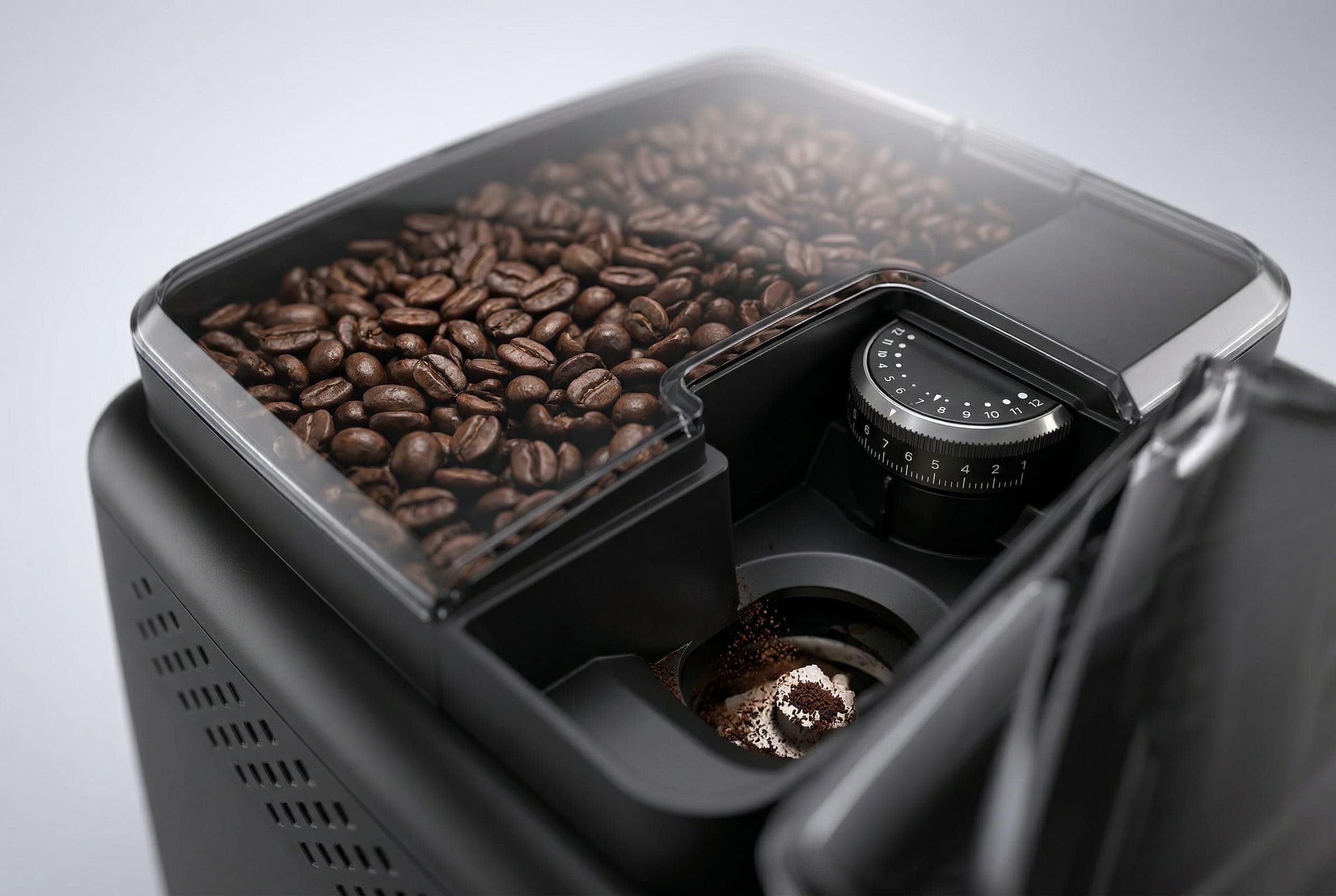
What the Philips 3200 LatteGo specs mean in daily use
- Ceramic burrs: they run cooler than steel and resist wear, which suits a machine that grinds a fresh dose for every cup. The trade-off is that you only get five grind steps, so fine-tuning is coarse.
- Fast heat-up (25 seconds): this helps people who want coffee within a minute of walking into the kitchen. It matters less if you make one batch of drinks in the evening.
- 1.8L tank and 275g hopper: at 2-4 drinks a day you will refill the tank every few days and the hopper roughly weekly. Larger households will refill more often, which is one reason to look at the 5500.
- Auto-rinse milk carafe: the LatteGo has no tubes to clean. That is the feature to pay for here. The trade-off is that it is built for dairy and good oat milk, not for hand-steamed microfoam or latte art.
- No temperature or dose control: simplicity is the point, but if you later want to tweak extraction you will outgrow the machine, and there is no upgrade path inside it.
Philips 3200 LatteGo maintenance and ownership
Routine care is light. Rinse the LatteGo carafe after milk drinks (it is dishwasher-safe), empty the drip tray and grounds container, and refill the water tank with fresh water.
Fitting an AquaClean filter reduces how often you need to descale, since the filter is rated for about 5,000 cups. Follow the descaling prompts and check the manual for the exact procedure and intervals.
Because the grinder and brew group are built in, you cannot swap the grinder later. Factor that in if you expect to move on from convenience machines in a few years; our espresso machine types guide explains the trade-offs of the other routes.
Who should skip the Philips 3200 LatteGo?
- Light roast drinkers: extractions were sour and thin about 60% of the time in testing.
- Straight espresso fans: the dose is lighter than specialty standards, so shots lack intensity.
- Latte art learners: there is no steam wand to practise with. The Breville Bambino Plus (a hands-off milk option) or Gaggia Classic Pro suits that goal better.
- Households making 5+ drinks daily: look at the 5500 instead.
If budget matters most, our best espresso machines under $500 list covers cheaper routes.
How it works and why it matters
Ceramic grinder, brew unit and LatteGo milk system: what each part does to the cup
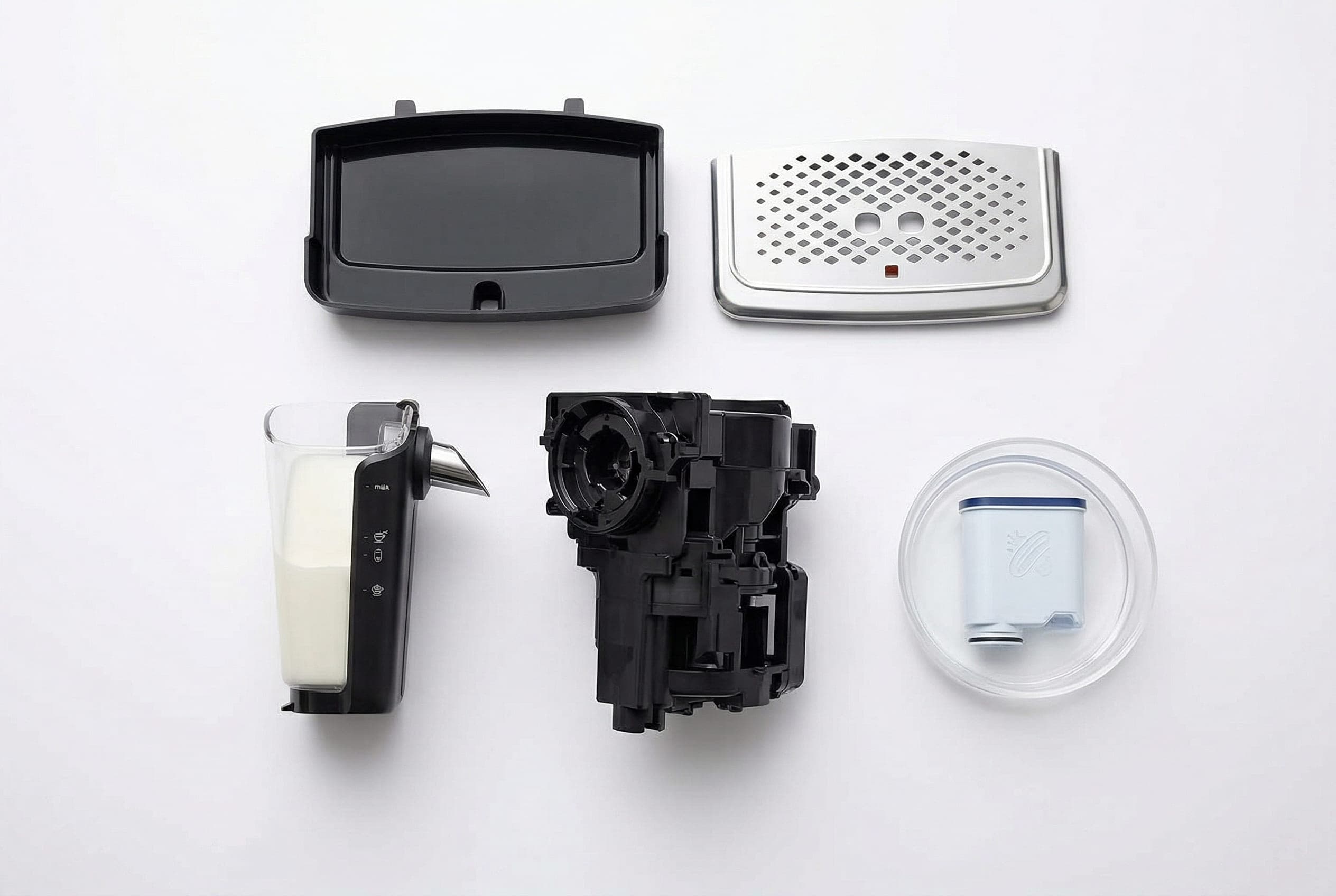
The 3200 grinds beans with a ceramic burr set, tamps them in a removable brew group and pushes water through a fast-heating element. A ceramic grinder stays cooler and keeps oils intact, which helps aroma in everyday medium roasts.
The LatteGo milk jug has no tube. Milk is whipped in a small chamber and poured straight into the cup, so rinsing takes seconds and there is no milk line to descale. The foam is airier than a manual wand's, so it suits lattes and cappuccinos rather than flat whites.
The trade-off is control. Dose, tamp and temperature are fixed, so drinks are repeatable but not adjustable. See the types guide.
Common problems and modern fixes
Brew-group care, scale and bean oils: ownership issues and fixes
- Bitter or weak drinks: adjust the grind a notch at a time with the grinder running, and increase strength before changing beans. The bitter espresso guide explains the logic.
- Brew group residue: rinse the removable group under tap water weekly and let it dry. Follow the cleaning guide.
- Scale: fit the water filter and descale on schedule using the descaling guide. Cleaning tablets are compared in cleaning tablets.
- Oily beans: very oily dark roasts can clog the chute. Choose medium roasts.
- Foam variation: milk temperature changes foam. Use cold milk, and see milk frothing fixes.
Before you decide
Super-Automatic Machines: What Actually Matters at $450–$550
At the $450–$550 price point, you're buying a specific promise: café-quality espresso drinks without barista training, delivered in under 60 seconds. Super-automatics live or die by three things: grinder quality, milk system design, and day-to-day maintenance practicality.
The Philips 3200 LatteGo EP3221/44 hits all three better than most competitors at its price.
- Grinder: the ceramic burrs reduce heat during grinding versus the steel grinders found in competing machines, preserving volatile aromatics that directly affect cup flavor.
- Milk system: the LatteGo carafe eliminates the biggest pain point of automated milk systems, which is tube cleaning after every use.
- Maintenance: AquaClean filter compatibility makes descaling infrequent.
What you're trading off is extraction control. The machine pre-doses, pre-tamps, and extracts automatically. You can adjust coffee strength and grind coarseness within the available steps, but you cannot control extraction time, water temperature, or dose weight independently. For the target user, someone who wants a great latte with one button press, those trade-offs are worth making.
Long-Term Ownership
Durability, upkeep and running costs once the novelty wears off.
- Durability
The EP3221/44 chassis has a slightly lighter feel than the 5500 Series — this is the entry 3200, and you can tell.
More detail
That said, the brew unit mechanism is solid, the controls click responsively, and nothing feels cheap in the way that budget super-automatics can. The LatteGo carafe is the same BPA-free plastic design used across the Philips lineup — dishwasher-safe, practical, and built to last with daily use.
- Reliability
The Philips 3200 Series has a reasonable reliability record based on long-term owner reviews and forum discussions monitored over several years.
More detail
Expected lifespan at 3 drinks/day is typically 5–7 years. The brew unit is the main wear component and is replaceable. AquaClean filter compatibility extends descaling intervals significantly.
- Parts
AquaClean filters and replacement brew units available from Philips and third-party sellers.
More detail
Philips North America parts support is generally responsive. This is a mature product line with well-established parts availability — a meaningful advantage over newer brands without established service networks.
- Upkeep
Low.
More detail
LatteGo automatic rinse runs after every milk drink. Grounds bin empties every 8–10 drinks at standard dose. Weekly: rinse LatteGo carafe, wipe drip tray. Monthly: clean brew unit under running water (2 minutes). With an AquaClean filter, descaling is needed far less often — Philips rates the filter at approximately 5,000 cups, so follow the manual's replacement schedule. This is substantially less maintenance than a typical semi-automatic requires.
This machine was purchased independently and was not provided by Philips.
Final Verdict
Our rating, who it fits, and what it costs.
Philips 3200 LatteGoRecommended
4.3 / 5 — Is it worth buying?
A month of daily testing confirms the Philips 3200 LatteGo EP3221/44's reputation as the most practical milk-forward super-automatic under $600.
✓ Best for
- Busy households wanting fresh-ground espresso with minimum effort
- Latte and cappuccino drinkers
✕ Skip if
- Hands-on espresso enthusiasts who value manual extraction control
- Light roast specialty coffee drinkers
Score breakdown
Shots tested
60+
Testing period
30 days
Ready to decide?
$459-$549typical street price
Our verdict: 4.3/5, recommended. Independently tested; commissions never change a rating.
Tools That Pair With This Review
Put it into practice with a free calculator built for what you just read.
- Espresso Dial-In CalculatorEnter your actual shot results to see whether you're on target — and what to adjust.
- Espresso Yield CalculatorEnter your dose and shot style (ristretto, normale, lungo) to get your target shot weight.
- Coffee Grind Size CalculatorPick your brew method and get the right grind size, texture, and grinder setting.
Reader questions
Questions or tips? Leave a comment
Ask about your setup or share what worked for you. Comments are checked before they appear.