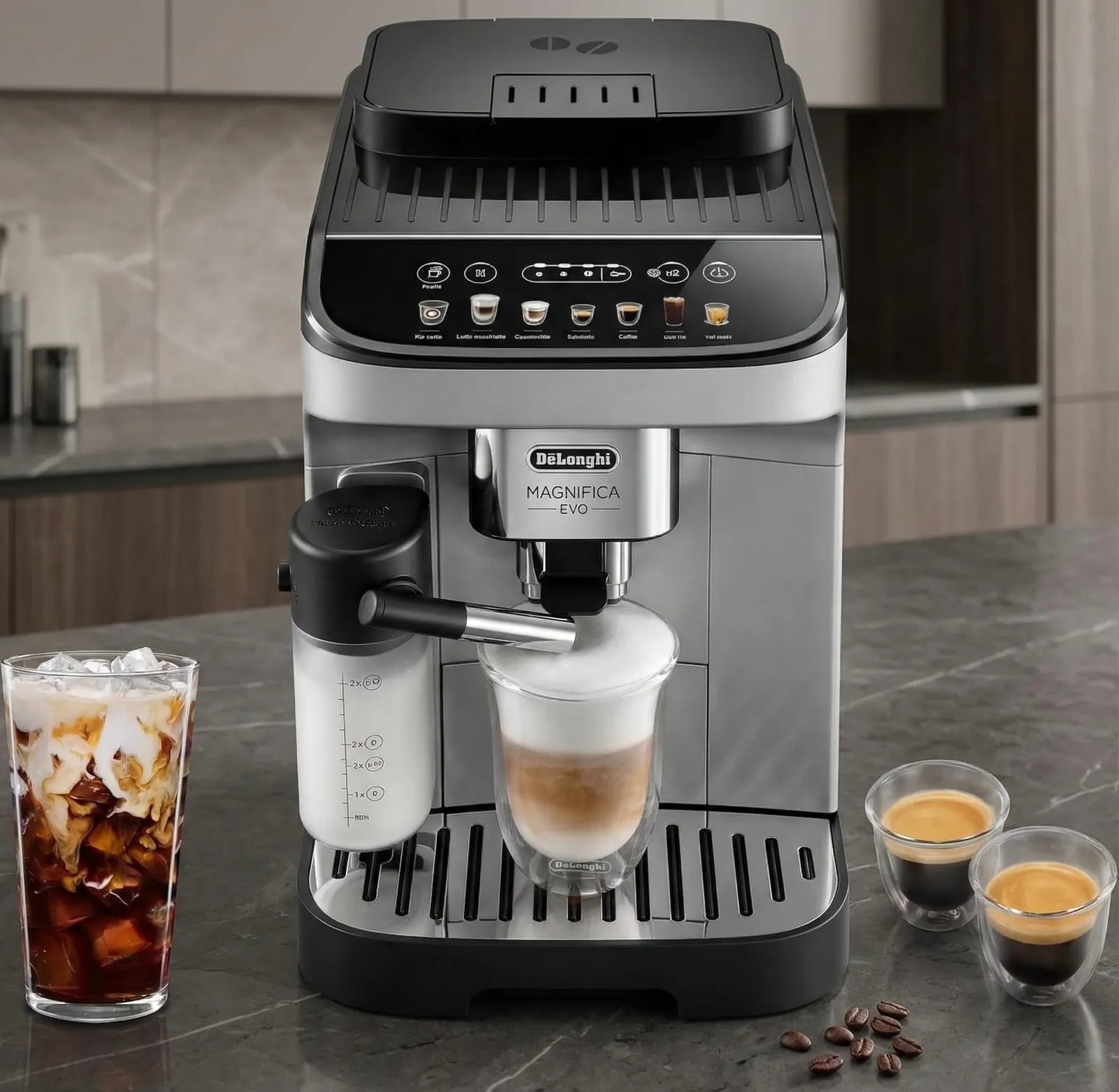
Espresso machine review
Last updated
De'Longhi Magnifica Evo Review 2026: One Touch
De'Longhi Magnifica Evo review: a one-touch bean-to-cup espresso machine tested over 190+ drinks in 9 weeks. Why light roasts struggled, and who skips it.
- Our rating 4.1/5
- By Michael Anderson
- 19 min read
- Independently tested: 190+ shots over 63 days continuous daily use
Affiliate disclosure: this page contains Amazon affiliate links. We may earn a commission if you buy through them, at no extra cost to you, and it never affects our rankings. Read our full affiliate disclosure
De'Longhi Magnifica Evo ECAM290.21.B at a GlanceRecommended
A confident pick for effortless bean-to-cup espresso, with the caveat that light roasts and latte art aren't its strength.
Mid-Range Super-Automatic Bean-to-Cup
Affiliate link: we may earn a commission at no extra cost to you. It never affects our rating.
- ~45 seconds
- One-touch espresso
- 13
- Grind settings
- 9.6 inches
- Width
In the shot log· 190+ shots · 9 weeks
Why it stands out
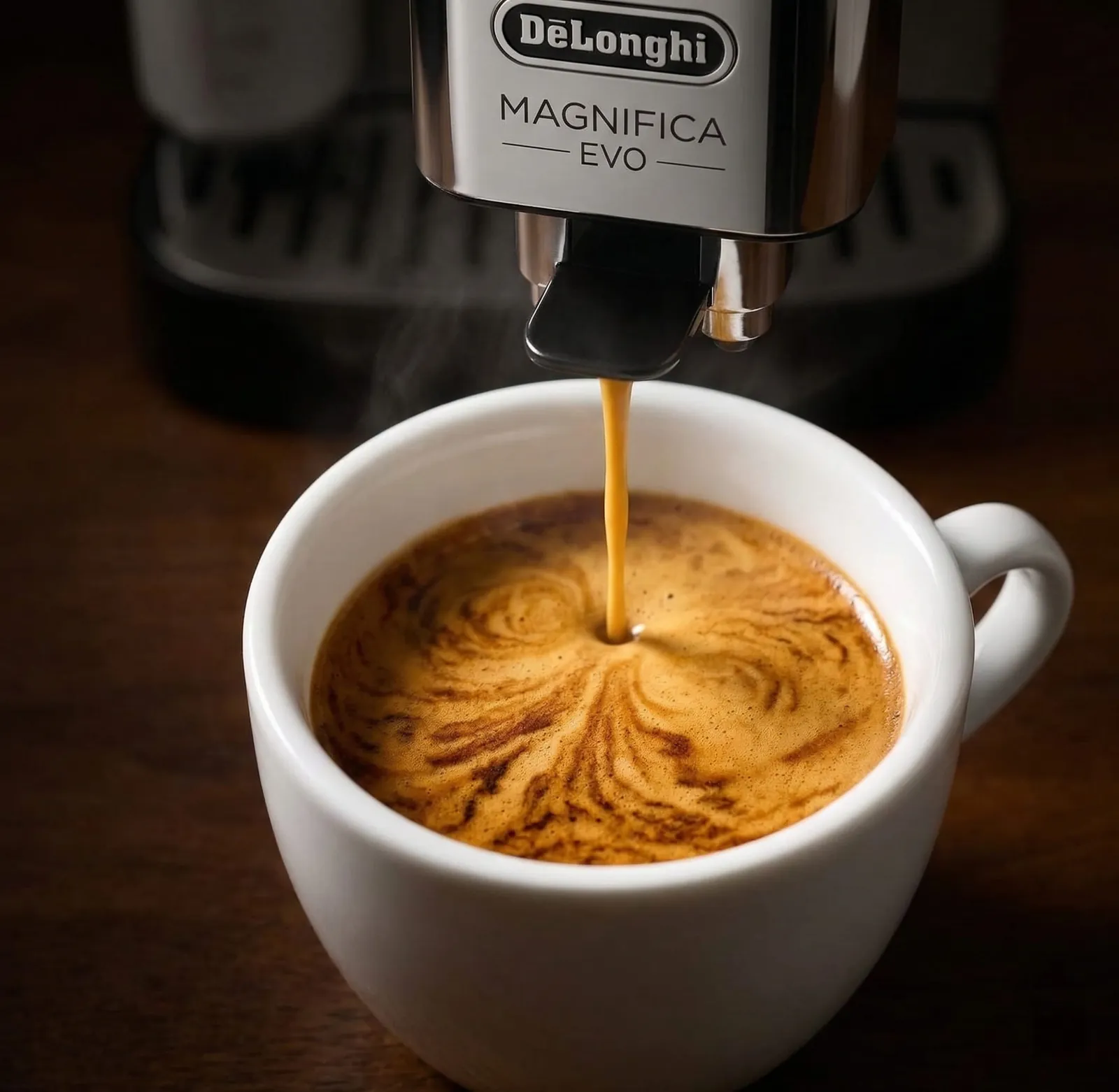
- One-touch espresso from fresh beans in about 45 seconds
- Consistent crema on medium-dark roasts
- Easy upkeep: auto-rinse, dishwasher-safe parts
Watch out for
- Light roasts underperformed at every grind setting
- Panarello wand makes foam, not microfoam
✓ Best for
Busy households that want real espresso quality without the learning curve of semi-automatic machines
✕ Skip if
Home baristas developing espresso technique
Super-automatics are usually the machine you buy to avoid learning espresso, so our first instinct with the Magnifica Evo was skepticism. Nine weeks of daily use changed that view.
The short answer: in this De'Longhi Magnifica Evo review, it's the rational pick for households or offices wanting fresh-ground espresso with zero learning curve; skip it if you want to build barista skill or mostly drink light roasts.
- What held up: Consistent crema on medium-dark roasts after one calibration, at about a quarter of the Jura E8's price.
- What's easy: Auto-rinse, a descale reminder and dishwasher-safe parts keep maintenance light.
- Where it fell short: Light roasts underperformed at every grind setting, and the panarello wand makes thick foam, not microfoam.
- Worth knowing: No PID control, and a full grounds container halts back-to-back shots.
Whether it belongs in your kitchen depends on what you want from espresso, not on the machine itself.
Who Is This Right For?
Check where you fit before you look at the trade-offs below.
A strong match
It suits you if you are
- Busy households that want real espresso quality without the learning curve of semi-automatic machines
- Former pod-machine users stepping up to fresh beans who want familiar one-button simplicity
- Offices or shared kitchens where multiple people use the machine and no calibration per user is practical
Consider something else
Look elsewhere if you are
- Home baristas developing espresso technique — the fully automated process removes the control and feedback skill development requires
- Light roast enthusiasts, since the machine underperformed with the Ethiopian natural we tested and likely other light single-origins
- Latte art or specialty milk drink enthusiasts — the Panarello produces foam, not the microfoam a dedicated steam wand can
- Skill level
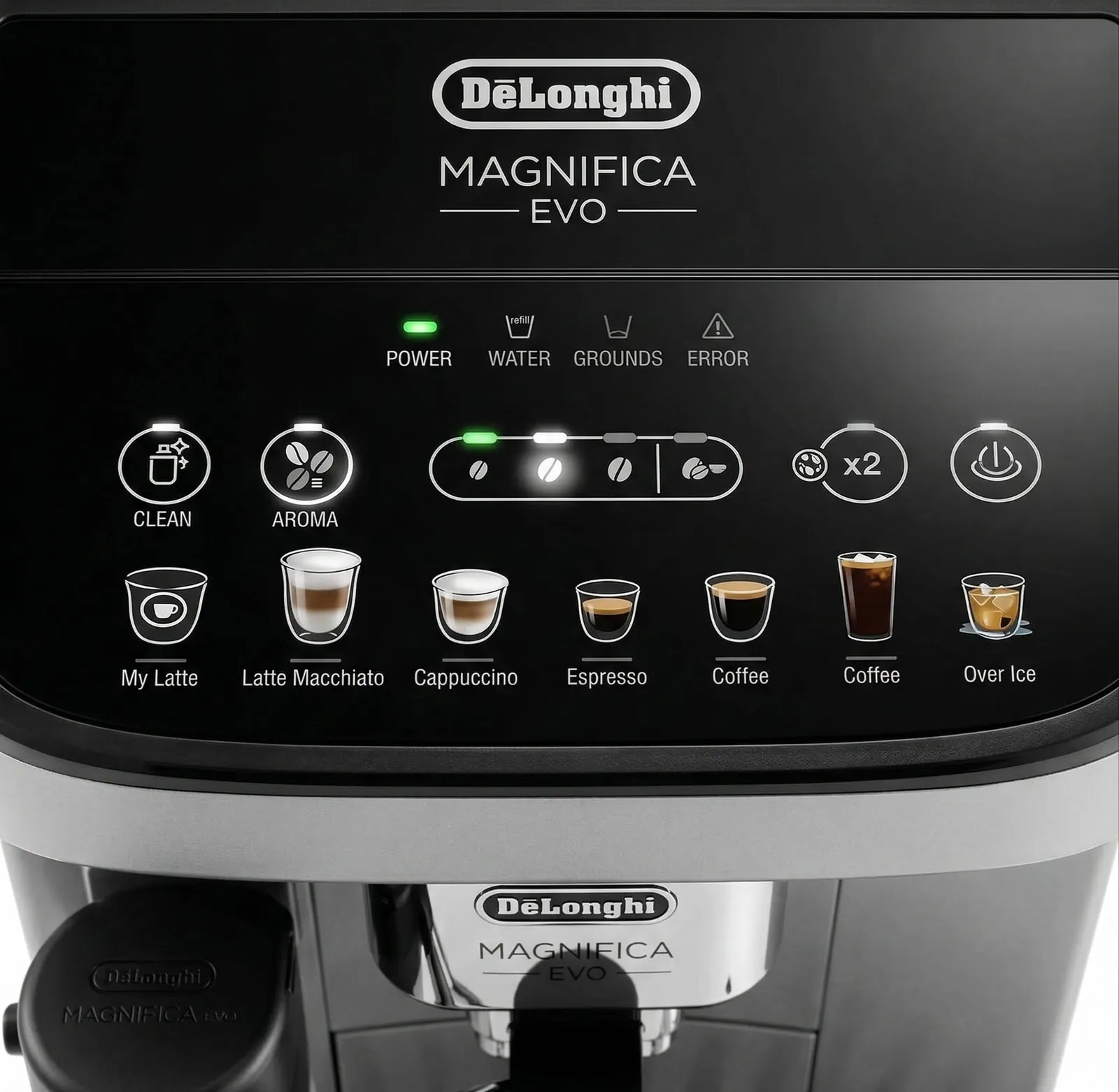
- Beginner-friendly — one-touch operation from beans to espresso in about 45 seconds, with zero technique required.
- Drink style
- Straight espresso and basic milk drinks via the Panarello frother — built for everyday cups rather than latte art or specialty milk texture.
- Upgrade path
- Buyers who want a proper automatic milk system should look at the Dinamica Plus; those who want manual extraction control should move to a semi-automatic with a separate grinder.
Pros & Cons
What earns the rating, and what you give up to get it.
6 reasons it works
Pros
- One-touch operation from fresh beans to espresso in about 45 seconds — no skill required
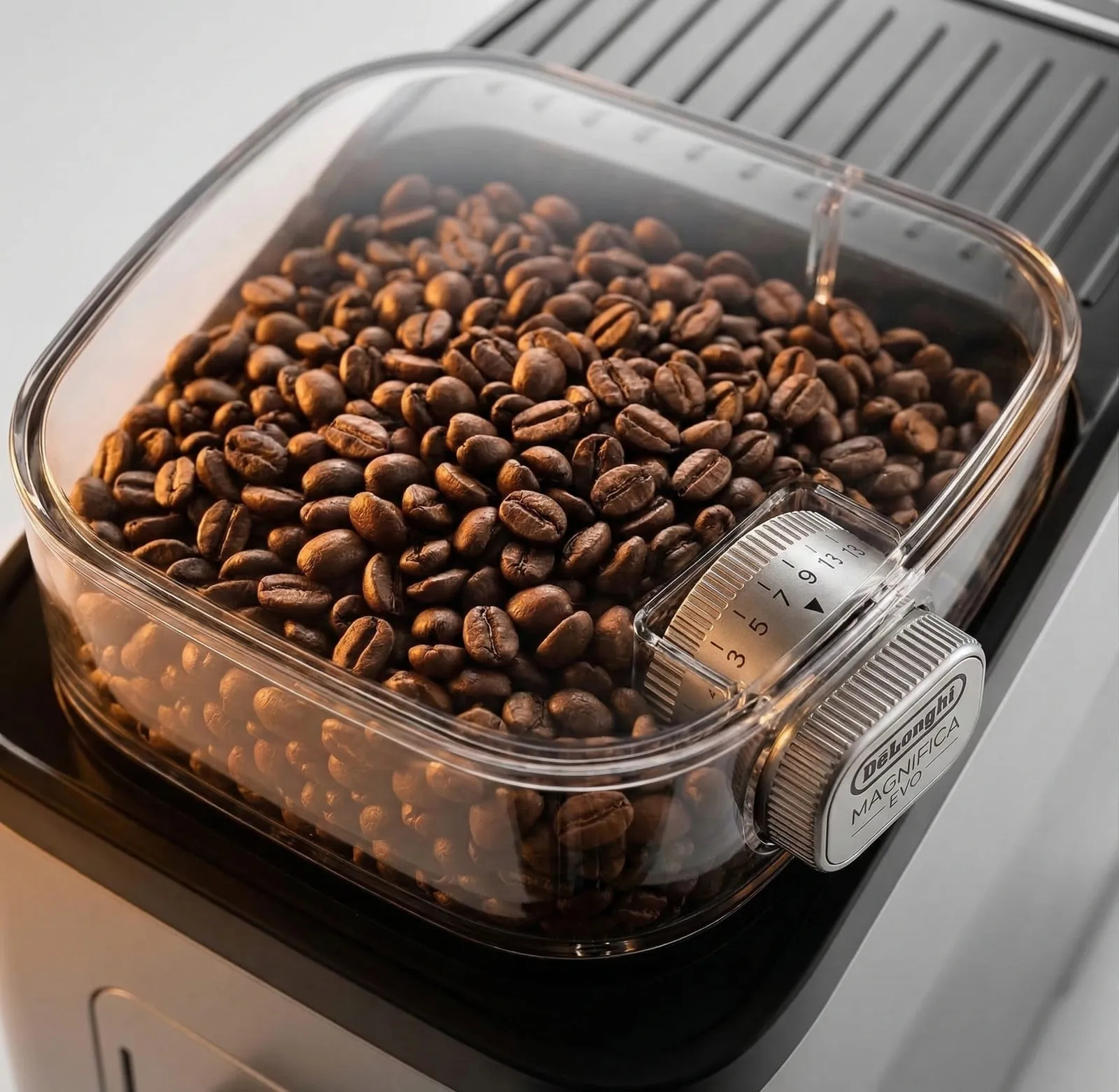
- All 13 grind settings accessible and grind quality is above average for the super-automatic category
- Consistent crema and body on medium-dark roasts after a one-time calibration
- Auto-rinse, auto-descale reminder, and dishwasher-safe parts make maintenance easy
- 1.8L water tank and 250g bean hopper reduce daily refill frequency
- Strong value at $699 vs $2,700 Jura E8 — the espresso gap does not justify nearly 4× the price for most buyers
6 trade-offs to weigh
Cons
- Panarello steam wand produces thick foam, not microfoam — limiting for latte art or flat white preparation
- Light roasts (we tested an Ethiopian natural) underperformed at every grind setting — the machine favours medium-dark
- Grounds container sensor halts operation when full — disrupts back-to-back shot pulling
- No PID temperature control means you cannot dial in temperature for different roast profiles
- Thermoblock system means you cannot pull multiple shots rapidly without temperature recovery time
- Larger footprint than compact semi-automatics at 9.6" wide and 22 lbs
Real-World Testing
How it performed in day-to-day use, in the order you will meet it.
Setup & Learning Curve
There's effectively no learning curve. Press the power button, place the cup, and the machine auto-rinses, grinds on demand, and delivers espresso from cold start with no portafilter, dosing, or tamping involved. We handed the machine to someone with no coffee equipment experience, with a two-minute explanation, and they were pulling acceptable shots in their first session.
Out of the box on factory defaults the espresso is flat and a little bitter — technically espresso, not satisfying. The one calibration step that matters is dropping the grind finer and increasing coffee strength, which takes about ten minutes to dial in and then rarely needs revisiting for a given bean.
Shot Extraction Performance
Grind setting 4–5 with coffee strength 4 on a fresh medium-dark roast is where this machine earns its rating: rich amber crema, reasonable body, and flavor good enough to serve. Results vary a lot by bean. Medium and medium-dark roasts (Colombian, Brazilian) consistently scored well in our tasting notes, and shot-to-shot consistency was strong — 9 of 10 shots on the same settings were flavor-comparable.
Light roasts are the main limitation. No grind setting produced a satisfying shot on the Ethiopian natural — the thermoblock can't hit the higher extraction temperatures light roasts need, and shots ran sour. The practical grind range is narrower than the '13 settings' label suggests: settings 1–2 choke the machine, 11–13 under-extract, and the usable window is 3–7.
Milk Steaming Experience
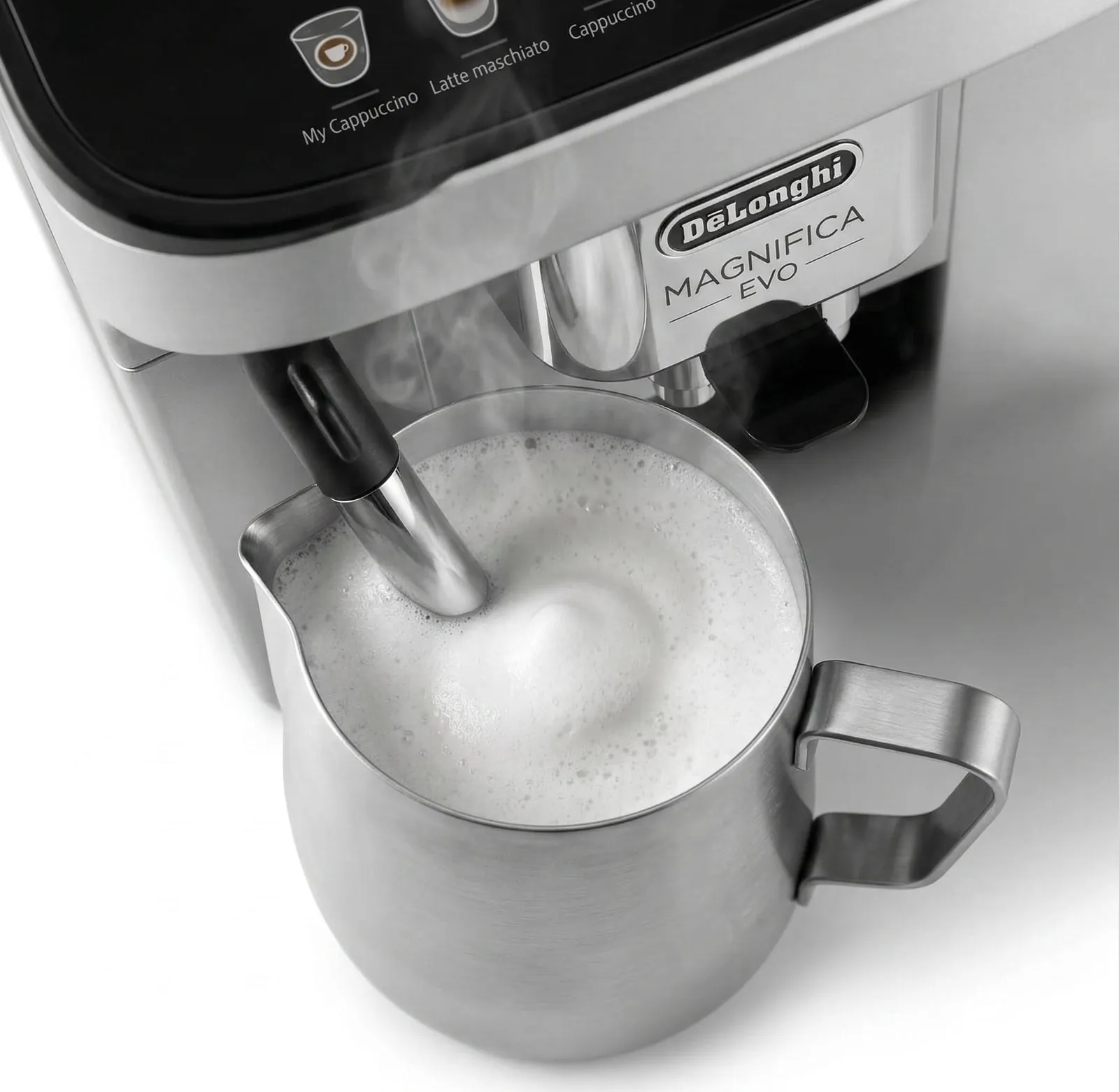
The Panarello wand is the weakest part of this machine. It injects air automatically as it steams, producing thick, dense foam rather than microfoam. That's fine for traditional Italian-style cappuccino, but with the Panarello sleeve fitted it can't produce the silky texture latte art or a proper flat white requires, because the air injection is built into the wand.
Frothing took 45–60 seconds for 150ml of cold milk, with steam output noticeably weaker than dedicated semi-automatic wands. Removing the Panarello sleeve exposes a bare steam tip that can produce better texture with practice, but that defeats the point for most super-automatic buyers. If milk drinks are the priority, look at a machine with an automatic milk carafe instead.
Build Quality & Daily Workflow
Day-to-day, the containers are sized sensibly: the grounds bin holds a week's worth of pucks at two shots a day, and the 1.8L tank lasts 3–4 days for a two-person household. Both are dishwasher safe and tool-free to remove. The one friction point is a full-container sensor that blocks brewing until you empty it — reasonable protection for the internals, but occasionally annoying mid-morning.
The grinder is noisy (roughly 70–72 dB), noticeable in a small kitchen early in the morning. The guided descaling cycle takes about 25 minutes and is easy to follow, which matters more than it sounds — skipping descaling entirely can cause irreversible thermoblock damage.
Grind Calibration Tips
Always adjust the grind dial while the grinder is running — adjusting it while static can stress and, in severe cases, damage the ceramic burrs. Bean freshness matters more than the grind setting itself: a fresh medium-dark at setting 5 consistently beat a stale medium-dark at any setting. Use whole beans within 3–4 weeks of the roast date for the best results.
How It Stacks Up Against Similar-Priced Machines
The Philips 3200 LatteGo has a better automatic milk system but a weaker grinder — choose it if milk drinks are your priority. The Breville Bambino Plus produces more nuanced espresso if you're willing to learn technique and add a grinder budget.
Is the De'Longhi Magnifica Evo worth it?
Value against a $2,700 Jura and a semi-automatic setup
At about a quarter of the Jura E8's price, the Magnifica gets you most of what non-specialist households want: fresh-ground espresso, consistent crema on medium-dark roasts and easy maintenance. What the extra Jura money buys is milk quality and roast flexibility, which many buyers never use.
The resale picture helps: expect 40–60% of purchase price after 2–3 years in working condition. Compared with a semi-automatic, you're paying for automation, not for a better cup.
De'Longhi Magnifica Evo problems and limits
The trade-offs worth knowing before you buy
- Light roasts: The thermoblock can't reach the higher extraction temperatures they need, so shots ran sour at every setting.
- Usable grind window: The 13 settings are really about 3–7; settings 1–2 choke the machine and 11–13 under-extract.
- Back-to-back drinks: A full grounds container halts operation, and the thermoblock needs recovery time between shots.
- Footprint: 9.6" wide and 22 lbs, larger than compact semi-automatics.
Magnifica Evo setup, descaling and maintenance
What ownership involves
Out of the box, the factory default is flat and a little bitter, so budget about ten minutes to drop the grind finer and raise coffee strength. After that it rarely needs revisiting for a given bean.
Descaling solution runs $8–$12 per cycle, needed 3–4 times a year at daily use, and the brew unit is part of an annual deep clean. Our descaling guide and cleaning guide cover the steps.
Who should skip the De'Longhi Magnifica Evo?
When another machine is the better buy
Skip it if you want to build barista skill, drink mostly light roasts, or care about latte art. The Panarello wand makes thick foam, not microfoam. Browse our best espresso machines for alternatives, or the espresso machine types guide to choose a category first.
How it works and why it matters
The Magnifica Evo is a bean-to-cup machine with ceramic conical burrs and a thermoblock. Here is how it makes coffee.
A bean-to-cup machine grinds, tamps and brews in one press. Ceramic conical burrs run cooler than steel and hold their edge, which helps consistency across long use. The grind setting controls how finely beans are ground, and the brew unit presses the grounds each time. The grind size calculator gives a starting point for each brew method.
A thermoblock heats water as it flows, so the machine is ready quickly but lacks the temperature control of a PID system. That is why medium and dark roasts suit it better than delicate light ones.
For the cup, expect crema and body rather than nuanced acidity; espresso extraction explains why temperature and grind shape that.
Common problems and modern fixes
Bean-to-cup machines have their own ownership problems. These are the fixes.
Oily beans can clog the grinder chute. Choose dry-looking medium or medium-dark beans, using picking espresso beans, and brush the hopper outlet monthly.
The grounds container sensor halts brewing when full, so empty it daily. Rinse the brew group weekly and the drip tray often, following cleaning an espresso machine.
Panarello foam can clog; remove and rinse the sleeve, and see fixing a steam wand that will not froth.
Scale builds up in the thermoblock, so fit a water filter and follow the descaling guide. The espresso machine maintenance guide covers the rest of the routine.
Before you decide
What a Mid-Range Super-Automatic Actually Delivers
The Magnifica Evo sits in the entry-to-mid tier of super-automatics, where the pitch is simple: fresh-ground, one-touch espresso with essentially no learning curve. At $699 it delivers on that promise for medium and medium-dark roasts, with above-average crema and strong shot-to-shot consistency thanks to a 15-bar pump, ceramic conical burrs, and a 250g hopper that needs less frequent refilling than smaller machines.
What you give up compared to pricier super-automatics like the Jura E8 ($2,700) is milk quality and roast flexibility: the Panarello wand produces thick foam rather than true microfoam, and the thermoblock's fixed temperature ceiling means light roasts consistently underperform regardless of grind setting. For buyers who want good espresso with zero skill required and don't need latte art or light-roast nuance, the Magnifica Evo captures most of what a $2,700 machine offers at a fraction of the price; buyers chasing manual technique or top-tier milk drinks should look elsewhere.
How It Measures Up on Key Espresso Criteria
- Temperature stability
- No user-facing PID; brew temperature follows the machine's preset settings.
- Pressure and pre-infusion
- 15-bar pump rating. No gauge.
- Shot-to-shot consistency
- Automatic grinding, dosing and tamping make cups depend on grind setting and beans, not technique.
Long-Term Ownership
Durability, upkeep and running costs once the novelty wears off.
- Durability
Solid for the price category — plastic exterior with stainless accents, ceramic conical burrs rated for ~20,000 grind cycles.
More detail
The thermoblock is the part most likely to need replacement, typically after 4–5 years of daily use.
- Reliability
No mechanical issues during testing.
More detail
The auto-rinse cycle on startup/shutdown reduces scale buildup and measurably extends component life.
- Parts
One of the strongest spare-parts networks in home espresso — descaling kits, brew units, and thermoblock assemblies are stocked by multiple retailers.
- Upkeep cost
Descaling solution runs $8–$12 per cycle, needed 3–4 times a year at daily use.
More detail
Brew unit service is typically part of an annual deep clean; no other consumables beyond beans and descaler.
- Warranty
2-year standard US warranty, with extended service contracts available directly from De'Longhi.
- Resale value
Holds value well on the secondary market — expect 40–60% of purchase price after 2–3 years in working condition.
Our assessment after the full test period: the Magnifica Evo is the super-automatic we recommend to most buyers in this price bracket. Espresso quality with medium-dark beans is good, the workflow is frictionless, and the maintenance design is the best we've seen at this price point. The Panarello's foam-not-microfoam limitation is real but predictable — it's inherent to the super-automatic format, not a flaw in De'Longhi's execution. This machine was purchased independently and was not provided by De'Longhi.
Final Verdict
Our rating, who it fits, and what it costs.
De'Longhi Magnifica Evo ECAM290.21.BRecommended
4.1 / 5 — Is it worth buying?
The Magnifica Evo's 4.1/5 rating comes down to consistency: above-average bean-to-cup espresso with minimal effort, at a price accessible to most buyers.
✓ Best for
- Busy households that want real espresso quality without the learning curve of semi-automatic machines
- Former pod-machine users stepping up to fresh beans who want familiar one-button simplicity
✕ Skip if
- Home baristas developing espresso technique
- Light roast enthusiasts, since the machine underperformed with the Ethiopian natural we tested and likely other light single-origins
Score breakdown
Shots tested
190+
Testing period
63 days continuous daily use
Ready to decide?
Our verdict: 4.1/5, recommended. Independently tested; commissions never change a rating.
Where It Ranks in Our Buying Guides
See how the De'Longhi Magnifica Evo ECAM290.21.B compares with the other picks in each tested roundup.
Tools That Pair With This Review
Put it into practice with a free calculator built for what you just read.
- Espresso Dial-In CalculatorEnter your actual shot results to see whether you're on target — and what to adjust.
- Espresso Ratio CalculatorEnter your dose and shot style (ristretto, normale, lungo) to get your target shot weight.
- Coffee Grind Size CalculatorPick your brew method and get the right grind size, texture, and grinder setting.
Reader questions
Questions or tips? Leave a comment
Ask about your setup or share what worked for you. Comments are checked before they appear.