
Our pick
Hario V60
A cone with spiral ribs and one large hole. Best for: full control. Learning curve: moderate to high.
Brewing Guides
Last updated
What pour over coffee is and how the method works, plus grind size, water temperature and a recipe to dial in your best cup
Affiliate disclosure: this page contains Amazon affiliate links. We may earn a commission if you buy through them, at no extra cost to you, and it never affects our rankings. Learn more
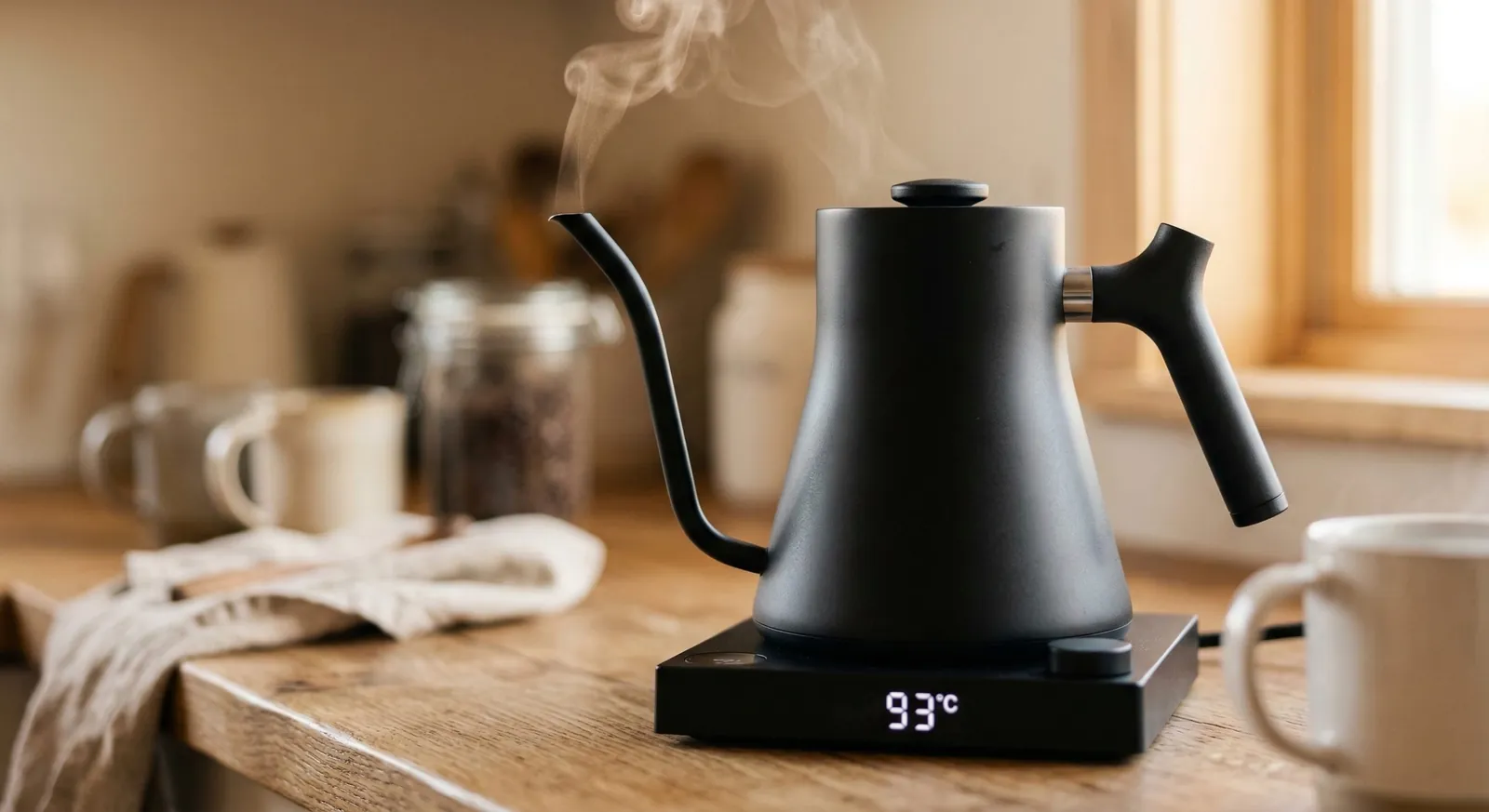
Start with a 1:15 ratio, a medium-fine grind, water around 93°C and a 30–45 second bloom, aiming for a 3–3:30 total brew. If it drains too fast, grind finer; too slow, grind coarser. Prefer hands-off? See the best drip coffee makers.
The real source of the extra clarity and control in the cup.
You pour water by hand through a cone or flat-bed dripper (V60, Chemex, Kalita Wave). Control is the difference: you set pour speed, water placement and brew time, and can adjust mid-brew.
For a size-specific recipe with every pour worked out, use the V60 ratio calculator or the Chemex ratio calculator.
Five levers shape the cup: grind size, water temperature, pour rate, brew ratio and bloom. The paper filter removes most oils, giving a clean, bright cup that shows off single-origin character. The water temperature calculator adjusts the range for roast and altitude.
A weighing-based starting ratio you can adjust to your taste.
Use 1:15 to 1:16 (1 g coffee to 15–16 g water) and weigh both. Scoops are unreliable because bean density varies. The pour over ratio calculator scales any size.
| Cup size | Coffee | Water |
|---|---|---|
| Small (200 ml) | 13 g | 200 g |
| Standard (250 ml) | 17 g | 250 g |
| Large (350 ml) | 23 g | 350 g |
| Chemex 6-cup (600 ml) | 40 g | 600 g |
Standard 250 ml brew, 17 g coffee:
Heat 310 g filtered water. The extra 60 g covers the rinse.
Rinse the filter. With 50–60 g of hot water, then discard it. This removes paper taste.
Add 17 g medium-fine coffee,. Level it, and zero the scale.
Bloom (0:00). Pour 34 g, centre outward, and wait 30–45 seconds.30–45 seconds
Pour to 100 g. In a slow spiral, about 2–3 g per second. Avoid the paper walls.
Pour to 175 g,. Then to 250 g by about 2:00.
Check the drain. It should finish between 3:00 and 3:30.
Swirl and serve at once. Pour over cools quickly.
Paper filters, gravity and a controlled pour show off clarity.
Pour over relies on gravity. Hot water passes through a bed of grounds and a paper filter, which traps oils and fine particles. The result is a bright, clear cup with defined flavours.
Because water is poured by hand, you control flow rate, agitation and contact time. Slower, gentler pours usually raise extraction; faster or more agitated pours change how quickly the bed drains.
The brew bed shape matters. Flat-bottom drippers tend to give a more even extraction, while cone drippers drain faster and are more sensitive to grind and pour technique.
What the pause does for the grounds and what the bubbles tell you.
Roasting traps CO2 in the bean. Blooming with about twice the coffee's weight in water lets the gas escape before the main pour, so water contacts the grounds evenly. Vigorous bubbling also signals fresh coffee.
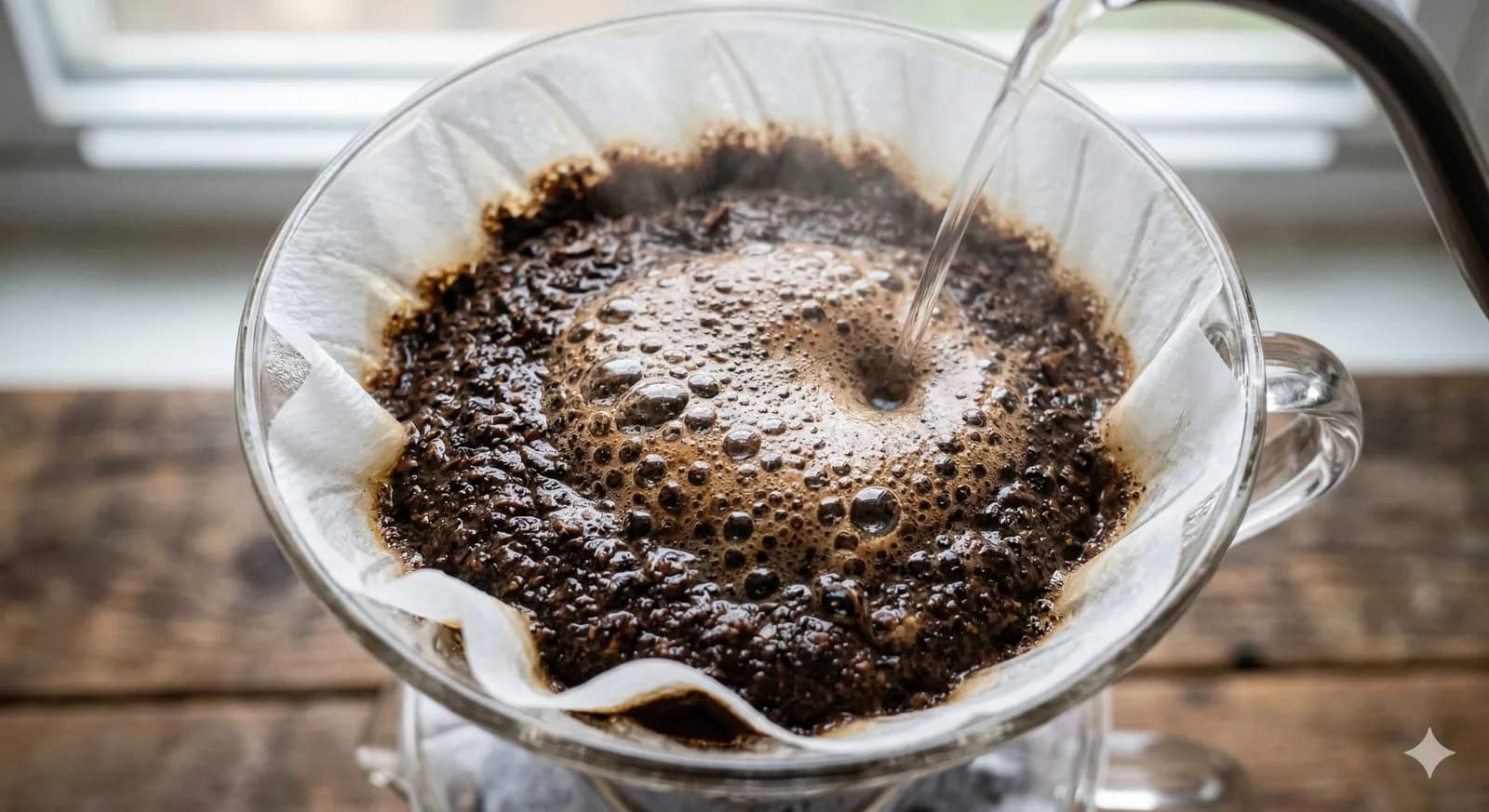
More in coffee bloom explained.
A texture cue and a timing check for settling on the right setting.
Medium-fine, like coarse sea salt or slightly finer. Use drain time as the check.
| Drain time | Taste | Fix |
|---|---|---|
| Under 2:30 | Sour, thin, watery | Grind finer or slow your pour |
| 3:00–3:30 | Balanced, sweet, clean | Dialled in; change nothing |
| Over 4:30 | Bitter, astringent, heavy | Grind coarser or speed up your pour |
Temperature ranges matched to roast level for sweeter, cleaner cups.
Aim for 90–96°C (194–205°F); straight-off-the-boil water over-extracts bitterness.
| Roast | Temperature |
|---|---|
| Light | 93–96°C |
| Medium | 91–93°C |
| Dark | 90–91°C |
No thermometer? Boiling water rested for two minutes is roughly 92–93°C, a safe default.
A comparison of popular cones and flat beds by how forgiving they are.
Kalita Wave suits beginners, V60 rewards control, Chemex suits batches.
Our pick
A cone with spiral ribs and one large hole. Best for: full control. Learning curve: moderate to high.
Our pick
Glass dripper and server with a thick filter for a very clean cup. Best for: 2+ cups, light roasts. Learning curve: low to moderate.
Our pick
Flat-bed dripper with a corrugated filter for even extraction. Best for: beginners. Learning curve: low.
Affiliate links: we may earn a commission at no extra cost to you.
A short shopping list ordered by how much each item improves the cup.
Burr grinder. A blade grinder gives powder and chunks that taste sour and bitter together. Try the hand-powered Comandante C40 or electric Fellow Ode Gen 2.
Gooseneck kettle. Its narrow spout controls pour rate.
Digital scale with timer. A basic 0.1 g scale is enough.
Dripper and matching paper filters.
How the method compares with an automatic machine or an espresso setup.
A certified machine like the Technivorm Moccamaster can come close to pour over with no effort; see drip vs pour over. Espresso is a different drink: pressure extracts oils for body and crema.
Quick decision guide
If you drink black coffee and enjoy the ritual
pour over.
If you drink lattes and cappuccinos
an espresso machine; see the best espresso machines.
If you want hands-off filter coffee
a good drip machine; see the best drip coffee makers.
Gear and technique to make pour over repeatable.
A gooseneck kettle helps, though it is not required. Try the pour over ratio calculator for recipe scaling, and read what coffee bloom is for the first pour.
Most problems come from grind and pour speed.
| Problem | Likely cause | Fix |
|---|---|---|
| Sour, thin | Grind too coarse or brew too fast | Grind finer; aim for 3–4 minutes total |
| Bitter, dry | Grind too fine or brew too slow | Grind coarser |
| Drains very slowly | Too fine, or fines clogging the filter | Grind coarser; avoid stirring too hard |
| Uneven bed, dry patches | Pouring in one spot | Pour in slow circles over the whole bed |
| Papery taste | Unrinsed filter | Rinse the paper filter with hot water first |
Change one thing at a time, starting with the grind. Weighing coffee and water and timing each brew makes it much easier to see what changed. Our what is coffee bloom guide covers the first, and often overlooked, step. The step-by-step brew timer tells you when to pour and how much.
Keep a simple log of dose, grind setting, water and total brew time for each coffee. After a few brews, you will see which changes improve the cup and can repeat them quickly with the next bag.
Habits that quietly flatten the cup, plus easy ways to avoid each one next time.
| Mistake | Result |
|---|---|
| Skipping the bloom | Flat, often sour cup |
| Pouring on the filter walls | Water bypasses grounds, diluting the cup |
| Blade grinder | Uneven extraction |
| Water straight off the boil | Bitterness |
| Stale coffee | Dull cup; use within about 4 weeks of roasting |
| Not rinsing the filter | Papery taste |
Quick answers before you buy.
About 22 g of coffee for roughly 340 g of water at a 1:15 to 1:16 ratio.
Weigh both for repeatable results.
The pour over ratio calculator scales any cup size.
Not by default.
Strength comes from your ratio, while pour over mainly gives a cleaner, brighter cup because you control pour rate and contact time.
A stronger brew needs more coffee per water, not just a slower pour.
Not strictly, but it helps.
The narrow spout gives a slow, steady pour that keeps extraction even.
A regular kettle works if you pour carefully in small stages.
Reusing paper filters is not recommended.
Used filters hold old oils and wet grounds that can add stale flavour.
Rinse and use a fresh one each brew.
Sour, thin pour over usually means under-extraction: a grind that is too coarse, water that is too cool, or a pour that is too fast.
Grind finer first, then re-taste.
See the sour coffee fixes for the same logic.
Freshly roasted, whole-bean coffee ground just before brewing.
Light to medium roasts show off the clarity pour over is known for, but any roast works if it is fresh and the grind is right.
Keep reading: more guides on the same topic.
 Explained
Coffee Education6 min read
What is coffee bloom? CO2 degassing explained, how to bloom with a 2:1 water ratio, and which beans and brew methods benefit most.
 Compare
Brewing6 min read
Drip vs pour over coffee compared on taste, temperature, effort and cost, with a simple rule for which brewer fits your routine.
 Explained
Coffee Education6 min read
What is a moka pot? How this stovetop coffee maker works, how it differs from espresso, what it tastes like and who should buy one.
 How to
Brewing6 min read
Cold brew recipe: 100 g coarse coffee to 800 ml water, steeped 18 hours, then diluted. Includes fixes for bitter or weak batches.
Reader questions
Questions or tips? Leave a comment
Ask about your setup or share what worked for you. Comments are checked before they appear.