

The grinder this chart covers
Breville Smart Grinder Pro
60-step conical burr grinder with timed dosing and portafilter cradles, for espresso and filter coffee.
Updated
Starting settings on the Breville Smart Grinder Pro for espresso, moka pot, AeroPress, pour-over, Chemex, drip, French press and cold brew, plus when to move the upper burr.
Espresso: start at 16 and aim for about 36g out in 25–30 seconds. Pour-over (V60): 34. Chemex: 42. French press: 57. Cold brew: 60. If shots still gush at the low single digits, move the upper burr finer. Full review: Breville Smart Grinder Pro review.
One starting number per brew method; lower numbers are finer.
| Brew method | Start at | Range | Starting recipe |
|---|---|---|---|
| Espresso, light roast | 12 | 8–15 | 18g in, 36–40g out, 27–32 s |
| Espresso, medium roast | 16 | 14–18 | 18g in, 36g out, 25–30 s |
| Espresso, dark roast | 18 | 16–22 | 18g in, 36g out, 25–30 s |
| Espresso, pressurized basket | 22 | 18–26 | Use the shot button, adjust by taste |
| Moka pot | 24 | 20–28 | Fill basket level, don't tamp |
| AeroPress | 28 | 22–32 | 15g : 230g, 2 min |
| Pour-over (V60) | 34 | 31–38 | 15g : 250g, 2:45–3:30 |
| Kalita Wave / flat-bottom | 38 | 35–42 | 20g : 320g, 3:00–3:45 |
| Drip coffee maker | 40 | 36–46 | 60g per litre |
| Chemex | 42 | 40–48 | 30g : 500g, 4:00–5:00 |
| Percolator | 51 | 49–54 | Breville's percolator band |
| French press | 57 | 55–60 | 30g : 500g, 4 min |
| Cold brew | 60 | 58–60 | 100g : 1L, 12–18 h in the fridge |
Espresso, light roast
Espresso, medium roast
Espresso, dark roast
Espresso, pressurized basket
Moka pot
AeroPress
Pour-over (V60)
Kalita Wave / flat-bottom
Drip coffee maker
Chemex
Percolator
French press
Cold brew
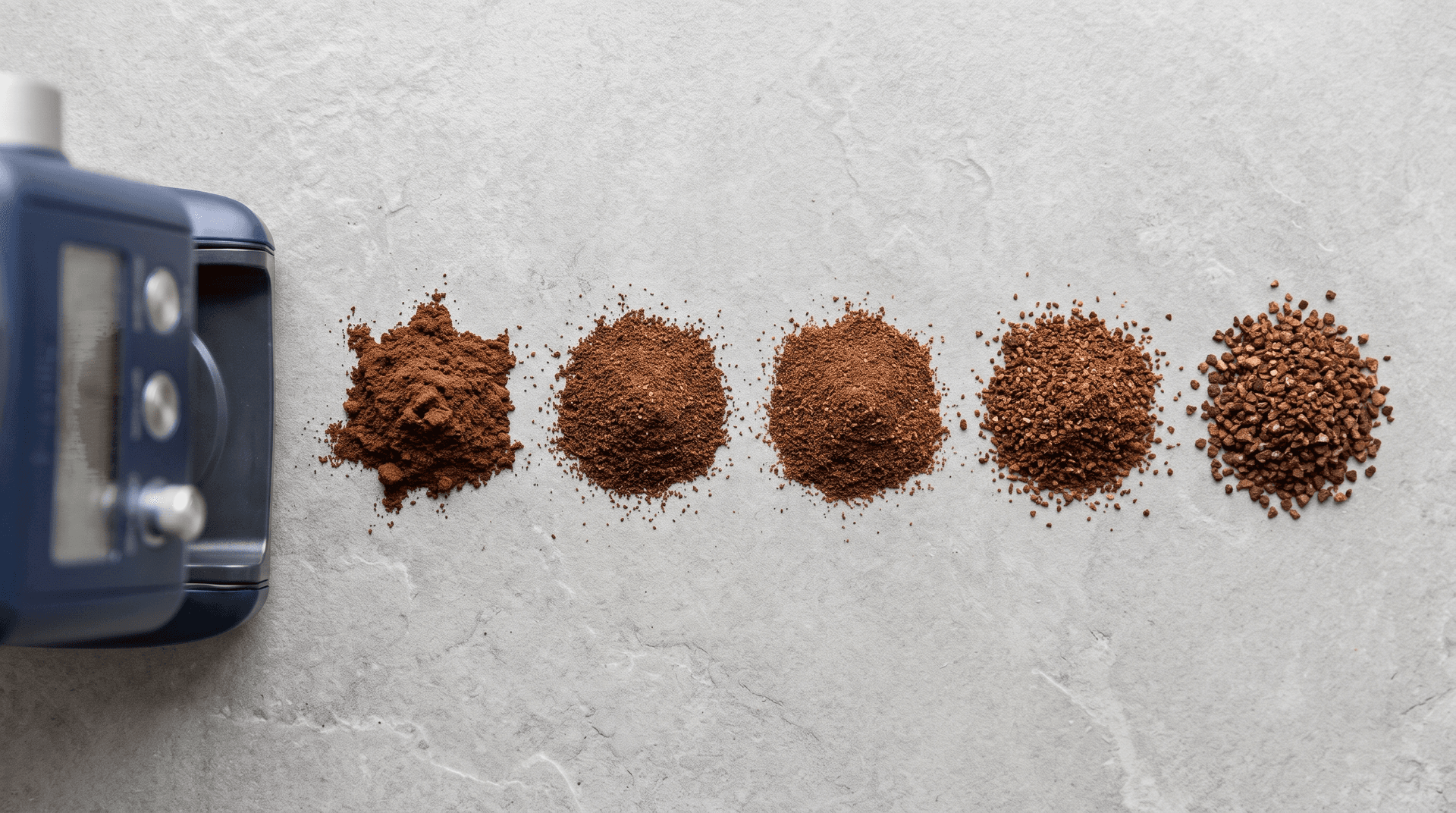
The four bands come from Breville's own grind size guide. The starting numbers follow the sizes in our coffee grind size chart. Your beans, roast date and brewer will move the ideal number a few steps, so adjust by taste and brew time.
A 60-step dial for daily changes and an upper burr for big shifts.
The grinder uses stainless steel conical burrs. Turning the grind size dial on the side moves the burrs closer (lower numbers, finer) or further apart (higher numbers, coarser), and the current setting shows on the display. There are 60 steps, and half of them, 1–30, sit in the espresso band, because espresso needs the finest control.
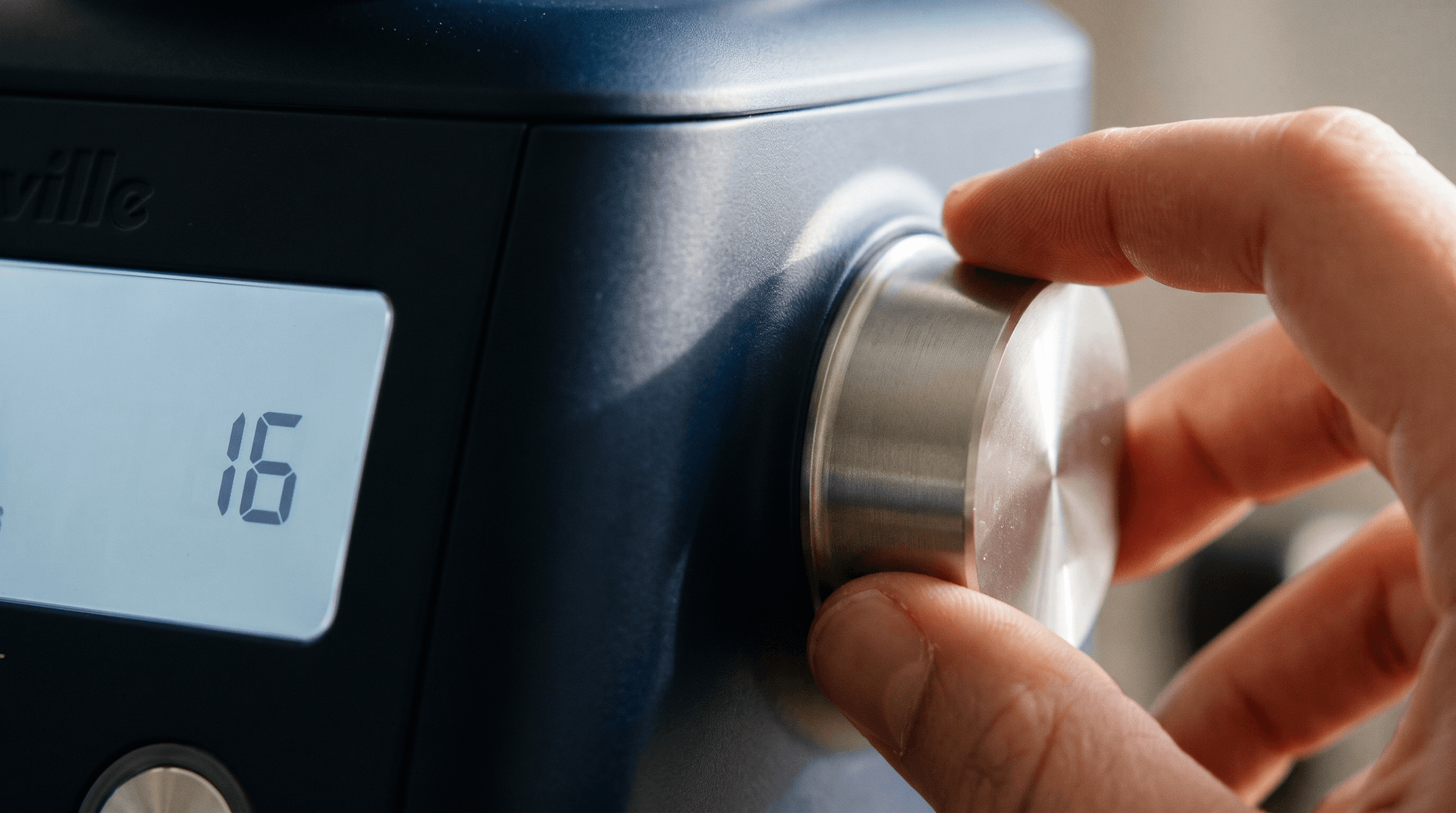
Inside the hopper sits a second adjustment: the removable upper burr, which has 10 positions. In CoffeeGeek's full review it shipped at position 5. Moving it shifts the whole 1–60 scale finer or coarser, so the same dial number produces a different grind afterwards.
Start at 12 and move one or two steps at a time.
Fill the hopper (or weigh 18g if single dosing) and set the dial to 16 for a medium roast.
Use the 54mm or 58mm cradle so the portafilter triggers grinding hands-free.
Weigh the dose in the basket and adjust grind time with the GRIND AMOUNT dial (0.2-second steps) until it lands on 18g; expect around 10–11 seconds at setting 16.10–11 seconds
Distribute, tamp level and pull a shot into a cup on a scale.
Aim for about 36g of espresso in 25–30 seconds.25–30 seconds
Fast or sour: go 1–2 settings finer. Slow or bitter: go 1–2 settings coarser.
Changing the grind changes the dose slightly, so re-weigh after every big move.
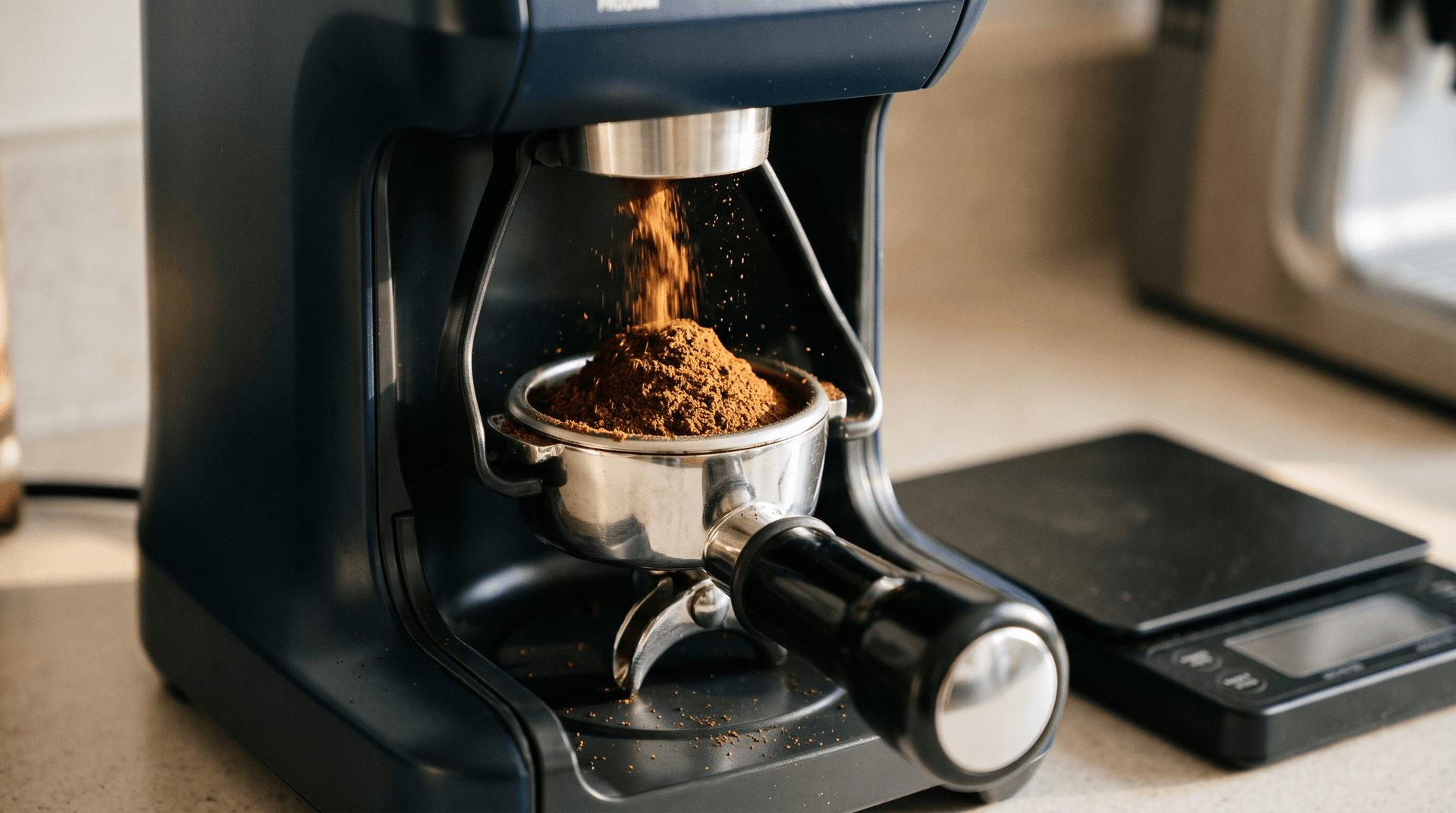
Our dial-in guide covers taste cues in detail, and shot running too fast or too slow lists every fix.
Quick decision guide
Your machine uses a pressurized (dual-wall) basket
start around 22; very fine coffee can choke a pressurized basket. See pressurized vs non-pressurized baskets.
You use the grinder with a Breville Bambino or Bambino Plus
use the 54mm cradle and start at 16. Read our Bambino Plus review for the full pairing.
V60, Kalita Wave and Chemex each sit in the filter band at different points.
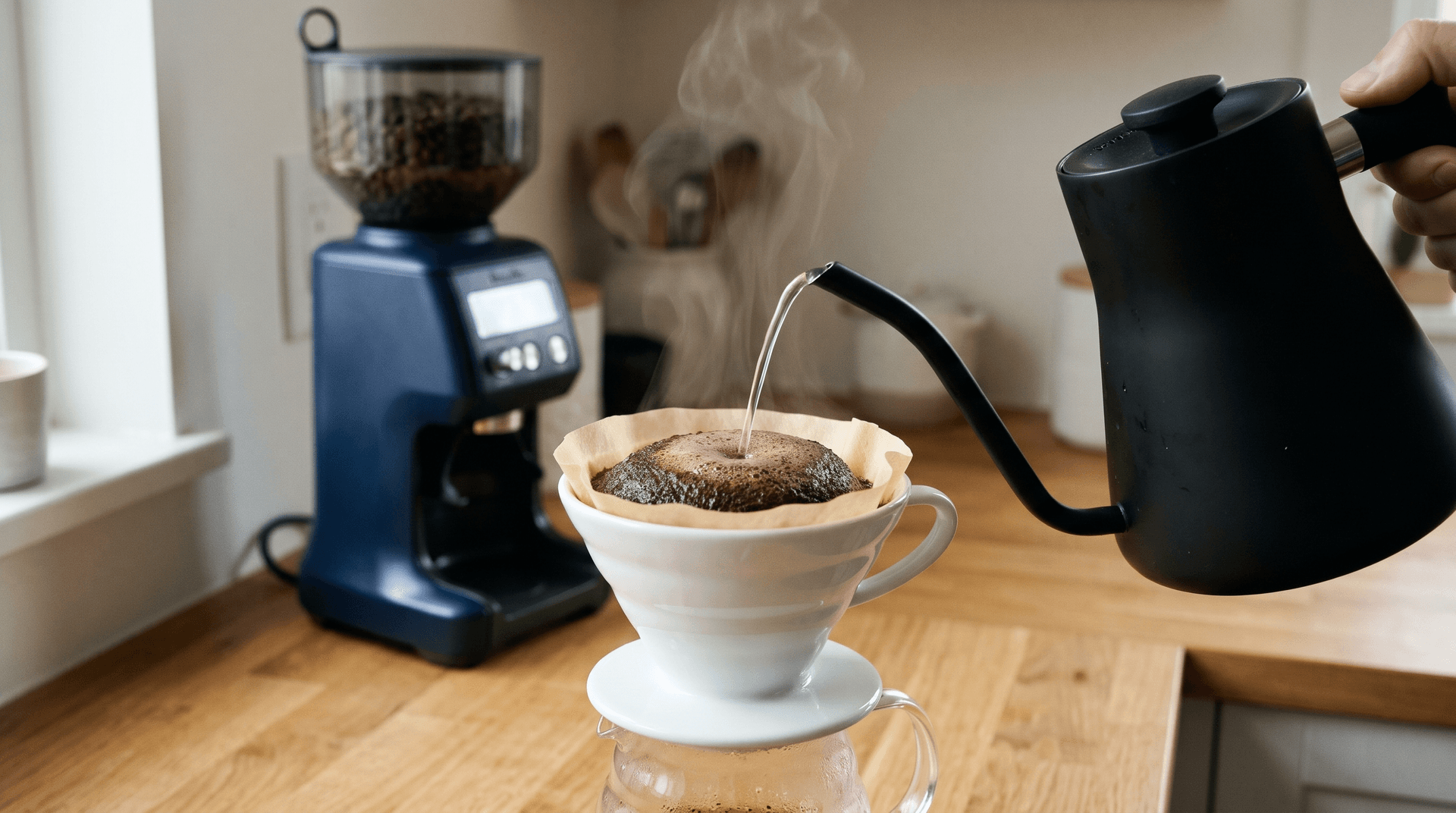
Use water around 92–96°C (198–205°F) and a 30–45 second bloom. Drawdown time is the best clue: much faster than target means a few steps finer; water still sitting on the bed long after your last pour means coarser. Conical burrs make more fine particles at coarser settings, so a Chemex can drain slowly even at a correct number; going 2–3 steps coarser usually fixes it. New to the method? Start with what pour-over coffee is and why the bloom matters.
Immersion and stovetop methods are more forgiving than espresso.
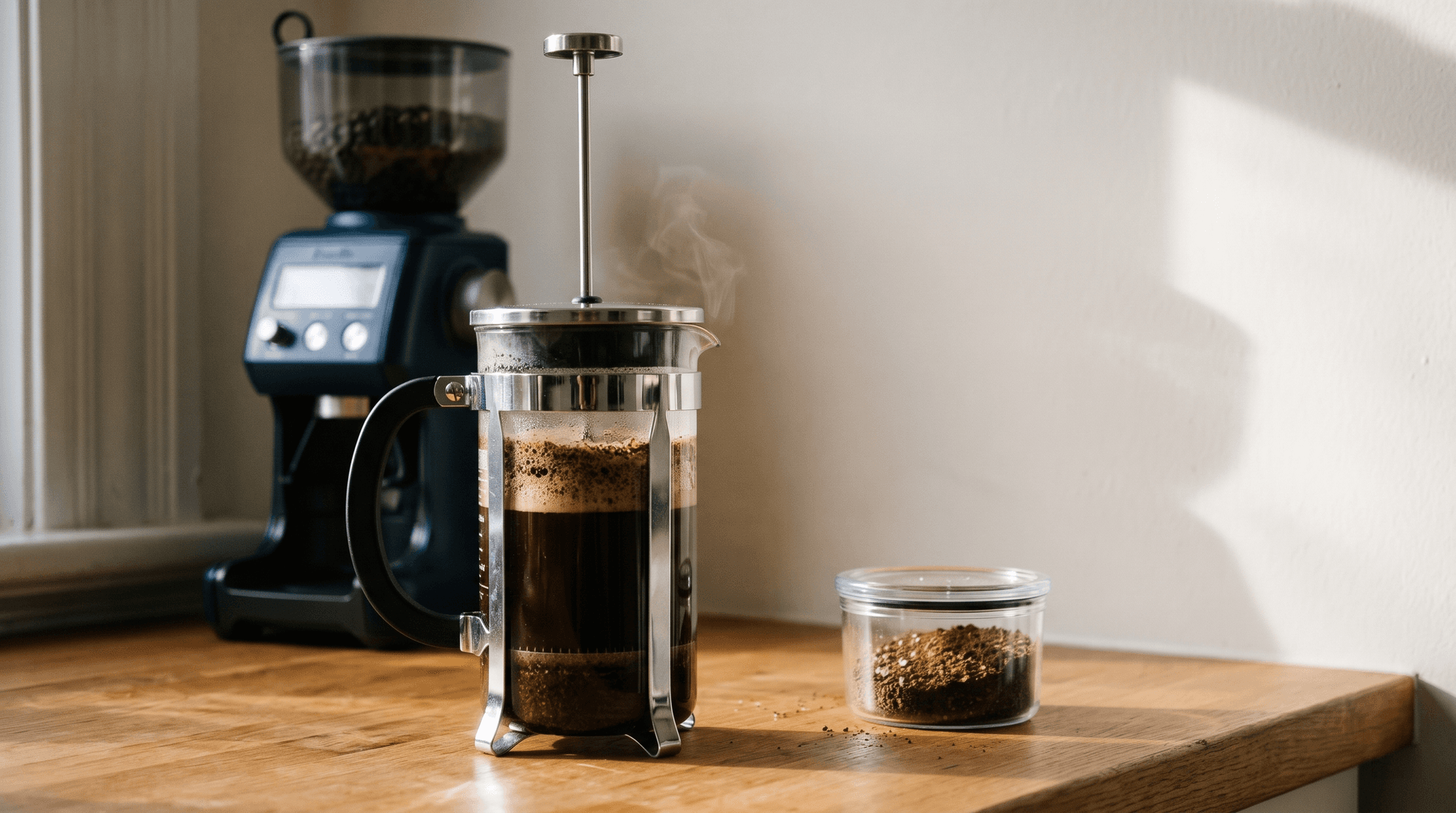
Use taste and brew time together; the number is only a starting point.
| What you taste or see | What it usually means | Change on the Smart Grinder Pro |
|---|---|---|
| Sour, sharp, thin | Under-extracted | 2 settings finer |
| Bitter, dry, harsh | Over-extracted | 2 settings coarser |
| Espresso under 20 seconds | Grind too coarse | 2–3 settings finer |
| Espresso drips or chokes | Grind too fine | 3–4 settings coarser, then work back |
| Still gushing in the low single digits | Range set too coarse | Upper burr one position finer |
| Pour-over drawdown stalls | Too fine or too many fines | 2–3 settings coarser |
| French press muddy | Fines passing the mesh | Coarser, or let it settle before pouring |
| Sour and bitter at once | Uneven extraction | Fix puck prep or pouring before the grind |
Sour, sharp, thin
Bitter, dry, harsh
Espresso under 20 seconds
Espresso drips or chokes
Still gushing in the low single digits
Pour-over drawdown stalls
French press muddy
Sour and bitter at once
Still unsure? Why espresso tastes sour and how to fix bitter espresso cover the other causes. For a starting point on any grinder, try the coffee grind size calculator.
No. The built-in grinder uses a different scale.
Breville machines with built-in grinders, like the Barista Express, use their own grind scale, so setting 16 on one is not setting 16 on the other. If you own an all-in-one, use our Breville Barista Express grind settings guide instead.
Small habits that make the chart numbers repeatable.
Thinking about an upgrade? Compare options in best espresso grinders under $300, see the Baratza Encore ESP, or read how to choose a burr grinder.
The grinder this chart covers
60-step conical burr grinder with timed dosing and portafilter cradles, for espresso and filter coffee.
Affiliate links: we may earn a commission at no extra cost to you.
Quick answers before you buy.
Start at 16 for a medium roast.
Go finer toward 12 for light roasts and coarser toward 18–22 for dark roasts, then adjust one or two settings at a time until a double runs in about 25–30 seconds.
Start at 34 for a V60, 38 for a Kalita Wave or other flat-bottom dripper, and 42 for a Chemex.
Adjust by drawdown time and taste.
Start at 57, inside Breville's 55–60 French press band.
Go coarser if the cup is muddy, or finer if it tastes weak after a 4-minute steep.
Only when the dial runs out: if espresso still runs fast in the low single digits with fresh beans, move the upper burr one position finer.
Make one change at a time and note the position.
No. The Barista Express has its own built-in grinder and scale, so use a chart made for that machine.
Keep reading: more guides on the same topic.
 Explained
Espresso9 min read
Breville Barista Express grind settings by roast, how to read the pressure gauge to fix sour or bitter shots, and when moving the inner burr finer helps.
 Explained
Grinder8 min read
Starting numbers for the Baratza Encore ESP's micro-stepped espresso range and its coarser filter range, plus how to dial in from them.
 Explained
Grinder9 min read
Coffee grind size chart with micron ranges for espresso, moka pot, AeroPress, pour over, French press and cold brew, plus how to adjust.
Reader questions
Questions or tips? Leave a comment
Ask about your setup or share what worked for you. Comments are checked before they appear.
Write a comment or question